Egypt condemns targeting of Riyadh oil refinery

Author: 
Sat, 2022-03-12 21:40

CAIRO: Egypt has condemned in the strongest terms a drone strike targeting an oil refinery in Riyadh.

In a statement, the Egyptian Ministry of Foreign Affairs said Cairo “reaffirms once again its total condemnation of these terrorist acts that target vital installations and the security and safety of energy supplies in the Kingdom.”

The ministry also said Egypt would “stand by Saudi Arabia in the measures it is taking to protect its security and sovereignty in the face of these despicable terrorist acts.”

The Saudi Ministry of Energy announced that the Riyadh refinery was attacked by a remote drone on Thursday morning, which resulted in a small fire that was controlled, and did not result in any injuries or deaths.

It added that the works of the refinery and the supply of petroleum and its derivatives were not affected.


General view of Aramco's Ras Tanura oil refinery and oil terminal in Saudi Arabia May 21, 2018. (REUTERS file photo)
Main category: 

Saudi energy ministry condemns oil refinery drone attack in RiyadhSaudi Arabia condemns suicide attack on Pakistan mosque


Billion-dollar property grab as Houthi ‘gangs’ seize rivals’ homes

Author: 
Sat, 2022-03-12 20:16

AL-MUKALLA: Armed Houthis are stepping up a campaign to seize the homes, land and property of opponents who challenge their authority, Yemeni officials and victims of the raids said on Saturday.
Some of the properties are sold or passed on to Houthi fighters, while others are turned into secret detention centers.
Unlike previous campaigns that mainly targeted properties in Sanaa, Houthi rebels have stormed dozens of houses and plots belonging to government officials and activists in Hajjah, Ibb, Al-Bayda, Dhamar and Al-Mahwit provinces, as well as other areas in northern Yemen.
The Iran-backed Houthis say they are carrying out orders from judicial authorities to confiscate the property of Yemeni figures who support the internationally recognized government of Yemen and the military operations of the Coalition to Restore Legitimacy in Yemen.
However, relatives of the victims say that militia fighters have confiscated the properties of former ministers, activists, tribal leaders and even ordinary people who happened to be living in government-controlled areas.
Sadam Maoudah, a former Houthi prisoner who now lives in government-controlled Marib city, told Arab News that the militia raided his seven-flat apartment block in Al-Mahwit city and told the other tenants in the building that property belonging to “the traitor Maoudah” was being confiscated.
The Houthis then wrote a new contract with the tenants that allowed them to receive the rent.
Maoudah said that the tenants later were ordered to leave the building after they revealed plans to turn it into a hotel.
“We don’t know what they will do with the building,” Maoudah said, adding that his family, including his disabled father who was hit by a car in Marib, is penniless after losing their only source of income.
“We appeal to the international community and humanitarian organizations to intervene to stop the crimes of the Houthis and their looting of displaced people’s properties,” Maoudah said.
Yemen’s Rased human rights organization documented 32 cases of Houthis looting and confiscating private assets of displaced people, including houses, cars and cash, in the province of Al-Mahwit alone.
The organization described the confiscation campaigns as “a collective punishment” that targets civilians who fled the Houthi-held areas.
Other victims of the campaigns have authorized local lawyers to challenge the confiscation orders, and complained that Houthi judiciary guards occupied their houses and refused to leave despite receiving orders from the attorney general.
Mohammed Murshed Al-Arshani, the son of a former justice minister, said on Friday that a Houthi judicial guard, Mohammed Saleh Dubaish, and a number of militia fighters occupied his family home in Sanaa’s Rawadha neighborhood under the pretext of executing a judicial order.
The Houthi occupants later added a new floor, ignoring orders from the militia-controlled public prosecution to leave.
“It seems that the gang will remain a gang even if it wears the dress of the state,” Al-Arshani said.
On Saturday, Yemeni officials and activists voiced their support for Saleh Samae, a former minister and governor of Al-Mahwit, whose properties in Sanaa were stolen by the Houthis.
Samae was among hundreds of Yemeni ministers, officials, politicians, military and security officials and journalists who left Sanaa in late 2014 after the Houthis launched a crackdown on dissidents.
Last month, the Geneva-based SAM Organization for Rights and Liberties said in a detailed report that the 38 confiscated properties owned by the Houthis’ opponents in Sanaa alone, including real estate and major companies, have a combined value of more than $2 billion.
The Houthis also looted more than $1.7 billion in revenues from the confiscated companies, hospitals and other institutions.
Yemeni analysts believe that the militia have stepped up the seizure of opponents’ property to destroy any hopes of returning home under a peace agreement.
“The militia moves to a new stage, removing any trace of their opponents and telling the society that they cannot return,” Ali Al-Fakih, editor of Al-Masdar Online, told Arab News.

Main category: 

Houthis accused of abusing women with moral policingCoalition intercepts drones launched by Houthis toward Saudi Arabia


Suez Canal setting new records, says Egypt in response to claims that maritime traffic is falling

Author: 
Sat, 2022-03-12 19:31

CAIRO: Claims that maritime traffic in the Suez Canal has fallen in the wake of Russia’s invasion of Ukraine have been rejected by the Egyptian government, which says the key trading link is setting new records.
The government’s media center said that it had contacted the Suez Canal Authority, which described the claims on social media as rumors.
Navigation movement in the canal during February 2022 reached a new high in terms of ship transit rates and net tonnages, the authority said.
“A total of 1,713 ships crossed from both directions, with a net tonnage of 100.1 million tons, compared with the transit of 1,532 ships during February last year, with a total net tonnage of 97.6 million tons,” the authority said.
It said that flexible marketing and pricing policies have encouraged new shipping lines to use the canal.
According to the government media center, the Suez Canal achieved record profits in 2021, with revenue totalling $6.3 billion, despite the effects of the pandemic on the global economy.
Performance rates in February this year are the highest for the month in the history of the canal, with revenue rising by 15.1 percent to $545.5 million, not including navigation services. This compares with $474.1 million for the same month last year.
Transit rates of various types of ships also rose compared with the same month last year, with bulk vessel numbers increasing by 29 percent, container ships by 11.8 percent and car carriers by 22.2 percent.

Main category: 

Transit of wheat and gas ships surges 15%, head of the Suez Canal Authority saysEgypt raises Suez Canal’s transit fees by 10%  


Turkey, Armenia vow to continue normalizing relations

Author: 
AFP
ID: 
1647082047599660200
Sat, 2022-03-12 10:38

Turkey and Armenia have pledged to pursue the normalization of ties in what the Turkish foreign minister Mevlut Cavusoglu described as a “productive and constructive” meeting on Saturday.
After talks with his Armenian counterpart, Ararat Mirzoyan, Cavusoglu said that Azerbaijan also “supports the process” of normalization.
Armenia and Turkey have no diplomatic relations, a closed land border and a deep-seated hostility rooted in the mass killing of Armenians under the Ottoman Empire during World War I.
But in December, the two countries appointed special envoys to normalize relations, spurred by support from regional powerbroker Russia and Armenia’s arch-foe Azerbaijan.
The push came a year after Azerbaijan used the help of Turkish combat drones to recapture most of the territory it lost to ethnic Armenians in a 1990s war in the disputed region of Nagorno-Karabakh.
A Russian-brokered truce that ended the second conflict removed Turkey’s main objection to talking to Armenia — namely, Yerevan’s support for the local Nagorno-Karabakh government’s claim of independence from Azerbaijan.
The first commercial flights for two years resumed in early February between Turkey and Armenia, but the land border between the two countries has remained closed since 1993, forcing trucks to transit through Georgia or Iran.

Main category: 


Gulf to play key role as EU plans to cut Russian gas imports, says envoy

Author: 
Fri, 2022-03-11 21:46

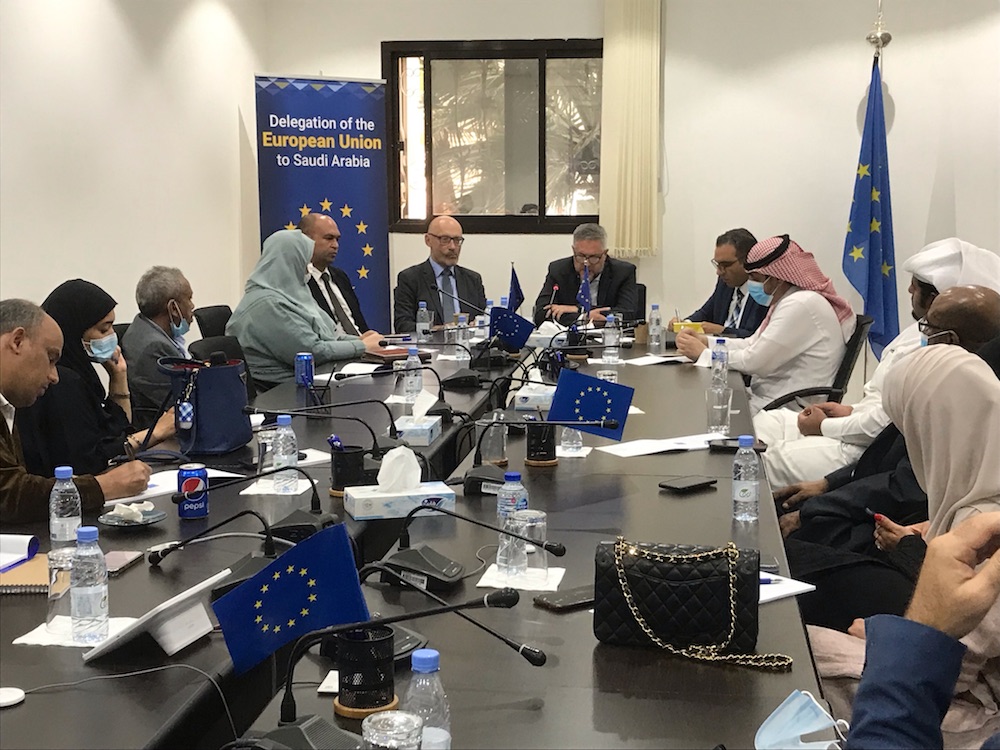
RIYADH: Saudi Arabia and the Gulf states will have an important role as the EU plans to cut Russian gas imports by two-thirds before the end of the year, said the EU ambassador to the Kingdom.

Speaking to reporters in Riyadh, Patrick Simonnet said that the EU has proposed a new plan to reduce its dependence on Russian energy amid Moscow’s invasion of Ukraine, and Saudi Arabia and other Gulf states would play a key role as energy partners.

The European Commission, the executive arm of the EU, has proposed to reduce its purchases of Russian gas by two-thirds by the end of the year, and cease buying fossil fuels from Russia before 2030.

In a reply to Arab News, the envoy said that this would be achieved by diversifying suppliers, which includes energy partners in the Gulf, and by increasing renewable hydrogen production and improving energy efficiency in households.

The EU seeks to increase imports of green hydrogen from Saudi Arabia, which is one of the largest producers in the world, he said.

Saudi Arabia aims to produce 4 million tons of hydrogen by 2030.

The EU envoy said: “There are discussions and negotiations to import natural gas from the Gulf countries, led by Saudi Arabia, which has entered into the gas production strongly during the recent period and has launched many projects in this sector.”

He said there is a new plan to change energy providers in general, especially renewable energy and hydrogen gas.

“We need to discuss with Saudi Arabia and other gulf countries how far we can redirect our gas imports,” he said.

“The plan of Europe is also not only to continue importing gas from other sources but to invest in and import renewable energy.”

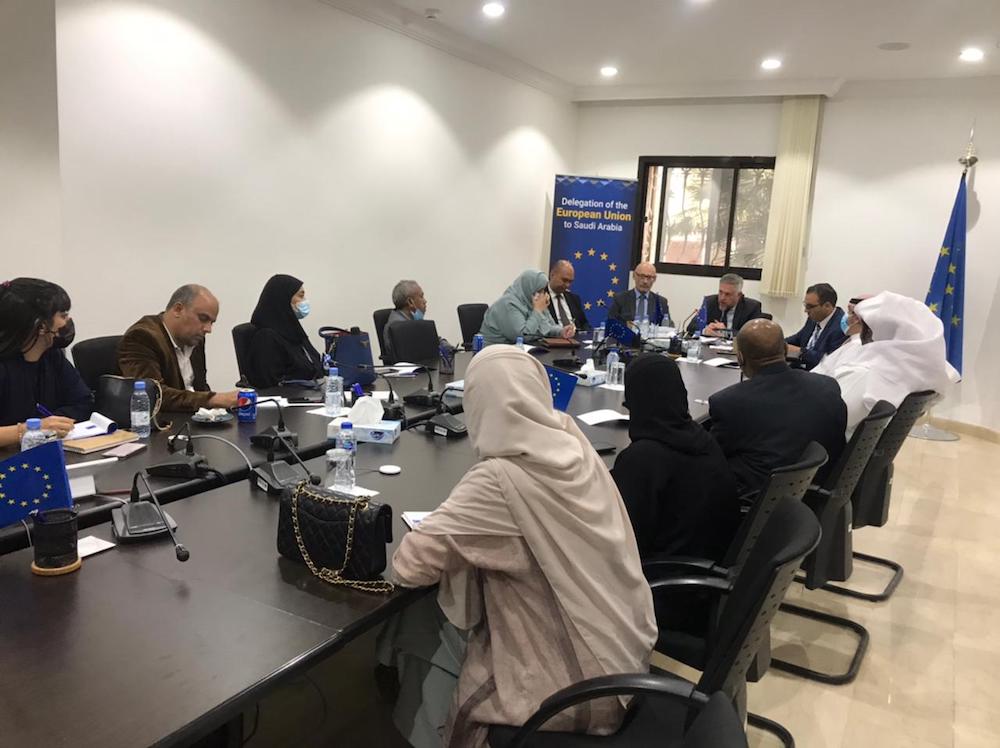
During the press conference at the EU office in Riyadh, the envoy noted that the EU has a very close relationship with Saudi Arabia and other Gulf states, stressing the need to further expand relationships in all fields and work to further enhance the partnership.

The envoy said that to enhance cooperation with the Gulf countries, a special cooperation strategy has been developed between the countries of the region that will enter into effective implementation at the beginning of January 2023, based on the recommendations of the meeting of foreign ministers of the Gulf Cooperation Council countries with their counterparts from the EU countries.

“Pillars have been laid in various sectors, most notably commercial investments, tourism and energy, achieving security and stability in the region, as well as offering solutions to climate change problems and supporting the initiatives put forward, foremost of which is the Middle East Green Initiative, which was proposed by Saudi Arabia.”

Simonnet noted that an important basis for further expanding close ties is the Saudi support for humanitarian relief, as the Kingdom represents a living and active example in this, especially in Yemen, Syria, and Afghanistan.

Commenting on the resumption of free trade negotiations between the EU and the Gulf states, he said: “There are great moves towards restarting negotiations in the near future, after studying technical issues that are being worked on, paving the way for the two parties to sit back at the negotiating table, after a ministerial meeting was recently held in Brussels on this issue.”

Without specifying a timeframe for the start of negotiations, the envoy affirmed that the two sides have a strong desire to resume free trade negotiations.

Citing the latest statistics, Simonnet said that the EU is Saudi Arabia’s one of the largest trading partners, with about €40 billion ($44 billion) trade in 2020, stressing that European companies aspire to increase their investments in all diversified economic and commercial sectors.

EU ambassador to Saudi Arabia Patrick Simonnet speaking to reporters. (Supplied/EU Office)
Main category: 

Russian gas transit via Ukraine returns to normal despite military hostilities Gasoline prices hit record as Biden announces US ban on Russian oil imports