Iraq MPs to vote for president on March 26

Author: 
AFP
ID: 
1647369630340219400
Tue, 2022-03-15 21:42

BAGHDAD: The Iraqi parliament on Tuesday scheduled a March 26 session for deputies to hold a delayed vote on the country’s president.
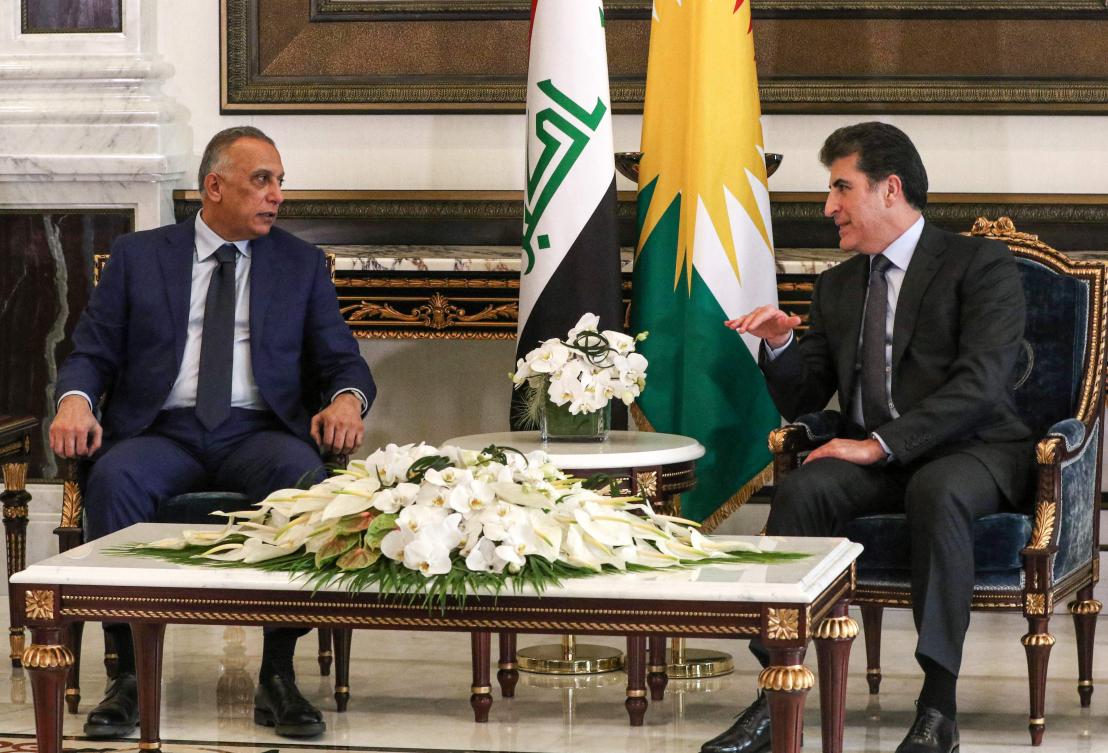
Parliament also released a final list of 40 candidates for the post, a largely ceremonial role reserved for the Kurds.
Among the frontrunners are Barham Saleh, the incumbent and member of the Patriotic Union of Kurdistan, and Rebar Ahmed of the Kurdistan Democratic Party, the PUK’s rival.
Lack of a quorum and legal issues have held up the contest, adding to war-scarred Iraq’s political uncertainty because the president has to name a prime minister backed by the largest bloc in parliament.
On February 13, the supreme court ruled out a bid by veteran politician Hoshyar Zebari backed by the KDP to run, after a complaint filed against him over years-old corruption charges.
Iraqi politics were thrown further into turmoil following the October 2021 general elections, which were marred by a record-low turnout, post-election threats and violence, and a delay of several months until final results were confirmed.
Intense negotiations among political groups have since failed to form a majority parliamentary coalition to appoint a new prime minister to succeed Mustafa Al-Kadhemi.
The largest political bloc led by firebrand Shiite cleric Moqtada Sadr, had backed Zebari for the presidency.
Tensions rose Sunday with Iranian missile strikes on Irbil, capital of an autonomous Kurdish region in northern Iraq.
Tehran said the attack targeted Israeli sites, but Kurdish authorities denied any such presence.

Main category: 

Lack of jobs, crisis drive Iraqi Kurds to migrateKurds, others converge in French camp, seeking to reach UK


Ex-PM Siniora won’t run in Lebanese elections

Tue, 2022-03-15 20:10

BEIRUT: With the candidacy deadline for the Lebanese parliamentary elections ending on Tuesday at midnight, over 875 applications had been submitted as of Tuesday afternoon.

Lebanese Interior Minister Bassam Mawlawi said that work is underway “to secure IDs and personal status extracts, and all other voter needs.

“We are working to secure electricity during the voting process and until the sorting of ballots ends.”

The elections are scheduled to be held on May 15 amid a severe economic collapse that Lebanon has been enduring for two years and the possibility of the country slipping into further deterioration in the coming months.

According to Mawlawi, 7,000 polling stations will be allocated throughout Lebanon.

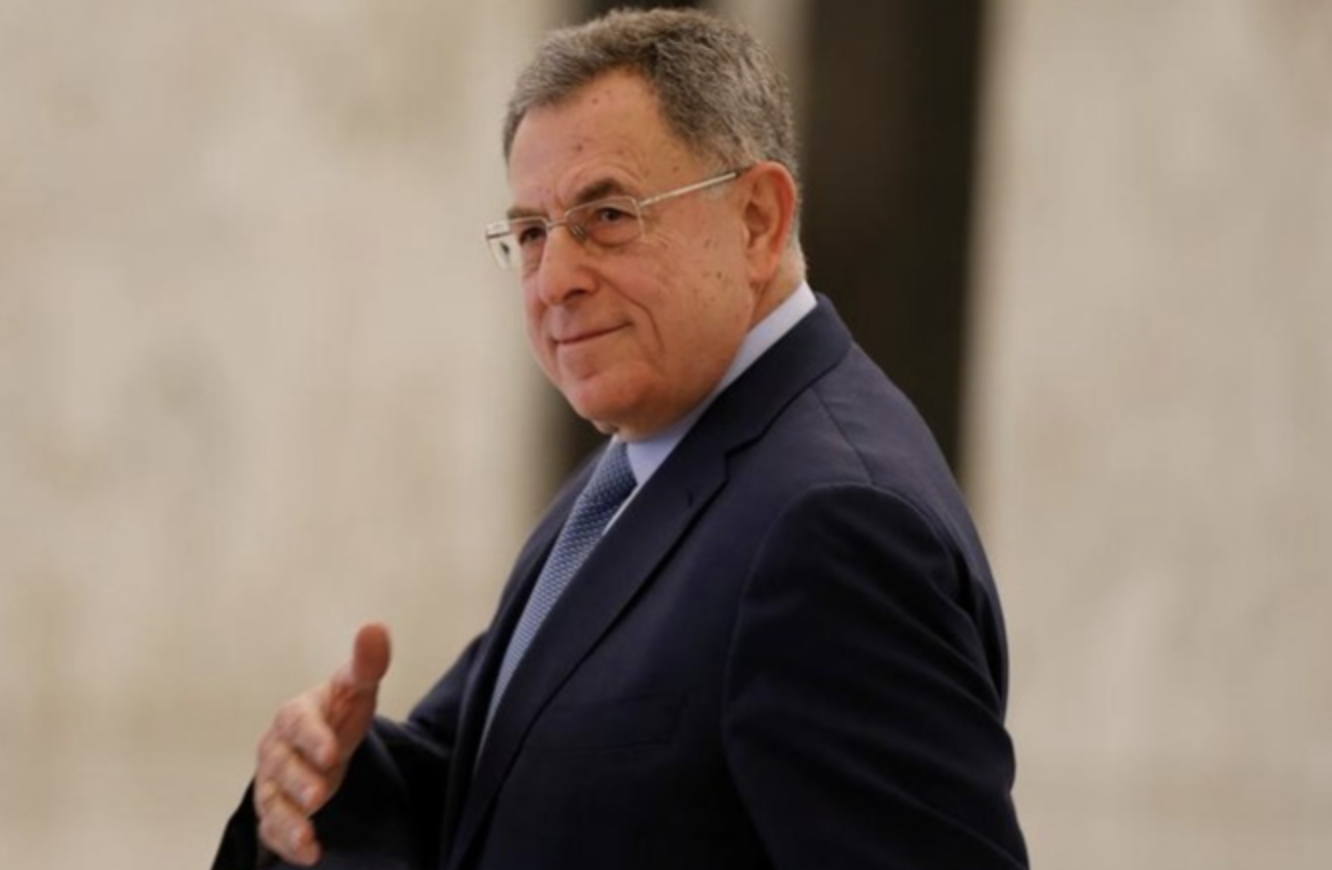
Meanwhile, Fouad Siniora has become the latest former premier to announce that he will not be running in the elections.

In January, former premier Saad Hariri announced his withdrawal from political life, expressing his conviction that “there is no room for any positive opportunity for Lebanon in light of the Iranian influence, international confusion, national division, rise of sectarian tensions, and the deterioration of the state.”

Hariri had also instructed members of the Future Movement, which he heads, to not contest the elections under the movement’s name, but he did not call on his supporters to boycott them.

Former premier Tammam Salam and the current Prime Minister Najib Mikati also announced that they will not stand along with Lebanon’s former ambassador to the UN, Nawaf Salam, who is currently a permanent member of the International Court of Justice in The Hague.

Siniora told a press conference: “My decision not to run for the elections does not mean that I will be boycotting; on the contrary, I hope my position makes room for the new generation. I will be fully invested in the elections in all their aspects, without running for office.”

He urged citizens to turn out to vote “so as not to allow opportunists to gain ground amid calls not to participate in this national duty.”

According to sources close to Siniora, he is seeking “to prevent Hezbollah from penetrating the Sunni environment, through Sunni figures close to the axis of resistance led by Hezbollah, the strategic ally of Iran.”

Siniora said: “I call on our people in Beirut, Sidon, the north, the Bekaa Valley, Mount Lebanon, and all over Lebanon to participate in these elections.

“The Lebanese people’s uprising showed us the need to renew political blood, support promising faces, and facilitate the way for experts who had not been given the chance to serve the nation.”

Dar Al-Fatwa, Lebanon’s highest Sunni religious authority, said it would not interfere with the elections, adding that it will neither support a candidate nor a list.

“Our role is limited to advising people to choose the best candidate for the state-building project and strengthening the unity of the Islamic ranks based on national foundations,” Dar Al-Fatwa said.

With Hariri’s withdrawal from political life, Siniora has been trying to fill the void in the Sunni community. However, the Future Movement is not pleased with his actions and is even accusing him of treason.

Meanwhile, Progressive Socialist Party leader Walid Jumblatt tweeted on Tuesday: “In this suffocating social and economic crisis that Lebanon is experiencing, we are paying for the Arab countries abandoning us. We are reaping the fruits of the petty and absurd statements made by senior leaders against the Gulf,” in reference to briefings from Hezbollah leaders about the Gulf states in recent months.
Main category: 

Lebanon political factions gear up for May electionsLebanon PM Mikati says he will not run in May parliamentary election


GCC offers to host peace talks between Yemeni factions, including Houthis, in Riyadh

Tue, 2022-03-15 19:05

AL-MUKALLA: The Gulf Cooperation Council is sponsoring unprecedented and comprehensive peace talks between warring factions in Yemen, including the Iran-backed Houthis, that could begin in Riyadh before the end of this month.

“The Gulf Cooperation Council will invite all Yemeni components, both supporters and oppositions, and the putschist Houthis would have some seats in the talks,” a senior government official told Arab News. The talks might start on March 27 and would continue for at least one week, they added.

Former Yemeni government ministers and outspoken politicians such as Ahmed Al-Maysari, Saleh Al-Jabwani and Abdul Aziz Al-Jubari would be invited. “Almost no one will be excluded,” the official said.

Meanwhile, a car bomb attack on Tuesday on a convoy in which a Yemeni southern military commander was traveling in Abyan province killed two soldiers and seriously injured two more, according to a Reuters report that quoted a military official.

Brig. Gen. Abdul Latif Al-Sayed survived the assassination attempt, said Mohammed Al-Naqib, spokesman for the Southern Armed Forces. Two assailants were also killed, he added.

Al-Sayed is the commander in Abyan of the Security Belt, the military forces of the separatist Southern Transitional Council. In October last year, the governor of Aden, who is a member of the STC, survived a car bomb attack in the port city that killed six people.

The announcement of the proposed GCC-sponsored peace talks came the day after Yemeni President Abed Rabbo Mansour Hadi met Nayef Falah Al-Hajraf, the council’s secretary general, in Riyadh. SABA, the official Yemeni news agency, reported that the two men discussed GCC support for moves to end the war in Yemen and the Houthi coup, based on peace talks, continuing efforts to fully implement the Riyadh Agreement and other issues.

They also reportedly discussed the GCC’s financial support for the devalued Yemeni riyal, to address deteriorating services and to alleviate the suffering of the Yemeni people.

Yemeni officials said the peace talks are contingent on the Houthis accepting the invitation. They added that the rebels might intensify their military operations across the country, and in particular outside the besieged central city of Marib, in an attempt to improve their negotiating position if they agree to participate.

“They will carry out major military operations in Marib and on other fronts to thwart any agreement (and force acceptance of) their onerous conditions that they have repeatedly floated during previous talks,” the official said.

The Houthis have rejected previous peace proposals, including the Saudi initiative, and insist that the Coalition to Restore Legitimacy in Yemen must first halt its airstrikes and lift alleged restrictions on Sanaa airport and Hodeidah seaport.

Najeeb Ghallab, undersecretary at Yemen’s Information Ministry, told Arab News that the internationally recognized government of Yemen would strongly support any Arab initiative to end the war, but warned that Houthi resistance could sabotage the proposed peace talks.

“We are most supportive of any Arab role to bring Yemenis together under the umbrella of the Gulf Cooperation Council,” he said.

However, he added that powerful factions inside the Houthi movement, which benefit from the war, and Iran, which uses the rebels as its stooge, would reject any calls for peace.

“The Houthis believe that gathering Yemenis … under one umbrella will weaken their role,” said Ghallab.

Main category: 

Coalition intercepts drones launched by Houthis toward Saudi ArabiaHouthis condemned for storing weapons in housing complex as blasts kill residents


Abu Dhabi crown prince to Japanese PM: UAE keen to maintain energy security, global markets stability

Author: 
Reuters
ID: 
1647352902008284400
Tue, 2022-03-15 13:05

DUBAI: Abu Dhabi’s Crown Prince spoke with Japan’s prime minister about the Ukraine crisis and assured him that the United Arab Emirates is keen to maintain energy security and keep global markets stable, Emirates News Agency reported on Tuesday.
Sheikh Mohamed bin Zayed Al-Nahyan also told Prime Minister Fumio Kishida that his country is keen on boosting relations with Japan in the energy field.
Earlier on Tuesday, Kishida said he had agreed with the crown prince to work together to help stabilize the international crude oil market as the Ukraine war has disrupted the market, bolstering the importance of Gulf crude exporters for energy importers like Japan.

Main category: 

Abu Dhabi wealth fund cuts jobs in effort to save $272m in costsGCC ambassadors to Japan hold coordination meeting, headed by Saudi Arabia


Lebanese parties jostle for votes; Arab League to monitor elections

Author: 
Mon, 2022-03-14 23:04

 BEIRUT: Arab League Secretary-General Ahmed Aboul Gheit has announced that his organization is ready to send a team to Lebanon to monitor the parliamentary elections scheduled for May 15.

“The Arab League has done this in Algeria, Iraq, Palestine, and many regions, and I think we will implement this in Lebanon,” he said.

Aboul Gheit visited Lebanon on Monday as part of the arrangements for holding the Arab summit in Algeria on Nov. 1 and 2.

Lebanese President Michel Aoun met with Aboul Gheit and assured him that the elections will take place on time. According to Aoun’s media office, he welcomed the idea of an Arab League team monitoring the elections.

With the candidacy deadline ending Tuesday midnight, the electoral competition has intensified between the large blocs who have started to announce their candidates. The number of newly registered candidates jumped to nearly 600 by Monday noon.

Sectarian polarization has started to trickle into electoral campaigns. Some parties, especially Hezbollah and its allies, have attacked foreign parties and their role in these pivotal elections.

Parties will be desperate for votes as the new parliament will elect the next Lebanese president in October.

FASTFACT

Lebanese President Michel Aoun met with Aboul Gheit and assured him that the elections will take place on time. According to Aoun’s media office, he welcomed the idea of an Arab League team monitoring the elections.

As the political jostling heated up, former Prime Minister Fouad Siniora expressed a glum view about the future of the country.

In his statement on the 17th anniversary of the Cedar Revolution on March 14, he said: “I fear for Lebanon as it experiences some of its most difficult and bitter days. Lebanon’s state has become dependent, its institutions have collapsed, its economy deteriorated and the Lebanese are waiting for crumbs of aid in the darkness and the cold.

“Meanwhile, the political tutelage of Iran and its armed party has intensified in Lebanon, in light of constant opposition to political, administrative and financial reform.”

Siniora stressed the need to reconfigure and strengthen internal unity to save Lebanon from those who have hijacked it.

Meanwhile, Parliament Speaker Nabih Berri held a press conference in which he announced the names of the candidates of the Amal Movement and the Development and Liberation parliamentary bloc, days after his ally Hezbollah announced the names of its candidates.

“The elections are receiving unprecedented international and regional attention,” Berri pointed out.

“This attention, or rather this interference, has not receded. Some are expressing interest in good faith but others, and there are many, want to invest in the election results to create sectarian strife. These foreign parties are funding some Lebanese parties to achieve strategic political goals to change Lebanon’s identity,” Berri explained.

Samir Geagea, the head of the Lebanese Forces party, launched its electoral campaign, describing the upcoming vote as “an existential battle and not just a political one.”

Geagea added: “The Lebanese have three options in the upcoming elections: Those who want a state but cannot build it, those who do not want a state and are able to continue to obstruct its construction, and those who want a state and can indeed build it.”

Main category: 

Lebanon PM Mikati says he will not run in May parliamentary electionLebanon political factions gear up for May elections