Iraqi Kurdish oil tycoon’s home in ruins after Iran strike

Author: 
Sun, 2022-03-20 00:36

IRBIL: Once a lavish mansion, the sprawling home of an Iraqi Kurdish oil tycoon was laid to waste in a barrage of missiles that struck near a US Consulate complex in the northern Iraqi city of Irbil earlier this week.
Iran’s powerful Revolutionary Guard said it launched the attack last Sunday, firing off 12 cruise missiles at what it described as a “strategic center” of the Israeli spy agency Mossad — in retaliation for an Israeli strike in Syria that killed two of the Iranian paramilitary force’s members the previous week.
Baz Karim Barzinji, CEO of the Iraqi Kurdish oil company KAR group, denies any links to Mossad.
The missiles gutted his beautiful home but he says he is grateful his family was unharmed.
The consulate was undamaged and no injuries were reported in the attack.
The US said it did not believe it was the target.
But the barrage marked a significant escalation between the US and Iran. Hostility between the foes has often played out in Iraq, whose government is allied with both countries.
Barzinji pointed to a large crater where once his home office stood as he took The Associated Press on a tour of the ruins on Friday. The tycoon, his wife and two teenage children were visiting a nearby farm when the attack took place, he said.

BACKGROUND

Tycoon Baz Karim Barzinji, his wife and two teenage children were visiting a nearby farm when the attack took place.

Once plush sitting rooms, where government officials rubbed shoulders with diplomats and other figures of influence, are now strewn with glass, pieces of concrete and piles of debris. The windows and the roof are gone, remnants of the mansion walls barely stand, and floors are covered with rubble.
“This is my family house, all the photos and our belongings” were here, he said. “It was horrifying.”

His daughter, Ban Karim, recounts how she huddled in the garden with the family dogs as the thundering missiles whizzed overhead. “We do not know if they can see us, we do not know if they are drones, we do not know anything about ballistics, what is going to happen right now,” she said, speaking in English.
Observers speculate the timing of the attack was significant as the world’s focus is on Russia’s war in Ukraine.
Iraq’s northern semi-autonomous Kurdish region maintains discreet links to Israel through the selling of its oil. Barzinji’s KAR group built and operates the export pipeline to Ceyhan in Turkey through a joint venture with Russia’s Rosneft.
“It is clearly nonsense, what the Iranians are talking about. This can be anything but an Israeli base,” Hiwa Osman, an Iraqi Kurdish political analyst, said of Barzanji’s villa.
An Iraqi intelligence official, speaking on condition of anonymity to discuss the attack, also rejected claims the house was an Israeli spy center, adding it was a place where diplomats often held social gatherings.
The attack was Iran’s first assault on Iraqi soil since the January 2020 missile strike on Ain Al-Assad air base housing US forces, which was in retaliation for the US drone strikes that killed a Iranian warlord, Qassem Soleimani, outside the Baghdad airport.
“This is a message (by Iran) to their base, their people. They needed to boost their morale because they have been humiliated for a long time,” said Hamdi Malik, an associate fellow with the Washington Institute who specializes in Shiite militias.
Malik believes Sunday’s attack was carefully plotted to minimize casualties and cause no direct harm to US interests — but also sent a message to the Americans amid stalled nuclear talks between Iran and world powers in Vienna: next time could be bigger, and more dangerous,
The attack also served to remind Baghdad, where talks on forming a government are languishing and where Moqtada Sadr, the winner of Iraq’s 2021 parliamentary election, is threatened to exclude Iran-backed parties by forming an alliance with the Kurds and Sunnis.
Iran’s “message to Iraqi partners is that no matter who wins the election …. Iraq is our backyard and we can do what we want, whenever we want,” Malik said.
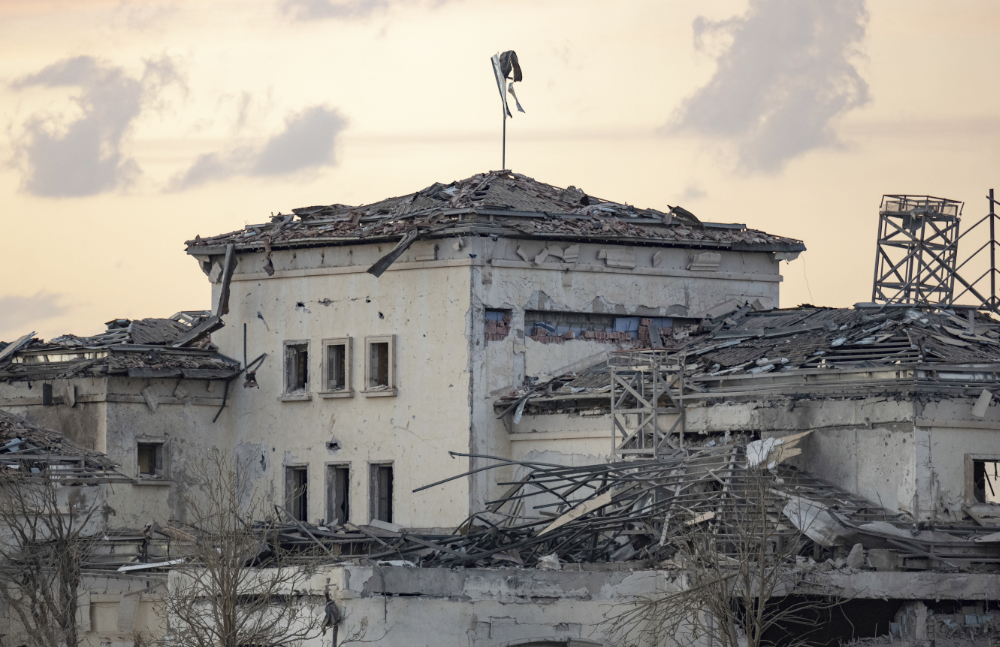
A house damaged by an Iranian ballistic missile attack is seen in Irbil, Iraq, Sunday, March 13, 2022. (AP)
Main category: 

Rockets fell in Iraq’s Balad air base leaving no damageSurprise ruling threatens wedge between Iraq and Kurdish govts


Ukrainian women immigrants in Israel pose moral dilemma, security challenge

Sat, 2022-03-19 21:58

RAMALLAH: Concerns have increased in Israel since the outbreak of war in Ukraine over claims in the media that some women refugees from the Eastern European country were being exploited by human trafficking networks.

Leaflets — including preventive information and emergency phone numbers — are expected to be distributed among Ukrainian refugee women upon arrival at the airport as part of measures to counter the threat.

A moral dilemma has arisen — as Israel has begun to receive hundreds of Ukrainians fleeing war — amid fears that some of the arriving women were being lured into prostitution, according to Israeli media reports.

The reports detailed how Israeli human trafficking and criminal networks lure Ukrainian refugees into prostitution upon their arrival to Israel, with the concern being used as an excuse for Israeli immigration officials to deny entry to dozens of refugees during the past two weeks.

According to a TV report aired on Thursday on Israeli Channel 12, the Israeli Ministry of Social Welfare and the Anti-Trafficking Unit in the Ministry of Justice received information on attempts to lure Ukrainian female refugees in Israel into prostitution.

The attempts to lure refugee women did not begin only after arriving in Israel.

The report indicated that about 100 Ukrainian refugees spoke during their interrogation at Ben Gurion Airport about a person who offered them money to help them escape from the war zones in Ukraine, cross the border and board a plane bound for Israel.

The refugee women added that after they arrived in Israel, the same person told them that they had to provide “sexual or domestic services” to pay back the money.

The Israeli Population and Immigration Authority has received information and details on the person in question, and the suspicion is that a network — rather than a single person — was trying to lure refugee women into prostitution.

FASTFACT

247 Ukrainians were refused entry out of the nearly 10,000 refugees who have tried to enter Israel since the outbreak of the war three weeks ago.

The testimonies of refugee women will be communicated to the police to open an investigation.

During deliberations in the Knesset on March 14, Population and Immigration Authority Director-General Tomir Moskowitz justified his refusal to allow some Ukrainian refugees to enter Israel, claiming that “they have come to work (in) prostitution.”

Moskowitz said: “Just as they came before the war, they come now too. Some of them are victims of (human trafficking) … and some are interested in bringing them or inviting them here.”

According to data reviewed by Moskowitz, 247 Ukrainian refugees were refused entry out of the nearly 10,000 refugees who have tried to enter Israel since the outbreak of the war in Ukraine three weeks ago.

Luring Ukrainian and Russian immigrant women into prostitution is not a new issue in Israel.

Dozens of those who immigrated to Israel in the early 1990s following the collapse of the former Soviet Union were reportedly recruited to work in prostitution for years.

Meanwhile, an Israeli source related to the institutes receiving Ukrainian immigrant women confirmed to Arab News that human trafficking was indeed occurring, adding that this was the case not only in Israel but in Europe as well.

“I heard that someone came to those Ukrainian women and gave them a telephone number. Yes, it happened,” said the source, who requested anonymity.

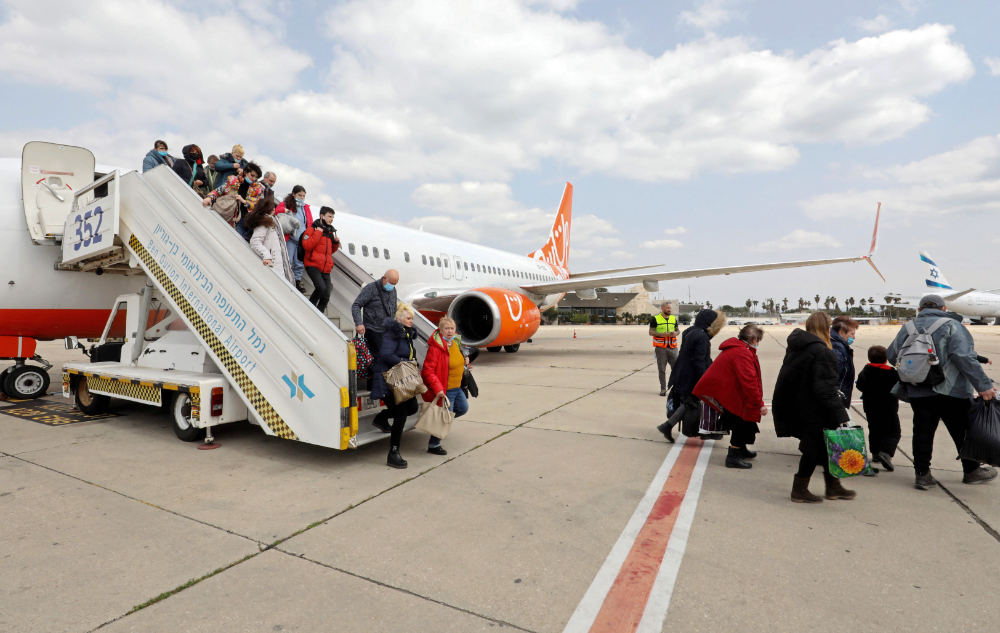
Ukrainian Jewish refugees, who fled the war in their country, disembark from a plane upon their arrival at Israel's Ben Gurion Airport in Lod, on March 17, 2022. (AFP)
Main category: 

Israeli forces kill two Palestinians in West Bank violencePalestinians decry EU suspension of aid on Israel’s behest


Lebanese Cabinet urges judiciary not to fall for populism as banks plan strike

Sat, 2022-03-19 21:49

BEIRUT: A Cabinet meeting was convened on Saturday to address judicial actions against seven banks in Lebanon.

The meeting conducted a review of the conflict between banks and the judiciary. The extraordinary session was held under the title “The higher interest of the state.”

The Cabinet concluded with Mikati affirming that the council of ministers had agreed that the law would take its course based on the principle of cooperation between the authorities without any discrimination or discretion.

It also agreed that judicial matters would be resolved according to laws by the staff of the judicial authority.

A ministerial source who took part in the session told Arab News that the ministers saw that it was not allowed for judges to use depositors’ money to achieve a certain populism.

The judge should not be a populist and tweet on Twitter, some ministers reportedly felt.

BACKGROUND

The banking association said the strike was a warning against what it called ‘the arbitrariness of some judicial decisions’ – a reference to orders that have frozen the assets of seven banks since March 14 and banned six of their executives from travel.

“The banks are indeed mistaken and there is indeed a major crisis, but it should be addressed in a balanced and non-random manner,” they suggested.

In response to what it described as a “judicial attack on banks,” the Association of Banks has called for the issuance of the capital control law as soon as possible.

In addition to the strike, the association warned that it might “take other steps that may be necessary to preserve the national economy and the supreme Lebanese interest.”

The decision on a set of lawsuits filed by activist groups against some major banks in Lebanon to recover depositors’ money coincided with investigations on charges against the central bank governor on suspicion of illegal enrichment and money laundering.

The judicial procedures resulted in the execution of the seizure of Fransabank’s assets, shares, and real estate and of the Creditbank and the branches of Blom Bank in Tripoli.

The Association of Depositors indicated its intention “to file more executive lawsuits against banks in the coming days.”

In a related development, the brother of Central Bak Gov. Raja Salameh, was arrested by the appeal public prosecutor in Mount Lebanon, Ghada Aoun, after he appeared before her as a witness.

Salameh’s attorney, Marwan Issa El-Khoury, said the allegations of “illicit enrichment and money laundering” were unfounded and the case was “media speculation without any evidence.”

The governor of the central bank had refrained from coming to Judge Aoun’s office more than a week ago as a witness, as he had filed a lawsuit to respond to Judge Aoun about the case in which he was investigated.

Aoun has also issued a travel ban against Salameh.

She said that the possibility of the political authority putting pressure on the judiciary was an “unacceptable attack on judges who perform their professional duty, if some people did not like this or that prosecution.”

Judge Aoun, who is affiliated with the president, in a tweet called on Lebanon’s judges to arm themselves with “the truth and the legal text. The hope is in you to save the country from injustice, bullying the weak and diverting influence.”

One of the ways out of the current crisis is to refer the confrontation between depositors and banks to the Court of Appeal.

The court may decide on Monday to implement the decision to break the seizure of safes and maintain the seizure of the value of the claimant’s deposit.

Also on Saturday, the leader of the Lebanese Forces party, Samir Geagea, said that “some bank owners and their administrators bear part of the responsibility for what happened to depositors’ deposits, and therefore they should be prosecuted legally.”

But he added: “What is happening now with regard to the issue of banks is a kind of farce and misleading public opinion.”

Geagea expressed his fear that “these authoritarian measures that use part of the judiciary as a tool for them, and are covered by law, will destroy the banking sector instead of reforming it.”

Geagea said that “the president, the current government, and the parliamentary majority are responsible for the harm that befalls Lebanese citizens as a result of all their personal maliciousness, continuous blackmail attempts or attempts to change some officials to appoint the most evil crooks in their place.”

Lebanese protesters gather in front of a bank in the southern city of Sidon to protest against restrictions on dollar withdrawals and transfers abroad. (File/AFP)
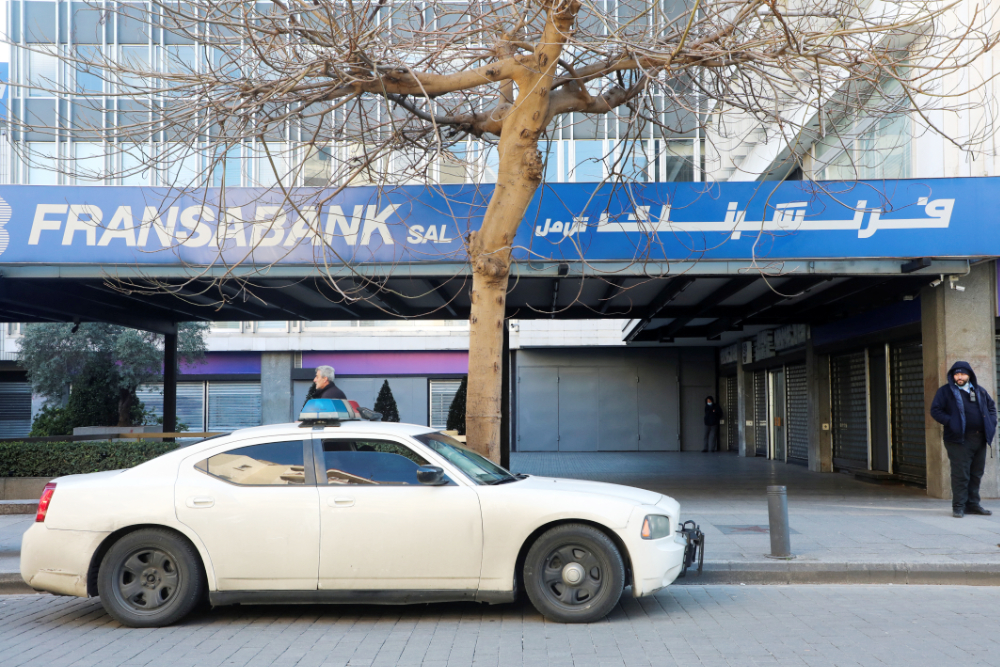
A police car is parked in front of a branch of Fransabank in Beirut, Lebanon March 16, 2022. (REUTERS)
Main category: 

Lawyer for brother of Lebanon central bank gov says evidence against him is ‘media speculation’ – statementLebanon PM Najib Mikati says some judges stoking tension within country


Yemenis embrace GCC call for peace talks in Riyadh

Sat, 2022-03-19 20:10

AL-MUKALLA: Yemen’s internationally recognized government, political parties and journalists have expressed support for invitations sent by the Gulf Cooperation Council to warring factions in Yemen for comprehensive talks in Riyadh to agree to a peace deal to end the conflict.

Yemenis have demanded that the Iran-backed terrorist Houthi militia and the Yemeni government comply with GCC-brokered peace efforts to find a solution to the war.

Nayef Al-Hajraf, the GCC’s secretary-general, said on Thursday that the Gulf bloc would host consultations between Yemeni parties at the end of this month in Riyadh to find a settlement.

The office of Yemeni President Abed Rabbo Mansour Hadi welcomed the GCC’s “sincere” offer to host the talks, adding that it would back all peace plans that are based on three references: the GCC’s peace initiative in 2011, the outcomes of the National Dialogue Conference and UN Security Council Resolution 2216.

“The presidency also called on all Yemeni components to effectively and positively participate in the upcoming consultations, and to combine all efforts to get Yemen out of its crisis, end the suffering of its people and start building the future of its generations,” Hadi’s office said in a statement carried by the official news agency SABA.

The pro-independence Southern Transitional Council also on Saturday backed the GCC’s call for talks, calling for the implementation of the Riyadh Agreement, reforming state’s bodies, addressing the crumbling economy and rescuing the falling currency.

The STC said it praised “the efforts and activities of the GCC to achieve peace, security and stability in the south and Yemen.”

Yemeni politicians and journalists, meanwhile, have urged the country’s warring parties to seriously take part in the conference in Riyadh to help address the world’s worst humanitarian crisis.

Abdul Kareem Al-Medi, a Yemeni journalist, said the GCC invitation has revived hopes to end the war and the humanitarian crisis caused by the Houthi military takeover of power in late 2014.

“We pray that the consultations succeed in coming up with a comprehensive vision between the various parties that responded to the invitation,” Al-Medi said on Twitter.

Omar Al-Murshed, a Yemeni media consultant, described the planned talks as “the last chance” for reaching a peace deal to end the suffering of Yemenis.

Riyadh Al-Dubai, a Yemeni human rights activist, called upon the Yemenis to “sincerely and effectively” take part in the conference, put aside their differences and personal interests and to work on ending the suffering of 30 million Yemenis who have been impacted by the war.

“Accepting this initiative and having sincere intentions before participating in it may be the lifeline that may pull Yemen out of the clutches of the war that has impacted all Yemenis,” he said on Twitter.

Nayef Falah Al-Hajraf, Secretary-General of the GCC, speaks during a press conference in Riyadh on March 17, 2022. (AFP)
Main category: 

War, neglect and ignorance endanger Yemen’s historical sitesYemen war turns nature reserve back into waste dump


Fears grow over possible removal of Iran’s Revolutionary Guard from US terror list

Author: 
Arab News
ID: 
1647637919009786100
Sat, 2022-03-19 00:11

JEDDAH: Concerns grew on Friday that the US planned to remove the Islamic Revolutionary Guard Corps from its blacklist of terrorist organizations as part of a revived nuclear deal with Iran.
The IRGC has been subject to US sanctions since 2007 as part of the US Specially Designated Global Terrorist list, and in 2017 it became the first national military to be designated by the US as a Foreign Terrorist Organization.
“The IRGC is the Iranian government’s primary means of directing and implementing its global terrorist campaign,” President Donald Trump said at the time.
The Revolutionary Guards control a business empire in Iran, as well as military and intelligence forces responsible for terrorist attacks throughout the world.
Analysts now believe the US plans to remove the terrorist designation in return for Iranian assurances about reining in the IRGC. It is thought to be the last and most troublesome issue in wider indirect talks on reviving the 2015 nuclear deal.
Such a move would be fiercely opposed by the Gulf states, and Israel made its concern known in a joint statement on Friday by Prime Minister Naftali Bennett and Foreign Minister Yair Lapid. “The attempt to delist the IRGC as a terrorist organization is an insult to their victims and would ignore documented reality supported by unequivocal evidence,” they said.
“We find it hard to believe that the IRGC’s designation as a terrorist organization will be removed in exchange for a promise not to harm Americans. The US will not abandon its closest allies in exchange for empty promises from terrorists.”

Main category: 

Ballistic missiles hit Irbil, Iran’s Revolutionary Guard claim responsibility