A US-backed initiative tackles the Middle East’s food-security challenge

Tue, 2022-04-05 20:12

DUBAI: Millions of people in the Middle East and North Africa were suffering from severe effects of hunger and malnutrition long before the COVID-19 pandemic disrupted supply chains and put a squeeze on public spending. Now the war in Ukraine threatens to exacerbate the problem and global food prices are expected to keep rising.

This is happening against the backdrop of an ever-worsening climate emergency, as rising temperatures around the world compound problems such as water shortages, soil degradation, forest fires and rural displacement. This is placing additional strain on agriculture and the food security of some of the world’s most vulnerable people.

In an effort to get ahead of this escalating food crisis, and in recognition of the fact it is intrinsically connected to the climate emergency, an ambitious new initiative led by the UAE and the US aims to double investment in climate-smart agriculture over a period of five years — from the $4 billion announced by US President Joe Biden at the COP26 climate summit in Glasgow, Scotland, in November to $8 billion by the time COP27 takes place in Sharm El-Sheikh, Egypt, this year.

The initiative — the Agriculture Innovation Mission for Climate, or AIM for Climate — brings together more than 140 global partners from the public, private and non-profit sectors with a view to doubling investment in science-based and data-driven decision and policy making relating to two of the most pressing issues facing the MENA region: food security and climate change.
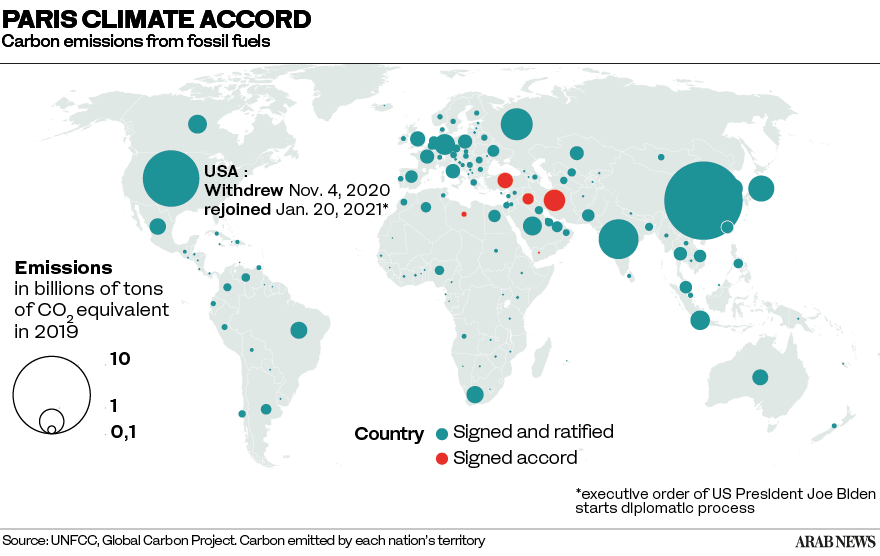
Speaking in late February after the inaugural ministerial meeting of AIM for Climate at Expo 2020 Dubai, Mariam Almheiri, the UAE’s minister for climate change and environment, said that although food systems are responsible for as much as a third of greenhouse gas emissions, they can also help to solve the problem.

“Food systems can be a challenge but also a solution to reducing greenhouse gas emissions,” she said. “Over two billion people are directly connected to the food-system sector, so we need to make food systems more efficient, decarbonize and ensure the livelihoods of the people dependent on the sector.”

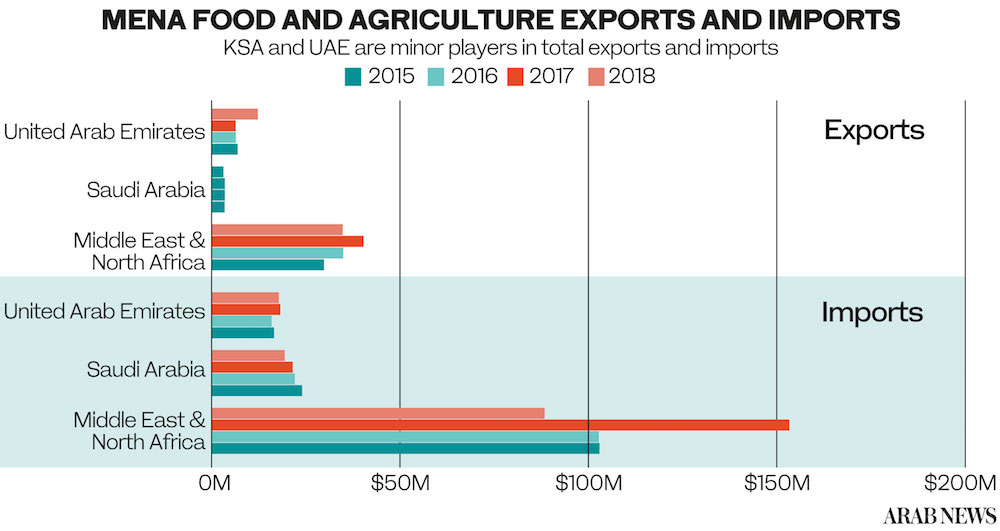
Noting the dependence of the UAE on imported food — about 90 percent of the country’s food needs are met by other countries — Almheiri said partnerships such as AIM for Climate are critical to help arid countries such as those in the MENA region to learn from the experiences of others. Furthermore, the adaptation of food systems will play a central role in the global drive toward sustainable development.

“The transformation to sustainable food systems is an urgent task and we don’t have a lot of time,” Almheiri said. “The UAE seeks to become a leading exporter of sustainable agricultural solutions for hot and arid climates.”
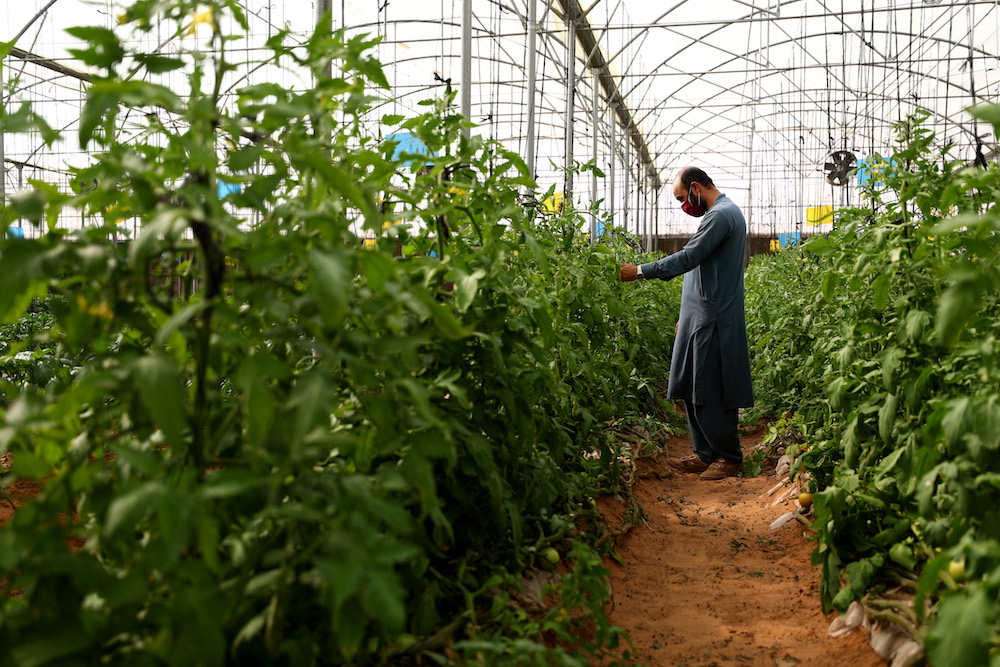

Emirates Bio Farm is making sure people still have access to healthy produce during the coronavirus crisis and supplies the UAE’s largest supermarket chains and retailers daily with fresh organic produce. (AFP/File Photo)

Part of this transformation will involve the adoption of emerging technologies, which are already enabling the UAE to produce food that would be impossible under normal climatic conditions, such as salmon, quinoa and berries, all of which can now be sustainably farmed in the UAE.

“We are keen to share our experience with our partners and work with other countries to address critical challenges of our food systems,” Almheiri told guests at the Expo 2020 Dubai meeting. “We see ourselves as an open lab to innovate, discover and put forward solutions.”

Although it is exciting to hear about such commitments and learn about the applications of new technologies, Almheiri said, food security and climate pressures cannot be addressed without concrete global targets.

“To move it to the next level, we’ve put tangible outcomes we want to achieve by COP27, which will move to the UAE as we are hosting COP28. We have to look at the deliverables,” she added.

Thomas J. Vilsack, the US agriculture secretary, also spoke at the Expo 2020 Dubai event and lauded the efforts of the UAE to rally nations to a common cause.
“There is an innovative spirit in Dubai that all of us around the world should emulate: A belief in a better and brighter future,” he said.

Securing funding is now critical for the project to succeed, Vilsack said, as he called on governments, the private sector and non-profit organizations to pool their resources to support small farms in developing countries, commit to reducing methane emissions, and promote emerging industries such as nano-technology, artificial intelligence, robotics, sensors and drones.

THENUMBER

* 69 million – People in the Near East and North Africa without access to adequate food in 2020, according to FAO.

“AIM for Climate government partners today demonstrated their strong commitment to work together to close the investment gap in climate-smart agriculture and food systems innovation, (which is) needed to address the twin challenges of global hunger and the climate crisis,” said Vilsack.

“We are proud of the wide range of AIM for Climate partners working to deliver impactful solutions for all people. AIM for Climate seeks to expand its network even further with new participants from across the globe.”
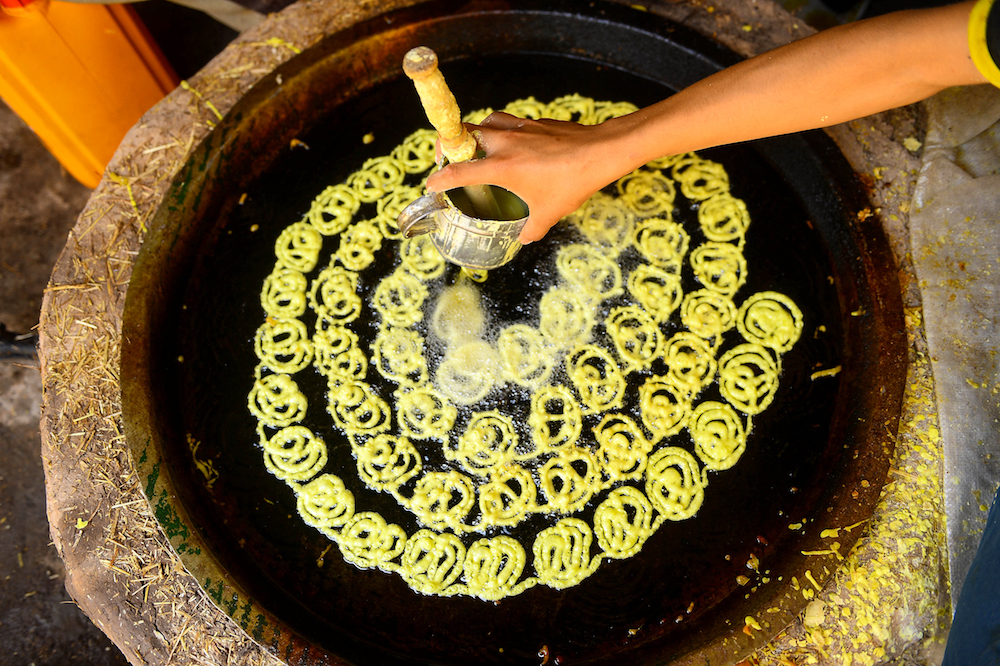

Food-security concerns have heightened since Russia launched its invasion of Ukraine on Feb. 24, several MENA nations rely on them for food staples. (AFP)

Food-security concerns have heightened since Russia launched its invasion of Ukraine on Feb. 24. Both of these countries are major suppliers of wheat and vegetable oils to global markets and several MENA nations rely on them for food staples, including bread.

Financial sanctions imposed on Russia and disruption to shipping have caused prices to rise and are stoking fears of looming shortages. In Yemen and Afghanistan, where hunger is already a fact of life for many, the prospect is terrifying.

The 2021 Near East and North Africa Regional Overview of Food Security and Nutrition report, published by the UN’s Food and Agriculture Organization in December, revealed that 69 million people in the region did not have access to adequate supplies of food in 2020, and 50.2 million people — 11 percent of the population — were undernourished.

“This is an astonishing figure for our region,” Ahmad Mukhtar, a senior economist at the FAO’s Regional Office for Near East and North Africa in Cairo, told Arab News.

“There are factors that we know, such as climate change, inequalities and protracted conflicts in our region, but one aspect that should be highlighted is that our region is particularly heavily dependent on imported food.”
About two-thirds of food in the MENA region is imported, which leaves it extremely vulnerable to supply-chain shocks, as the COVID-19 pandemic made painfully clear. Progress toward the UN’s Sustainable Development Goal of achieving “zero hunger” by 2030 was badly affected by the health crisis, with many of the achievements of the past decade pushed into reverse, according to a FAO report published in November.

At least 132 million people in the MENA region were plunged into chronic hunger during the pandemic, with up to 14 percent of food production lost along the supply chain before it even reached consumers.

Areas in which progress has stalled, or gone into reverse, include agricultural systems and small-scale food production, which have borne the brunt of the economic toll of the COVID-19 crisis.

The region is also poorly equipped to manage strategic food reserves. Mukhtar said structured plans are needed for the management and distribution of food and to prevent waste. Much of this will depend on the deployment of new technologies and innovations.

“This is an area that needs focus,” Mukhtar added. “There are certain structural issues, such as inequalities, conflicts and climate change, which are all external factors that are beyond the agri-food policy domain, so we have to look at what is in our hands.”

A joint US-Arab initiative will tackle food challenges in the MENA region through investment in sustainable agri-tech. (AFP/File Photos)
Main category: 

How Ukraine war is making the Arab region’s food security crisis worseGlobal food security faces serious threats, warns Syngenta


Pope Francis to visit crisis-hit Lebanon in June

Author: 
Reuters
ID: 
1649171014081834500
Tue, 2022-04-05 14:40

BEIRUT: Pope Francis is set to visit Lebanon in June, the country’s presidency said on Tuesday, in a long-awaited trip that comes amid spiralling financial and political crises.
Lebanon, home to one of the largest Christian communities in the Middle East, has been gripped by an unprecedented economic downturn since 2019, with more than 80 percent of the population now living in poverty.
The pontiff, who has received Lebanon’s president and prime minister in the Vatican in recent months, had previously promised to visit the country and repeatedly expressed concern over its worsening crises.
“Apostolic Envoy Joseph Spiteri informed President Michel Aoun that Pope Francis will visit Lebanon next June,” a presidency statement said.
“The Lebanese people have been waiting for this visit for some time to express gratitude to his holiness for his support,” the statement said, adding the exact date and agenda for the visit would be set later.
Lebanese took to social media to celebrate the announcement.
“A welcome to the pope of peace in the holy land,” said one user.
Lebanon, a multi-confessional country of some six million people, is home to a Muslim majority but Christians account for around a third of the population.
Pope Francis’ planned visit, coming after Lebanese parliamentary elections scheduled for May 15, would be the third by an incumbent pope to the country since the end of its 1975-1990 civil war.
The last trip in 2012 saw Pope Benedict XVI visit to appeal for peace, months after the start of the civil war in neighboring Syria.
Pope John Paul II visited in 1997, drawing one of the largest crowds Lebanon had ever seen.
“Lebanon is more than a country — it is a message,” he said at the time.
One social media user drew a parallel between the 1997 visit and the one expected in two months.
“Just as Pope John Paul II was a hope for Lebanon, Pope Francis too will definitely be a new hope,” he wrote on Twitter.
“During elections, out with the old and in with the new,” he said, referring to traditional party leaders who have been at the helm of Lebanese politics since the end of the civil war.
Pope Francis met last month with Lebanon’s president, who is a Christian as dictated by the country’s constitution which also divides seats in government and parliament along sectarian quotas.
In November, he received Lebanon’s Muslim Prime Minister Najib Mikati in the Vatican.
“May God take Lebanon by the hand and tell it: ‘Get up!’” the Vatican quoted Francis as saying during the meeting.
During a visit to Cyprus in December, Pope Francis met with the head of Lebanon’s Maronite Church and expressed concern over the country’s crises.
He also received the heads of Lebanon’s top churches in July.
In August, he called on the international community to offer support to Lebanon, one year after an explosion in Beirut port killed more than 200 people and destroyed swathes of the capital.
Since 2019, the Lebanese currency, the pound, has lost more than 90 percent of its value against the US dollar on the black market.
The bankrupt Lebanese state has struggled to afford basic imports of fuel, food and medicine.
With no exit in sight from the country’s crisis, Lebanon’s population has fled the country en masse in a detrimental brain drain.

Main category: 

Lebanese president extends invitation to Pope FrancisPope Francis calls for end to ‘armed aggression’ as Ukrainian refugees rise to 2.5 million


Arab delegation visits Moscow, Warsaw to discuss Ukraine conflict

Tue, 2022-04-05 17:00

CAIRO: The Russia-Ukraine conflict has had many negative effects on Arab countries, especially in terms of grain imports, said Arab League Secretary-General Ahmed Aboul Gheit.

At a press conference with the Russian and Egyptian foreign ministers in Moscow, Aboul Gheit added that many Arab countries import wheat, cereals and grains in very large quantities from Russia.

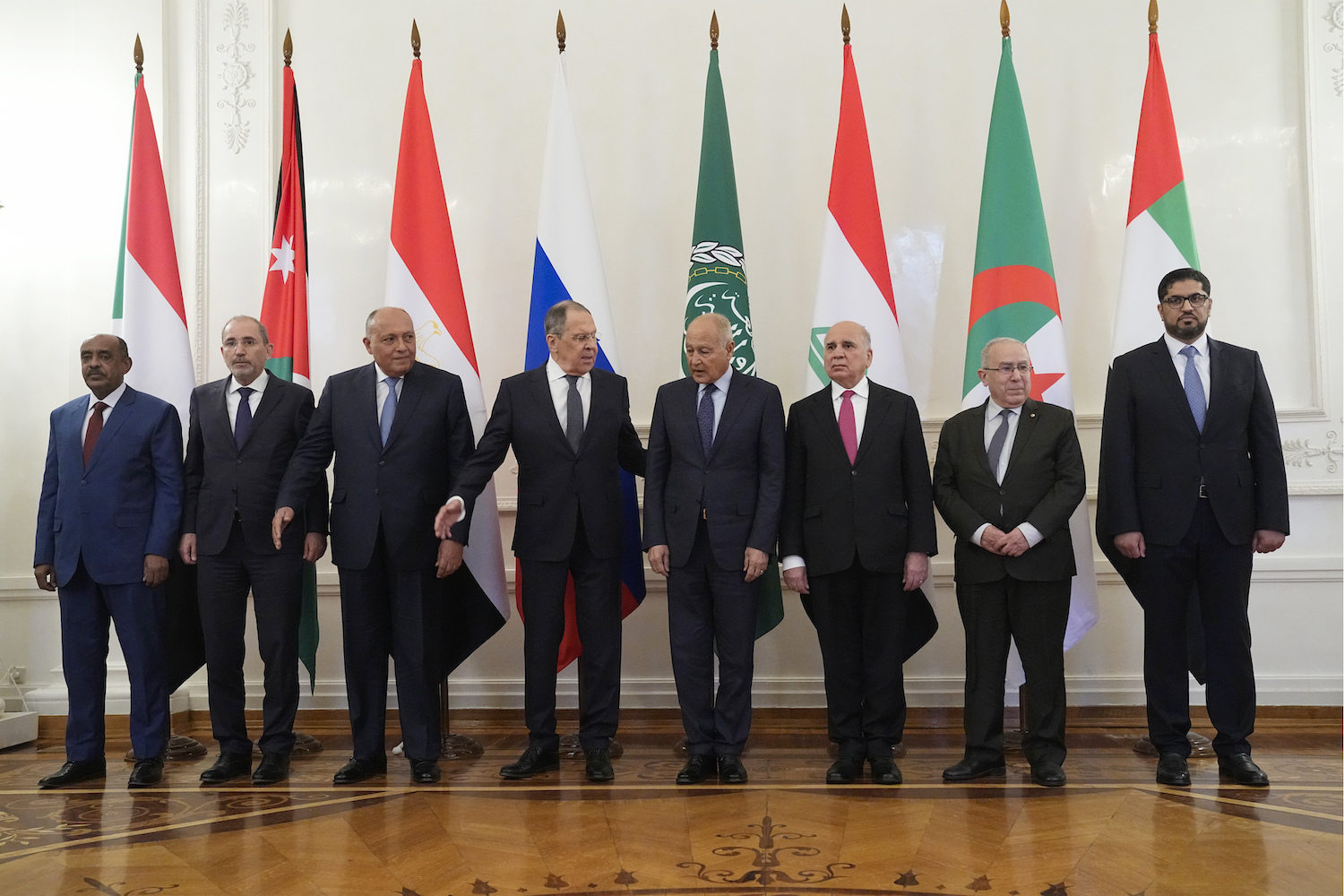
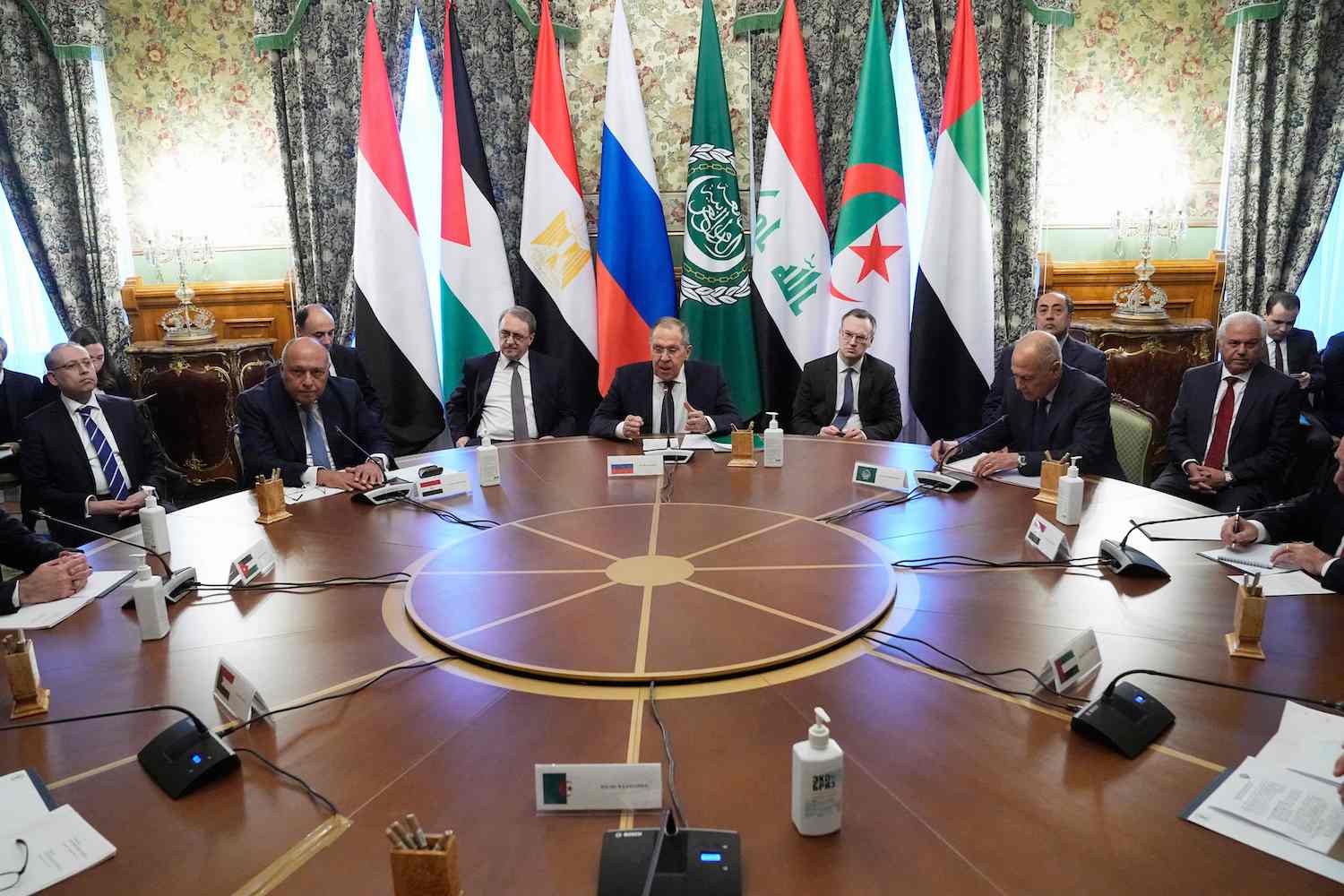
An Arab delegation comprising Aboul Gheit and the foreign ministers of Egypt, Jordan, Iraq, Algeria and Sudan held talks in Moscow with Russian Foreign Minister Sergey Lavrov before heading to Warsaw for talks with Ukrainian Foreign Minister Dmytro Kuleba.

The conflict has caused a steep rise in fuel and oil prices that has hindered development efforts and economic planning in many Arab countries, Aboul Gheit said.

“Prices are rising in many parts in the Arab region, in a way that affects the welfare of the Arab citizen, and the matter leads to more negative effects,” he added.

“We do not look at the matter only from the perspective of the Arabs … There is a sense of the need to defend peace and stability in the world and restore international conditions to their normal form.”

Aboul Gheit said the Arab position “is summed up in supporting all efforts aimed at resolving the (Russia-Ukraine) crisis through dialogue and diplomacy, in a manner that preserves the security and safety of peoples in this important region of the world.”

He stressed “respect for the principles of international law and the Charter of the United Nations.”

Egypt’s Foreign Minister Sameh Shoukry said in Moscow the delegation “expressed concern about the extension of the current crisis, and called on all parties involved in the conflict to stop escalation and not resort to military action … We also stressed the immediate resort to peaceful solutions and diplomacy-based dialogue.”

The delegation “affirmed its readiness to carry out mediation efforts and support the direct negotiation path between the two sides,” he added.

“We also stressed the importance of coordination to maintain the security and safety of the Arab communities currently in the conflict zone, and to facilitate the transit of those wishing to flee to neighboring countries.

“The two sides also discussed ways to overcome the economic consequences of this crisis and ensure that it does not affect the peoples of the region and beyond.”

Main category: 

Arab League delegation to discuss Ukraine in MoscowUN must not forget or ignore MENA conflicts and crises, says Aboul Gheit


Iran stabbing attack leaves 1 dead, 2 injured at holy shrine

Tue, 2022-04-05 16:50

TEHRAN: An assailant stabbed three clerics at the most revered Shiite site in Iran on Tuesday, according to Iranian state-run media, killing one and injuring two before he was arrested. The motive for the attack remained unclear.
One cleric died almost instantly after being stabbed at the Imam Reza shrine, a major pilgrimage site for Shiite Muslims in Iran’s holy northeast city of Mashhad. Two others were hospitalized, Iran’s state-run IRNA news agency reported.
State media identified the cleric who was killed as Mohammad Aslani. It did not provide information about the conditions of the other victims or identify the suspect.
In a video from the scene that was shared on social media, two men could be seen splayed on the shrine’s gray marbled floor covered with blood. IRNA news agency posted a video of police arresting the assailant.
The attack happened on the third day of the holy fasting month of Ramadan that draws Muslim worshippers to communal prayers at mosques across the country.
The Imam Reza shrine in Mashhad, some 900 kilometers (560 miles) northeast of the capital Tehran, is the largest complex housing a tomb in Iran and its most visited. The shrine draws about 20 million people a year, mostly Iranians and pilgrims from neighboring nations like Iraq and Pakistan.
Such violent acts at the holy shrine are rare. However, one of the biggest terrorist attacks in Iranian history occurred at the shrine in 1994. At the time, the government held an armed opposition group, Mujahedeen-e-Khalq, responsible for the bombing that killed over two dozen people.
The stabbings on Tuesday followed a separate attack targeting clerics earlier this week. On Sunday, two Sunni clerics were shot to death in a mosque in the northern town of Gonbad Kavus. Authorities did not offer a motive for that incident, either.

Main category: 

Iran blames US for halt to Vienna nuclear talksRed card! Outrage in Iran over ban on female football fans


Uproar over Israeli FM’s ‘provocative’ visit to Damascus Gate in East Jerusalem

Mon, 2022-04-04 22:26

RAMALLAH: Palestinians have strongly condemned the Israeli Foreign Affairs Minister Yair Lapid’s provocative visit to Damascus Gate in East Jerusalem.

Violent clashes erupted after Lapid visited the area on Sunday evening, leading to the injury of 19 youths and the arrest of 11 Palestinians by Israeli police.

Violent clashes occurred at the same place during last year’s Ramadan season, which coincided with evictions in Sheikh Jarrah, with the combined tensions leading to 11 days of conflict between Hamas and Israel.

Following his visit to East Jerusalem, Lapid tweeted in Hebrew: “I participated today in assessing the situation in Jerusalem with the Commissioner, Yaakov Shabtai, and then I patrolled the Nablus Gate. This is a tense period, but we have a police force that can be trusted.”

Lapid added: “We give the security forces full backing; they work professionally. Impossible; we are committed to them and will give them all the necessary resources.

“When we are all with our families on Seder night, about 8,000 police officers will be outside guarding the lives of Israeli citizens; I am proud of our police officers, of the Border Police, of the IDF, of everyone who guards us in these tense days — take care of yourselves.”

The Palestinian Authority’s Ministry of Foreign Affairs and Expatriates condemned Lapid’s storming of Bab Damascus Gate, describing his words as an embodiment of the apartheid regime.

The ministry also derided promises made by Lapid to domestic extremists to deploy more forces and police in Jerusalem under the pretext of protecting them during the Jewish holidays.

It said that Lapid’s promises are an incitement against the Palestinians and described Lapid’s actions as an “embodiment of the worst forms of the Israeli apartheid regime that the occupation imposes on the Palestinian citizen by force within the framework of its expansionist colonial system.”

This system restricts and confiscates the freedom of the Palestinian person, as if there are only Jewish holidays that need protection, in complete disregard for the existence of Muslim and Christian holidays, the ministy added.

It said that the Israeli apartheid regime is embodied by Lapid’s actions in Jerusalem, adding that he completely ignores the fact that it is occupied land, and storms it as an occupier to make sure that his security measures have been completed to suppress the Palestinian citizens.

The dozens of police and security forces that Lapid is trying to protect are only conclusive proof that he is an occupier and is afraid to walk on occupied land, the ministry said.

Lapid’s visit also inspired a reaction from Israeli far-right politician MK Itamar Ben-Gvir, who tweeted: “Do you remember Lapid, who shouted that I was igniting the Middle East? I set up a bureau in Shimon the Tzaddik (Sheikh Jarrah); there is peace there; I went up to the Temple Mount (Al-Aqsa Mosque) and passed in peace. 

“He ‘toured’ the Damascus Gate riots all night. The matter is simple: He who shows the determination and courage of the rioters respects him. Those who show weakness — get into it.”

Ben-Gvir added: “I spoke at the (parliament) Foreign Affairs and Security Committee and said that whoever attacked the police at Damascus Gate should have been shot.”

Meanwhile, with the start of Ramadan, Israeli police turned East Jerusalem and Al-Aqsa Mosque into military barracks.

They tightened its procedures and restrictions on Palestinian worshipers, coinciding with the approaching Jewish holidays.

Israeli political analyst Yoni Ben-Menahem told Arab News: “I do not think that the clashes between Palestinian youths in Bab Al-Amud Square and the Israeli police are linked to Lapid’s visit to the area, which turned a year ago into an arena of daily clashes between the youth of Jerusalem and the police, where the youths provoke their personnel.”

Ben-Menahem continued: “It was assumed that the Minister of Internal Security and Police Omer Bar-Lev would take that tour yesterday, not Lapid, who went there looking for headlines in the Israeli press.”

Prof. Sari Nusseibeh, former president of Al-Quds University, told Arab News that things will not get out of control, despite the bubbling tensions.

He stressed that the presence of the occupation creates causes for anxiety. Still, it will not be an extraordinary and usual tension this time.

Prof. Nusseibeh added that increased security will help to secure the prosperity of the economic situation for the merchants of the old city, who have been waiting for Ramadan to improve their trade.

“There is a consensus among the Old City of Jerusalem merchants on the necessity of maintaining calm and discipline during Ramadan.”

Hamas spokesperson in Jerusalem Mohammed Hamada said in a statement that:

“The raid by the Israeli occupation Foreign Minister Yair Lapid into the Bab Al-Amud (Damascus Gate) area, which was followed by Israeli occupation forces opening fire toward the Palestinian people in occupied Jerusalem, is strongly evident that the Israeli occupation is insisting on implementing its malicious schemes targeting Jerusalem and the Al-Aqsa Mosque.”

Hamada said the visit was “a grave escalation and a provocation to the feelings of Palestinians and Muslims in the holy month of Ramadan.”

He added: “We hold the Israeli occupation leaders fully responsible for the repercussions of this move. We, alongside the Palestinian people, are committed to protecting Jerusalem and the Al-Aqsa Mosque with all means possible.”

The Palestinian Authority’s Minister of the Islamic Awqaf and Religious Affairs Hatem Al-Bakri said that Israel desecrated Al-Aqsa Mosque through 20 invasions throughout March. He said that Israeli authorities allowed the entry of more than 4,200 Jews, including officers, soldiers and students of biblical institutes, who intended to perform Talmudic prayers in the mosque while a Jewish cleric performed.

The staff of the temple servants, in their priestly attire, performed Talmudic rituals in front of the Dome of the Rock, while some of them chanted the “Israeli national anthem” in the mosque, as part of their attempts to confirm that the mosque is under Israeli sovereignty.

Ben-Gvir was among the participants in the raids on March 31, which the Palestinians described as a provocation.

Despite the waves of small acts of violence and tension rippling across the West Bank and East Jerusalem, both sides are resisting a new cycle of mass violence.

Main category: 

Egypt slams Israeli escalation against PalestiniansThree Palestinians killed as Israeli extremist visits Al-Aqsa in ‘provocation’