GCC diplomats urge Lebanese voters to preserve country’s sovereignty, freedom, Arab identity

Author: 
Thu, 2022-05-12 22:54

BEIRUT: Gulf Cooperation Council ambassadors to Lebanon have urged the country’s voters to prioritize the national interest over any other.

The diplomats stressed that only those who preserved Lebanon, its sovereignty, freedom, Arab identity, and territorial integrity should become MPs.

Their appeal came as the third stage of the parliamentary elections for official employees took place on Thursday. These employees will manage the final stage of the elections on Sunday.

Almost 15,000 voted on Thursday in 29 polling stations to facilitate their work on Sunday. Voter turnout reached 50 percent by noon in some constituencies.

The envoys expressed their wish for a transparent electoral process to reflect the aspirations of the Lebanese.

The ambassadors said that “negativity toward the upcoming elections does not build a nation rather (it) allows others to fill the void and define the identity of Lebanon and its Arab people.”

Kuwaiti Ambassador to Lebanon Abdul-Al Sulaiman Al-Qenaei, Saudi Ambassador Walid Bukhari, and Qatari Ambassador Ibrahim Al-Sahlawi visited Lebanon’s Grand Mufti Sheikh Abdel-Latif Derian.

“Boycotting the elections would be surrendering,” the religious leader warned after meeting the diplomats. “We do not want to hand Lebanon over to the enemies of Arabism. We have to realize that whoever wins the elections determines Lebanon’s future and its relations with its Arab brothers and friends.”

The grand mufti’s remarks came amid local calls for electoral participation.

The appeals have gained significance since Sunnis said they would boycott the polls due to the decision from the head of the Future Movement, former Prime Minister Saad Hariri, to step down from politics and not contest the election.

Dar Al-Fatwa’s media office said: “The three ambassadors stressed the importance of the religious and national role that Dar Al-Fatwa has played and is playing to strengthen the unity of the Lebanese and Islamic ranks amid the difficult circumstances in Lebanon, the homeland of moderation, love, convergence, and coexistence.

“They reiterated their support, cooperation, and solidarity with the Lebanese people and institutions, and their keenness on national unity, noting that Lebanon’s unity, and its Islamic-Christian coexistence model, is a guarantee for the unity of the Lebanese.”

Lebanon’s Arab Clans and the Beirut Families Union stressed the necessity of “full and complete commitment to Derian’s call for massive participation in Sunday’s elections.”

It said that systematic voting was required to “preserve Lebanon’s independence, the sovereignty of the state of legitimate institutions, its identity, its Arab relations, and its international friendships.”

It added: “Boycotting is a malicious and treacherous deception, promoted by the enemies of democracy and the Lebanon of coexistence, in favor of strange and suspicious projects and racist suicidal alliances that have ravaged our country.”

The statement stressed that the Sunni community was a “key component in Lebanon, and it will not give up its national and Arab role for anyone. Boycotting the elections is a suicide. Casting a blank ballot is a waste. Rational participation is a victory.”

It also said the elections would not be “swindled by the pseudo-leaders who sold themselves and their homelands at a cheap price.”

Amid calls for mass participation, the Lebanese Association for Democratic Elections expressed concerns about the integrity of Sunday’s elections.

President Michel Aoun said: “We received information about the illegal disbursement of funds.”

During the penultimate Cabinet session on Thursday, he called on the ministers of justice, defense, and interior to instruct the army’s intelligence agency and security forces to crack down on bribery during the election period.

LADE said that some employees were unfamiliar with the voting mechanism, even though they are tasked with managing the largest and most critical electoral process on Sunday and have already undergone training.

An Arab League delegation, headed by Ahmed Rachid Khattabi, arrived in Lebanon on Wednesday to supervise the elections.

After touring several polling stations Thursday, Khattabi said: “The delegation arrived in Beirut at the Lebanese interior minister’s invitation to monitor the course of this legislative entitlement, which is of special and pivotal importance in the course of national action.”

Lebanese Army commander Gen. Joseph Aoun has already stressed that troops are ready to maintain the security of the elections.

He said the military would operate with the utmost impartiality and only intervene to prevent clashes.

He was speaking at a meeting on Tuesday with the commanding staff and the leaders of the major units and independent regiments.

He called on the parties running for election to assume national responsibility and cooperate with the military to hold the vote in a calm and democratic atmosphere.

A report from the UN special rapporteur on the issue of extreme poverty and human rights, Olivier de Schutter, issued on Wednesday said 80 percent of people in Lebanon were living below the poverty line as prices had risen by over 200 percent.

It said nine out of 10 people had difficulty earning an income and an average of six out of 10 would leave the country if they got the chance.

The head of the Association of Petroleum Importing Companies, Maroun Chammas, expected demand for gasoline to double from Friday until Monday.

The total consumption of gasoline is expected to reach about 37 million liters, an increase of about 14 million liters over regular days.

“The general cost of gasoline canisters that will be consumed from Friday to Monday, is about LBP938 billion ($622.22 million), an increase of about LBP355 billion compared to normal days,” he said.

These figures did not include the cost and quantities needed by the armed forces this upcoming election weekend, Shammas added.

Main category: 

Lebanese poll hopefuls ‘buying their way to power’ with cash bribesUN urges crisis-hit Lebanon to ‘change course’



Houthis using summer camps to train child soldiers, parents warned

Author: 
Thu, 2022-05-12 22:36

AL-MUKALLA: Yemen’s government officials, human rights activists, religious figures and journalists have warned families living in Houthi-held areas against sending their children to the militia’s summer camps, and have accused the Iran-backed group of wanting to recruit these young people for their army.

This comes in the wake of the movement’s leader, Abdul Malik Al-Houthi, ordering his supporters to open these camps in areas under their control, where he pledged to “immunize them” against misconceptions about his organization and Islam.

Houthi officials have reportedly said that 57 camps were launched in Sanaa alone, which are expected to attract hundreds of students during the upcoming summer vacations.

Yemeni officials and activists say that the Houthis are using these gatherings to radicalize and indoctrinate minors, so that they can prepare them to become soldiers.

“Your child that you will send to the Houthi summer and military course is a time bomb that will kill you tomorrow,” said Ghamdan Al-Yosifi, a Yemeni journalist, labeling them “factories for manufacturing explosives.”

A similar warning to parents had been issued last year when the Houthis launched these centers. The Houthis have claimed that thousands of children graduated with religious education from these camps.

However, critics have said that the children were brainwashed, taken to graveyards and trained to use weapons.

This year’s camps are being set up as the Yemeni government and the Houthis have halted hostilities under a truce brokered by the UN.

Abdul Kareem Al-Medi, a Yemeni journalist, said that the recruitment of children threatens the country’s fragile peace.

“To our honorable people and to all those who trust us, avoid the evil of the summer terror centers. Let him go with them if you want your son to turn into a mobile death machine,” Al-Medi said.

But the Houthis argue that their summer camps are meant to teach the correct recitation of the Qur’an, counter misconceptions about Islam, and prepare the new generation to fight their enemies, including Israelis.

“The summer courses are a step and an initiative that prevents youth from wasting time during the summer holidays, immunizes them from false cultures and enables them to master the Holy Qur’an and to recite it correctly,” Jalal Al-Ruwishan, a Houthi military official, was quoted as saying while visiting a summer camp in Sanaa on Wednesday.

However, Yemen’s information Minister Muammar Al-Eryani accused the Houthis of trying to turn young people into ideologically driven soldiers, and shared images of dead child soldiers and children inside the group’s camps.

“We call on parents, sheikhs and tribesmen in Houthi-controlled areas to boycott child recruitment camps, preserve their children … refrain from sending them to fuel their absurd war and to implement (an) Iranian agenda,” he said on Twitter on Thursday.

But given the Houthis’ harsh treatment of those who disobey their orders, many Yemenis believe that parents might still allow their children to sign up for these camps.

In January, a report prepared by the UN Panel of Experts found that some women who refused to participate in these Houthi activities were abducted and raped.

“While some adults join these cultural courses because they agree with the ideology, others participate in order not to lose employment benefits or humanitarian assistance, or out of fear of reprisals for non-participation,” the experts stated.

They added that almost 2,000 Yemeni children, some as young as 10, recruited by the Houthis, were killed in fighting between early 2020 and May 2021, and children received military training or were taken to military sites during summer courses.

Mohammed Jumeh, Yemen’s permanent delegate to UNESCO, said that those children who were killed on the battlefields were initially indoctrinated and recruited inside the Houthi camps, and blamed parents for not heeding warnings.

“Protecting children from extremist ideology and priesthood is the responsibility of parents in the first place,” Jumeh said.

Yemeni military analysts argue that the continuing recruitment of children by the Houthis show that they are getting ready for a new round of military operations, despite their announced commitment to the UN-brokered truce.

“Summer centers and cultural courses are epicenters of sectarian incitement (and) mobilization in preparation for new rounds of conflict and endless battles,” Brig. Gen. Mohammed Al-Kumaim, a Yemeni military analyst, said.

Main category: 

Yemeni government vows to uphold UN-brokered truce despite Houthi violations Houthis unwilling to end their siege of Taiz, says official


Tunisian president rejects foreign election observers

Author: 
AFP
ID: 
1652384261745265700
Thu, 2022-05-12 22:42

TUNIS: Tunisian President Kais Saied on Thursday said he opposes the presence of foreign election observers, as the country gears up for a referendum and legislative polls later this year.
“We are not an occupied country to send observers to,” he said during a swearing-in ceremony for members of a new elections authority.
Saied in July last year sacked the government and suspended parliament, prompting fears for democratic gains a decade after Tunisia’s revolution which sparked the Arab Spring uprisings.
He has since taken control of the judiciary and on April 22 gave himself powers to name three out of seven members of the electoral commission, including its chief.
The US State Department said it was deeply concerned by Saied’s decision to “unilaterally restructure” the body.
On Monday, Saied appointed Farouk Bouasker as its head, replacing Nabil Baffoun, a vocal critic of Saied’s power grab.
Tunisians are set to vote on constitutional reforms on July 25 and elect a new parliament on December 17. Saied’s critics say he wants to create a tame electoral commission ahead of those ballots.
His moves initially won widespread support from Tunisians fed up with the crisis-gripped political system, but his opponents accuse him of trying to restore autocracy in the North African country.

Main category: 

Macro Snapshot — Foreign investment in Tunisia up 73% in Q1; Mexican inflation seen at 21-year highTunisia finds 24 more bodies of migrants after boats sank in April


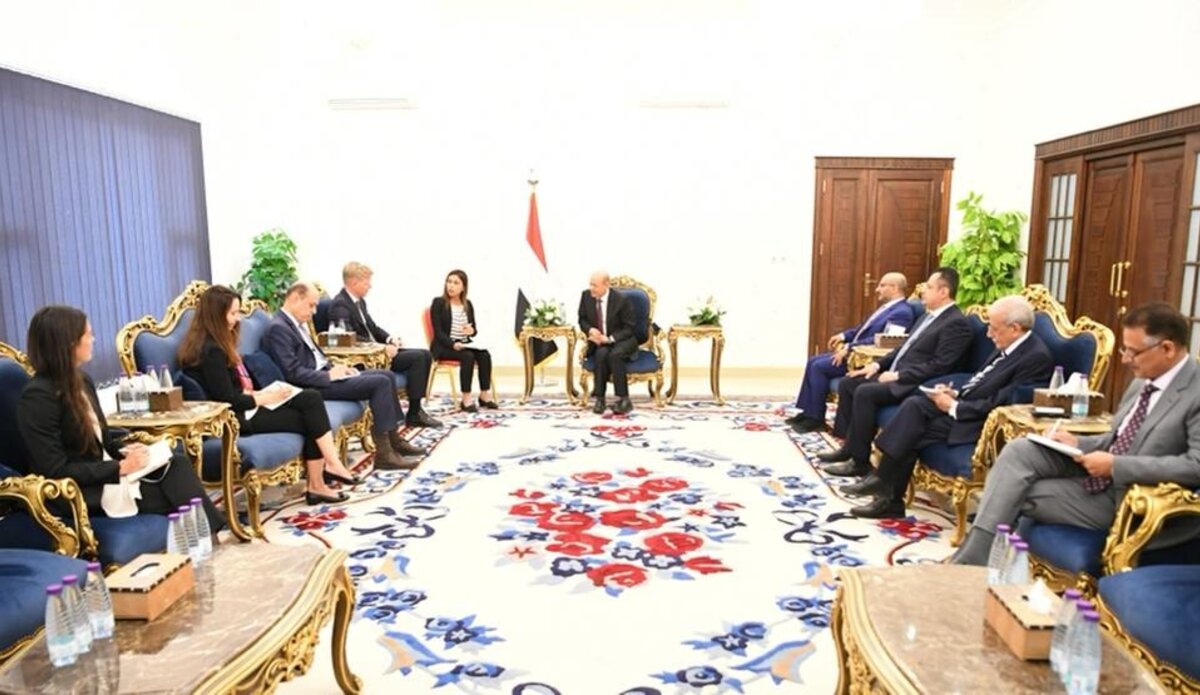
UN envoy for Yemen concludes visit to Aden

Thu, 2022-05-12 19:10

RIYADH: The UN Special Envoy for Yemen, Hans Grundberg, concluded a two-day visit to Aden on Wednesday.

During his visit, Grundberg met with the President of the Presidential Leadership Council, Rashad Al-Alimi, Yemeni Prime Minister, Maeen Abdulmalik Saeed, and Vice President of the Presidential Leadership Council, Tareq Saleh.

The UN envoy reviewed the status of the truce and the benefits it has delivered so far to Yemeni civilians, particularly the significant reduction in civilian casualties.

He also discussed ways to overcome challenges, especially with regards to opening roads in Taiz and other governorates and resuming commercial flights from Sanaa airport.

“The parties need to move swiftly in implementing all elements of the truce in parallel to reduce the impact of the war on civilians and facilitate the freedom of movement of people and goods. I urge them to work constructively and demonstrate their commitment in all its humanitarian elements,” Grundberg said.

“I will continue my active support to Yemeni parties to identify solutions, increase confidence, and build on the truce to move towards a comprehensive and sustainable political solution that meets the legitimate aspirations of Yemeni women and men,” he added.

Main category: 

UN Yemen envoy in Aden to sustain truce, revive peace talksGCC Sec-Gen reaffirms support for efforts aimed at enhancing security and stability in Yemen


Lebanese poll hopefuls ‘buying their way to power’ with cash bribes

Author: 
Wed, 2022-05-11 21:46

BEIRUT: With Lebanon’s crucial parliamentary elections on Sunday expected to go down to the wire, candidates and party supporters have been accused of trying to buy their way to victory by offering cash bribes to undecided voters.

A Shiite voter in Beirut’s second constituency told Arab News that he had been offered $300 if he and his family agreed to vote for a particular businessman.

The man, who asked to be identified only as Mohammed, said: “Supporters campaigning for their parties call me every day to ask who I will be voting for. I have no idea how they got my number. Some offer ration cards, others money, to either vote for them, or even boycott the elections or cast a blank ballot.”

Mohammed, who has no links with the Amal Movement or Hezbollah, said he is unlikely to vote. “All the parties in power had the opportunity to fulfill their promises, but they have left their people mired in their misery. We will not re-elect them.”

Electoral bribery has long been a problem in Lebanon, despite laws banning the practice, but has become more widespread and visible with the collapse of the national currency and decline in living conditions.

Now, if rumors from the money exchange black market are to be believed, the exchange rate will drop ahead of the elections as parties attempt to buy votes using US currency.

One money changer, who declined to be named, told Arab News: “Electoral spending is expected to rise during the next few days as parties attempt to buy the largest number of votes, through direct bribes.”

People in Beirut have reported that money changers have been stopping passers-by in the street to ask if they want to exchange their dollars.

Many believe the election result will depend on undecided voters or those desperate for money, who will end up voting for the highest bidder.

Lebanese electoral law states: “During the period of the electoral campaign, the provision of services or the payment of funds including the obligations and expenses of candidates shall be prohibited.”

Nadim Abdelmalak, head of Lebanon’s supervisory commission for elections, said recently: “The commission has not received any complaint from any party regarding electoral bribery.”

However, according to the Lebanese Association for Democratic Elections, rapidly worsening living conditions are reinforcing the presence of bribery, especially with  about 80 percent of the population facing poverty as a result of the country’s economic crisis.

The unemployment rate is also approaching 40 percent amid a record collapse of the national currency against the dollar, while a freeze on bank withdrawals and the withholding of depositors’ funds are also threatening household budgets.

Ihab, a cab driver and voter in the Beirut’s second district, said that “he doesn’t mind receiving help from any electoral list.”

Many electoral lists offered gas and food vouchers. “They even offered to pay the generator bills and they are now offering to rent my car to transport voters for payment in dollars. I agreed, but I will not vote for anyone.”

LADE said that it had evidence of candidates distributing baby milk in the north of Lebanon, while others have donated solar panels to light roads.

Samer, a voter in the Zahle district, said that “as the electoral battle in the region heats up, the bribes will double and this will manifest on the election day. Those voting in the morning will be less bribed than those voting in the afternoon.”

Bribery appears commonplace in the electoral districts where competition is fierce, especially Beirut I, Beirut II, Zahle, Keserwan, Jbeil, Batroun, Koura, Bsharri, Zgharta and Chouf Aley.

However, the contest seems less heated in regions controlled by Hezbollah and the Amal Movement.

Mayssa, from the Baalbek–Hermel district, said: “A group from Hezbollah visited our home in the southern suburbs of Beirut and asked about the number of voters in the family. They assured us that transport will be available from Beirut to the district. They didn’t offer anything else.”

With fuel prices at crippling levels, most parties are offering voters in remote areas gas vouchers to cover their driving costs to polling stations.

The cost of refueling a car often exceeds 500,000 Lebanese pounds ($300), which means voters in isolated villages can face a $600 bill to drive back and forth to vote.

Salam, who works in a Beirut hotel, said: “Hezbollah is confident that they will win the elections. That is why they are not urging us to vote for them, although I am reluctant to vote because I no longer believe in anyone.”

Main category: 

Sunni preachers in ‘vote to save Lebanon’ pleaUN chief urges free, transparent elections in Lebanon May 15