Arab women are now ministers and CEOs, yet stereotypes persist

Tue, 2022-05-17 22:50

DUBAI: Outdated and harmful stereotypes of meek and oppressed Arab women still prevail in Western and Asian media. 

Despite these faulty notions about who and what they are, Arab women continue to defy expectations and make inroads in the worlds of business, politics, finance, diplomacy and tech.

However, many believe more must still be done to tackle baseless misconceptions about Arab women, their role and their capabilities in the eyes of the outside world.

“We live in a world which has historically looked at our part of the world as a traditional one, where women are more in the family and household,” May Nasrallah, founder and executive chairman of deNovo Corporate Advisers, told Arab News.


A Saudi woman poses for a photo after having a driving lesson in Jeddah on March 7, 2018. (AFP/File Photo)

“But in reality, we are so far away from that (in terms of) the evolution and how much we’ve changed in how we operate here. In the UAE, we have women in government, leadership positions, heads of banks, family groups and ministers, so we’ve changed a lot, but there is a lack of knowledge.”

To change the image of the Arab woman abroad, Nasrallah has urged traditional forms of media, such as television broadcasters, to showcase more female Arab leaders.

“We see multiple examples where they are very impressive,” she said. “It’s about continuing to escalate women to let the world see what they are capable of.”

Another potential area of improvement is in challenging gender expectations that persist within some communities.


Nasrallah and Kanoo were part of a discussion panel on “Arab women’s image,” which took place at the Arab Women’s Forum within the Top CEO conference in Dubai on May 17. (AN Photo/Zubiya Shaikh)

“We need our own traditional images to change internally,” Nasrallah said. “It changes with the different generations and we’re getting there. Look at the leadership around us, and who is running our region right now. It is very forward-thinking, very open minded, and it enhances women in leadership positions. It’s been reflected time and again.” 

Nasrallah believes self-doubt is another obstacle that needs to be overcome in the mindsets of Arab women. Recalling her own time in investment banking, she remembers male colleagues putting themselves forward for promotions or new roles — whether they were capable of them or not.

“Women, on the other hand, second guess themselves and that’s inherent in our configuration, which needs to be changed,” she said. 

A support network at home is also crucial. Nasrallah, who has four sons, said that she drew encouragement from both her father and husband, who pushed her to maintain her full-time career. 

“Having men around us that encourage us to continue to go forth in the business world or workforce is a huge positive.”

Equally, providing the right tools to be successful and to not be afraid to fail would give more women the mentality required to succeed. Having a supportive network of peers would also provide an important ecosystem that can help support them in entrepreneurship.

For Suzy Kanoo, CEO and president of the Khalil bin Ebrahim Kanoo Company and International Motor Trading Agency in Bahrain, raising awareness about the successes of Arab women is key. 

“We talk about how great we are, but women underestimate their strength — it’s unequaled,” she told Arab News.


Saudi entrepreneurs Asmaa Alabdallah (L), founder of BitGo, and Reem Dad (R), co-founder of Taibah VR, stand in front of Halcyon House in Washington. (AFP)

“In my family business, I attend conferences around the Asian continent, and I have noticed they preferred to talk to the male manager, which hit me, and I realized I am blessed to be a part of this region and I am so proud to be an Arab woman.” 

Kanoo, who wrote a book about empowering Arab women called “Hear Us Speak: Letters from Arab Women,” said the West fails fundamentally to understand Arab women and their religion.

“(For the West), being more modest or wearing a hijab has something to do with a woman being more submissive,” she said. 

“(For them) it’s synonymous with that, but when they come here, they see it’s not true at all. This is a choice that everyone has the right to, but I’m respected the same way as someone who wears one and this is the beauty of our region.”

Making an effort to understand, visit and read more about the region would help eliminate such misconceptions, she believes, as foreigners would come to realize that the ideas they have been fed about the role and status of Arab women is false.

However, Kanoo believes an issue arises when Arab women seek to move up the professional ladder. 

“I see that lacking,” she said. “We need more action, with more women on board seats. We’re just as educated. So, we need an extra push and more affirmative action on that.”

She called for more female judges to preside over family courts across the Middle East — a move that would rebalance the mere 8 percent of female judges seen today.


Saudi women jog in the streets of Jeddah’s historic Al-Balad district. (AFP)

Arab women must also become more assertive in demanding their rights, taking shame out of the equation, Kanoo added. “Once we stand up and (claim) our rights, that’s it, people start to respect that.”

Generation Z — those born between the mid to late-1990s and the 2010s — is challenging outdated behaviors thanks to social media and evolving parenting habits. “Social media paved the way and parents are another large influence on that,” Kanoo said. 

“More than anything, our governments are helping us through the different reforms we are seeing, across Saudi Arabia and the UAE. Nothing is going to hold Gen Z back. We’re not there yet, but we’re moving forward, which is fantastic.”

But continuing to empower Arab women is not just about reputation or doing the right thing — it is also good for the economy, said Nasrallah.

“A better educated mother will better educate her children and give them opportunities as well, so it’s an ecosystem that will benefit to evolve and grow. 

“More separation brings you down as a society and we need to be lifting ourselves up and showcasing to the world what we are capable of.”

Nasrallah and Kanoo were part of a discussion panel on “Arab women’s image,” which took place at the Arab Women’s Forum within the Top CEO conference in Dubai on May 17. 
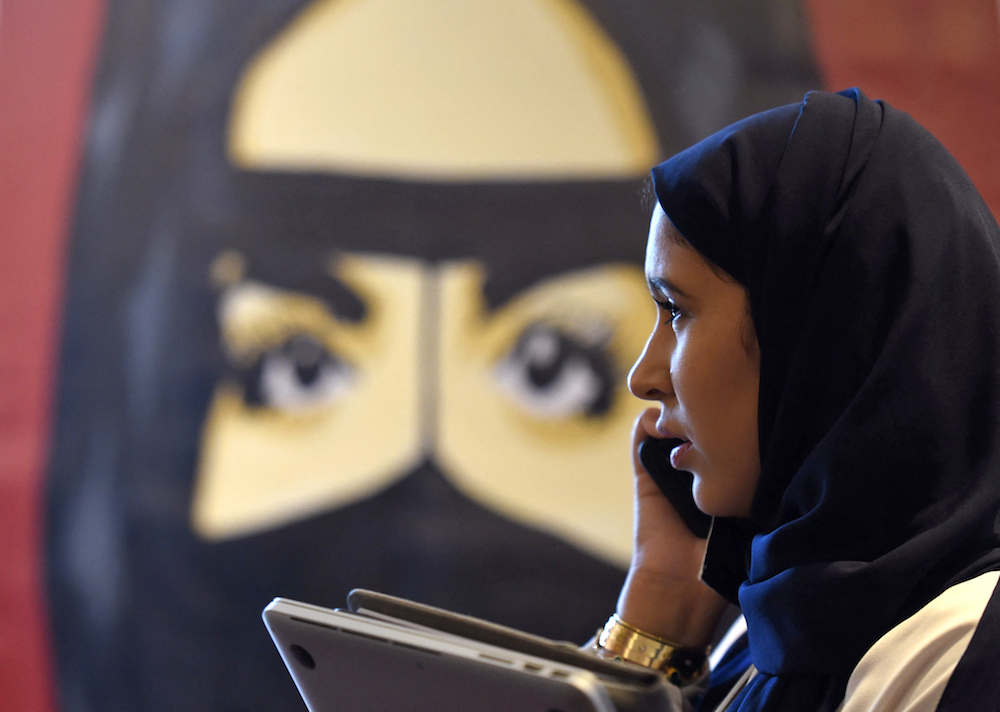
A Saudi woman talks on her phone during the "MiSK Global Forum" held under the slogan "Meeting the Challenge of Change" in Riyadh. (AFP)
Main category: 

Why positive change in Middle East starts with bringing women into the work forceDigital transformation, women participation are the need of the hour, says VP Visa CEMEA


Houthi mines have killed 372 people since mid-2019: Report

Author: 
Tue, 2022-05-17 22:09

AL-MUKALLA: Tens of thousands of land mines planted by the Iran-backed Houthis across Yemen have killed 372 people and wounded 754 more since mid-2019, the Yemeni Landmine Monitor said.

The latest victim of unexploded ordnance was a policeman, Mohammed Aklan, who was fatally wounded this week after stepping on a mine outside his home on the outskirts of the western city of Hodeidah, the organization said.

Also this week, a civilian was killed in a mine blast as he was collecting plastic bottles in the eastern section of Hodeidah.

Yemen’s Hodeidah province is plagued with undetected land mines. The Houthis planted thousands of mines in the province in 2017 and 2018 to obstruct a military offensive by government troops.

The new statistics on land mine victims in Yemen comes as activists, diplomats, ministers and members of the public in Yemen launched an online campaign to draw attention to the use of land mines by the Houthis, demanding that the militia hand over maps that show the locations of the devices.

Yemenis say that the Houthis have laid mines on roads and around hospitals, schools and farms, and have planted more naval mines in the Red Sea, calling upon the world, mainly international mediators, to order the militia to hand over maps during the UN-brokered truce.

“The colossal number of land mines planted by Houthis in Yemen has been unconscionable and will take years to discover and dismantle. To help deter more innocent people and wildlife from being murdered or maimed, Houthis should immediately #HandInTheMaps so they can be detected,” the Yemeni Embassy in Washington, D.C. tweeted.

Muammar Al-Eryani, Yemen’s information minister, said that the extensive use of land mines by the militia has turned Yemen into the most mine-saturated area in the world since the Second World War, noting that displaced people cannot return to their homes and farms in liberated areas due to the presence of mines.

“The international community, UN and the UN envoy are required to pressure the Houthi militia to stop manufacturing and planting mines of all kinds, provide maps of minefields, support government demining programs, rehabilitate the injured and reintegrate them into society,” Al-Eryani tweeted.

Brig. Gen. Mohammed Al-Kumaim, a Yemeni military analyst, told Arab News that it is unlikely the Houthis will respond positively to the campaign, and will continue their mine program. “When tens of land mines are removed from a location during the day, the Houthis sneak into the same place to plant them again. Those maps should be taken from the Houthis by force,” he said.

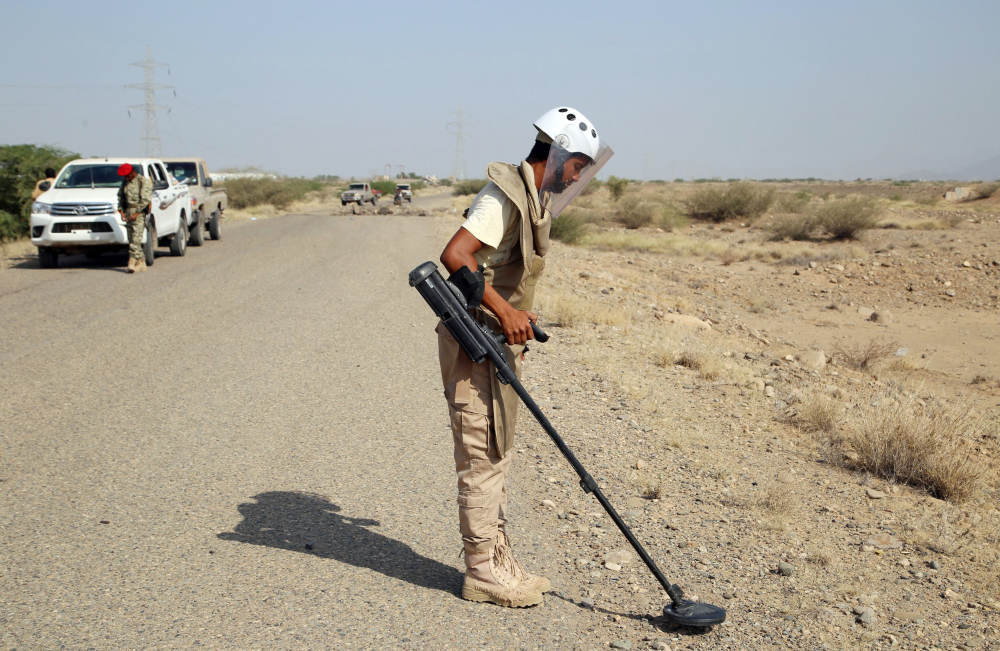
A member of Yemen's pro-government forces searches for land mines near al-Jawba frontline in the village of Hays, Hodeida. (AFP)
Main category: 

Silent Taiz protest denounces deadly strikes by HouthisHouthis using summer camps to train child soldiers, parents warned


Why positive change in Middle East starts with bringing women into the work force

Tue, 2022-05-17 22:16

DUBAI: Advancing the role of women in society and the economy is a key driver for change in any country or region, particularly the Middle East.

According to a 2020 study by management consulting firm McKinsey and Co., “increased female participation in professional and technical jobs can turbo-charge economic growth in a region that will be significantly impacted by the Fourth Industrial Revolution — making their participation all the more critical.”

McKinsey emphasized four indicators that correlated with women’s participation in professional and technical jobs: Education, financial inclusion, digital inclusion, and legal protection.


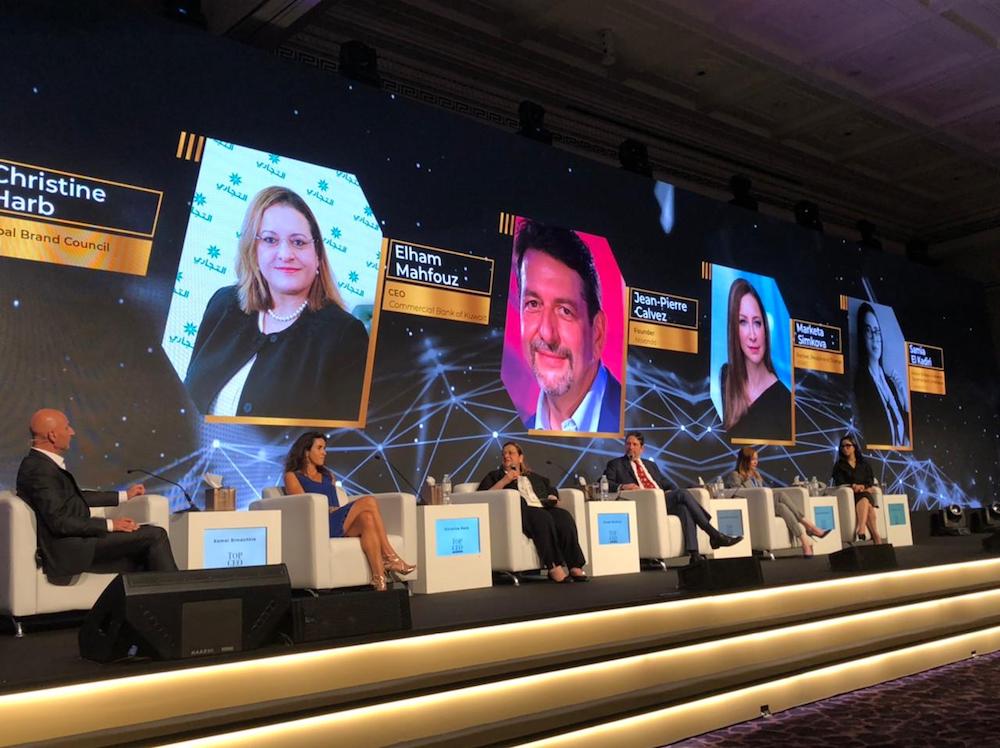
A panel of experts at the Arab Women Forum, held in Dubai on Tuesday, examined what the workplace of tomorrow may look like for women. (AN Photo/Zubiya Shaikh)

For the Middle East, high inequalities in these metrics persisted, most notably in legal protection and financial inclusion — with a significant number of women remaining unbanked.

The goal, the consulting firm said, was to introduce new legal frameworks as an important enabler for ending the gender-based inequalities endemic to the Middle East.

On a more positive note, McKinsey predicted that the share of women in professional and technical jobs was set to more than double by 2030. Crucial, then, was the need to capture this opportunity to bring the Middle East’s women into parity with their peers around the world.

A panel of experts at the Arab Women Forum, held in Dubai on Tuesday, examined what the workplace of tomorrow may look like for women, and asked how companies could attract and retain female talent.

Speakers included Christine Harb, vice president of marketing at Visa Inc.; Dr. Celeste Cecilia Moles Lo Turco, director for PwC Middle East in the environmental, social, and corporate governance, and sustainability fields; Khaled Al-Maeena, chairman of Al-Bilad Media and Publishing and managing partner of Quartz Communications; Dr. Maliha Hashmi, World Economic Forum Global Future Council expert and V20 delegate of the G20; and Anand Vengurlekar, a strategic innovation adviser.

Harb said there were two main challenges facing women in the workplace today. “One is female representation in C-level positions. If we look at the Middle East and North Africa region, we still have a low representation of women in board rooms and C-level positions and, even if companies today are promoting diversity and inclusion, the representation in the region is still very low across industries and the region in general,” she told Arab News ahead of the event.

More women occupy C-level roles now than at any time in the past 10 years — but to address their persistent underrepresentation at all levels, the workplace of the future must provide flexibility and versatility for women, and they must be seen in the top-level roles, Harb added.

“How can women make sure they are sponsored and supported? Companies in the region also need to promote them to (C-suite) roles,” she said.

The second challenge, Harb noted, was the alignment of what organizations say and how they act toward their female employees.

“Many companies today are saying the right things, but there is no psychological safety, as such, for women to feel they can benefit from the flexible working hours or from the conditions that are being put in place that will allow them to find their balance as women,” she added.

She pointed out that some of the challenges stemmed from cultural limitations. “Historically, in the Middle East, most of these roles have been occupied by men.”

And to undo this, a concerted effort had to be made within organizations before a role opened up.

“When we look at the evolution, in the succession planning of these organizations, women were not really prepped to take on (high-level) roles. It’s not just the promotion, but it is about making sure the woman is equipped to be able to take over,” Harb said.

Female participation at all levels of technical and professional industries will require flexibility and versatility across future workspaces. (Getty Images/AFP)
Main category: 

Digital transformation, women participation are the need of the hour, says VP Visa CEMEAWomen should not relinquish their rights in business, says Suzy Kanoo


Reformists surge in Lebanon polls

Tue, 2022-05-17 21:27

BEIRUT: Lebanon’s militant Hezbollah group and its allies lost their parliamentary majority while independents achieved surprise breakthroughs, final elections results showed Tuesday.

The results indicate a fragmented and polarized parliament divided between pro- and anti-Hezbollah lawmakers who will likely find it difficult to work together.

The outcome signaled a shift in a country devastated by an ongoing financial crisis and soaring poverty.

New reformist faces who entered the legislative race on the values of a 2019 anti-establishment uprising made a stronger showing than many had predicted.

Saudi Ambassador to Lebanon Waleed Al-Bukhari tweeted that the result “proves the inevitability that the logic of the state will win against the absurd excesses of the statelet disrupting political life and stability in Lebanon.”

In the words of a political observer, “neither Hezbollah nor the Free Patriotic Movement is controlling parliament.”

On May 22, the term of the new parliament begins and Prime Minister Najib Mikati’s Cabinet will become a caretaker government.

The new house is expected to elect a new speaker amid the absence of parliamentary consensus to reelect standing speaker Nabih Berri, who has held the position since 1992.

Beirut witnessed on Tuesday morning the burning of a “Revolution Fist” that was set up in the Martyrs’ Square as a symbol of popular protest against the ruling class.

Moreover, the exchange rate of the US dollar against the Lebanese pound on the black market surpassed 30,000 Lebanese pounds for the first time after the elections.

The presidential palace announced that President Michel Aoun was transferred to Hotel-Dieu de France hospital in Beirut “to undergo some medical tests and X-rays.” They reassured the public that Aoun “will leave the hospital in the next few hours when the tests are done.”

The elected parliament does not resemble any of the six previously elected parliaments since the Taif Agreement in 1989. According to political observers, “it reflects the political turmoil the country is going through.”

The loss of several veteran political figures was remarkable in the election. Minister of Information Ziad Makkari said that those forces and figures “should reconsider the work they’ve done for their people.”

He added: “We hope that the forces of change that have reached the parliament seriously contribute to the rise of the country because it can’t endure any longer.”

Remarkably, Hezbollah and its allies won a total of 59 seats out of 128. The group’s allies include the Amal Movement, the Free Patriotic Movement, the Tachnag party and Al-Ahbash Association, along with Jihad Al-Samad, Farid Al-Khazen and Hassan Mourad.

The Amal Movement, headed by Nabih Berri, won 15 Shiite seats, most of which are occupied by current deputies, including two who were charged in the Beirut port explosion case.

Hezbollah won 13 Shiite seats, including current deputies and two new ones.

One Shiite and two Sunni deputies allied with Hezbollah also won.

The Lebanese Forces won 20 seats, including one Sunni deputy who was running on a list supported by the party.

The Free Patriotic Movement won 18 seats.

The Progressive Socialist Party, headed by Walid Jumblatt, won nine seats.

The Lebanese Phalangist Party won five seats, including an Armenian deputy.

The Independence Movement won two seats.

The Marada Movement won two seats, while Al-Ahbash won two seats — one in Beirut and one in Tripoli.

The Islamic Group won one seat.

Camille Dory Chamoun from the National Liberal Party won one seat. The party announced on Tuesday that “they will be part of the bloc that includes the Lebanese Forces and their allies.”

The elections also witnessed the victories — mostly in the north — of six former members of the Future Movement who left the party following former Prime Minister Saad Hariri’s decision to suspend his political activity.

Eleven independent candidates won, including some fiercely opposed to Hezbollah, such as Achraf Rifi in Tripoli and Fouad Makhzoumi in Beirut.

Fifteen deputies from civil society and the 2019 revolution won, including doctors, engineers, scientists, lawyers, businessmen and academicians. Their victory breaks the monopoly of the conventional political parties and reflects voters’ revolt against their traditional leaders.

The winners include Rami Fanj, candidate for the Sunni seat in Tripoli. He ousted deputy Faisal Karami, who comes from a veteran political family.

Eight out of 155 women candidates were able to break the parliament’s overwhelming male dominance.

Three of these female winners were already deputies, including Inaya Ezzedine from the Amal Movement, Paula Yaacoubian, who resigned amid the 17 October revolution, and Sethrida Geagea of the Lebanese Forces.

The remaining women deputies are Nada Boustani, former minister of energy affiliated with the Free Patriotic Movement, Ghada Ayoub from the Lebanese Forces and Cynthia Zarazir, Najat Saliba and Halima Kaakour from the civil society movement.

The results in Lebanon indicate a fragmented and polarized parliament divided between pro- and anti-Hezbollah lawmakers. (Reuters)
Main category: 

Blow to Hezbollah in Lebanese electionLebanon parliamentary elections: Voting marred by disputes, low turnout


Turkey foils Daesh suicide bomber in province bordering Syria

Mon, 2022-05-16 22:02

ANKARA: As part of its countrywide counterterrorism operations, Turkey has arrested a suicide bomber allegedly linked to Daesh who was planning an attack in the southeastern province of Urfa, bordering Syria.

Bashar Al-Mizhen, codenamed Abi Enes Al-Kathani, has confessed to the authorities.

Mizhen, who joined Daesh in 2015 and received special arms training from the terror group, was allegedly preparing the attack in coordination with the Damascus branch of Daesh.

He is the 10th terrorist caught this year on Turkish soil. The authorities seized several digital materials and are currently examining various organizational documents belonging to the terror group.

FASTFACT

Bashar Al-Mizhen, codenamed Abi Enes Al-Kathani, has confessed to authorities.

Daesh members have carried out a number of attacks against Turkey, including at least 10 suicide bombings, seven bombings, and four armed attacks, which killed 315 people and injured hundreds of others.

Last year, Turkey also arrested a Daesh terrorist identified as the right-hand man of the late terrorist leader Abu Bakr Al-Baghdadi.

In the first quarter of this year, dozens of Daesh members, including the sons of its top officials in Iraq, were caught in several Turkey cities, including Urfa, the northern province of Samsun and the western province of Izmir.

Last month, Turkey’s intelligence agents also caught two Daesh terrorists who were planning attacks against the country’s troops on home soil and in Syria.

Nihat Ali Ozcan, a retired major now serving as a security analyst at the Ankara-based think tank TEPAV, said such operations are held consecutively because one operation feeds another with the intelligence data that is gathered.

“Within its territories, Turkey hosts about 3.7 million unregistered Syrian refugees right now. Adding the unregistered refugees and those who are settled in the safe zones in northern Syria, this number has reached 7.5 million,” he told Arab News.

“We cannot assume that all of them are innocent people,” he said.

“There are several Daesh sympathizers among them. All immigrant-receiving countries are at the same time importing the domestic problems of their countries of origin,” said the retired major.

“In Turkey, one can identify several kinds of economic, cultural and security-related challenges that Syria has exported along with several ideological(ly-driven actors who are in competition with one another),” Ozcan added.

There are about 430,000 registered Syrian refugees in Sanliurfa, making the city the fourth-largest host of displaced people after Istanbul, Gaziantep and Hatay.

Ozcan also underlined the impact of faith-based actors in Sanliurfa, including tribes and clans that have linguistic, religious, and kinship ties with Syrians, which also feed this security eco-system and boost the sympathizer base of Daesh in this city.

Experts have emphasized that any attack plan of Daesh, including its timing and scope, is related to its own organizational dynamics, and should be considered a reminder of how dangerous the current situation in neighboring Syria and Iraq is, as the terrorists move across borders to fulfill their wider objectives.

“Daesh acts according to its own rationale. It uses terror to influence great masses, (send) message(s) to the political actors and show(s) … the world that it steps up efforts to bolster its presence in other regions as well,” Ozcan said.

Daesh still retains a significant presence in northern Iraq and Syria, as shown by one of the biggest assaults in years, which was the prison attack in the Kurdish-controlled northeast Syrian city of Hasakah in January that left hundreds dead and allowed several prisoners to escape.

In April, two Iraqi soldiers were killed and two others wounded in an attack by Daesh in the western Anbar province, while seven Peshmerga and three civilians were killed in another Daesh attack in northern Iraq in December 2021 — an assault that was condemned by Turkey.

“Several years ago, Daesh seized huge (swathes) of Iraq and Syria. Today, despite its significant loss of a territorial base, the terror group still struggles to maintain its existence through new tactics,” Ozcan said.

The global coalition against Daesh, which was formed in 2014 and now includes 84 states and international organizations, gathered last Wednesday in Morocco to coordinate efforts against any resurgence of the extremists in the Middle East and North Africa.

“Over the last several years, Daesh has been considerably weakened in Iraq and Syria, but it remains a threat, seeking any opportunity to reconstitute itself,” senior US diplomat Victoria Nuland said during the meeting.

Daesh recently urged its sympathizers to take advantage of the ongoing war in Ukraine to stage new attacks against European nations.

A helicopter gunship flies above a Turkish military vehicle in Syria’s northeastern Hasakeh province close to the Turkish border. (AFP file photo)
Main category: 
Tags: 

Biden invites private investment in Syrian areas not under Daesh, Assad controlTurkey has offered sea evacuation for wounded Ukrainian fighters — Erdogan adviser