Turkey orders 103 soldiers arrested in Gulen probe

Author: 
Fri, 2018-11-09 22:36

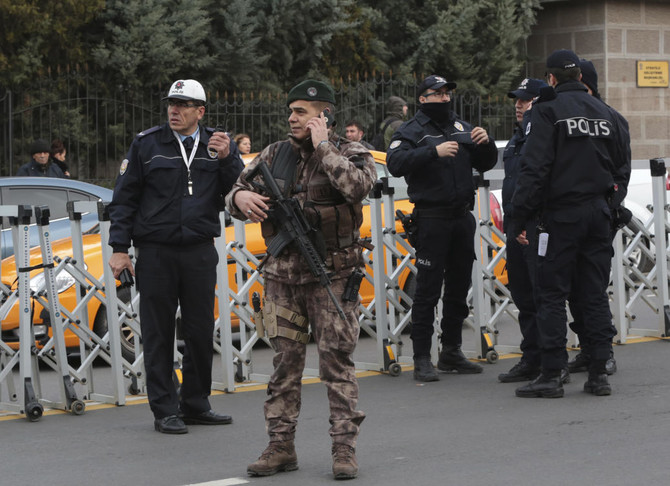
ISTANBUL: Turkish prosecutors ordered the detention of 103 soldiers with suspected links to the US-based cleric accused of orchestrating a failed coup in mid-2016, state-owned Anadolu news agency said on Friday.

Police have carried out regular sweeps against alleged supporters of the preacher Fethullah Gulen since the coup attempt of July 2016, in which 250 people were killed. Gulen denies involvement.

In the latest operation, in Istanbul and 31 other provinces, police have so far detained 74 people, Anadolu said.

The 103 suspects, all on active service, include colonels and lieutenant colonels, it said, adding that an investigation had shown they had communicated over fixed-line and pay telephones.

Authorities said members of the alleged Gulen network communicated via payphones.

Turkey’s Western allies have criticized the crackdown, which mostly took place under a state of emergency declared shortly after the coup attempt and remained in effect until July 2018.

Erdogan’s critics accuse him of using the failed putsch as a pretext to quash dissent. 

Turkey says the measures are necessary to combat threats to national security.

Main category: 
Tags: 

Turkey orders 61 soldiers detained for suspected Gulen links — mediaTurkey detains 150 soldiers over alleged Gulen links


Turkey announces new Syria border crossing

Author: 
Menekse Tokyay
ID: 
1541791630794543100
Fri, 2018-11-09 22:28

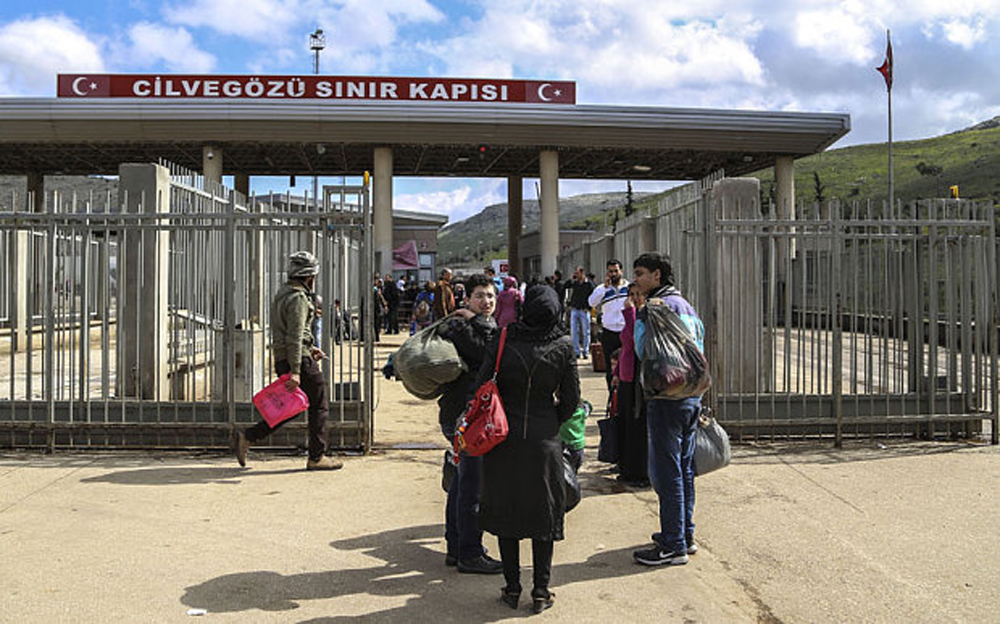
ANKARA: Ankara officially announced on Friday the opening of a new border crossing between Turkey and the northwestern Syrian city of Afrin.

The aim of this direct gate, which has been operational since Thursday, will be to increase, fasten and facilitate the supply of humanitarian and reconstruction aid to the region. It will also boost economic transactions in Afrin.

In proximity to Hamam village in the west of Jinderes, the border gate is called “Olive Branch” with reference to Turkey’s cross-border counterterrorism operation in Afrin which was conducted between January-March this year to clear the region from Syrian Kurdish YPG militia and Daesh terrorists.

Currently there are ten land and three rail custom gates between Turkey and Syria, while only seven of them are operational.

So far, Turkey’s humanitarian assistance to the region has consisted of delivery food, fruits and vegetables, drinking water, matrasses, blankets, hygiene kits, clothes, and packages of diapers to about 300,000 civilians in Afrin.

Turkey has ensured to distribution of food and personal care items to Afrin through dozens of aid distribution centers it established in the region.

Ömer Özkizilcik, analyst and editor at Suriye Gündemi (Syrian Agenda) news website, said the new Olive Branch border crossing to the Afrin region has primarily logistic and administrative reason behind its construction.

“Until now, supplies to Afrin from Turkey were usually sent via Azaz. With the new border crossing, Turkey aims to increase its ability to supply Afrin with humanitarian aids and also to accelerate Turkish reconstruction efforts into the region,” he told Arab News.

“While local councils in Euphrates Shield areas are supported by the south-eastern Gaziantep governorate of Turkey, local councils in Afrin are supported by the southern Hatay governorate. With the new opened border crossing, the Hatay governorate will firstly have a direct link to Afrin,” Ozkizilcik added.

The new border crossing will also enable the local residents of Afrin to boost their economic transactions by sending their locally produced items directly into Turkey, and will boost the regional economy, experts underline.

Wealth, combined with the relative calm in the region, is expected to increase the appeal of Afrin and to encourage needy refugees for returning home.

According to Ozkizilcik, another perspective behind the border crossing is the possibility for Syrian refugees inside Turkey to cross directly into their hometowns in the Afrin region under the supervision of Turkish authorities.

“All in all, Turkey is further improving its influence in northern Syria,” he added.

Sinan Hatahet, an expert on Syria at Al Sharq Forum in Istanbul, thinks that this is rather an administrative decision rather than political.

“Previously the aid was passing through Kilis border gate, and now the humanitarian aid and trade flows will be directly transferred from Hatay to Afrin. It could incur faster, quicker and more lucrative trade flows,” he told Arab News.

Bedir Mulla Rashid, a Syrian analyst from Omran Center for Strategic Studies in Istanbul, said the border gate would also help meeting the logistical needs for the troops and officers deployed in the region.

“Since it is near to Jindires it will be a chance for more exchange of goods inside Syria between areas of Olive Branch operation and Idlib province. And Afrin city local council is performing better after electing Said Sulaiman,” Rashid told Arab News.

According to Rashid, since the announcement came from the Turkish Trade Minister, it means that more efforts will be done to increase trade in the area in general especially in terms of agricultural products and textile.

“Afrin is a rich area in terms of olive and grain. The relative safety of Afrin region during the civil war also encouraged many cloth manufacturers in Aleppo to move their products to Afrin. And now they can either do their trade with Turkish market or export through it to other regional markets,” he added.

However, Rashid does not think the opening of this border gate will trigger a significant returnee wave from Turkey back to Afrin for now.

“Till now many of groups linked to Free Syrian Army (FSA) are based in the cities and villages of Afrin, and some of them are doing some violations like imposing high taxes on goods and movement of people,” he said.

But, Rashid added, if the security situation is improved and FSA groups are pulled out of Afrin, it will for sure make some changes in the returnee trend of Syrian refugees back home,”
Main category: 
Tags: 

Erdogan criticizes Russia, says Turkey to decide future of AfrinTurkey to continue measures in Syria’s Afrin until threats eliminated: Defense minister


Mosul fears return of Daesh nightmare

Author: 
Fri, 2018-11-09 22:31

MOSUL: A deadly car bomb in Iraq’s Mosul, the first since the city was recaptured from terrorists, has left residents shaken and terrified that past nightmares are returning to haunt them.

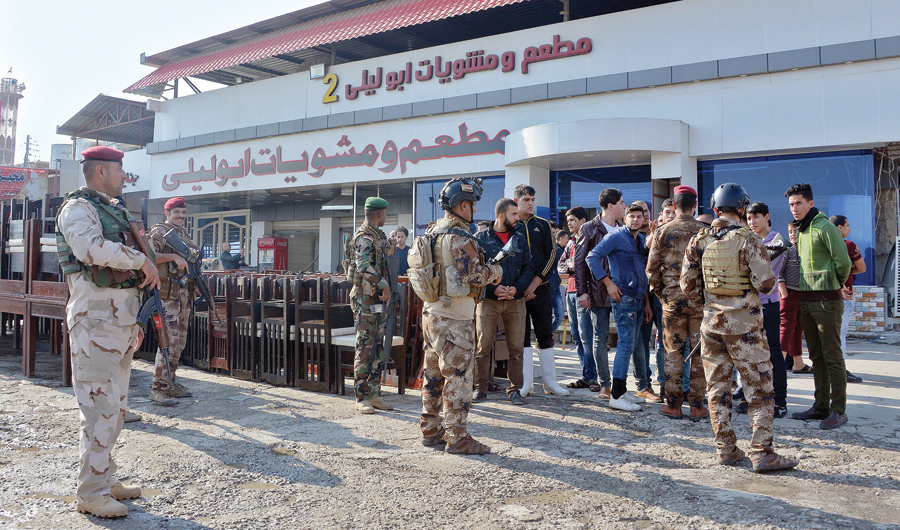
The blast late on Thursday hit the popular Abu Layla restaurant in Mosul, the northern city that for three years served as Daesh’s Iraq headquarters.

When residents awoke to the scene of destruction on Friday morning, they feared their bloody past with Daesh was not yet behind them.

“We were liberated, so we thought that security was back,” said Mossab, a 25-year-old restaurant employee.

“But now it’s worse than ever.”

Three people were killed and 12 wounded in the bombing, medical and security sources said.

The restaurant suffered significant damage. One side, which sits on a road junction, seemed to have its windows blown out and the facade partly sheared off.

The cars in the street all had shattered or cracked windscreens and were covered in black ash and debris.

Mossab’s car, parked nearby, was one of them.

“I’ve been working for four years to save up to buy it, but it all went in the blink of an eye,” he said, devastated.

More violence

Iraqi security forces were deployed outside the restauarant on Friday, standing guard as cleaning crews worked to remove the debris. 

Residents nervously came to inspect the damage.

Khodor Ali, a 38-year-old who lives nearby, was worried there would be more violence.

“If the security situation stays like this, then our future is in the gutter,” he said.

Troops and paramilitaries recaptured Mosul in July last year, months before the government declared Daesh had finally been defeated in Iraq.

But the group still carries out bloody hit-and-run attacks, mostly in the rugged mountains of the north and in desert areas along the western border with Syria.

Security forces frequently arrest suspected terrorists or break up sleeper cells, and are still uncovering Daesh tunnels and hideouts in Mosul.

There was no immediate claim of responsibility for Thursday’s attack, but a statement by security forces blamed it on “terrorists.”

Ali said Iraqi officials were at least partly to blame for Thursday night’s attack.

“If they weren’t able to protect the city, they shouldn’t stay,” he said angrily.

“The only thing these officials want are senior posts. They told us, ‘IS (Daesh) is finished’ — but then there’s a car bomb that kills innocent people.”

Corruption

City officials have pointed the finger at the security forces deployed across Mosul.

“One of the main reasons we’re seeing a deterioration of the security situation is that there are too many decision-makers,” said member of parliament for Mosul, Ahmad Al-Jarba.

Between Iraq’s central military command and the Hashed Al-Shaabi paramilitary force, both of which are stationed in and around Mosul, there were mixed signals on security, Jarba said. He said endemic corruption had also played a role.

Iraq is the 12th most corrupt country in the world, according to monitoring group Transparency International.

Mosul’s residents have shouldered much of the rebuilding themselves, opening restaurants and shops along the Tigris river that divides the city.

But after Thursday’s blast, the spectre of IS seems closer than they had thought.

Main category: 
Tags: 

Money moves again in Iraq’s Mosul, but not via banksSix killed by car bomb near Iraq’s Mosul


Libyan PM appeals for ‘common vision’ ahead of crisis talks

Author: 
Fri, 2018-11-09 22:24

TRIPOLI: The head of Libya’s UN-backed government, Fayez Al-Sarraj, has urged the international community to find a “common vision” for the chaos-hit North African nation, ahead of crisis talks in Sicily next week.

In an exclusive interview with AFP at his unity government’s headquarters in Tripoli, Al-Sarraj hit out at “negative interventions by some countries” in Libya, without naming them.

Libya has been beset by violence since Muammar Qaddafi was ousted and killed in an uprising in 2011, with rival groups vying for territory and oil wealth.

Many Libyans put the country’s crisis down to rivalries between foreign governments — Western as well as Arab — who they say pursue their own narrow agendas by supporting one group against another.

Al-Sarraj “saluted” France for organizing a conference in Paris in May that brought together the four main protagonists in Libyan politics, including himself.

He said he regretted that decisions taken at the conference, including a commitment to hold elections on Dec. 10, had not been respected.

Al-Sarraj’s Government of National Accord (GNA) was set up under a 2015 UN-brokered deal, but a rival administration based in the country’s east refuses to recognize its authority.

He criticized the rival Parliament based in the east, saying it had failed to respect its commitment to carry out the preparations needed for elections.

When asked about the timing of elections, Al-Sarraj said “any mention of a date … without putting in place a constitutional framework is a form of wishful thinking.”

The timetable divides the major powers. While France has pushed for the December date, Libya’s former colonial ruler Italy, as well as Russia and the US, have all opposed this.

“It is necessary to unify the international position with regard to Libya,” Al-Sarraj said, calling for a “common vision” for its future.

He said Italy and France should overcome their differences “so that there are no points of contention” between them.


Bickering leaders

The populist government that came to power in Rome in June has been openly critical of the French role in Libya, saying it was at least partly to blame for the current chaos.

UN envoy Ghassan Salame set out a new election timetable in a videoconference with the Security Council from Tripoli on Thursday.

He said a national conference in the first weeks of 2019 would pave the way for the electoral process to begin in the spring.

Proposals for a platform for ordinary Libyans to chart the political future, short-circuiting the country’s bickering leaders, have been under discussion since last year.

They had been delayed because of repeated flare-ups of fighting between the country’s rival armed groups.

Al-Sarraj’s biggest challenge has been tackling the insecurity, particularly in the capital, where militias still hold sway more than seven years after Qaddafi’s overthrow.

Between late August and late September, fighting in and around Tripoli between rival groups from the capital and other parts of western Libya killed at least 117 people and wounded more than 400.

Under pressure from the UN mission, the GNA announced new “security arrangements,” which have yet to visibly come into place.

“We are starting to implement this plan, but it requires international support and the engagement of all (Libyan) parties.”

The security plan aims to replace the militias with “regular army and police units,” said Al-Sarraj. But he said some militias had “played a positive role in contributing to securing the capital and other cities, and in the fight against terrorism.”

“Putting all these factions in the same box” represents an injustice to some young Libyans, who could integrate successfully into the security forces, he said.

Main category: 
Tags: 

Libya should start elections process in 2019 – UN envoyLibya commander Haftar visits Russia ahead of conference


Palestinian killed by Israeli fire in border clashes

Author: 
Fri, 2018-11-09 22:20

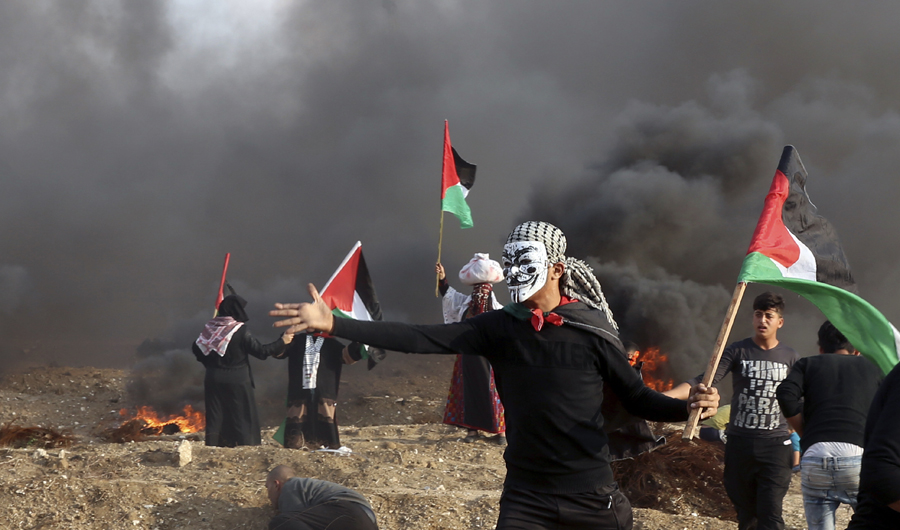
GAZA CITY: A Palestinian was killed by Israeli fire during clashes along the border of the Gaza Strip on Thursday, the Health Ministry in the coastal enclave said.

Israel’s military said soldiers opened fire after “several suspects were spotted approaching the security fence in the southern Gaza Strip and attempting to sabotage it.”

A Gaza Health Ministry spokesman said the man was shot by Israeli forces during clashes east of Deir Al-Balah in central Gaza.

He was identified as Mohammed Abu Sharbeen, 20, from the southern Gaza city of Rafah.

At least 220 Palestinians have been killed by Israeli fire since major protests backed by Hamas began in March.

The majority have been shot during protests and clashes, but others have died in tank fire or airstrikes.

One Israeli soldier was killed by a Palestinian sniper.

Israel says its actions are necessary to defend the border and stop infiltrations and attacks, which it accuses Hamas of seeking to orchestrate.

The often violent demonstrations usually peak on Fridays, but last week’s was the calmest in months, amid talk of a truce deal between Hamas and Israel.

Such a deal would see the protests end in exchange for an easing of Israel’s blockade of the coastal enclave.

Main category: 

Wintry weather and diplomacy cool down Gaza border protestsFrenchman accused of smuggling guns from Gaza to West Bank ‘tricked’