One dead in flooding as heavy rains hit Kuwait

ID: 
1541873727141986200
Sat, 2018-11-10 16:33

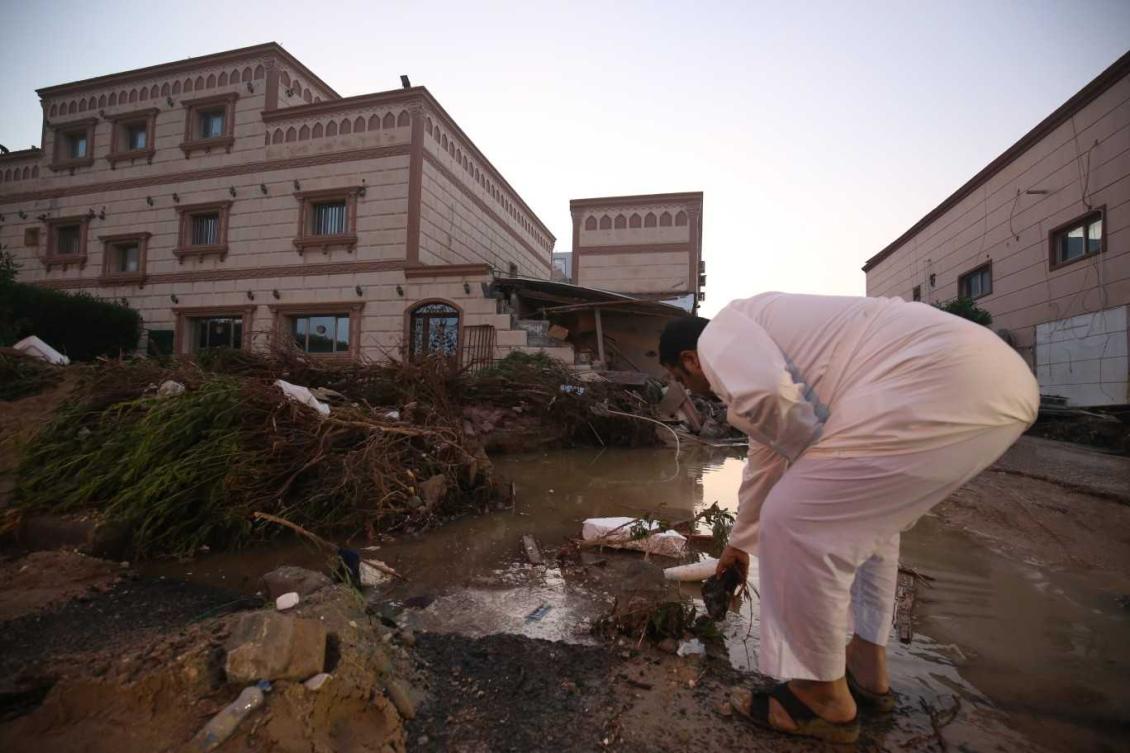
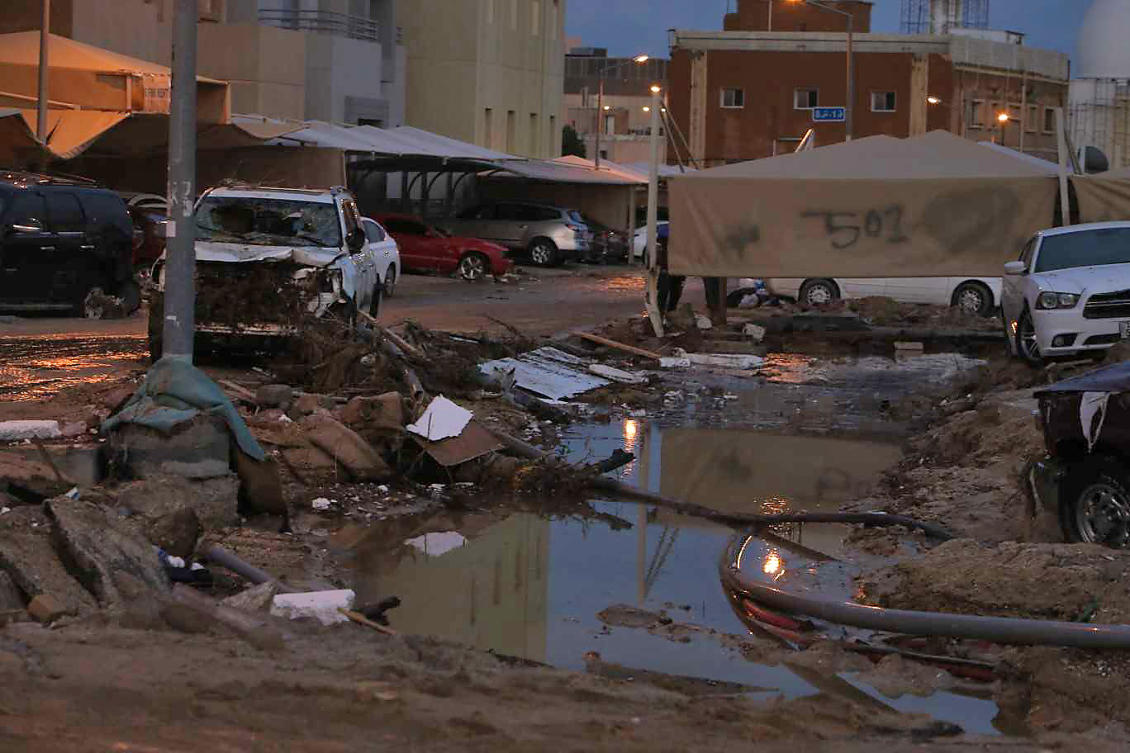
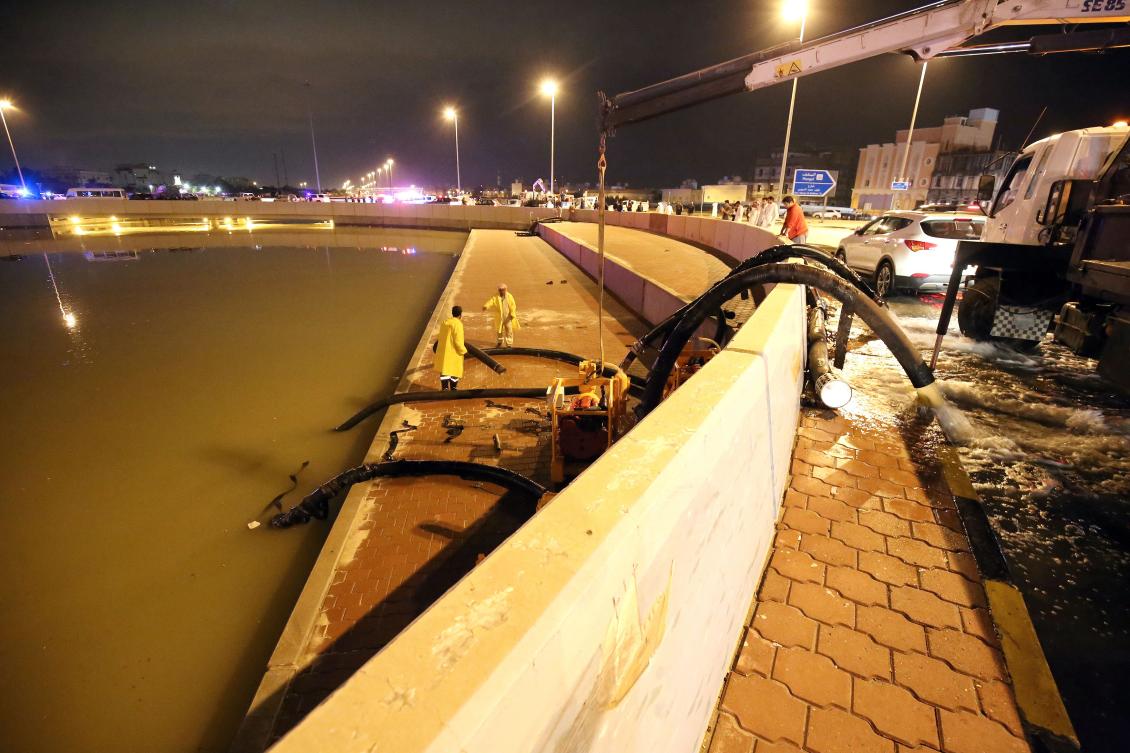
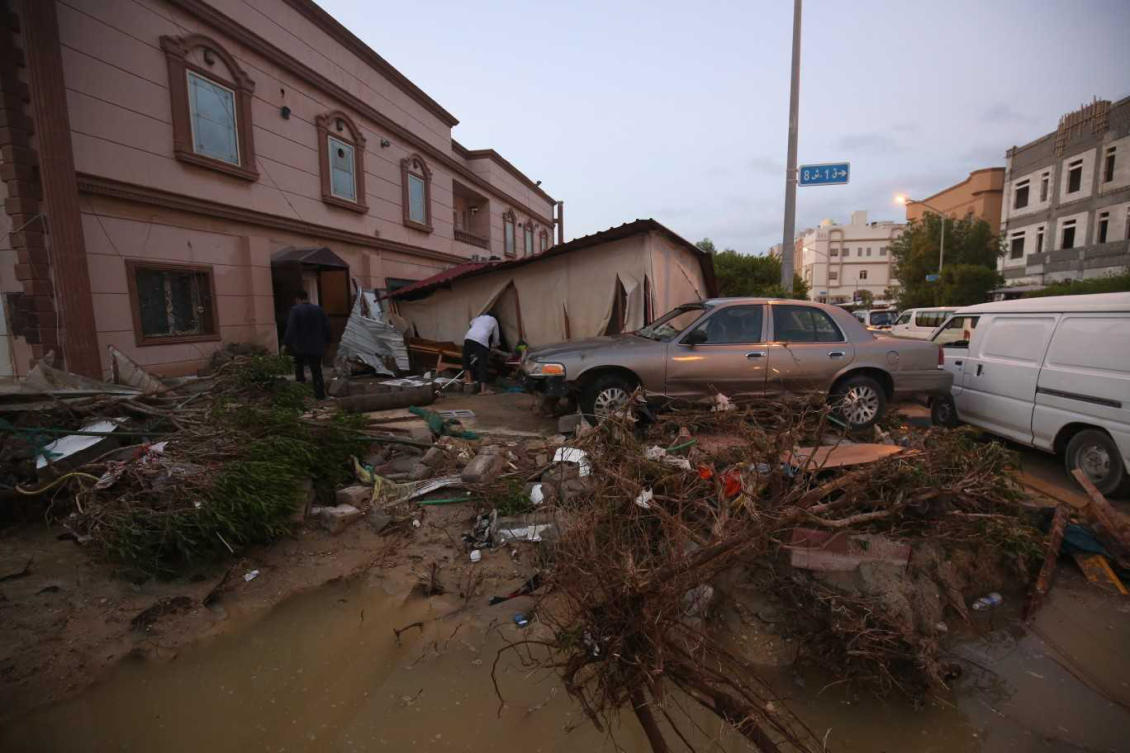
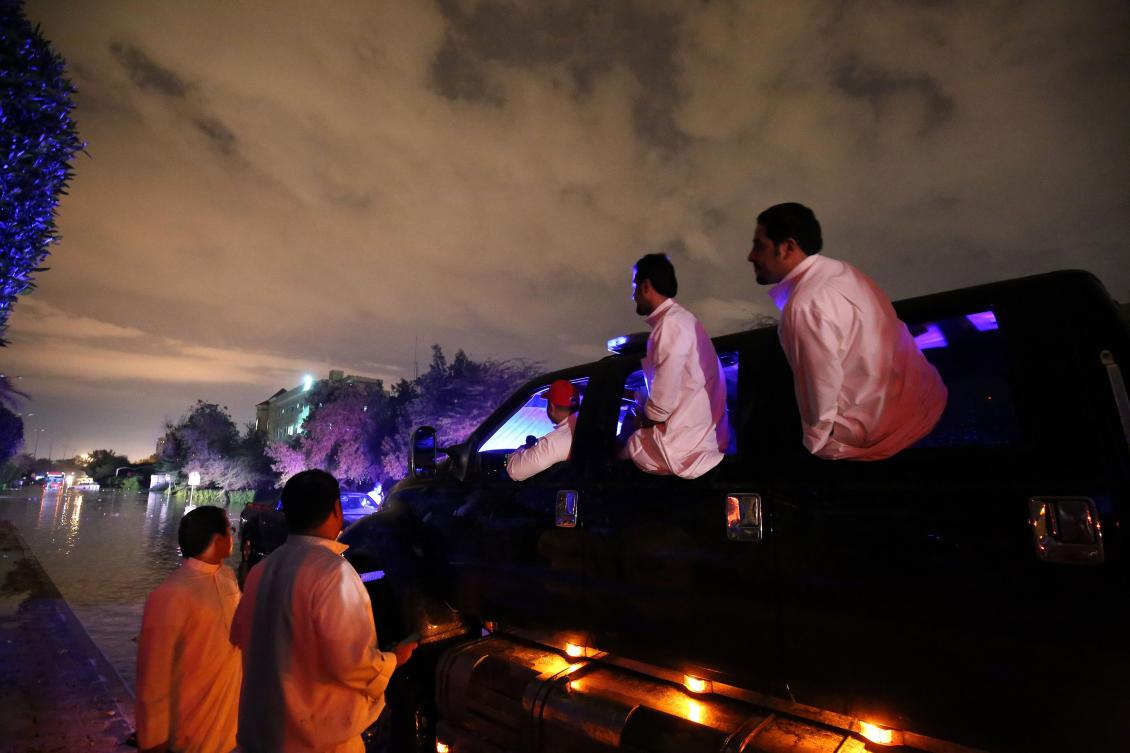
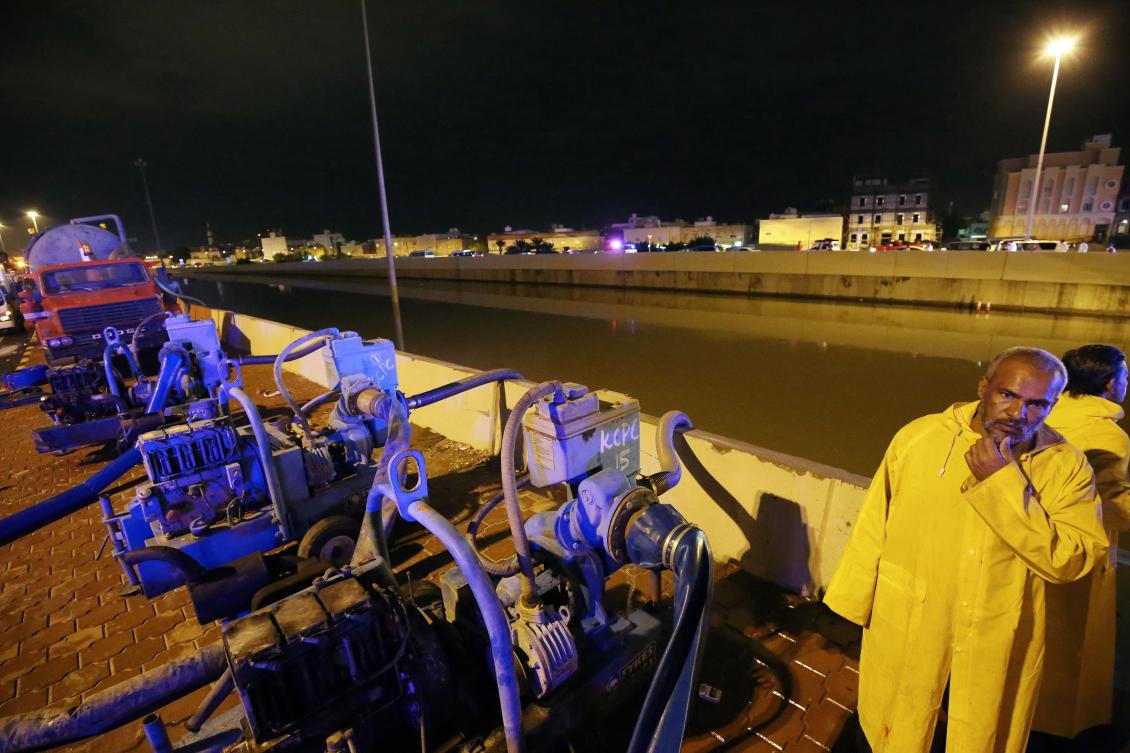
JEDDAH: Flash floods after heavy rains in Kuwait killed one man Saturday and damaged roads, bridges and homes, officials said, as several oil firms and ministries announced a state of emergency.
The Ministry of Health said the man, aged 30, was swept away by the flooding as he tried to rescue his family from their home, which was submerged in water in Al-Fahaheel area in the east.
An unspecified number of people were also reported injured in traffic accidents caused by the rains.
Several vehicles in many areas of the desert kingdom were washed away by the floods, particularly in newly-build residential areas, AFP journalists said.
Kuwaiti National Assembly Speaker Marzouq Al-­Ghanim promised on Saturday that the family of the Kuwaiti citizen killed by heavy rains on Friday night would not be “left in the lurch.”
“The family of the martyr of the Al-­Fahaheel floods, Ahmad Al­-Fadhli, will not be let down, facing life challenges alone,” he said in a press statement following Al­-Fadhli’s funeral procession.
He added that he had to attend the funeral since he is the representative of the Kuwaiti people.
The Kuwaiti army and the national guard launched search operations as authorities set aside several locations to receive residents threatened by flooding.
The ministries of oil and electricity as well as several oil companies announced a state of emergency, and the government held an urgent cabinet session on Saturday morning.
Prime Minister Sheikh Jaber Mubarak Al-Sabah chaired the meeting and said that officials will be investigated and those who failed in their duties to prevent the flooding will be held accountable.
The state news agency KUNA, quoting the ministry of education, said that private and public schools would be closed on Sunday.
Kuwait’s meteorological office has issued weather warnings for the coming hours, with an increasing potential for spotty and thundery showers.
The unstable weather gripping the country is likely to persist later on Saturday with a chance of intermittent downpours at varying intensities, meteorologist Abdulaziz Al­-Qarawi told KUNA.
Weather conditions are expected to gradually improve after midday tomorrow, he indicated.
Bad weather accompanied by torrential rains and flash flooding has hit several countries in the region, including Jordan where 12 people have been killed and nearly 4,000 tourists forced to flee the famed ancient desert city of Petra.
Main category: 

Kuwait’s public works minister resigns amid severe floodingBad weather shuts schools and government in Kuwait


Freed Daesh captive says son died in her lap from militant gunfire

Author: 
Sat, 2018-11-10 22:47

DAMASCUS: A Syrian woman captured by Daesh said her eight-year-old son died in her lap after the extremists shot him and his cousin during a military operation to liberate them more than 100 days after they were kidnapped.

Najwa Abu Ammar, 35, was kidnapped with her two sons and daughter and nearly two dozen others in July from southern Sweida province in a bloody attack on their villages in which the militants killed over 200 people.

When a military operation began to liberate them on Thursday, the children panicked during the gunfire, she said. 

Her son Rafaat and his 13-year-old cousin Qusay ran and the militants fired at them.

“We were in the open air at the bottom of a valley as the clashes raged between the army and gunmen,” she said. 

“When my son tried to run away, they (Daesh militants) shot him. He was in my lap when he died.”

His cousin Qusay bled to death after nearly five hours, Abu Ammar said.

““I am very very sad,” she said in a telephone interview through a crackling line from her remote village of Shbiki. “I am tired.”

A large funeral procession for the two children set out on Saturday from the national hospital in Sweida to their village, about 30 km to the east.

“What is the sin of those innocent children, who should now be in their classrooms,” Monzer Al-Shoufi, a resident of Sweida who took part in the procession, told AP by telephone.

The family of Abu Ammar suffered another loss in the kidnapping — Rafaat’s grandmother was killed on the day of the abductions.

Nashaat Abu Ammar, Rafaat’s father, said his mother was among those kidnapped by the militants, who forced the elderly, sick woman to walk about 4 km. When she failed to continue, they shot her dead.


Bombings

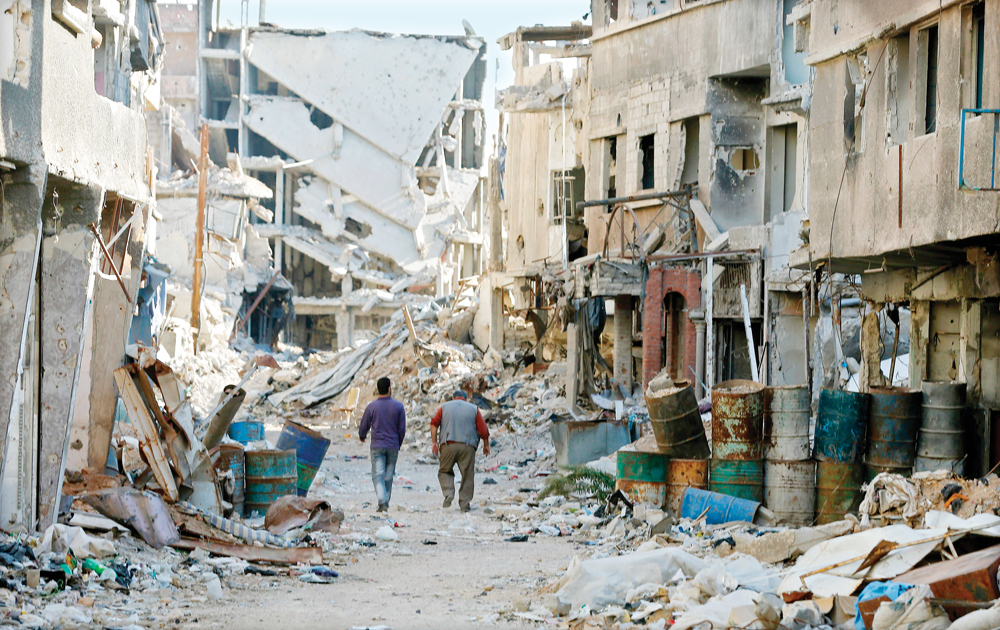
The rare attacks in the province populated mainly by minority Druze included several suicide bombings. The violence on July 25 devastated the community and shattered the region’s calm. At least 216 people were killed and the militants walked away with the captives.

Nashaat Abu Ammar said about 20 of those killed were close relatives and 60 others were related.
Najwa Abu Ammar said the captors held the group in different hideouts, including a camp and a cave, and once kept them in a moving car for over 12 hours, the captives not knowing where they were headed.

The militants fed them sporadically and beat and insulted the children. They didn’t torture them, Abu Ammar said, but started threatening to kill them as time passed.

At least two women and one man died in captivity, including a woman who was shot by the extremists to pressure authorities in negotiations for the captives’ release.

Abu Ammar’s husband said she looked frail.

“Sometimes they fed us once every two days and other times twice every day,” Abu Ammar said, adding that it was mostly just olive oil, thyme and jam.

“They held us first in a camp then a cave and kept moving us from one place to the other,” she said.

Abu Ammar said she didn’t know about the killed hostages until they were liberated.


Broad offensive

Six other hostages, two women and four children, had been freed in an exchange with the regime in October. Negotiations were expected to free the remaining hostages but talks failed and Syrian troops launched a broad offensive against Daesh in southern Syria.

Separately, a war monitoring group and pro-Assad media accused the US-led coalition of killing over two dozen civilians in airstrikes in Hajjin, a town in southeastern Syria near the border with Iraq, Daesh’s last stronghold.

Spokesman Col. Sean Ryan told AP in an email that the US-led coalition “successfully struck (and) destroyed” a Daesh observation post and staging area in Hajjin “void of civilians at the time.”

Ryan said the coalition team in charge of tracking civilians reviews claims of civilian casualties they see in media reports.

The Britain-based Syrian Observatory for Human Rights said at least 26 people, believed to be members of Daesh families, were killed in Hajjin and another seven were killed in Shafaa in airstrikes on Friday. 

The Observatory said the dead were mostly women and children and were mostly Iraqis.

Syria’s state news agency reported 26 killed, quoting locals.

The Daesh group posted a rare video from inside Hajjin showing badly destroyed homes, bodies protruding from under rubble and dust still rising from some buildings.

The US-led coalition and local allies have been battling Daesh on the eastern banks of the Euphrates River. 

But the militants continue to hold their ground in the small sliver of territory around Hajjin.

Main category: 

After Daesh, Damascus suburb residents blocked from going home2 killed children among liberated Syrian hostages held by Daesh


More sanctions likely on Iranian regime, says US national security adviser

Author: 
Sat, 2018-11-10 22:29

PARIS: US National Security Adviser John Bolton said that more sanctions were possible on Iran just days after a new round of measures touted as the most punishing ever on Tehran entered into force.

Bolton said two rounds of unilateral US sanctions introduced by President Donald Trump in August and most recently on Monday had had a “quite significant” effect on the Iranian economy and the country’s actions abroad.

“I think that you’re going to see even more sanctions coming into play over time and much tighter enforcement of the sanctions,” Bolton said in Paris.

Asked what would be the target of the sanctions, he replied: “There are other things we can do in the terrorism and counterterrorism area.”

The International Monetary Fund (IMF) forecasts that the sanctions will cause Iran’s economy to contract 1.5 percent this year and 3.6 percent next year — pain that Trump has boasted about.

“We’ve seen indications that it has affected their belligerent activity in Iraq, Syria and Yemen. Not enough yet, but it’s beginning to have that effect,” Bolton said.

“We’ve seen a continuation and exacerbation of political discontent inside Iran. That opposition continues to manifest itself. Economically the Iranian currency is going through the floor, inflation has quadrupled and the country is clearly in recession.”

He said “the objective is still to drive Iranians exports of oil to zero” despite waivers given to the biggest buyers of Iranian oil, including China, India and South Korea.

“It’s with some satisfaction that I noticed today the price of oil is down. We have worked with the Saudi Arabia, the UAE, and other producers to make sure production is up so that historic buyers of Iranian oil are not disadvantaged,” he added.

Bolton spoke as Iranian President Hassan Rouhani said that US sanctions have had no effect on Iran’s economy because Washington had already practically reimposed them earlier.

“The sanctions have had no impact on our economy because America had already used all the weapons at its disposal and there was nothing new to use against us,” Rouhani said in remarks carried live on state television on Saturday.

“They just issued a long list of banks, their branches … and airlines and their planes. And this shows that they are merely trying to affect the Iranian nation psychologically,” Rouhani said.

The US said it would temporarily allow eight importers to keep buying Iranian oil when it reimposed sanctions last Monday aimed at forcing Tehran to curb its nuclear, missile and regional activities.

“It has now become clear that America cannot cut Iran’s oil exports to zero,” Rouhani added, speaking after a weekly meeting with the heads of the parliament and the judiciary.

Main category: 

US grants Iraq 45-day waiver over Iran sanctions to import gas, electricity: US EmbassyRouhani: New US sanctions have no effect on Iran economy


Palestinian dies of wounds from West Bank clashes

Author: 
AFP
ID: 
1541870657421664200
Sat, 2018-11-10 16:47

RAMALLAH: A Palestinian man shot in clashes with Israeli forces in October has died of his wounds, the health ministry in the occupied West Bank said on Saturday.
Mohammed Shreyteh, 28, had been shot in the head during the clashes that took place on October 26 in the West Bank.
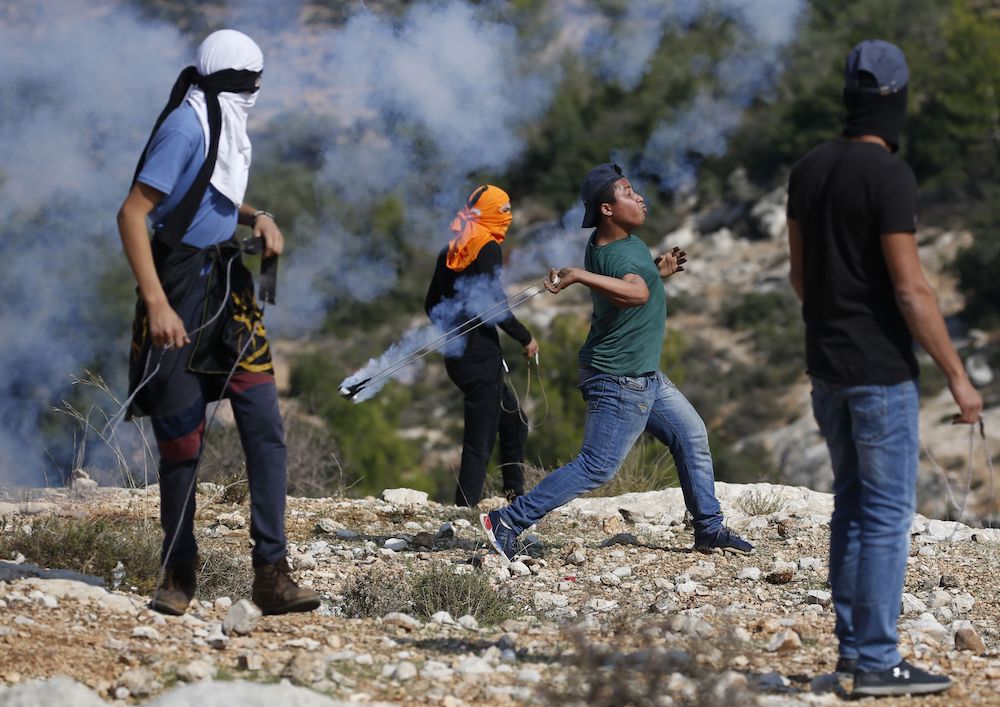
At the time, witnesses said the violence erupted when Israeli settlers came to visit a site near the West Bank village of Al-Mazraa Al-Gharbiya, and that Palestinians pelted them with stones.
Israeli forces then intervened and fired tear gas and ammunition at the Palestinians, according to the witnesses.
The Israeli army accused Palestinians of instigating a “riot” during which they allegedly “set off fireworks and hurled rocks” at troops and border police.
The military responded with “riot dispersal means and fired in accordance with standard operation procedures,” it said.
During those clashes another Palestinian, Othman Ladawda, 33, was killed, the health ministry in the West Bank said at the time.
He was hit with live ammunition, with the bullet piercing organs in his lower abdomen, the ministry said.

Main category: 

Wintry weather and diplomacy cool down Gaza border protestsGaza border protest more subdued


Lebanon’s Hezbollah insists on government demand, warns Israel

Author: 
Reuters
ID: 
1541868330941428400
Sat, 2018-11-10 16:33

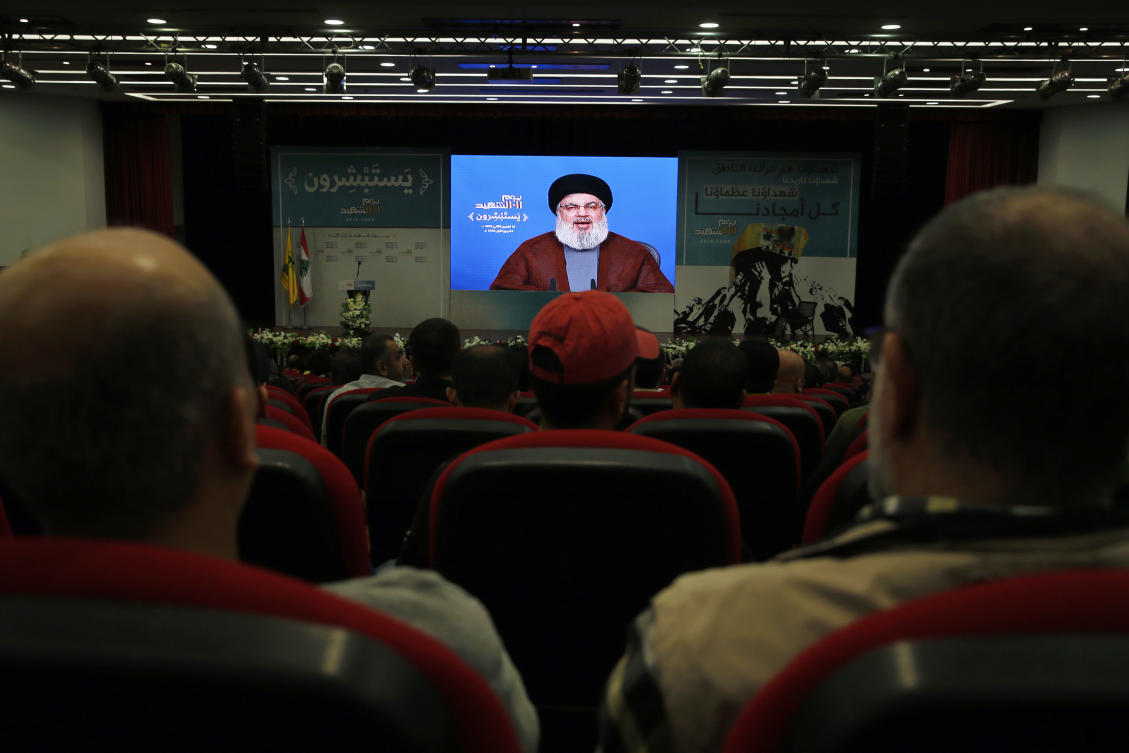
BEIRUT: The leader of the Lebanese Shiite group Hezbollah insisted that one of its Sunni allies be given a portfolio in a new Lebanese cabinet, and indicated it would be ready to go back to square one in negotiating a government if necessary.
In a televised speech on Saturday, Sayyed Hassan Nasrallah also warned Israel that his Iranian-backed group would respond to any attack on Lebanon and urged his country to withstand diplomatic pressure over its rocket arsenal.
Hezbollah’s demand for one of its Sunni allies be given a portfolio in the new Lebanese government is at the heart of a row that has obstructed a final agreement six months since a parliamentary election.
The formation of a new government is necessary before any moves can be made toward fiscal reforms which the International Monetary Fund said in June are needed immediately to improve debt sustainability.
Hezbollah says one of its Sunni allies must be represented in the government to reflect their election gains.
But Prime Minister-designate Saad Al-Hariri, who is Lebanon’s main Sunni politician and enjoys Western backing, has ruled out allocating any of his cabinet seats to them.
Lebanon’s political system requires government positions to be allotted along sectarian lines.
Nasrallah said rejecting a Sunni ally from its “March 8” camp amounted to exclusion of a section of Lebanese.
“We were sincere when we spoke of a national unity government. There is no national logic, or moral logic, or legal logic … for anyone in Lebanon to come out and say ‘it is forbidden for the March 8 Sunnis to be represented in the Lebanese government,” Nasrallah said.
“If it is forbidden, come let’s talk again from the start,” he said, adding: “We don’t want conflict, or tension, or escalation.”
President Michel Aoun vowed earlier on Saturday to find a solution to the problem. Though a political ally of Hezbollah, Aoun has sided with Hariri in the row.
Hezbollah, groups and individuals that support its possession of weapons won more than 70 of the 128 seats in the May 6 parliamentary election.
Hezbollah is proscribed as a terrorist group by the United States. The group last fought a major conflict with Israel in 2006, since when it has grown militarily stronger as a major participant in the Syrian war.
Nasrallah said Israel had recently tried to increase pressure over the group’s rocket arsenal and to create “a state of intimidation and threat that if this matter is not dealt with, it (Israel) will deal with it.” Israel had used “the Americans and even some European states” in this effort, he said.
“I say to Lebanon that it must bear this level of diplomatic pressure,” Nasrallah said. “Any attack on Lebanon, any air strikes on Lebanon or bombardment — we will certainly respond,” he said.

Main category: 

‘Hezbollah needs to be eliminated,’ UAE tycoon Al-Habtoor tells Arab-US policymakers conferenceUS sanctions on Hezbollah embarrass Lebanon