Lebanon to form body to probe civil war disappearances
Author:
Associated Press
ID:
1542053355750573000
Mon, 2018-11-12 (All day)
BEIRUT: Lebanon’s parliament on Monday approved the formation of an independent commission to help determine the fate of thousands of people who went missing during the country’s civil war, which ended nearly three decades ago.
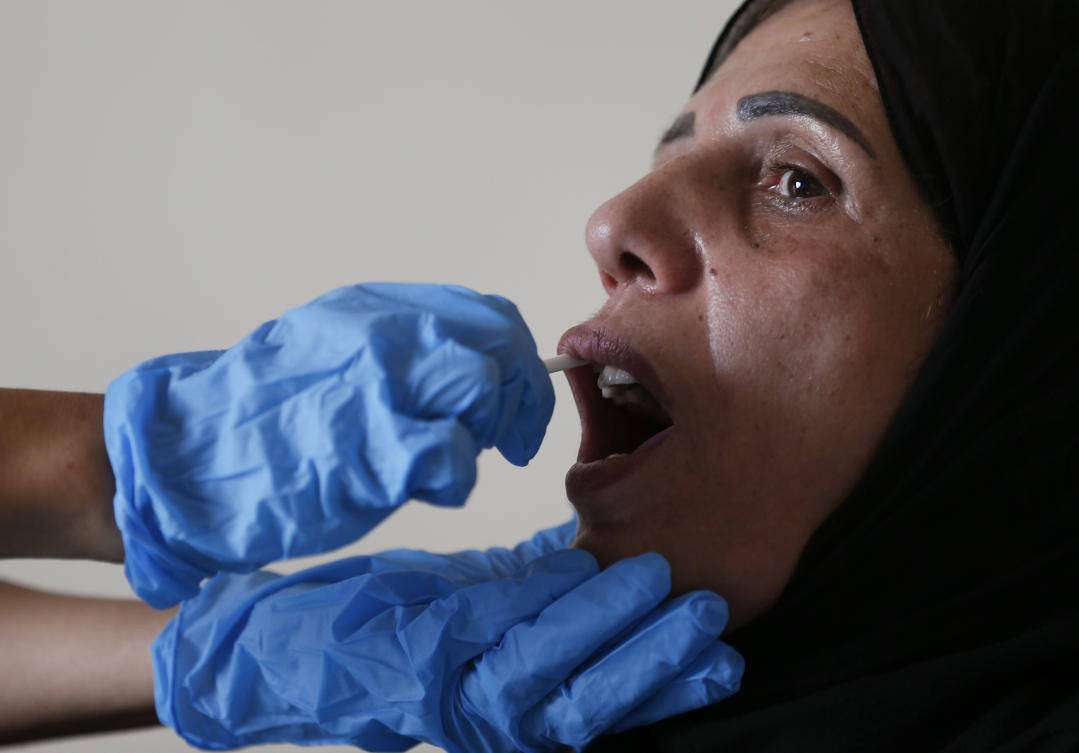
The long-awaited law would empower an independent national commission to gather information about the missing, collect DNA samples and exhume mass graves from the 1975-1990 conflict.
Families and rights groups have been campaigning for the law since 2012, when it first went to parliament.
“This is the first step toward giving closure to families of the missing hopefully,” said Rona Halabi, spokeswoman for the International Committee for the Red Cross. “This represents a milestone for the families who have waited for years to have answers.”
The Hague-based International Commission on Missing Persons says more than 17,000 people are estimated to have gone missing during the Lebanese civil war.
Lebanon’s National News Agency said lawmakers approved the law after voting on each of its 38 articles.
LBC TV said lawmakers initially protested, saying calls for accountability may affect current officials. The broadcaster said they were reassured the 1991 amnesty for abuses committed by militias during the war remains in place.
Many of Lebanon’s political parties are led by former warlords implicated in some of the civil war’s worst fighting.
“For the first time after the war, Lebanon enters a genuine reconciliation phase, to heal the wounds and give families the right to know,” Gebran Bassil, the country’s foreign minister tweeted.
The ICRC began compiling DNA samples from relatives of the disappeared in 2016 and has interviewed more than 2,000 families to help a future national commission.
DNA samples have been stored with the Lebanese Internal Security Forces and the ICRC. The law would allow Lebanese security forces to take part in the sample collection.
Lebanon’s Hezbollah insists on government demand, warns Israel
US security chief Bolton in UAE for ‘regional’ talks
Author:
AFP
ID:
1542052772560545500
Mon, 2018-11-12 17:46
ABU DHABI: US National Security Adviser John Bolton held talks on Monday with Abu Dhabi Crown Prince Sheikh Mohammed bin Zayed on regional issues and the fight against “terrorism,” state media said.
Bolton’s visit comes as international pressure mounts to end the war in Yemen, where government loyalists backed by an Arab-led coalition, including Emirati forces, are battling Iran-aligned Houthi rebels.
Serious & substantive meetings today in UAE w/ Crown Prince Mohammed bin Zayed Al-Nahyan & National Security Advisor Sheikh Tahnoon bin Zayed Al-Nahyan. We discussed Iran, Yemen, Afghanistan, counterterrorism & a range of other issues. Looking forward to joining @VP in Singapore.
Government forces, led on the ground by Emirati-backed troops, have made their way into Hodeidah after 11 days of clashes.
Ahead of the trip to the UAE, Bolton said in a tweet he was “looking forward to meeting with our friends in the UAE to discuss important regional issues.”
WAM state news agency said the talks focused on “cooperation between the two countries in several fields, as well as issues of concern to both countries.”
Bolton and Sheikh Mohammed, who is also deputy supreme commander of the UAE armed forces, “exchanged views on several regional and international issues” and also discussed “international efforts and cooperation to confront terrorism and terrorist groups,” the agency reported.
King Salman meets British Foreign Minister Jeremy HuntThe fifth annual Abu Dhabi Strategic Debate kicks off in UAE capital
Lebanese MP: Sweida hostages were freed by Russia
Author:
Mon, 2018-11-12 22:30
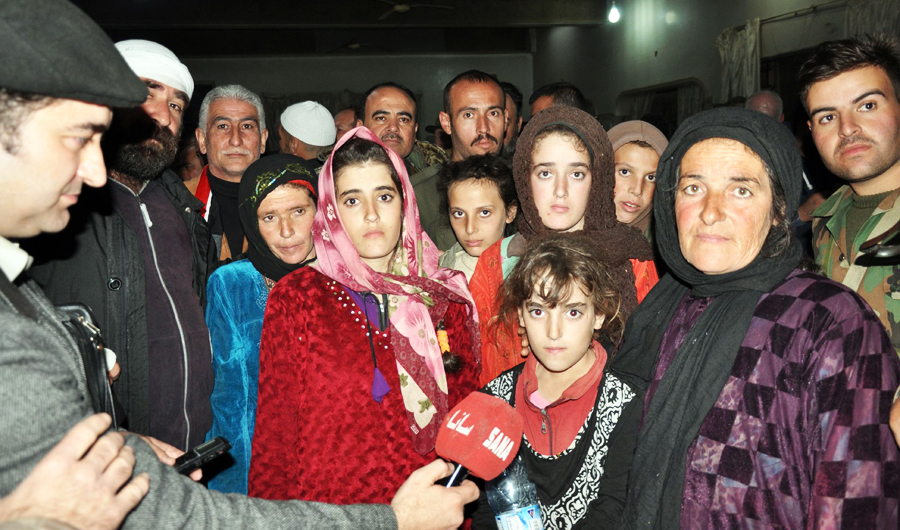
BEIRUT: Lebanese MP and member of the Democratic Gathering party Wael Abou Faour told Arab News that “the liberation of the women abducted by Daesh on Nov. 8 was accomplished by Russian special forces. They were responsible for the monitoring, reconnaissance, timing and execution of the operation. The Syrian army was not the one to do so as the regime had claimed. However, some Syrian elements that directly follow the Russian leadership took part in the operation.”
“What happened was a military liberation operation. No deal was made with the Syrian regime or the abductors,” he added.
Faour had accompanied the head of the Democratic Gathering party, Taymour Jumblatt, on a trip to Moscow where they met with the Russian Deputy Foreign Minister Mikhail Bogdanov, in the presence of the official in charge of the issues of Lebanon, Syria and Palestine Andrei Banov. “The Russians informed us that the hostages will be released very soon at 10 a.m. Moscow time, while the Syrian announcement of their liberation came at 3 in the afternoon,” he noted.
Daesh had kidnapped 36 women and children from the Syrian southern province of Sweida during an attack that killed more than 250 people, according to the Syrian Observatory for Human Rights.
“The Syrian regime was responsible for the kidnapping in the first place, so it is not normal for it to be behind the liberation. The regime wanted to use what happened to blackmail Syrian Druze into returning to the military service. There are hundred of thousands of Druze in Syria and 53,000 of them refused to join the military.”
“Since the beginning of the kidnapping crisis, the Russian leadership informed us that it is working directly on the ground and running the negotiations. Through announcing its responsibility for the liberation of the hostages, the Syrian regime is trying to look as if it is protecting the Druze and acquit itself from letting Daesh into the Druze areas,” Faour pointed out.
“The situation in Sweida is relatively acceptable. Some arrangements are being made under the direct guidance of the Russian leadership. Taymour Jumblatt is taking part in this matter in a way that preserves the security of Sweida residents and their relations with the rest of the Syrian people and prevents their usage in any future conspiracies carried out by the regime.
“These recent events showed that Taymour Jumblatt’s confidence in the Russians was in place especially after the liberation operation. Further discussions about future arrangements related to the Druze’s situation in Syria are under way. A suggestion proposed that the Druze wanted for military service would join the fifth legion led directly by Russia, which is receiving positive feedback among Druze,” he said.
“The relation between the Progressive Socialist Party led by Walid Jumblatt and the Russian Federation is historic. Russians preserve their relations with their historic allies and remember the great role of Kamal Jumblatt, who was awarded with the Order of Lenin among very few figures in the world. They also cherish the common friendship and struggle they share with Walid Jumblatt and want to consolidate the relation with his son Taymour.
“The relation with Russia does not lead to a relation with President Bashar Assad. That relation will only come back to life when there is a democratic regime in Syria,” Faour stressed.
“Russia is working on a gradual political solution in Syria. There is no turning away from the constitutional committee. There are discussions related to the representatives of the civil society that constitute a third of the committee, which balances it in some way.
“The meeting held with Russian officials also discussed Lebanese issues. Moscow showed a great interest in the internal situation and it fears that the current developments, international disputes in particular, may destabilize its stability.
“They are very concerned with the forming of the Lebanese government headed by Saad Hariri, and Bogdanov expressed Russia’s readiness to take any initiative to help Lebanon overcome the government crisis,” he added.
2 killed children among liberated Syrian hostages held by DaeshSyria army frees 19 Druze hostages from Daesh
Israeli air strikes kill three Palestinians in Gaza after rocket fire
Author:
daniel fountain
ID:
1542036756749322700
Mon, 2018-11-12 18:42
GAZA: Israeli air strikes in Gaza killed three Palestinians on Monday after a barrage of rocket fire from the enclave, as renewed violence threatened to derail efforts to restore calm.
Israel’s military said it had so far struck more than 20 militant sites in response to some 80 launches from the Hamas-run territory, reportedly rockets and mortars.
Missile defences had intercepted a number of the rockets, the military said.
The army said an Israeli bus was hit by fire from the Gaza Strip. Medics reported one person severely wounded.
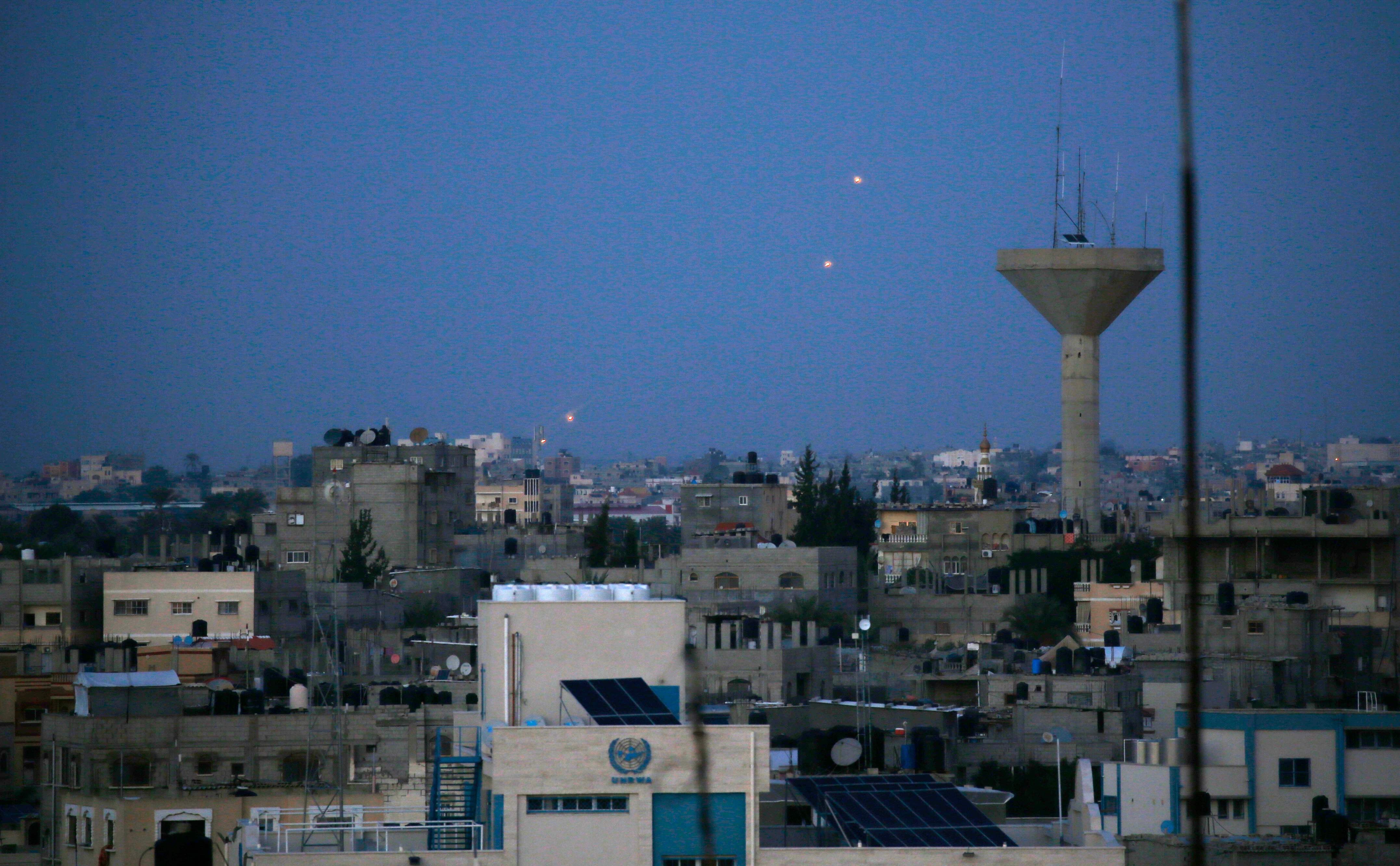
A picture taken from the Gaza Strip on November 12, 2018 shows missiles being launched toward Israel. (AFP)
Medics also said six people from the southern Israeli city of Sderot were lightly wounded.
Israeli police said a rocket hit a house in Netivot, another southern Israeli town.
Gaza’s health ministry said three Palestinians were killed in the Israeli strikes.
Militant group the Popular Front for the Liberation of Palestine said two were its members.
A picture taken from the Gaza Strip on November 12, 2018 shows missiles being launched toward Israel. A number of rockets were launched from the Gaza Strip toward Israel. (AFP)
Hamas meanwhile said it was behind the rocket fire on behalf of all Palestinian militant groups in Gaza, saying it was in revenge for a deadly Israeli military operation late Sunday.
On Sunday, a clash erupted during an Israeli special forces operation in the Gaza Strip that killed seven Palestinian militants, including a local commander for Hamas’s armed wing, and an Israeli army officer.
Prime Minister Benjamin Netanyahu cut short a trip to Paris and rushed home as tensions rose, and on Monday convened a meeting of security chiefs.
Israel had stressed its covert operation on Sunday was an intelligence-gathering mission and “not an assassination or abduction,” but Hamas strongly denounced it and vowed revenge.
Israel signalled that Sunday’s mission did not go as planned and resulted in the clash, which Palestinian officials said included Israeli air strikes.
In the immediate aftermath of the clash, Israel said it identified 17 launches – likely rockets or mortars – toward its territory from Gaza, with three intercepted by missile defences. No injuries were reported.
Hamas’s armed wing, the Ezzedine Al-Qassam Brigades, said the Israeli special forces team had infiltrated near Khan Yunis in the southern Gaza Strip in a civilian car.
Al-Qassam agents stopped it and wanted to search it, realised it was an Israeli operation and confronted them, it said in a statement.
An exchange of fire followed in which local Al-Qassam commander Nour Baraka was killed along with another militant, it said.
The car then attempted to flee and Israeli aircraft provided covering fire.
An Israeli helicopter landed near the fence and took away the special forces troops, according to Al-Qassam.
Israeli military spokesman Jonathan Conricus declined to comment on the Al-Qassam account “because of the sensitive nature of the operation”.
Israel provided few details on Sunday’s operation, saying it was carried out by special forces and resulted in an “exchange of fire”.
A funeral was held for the seven Palestinian militants on Monday attended by thousands, including masked Al-Qassam members carrying rifles, some firing into the air.
On the Israeli side of the border, residents said they had stayed close to shelters throughout the night.
“I was sitting in my living room and around 10 pm or 11 pm, I suddenly heard the sound of helicopter gunships firing,” said Gadi Yarkoni, head of a regional council in the area and a resident of Nirim Kibbutz.
“It was right above the village I’m living in. It was very unpleasant.”
The clashes came after months of deadly unrest along the Gaza-Israel border had appeared to be calming.
Recent weeks have seen Israel allow Qatar to provide the Gaza Strip with millions of dollars in aid for salaries as well as fuel to help ease an electricity crisis.
Before the flare-up, Netanyahu had defended his decision to allow Qatar to transfer the cash to Gaza despite criticism from within his own government over the move, saying he wanted to avoid a war if it was not necessary.
Naftali Bennett, Netanyahu’s education minister and right-wing rival, compared the cash flow to “protection money” paid to criminals.
Israel and Palestinian militants in Gaza have fought three wars since 2008, and recent months have raised fears of a fourth.
Deadly clashes have accompanied major protests along the Gaza-Israel border that began on March 30.
At least 230 Palestinians have since been killed by Israeli fire, the majority shot during protests and clashes, while others died in tank fire or air strikes.
Two Israeli soldiers have been killed in that time.
Egyptian and UN officials have been mediating between Israel and Hamas in an effort to reach a long-term truce deal.
Israel-Gaza border falls quiet after botched Israeli operation
Bomb in Turkish-controlled Syrian town kills 1, wounds 24
Author:
Associated Press
ID:
1542025025898350100
Mon, 2018-11-12 (All day)
ANKARA, Turkey: Turkey’s state-run news agency says a car-bomb explosion in a Turkish-controlled town in northern Syria has killed one person and wounded 24.
The Anadolu Agency says the explosion occurred Monday in front of a school in the town of Jarablus. Five of the wounded were in serious condition and were evacuated to Turkey for treatment.
No one immediately claimed the attack.
The town is part of a swath of territory in northern Syria that has been under Turkish control since 2016, when Syrian rebels backed by Turkey drove out Daesh militants.