Normalcy restored in Egyptian Sinai city, but danger lurks

Author: 
Tue, 2018-12-11 22:18

EL-ARISH, Egypt: Mohammed Amer Shaaban stood over trays of fresh fish at his tiny store in the coastal Sinai Peninsula city of El-Arish, pointing to his right and left while recalling the tough days when Daesh militants operated with impunity.
“They killed a Christian who owns a knife shop there and an informant over there. They also killed one of my cousins,” he said.
“We have enjoyed some stability and peace for the past six or seven months,” added the 48-year-old father of five as some two dozen journalists descended on El-Arish’s fish market as part of a rare, army-organized trip.
The trip was chiefly designed to show off signs of normalcy in El-Arish, northern Sinai’s largest city, as evidence that the military’s all-out offensive against militants launched nearly 10 months ago has succeeded.
But in the city and the surrounding deserts, the signs of war are difficult to miss, particularly the enormous security presence. The Associated Press was required to submit the photos and video accompanying this story to Egypt’s military censor, which did not say two weeks after submission if or when the material would be released.
The carefully scripted trip included visits to an indoor arena packed with thousands of screaming schoolchildren, a new housing project, a school and a factory. No one is claiming the militants have been defeated, but there have been no major attacks for several months, save a recent ambush of buses carrying Christian pilgrims to a remote desert monastery south of Cairo that left seven dead.
The fight against militants in Sinai has gone on for years, but the insurgency gathered steam after the 2013 ouster by the military of a freely elected but divisive president, the Islamist Mohammed Morsi of the Muslim Brotherhood. Authorities have since shut down almost all underground tunnels that they suspected militants used to smuggle fighters and weapons into Sinai from neighboring Gaza, ruled by the Islamist Hamas group since 2007.
They also razed to the ground much of the town of Rafah on the Gaza border in a bid to deny the militants a safe haven and stop its use as cover for tunnels. Elsewhere in northern Sinai, olive orchards have been bulldozed to deny the militants sanctuary.
A brutal militant attack on a Sinai mosque that killed more than 300 worshippers a year ago — the deadliest such attack in Egypt in living memory — prompted general-turned-president Abdel-Fattah el-Sissi to order a major offensive.
The operation, with thousands of troops backed by tanks, jet-fighters and warships, got underway in February. Security forces almost completely sealed off northern Sinai, causing shortages of food and fuel. The siege was eased in May, allowing normalcy to gradually return to the mostly desert region, especially in El-Arish.
Barely a year ago, militants in El-Arish killed suspected informants in broad daylight, set up bogus checkpoints, shot Christians in their stores, snatched clerics and members of the security forces to later dump their bodies on the streets. Now traffic is heavy, families are out in public, stores are filled with goods, and school classes are packed with children.
The military is eager to tout the changes.
“Terrorism will be completely defeated in a matter of a few months,” announced Mohammed Abdel-Fadeel Shoushah, a retired general who serves as the governor of northern Sinai. “Now we are focusing on development, which is the basis of security.”
For now, though, El-Arish shows enduring signs of conflict.
A Pharaonic-style building across the road from the governor’s heavily guarded office has almost every one of its windows shattered. Some streets are blocked by sand berms, while others are sealed off by concrete blocks. Unfinished buildings are everywhere in the city, parts of which look deserted. Many of the date palms in the city look like they have received little care for years.
Authorities are building a wall around the city’s airport after militants last December rocketed a helicopter used by the then defense and interior ministers while parked on the tarmac. The ministers were unharmed, but one officer was killed in the attack.
Another wall with heavily fortified watch towers is being built on the southern reaches of the city to prevent militants from infiltrating through dense olive orchards.
The pervasive security, and the great lengths to which the military went to protect the journalists, suggest danger may not be far away. The reporters traveled in armored cars with gunners in full combat gear perched atop, and a signal-jamming vehicle tagged along as a precaution against roadside bombs. The top officials in the convoy were protected by heavily armed policemen in black fatigues and ski masks.
In late October, militants twice attacked workers employed by the company building the wall just south of El-Arish, killing at least six and wounding 16. Earlier in November, security forces killed 12 militants hiding in unused buildings in El-Arish.
“Stay put in the vehicle and don’t come out and wander around,” an armed plainclothes police officer sternly warned reporters during one stop. “It is not as safe as you might think,” he said, pointing to the expanse of desert on one side of the road.
The magnitude of the counterterrorism task becomes apparent during the nearly 200-kilometer (125-mile) journey through the desert from the east bank of the Suez Canal to El-Arish.
All along the road are military positions. At some, tanks are buried in the sand for protection with only their turrets showing. Soldiers on watch towers in the middle of nowhere cut forlorn figures against a backdrop of desert. The checkpoints create long lines of vehicles. Helicopters occasionally hover above.
El-Arish resident Hassan Mahdi, a lawyer who came to Sinai from a Nile Delta province as a young boy nearly 30 years ago, said the restored security is a welcome change.
“To be honest, life was very, very difficult here,” he said. “Businesses were relocating out of Sinai in search of security and many things were in short supply. Not anymore.”

Main category: 

Life returns to Egypt’s Sinai city despite anti-militant warEgyptian police kill 12 militants in Sinai raid
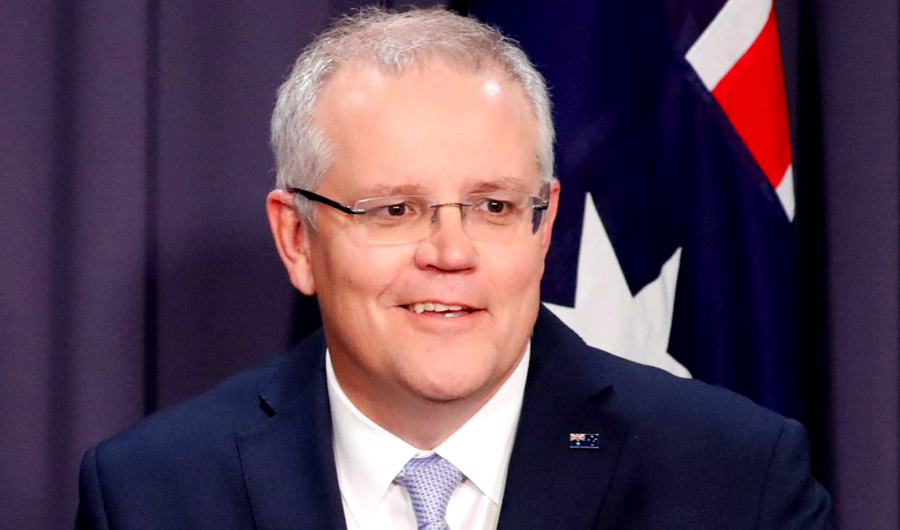


Australian government discusses moving Israel embassy to Jerusalem

Author: 
Tue, 2018-12-11 22:05

SYDNEY: Australia’s government met on Tuesday to discuss whether to move its embassy in Israel from Tel Aviv to Jerusalem, two sources familiar with the matter said, a decision that would break with decades of policy and risk angering Asian neighbours.
“Cabinet met today and the issue of moving the Israeli embassy was discussed. The decision is still pending,” said one of the sources who declined to be identified as he is not authorised to speak to the media.
Prime Minster Scott Morrison in October said he was “open” to moving the embassy to Jerusalem, following the lead of U.S. President Donald Trump.
The United States opened a new embassy in Jerusalem in May, a move that delighted Israel, infuriated Palestinians and upset the wider Arab world and Western allies.
The Australian newspaper reported several senior cabinet members were leaning towards recognising Jerusalem as Israel’s capital while stopping short of moving the embassy.
Jerusalem’s status is a major obstacle to a peace deal between Israel and the Palestinians. Israel regards all of the city, including the eastern sector that it annexed after a 1967 war, as its capital.
The Australian newspaper said a decision could be announced this week.
By recognising Jerusalem as Israel’s capital, Morrison would be hoping to keep his conservative backbench happy but it would likely anger neighbours, including Indonesia, the world’s biggest Muslim-majority country.
The Palestinian question is sensitive in Indonesia and it has refused to sign a free trade agreement with Australia until it confirms its plans towards Israel.
Israel’s government regards Jerusalem as the eternal and indivisible capital of the country. Palestinians feel equally strongly, saying that East Jerusalem must be the capital of a future Palestinian state.

Main category: 

Trump rejects moving Israel embassy to Jerusalem — for nowIsrael, Palestinians jockey over Jerusalem in Trump era


Egypt probes images of naked couple atop pyramid

Author: 
AFP
ID: 
1544546651682226100
Tue, 2018-12-11 16:05

CAIRO: Egyptian authorities have launched an investigation into images said to show a naked couple who scaled the Great Pyramid that has sparked outrage in the conservative Muslim country, an official said Tuesday.
In a video titled “Climbing the Great Pyramid of Giza,” Danish photographer Andreas Hvid appears to scale the 4,500-year-old tomb on the outskirts of Cairo at night with an unidentified woman who is later seen taking off her top.
Hvid says the video was taken in late November but it was published on YouTube on December 8.
A photograph released by Hvid appears to show the couple completely naked on top of each other while looking in the direction of a nearby pyramid with the horizon illuminated.
“The public prosecution is investigating the incident of the Danish photographer and the authenticity of the photos and video of him climbing the pyramid,” Mostafa Waziri, the secretary general of Egypt’s supreme antiquities council, told AFP.
If the video was actually filmed at the top of the pyramid, that would make it a “very serious crime,” Waziri said.
The nearly three-minute video has taken social media by storm and has been the subject of late night talk shows. It has notched up almost three million views on YouTube alone.
“A 7,000-year-old civilization has turned into a bed sheet,” a Twitter user in Egypt lamented.
Another protested that “they want to soil the dignity and pride of Egyptians because the pyramid reflects the glory and grandeur of the Egyptian people.”
The authenticity of the images has been disputed with some arguing the photograph showing the pair naked appears to be very bright whereas the video showed them scaling the pyramid at night.
Antiquities Minister Khaled el-Enany told government newspaper Al-Ahram that the video has stirred “anger and outrage among Egyptians,” and that officials in charge of guarding the pyramids would be punished if found to have been negligent.
Hvid, 23, explained back home to the Danish newspaper Ekstra Bladet that he had “dreamed for many years of climbing the Great Pyramid” as well as of taking a naked photograph.
“I’m sad that so many people have got angry but I’ve also received a lot of positive responses from many Egyptians,” he said in an interview.
The young Norwegian, who runs his own YouTube channel, said he had absolutely no interest in stirring up a crisis such as that triggered by cartoons in Western newspapers of the Prophet Muhammad.
As for the girl in the video, she was not his girlfriend. “It was just a pose. We did not have sexual relations,” Hvid said.
The Great Pyramid, also known as the Khufu pyramid, is the largest in Giza, standing at 146 meters (480 feet) tall, and the only surviving structure of the Seven Wonders of the ancient world.
Climbing pyramids is forbidden in Egypt.
In 2016, a German tourist was barred from entering the country for life after he posted online footage of climbing one of the ancient structures.

Main category: 


Lebanon’s Aoun says Israeli anti-tunnel action no risk to peace

Author: 
Reuters
ID: 
1544546621432224500
Tue, 2018-12-11 16:06

BEIRUT: Lebanese President Michel Aoun said on Tuesday he saw no risk to peace from an operation by Israel’s military to disable cross-border tunnels it says were dug into its territory by Hezbollah guerrillas.
Israel says Hezbollah, Lebanon’s most powerful armed group, dug the tunnels with the aim of launching attacks into Israel with backing from its regional sponsor Iran. Hezbollah has yet to comment.
“We certainly took this issue seriously — the presence of tunnels at the border — and Israel informed us via the United States that it does not have aggressive intentions and it will continue to work on its (territory),” Aoun told a news conference.
“We also do not have aggressive intentions… We are ready to remove the causes of the dispute, but after we obtain a final report and we set out the matters that need to be dealt with.”
During a televised visit to the border, Prime Minister Benjamin Netanyahu said Israel was “methodically dismantling the tunnel weapon,” and warned Hezbollah not to re-establish the front.
“If Hezbollah makes the big mistake of deciding in any way to strike at us or resist the (anti-tunnel) action we have undertaken, it will get hit with blows that it cannot even imagine.”
The UN peacekeeping force in Lebanon, UNIFIL, last week confirmed the presence of one tunnel near the Israeli town of Metulla. The force’s head, Major General Stefano Del Col, said on Tuesday that a second one had been found while Israel’s military said it had discovered a third.
Del Col, in a statement issued after meeting Aoun, said the matter was “serious.” UNIFIL was making “every effort to maintain clear and credible channels of communication with both sides so that there is no room for misunderstanding.”
Israel has said it is up to UNIFIL to deal with the tunnels on the Lebanese side of the border, and its military said it held the Beirut government responsible for “another blatant breach” of a UN resolution that ended a 2006 war between Hezbollah and Israel.
Aoun, a political ally of Hezbollah, said in a separate statement that Lebanon was committed to implementing that resolution.
Israel and Hezbollah have avoided major conflict across the Lebanese-Israeli border since 2006, though Israel has mounted attacks in Syria targeting what it said were advanced weapon deliveries to the group.

Main category: 
Tags: 


EU agency: More Iranian, Turkish citizens seeking asylum

Author: 
Associated Press
ID: 
1544523051270478100
Tue, 2018-12-11 (All day)

BRUSSELS: The European Union’s asylum office says people from Iran and Turkey are increasingly applying for international protection throughout the EU.
EASO said Tuesday that “Iran and Turkey have both been among the top five countries of origin over the past few months.”
It says that 3,170 Iranians applied for asylum in the EU in October, the highest number for more than two years. More than one in three Iranian applicants received protection in the past six months.
October saw a record 2,880 asylum applications lodged by Turkish citizens. Over the past six months, around 44 percent of Turkish applicants were granted refugee status.
EASO says more than 60,500 people applied for asylum in October, the highest monthly figure this year. Most were nationals of Syria, Afghanistan and Iraq.

Main category: 

Iran sentences 3 rights lawyers to prisonIran can expand range of ballistic missiles: Guards commander