UAE rebuts false allegations regarding Sheikha Latifa

Author: 
sarah glubb
ID: 
1545686199516296700
Mon, 2018-12-24 22:39

DUBAI: The UAE Ministry of Foreign Affairs and International Cooperation released a statement on Monday via the state run WAM, detailing a communique by the UAE Mission in Geneva rebutting allegations regarding Sheikha Latifa bint Mohammed Al-Maktoum.
Below is the statement in full:
“On Dec. 21 2018, the UAE Mission in Geneva delivered a communique regarding H.H. Sheikha Latifa bint Mohammed Al-Maktoum to the Office of Special Procedures at the United Nations High Commissioner for Human Rights. The communique responds to and rebuts false allegations and provided evidence that Her Highness Sheikha Latifa was at home and living with her family in Dubai.
“At the request of the family, on Dec. 15 2018, Mary Robinson, former United Nations High Commissioner for Human Rights and former President of Ireland, met with Sheikha Latifa in Dubai.
“The photographs taken during the afternoon they spent together have been shared, with their consent. During her visit to Dubai, Robinson was reassured that Sheikha Latifa is receiving the necessary care and support she requires.”

Main category: 


Christmas is about keeping hope alive, says Bethlehem mayor

Author: 
daniel fountain
ID: 
1545678940176082200
Mon, 2018-12-24 22:25

BETHLEHEM: Bethlehem Mayor Anton Salman said keeping hope alive was his biggest challenge.
Talking to Arab News during an exclusive interview, he expressed his wish to bring thousands of disapora Bethlehemites back to the city, but acknowledged his inability to do so “because there’s no land due to Israeli settlements.”
Following are excerpts from the interview:

Q. What is your biggest challenge as mayor of a city surrounded by walls and settlements?
A. Keeping hope alive. We do so not only as a matter of carrying the message of Christmas, but also through our daily work: Building institutions and capacity for our people is a strong form of resistance against the occupation.
In practical terms, I’d like to bring back thousands of Bethlehemites from the diaspora, but I can’t do that because there’s no land due to Israeli settlements, and because the Israelis control the population registry and many people have lost their IDs. Whether by taking land or residency rights, Israel doesn’t want us here. We tell Israel that no matter what, we’ll remain.

Q. What is the biggest obstacle for tourism in Bethlehem?
A. Israel’s monopoly over tourism, but we also have a responsibility in terms of doing more advocacy and promotion. Israel has even tried to prevent tourists from sleeping over in Bethlehem, but we’ve succeeded in bringing more people. What’s important though is not the number of visitors as much as the number of people who stay in the city. Our goal for 2019 is to increase the number of people staying in the city.

Q. Are you interested in Arab tourists? What would you like to see in terms of tourism from Arab and Muslim countries?
A. Bethlehem is the Capital of Arab Culture 2020. We’d love to have thousands of people form Egypt, Jordan, Syria, Iraq and Lebanon here. Unfortunately, this isn’t possible today due to the occupation, and we know we’re losing a lot from it. We lose our potential, but our Arab sisters and brothers should know that we’ll always be waiting for them.
Has the increase in tourism accommodation improved long-term economic conditions, or is it only short-term improvements?
It’s too early to make any conclusions about this, but we can’t take Bethlehem outside the context of the economic crisis that we have in Palestine in general. In any case, we’ll keep working to improve the situation, and to make our residents feel the increase in the number of visitors in their daily lives.

Q. What do you want from the international community?
A. More deeds and less statements. It needs to hold Israel accountable for violating international law. How can a Western government claim to care about the situation of Christians in the Middle East while doing nothing about the oppression we have in Bethlehem? How come separating Bethlehem from Jerusalem with an illegal wall has been normalized by the international community? We need it to uphold its legal and moral responsibilities. That’s all we’re asking for.

Q. What are the issues on which you would like to see the Palestinian Authority (PA) doing more?
A. We have a direct relationship with the PA, and we raise our issues with it. We’d like it to better promote the potential of our city.

Main category: 

Iraqi cities preparing for large Christmas celebrationsReal Christmas trees find buyers in the desert among UAE expats


Iraq Cabinet remains incomplete as Parliament defers key appointments

Author: 
Mon, 2018-12-24 22:00

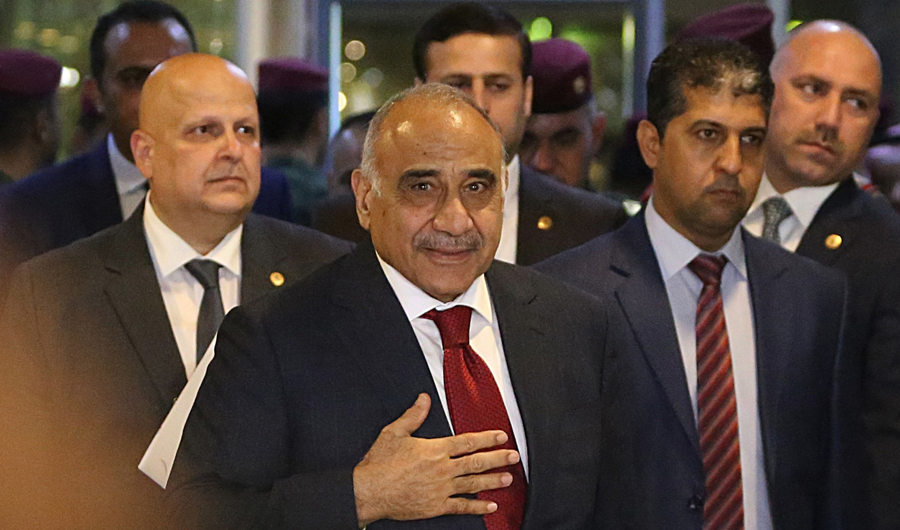
BAGHDAD: Iraq’s prime minister has failed once again to make new Cabinet appointments after his nominees could not muster the requisite parliamentary support, dashing hopes for a breakthrough in filling the vacant positions.

Iraqi lawmakers and negotiators told Arab News that the two biggest political blocs in Parliament on Tuesday showed no signs of having reached a consensus on the nominees for several key ministries, including the interior and defense, which act as power bases in a fractured political landscape.
Abdul Mahdi’s appointment as prime minister in September had raised public expectations after a prolonged spell of government deadlock following the general elections of May. However, the Shiite political blocs whose backing paved the way for the 76-year-old former oil minister’s return to government have differed on the candidates for the other posts.
On assuming office, Abdul Mahdi was given 30 days to assemble a Cabinet to be approved by Parliament. The political jockeying had been expected to intensify as regional patrons were seen as reluctant to allow key ministries to go to candidates backed by their rivals.
The political deadlock surfaced in late October after 16 out of the 22 candidates proposed by Abdul Mahdi won approval. The rest were rejected by the Reform Alliance, led by the Shiite cleric Muqtada Al-Sadr, which remains at loggerheads with the Iran-backed Al-Binna’a Alliance led by Hadi Al-Amiri, the commander of Badr Organization, Iraq’s most powerful Shiite armed faction.
Each candidate needs at least 166 votes out of 329 in Parliament to be approved. Both Reform and Al-Binna’a have been unable on their own to secure the requisite support for their candidates, compelling each to rely on the other’s backing.
Abdul Mahdi has sought to circumvent the deadlock by holding negotiations on the contentious candidates individually. Three of the candidates won the Parliament’s approval last week. Two more will join them after the previous nominees were dropped in the latest development. In Monday’s session, Abdul Mahdi’s picks for the Education and Immigration Ministries were approved.
However, Maj. Gen. Faisal Fanar Al-Jarb, a candidate for the Ministry of Defense, was excluded by voting, while voting on the candidates for the posts of interior and justice ministers was postponed.
Disagreement between Reform, which says it wants to limit outside influence in Iraqi politics, and Al-Binna’a over the nominees for the interior and defense portfolios is at the heart of the current stalemate. Reform wanted retired Al-Jarba, a former commander of Saddam Hussein’s special squadron, to head the Defense Ministry. Al-Binna’a objected on the grounds that Al-Jarba’s role in the deposed Saddam regime disqualified him for a Cabinet post under the program of de-baathification.
For its part, Al-Binna wanted Falih Al-Fayadh, who has just become the National Security Adviser, to take charge of the powerful Interior Ministry. Al-Fayadh, who was sacked in August from his dual posts as head of the Iran-linked Popular Mobilization Units and the national security advisor by caretaker Prime Minister Haidar Abadi, is viewed by Reform as “the man of Iran.”
Arab News has learned that a last-minute deal reached in Monday’s session by the negotiators of the two blocs resulted in Al-Jarba’s exclusion and Al-Fayadh’s replacement by a new candidate for the interior portfolio.
“Al-Jarba did not get the required votes for his approval, so he is formally excluded as a ministerial candidate,” an Al-Binna’a negotiator told Arab News.

He added that “we agreed Al-Fayadh will be replaced soon but the vote (for the new nominee for interior minister) will take place in the new year.”
The Interior Ministry had been under the control of ministers close to Iran since 2010.

Main category: 
Tags: 

Iraqi cities preparing for large Christmas celebrationsIraq appoints two more ministers but government still incomplete


Iraqi cities preparing for large Christmas celebrations

Author: 
daniel fountain
ID: 
1545677938966038400
Mon, 2018-12-24 22:10

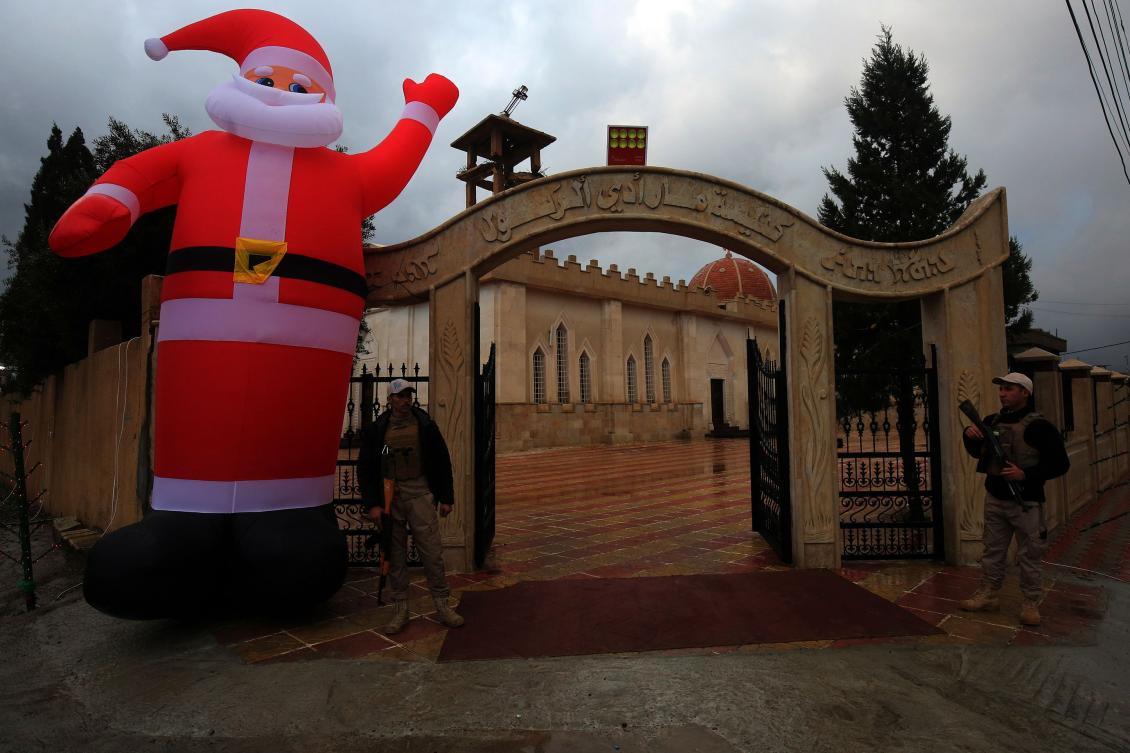
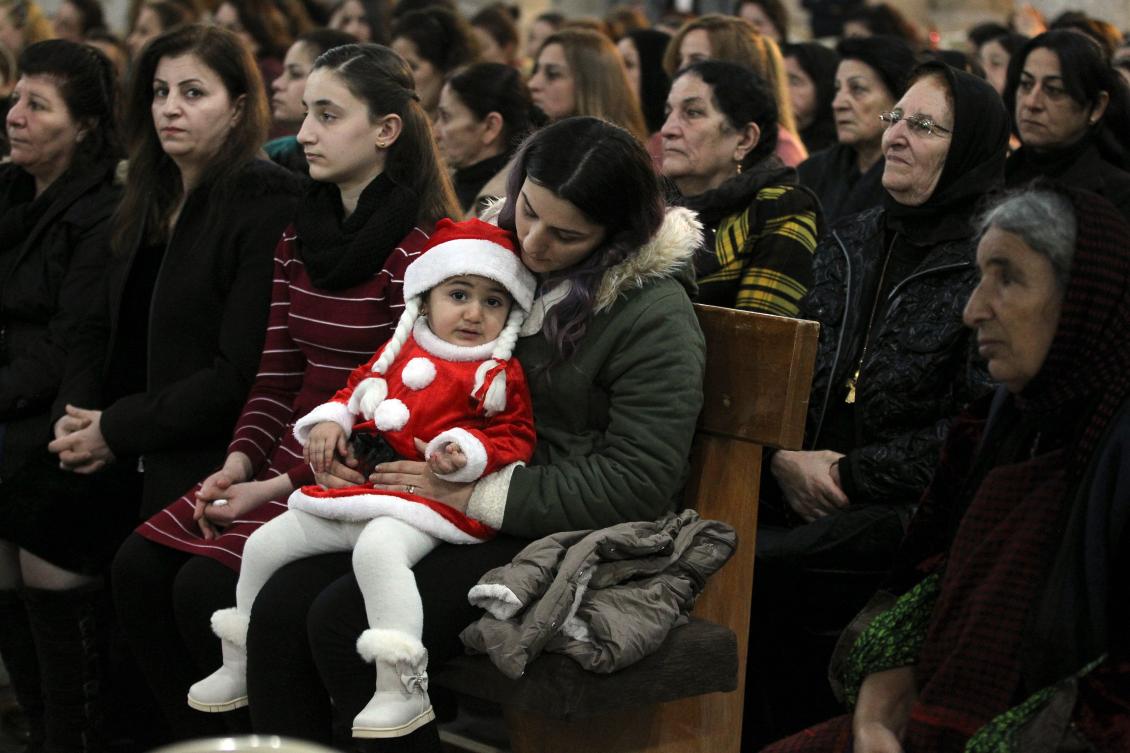
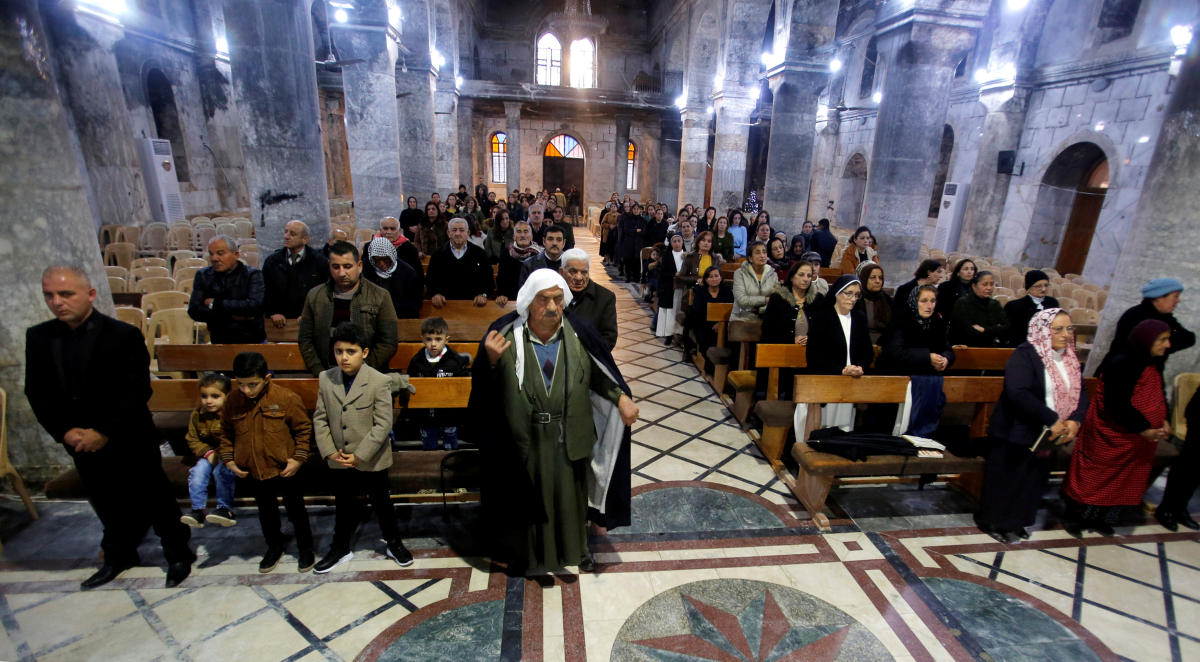
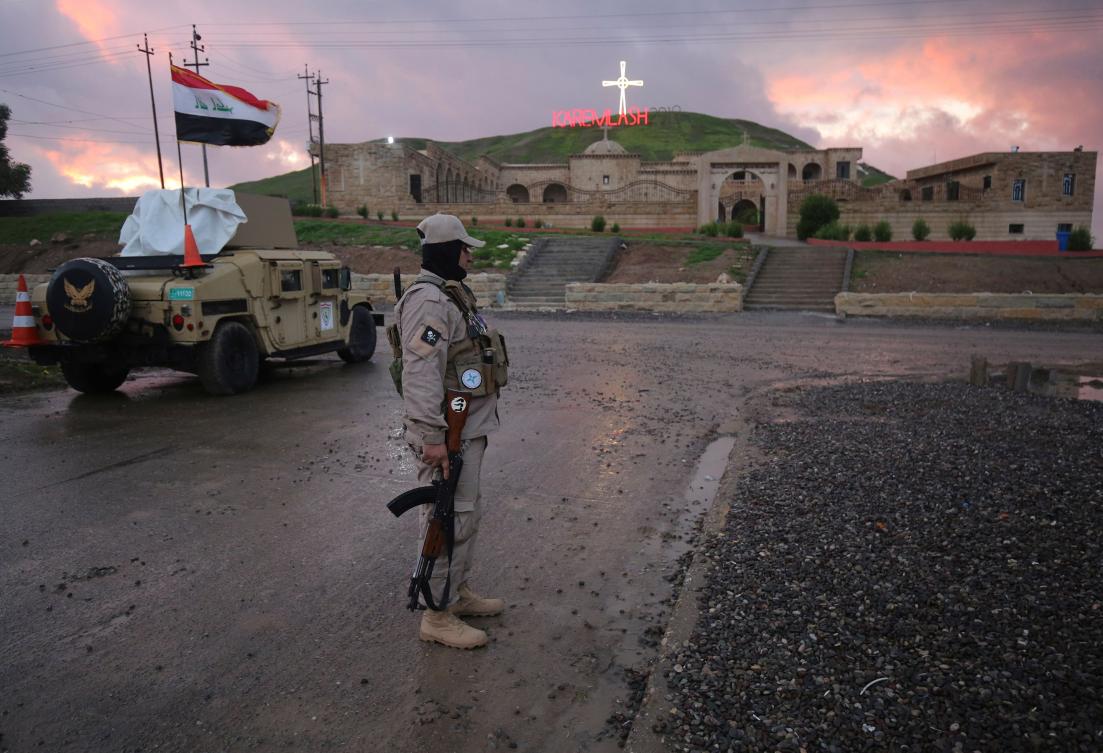
BAGHDAD: With security threats at their lowest level in five years, Iraqi cities are preparing for largescale Christmas celebrations, Christian clerics and officials told Arab News on Sunday.
Local authorities nationwide have set up large decorated Christmas trees in main squares. Shops in Kardaa, a neighborhood in southern Baghdad that includes many churches, are filled with Christmas decorations and accessories.
Celebrations this year follow the declaration of the defeat of Daesh in Iraq. The terrorist group had killed and displaced Christians in the north of the country following its sweeping territorial gains in June 2014.
Some cites such as Ramadi, capital of the Sunni-majority Anbar province in western Iraq, is celebrating Christmas for the first time since 2003, locals told Arab News.
“The security situation this year is the most stable in a long time, thank God,” Ara Badalian, pastor of the Evangelical Baptist Church in Baghdad, told Arab News.
“We’re more relaxed and free to practice our ritual ceremonies this time compared to previous years, and we’ve extended our celebration hours to 10 p.m. instead of 8 p.m.,” he said.
“The number of festivals we’ve planned is the most in many years, and participation is much wider and not limited to Christians, as our friends from other sects are keen to participate in our celebrations.”
Baghdad and other cities have witnessed a significant drop in the number of terrorist attacks in the past three years.
The number of casualties across the country in November was the lowest in six years, according to statistics from the UN Mission in Iraq.
Troops have been deployed near churches, malls and main squares to guard against potential terrorist attacks.
After Christmas, Iraqis see in the new year with street celebrations accompanied by music and fireworks.
Many clubs, cafes and malls hold free parties with famous singers throughout the last week of December.
“It’s an occasion to see all my family members to celebrate New Year’s Eve and enjoy time with them,” Rawaa Abdulridha, a young lawyer, told Arab News.
“We’re hungry for joy. We’re exhausted because war and death have dominated our streets for many years, so the time has come for some joy.”

Main category: 

Real Christmas trees find buyers in the desert among UAE expatsPilgrims gather at Jesus’s traditional birthplace in Bethlehem for Christmas


Protests, strike pose mounting challenge for Sudan president

Author: 
AFP
ID: 
1545668621085637100
Mon, 2018-12-24 12:55

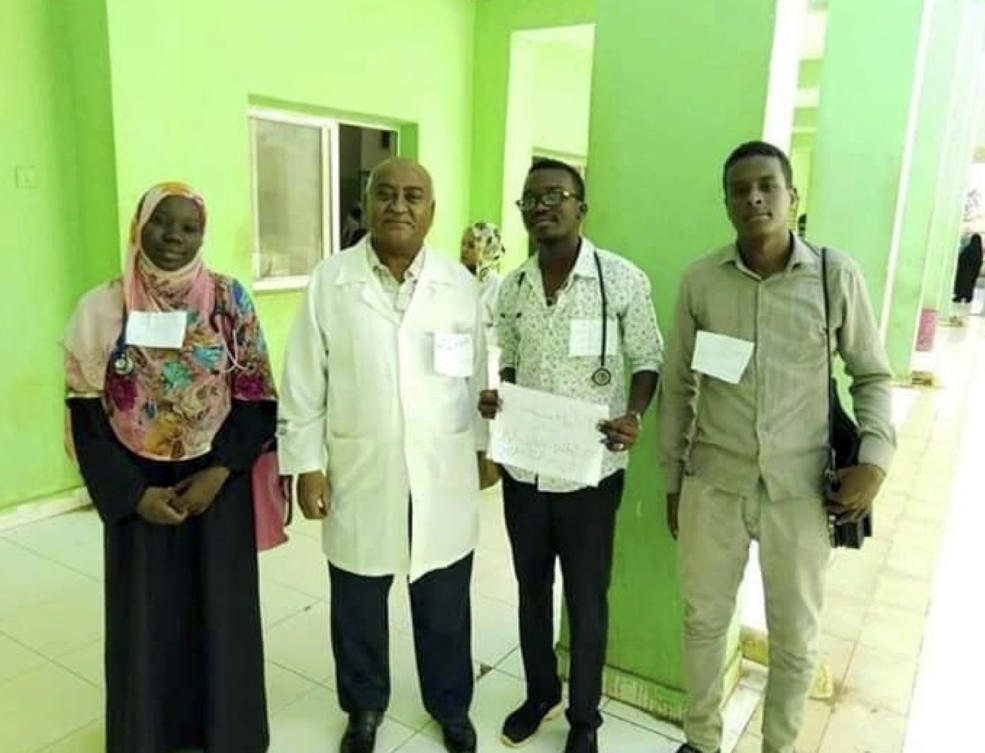
KHARTOUM: Doctors in Sudan went on strike on Monday, feeding into deadly protests against bread prices that represent one of the biggest challenges President Omar Al-Bashir has faced in nearly three decades in power.
A gathering of professionals from various sectors had issued a call on Sunday to strike as fresh protests hit cities — including Omdurman, close to the capital Khartoum — late into the evening.
The strike “started at 08:00 am (0600 GMT) in the morning” and hospital workers were the first to take part, said Mohammed Al-Assam, a member of a committee of doctors.
The committee said in a statement that it would submit an official demand on Tuesday for the “president’s immediate resignation in response to the uprising by the Sudanese people… (and the) formation of a transitional government.”
The protest movement has hit around a dozen cities since Wednesday, after the government tripled the price of bread, in a country beset by economic crisis.
Eight people have died in demonstrations in the eastern cities of Al-Gadaref and Atbara during clashes with security forces, according to officials and witnesses.
But others have spoken of higher death tolls.
Opposition leader Sadiq Al-Mahdi said on Saturday that 22 people had died, denouncing what he called “armed repression” against a legitimate protest movement.
Mahdi, Sudan’s last democratically elected prime minister, was overthrown in a coup that brought Bashir to power in 1989.
Pushed into exile several times, Mahdi returned to his homeland on Wednesday, the day protests began.
After initially railing against the high cost of living, some protesters have also adopted the slogan used in the 2011 Arab Spring — “the people want the fall of the regime.” Mahdi has likewise called for the government to go.
“The main reason for the protests is economic and linked to high prices but the roots of the economic crisis are political,” according to Abdellattif Al-Bouni, a political science professor.
“The political failures of the government, errors and bad management” explain why people are so angry, he said.
In January, protests erupted against the high price of basic foodstuffs, but were quickly quelled by the authorities, which arrested opposition leaders and militants.
Several opposition party members — accused of vandalism during the ongoing protests — have been arrested, the official Suna news agency said on Sunday.

Main category: