Lebanese trade union to strike over pay, lack of government

Thu, 2019-01-03 23:32

BEIRUT: A major Lebanese trade union is to hold a general strike on Friday over living conditions and the political gridlock roiling the country.

Lebanon has no government eight months after an election, with rival parties fighting over Cabinet positions and Sunni representation in the country’s sectarian power-sharing system.  

The gridlock has heaped further pressure on the country’s economy, which is saddled with high levels of debt, and there have been protests about unemployment, taxes and living costs.

Bechara Asmar, from the General Confederation of Lebanese Workers, said the strike would last for hours and that there would be no street protests.

Economic bodies condemned the strike, saying it would inflict “significant damage” on business because of its proximity to the Armenian Christmas Eve celebrated the following day.

Mohamed Choucair, the president of the Lebanese economic organizations, urged all firms to consider Friday a normal working day. 

People should continue to work and prevent further losses and “protect institutions, workers and the national economy so as not to incur heavy losses that the economy cannot afford,” he said.

He also cast doubt on the objectives of the strike, adding the formation of the government remained the first demand of all economic bodies.

Political parties were quick to meet with union representatives to understand the reasons for the industrial action.

Asmar, following a meeting with the Progressive Socialist Party, said: “The strike aims to pressure for the immediate formation of a government and is not directed against anyone nor does it carry a message for anyone.”

Kataeb Party leader MP Samy Gemayel apologized for the hardships people were facing because of the political impasse.

“The people are suffering and there are families that cannot afford fuel oil for heating. People are hungry and in pain, and the economy is on the verge of collapse. Is it acceptable for us to remain without a government because of the dispute over a minister?”

Tourism Minister Awadis Kedianian, from the Armenian Revolutionary Federation (ARF) or Dashnak party, also met Asmar. 

The minister said: “Forming the government would support Lebanon’s presence on the global tourism map, and a delay in its formation would harm this.”

ARF was committed to supporting the public and refusing to commit to the strike implied indifference, he added.

Main category: 
Tags: 

Lebanon resumes efforts to form governmentHariri hopes Lebanon will ‘turn a new page’ in 2019


Brazil wants to move its Israel embassy, but no date yet -presidential aide

Author: 
Reuters
ID: 
1546546991592673900
Thu, 2019-01-03 18:48

BRASILIA: There is still no date set for when Brazil will move its embassy in Israel from Tel Aviv to Jerusalem, but there is a clear intention to do so, the national security adviser to newly inaugurated President Jair Bolsonaro said on Thursday.
Speaking in the capital Brasilia, retired army general Augusto Heleno said there were, however, other considerations to take into account, and as such, Bolsonaro had still not made up his mind. Heleno added he did not think Brazil would face any issues with Arab nations, which oppose the move and are major buyers of Brazilian meat.

Main category: 


UN says Algerian security move has stranded vulnerable Syrians in desert

Author: 
Reuters
ID: 
1546547423012707400
Thu, 2019-01-03 19:12

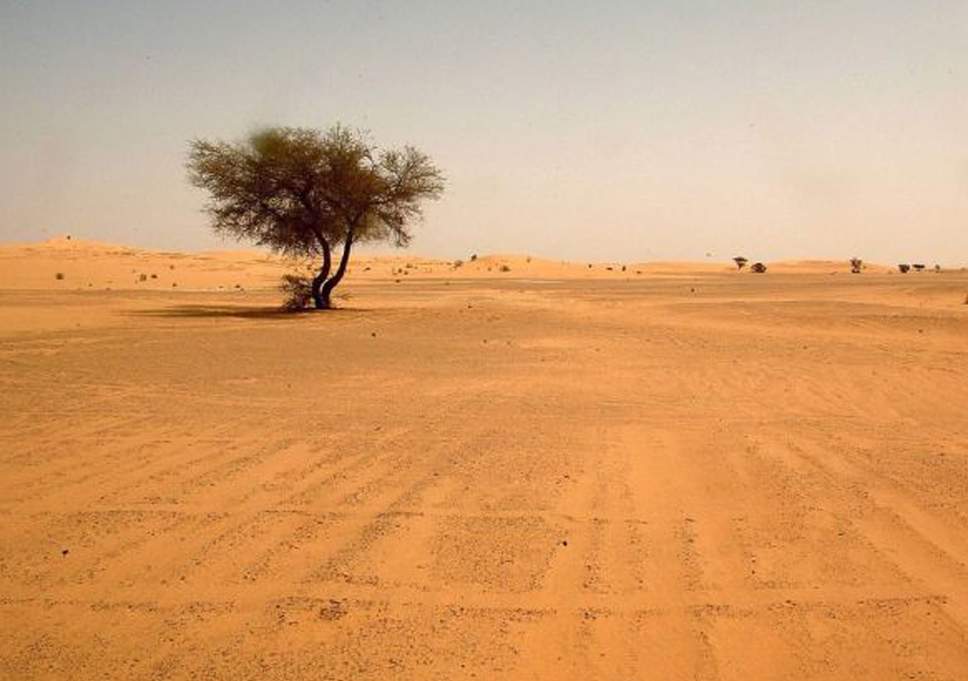
ALGIERS: The United Nations said on Thursday it feared for the safety of Syrians barred from entering Algeria from the south, saying some of those turned back were refugees left stranded in the desert and not suspected militants as Algiers maintains.
The official overseeing migrant policy at Algeria’s interior ministry said on Wednesday that Syrians who had arrived overland from the south recently were members of defeated militant groups from Syria’s civil war who would pose a security threat.
But the UN High Commissioner for Refugees criticized the decision, saying that some of the Syrians mentioned by the Algerian official were known to be registered refugees.
“(They) have fled conflict and persecution or claim to have attempted to seek international protection in Algeria,” a UNHCR statement said.
“According to information made available to UNHCR, 20 individuals from this group currently remain stranded in the desert, three kilometers from the Guezzam border post where they are exposed to the elements. The other 100 individuals who were taken to the border are unaccounted for,” the statement said.
Citing an “urgent humanitarian imperative,” UNHCR said it had appealed to Algerian authorities for access to Syrians affected by the ban to identify those in need of international protection and ensure their safety.
Hassen Kacimi, the interior ministry officials, said around 100 Syrians had reached the southern border with the help of local armed escorts in recent weeks but were intercepted and expelled shortly after they slipped into Algeria.
He said these Syrians had transited Turkey, Jordan, Egypt, Sudan and Niger or Mali using fake Sudanese passports.
Algeria has taken in around 50,000 Syrians on humanitarian grounds in recent years, Kacimi added.
Algeria went through years of devastating civil war with Islamist militant groups in the 1990s. While violence is now greatly diminished, sporadic attacks continue in isolated areas.
In Algeria’s south and southeast, largely desolate areas with few inhabitants, the government has beefed up its security presence after neighboring Libya and northern Mali and Niger descended into lawlessness with various armed groups active.

Main category: 
Tags: 


What next for Syria’s Kurds?

Author: 
Thu, 2019-01-03 23:28

BEIRUT: Syria’s Kurds have established an autonomous region during seven years of civil war, but the abrupt decision by their US ally to withdraw has thrown their political future into doubt.

Kurdish-led forces control a large swathe of the country’s north and northeast, some of it seized from Daesh at the cost of heavy losses with backing from the US-led coalition.

A US withdrawal could leave them exposed on two fronts, both to an attack by neighboring Turkey and its Syrian proxies, and to a return of Damascus government institutions.

Syria’s Kurdish minority have largely stayed out of the civil war, instead forging autonomy in a large swathe of the north and northeast, including along the Turkish border.

The fight against Daesh has allowed the Kurdish-led Syrian Democratic Forces to expand that territory to include the Euphrates Valley city of Raqqa, as well as key oil and gas fields in the eastern province of Deir Ez-Zor.

On Dec. 19, President Donald Trump took many even among his own supporters by surprise with the announcement of a full US troop withdrawal from Syria.

That prompted the Kurds to seek a new alliance with the Damascus regime to protect them from a long-threatened attack by neighboring Turkey.

Ankara views the Kurdish fighters of the SDF as “terrorists,” in cahoots with the outlawed Kurdistan Workers Party (PKK), which has been fighting Turkish troops since 1984.

Although unlikely without prior agreements between regime ally Russia and rebel backer Turkey, analysts foresee a possible carving up of the northeast between the different sides.

“There will be a division of territory between the SDF, the Turks, and the Syrian army,” political geographer and Syria expert Fabrice Balanche predicted.

Today, the regime holds almost two-thirds of Syria after victories against militants and other rebels, and has pledged to eventually return the northeast to government control.

Last week, Damascus deployed troops in the northern countryside to stem off any Turkish-led attack on the flashpoint SDF-held city of Manbij.

On Wednesday, the army said 400 Kurdish fighters had retreated from areas around the Arab-majority city. But an Arab contingent of the SDF remains in control, and US forces are also present as they have not yet withdrawn.

On Monday, pro-government newspaper Al-Watan cited an Arab diplomat in Moscow as saying the northern city would revert to “full state supervision.”

The source also said Turkey, Russia and fellow regime ally Iran would discuss “a return of state institutions” to areas further east, beyond the Euphrates River, at a meeting expected at the start of the year.

Balanche said the regime would eventually resume full control of the main northeastern cities of Hasakah and Qamishli.

It would also retake the Arab-majority city of Raqqa, as well as the oil fields of Deir Ezzor.

“The Syrian Army will… rapidly seize the Omar oil fields — two-thirds of Syrian production,” Balanche said.

Turkey has led two previous incursions across the border, the most recent of which saw its Syrian proxies seize the northwestern enclave of Afrin from Kurdish forces last year.

But analyst Heiko Wimmen said Ankara would first have to seek consent from Moscow before any third offensive, especially to use its air force.

“If it does happen however, Turkey will try to control the border strip,” said Wimmen, of the Brussels-based think tank, the International Crisis Group.

“What they are aiming for is a buffer zone along the border,” he said, stressing that the mission would be fraught with difficulty.

“It is not clear that they are immediately prepared to take over and control a large area with a partly hostile population,” he said.

Balanche predicted Turkish troops and their allies would eventually push 20-40 km into Syria.

After decades of marginalization, since the civil war erupted in 2011 Syria’s Kurds have set up their own institutions in areas they control.

After government forces pulled out of Kurdish-majority areas in 2012, the Kurds set up their own administrations and implemented longstanding demands such as Kurdish-medium education.

But as loyalist forces gained ground last year and Damascus rejected Kurdish self-rule, the Kurds entered talks with the regime to seek some form of decentralization.

With the Kurds now set to see their US ally withdraw from Syria, Wimmen said the Kurds were “certain to lose a lot.”

“The question is whether the loss will be total or whether some of it can be salvaged… through a deal with the regime, guaranteed by Russia,” he said.

But “given the track record of the regime and its negotiation positions so far… there is little reason for optimism.”

Main category: 
Tags: 

Trump gives no timetable for Syria exit, wants to protect KurdsIn Kurdish Iraq, women strive to end genital mutilation


Turkey, Iraq agree to boost counterterror cooperation

Author: 
Thu, 2019-01-03 23:20

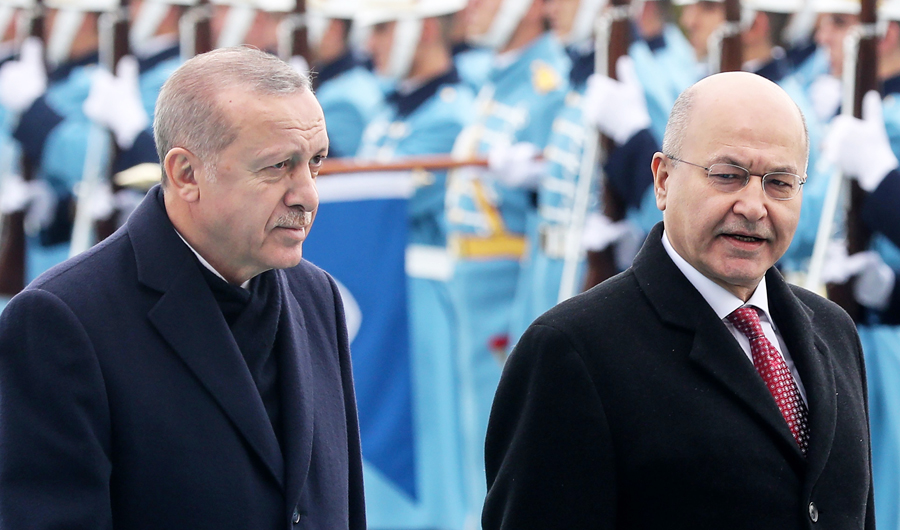
ANKARA: Iraqi President Barham Salih’s first official visit to Turkey’s capital since his election in October indicates an emphasis on cooperating against terrorism, experts say. 

At a joint press conference, he said relations with Turkey will be “shoulder to shoulder, in full solidarity,” adding that he expects Ankara to contribute to reconstructing Iraqi regions where terrorism has been eliminated. 

Ankara aims to boost security cooperation with Baghdad, Turkish President Recep Tayyip Erdogan said at the press conference, adding that “there’s lots we can do with Iraq” in that regard. 

Muhanad Seloom, associate lecturer in politics at Exeter University, said the issues of sharing water, Kurdish militancy and trade will frame bilateral relations for the foreseeable future.

“I expect the Turkish government to continue seeking cooperation with the Iraqi federal government to end the presence of the PKK (the Kurdistan Workers’ Party) in Iraq, especially in areas outside the Kurdish Regional Government’s (KRG) control,” he told Arab News. 

“However, the PKK’s main camps are located inside Iraqi Kurdistan and on the borders — areas over which the central government in Baghdad has little control,” he said. 

“The central government, however, could provide Turkey with legal cover to continue its military incursions in Iraqi border areas to target PKK fighters.” 

In terms of the joint fight against Daesh, experts underline Turkey’s reconstruction efforts in Iraq and ongoing intelligence cooperation between the two countries. 

In February 2018, Iraq secured about $25 billion at an international donors’ conference in Kuwait, where Turkey pledged a credit facility of $5 billion. Major Turkish companies are expected to conduct reconstruction projects in war-torn areas of Iraq. 

Last year “witnessed several cases where Turkish and Iraqi intelligence services cooperated to arrest and extradite Iraqi citizens accused of terrorism offenses,” Seloom said. 

Last February, Ismail Alwan Salman Al-Ithawi, a top Daesh leader, was captured following cooperation between Turkish, Iraqi and US intelligence agencies.

Seloom said another area of potential cooperation could be in Syria, in light of the possible withdrawal of US forces.

“The Iraqi prime minister has already expressed his desire to intervene militarily in Syria to make sure any potential Daesh resurgence doesn’t spill over into Iraq,” Seloom added.

Last week, Iraqi fighter jets pounded strategic Daesh positions in eastern Syria, killing 30 of its commanders. In 2018, Iraq sentenced more than 600 foreigners over their links to Daesh. 

Baghdad and Ankara boosted ties after the latter’s forceful stance against the KRG’s independence referendum in September 2017. 

Turkey and Iraq are expected to continue their high-level strategic council meetings throughout the year. Iraq is one of Turkey’s major trade partners, with bilateral trade at around $10.6 billion in 2017. The state-run Trade Bank of Iraq recently announced its plan to acquire a Turkish bank.

Last year, Turkey conducted several cross-border operations into Iraq. Erdogan had vowed to expand the military campaigns to the cities of Kirkuk and Mosul, and the town of Sinjar — PKK strongholds in northern Iraq — to prevent the group from setting up new headquarters in the region. 

Galip Dalay, a visiting scholar at Oxford University and research director at Al-Sharq Forum, said Salih aims to develop good relations with regional actors, including Turkey and Saudi Arabia. 

“Salih has a successful diplomatic background also among Iraqi Kurds, as well as with countries such as the US. He’s trying to become the international face of Iraq and to initiate a regional rehabilitation,” Dalay told Arab News. 

Turkey has not yet lifted its ban on flights to and from the city of Sulaymaniyah in Iraqi Kurdistan, citing security concerns. 

City officials are reportedly continuing to lobby Ankara to lift the ban, which is seen as a means of putting pressure on the Patriotic Union of Kurdistan (PUK), which controls the provincial administration, to halt its assistance to the PKK. 

Dalay said Iraqi-Turkish cooperation against terrorist groups is unlikely to include the Syrian-Kurdish People’s Protection Units (YPG) and its political wing, the Democratic Union Party (PYD). 

“Although he doesn’t lean toward their militant position, Salih is ideologically close to the secular left-wing in Kurdish politics. He has close ties with the PYD and conducts backdoor diplomacy with it,” Dalay said. 

In October 2017, Iraq’s federal government captured the oilfields of Kirkuk from the KRG. Before that, the oil-rich, semi-autonomous region was exporting crude oil to Ceyhan port on Turkey’s Mediterranean coast — the only available outlet for exports from Kirkuk. 

The resumption of oil flows from Kirkuk following a tentative agreement in November was key for countries to reduce their reliance on Iranian crude oil. 

Iraq’s prime minister recently said Baghdad will increase oil exports from Kirkuk to Ceyhan from 60,000 barrels per day (bpd) currently to 100,000 bpd, with revenues from these exports going to the federal government. 

Dalay said: “Turkey values the territorial integrity of Iraq and wouldn’t prefer the dominance of any group in Kirkuk. But a sharing of power without excluding Kurds completely would be preferable.”

Main category: 

Erdogan:Turkey has no business in Syria’s Manbij if YPG militia leavesTurkey detains two French Daesh suspects wanted by Interpol: state media