UN envoy holds talks with Yemen president amid preparations to boost Hodeidah monitoring team

Author: 
Wed, 2019-01-09 00:10

JEDDAH: The United Nations envoy for Yemen held talks Tuesday with the country’s president, as he sought to shore up a truce in key port Hodeidah.

Martin Griffiths met with the Yemeni authorities after seeing Houthi militant leaders in Sanaa on a tour aimed at ensuring both sides make good on a ceasefire deal agreed in Sweden last month.

Yemen’s internationally recognized leader Abed Rabbo Mansour Hadi expressed his “support for the efforts and work” of Griffiths at the talks in the Saudi capital, the Saba news agency reported.

The head of the president’s office Abdullah al-Alimi wrote on Twitter that Hadi remained committed to the Sweden accord and stood ready to open up “all humanitarian access.”

Griffiths is set to brief the UN Security Council Wednesday on the ceasefire deal, AFP repoted.

UN Secretary-General Antonio Guterres has asked the Security Council to approve the deployment of up to 75 observers to Hodeidah for six months to monitor the ceasefire, Reuters reported.

The council will need to take action on Guterres’ request by about Jan. 20, when a 30-day authorization for an advance monitoring team led by retired Dutch General Patrick Cammaert expires.

It was not immediately clear how many monitors were currently on the ground with Cammaert. 

The United Nations has said the monitors are not uniformed or armed.

In his Dec. 31 proposal to the council, seen by Reuters, Guterres described the proposed 75-strong team as “a nimble presence” to monitor compliance of the deal and establish and assess facts and conditions on the ground.

The UN has said the truce has largely held in the city since the agreement came into force on Dec. 18.

The pro-Hadi Arab coalition, which includes Saudi Arabia, has accused the Houthis of dozens of violations of the truce.

Griffiths is looking to push on with steps agreed   in Sweden, including the redeployment of rival forces from Hodeidah.

He is also hoping to bring the sides together again for a new round of peace talks later this month.

The war in Yemen was sparked when the Houthis seized the capital Sanaa in 2014.

The conflict has unleashed the world’s worst humanitarian crisis, according to the UN, which says 14 million Yemenis are on the brink of famine.

*With AFP and Reuters

Main category: 

UN envoy arrives in Yemen to push Hodeidah truceYemen government following up reports of aid looting



Children tortured in Iraq Kurdistan for ‘Daesh links’

Author: 
Tue, 2019-01-08 22:25

BAGHDAD: Security forces in Iraqi Kurdistan have been “torturing children” to force them to confess to having links with Daesh, Human Rights Watch said on Tuesday.

The rights group said it interviewed 23 boys aged between 14 and 17 who were charged with, or convicted of, belonging to Daesh, and that 16 of them said they had been “tortured” during questioning.

Some boys said members of the Kurdish security forces known as Asayesh beat them with plastic pipes, electric cables or rods while others said they were subjected to electric shocks or a painful stress position dubbed the “scorpion,” the watchdog said.

“Several boys said the torture continued over consecutive days, and only ended when they confessed” to involvement with Daesh, it said.

“Most said they had no access to a lawyer and they were not allowed to read the confessions Asayesh wrote and forced them to sign,” it added. It said the punishment inflicted by security forces of the Kurdistan Regional Government in northern Iraq took place in 2017 and 2018 despite promises by authorities to investigate the torture claims.

“Nearly two years after the Kurdistan Regional Government promised to investigate the torture of child detainees, it is still occurring with alarming frequency,” said Jo Becker, children’s rights advocacy director at HRW.

The watchdog said its staff interviewed the boys during a November visit to a detention center in Irbil, where 63 children are being held.

A senior Kurdish official dismissed the allegations.

Dindar Zebari, international affairs adviser to the Kurdish government, told AFP that “HRW never visited” the detention center.

According to HRW, most of the boys said their interrogators told them what they should confess and many said they gave false testimony only to stop the torture.

“My confession says that I joined Daesh for 16 days, but actually I didn’t join at all,” a 16-year-old child told HRW.

A 14-year-old said: “First they said I should say I was with Daesh, so I agreed. Then they told me I had to say I worked for Daesh for three months. I told them I was not part of Daesh, but they said, ‘No, you have to say it’.”

The boy said that after two hours of interrogation and torture he agreed to their demands.

“The Kurdistan authorities should immediately end all torture of child detainees and investigate those responsible,” HRW said.

Main category: 

In Kurdish Iraq, women strive to end genital mutilationIraq extends air blockade of Kurdistan by 3 months


US says aware of reports of Iran’s detention of US citizen

Author: 
Reuters
ID: 
1546971247555586900
Tue, 2019-01-08 17:57

WASHINGTON: The US State Department said on Tuesday it was aware of reports of the detention of a US citizen held in Iran for more than six months, amid heightened tensions between the countries following the reimposition of US sanctions.
The New York Times reported on Monday that Michael R. White, a 46-year-old US Navy veteran, was seized while visiting Iran and has been held in jail since July on unspecified charges.
His mother, Joanne White, told the New York Times her son had visited Iran “five or six times” to meet his Iranian girlfriend. He had bought a ticket to return from Iran, but never boarded his flight on July 27.
Asked about the reports, a US State Department spokesman said: “We are aware of reports of the detention of a US citizen in Iran.”
The spokesman declined to provide additional information, citing privacy considerations.
Iranian officials have not reacted to the reports, and were not immediately available for comment.
A former detainee in Iran, Ivar Farhadi, told the London-based IranWire website he had spoken to White when they were both at Vakilabad Prison in the city of Mashhad in northeastern Iran.
The New York Times quoted White’s mother as saying her son, a California resident, suffers acute asthma and had undergone chemotherapy and radiation treatment for a neck tumor.
Tension between Iran and the United States has risen significantly since last May, when US President Donald Trump withdrew from an international nuclear deal with Tehran and reimposed US sanctions that had been lifted after a 2015 accord.
Several Americans have been detained in Iran in recent years and Trump warned in 2017 that Tehran would face “new and serious consequences” unless all unjustly held US citizens were freed.
Former FBI agent Robert Levinson disappeared while visiting Iran’s Kish Island in 2007. US officials believe Levinson, who suffered from diabetes, died in captivity after meeting with an American-born Islamic militant. Iranian officials have repeatedly denied knowledge of his disappearance or whereabouts.
In October 2015, Siamak Namazi, a businessman in his mid-40s with dual US-Iranian citizenship, was detained as he was visiting family in Tehran. His 82-year-old father, Baquer Namazi, was also arrested in February 2016 and later convicted of espionage charges which he denied.
Xiyue Wang, a Chinese-born US citizen and graduate student from Princeton University, was arrested in Iran in 2016. He was sentenced to 10 years in jail on spying charges that he denied.

Main category: 


Sudan town holds rally for ‘martyrs’ killed in protests

Author: 
AFP
ID: 
1546962377464843600
Tue, 2019-01-08 15:12

KHARTOUM: Hundreds of protesters on Tuesday staged a “martyrs’ rally” in an eastern Sudanese town to honor those killed in anti-government protests last month, witnesses said.

Deadly protests have rocked Sudan since December 19, when unrest broke out over the price of bread.

Authorities say at least 19 people including two security personnel have been killed during the demonstrations, but rights groups say around 40 people have died.

Six people were killed in Al-Gadaref, an impoverished agricultural town in eastern Sudan.

On Tuesday, protesters staged what organizers said was a “martyrs’ rally” to mark the deaths in Al-Gadaref.

The main market was shut as demonstrators gathered in the downtown area, chanting slogans such as “Peace, justice, freedom” and “Revolution is the choice of the people.”

Demonstrators were confronted by riot police who fired tear gas as protesters prepared to march to the provincial council building, witnesses said.

Groups of protesters managed to reach the compound of the council building and one of their representatives read out a petition calling for President Omar Al-Bashir to resign, one witness told AFP by telephone on condition of anonymity.

The protest was organized by the Sudanese Professionals’ Association, a group of teachers, doctors and engineers that has spearheaded the ongoing anti-government demonstrations across the country.

Sudanese authorities could not be reached to comment on the rally.

Authorities have launched a crackdown on opposition leaders, activists and journalists to prevent the spread of protests.

More than 800 protesters have been arrested across Sudan since the unrest began, Interior Minister Ahmed Bilal Osman said Monday while describing the current situation as “calm and stable.”

Sources said that 118 buildings were destroyed in the protests, including 18 that belonged to police, while 194 vehicles were set on fire including 15 that belonged to international organizations.

Several buildings and offices of Bashir’s ruling National Congress Party (NCP) were torched in the initial violence.

Bashir, who has ruled Sudan since 1989, told police last month to use “less force” in their response to demonstrators.

Protests broke out when the government raised the price of a small loaf of bread from 1 Sudanese pound to 3 (from 2 to 6 US cents).

Sudan has been facing a mounting economic crisis over the past year, led by an acute shortage of foreign currency.

Food and fuel shortages have been regularly reported across several cities, including the capital Khartoum, while the cost of food and medicine has more than doubled and inflation has hit 70 percent.

Main category: 
Tags: 


Lebanon’s winter storm freezes refugees in flooded camps

Author: 
Reuters
ID: 
1546962123024826900
Tue, 2019-01-08 14:50

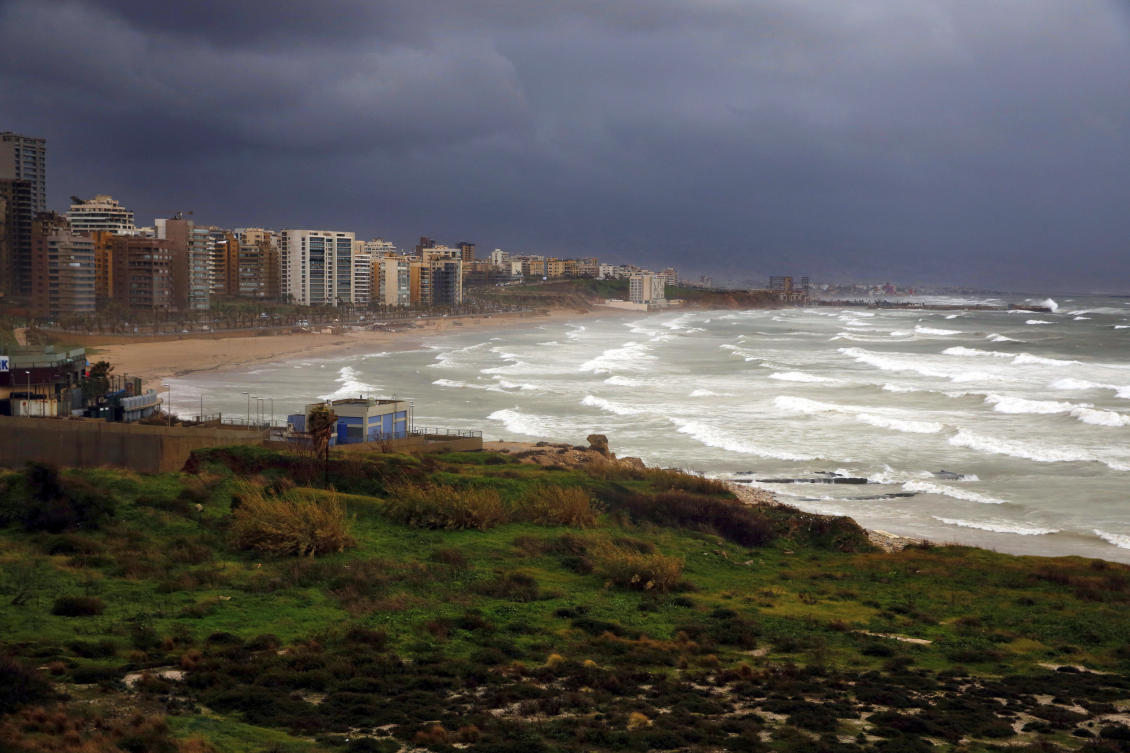
BEIRUT: Storms in Lebanon have flooded Syrian refugee camps, ruining tents, mattresses and food and compounding the misery of people enduring powerful winter winds and biting cold.
More than a million Syrians fled to neighbouring Lebanon since war broke out at home in 2011, and UN agencies say most live of them live in poverty.
“There is almost half a metre of water on the ground and in the tents … the war in Syria forced us into this situation,” said Hussein Zeidan who came to Lebanon from Homs in Syria in 2011.
He lives in a makeshift camp near a river in north Lebanon’s Akkar region. He and some of its other residents said the storm had left them and their children with no clothes, furniture or food.
Families were moving around in search of dryness and warmth.
“Water flooded us in the camp: me and my children. Our situation is bad … God bless our neighbours, they welcomed us in yesterday night. Today, water flooded them so we came here, as you can see, to this half-built house with no windows or doors,” Ghazwan Zeidan, who has three children, said in Akkar.
The UN refugee agency said on Tuesday that the storm had completely flooded or collapsed 15 informal settlements out of at least 66 that were “heavily impacted”.
In the Bekaa valley in east Lebanon, the cold temperatures have also brought snow.
Abu Shahid, who fled Hasaka in Syria three years ago with his family, stood in flooded water in an informal camp in Bar Elias village. He described how his tent had completely submerged, damaging all his family’s belongings.
“The only solution is to leave our things and move, run away with our lives … Water is everywhere, where do we go?,” he said. The previous night, he and his wife and two children had slept in a neighbour’s tent that was less damaged by the floods.
For 19-year-old Hamed Haj Abu and his relatives, the night was cold and wet.
“We did not sleep all night. Some were sleeping for an hour, others were waking up. Water was coming on us, in the tent, from everywhere,” he said in Bar Elias.
“My brother and his family first came to us, they are living nearby. We all did not sleep, we left the tent all together, we can’t sit, look, water is flooding, we can’t sleep on water.”

Main category: