Israelis, Palestinians segregated on new West Bank highway

Author: 
By ILAN BEN ZION | AP
ID: 
1547147252188117000
Thu, 2019-01-10 (All day)

JERUSALEM: Israel inaugurated a new highway in the occupied West Bank on Thursday that features a large concrete wall segregating Israeli and Palestinian traffic.
One side of Route 4370 — located northeast of Jerusalem — will be open to Israeli vehicles only, while the other half will only be open to Palestinian traffic. Critics have branded it an “apartheid” highway, saying it is part of a segregated road system that benefits Jewish settlers.
The highway was built as part of a planned ring road east of Jerusalem that would connect the northern and southern West Bank. Construction began in 2005, but the 5-kilometer (3-mile) road lay unfinished for years until 2017.
Israeli officials inaugurating the new road on Wednesday touted it as a means of better connecting West Bank settlements north of Jerusalem to the city.
Israeli Public Security Minister Gilad Erdan called the highway “an example of the ability to create coexistence between Israelis and Palestinian while guarding (against) the existing security challenges.”
The Palestinian Authority said in a statement that the “apartheid” road “poses a challenge to the credibility of the international community.”
“It’s a shame on the international community to see an apartheid regime being established and deepened without doing anything to stop it,” the statement said.
Israel captured east Jerusalem and the West Bank in the 1967 war, territories the Palestinians want to be part of their future state. The Palestinians and most of the international community consider Israeli settlements to be illegal and an obstacle to peace.
The eastern ring road was conceived as a means of connecting the northern and southern West Bank. Critics of the settlements fear that if the road is completed, Israel will then proceed with settlement construction in an area east of Jerusalem known as E1.
The Palestinians have long feared that construction in E1 would split the West Bank in half, making a future state inviable. With the road completed, Israel could argue that the territory was still contiguous.
Development in E1 has been largely frozen under US pressure, even as Israeli settlement construction in the West Bank has boomed under the Trump administration.
Betty Herschman, a spokeswoman for the Ir Amim activist organization, said that “we can only speculate” concerning the timing of the highway’s opening after years of dormancy, “but what we do know is that because of the relationship to E1, we should all be on high alert as to what this indicates.”
In a separate development earlier Thursday, an Israeli court sentenced a Palestinian man to 18 years in prison for stabbing a British student to death in Jerusalem.
The Jerusalem district court accepted a plea bargain in sentencing 60-year-old Jamil Tamimi. He killed 20-year-old British student Hannah Bladon on the Jerusalem light rail in April 2017, stabbing her multiple times before an off-duty policeman pulled the emergency brake and subdued him.
Tamimi’s defense team claimed he suffered from mental illness, and the attack was not ideologically or politically motivated.
Bladon was an exchange student at Hebrew University from the University of Birmingham.
Maurice Hirsch, her family’s representative, said he was disappointed her killer would not be serving a life sentence for his crime. But he added “no sentence would have been able to return Hannah.”

Main category: 

France urges Israel to reconsider settler home approvals in West BankIsraeli troops arrest dozens in West Bank

Stranded Syrian refugees braced for ‘killer’ storm

Author: 
Associated Press
ID: 
1547142189227677400
Thu, 2019-01-10 (All day)

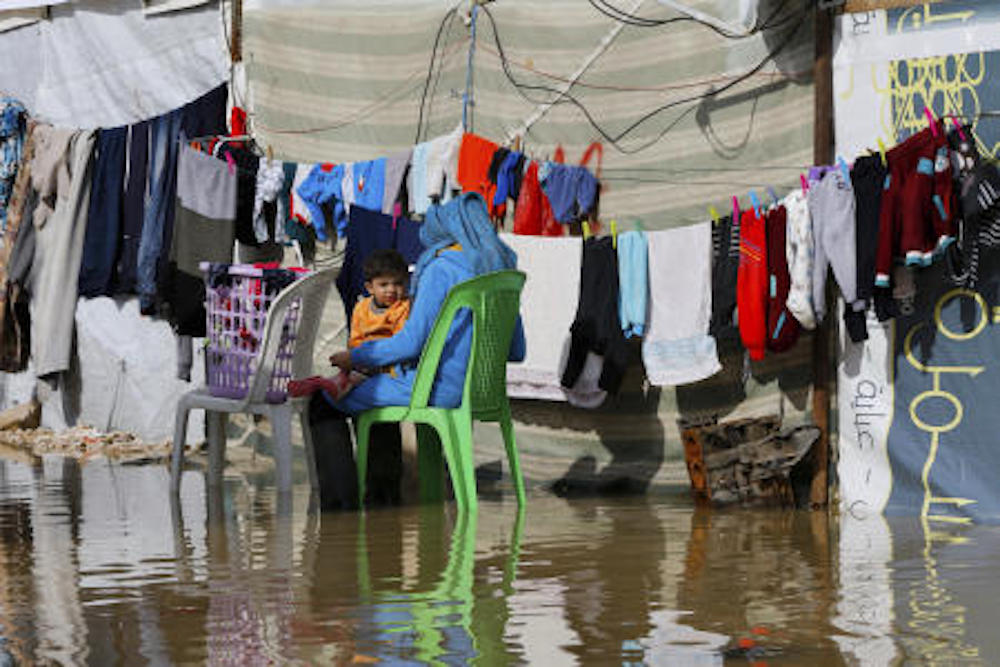
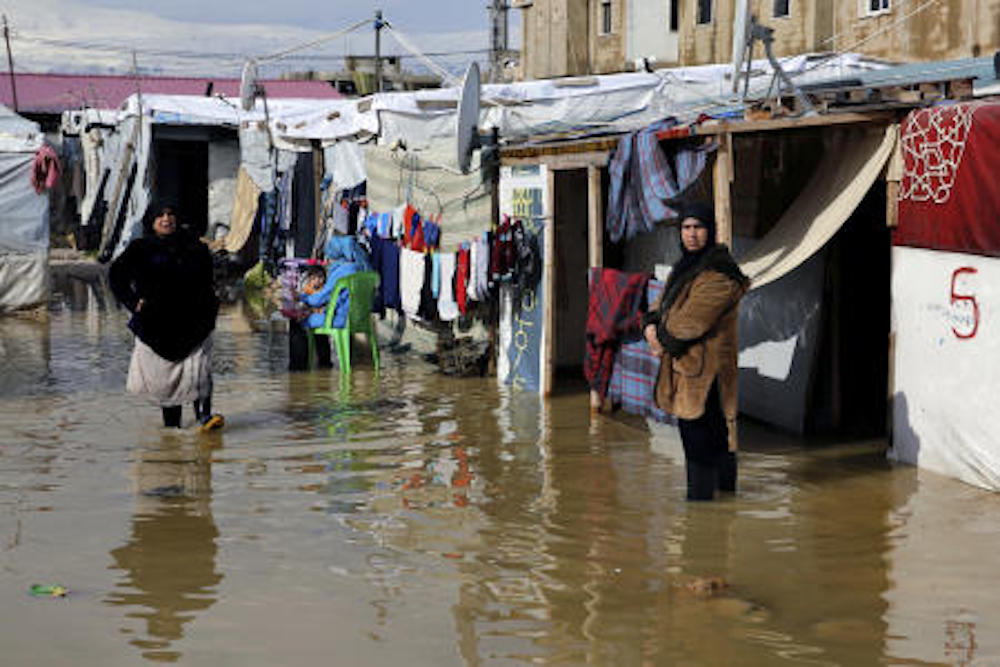
BEIRUT: Emergency relief operations are underway in Lebanon in a desperate bid to prevent thousands of Syrian refugees freezing to death as another icy storm heads their way.
Aid workers fear that a blizzard, forecast to sweep across the country, poses a serious threat to the lives of up to 70,000 refugees living in makeshift camps.
Gihan El-Kaissi, executive director of the Union of Relief and Development Associations (URDA), told Arab News: “The majority of Syrian refugee camps are in the coldest parts of Lebanon. Even if every refugee could shelter under 10 blankets, they would still freeze to death without fuel oil for heating.” 
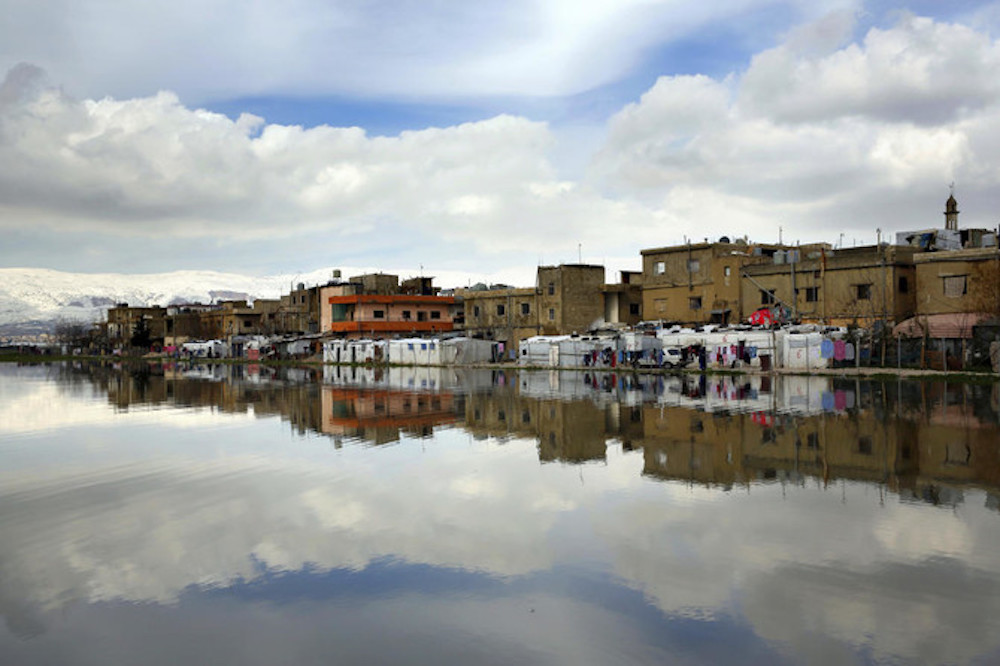
Snow storms that battered Lebanon last week destroyed plastic tents, leaving 11,000 refugees with no shelter and many enduring temperatures as low as minus 10. In Miniyeh, in northern Lebanon, a 10-year-old girl died after being washed away in floods. 
Around 850 refugee camps have been set up throughout Lebanon, housing an estimated 40,000 children.
El-Kaissi said: “We have emergency plans in place to distribute fuel oil, blankets and mattresses as a priority. We are also working hard to mend damaged tents and have begun sending out awnings to be placed over them.” She added that many children had nothing to wear on their feet and hundreds of pairs of shoes were being dispatched to camps.
In the Lebanese border town of Arsal, male refugees were reported to be working around the clock to clear snow off tents and erect wooden supports to prevent the flimsy structures from collapsing.
Abu Mohammed, a Syrian refugee from Qusayr, said most people who had fled from his town wished to return to Syria, but he said they were being prevented by the Syrian authorities.
The UN High Commissioner for Refugees (UNHCR) representative in Lebanon, Mireille Girard, told Arab News that a lack of official refugee camps in Lebanon was adding to the crisis.
She said 20 percent of refugees in Lebanon were living in camps set up in areas vulnerable to flooding, while many others lived in part-built houses, basements and garages. Hundreds of families had been forced to move into makeshift camps because they could not afford to rent apartments, Girard said. 
She added that UNHCR officials were in constant discussions with the Lebanese authorities over the plight of Syrian refugees. “They (the refugees) are not waiting for a plan to reconstruct Syria. They want to return to their country and their homes,” she said. 
The agency now has eight offices in Syria to help support families returning there.

Main category: 

Struggling to survive, Syrian refugees in Lebanon fall deeper into debtSyrian refugees remain skeptical about return


House arrest for Jewish minors held over killing of Palestinian

Author: 
AFP
ID: 
1547140520517518000
Thu, 2019-01-10 13:30

JERUSALEM: Israeli authorities on Thursday released to house arrest four of five Jewish minors held on suspicion of involvement in a fatal stone-throwing attack on a Palestinian woman, lawyers and officials said.
The arrests on December 30 were in connection with the killing of Aisha Rabi, who died after stones were thrown at the car she was traveling in with her family in the occupied West Bank on October 12.
Authorities did not confirm their detention until Sunday due to a gag order on details of the case while the investigation continued.
The remand of the fifth suspect has been extended by another six days, Israel’s domestic security agency Shin Bet said.
The lawyers representing the minors argued that their release proved they were innocent.
“These youths, who had absolutely nothing to do with the event, should not have been arrested,” said attorney Adi Kedar of Honenu, a right-wing legal aid organization, vowing to work to have the fifth suspect released.
The Shin Bet, which on Sunday announced an unspecified number of arrests for “serious terrorist offenses, including murder,” rejected claims the youths were mistreated during their investigation.
The five, students at the Pri Haaretz religious seminary in the Rechelim settlement in the West Bank, were arrested “after intelligence efforts connecting them to the death of Rabi,” a mother of nine, the Shin Bet said Thursday.
The Shin Bet noted the four were released after it was decided “the investigation could continue while they were under house arrest and other limiting conditions.”
It also warned of “ongoing efforts” to obstruct the course of the investigation, “including by disseminating information about the probe while slandering the Shin Bet.”
The fatal stoning took place near Rechelim, close to Rabi’s village of Bidiya in the Israeli-occupied northern West Bank.
Rabi was struck on the head in the attack and died later at a hospital in the city of Nablus. Her husband, who was driving the car at the time, escaped with minor injuries.
Palestinian witnesses and security sources cited by official Palestinian news agency WAFA said the stones were thrown by Israeli settlers.
Israeli investigations into “Jewish terrorism” — as such cases are often referred to by Israeli media — are highly sensitive.
Israeli authorities have been accused by rights activists of dragging their feet in such cases in comparison to investigations into Palestinian attacks, while far-right Israelis say suspects have undergone coercement and torture.

Main category: 

Israel arrests Jewish students over Palestinian woman’s deathGaza cafe owner offers fish pedicures to improve business


Archaeologists restore ancient Palmyra artefacts in Damascus museum

Author: 
Reuters
ID: 
1547130796396687300
Thu, 2019-01-10 13:41

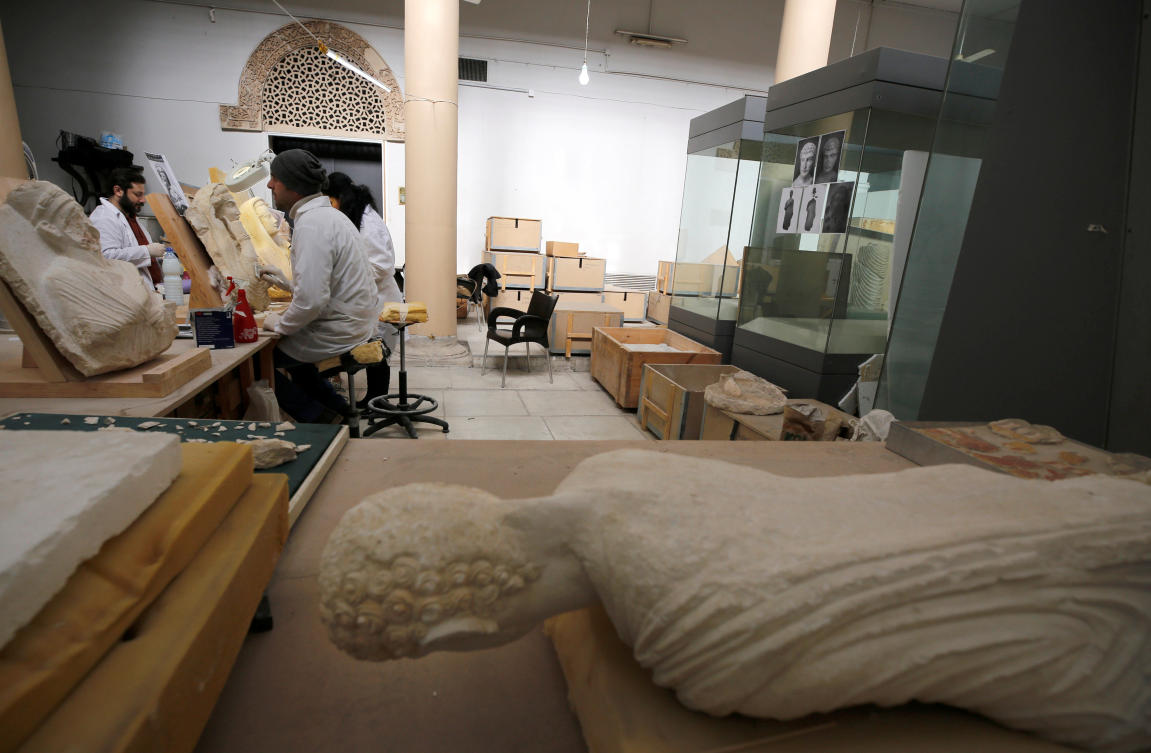
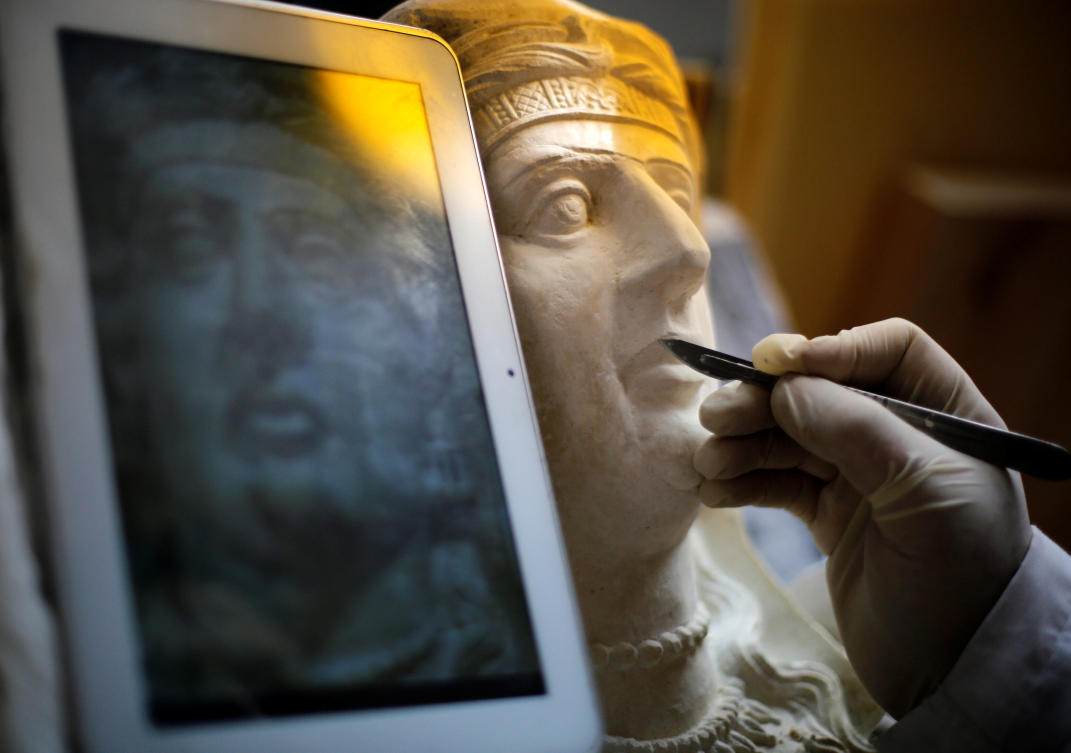
DAMASCUS: In the National Museum of Damascus, archaeologist Muntajab Youssef works on an ancient stone bust from Palmyra, one of hundreds of artefacts his team is painstakingly restoring after they were damaged by Daesh.
Centuries-old statues and sculptures were wrecked by the extremists when they twice seized control of the old city in central Syria during the country’s war, which will go into its ninth year in March.
The 1,800-year-old bust of a bejewelled and richly clothed woman, The Beauty of Palmyra, was damaged during the first offensive on the city by Daesh fighters in 2015.
After Syrian government forces took back the city with Russian military support in March 2016, the bust, alongside other damaged ancient monuments, was taken to Damascus and archived in boxes. When restoration work on it began last year, Youssef said it was in pieces.
“The hands and face were lost completely, also parts of the dress and there are areas that are weaker,” Youssef, who has been working on the bust for two months, said.
Youssef is one of 12 archaeologists working on the arduous restoration job, which first began with the of moving the damaged pieces to Damascus.
Mamoun Abdulkarim, the former Head of Syrian Antiquities, said that in some cases broken artefacts were transported in empty ammunition boxes provided by the Syrian army in Palmyra.
How many artefacts there are in total is difficult to say, given the state they were found in.
The lack of documentation for the artefacts also adds to the restoration challenge.
“A big part of the documentation in the Palmyra museum, was damaged with the antiquities and computers,” archaeologist Raed Abbas said. “A statue needs pictures … in order to be rebuilt.”

Main category: 


International community should push Houthis to implement Sweden agreement: Yemen FM

Thu, 2019-01-10 15:15

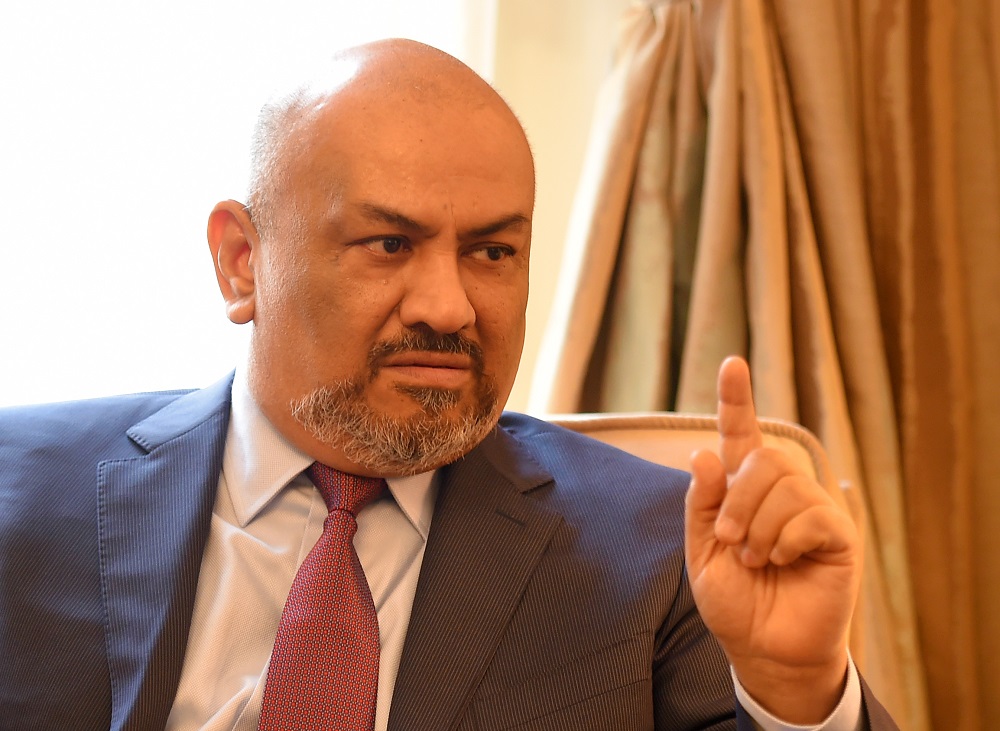
Yemen’s foreign Minster Khalid Al-Yamani called on the international community to push the Houthis militia to implement the UN peace agreement. 

“The Houthis have yet accepted to withdraw from the Hodeidah and its ports,” Al-Yamani said during a joint press conference with the Jordanian Foreign Minister Ayman Safadi in Amman. 

The Houthi militia had agreed to withdraw from Hodeidah and hand over the port to the United Nations after UN-sponsored peace talks in Sweden concluded on Dec. 18, 2018. 

However late last month, the UN cast doubt on the claims by the Houthis to have withdrawn from the port of Hodeidah, saying such steps can only be credible if all other parties can verify them.

The Jordanian foreign minister also stressed the need to implement the Sweden agreement to end the crisis. 

“We support all efforts to resolve the Yemen crisis and end the suffering of the Yemeni people,” Safadi said. 


Main category: 
Tags: 

Yemeni army liberates strategic mountain range in Dalih provinceSaudi Arabia’s KSRelief signs six agreements to boost aid to Yemen