US reiterates concern about Hezbollah agenda to destabilize region

Author: 
Sun, 2019-01-13 23:03

BEIRUT: US officials are in Beirut holding talks with Lebanese officials about the growing threat posed by Hezbollah as US Secretary of State Mike Pompeo continues to tour the Middle East.

During the visit, David Hale, US undersecretary of state for political affairs, will underscore US concerns about Hezbollah’s destabilizing activities in Lebanon and the region, which include the recent discovery of Hezbollah’s cross-border tunnels.

The tunnels “defy UN Security Council Resolution 1701, jeopardize the security of the Lebanese people and undermine the legitimacy of Lebanon’s state institutions,” the US Embassy in Lebanon said in a statement issued ahead of the meeting.

Hale’s visit came ahead of the global summit that will take place in Poland on Feb. 13 and 14 “to counter Tehran’s regional influence,” according to a statement made by Pompeo two days ago.

Pompeo announced on Twitter before embarking on his Middle East tour that he would send a clear message to US friends and partners that “the US is committed to the region, committed to defeat Daesh and committed to countering Iran’s destabilizing activities.”

Lebanon is not included in Pompeo’s visit, which covers eight Arab countries and concludes on Tuesday.

The US Embassy also said in its statement that Hale “will meet with senior Lebanese officials to discuss the full range of bilateral and regional issues.” 

The embassy also added that he “has enduring ties with Lebanon and the Lebanese people after serving at the US Embassy in Beirut as a political officer, deputy chief of mission and ambassador over the span of 27 years.”

“He is returning to Lebanon in his new role to reaffirm strong US support for the Lebanese state, including its legitimate security institutions, as it continues to cope with significant challenges,” the US Embassy added.

Shortly after arriving in Beirut, Hale, accompanied by US Ambassador to Lebanon Elizabeth Richard, met with Walid Jumblatt, the leader of the Progressive Socialist Party.

Hale also met with Joseph Aoun, the commander of the Lebanese Armed Forces, who said that their discussion was focused on “the general situation in Lebanon and the region, as well as cooperation relations between the armies of the two countries, especially the amount of military assistance provided by the US to the Lebanese Army.”

During his visit to Lebanon, Hale will also meet with President Michel Aoun, Parliament Speaker Nabih Berri, Prime Minister-designate Saad Hariri, and a number of political leaders with whom he was acquainted when he served as the US ambassador to Lebanon.

Hale’s visit comes at a time when Lebanon is going through a very sensitive phase as a result of the eight-month disruption to the government’s formation. 

Lebanese parties have accused Hezbollah militant group of being behind this disruption for reasons associated with Lebanon’s regional stance.

Main category: 

Lebanon’s Hezbollah believes solution to government impasse ‘very close’Israel urges UN action over Hezbollah ‘attack tunnels’ from Lebanon


Turkey crackdown on Hayat Tahrir Al-Sham network

Author: 
Zaynab Khojji
ID: 
1547407424416329000
Sun, 2019-01-13 22:24

ANKARA: Over the weekend, Turkey carried out counter-terrorism operations against the alleged members of Syria’s former Al-Qaeda affiliate Hayat Tahrir Al-Sham (HTS) in cities throughout the country.
With HTS taking control of more strategic towns in Syria’s northwestern province of Idlib from Turkish-backed fighters, experts said the group represented an increasing terror threat inside Turkey due to its geographical proximity and Turkey’s involvement in the Syrian conflict.
In Istanbul, in the southern city of Adana and in the capital city Ankara, 13 HTS officials were arrested in the first operation against the terror group, which was carried out by 300 police officials.
In Adana, Turkish police arrested a cell of financial supporters of HTS, including the president of a humanitarian aid NGO named Fukara Der whose financial operations had already attracted the attention of Turkish Financial Crimes Investigation Board (MASAK). The suspects, who also fought during Syrian civil war, are accused of sending money, clothes and providing logistics to HTS members in Syria.
Kyle Orton, a researcher on the Syrian war, thinks that it is difficult to avoid the suspicion that the timing of this anti-HTS raid is political.
“Turkey switched to targeting HTS/AQ cells in the way it did the PKK and Daesh infrastructure some time ago. There is clearly a significant HTS network in Turkey, which is tied into the broader Al-Qaeda network for legacy reasons,” he told Arab News.
According to Orton, Turkey’s intentions in Idlib remain deeply murky, at least in part because the capture of territory in the east of Syria that allowed for the return of refugees and broke up the PKK cantons would diminish Ankara’s interest, in terms of its security, in holding on to Idlib. Therefore the Turks might do a deal that allows the pro-Assad coalition to have Idlib back.
Turkey has listed HTS as a terror group associated with Al-Nusra and Al-Qaeda since last August.
Nihat Ali Ozcan, a security analyst at the Ankara-based think tank TEPAV, said Turkey faces a domestic security risk when intervening in a civil war in its neighbor, and added that this terror threat might increase if the power struggle between HTS and pro-Turkey rebels ever turn into conflict.
“These counter-terrorism operations across the country are therefore of a pre-emptive character,” he told Arab News.
According to Ozcan, HTS has a more established support network in Turkey compared to Daesh, and its membership base is more mixed in nationality, making it more open to the recruitment of foreign fighters.
Sertac Canalp Korkmaz, a researcher in security studies at ORSAM, a think tank in Ankara, said the threat posed by HTS in Turkey is as great as that posed by Daesh and Al-Qaeda.
According to Korkmaz, HTS opposed the Sochi de-escalation agreement from the beginning, as it didn’t agree on laying down its arms.
Escalating clashes between HTS and the Ankara-backed National Front for Liberation in Idlib have also raised concerns about the sustainability of other clauses of the Sochi agreement, in which Article 5 stipulates that all radical terrorist groups should  be removed from the demilitarised zone.
“The prospect of Ankara taking part of a limited operation in Idlib increases the potential of a terror act inside Turkey through its cells,” Korkmaz told Arab News.
“Southern city of Adana is geographically close to the conflict zone, while Istanbul and Ankara, as cities, provide opportunities for terror cells to hide themselves and recruit members,” he added.

Main category: 

Turkey vows operation against Kurdish militia, when time is rightTurkey announces counterterror plan in Syria


Israeli energy minister on rare visit to Egypt

Author: 
AFP
ID: 
1547395751135347800
Sun, 2019-01-13 16:06

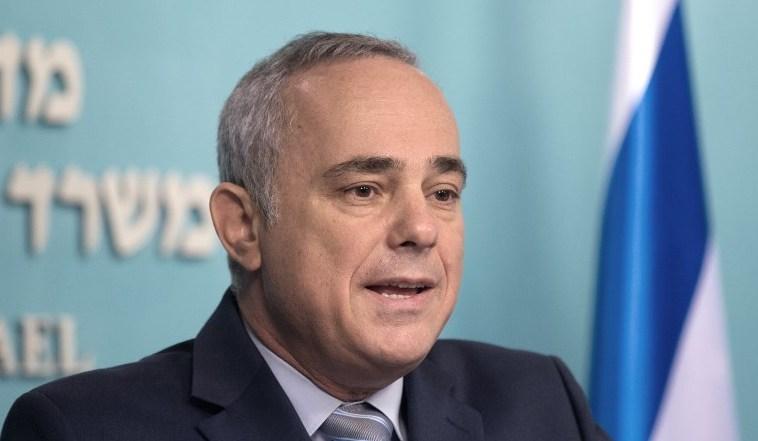
CAIRO: Israel’s Energy Minister Yuval Steinitz arrived in Cairo on Sunday to attend a natural gas conference in a rare visit to Egypt by an Israeli official, airport sources said.
Jordan and Egypt are the only two Arab states to have full diplomatic ties with Israel, but the relations remain limited and taboo among the general populations.
Egyptians, like most Arabs, are largely opposed to the normalization of ties with Israel in the absence of any resolution to the Israeli-Palestinian conflict.
Steinitz’s visit came at the invitation of the Egyptian government, Israel’s energy ministry said.
The Israeli minister was set to attend a regional forum on natural gas, which has become a major economic and strategic issue in the eastern Mediterranean.
The “development of gas fields has geopolitical and geostrategic value,” Steinitz told Israeli army radio ahead of the trip.
“Here you have for the first time real economic cooperation between the axis-of-peace states Israel, Egypt and Jordan, along with European countries.”
Egypt has increased its meetings and agreements on natural gas with neighboring countries as of late.
In February 2018, Cairo reached a deal with Israel for the transfer of natural gas from Israel’s Tamar and Leviathan reservoirs to Egypt.
“Steinitz’s invitation to the conference in Egypt is the positive outcome of the gas agreement,” a source close to energy minister told AFP.
The last time an Israeli minister visited Egypt was in November 2017 when Social Equality Minister Gila Gamliel took part in a conference on the promotion of gender equality in Mediterranean states.
Relations between Israel and some Arab countries have warmed in recent months, with Israeli ministers last year visiting the United Arab Emirates and Oman.

Main category: 

Israel drone maker Aeronautics gets $232 million buyout offerIsrael finds last tunnel, ending mission on Lebanese border


Funding shortage leads to World Food Programme cuts for Palestinians

Author: 
AFP
ID: 
1547393780015084000
Sun, 2019-01-13 15:22

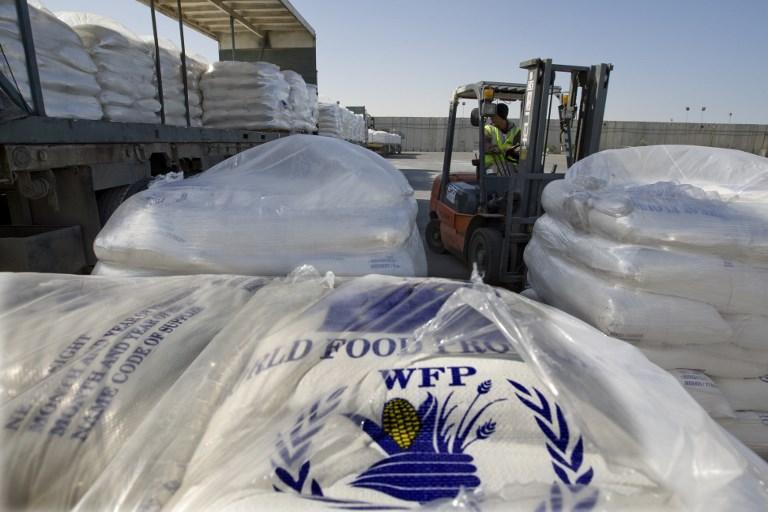
JERUSALEM: The World Food Programme has suspended or reduced aid for some of its Palestinian beneficiaries in the occupied West Bank and Gaza Strip due to funding shortages, an official with the organization said Sunday.
Some 27,000 Palestinians are no longer receiving aid through the United Nations program since January 1 in the West Bank, said Stephen Kearney, the organization’s director for the Palestinian territories.
Another 165,000, including 110,000 in Gaza, are receiving 80 percent of the usual amount, he said.
The cuts were decided upon after a gradual reduction in donations over the past nearly four years, with US cuts having the biggest effect.
In 2018, the WFP assisted 250,000 people in Gaza and 110,000 in the West Bank.
In the village of Yatta near Hebron in the southern West Bank, Maha Al-Nawajah said she is buying fewer necessities.
“In December, they did not renew my card,” said the 52-year-old mother, referring to the WFP card that allowed her to buy groceries for 12 members of her extended family.
She said family members were unemployed.
“My sons do not have permission to enter into Israel and my husband receives it occasionally” and can earn some cash during those times, she said.
The West Bank has an unemployment rate of 18 percent and some Palestinians seek to work in Israel with the hope of earning a higher salary.
But permits are needed to do so and Israel is selective in who is given one.
The WFP launched a funding appeal on December 19 and received additional contributions from the European Union and Switzerland, but the amount remains short, Kearney said.
It said at the time that it was in need of $57 million. It will now seek contributions from new donors in an effort to fill the gap, he said.
Kearney said there were also concerns that the cuts would affect the local economy since residents used the cards to buy goods in local stores.
In the Gaza Strip, around 80 percent of the two million residents rely on international aid.
The strip has been under an Israeli blockade for more than a decade. Israel and Gaza’s Islamist rulers Hamas have fought three wars since 2008.
US President Donald Trump has cut some $500 million in Palestinian aid.

Main category: 

Egypt limits Gaza passage after PA quits border crossingPalestine TV offices in Gaza ransacked by gunmen


Nuclear chief says Iran exploring new uranium enrichment

Author: 
By NASSER KARIMI | AP
ID: 
1547402996125961600
Sun, 2019-01-13 (All day)

TEHRAN: The head of Iran’s nuclear program said Sunday that the Islamic Republic has begun “preliminary activities for designing” a modern process for 20-percent uranium enrichment for its 50-year-old research reactor in Tehran, signaling new danger for the nuclear deal.
Restarting enrichment at that level would mean Iran had withdrawn the 2015 nuclear deal it struck with world powers, an accord that President Donald Trump already pulled America out of in May.
However, Ali Akbar Salehi’s comments to state television appeared aimed at telling the world Iran would slowly restart its program. If it chooses, it could resume mass enrichment at its main facility in the central Iranian town of Natanz.
“Preliminary activities for designing modern 20 percent (enriched uranium) fuel have begun,” state TV quoted Salehi as saying.
Salehi said adding the “modern fuel” will increase efficiency in Tehran research reactor that consumes 20-percent enriched fuel.
“We are at the verge” of being ready, he said, without elaborating.
In June, Iran informed the UN’s nuclear watchdog that it will increase its nuclear enrichment capacity within the limits set by the 2015 agreement with world powers. Iran continues to comply with the terms of the deal, according to the UN, despite the American pullout.
Salehi heads the Atomic Energy Organization of Iran, whose Tehran campus holds the nuclear research reactor given to the country by the US in 1967 under the rule of the shah. But in the time since that American “Atoms for Peace” donation, Iran was convulsed by its 1979 Islamic Revolution and the subsequent takeover and hostage crisis at the US Embassy in Tehran.
For decades since, Western nations have been concerned about Iran’s nuclear program, accusing Tehran of seeking atomic weapons. Iran long has said its program is for peaceful purposes, but it faced years of crippling sanctions.
The 2015 nuclear deal Iran struck with world powers, including the US under President Barack Obama, was aimed at relieving those fears. Under it, Iran agreed to store its excess centrifuges at its underground Natanz enrichment facility under constant surveillance by the UN nuclear watchdog, the International Atomic Energy Agency. Iran can use 5,060 older-model IR-1 centrifuges at Natanz, but only to enrich uranium up to 3.67 percent.
That low-level enrichment means the uranium can be used to fuel a civilian reactor but is far below the 90 percent needed to produce a weapon. Iran also can possess no more than 300 kilograms (660 pounds) of that uranium. That’s compared to the 10,000 kilograms (22,046 pounds) of higher-enriched uranium it once had.
Trump, who campaigned on a promise to tear up the nuclear deal, said he ultimately pulled America out of the accord over Iran’s ballistic missile program and its malign influence on the wider Mideast.
In an interview in September with The Associated Press, Salehi warned that Iran could begin mass production of more advanced centrifuges if the deal collapses.
“If we have to go back and withdraw from the nuclear deal, we certainly do not go back to where we were before,” Salehi said at the time. “We will be standing on a much, much higher position.”

Main category: 

Iran protests to Poland over Iran-focused summitIraq brush past Yemen to set up Iran decider