Defeated Daesh militants, women still defiant

Author: 
Fri, 2019-03-08 23:06

NEAR BAGHOUZ, Syria: Defeated but unrepentant, some militants limping out of their besieged final bastion in eastern Syria still praise Daesh and promise bloody vengeance against its enemies.

The skeletal and dishevelled figures shuffling out of the smoldering ashes of the proto-state may look like a procession of zombies, but their devotion seems intact.

At an outpost for US-backed forces outside the besieged village of Baghouz, 10 women stand in front of journalists, pointing their index fingers to the sky in a gesture used by Daesh supporters to proclaim the oneness of God.

Most refuse to disclose their names or nationalities.

Indistinguishable under their identical black robes, a group of women arriving at the screening point manned by the Syrian Democratic Forces (SDF) swarm around reporters like hornets.

Some throw rocks at the cameras of those trying to film them, while one screams at a photographer and calls him a pig.

A woman snarks at the way the reporter is dressed: “God curses women who resemble men.”

The SDF are closing in on diehard militants and their relatives holed up in a makeshift encampment inside the village of Baghouz.

More than 7,000 people have fled the bombed-out bastion over the past three days, escaping shelling by the SDF and airstrikes by the US-led coalition against Daesh.

But for Umm Mohammed, a 47-year-old woman from Iraq’s Anbar province, the men who have fled are “the cowards and the meek.”

As for the women, “we left because we are a heavy burden on the men,” she says.

“We are waiting for the (next) conquest, God willing.”

Nearby, a little boy hums a militant anthem as he walks beside his mother, his jacket covered with dust.

The boys raised under Daesh rule and trained to fight from a young age — are the reason the group will survive, another Iraqi woman says.

“The caliphate will not end, because it has been ingrained in the hearts and brains of the newborns and the little ones,” says the 60-year-old, refusing to give her name.

Many women tell AFP that they want to raise their children on the ideology of the caliphate, even as its territorial presence fizzles out.

Abdul Monhem Najiyya is more ambivalent about the group.

“There was an implementation of God’s law, but there was injustice,” he says, claiming he worked as an accountant for Daesh.

“The leaders stole money… and fled,” he says. “We stayed until the bullets flew over our heads.”

But he says many senior Daesh figures have fled to the northwestern province of Idlib or crossed into Turkey and Iraq.

Najiyya’s harshest words are for the group’s elusive leader, Abu Bakr Al-Baghdadi, whom he says he never saw once.

“He left us in the hands of people who let us down and left,” he says. “He bears responsibility, because, in our view, he is our guide.”

When asked why it took him so long to quit the redoubt, Najiyya said he was afraid of being detained by the SDF because his cousins are Daesh militants.

He also says that rumors the militants would be granted safe passage to Idlib, largely controlled by a rival militant group, encouraged some to stay.

Nearby, a bearded man with a leg wound cursed the coalition, whose warplanes have pummeled the last militant redoubt.

“I only surrendered because of my injury,” he says, adding that he had been with Daesh “since the beginning.”

One woman, who says she is from Damascus, tells AFP: “We have left, but there will be new conquests in the future.”

Speaking from behind a veil that covers her face, she says: “We will seek vengeance, there will be blood up your knees.”

Main category: 
Tags: 

In Syrian riverside camp, Daesh clings to last scrap of ‘caliphate’Syria force braces for new outflux from last Daesh village


Tunisia divided over equal inheritance for women

Author: 
Fri, 2019-03-08 22:48

KASSERINE/TUNISIA: Souad Gharsalli lives in a rented flat in the center of Kasserine, in western Tunisia, baking and selling artisanal bread to make money. But she should be growing olive trees for a living, she says.

Gharsalli, 47, grew up with three brothers and six sisters on her family’s 7 hectares (17 acres) of land in the region of Kasserine, on which they grew olive trees and grains.

When their father died in 1997, Gharsalli and her sisters inherited half as much land as their brothers, in accordance with Tunisian law.

Then one of the brothers asked his sisters to sign a document. The women, who are only partially literate, later found out they had given up any claim to their father’s land.

“We thought we were just giving them the right to work on our land,” Gharsalli told the Thomson Reuters Foundation. “But after that, we had no right to any of it.”

Despite laws protecting their right to inherit, many women in Tunisia struggle to get their allocated share. According to government figures from 2014 — the latest available — in 85 percent of cases women got no land at all when their fathers died.

Now, a proposed new law could give women and men an equal share of inheritance.
The proposal, due to be debated by Parliament, has divided opinion across Tunisia, as well as other parts of North Africa and the Middle East.

Supporters say the law, which was presented to the country’s legislature in February, could give Tunisian women greater financial autonomy. Government figures show that less than five percent of women in Tunisia are registered land owners.

National polls show almost 60 percent of women in Tunisia are against the proposal, however, as it seeks to replace legislation that is based on Islamic law.

After opposition from conservatives, the original draft law was amended to allow individuals to “opt out” and continue to allocate inheritance according to the current rules.

“This will be the first Arab country that will have legislated on this question, which is sensitive and taboo because it is said to be written in the religious texts,” said Khadija Cherif, coordinator of the commission on inheritance at the Tunisian Association of Democratic Women (ATFD).

“But (for me) this is not a question of religion. It is a question of economic power, which gives men power in the family and over the women.”

‘You will get land from your husbands’

Advocates of the proposal know that even if the text is passed into law, social pressure and informal family arrangements could still block women’s access to land.

Before Hayet Nasri’s father died, he told his family he would leave his 14 hectares of land to only one of his four sons.

After their father’s death, the brothers instead agreed to share the land between them. Now they have 200 olive trees each, and Nasri and her five sisters have none.

“The sharing of the land is not legal, it is not official. It’s done within the family, not the court,” said Nasri, who rents a house in Kasserine with her husband and five children.

To justify their actions, her brothers told her and her sisters: “You are married. You will get land from your husbands, not from us.”

But if all the land a woman has is from her husband, a divorce can leave her with nothing, said Ahmed Mbarki, a lawyer in Kasserine.

Tunisian divorce law provides for an equal split of property acquired during the marriage, but that applies only to residences, not land. Even so, “the husband will try to get around it,” said Mbarki.

“The land is always in the hands of the man, the husband, the father. If there is a divorce — and there are many — the husband gives nothing to his wife.”

Mbarki has also seen many inheritance cases where women willingly give up their rights to a portion of their fathers’ land.

“The sisters say, ‘I love my brother, I want to give them my part, I don’t want to cause any problems,’” he said.

First steps

Cherif of the ATFD — which has been leading the campaign for the new law — sees the proposed law, and the debate surrounding it, as promising “first steps” toward change.

“There is a lot of silence around injustice against women,” she said.

“It (the law) will allow those who think in silence that their situation is unjust to defend themselves, and it will allow others to become conscious of the fact that they have and can use this right. That will take time.”

She added that the ATFD is seeing more women fighting for their inheritance rights in court today compared to 20 years ago.

Gharsalli is still waiting. After divorcing her husband in 1998, she did not re-marry and now lives with her son.

Last year, her brothers promised to give her a plot of land but later changed their minds.

“My wish is to get the chance to own some part of this land to plant even just 20 olive trees to live off of,” she said.

Main category: 
Tags: 

In rural Tunisia, inheritance reform offers women rare boostTunisian president proposes inheritance equality for women, with exceptions


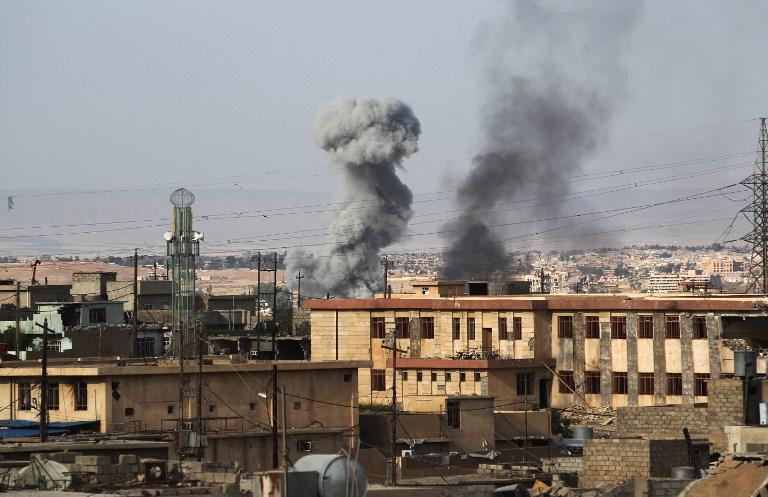
Car bomb blast kills 2 in Iraq’s Mosul

Author: 
Reuters
ID: 
1552071023025738000
Fri, 2019-03-08 18:28

MOSUL: A car bomb blast in the northern Iraqi city of Mosul on Friday killed at least two people — a child and a member of the security forces — and wounded 10 others, a local medical official said.
Security sources reported earlier that the blast in Mosul’s Muthanna district wounded at least five security personnel, but the number of wounded was set to rise.
It was the second explosion in just over a week to hit the city which was Daesh’s de facto capital from 2014 to 2017. Such incidents are usually blamed on Daesh militants still at large in parts of northern Iraq. There was no immediate claim of responsibility.
Mosul has been the site of several bomb blasts in recent months. In last week’s attack a car packed with explosives blew up killing two people and wounding another 24 near Mosul University.
Militants have adapted their tactics to insurgent-style attacks since Daesh was defeated in Iraq in 2017 and driven out of areas it had controlled for years. Daesh militants are currently facing an assault by US-backed forces in Syria in some of the last areas they hold.

Main category: 

Photographers in Iraq’s Mosul snap dark days, bright futuresIn Mosul exhibition, Iraqi artists process brutal rule of Daesh


Istanbul police fire tear gas at banned women’s day rally

Author: 
AFP
ID: 
1552068630725540800
Fri, 2019-03-08 17:57

ISTANBUL: Istanbul police fired tear gas at thousands of women who took to the city’s central avenue on International Women’s Day on Friday in defiance of a protest ban to demand greater rights and denounce violence.
Security forces in riot gear pushed the crowds of women — some wearing colourful wigs and masks — at the entrance to the city’s main pedestrianised shopping street of Istiklal Avenue, an AFP correspondent reported.
Police then used tear gas on the marchers and menaced them with dogs, causing many protesters to flee onto side streets.
The Women’s Day event took place peacefully last year but just before this year’s march, authorities issued a statement banning any demonstration on the city’s central avenue.
Ahead of the protest the area was flooded with police who set up cordons around the central Taksim Square, while many local shops were closed.
One woman, called Ulker, speaking to AFP from behind a barrier, said: “Here is the bitter truth: There is a system, there is a state that is scared of us. I condemn this.”
Thousands of demonstrators were eventually allowed into a small part of the avenue to stage the protest.
They unfurled banners that read “Feminist revolt against male violence, and poverty”, and “I was born free and I will live free.”
The demonstrators also chanted slogans including “We are not silent, we are not scared, we are not obeying.”
The crowds then became trapped between two security cordons and were subsequently dispersed by the police using tear gas.
Women’s activists have long accused President Recep Tayyip Erdogan’s Islamic-rooted government of not doing enough to stop violence against women.
In 2018, 440 women were killed in murders linked to their gender, according to the women’s rights group “We Will Stop Femicide”, compared with 210 in 2012.
The issue came to public attention when Turkish pop singer Sila appeared before court on complaints of having been beaten by her partner Ahmet Kural, a famous actor.
The landmark trial opened in Istanbul Thursday a day before International Women’s Day.
“As you know in Turkey violence against women is very high. The government is doing nothing to stop it. That’s all we can do: to come here and speak up,” protester at Istiklal Avenue Gulsah said.
Women’s rallies were also held in the capital Ankara, where a few hundred women protested, with small police presence.
Some chanted: “Men are killing and the state is protecting killers”.
Large scale protests are rare events in Turkey since mass 2013 anti-government rallies, which were seen as a major challenge to Erdogan’s government.

Main category: 

Saudi Arabia women’s team out to use bowling championship debut as springboard to successTurkish court accepts indictment against 16 over Gezi protests -lawyer


Houthis committed 18 cease-fire violations in the last 24 hours: Arab coalition

Fri, 2019-03-08 19:17

JEDDAH: The Iranian-backed Houthi militia committed 18 violations against the Swedish cease-fire agreement in Hodeidah during the last 24 hours, the Arab coalition said on Friday.

The Stockholm Agreement was signed by the Yemeni government and Houthi representatives in December last year.

The main points of the agreement were a prisoner exchange, steps toward a cease-fire in the city of Taiz, and a cease-fire agreement in the city of Hodeidah and its port, as well as ports in Salif and Ras Issa.

The coalition said the Houthis targeted several neighborhoods in Hodeidah using various weaponry.

“The violations included shooting with various light weapons and mortars on the areas of Hais, Al-Faza and Jabaliya,” said the coalition, adding that one citizen was killed and another was injured.

Earlier on Friday, Saudi Arabia’s Royal Air Defense Force shot down a Houthi drone that was flying toward Saudi Arabia, Saudi state TV reported.

The spokesperson of the Saudi-led Arab coalition, Col. Turki Al-Maliki, said that the drone was targeting civilians in a residential area in the city of Abha.

The Houthi militia has committed thousands of violations since the agreement came into force on Dec. 18, 2018.

Last month, state news agency SPA said the Houthi militia had committed 1,112 violations since the Hodeidah agreement was implemented, leading to 76 civilian deaths and 492 injuries.

The report said the Houthis continued to target civilian homes, public areas and army positions, using a variety of weapons.

Main category: 

Saudi Royal Air Defense forces shoot down Houthi drone, 5 civilians injuredHouthis have ‘killed the Stockholm Agreement’: Yemeni official