Turkey and Russia face escalation of violence over Syria’s push into Idlib

Sat, 2019-06-01 23:20

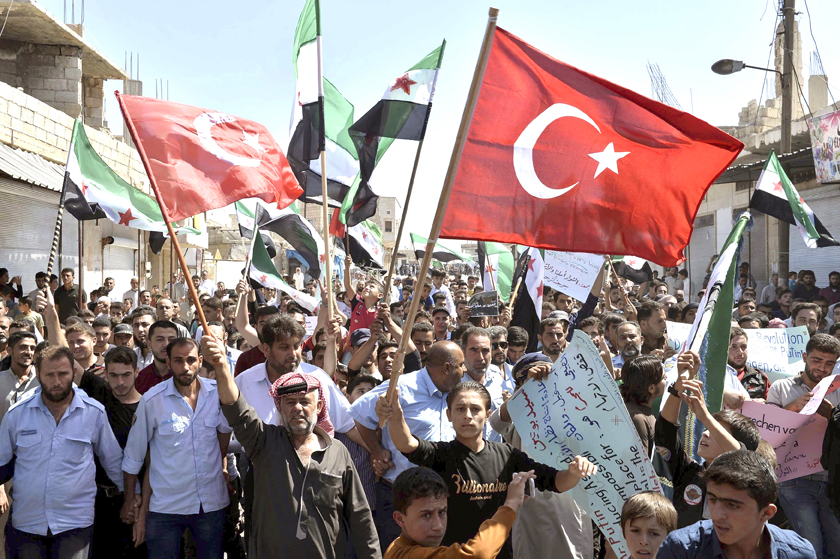
JEDDAH/ISTANBUL:  Ankara and Moscow are again facing an escalation of violence in Syria’s last opposition-held territory.

An all-out offensive by the Assad regime to capture Idlib in northwest Syria could unleash an unprecedented humanitarian crisis, as the province is home to 3 million people.

Regime ground forces have been advancing from the south of the opposition stronghold under the cover of Syrian and Russian airstrikes.

The Syrian Observatory for Human Rights said 291 civilians and 369 fighters have been killed in Idlib since April 30. 

In the same period, 269 regime troops and 22 civilians have been killed in regime-held areas by opposition fire.

The UN children’s agency said more than 130 children have reportedly been killed. More than 200,000 people from Idlib have been displaced, according to the UN.

Ankara has accused the Assad regime of violating a cease-fire brokered by Turkey and Russia. 

Turkish Defense Minister Hulusi Akar said Ankara has told Russia that “the regime must be controlled.”

Syrian opposition spokesman Yahya Al-Aridi said the regime has chosen a military path in handling the popular uprising. “The more tension, the better for the regime and Iran, its main supporter,” he told Arab News. 

Russia has tried more than 250 kinds of deadly weapons in Syria, he said. “It wanted to tailor a solution that fits its own interests and suits the regime. The pretext is there in Idlib with some Al-Nusra fighters,” he added. 

What is happening in Idlib, said Al-Aridi, is a violation of accords between Turkey and Russia. 

“The losses on both sides are tremendous, with people defending themselves against ground forces. But they can’t do anything against the Russian and regime bombardment,” he added. 

“The human loss is horrible. Hundreds of thousands are fleeing their homes with no shelter. It’s a humanitarian disaster, with the world unfortunately watching and doing nothing against those criminals.”

Turkey, which is already hosting more than 3.6 million Syrian refugees, is facing strong pressure from Syria, Iran and Russia to deliver on its pledge to control the armed opposition factions in Idlib.

But Turkey also needs Russia to rein in Syria’s Bashar Assad to prevent a massive outflow of refugees and to keep Turkish soldiers on the ground safe.

Turkish President Recep Tayyip Erdogan and Russian President Vladimir Putin “have an incentive to cooperate and ensure that nobody’s interests are totally trampled,” says Aaron Stein, the director of the Middle East program in American think tank Foreign Policy Research Institute.

In September, the two leaders brokered a cease-fire for Idlib in the Russian resort of Sochi, preventing a bloody onslaught, despite the fact that Russia has firmly backed Assad and Turkey supports opposition forces. Nine months later, the truce has failed.

The agreement called for a 15-to-20 km demilitarized zone free of insurgents and heavy weaponry and for two key highways crossing through Idlib to be reopened. The demilitarized zone has been breached and the highways are at the center of the current regime offensive.

FASTFACT


• In September, the two countries brokered a cease-fire for Idlib in the Russian resort of Sochi, preventing a bloody onslaught, despite the fact that Russia has firmly backed Assad and Turkey supports opposition forces. Nine months later, the truce has failed.

• Instead of coming under the umbrella of moderate groups, HTS has used Turkey as leverage against Russia and Assad-supporter Iran.

Syrian ground forces have been advancing from the south of the opposition stronghold under the cover of Syrian and Russian airstrikes.

The Syrian Observatory for Human Rights said more than 291 civilians and 369 fighters have been killed since April 30 in the opposition stronghold. In the same period, 269 regime troops and 22 civilians were killed in regime areas by opposition fire. The UN’s children’s agency said more than 130 children have reportedly been killed.

Already, more than 200,000 people from the stronghold have been displaced, according to the UN, with some seeking safety near the border with Turkey while others crammed into already crowded camps in Syria.

Turkey has accused the Syrian regime of violating the cease-fire and Turkish Defense Minister Hulusi Akar said the country has told Russia “the regime must be controlled.”

Russia has launched airstrikes in Idlib and is providing air cover in the Syrian regime offensive. It has complained that the fighters have increasingly been targeting its military base in the nearby coastal province of Latakia.

But for now, Moscow is unlikely to support an all-out Syrian operation in Idlib because the benefits of a long-term alliance with Turkey outweigh one military battle.

“Russia doesn’t want to ruin its relationship with Turkey because of Idlib,” says Kirill Semenov, a Moscow-based Middle East analyst and expert at the Russian International Affairs Council.

In late April, Putin said he would not rule out a large-scale assault but “together with our Syrian friends, we believe that this would not be advisable” due to humanitarian issues.

Still, Russia’s patience is wearing thin with the Hayat Tahrir Al-Sham, or HTS, which it accuses of targeting its military base. HTS is considered a terrorist organization by the US, Russia and Turkey, despite its claims it has disassociated from Al-Qaeda.

Top Russian officials have often called Idlib a “breeding ground for terrorists.”

Despite the cease-fire deal, Turkey has been unable to neutralize the extremists. Much of Idlib has come under the control of HTS, which has defeated Turkey-backed armed groups.

Emre Ersan, an associate professor of international relations and political science at Istanbul’s Marmara University, believes Turkey may have overestimated its influence over HTS. He says Turkey’s plan to split the group, with some of its members joining Turkish-backed opposition forces and the group’s hard-liners isolated, has not worked.

Instead of coming under the umbrella of moderate groups, HTS has used Turkey as leverage against Russia and Assad-supporter Iran, according to Ersan.

Adding to the risks, Turkish troops are in the line of fire. Two Turkish soldiers were wounded in early May in a Syrian regime artillery attack on an observation post. Three other attacks have been cited by Turkey’s official Anadolu Agency, raising the question if the attacks were accidental or designed to pressure Ankara with Russia’s knowledge.

“The Turkish Armed Forces will not take a single step back from where it is,” Akar, Turkey’s defense minister, said last week.

Erdogan and Putin have talked on the phone, agreeing to continue working along the lines of the cease-fire agreement to prevent civilian deaths and a refugee flow. They also agreed to meet on the sidelines of next month’s Group of 20 conference in Japan.

“Apart from this dialogue and cooperation, there is nothing on the ground that can prevent a catastrophe in Idlib,” Ersan says.

The presidents have become close since 2016, rebuilding their relations after a dramatic crisis in 2015 when Turkey shot down a Russian jet near the Syrian border. Their rapport comes amid Turkey’s fragile relations with NATO ally US, especially over Washington’s support of Syrian Kurdish-led forces who control large swaths in eastern Syria. Ankara considers them an extension of a Kurdish insurgency operating inside Turkey.

Erdogan is so far sticking to his promise to buy Russian-made S-400 missiles despite US warnings the system would jeopardize Turkey’s participation in the F-35 fighter jet program and compromise its safety. Stein calls this “a big win for Russia.” Turkey is angling for a way to have both the S-400s and the F-35s.

Turkey is also talking with the US about a safe zone in northeastern Syria and has repeatedly asked for the US to end its military support for Kurdish-led Syrian Democratic Forces, or SDF. Erdogan will meet US President Donald Trump at the G-20 as well.

Ersan believes Russia may allow Turkey to grab the northern town of Tel Rifaat from the Kurdish fighters, the last town they control in western Syria. Russian support could help Turkey put pressure on the SDF, widen Turkish influence and strengthen its hand in ongoing negotiations with the US

In exchange, he argues, Turkey could be open to some limited Syrian operation toward Idlib.


(With AP)
 

Main category: 
Tags: 

Almost 950 killed in a month of Syria violenceSyrian boy survives regime bombing that killed his mother, siblings



Tunisia stops rescued migrants from coming ashore

Author: 
Sat, 2019-06-01 23:05

TUNIS: Tunisian authorities were on Saturday stopping 75 migrants saved at sea from coming ashore, according to a rights group and the captain of the ship which rescued them.
The migrants were adrift in international waters in a boat with a broken engine when an Egyptian tug boat brought them aboard, the captain said on condition of anonymity.
After notifying authorities in Italy and Malta, the crew headed for the southern Tunisian port of Zarzis where authorities refused to allow the ship to dock.
“We’re in a critical situation, we’re nearly 100 on board and we don’t have more than two days of supplies of water and food,” the captain told AFP by phone.
Tunisian rights organization FTDES said the regional governor demanded government support before accepting the migrants, following an increase in new arrivals from neighboring Libya in recent months.
Tunisian authorities did not respond to AFP’s requests for comment.
The crew of the tug boat rescued 64 Bangladeshis, nine Egyptians, one Moroccan and one Sudanese, who had departed from Zuwara in western Libya, according to FTDES.
Last month, around 60 migrants, most from Bangladesh, drowned off the coast of Tunisia after leaving Libya on a boat bound for Europe.
There has been a significant reduction in rescue vessels operating in the Mediterranean Sea in recent months, with humanitarian boats facing legal woes as countries such as Italy impose a hard-line migration policy.

Main category: 

Three migrants die of thirst in Niger desertItaly, Malta rescue stricken migrants in Mediterranean


Funeral of Algerian activist draws thousands after prison death

Author: 
Sat, 2019-06-01 23:03

ALGIERS: Thousands of people attended the funeral on Saturday of Algerian human rights activist Kamel Eddine Fekhar, whose death in pre-trial detention has prompted an investigation.

Fekhar, a 54-year-old doctor, was a leading advocate for the Berber-speaking Mozabite minority.

He was buried in the El-Alia cemetery in the capital Algiers, where people gathered by his coffin and a portrait of the activist.

Fekhar died in the Blida hospital south of Algiers after being transferred there “in a comatose state,” his lawyer Salah Dabouz said on Tuesday.

The activist had been on hunger strike since late March, his lawyer said, when he was arrested for “attacks on institutions.”

The Justice Ministry said on Wednesday it had ordered an investigation into the circumstances of Fekhar’s death, following criticism from Algerian and international rights groups.

A day earlier, large crowds of Algerians took to the streets of the capital, where dozens were detained ahead of the latest protest two months after leader Abdelaziz Bouteflika resigned.

Demonstrators filled avenues in central Algiers chanting slogans against a push to hold presidential elections in July and rejecting calls by the armed forces chief for dialogue.


Memorial

Protesters on Saturday held a minute’s silence for the activist before breaking into chants blaming the authorities for his death.

Fekhar’s lawyer said his client had been held in Ghardaia, 480 km south of Algiers, for weeks “in inhumane conditions.”

The activist was first arrested in 2015 during unrest in the M’zab Valley, where Ghardaia is the largest city, between the country’s Mozabite community and Chaamba Arabs.

After serving two years in prison for public order offenses, he was released in July 2017.

Protesters are looking to keep up the pressure on the North African state’s ruling body with weekly rallies despite the end of Bouteflika’s two-decade rule.

Police had earlier rounded up some 50 people, mainly young men, in the heart of Algiers ahead of the planned protest.

Those detained had their IDs and mobile phones confiscated and were loaded into vans, an AFP journalist reported.

Demonstrators taking to the streets are demanding the resignation of all those tainted by ties to the former regime.

Local journalists reported that people were out in force in the country’s other biggest cities of Oran, Constantine and Annaba.

Armed forces chief Ahmed Gaid Salah has become the main powerbroker after he turned on his boss Bouteflika and helped ease him from office in the face of the mass protests.

He is pushing for elections on July 4 but demonstrators insist there must be a wholesale change of top officials before a new vote can be held.

Only two little-known figures have submitted their candidacies on time for the disputed poll, raising doubts about plans to stage it.

The Constitutional Council has until June 5 to decide whether to approve the two hopefuls, who need the backing of at least 600 elected officials or 60,000 voters to get on the ballot.

The rallies that erupted across the country in February after Bouteflika announced plans to seek a new term have largely been tolerated by security officials overwhelmed by the vast crowds.

Last Friday the police made numerous arrests in central Algiers of protesters carrying placards and the national flag.

The crowd this week held a minute’s silence for human rights campaigner Kamel Eddine Fekhar before breaking into chants blaming the authorities for his death in custody on Tuesday.

Fekhar, an activist from the Mozabite Berber minority, was being held in pre-trial detention for “attacks on institutions” and had been on hunger strike since March.

The justice ministry said it was probing his death after his lawyer complained he had been kept in “inhumane conditions.”

Main category: 

Algerians rally for change despite arrestsAlgeria’s July election date implausible: Media


Lebanon army chief angry at budget measures

Author: 
AFP
ID: 
1559412008060717700
Sat, 2019-06-01 17:51

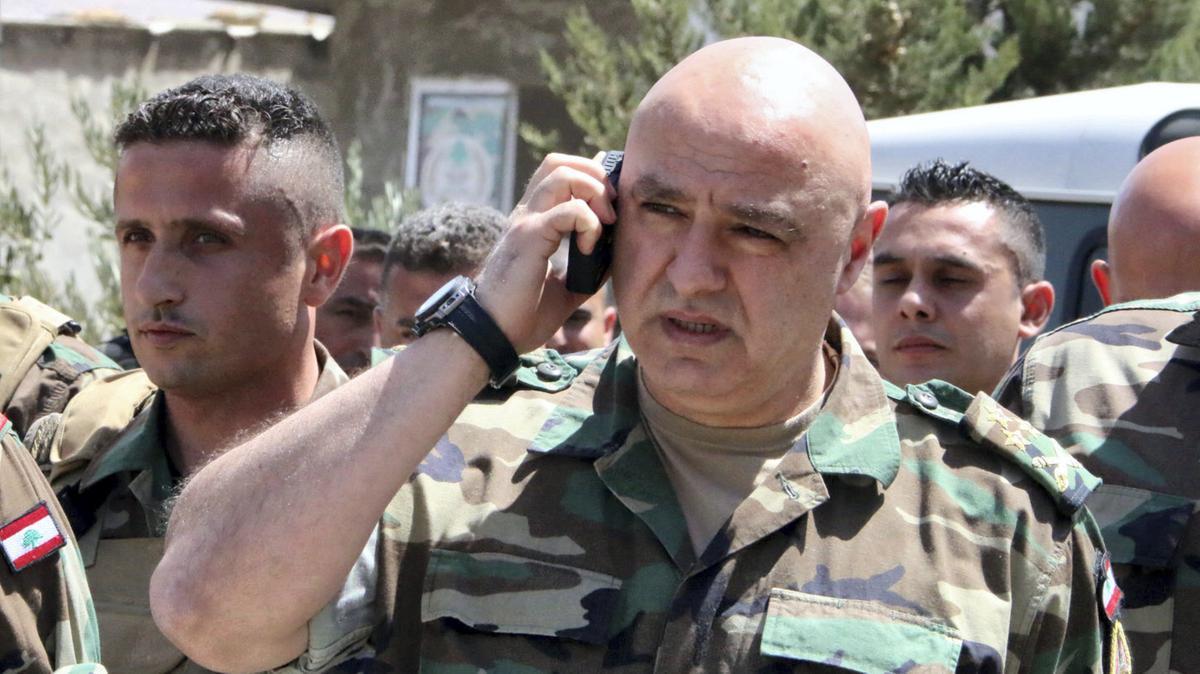
BEIRUT: Lebanon’s army chief on Saturday criticized measures in the country’s austerity budget, including a recruitment freeze, warning they would have a negative impact on the military.
General Joseph Aoun’s intervention, rare for a Lebanese army chief, comes after the government approved a budget aimed at unlocking billions of dollars in aid that an official source said includes a three-year army recruitment freeze.
“The ban on recruiting soldiers or cadets, and the ban on dismissal, will have negative consequences on the military institution,” Aoun said in a statement published by the army.
Lebanon is one of the world’s most indebted countries and the government plan is expected to trim the country’s deficit this year to 7.59 percent.
Donors at the so-called CEDRE conference last year pledged $11 billion in aid and soft loans to Lebanon, which vowed to reduce its public spending.
Aoun said the army has already been adopting a stringent approach to spending and last year returned part of its budget to the state coffers.
“The army is the backbone of Lebanon, we do not exaggerate in saying that it guarantees (the country’s) security and stability. Its mission is not limited to times of war and conflicts,” he said.
“Despite the current security stability, significant challenges remain, such as those at our eastern, southern or maritime borders,” Aoun added.
Lebanon has been hit by repeated political deadlocks in recent years and the economic woes have been compounded by the devastating war in neighboring Syria.
It is also technically still at war with Israel, with United Nations peacekeepers stationed on the frontier.
There have been numerous protests in recent weeks against the austerity measures by Lebanese government workers, including by retired soldiers concerned about possible pension reductions.
Civil servant salaries are to be cut under the new budget, which would also introduce a 2-percent tax on imports and increase taxes on interest income from bank deposits from seven to 10 percent.
The plan still needs to be ratified by parliament, giving lawmakers an opportunity to table amendments.

Main category: 

Lebanon to seek more cuts in 2020 budget targeting power subsidyLebanon receives Israeli response to border demarcation


Iran willing to talk if other sides ‘show respect’, not ordered to negotiate: Rouhani

Sat, 2019-06-01 20:19

TEHRAN: President Hassan Rouhani on Saturday suggested Iran may be willing to hold talks if the US showed it “respect,” but said Tehran would not be pressured into negotiations, Fars news agency reported.
Iran and the US have been drawn into starker confrontation in the past month, a year after Washington pulled out of a deal between Iran and global powers to curb Tehran’s nuclear programme in return for lifting international sanctions.
Washington re-imposed sanctions last year and ratchetted them up in May, ordering all countries to halt imports of Iranian oil. In recent weeks it has also hinted at military confrontation, saying it was sending extra forces to the Middle East to respond to an Iranian threat.
US President Donald Trump says the 2015 nuclear deal was not strong enough and he wants to force Iran to negotiate a new agreement. Some U.S. officials have spoken of the possibility of new talks.
Trump said on Monday: “It (Iran) has a chance to be a great country with the same leadership… We aren’t looking for regime change – I just want to make that clear.”
Fars news agency quoted Rouhani as saying: “We are for logic and talks if (the other side) sits respectfully at the negotiating table and follows international regulations, not if it issues an order to negotiate.”
Iran’s top authority, Supreme Leader Ayatollah Ali Khamenei, said on Wednesday Iran would not negotiate with Washington. Rouhani had previously signalled talks might be possible if sanctions were lifted.
In Saturday’s speech to a group of Iranian athletes, Rouhani noted Trump’s recent remarks and suggested they were a climb-down from statements last year that encouraged regime change in Iran.
“The same enemy which declared its aim last year to destroy the Islamic Republic of Iran today explicitly states that it does not want to do anything to (our) system,” Rouhani said. “If we remain hopeful in the war with America, we will win.”

Main category: 
Tags: 

US suspends funding for Iran Twitter account that trolled criticsHouthis an ‘arm of Iran that threatens Yemen’s existence’