For the Gulf region, global air quality report is a wake-up call

Author: 
Caline Malek
ID: 
1559684669647341500
Wed, 2019-06-05 00:43

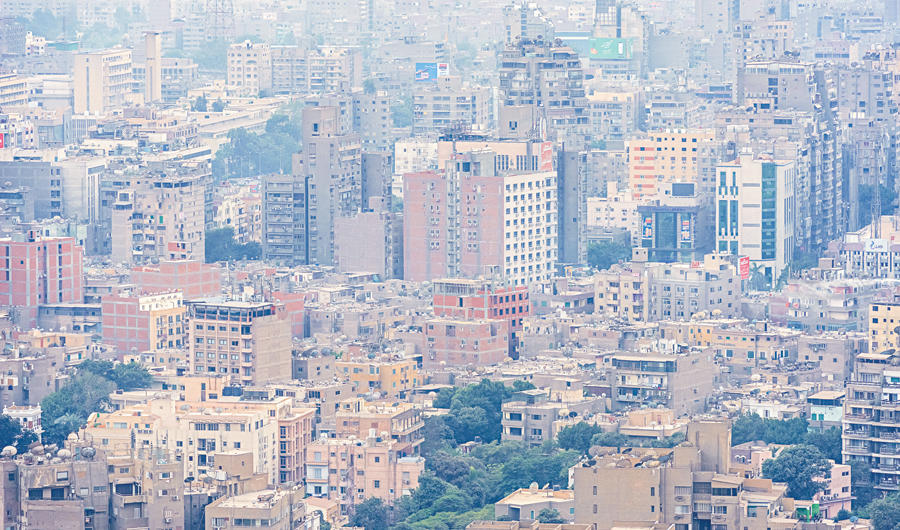
DUBAI: Nine out of 10 people globally breathe polluted air, and only one out of 10 cities meet the World Health Organization’s (WHO) air quality standards.
As such, the UN is understandably focused on this emerging environmental risk as World Environment Day is marked on June 5. According to the latest WHO data, Saudi Arabia is home to some of the cities with the worst air quality.
“The Gulf region is one of the most polluted in the world due to its addiction to oil and gas,” said Julien Jreissati, a campaigner at Greenpeace Middle East and North Africa (MENA). “This is both on the supply side — with most of the pollution hotspots lying near oil drilling sites, in Saudi Arabia for instance — and on the demand side, with electricity and transport.”
Experts ascribe the high pollution levels in the Gulf to dependence on fossil fuels, and lax emissions standards and regulation with regard to fossil fuel-burning power plants, industries and vehicles. They say urgent action is needed given that 93 percent of the world’s children live in places where air pollution levels are above WHO guidelines, nearly 3 billion people depend on burning solid fuels or kerosene to meet household energy needs, and air pollution is costing the global economy more than $5 trillion every year in welfare costs.
The desert climate is also to blame for the Gulf’s air pollution problem. Climate change will not only elevate temperatures to potentially unbearable levels in the region, but also spur an increase in atmospheric pollution, with worrying health implications.
“It’s clear that air pollution is already one of the biggest threats for public health that we’re confronting at the moment,” said Dr. Maria Neira, director of public health, environment and social determinants of health at the WHO. “Globally, we have 7 million premature deaths that are attributable to air pollution. We have very hot areas in Asia and Africa where air pollution represents a huge problem,” she added. “As for high concentrations of toxic air, we can observe across the world that some parts of the Middle East are among those most affected.”
Neira underscored air pollution’s link to sand and desert dust — transboundary factors that are likely to be accelerated by climate change, especially in areas with large concentrations of petrochemical industries and high volumes of shipping and vehicular traffic. “The linkages between exposure to air pollution and health problems have been very well established,” she said.
“Air pollution will be causing obstructive chronic respiratory diseases and lung cancer. Toxic air won’t just go into the lungs but also the brain and heart, so we need to protect the population.”
The State of Global Air Report 2019 identifies air pollution as the fifth leading risk factor for mortality worldwide.
It is responsible for more deaths than better-known factors such as malnutrition, alcohol use and physical inactivity, the report said.
Each year, more people die from air pollution-related diseases than from road traffic injuries or malaria, it added.


“In the six Gulf countries, ambient air pollution was responsible for 13,000 premature deaths in 2017, according to the Global Burden of Disease,” said Lauri Myllyvirta, senior analyst at the Greenpeace Air Pollution Unit. “This is a substantial increase over the 10,000 deaths in 2010.”
In most cases, high concentrations of particulate matter — fine particles from indoor and outdoor sources that are able to travel into the respiratory tract and reach the lungs — are to blame. The most harmful is PM2.5, tiny particles or droplets in the air that are two and a half microns, or less, in width.
According to the State of Global Air Report 2019, exposure to PM2.5 is extremely high in the Middle East, with Qatar ranking the highest, followed by Saudi Arabia, Egypt, Bahrain, Iraq and Kuwait. Average pollution exposure in these countries is well above average levels in China.
The findings show that more than 90 percent of people worldwide are exposed to pollution levels exceeding WHO guidelines for healthy air — some by five times — with more than half living in areas that do not even meet the organization’s least-stringent air quality standards.
Myllyvirta points to fossil fuel burning — particularly the burning of heavy oil in power plants, refineries and factories — as the leading cause of air pollution in the Gulf. “The second most important source is soil dust, which is in principle ‘natural’ but can increase with climate change due to drought and desertification,” he said. “Our global mapping of the sources of NOx pollution, one of the key ingredients of PM2.5, also pointed to oil-fired power plants and oil refineries, besides transportation, as key sources,” he added. “Alarmingly, the Gulf is one of the few regions in the world besides South Asia where pollution levels are increasing. This is no surprise as oil consumption in the region rose 25 percent between 2010 and 2017, according to (oil company) BP.”

FASTFACT

• State of Global Air Report 2019 ranks Qatar highest, followed by Saudi Arabia, Egypt, Bahrain, Iraq and Kuwait in annual PM2.5 exposure in 2017 in the Middle East.

• Exposure to air pollution is blamed for 4.2 million deaths annually.

• 91% of the world’s population is exposed to pollutants exceeding WHO guideline limits.

• About 3 billion people are exposed to high indoor air pollution due to lack of access to clean cooking fuels and technologies.

Pointing to the Gulf’s abundant sunshine, Jreissati said the region’s true wealth lies in the sky, not underground.
“The region is one of the world’s sunniest,” he added. “In order to combat both local pollution and global climate change, it’s imperative that the Gulf countries initiate a fast transition to renewable energies, which are clean, cheap, and can provide jobs.”
Large-scale deployment of renewables has the potential to make a big difference to ambient air quality.
“This has started in the UAE with massive solar energy plants, some operational and others being constructed,” Jreissati said.
“There’s also a strong need to develop a transport system that puts the health of people, not polluting cars, at its center. This means more electrified public transport, more shared mobility and less internal-combustion-engine vehicles.”
Myllyvirta concurs, saying transitioning away from fossil fuels to renewable energy should be the Gulf’s main focus. “Fossil fuels currently receive massive subsidies that should be phased out rapidly. At the same time, oil-burning power plants and factories should be required to install proper emission-control devices to reduce the toll they’re taking on public health,” he said. “Similarly, emissions standards for vehicles — which are decades behind Europe and other advanced countries — should be upgraded.”
Saudi Arabia initiated steps to protect public health two years ago when its Ministry of Environment, Water and Agriculture launched an initiative to monitor air quality and emissions of pollutants. The measure required the Kingdom’s estimated 7,000 industrial facilities with chimneys to install units that would measure pollution in real time at source.
“Air pollution is quite serious in the region,” said Tatiana Antonelli Abella, founder and managing director of the UAE-based green social enterprise Goumbook.
“This is a threat that exposes us to respiratory illnesses and other related diseases, but there’s more awareness now,” she added.
“We can reverse the path we’re on and have a positive impact with knowledge, dedication and determination.”
Ultimately, however, the cities of the future will have to change. “The measures needed to tackle the issue are particularly important in places where we have a high density of population and … where we have massive urbanization,” Neira said. “Clearly, we need to reduce the sources of air pollution (linked to human activity) by applying technologies in industrial processes,” she added.
“We also need to promote more sustainable mobility. We can’t rely on private cars. We need to shift to electric vehicles, and be very conscious that the way our urban areas and cities will be planned, designed and organized for citizens — not just for cars — is extremely important from the standpoint of public health.”
Main category: 

Children in South Asia hardest hit by air pollution, says studyLondon, Paris and Rome among air pollution hotspots in Europe



WFP blasts Houthis for hampering rollout of aid program

Author: 
Tue, 2019-06-04 21:07

DUBAI: A dispute over control of biometric data between the World Food Programme (WFP) and Yemen’s Houthi militia is straining humanitarian efforts and threatens to disrupt aid distribution.

In an unusually strong statement the UN agency, which feeds more than 10 million people a month across the Arabian Peninsula’s poorest nation, said last month it is considering suspending deliveries due to fighting, insecurity and interference in its work.

The WFP has said the Iran-aligned Houthis, who control the capital Sanaa, were hampering the rollout of a WFP biometric system to identify those in most need.

The biometric system — using iris scanning, fingerprints or facial recognition — is already used in areas controlled by Yemen’s internationally recognized government.

Sources familiar with the discussions said Houthi leaders asked the agency to stop the registration process in early April after realizing the new system bypasses Sanaa’s supervision.

Since discovering in December 2018 that donated food in Houthi areas was being systematically diverted through a local partner connected to Houthi authorities, the WFP has pressed the Houthis harder to implement a biometric registration system used globally to combat corruption in aid distribution.

“The continued blocking by some within the Houthi leadership of the biometric registration … is undermining an essential process that would allow us to independently verify that food is reaching … people on the brink of famine,” WFP spokesman Herve Verhoosel said.

Main category: 

Houthis an ‘arm of Iran that threatens Yemen’s existence’Houthis entice child soldiers with keys to ‘enter paradise’ when they die


Baghdad’s Green Zone reopens to the public after 16 years

Tue, 2019-06-04 20:40

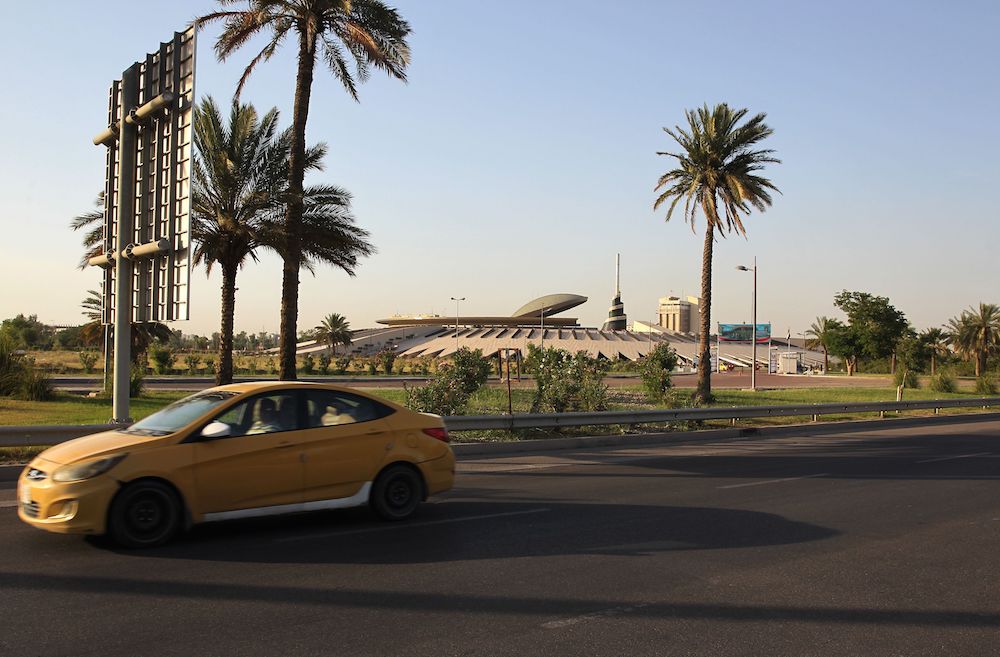
BAGHDAD: Baghdad’s Green Zone area, the heavily fortified strip on the west bank of the Tigris River, reopened to the public Tuesday after 16 years — a move meant to portray increased confidence in the country’s overall security situation after years of war.
Maj. Gen. Jassim Yahya Abd Ali told The Associated Press that the area, which houses the US Embassy and Iraqi government offices, is now open “twenty-four hours a day without any exceptions or conditions.”
The 10-square kilometer (4-square mile) with its palm trees and monuments has been off limits to the public since the 2003 US invasion of Iraq to topple dictator Saddam Hussein.
“I feel that Baghdad is bigger than before,” said Assir Assem, a 25-year-old who drove his car inside the Green Zone for the first time in his life on Tuesday. He said his generation didn’t know anything about the Green Zone and felt that people there lived in another country.
“Now there is no difference, and this is beautiful,” he said.
The area was home to Saddam Hussein’s palaces before the war. It then became known as “Little America” following the 2003 US invasion that toppled him, after it was seized by US military forces. In later years, the walled off area surrounded by cement blast walks became a hated symbol of the country’s inequality, fueling the perception among Iraqis that their government is out of touch.
Only Iraqis with special security badges could enter the area.
Various attempts and promises by the Iraqi government to open the Green Zone to traffic over the past years have failed to materialize, because of persistent security concerns.
Earlier this year, the government began easing restrictions in the area. Prime Minister Adel Abdul Mahdi said the Green Zone will be fully open to the public on Eid Al-Fitr, the holiday that marks the end of Ramadan.
Ali said authorities removed d 12,000 concrete walls from the area.
“Thank God the opening of the Green Zone happened during the Eid. … It is a very good initiative and will ease transportation in Baghdad,” said Abdullah Mouhamed, a taxi driver.

Main category: 

In the eye of the storm, Baghdad’s Green Zone remains sealedPartial reopening of Baghdad’s Green Zone delayed


Divorced at 11, Yemeni filmmaker uses camera to fight for girls’ rights

Author: 
Tue, 2019-06-04 18:41

LONDON: At two years old, Yemeni filmmaker Khadija Al-Salami witnessed her father beating her mother so violently she was rushed to the emergency room at hospital.
When her father was not punished, and Al-Salami was married off at the age of 11, she rebelled and started using a camera to expose girls’ suffering in Yemen, where one in three are wed before they turn 18, campaign group Girls Not Brides data shows.
“I use the camera as a tool to fight,” Al-Salami, now 48, said in a phone interview with the Thomson Reuters Foundation from Paris, where she is now based, ahead of her appearance at Fortune Most Powerful Women International Summit.
“When you grow up in a very conservative society, where the weight of tradition marginalizes human rights, and the personal freedom of women doesn’t exist … you’re only left with one choice: and that’s to revolt against it.”
One of almost 50 accomplished women speaking at the London event, Al-Salami is feted as one of Yemen’s first female filmmakers, with her stories of girls who have refused to wear the veil, faced trial for murder and marched on the streets.
In Yemen, one of the poorest countries in the Middle East, 32% of girls become wives before their 18th birthday, and almost 10% are married by the time they turn 15, according to Girls Not Brides.
“Women unfortunately are abused everywhere in a different way. We need everybody’s help, to get together and fight these bad traditions,” award-winning Al-Salami said.
“I was able to overcome all these difficulties. That’s given me a lot of force to do something for other people who are afraid to speak up.”
Al-Salami was granted a divorce after attempting suicide, disowned by her family for shaming them, and moved to the United States when she was 16 to study.
But she regularly returns to her home country to make films — mostly in secret — to spotlight taboo women’s rights issues.
Al-Salami shared a stage at the summit with Helle Thorning-Schmidt, head of the charity Save the Children, who called for an end to Yemen’s ongoing conflict, which began in late 2014.
“Yemen is perhaps the worst place to be a child right now,” Thorning-Schmidt, who was Denmark’s first female prime minister, told the audience.
“Children in Yemen are dying from hunger. I sat with one of those children in my arms, she was eight months old but she had the weight of a newborn.”
More than 12 million children in Yemen need aid, and 360,000 of those under five are severely malnourished, according to the United Nations’ children’s agency, UNICEF.
“What’s going on now with Yemen and with the war for the last five years, my heart is broken. The whole population is under bombs and they’re just trying to find shelter and the most basic thing in order to survive,” said Al-Salami.
Despite the violence, Thorning-Schmidt said the children she met in Yemen last year still dreamed of change.
“Little girls … they always say, ‘I want to go to school, I don’t want to marry’. Whatever they’d been through, there’s still that glimmer of hope in their eyes,” she said.

Main category: 

Houthis an ‘arm of Iran that threatens Yemen’s existence’Saudi Arabia and UAE agree to fight disease, malnutrition in Yemen at high-level WHO meeting in Riyadh


May and Trump determined to stop ‘terrorist supporting’ Iran gaining nuclear weapon

Tue, 2019-06-04 17:23

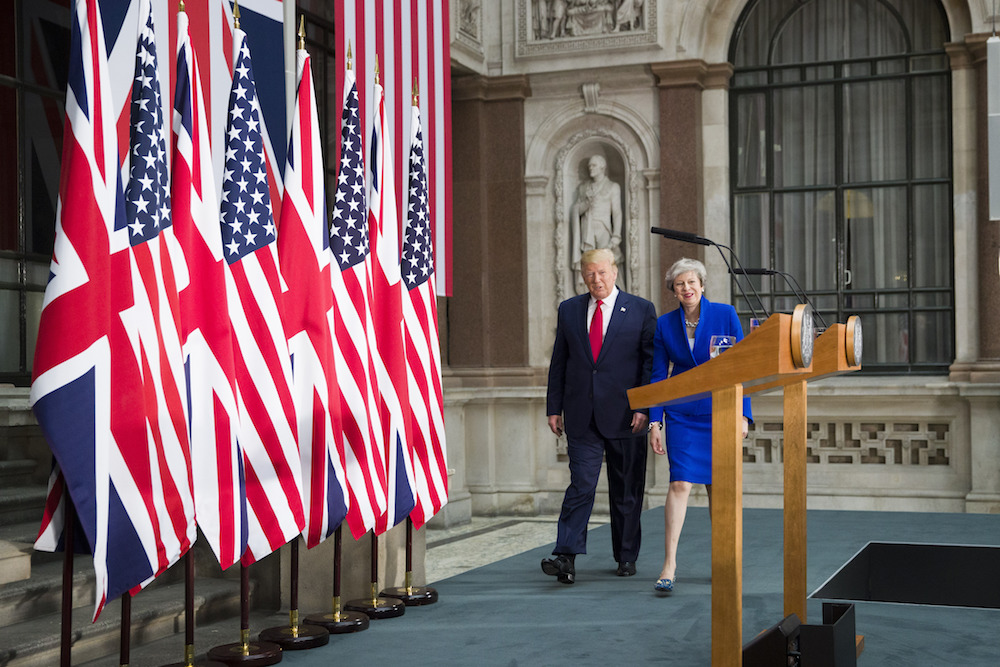
LONDON: Donald Trump and Theresa May discussed tackling “Iran’s destabilizing activity” in the Middle East during the US president’s state visit to the UK.

The two countries will work to ensure “Tehran can not acquire a nuclear weapon,” May said at a joint press conference in London.

The British prime minister, who will leave her job on Friday, acknowledged that the US and the UK had differed in their approaches on how to reach those goals. The UK, along with European nations, has stuck by the 2015 nuclear deal between Iran and world powers after Trump withdrew the US from the accord last year.

But the two leaders made sure that their joint concern over the threat from Iran was a key foreign policy issue on the agenda during Trump’s visit.

“The UK continues to stand by the nuclear deal,” May said. “It is clear that we both want to reach the same goal. It is important that Iran meets its obligation and we do everything to prevent escalation, which is in no one’s interests.”

Trump last month beefed up America’s military presence in the Middle East, deploying an aircraft carrier, long-range bombers and Patriot missiles to the Arabian Gulf region.

“The United States and the United Kingdom are determined to ensure that Iran never develops nuclear weapons and stops supporting and engaging in terrorism,” Trump said.

Iran’s Supreme Leader Ayatollah Ali Khamenei hit back later Tuesday, saying Tehran would not be “deceived” by Trump’s recent offer of negotiations and would not give up its missile program.

“The U.S. president recently said Iran can achieve development with its current leaders. That means they do not seek regime change … But this political trick will not deceive Iranian officials and the Iranian nation,”  Khamenei said in a televised address.
“In the missile programme, they know we have reached a point of deterrence and stability. They want to deprive us from it, but they will never succeed.”

Trump also thanked the UK for the role played in defeating Daesh in Iraq and Syria.

During the press conference Trump also promised Britain a “phenomenal” post-Brexit trade deal and pledged to work out any differences with London on the role of China’s Huawei in building 5G networks.

Speaking on the second day of his visit, he congratulated May for her time as prime minister and singled out two of her potential successors for praise.

Trump mentioned Boris Johnson, who has said the UK should leave the European Union on Oct. 31, deal or no deal, and Jeremy Hunt, Britain’s foreign minister who has warned against leaving without a deal.

Trump’s state visit, promised by May back in January 2017 when she became the first foreign leader to meet him after he took office, has been cast as a chance to celebrate Britain’s “special relationship” with the US, boost trade links and reaffirm security cooperation.

*With Reuters

Main category: 

Trump Middle East adviser Kushner holds talks with EU leaders on peace plan‘Trump baby’ balloon flies outside British parliament as big protests expected