Sun-drenched Middle East has a high vitamin D deficiency rate. Why?

Mon, 2019-06-10 02:07

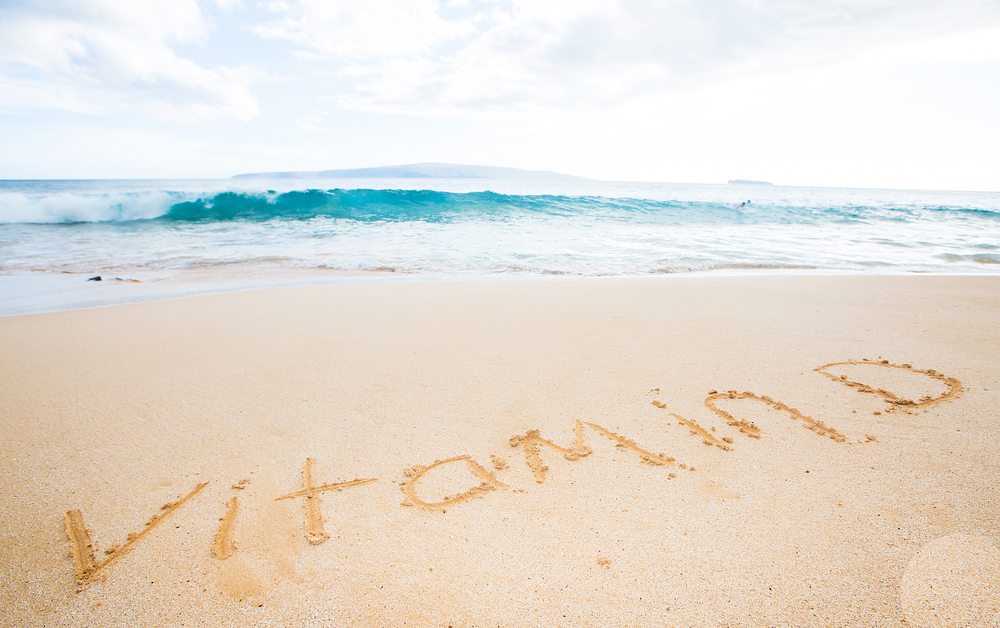
DUBAI: Dubbed the “sunshine vitamin,” vitamin D is produced when the skin is exposed to direct sunlight.

Paradoxically, despite the intense sunshine in the Middle East and North Africa, deficiencies in the vitamin are widespread among the population.

According to research published in the Journal of Nutrition and Metabolism, “the Middle East and North African regions have a very high rate of vitamin D deficiency, which reaches 81 percent among various age groups.”

Reasons for this include cultural practices, climate, genetic disposition and skin color.

Cultural forms of dressing, which include covering major parts of the body, also may affect the skin’s absorption of sunlight, especially for women.

Another reason is the region’s high temperatures, which limit time outdoors for many people.

FASTFACT


Low levels of vitamin D have been linked to a number of illnesses, including rickets and osteomalacia, which weaken bone tissue.

Researchers at the Eastern Mediterranean Health Journal said the deficiency can also be attributed to “a racial difference in vitamin D concentration or a genetic predisposition to vitamin D deficiency among people of Saudi Arabia.”

Skin color also affects the skin’s ability to synthesize sunlight into vitamin D. 

A paper published in 2011 by Floor Christie of the University of Sunderland and Linda Mason of the Liverpool School of Tropical Medicine found that women with darker complexions require two hours of sun exposure to produce the same amount of vitamin D that a woman with lighter complexion can produce in 12 minutes.

“Creating areas where women, particularly those of lower socioeconomic status, can enjoy sun exposure, as well as fortifying more foods, would go some way toward tackling this problem,” they wrote.

Low levels of vitamin D have been linked to a number of illnesses, including rickets and osteomalacia, which weaken bone tissue. 

Severe cases of rickets may result in stunted growth and skeletal deformities in children.

Recent studies show that vitamin D deficiency is also linked to various types of cancer, some coronary heart diseases, and type 1 and 2 diabetes. It is also correlated to ailments such as multiple sclerosis, rheumatoid arthritis, hypertension and Alzheimer’s disease.

Moreover, research has also suggested a link between vitamin D deficiency and some mental health problems, including depression.

Most doctors recommend vitamin D supplements since exposure to sunlight and food intake may not always be sufficient to meet the required dose.


Main category: 

Cancer breakthrough by Lebanese doctor in the USVitamin D deficiency rampant, says expert


Qatar admits having different ‘assessment’ to US on Iran threat

Mon, 2019-06-10 00:04

LONDON: Qatar has its “own assessment” different to the US on policy towards Iran, the country’s foreign minister said Sunday.

The comments are expected to alarm members of the Trump administration, which has beefed up America’s military presence in the region after an increased Iranian threat. 

Qatar hosts the biggest US military base in the Middle East but has become increasingly close to Iran despite Washington viewing Tehran as the world’s largest state sponsor of terror.

Since withdrawing from the 2015 agreement to curb Iran’s nuclear program, President Donald Trump has ramped up sanctions and vowed to curb Tehran’s destabilizing activities in the region.

Speaking in London, Qatari Foreign Minister Sheikh Mohammed bin Abdulrahman Al-Thani said Qatar respected US policy on Iran, but added: “We have our own assessment.”

“There is a big pressure on Iran’s economy, but Iran lived under sanctions for 40 years. It’s never been like this but they survived. We don’t see the repetition of the same way will create a different result,” he said. “They don’t want to have a continuation of the sanctions at the same level and enter negotiations. They believe there was an agreement and US was part of the agreement.” 

Sheikh Mohammed said Qatar and other countries have been talking to both Iran and the United States about de-escalation, urging both sides to meet and find a compromise.

“We believe that at one point there should an engagement – it cannot last forever like this,” he said. “Since they are not willing to engage in further escalation, they should come up with ideas that open the doors.”

Qatar’s close ties with Iran, along with its support of extremist groups, was one of the reasons Saudi Arabia, the UAE and other Gulf and Arab countries cut ties with Doha two years ago.

The comments from Qatar on a differing approach to Iran come after the US last month deployed an aircraft carrier strike group and B-52 long-range bombers to the region to tackle escalatory action by Iran.

The US has also said Iran was almost certainly behind an attack on four oil tankers, including two Saudi ships, off the coast of the UAE. 

Sheikh Mohammed also spoke about the Trump administration’s impending Middle East peace deal, saying there was a disconnect between the Palestinians and the US over the blueprint.

“It cannot be a solution like, sort of, imposed on the Palestinians – no country in the Arab world can accept that,” Sheikh Mohammed said, of the deal to end decades of confict with Israel.

*With Reuters

Main category: 

Qatar condemned after backtracking on Makkah summits declarationUS commander says he believes Iran threat still ‘very real’


Iraq begins examining Yazidi mass graves remains

Author: 
AP, AFP
ID: 
1560114574325682600
Mon, 2019-06-10 00:09

BAGHDAD: The head of Iraq’s forensics administration said his office will begin DNA testing to identify the remains of 141 bodies found in mass graves, believed to contain the Yazidi victims of Daesh’s killing campaign five years ago.
Zaid Al-Yousef said the bodies were found in 12 graves located by Yazidi survivors in the Sinjar region in north Iraq.
Al-Yousef told The Associated Press on Sunday it will take until August to identify the remains.

Exhumation
The Iraqi government exhumed a mass grave containing victims of Daesh in the Yazidi stronghold left behind by Daesh in the northwestern Sinjar region, where militants brutally targeted the minority.
The exhumation, which was carried out with UN support, began on March 15 in the village of Kocho.
The militants rampaged across Sinjar in 2014, killing Yazidi men and abducting thousands of women and children. Many followers of the minority faith are still missing, after women were forced into sexual slavery and boys were indoctrinated in extremist ideology.
Over 70 mass graves have been discovered in Sinjar since it was liberated from Daesh in November 2015.
Nobel Peace Prize winner Nadia Murad, a Yazidi who escaped Daesh and became an outspoken advocate for her community, attended the ceremony in her home village of Kojo to mark the start of exhumations.
The UN, which is assisting with the forensic work, says the first opening of a mass grave in the region will help to shed light on the fate those inhabitants killed by Daesh militants.
Hundreds of men and women from the village are believed to have been executed by the militants when they took over the area in 2014.
The Yazidi people were targeted by the Daesh militants who swept across northern Iraq in 2014 and seized their bastion of Sinjar near the border with Syria.
Daesh militants slaughtered thousands of Yazidi men and boys, then abducted women and girls to be abused as sex slaves.
The UN has said Daesh actions could amount to genocide. It is investigating its atrocities across Iraq, it added.
Murad called at Friday’s event for Iraq’s central authorities and those in the Kurdistan region to “protect the mass graves” so that proof could be found of the “genocide of the Yazidis.”
“There will not be reconciliation with the Arab tribes of our region if their dignitaries don’t give the names of those who carried out the crimes so they can be judged,” she said.
The head of the UN investigative team, Karim Khan, said the exhumation marked an “important moment” for the probe, with 73 mass graves discovered so far in Sinjar alone.
“The road toward accountability is a long one, and many challenges lay ahead,” he said in a statement.
“Notwithstanding this, the spirit of cooperation between the survivor community and the government of Iraq is to be applauded.”
Daesh is currently battling to defend the last shred of its crumbling “caliphate” across the border Syria in the face of Kurdish-led forces backed by an international coalition
The Yazidis are a religious minority with unique beliefs that distinguish them from Muslim and Christian worshippers in the region. The Kurdish-speaking Yazidis follow an ancient religion rooted in Zoroastrianism, but Daesh considered them to be “apostates.”

Main category: 

Iraq to identify remains from Daesh graves in Yazidi areaSyria Kurds return 25 Yazidis freed from IS to Iraq


Tension forces evacuation of Syrian refugee camp in Lebanon

Author: 
AP, AFP
ID: 
1560114100705636600
Mon, 2019-06-10 00:00

DEIR AL-AHMAR/LEBANON: Dozens of Syrian refugees have dismantled their tents in a camp they lived in for years in eastern Lebanon after authorities ordered their evacuation following a brawl with locals.
Jean Fakhry, a Lebanese official from Deir Al-Ahmar in the Bekaa Valley, said on Sunday the decision to evacuate the 90 tents was to avoid further friction.
Lebanon hosts over 1 million Syrian refugees who fled the war next door since 2011, overwhelming the country of nearly 5 million.
A fight broke out last week between camp residents and Lebanese firefighters who arrived to put out a fire.
More than 30 Syrians were arrested and unknown assailants burned down three tents.
Samar Awad, a 27-year-old Syrian, said camp residents are moving to a new area, miles away, with no water or electricity.
The authorities in April had set a June 9 deadline for Syrian refugees living in shelters built with materials other than timber and plastic sheeting in Arsal to bring their homes into compliance.
The planned demolition of concrete shelters housing Syrian refugees near the border could make at least 15,000 children homeless, aid groups earlier warned.
In Arsal, which lies in northeastern Lebanon, more than 5,000 structures made with concrete are slated for demolition. Similar measures could affect other communities in the near future.

SPEEDREAD

The authorities in April had set a June 9 deadline for Syrian refugees living in shelters built with materials other than timber and plastic sheeting in Arsal to bring their homes into compliance.

Lebanon allows only informal camps for Syrian refugees to prevent permanent settlements that would affect its delicate demographic balance.
Three international aid agencies — Save the Children, World Vision and Terre des Hommes — warned that children were most at risk and urged the government to hold off.

“For a child who barely eats, and often doesn’t go to school, losing a home is extremely traumatic. And we are talking about 15,000 children,” said Piotr Sasin from the Swiss-based Terre des Hommes charity.
The joint statement warned that the “demolition of many of these homes could result in the destruction of household water and sanitation systems, leaving children at high risk of illness and disease.”
Lebanon is home to an estimated 1.5 to 2 million refugees who have fled the conflict that erupted in 2011 when the Syrian regime repressed initially peaceful protests.
Lebanon’s economic and other woes are routinely blamed on Syrian refugees by local politicians and the government has ratcheted up the pressure to send them back.

Main category: 

Lebanese move may render 35,000 Syrian refugees homelessSyrian refugees struggle to make ends meet during Ramadan


Two states ‘only solution’ to resolve dispute, says Germany

Author: 
AFP, Reuters
ID: 
1560113677865580700
Sun, 2019-06-09 23:53

AMMAN: Germany’s top diplomat on Sunday reaffirmed his country’s support for a two-state solution to the Israeli-Palestinian conflict ahead of a long-awaited US peace plan.
“We are still in agreement that reaching a two-state solution through negotiations is the only solution,” Heiko Maas said during a press conference in Amman with his Jordanian counterpart.
Washington is gearing up to roll out economic aspects of its plan at a conference in Bahrain later this month, but it is not yet clear when its political details will be unveiled.
The Palestinians have already rejected the deal, citing a string of moves by US President Donald Trump they say show his administration is irredeemably biased.
“We and Germany agree that the two-state solution is the only way to end the conflict,” Jordanian Foreign Minister Ayman Safadi said.
Mass and Safadi met a day after US Ambassador to Israel David Friedman was quoted by the New York Times as saying Israel had the “right” to annex at least parts of the occupied West Bank.
Palestinian leaders said the US envoy’s comments showed “extremists” were involved in White House policy on the issue.
Israel occupied the West Bank in the 1967 Six-Day War and its construction of settlements there is viewed as a major stumbling block to peace as they are built on land the Palestinians see as part of their future state.
Friedman has in the past been a supporter of Israeli settlements as has the family of Jared Kushner, Trump’s son-in-law and adviser leading efforts to put together the peace deal.
Kushner has hinted that it will not endorse international calls for the creation of a Palestinian state.

Path to peace
Several UN resolutions have enshrined the two-state solution, which envisages separate homelands for Jews and Palestinians, as the path to a peace settlement.
Both ministers also stressed the importance of the UN agency for Palestinian refugees, just weeks after the US called for it to be dismantled after cutting its roughly $300 million annual donation.
Jordan is home to nearly 2.2 million Palestinian refugees, who make up almost half of the kingdom’s population.
Separately, Mass said Germany would give Jordan a $100 million loan to help cope with economic difficulties in the kingdom where IMF-backed fiscal reforms sparked mass protests last year.
Jordan, whose stability is seen as vital for the volatile Middle East, also hosts some 1.3 million refugees from neighboring war-torn Syria.

HIGHLIGHT

Washington is gearing up to roll out economic aspects of its plan at a conference in Bahrain later this month, but it is not yet clear when its political details will be unveiled.

The German Parliament voted last month to condemn as anti-Semitic a movement that calls for economic pressure on Israel over its policies on the Palestinians.
Prime Minister Benjamin Netanyahu had welcomed the Bundestag decision in a statement on Twitter. “I hope that this decision will bring about concrete steps,” he said in a statement in Hebrew on Twitter.
The BDS condemned the motion as anti-Palestinian.
“The German establishment is entrenching its complicity in Israel’s crimes of military occupation, ethnic cleansing, siege and apartheid, while desperately trying to shield it from accountability to international law,” it said on Twitter.
Lawmakers from the far-right Alternative for Germany (AfD) party abstained during the symbolic vote. They had submitted their own motion calling for a total ban of the BDS in Germany. That motion was defeated.

Main category: 
Tags: 

Palestinians say US envoy’s annexation comments show ‘extremist’ approachIsrael has ‘right’ to annex West Bank land, says US ambassador