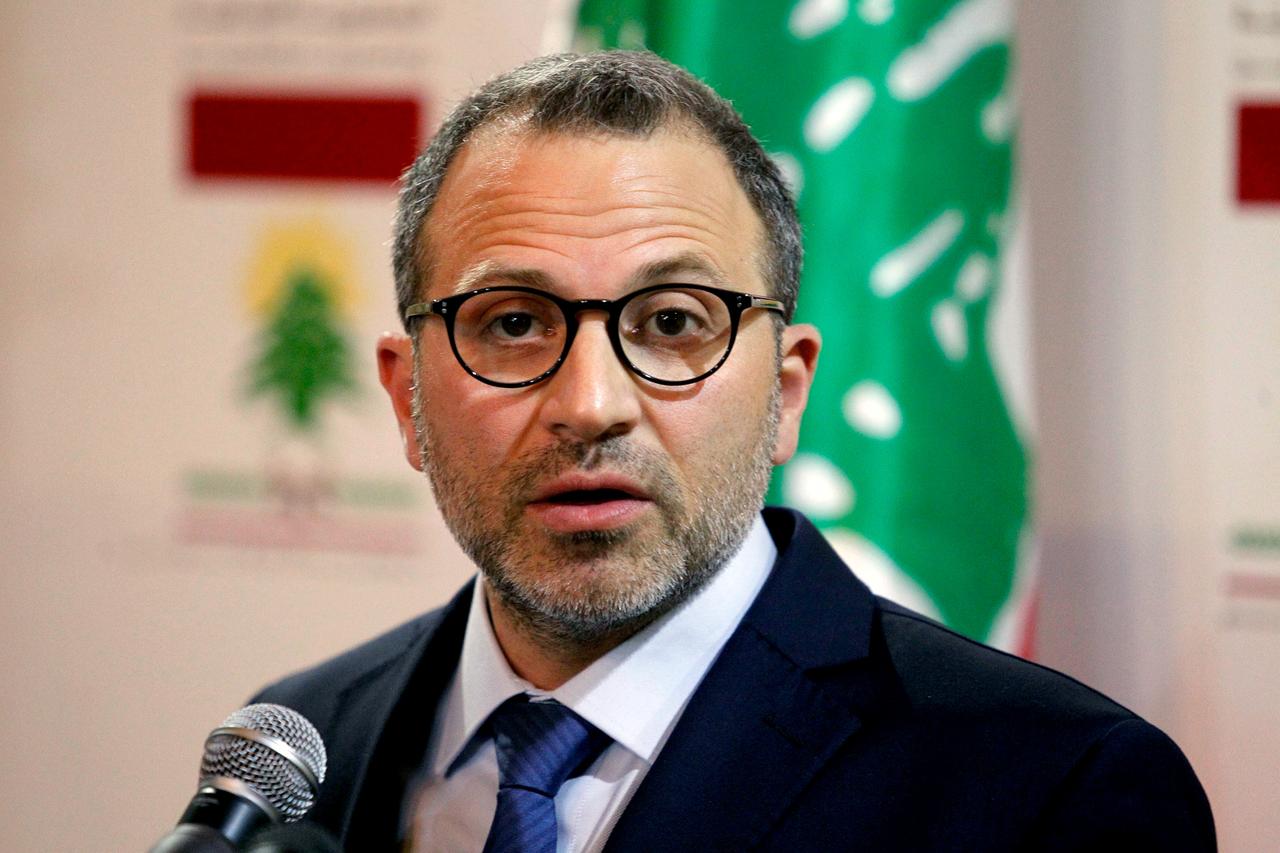
Egyptian swimmer dives into major UN role

Tue, 2019-06-11 23:57

CAIRO: Egyptian swimmer Mohamed Al-Husseini has been named spokesperson of the UN High Commission on Disability in Egypt and abroad.

Al-Husseini is the first Egyptian and Arab, as well as the first person with Down syndrome, to be appointed as the organization’s spokesperson.

The swimmer will attend global conferences where he will share his life story, struggles and goals, according to Reda Abdel Aziz, the commission’s director.

Al-Husseini was picked due to his swimming achievements, Abdel Aziz said.

In 2017, the 18-year-old became the first swimmer with Down syndrome to cross the English Channel after training for more than 10 hours a day in preparation for the marathon swim.

“For every 1,000 children with Down syndrome, maybe only one or two are recognized for their achievements,” Mona Bassel, of the American University in Cairo, told Arab News.

“Some schools offer programs for children with Down syndrome, but there is a lot of ignorance among society in general. Realistically, we have a long way to go in terms of stigma and dealing with people with the disability,” she said.

The UN selection of Al-Husseini comes at a time when Egypt is empowering people with disabilities, and the swimmer’s story is an inspiration to many.

In March, President Abdel Fattah El-Sisi established the National Council of People with Disabilities, an independent body that encourages participation in decision-making processes.

Up to 10 percent of Egypt’s population is made up of people with special needs, El-Sisi said in a speech celebrating International Day of Persons with Disabilities.

Main category: 

“Age is no obstacle” — Egyptian swimmer still a champion at 76Egyptian author Ahmed Khaled Tawfik featured on Google Doodle


Crisis Group report slams Israeli’s $530m plan for occupied East Jerusalem

Tue, 2019-06-11 23:25

AMMAN: The International Crisis Group (ICG) has called on Israel not to implement controversial parts of a $530 million, five-year plan to develop occupied East Jerusalem without any input from the Palestinian community.

In a 40-page report published on Tuesday, the ICG called on Israel not to separate Palestinian communities in parts of East Jerusalem from the city’s municipality, force schools there to adopt Israel’s curricula, and introduce a land registry.

The report, titled “Reversing Israel’s Deepening Annexation of Occupied East Jerusalem,” concludes that these actions “would exacerbate the conflict in and over Jerusalem.”

Ofer Zalzberg, a senior analyst with the ICG and the report’s main author, told Arab News that despite settlement construction in East Jerusalem and severe impediments placed on natural growth in Palestinian neighborhoods, Israel has failed to establish a durable and substantial Jewish majority in that part of the city. 

Zalzberg said a former Israeli minister described the dilemma to him as follows: “East Jerusalem remains stuck in our throat: We can’t swallow it and we can’t spit it out.”

Khaled Abu Arafeh, a former Palestinian minister, said Israel is moving fast to Judaize East Jerusalem. 

“It’s very worrisome what’s happening. This large amount of money is being set aside to tackle Palestinian aspirations, especially in the educational field,” he told Arab News. 

Abu Arafeh said the report shows how Israeli authorities operate in East Jerusalem with impunity. 

“This is very dangerous, and requires more than ever (Palestinian) national unity and a position from the Arab and Islamic world,” he added. 

Khalil Assali, a member of the Waqf, which manages Al-Aqsa Mosque, said Israel has been targeting education in East Jerusalem for some time. 

“The Israelis have placed obstacles, closed schools and forced (Palestinian) students to attend Israeli municipal schools,” he told Arab News.

“We have at least 30,000 students whose names aren’t in any registry because they have no school seats.”

Khalil Tufakji, head of the map department at the Arab Studies Center, expressed opposition to the idea of a land registry for East Jerusalem. 

“There are many Palestinian land owners from East Jerusalem who are living abroad, and this idea is aimed at transferring their properties to the Israeli government by means of putting them in the hands of the custodian of absentee properties,” he told Arab News.

The ICG called on Palestinians, Israelis, and allies of both leaderships to press Israel’s government not to carry out these plans. 

“If it wants to reduce poverty and crime in East Jerusalem, Israel should allow Palestinians to establish civic leadership bodies in the city and end its ban on Palestinian Authority activities there,” the ICG wrote.

It urged outside powers “to allocate funds to help Palestinian Jerusalemites establish civic leadership bodies in East Jerusalem to operate both east and west of the separation barrier, in coordination with Israel.”

Main category: 

Arabs seek recognition for Palestine with East Jerusalem as its capitalWhy Jerusalem’s Al-Aqsa Mosque matters for Muslims


US sanctions shut off Iranian oil feeding Assad’s ‘murderous regime’

Tue, 2019-06-11 23:17

LONDON: The US moved to shut off Iranian oil supplies to Syria Tuesday as Washington said Iran’s conduct in the country was part of a “quest to dominate” the Middle East.

New Treasury Department sanctions targeted two Lebanese based firms, which have imported tens of thousands of metric tons of Iranian oil into Syria.

The sanctions focused on Syria’s most prominent tycoon Samer Foz, who has made a fortune luxury developments during the Syrian war.

State Department officials said the action against Synergy SAL and BS Company hit one of Iran’s remaining outlets for oil exports, which have been reduced to a trickle by a crippling US sanctions regime.

“Some of Samer Foz’s activities involved helping the Iranian regime illicitly ship oil to the Assad regime,” special envoy for Syria Joel Rayburn said. “Today’s actions against the Samer Foz network will also put pressure on the Assad regime’s key supporters, such as the Iranian regime and Hezbollah.” 

Iran, along with Russia, has been one of the key backers of Bashar Assad during the eight-year Syrian conflict, which has killed more than 400,000 people. Tehran has supplied military muscle, deploying boots on the ground and arming and financing militias in the country.

Its presence in Syria ensures a territorial link from Tehran to the Mediterranean – something that deeply concerns Arab nations in the region, along with Israel and the US. 

America and its allies in the Middle East are trying to make sure Iran will “pull these forces back” from Syria before a UN political solution can proceed, James Jeffrey, the US Special Representative for Syria Engagement, said.

He said this is being done through pressure on the Assad regime and through “talking with the Russians.”

“The Syrian government invited the Iranians in as their allies in the civil war but in addition the Iranians have introduced as they have done in other places, Yemen, Lebanon, long-range weapon systems essentially as part of their hegemonic quest to dominate the Middle East,” Jeffrey said.

The envoy was speaking in Cairo where, as part of a US delegation, he met with Egyptian and Arab League officials to discuss Syria and how to move toward implementing a UN resolution designed to end the conflict.

Meetings between the US and Russia earlier this year offered some hope of progress, but a flare-up in fighting in Idlib province has infuriated the United States.

Donald Trump last week voiced his anger at the offensive by Syrian and Russian forces that has killed more than 300 civilians and driven nearly 300,000 people from their homes in the last six weeks.

Idlib province is the last significant territory held by rebels and extremist groups fighting against Assad. 

The new US sanctions are probably timed to coincide with the spiralling death toll and humanitarian crisis in Idlib.

The sanctions “target those who are profiting from the misery and murder of the Syrian people,” Rayburn, the Syrian envoy said.

“Any effort at reestablishing or upgrading diplomatic relations or economic cooperation with the Assad regime will only undercut efforts to move toward a permanent, peaceful and political solution to the Syrian conflict.”


Main category: 

US sanctions Syrian businessman Samer Foz, entities for links to AssadRussian jets kill at least 25 in north-western Syria


How the Iranian regime crushed the reform movement in 2009

Author: 
Tue, 2019-06-11 23:04

TEHRAN: A decade has passed since Iran held its most bitterly contested elections ever, the aftermath of which shook the country to its core over allegations of mass electoral fraud.

Massive demonstrations and counter-demonstrations by protesters and state supporters raged across major cities for 19 months, nowhere more so than in the capital Tehran, in what was later described by Iran’s supreme leader Ayatollah Ali Khamenei as the “edge of the abyss.”

As the world watched on in amazement, the so-called Green Movement that started out with “silent” demonstrations against ultra-conservative Mahmoud Ahmadinejad’s re-election as president and demands for an independent recount evolved into running battles between protesters and security forces.

The advent of camera-equipped mobile phones and the spread of the Internet-meant images of the protests fanned out quickly, causing the main focus of the demonstrations to switch from electoral fraud to repression.

The determination of the state to stamp out what it considered to be “sedition” at any cost, including mass trials and death sentences, gradually brought the movement to a standstill.

One of the reformists arrested in the first wave of the crackdown was journalist and activist Ahmad Zeidabadi.

“History will look back at the defeat of the Green Movement as a bitter event that left its supporters extremely and deeply frustrated and disillusioned,” said Zeidabadi, who was detained the day after the election.

Amir Mohebbian, a conservative politician and analyst, said the circumstances had changed in many ways since 2009 when “the state realized that the opposition and America” were behind the riots, and therefore used its “full powers to take control of the situation.”

The 2009 election campaign might well have been one of the most dynamic in the country’s history.

The one-on-one TV debates between candidates changed the mood of the campaign from festive to a bitter face-off, none more so than an explosive encounter between Ahmadinejad and his main challenger Mir Hossein Mousavi.

On Friday, June 12 when polling stations opened, the turnout — officially at 85 percent — forced voting hours to be extended late into the night.

The first signs that something had gone awry came when Iranians realized the SMS messaging system had been disabled overnight.

Reformists soon claimed telephone lines to their vote tallying centers had been cut and many observers had not been allowed to enter polling stations.

Later on, some of Mousavi’s main campaign centers in Tehran were closed by security forces.

Mousavi held an impromptu press conference late at night and claimed victory, warning that any reports to the contrary would be a sign of fraud.

The final official count showed Ahmadinejad had won with nearly 63 percent of the vote, and within hours sporadic protests began in Tehran and soon spread to other major cities.

As the vote breakdown was published, reformists pointed to irregularities and claims of mass fraud gained traction.

Ahmadinejad’s victory rally on June 14 in which he called protesters “dirt and rubbish” riled many voters.

When Mousavi and the other reformist candidate Mehdi Karroubi, who had officially gained 34 and 1 percent respectively, called for a counter rally in Tehran on June 15 the response by supporters was beyond expectations.

There is no official figure as to how many took part in the demonstration on that Monday but reports from different political factions claimed more than 3 million marched in silence onto Azadi (Freedom) Square.

Holding banners asking “Where is my vote?” they waved green flags, Mousavi’s official campaign color.

Demonstrations continued throughout the week with reports of clashes between protesters and security forces. The authorities demanded that candidates pursue complaints through the Guardian Council, tasked with supervising elections. A recount of 10 percent of ballot boxes was held, confirming Ahmadinejad’s victory, but his challengers contested the council’s neutrality and refused to accept its ruling.

On Saturday, June 20, another massive rally in central Tehran turned violent as protesters and security forces clashed.

Though local and foreign media were now banned from attending the rallies, many powerful pictures and videos emerged.

One depicted the shooting that day of Neda Agha-Soltan, a student in her 20s, whose death was described as “heartbreaking” by then US President Barack Obama.

That Saturday’s protests were among the bloodiest, only matched by the fierce clashes on Dec. 27, 2009.

Though gradually declining in size and frequency, the protests went on until February 2011, the last time Mousavi and Karroubi called for demonstrations before authorities placed them under house arrest, where they now remain.

It was never known how many people lost their lives or were wounded during the protests. The state says dozens were killed, mostly by “seditionists.”

For Ali Shakouri-Rad, one of the last active reformist politicians, Iranians have since moved on and have become “occupied with issues other than elections, such as the economy.”
Main category: 

Iran protests ‘won’t end until regime falls’Iran protests show danger of economic woes


Lebanese FM faces flak over ‘racist’ comments against foreign workers

Author: 
Tue, 2019-06-11 01:12

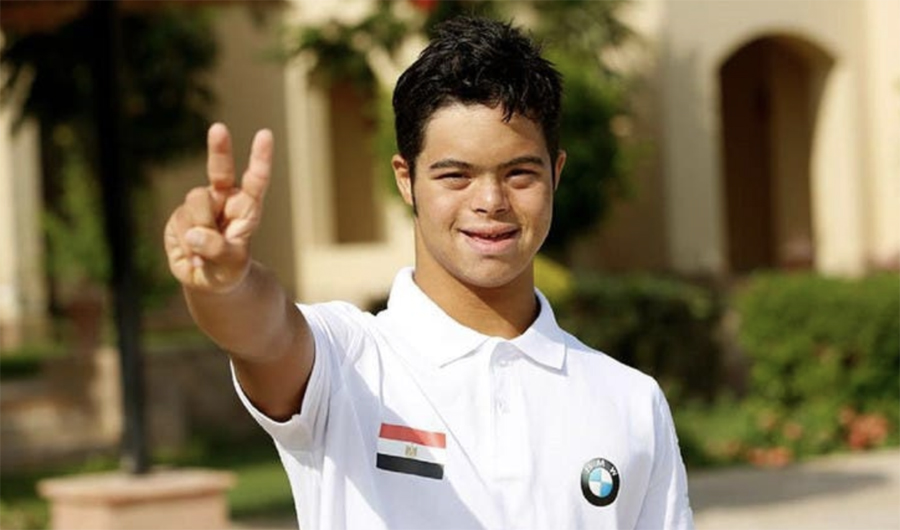
BEIRUT: Lebanese Foreign Minister Gebran Bassil has responded to criticisms of a message that he posted on Twitter at the weekend about workers in his country. It sparked an angry response on social media, with many people describing his comment as racist and calling for his resignation.

On Saturday, he tweeted: “It is normal to defend Lebanese workers against any other foreign worker, whether Syrian, Palestinian, French, Saudi, Iranian or American. The Lebanese come first. Unfortunately, some people do not understand that the Lebanese interests come first, nor do they understand the meaning of the bond of blood.”

It came on the same day that Bassil’s Free Patriotic Movement released a promotional video for a campaign encouraging businesses to hire Lebanese workers rather than foreigners. It shows campaigners visiting shops and telling Syrian workers to “go back to their country.”

On Monday, during a conference on “Active Diplomacy” in Beirut, Bassil addressed the controversy, saying his words had been “twisted.”

“My words have been misinterpreted and taken out of context,” he said. “When this happens, a correction is a must. I actually talked about Lebanese workers. Each state should give priority to its people for job opportunities and protect itself from illegal workers, and this what all of the states are doing.

“Lebanese people abroad are working according to the states’ needs and not against them, respecting the laws there. We call on any state to take necessary measures against any Lebanese expatriate who violates its laws, especially in Saudi Arabia, where we have a Lebanese community whose interests we should preserve.

“Our duty is to respect the state where we work and its laws. Countries, including Lebanon and Saudi Arabia, prioritize their own people in their laws. This is not racism. Defending the right of our people is not racist but patriotic. This is all I meant.”

His tweet sparked debate online, and while many were critical of Bassil’s comments, some supported him.

“Someone should remind him of Saudi Arabia’s efforts in reaching the Taif Agreement, back when the Lebanese were fighting, and he was hiding with his father-in-law 20 meters below the ground,” wrote Lebanese activist Nouf Al-Doussari, who called on Bassil to resign.

Naif bin Arwil wrote: “You have a Lebanese labor force that you stole, a Syrian labor force begging you that you cut off, a Palestinian work force that turned to you and that you humiliated while you kissed the French hands, humiliated, and finally an Iranian force trying to destroy you that you obeyed. However, the Saudi generous hand was extended to you and you bit it. Shame on you. And I am only talking here about Lebanon’s traitors.”

Lebanese MP Paula Yaacoubian called on Bassil to “apologize to the Lebanese as it is impossible for one to be responsible and say anything just to increase their cheap popularity.”

Lebanese State Minister for Presidential Affairs Salim Jreissati visited Dar Al-Fatwa on Monday, following Bassil’s tweet and speeches by others criticizing the political Sunnah last week, which provoked the anger of both Grand Mufti of Lebanon Sheikh Abdul Latif Deryan and the Future Movement.

After the meeting, Jreissati expressed surprise at “the extent reached by the latest political speeches.”

He added: “Lebanese President Michel Aoun considers that political speech is determined by the laws in force, including the Charter of National Reconciliation and Constitution, i.e. the Taif Agreement and the constitution, and so we insisted on the need not to attribute statements to anyone other than those who voice them, and not to build up escalatory stances based on such statements.”

He stressed that “President Aoun considers that Prime Minister Saad Hariri is the most powerful…in terms of representation and he speaks in the name of the Lebanese government, according to our constitution, after drafting the policies, including foreign policy, and taking decisions in unanimity and majority of votes in the Cabinet. This is the Taif Agreement and the constitution that we make sure to respect.”

The Lebanese-Saudi Business Council called on Lebanese officials “to avoid dragging Lebanon into intense regional conflicts and pushing it to take positions that contravene its principles and the natural and historical partnerships with its Arab neighbors, especially the Kingdom of Saudi Arabia.”

The council said it relied on “the Saudi authorities to understand the sensitive situation in Lebanon and to deal with Lebanon based on the historical ties between the two brotherly countries.”

Main category: 

Tension forces evacuation of Syrian refugee camp in LebanonLebanon army chief angry at budget measures