Kuwaiti eco-activists show how to win the war on waste

Sun, 2019-06-16 23:31

KUWAIT CITY:  Kuwait has been facing serious challenges in managing its solid waste for some time now.

The dumping of non-biodegradable materials such as plastic into landfills and the subsequent migration of leachate, causing groundwater contamination, has also been equally worrying.

Sanaa Al-Qamlaas, a witness to the unethical dumping of all kinds of waste materials into these sites, said she first felt the need for a change in the management of waste in Kuwait several years ago.

“I often visited landfills and it was hard for me not to tear up watching them,” she said. “I decided that we had to stop at least plastic from going into these landfills as it had a major negative impact on the environment.”

Al-Qamlaas got together with her best friend, Farah Shabaan, and her nephew, Soad Al-Fozan, and soon Kuwait’s first polyethylene terephthalate (PET — plastic) bottle recycling project, Omniya, was born.

Starting in August 2015, the trio initially focused on the collection and recycling of PET bottles as “there were massive quantities of these bottles in the landfills and these were ignored even by the scavengers as they were light-weight,” said Al-Qamlaas.

There were massive quantities of these bottles in the landfills that were ignored by the scavengers.

Sanaa Al-Qamlaas

With a 1,000 dinar ($3,300) budget in hand and no plan for the road ahead, Al-Qamlaas and Shabaan decided one weekend to simply send WhatsApp messages to the people on their contacts list, asking them to segregate their plastics and to drop them in cardboard containers that would be provided at their homes.

Once done, the two friends went to each home to pick up the collected plastic.

“We just sent the message to our friends, but we were in for a surprise when the former minister of social affairs, Hind Al-Sabeeh, contacted us asking us what we were up to. It was a positive indicator of how powerful social media can be,” remembers Al Qamlaas.

The ex-minister encouraged them and told them to get a certification for their initiative.

Omniya’s message was also noticed on Instagram by the chairman and director general of the Environment Public Authority (EPA), Sheikh Abdullah Al-Ahmad Al-Humoud Al-Sabah, who instructed his team to assist the women in their new project.

Omniya started getting calls from residents asking them for containers for their own bottles.

“We went to each home, spoke to everybody, taught them how to crush the plastic bottles, how to segregate plastic; once the bags were full, we took them back in our cars.”

Initially Al-Qamlaas and Shabaan were challenged by the rubbish that users put in with the plastic.

“Our cars stank and our homes too, but all that changed once people knew what to segregate,” said Al-Qamlaas.

They visited 4,500 homes in the first year, going back and forth picking up bottles, followed by visits to around 100 schools to spread awareness. They soon collected enough bottles to get on to the next step — recycling.

With partial financial help from the Kuwait National Fund, Omniya set up the country’s first PET recycling plant.

“We just started production a year ago; we are still hugely in debt as we have to pay our land rent and operate our machinery and do not have any air-conditioners in the factory. But we are producing hot-washed, high-class PET flakes, that we now sell to Ireland, Italy and Turkey — markets with niche specifications,” says Al-Qamlaas.

Realizing that they needed more support to run a factory, the team roped in the private sector for sponsorships and partnered with various organizations such as the United Nations Development Programme (UNDP), the Ministry of Education as well as the Environmental Protection Agency (EPA).

Today, Omniya is a familiar name in Kuwait and the passion is still strong.

“We have just one aim — to stop plastic from going to these landfills,” Al-Qamlaas said. “The road is long and we are tired but we owe it to our country — to the next generation.”


This report is part of a series being published by Arab News as a partner of the Middle East Exchange, which was launched by the Mohammed bin Rashid Al Maktoum Global Initiatives and the Bill and Melinda Gates Foundation to reflect the vision of the UAE prime minister and ruler of Dubai to explore the possibility of changing the status of the Arab region.


Main category: 

Saudi Arabia celebrates Environment Day to beat air pollutionG20 set to agree on marine plastic pollution deal


UAE FM and Egyptian president meet in Cairo

Sun, 2019-06-16 21:10

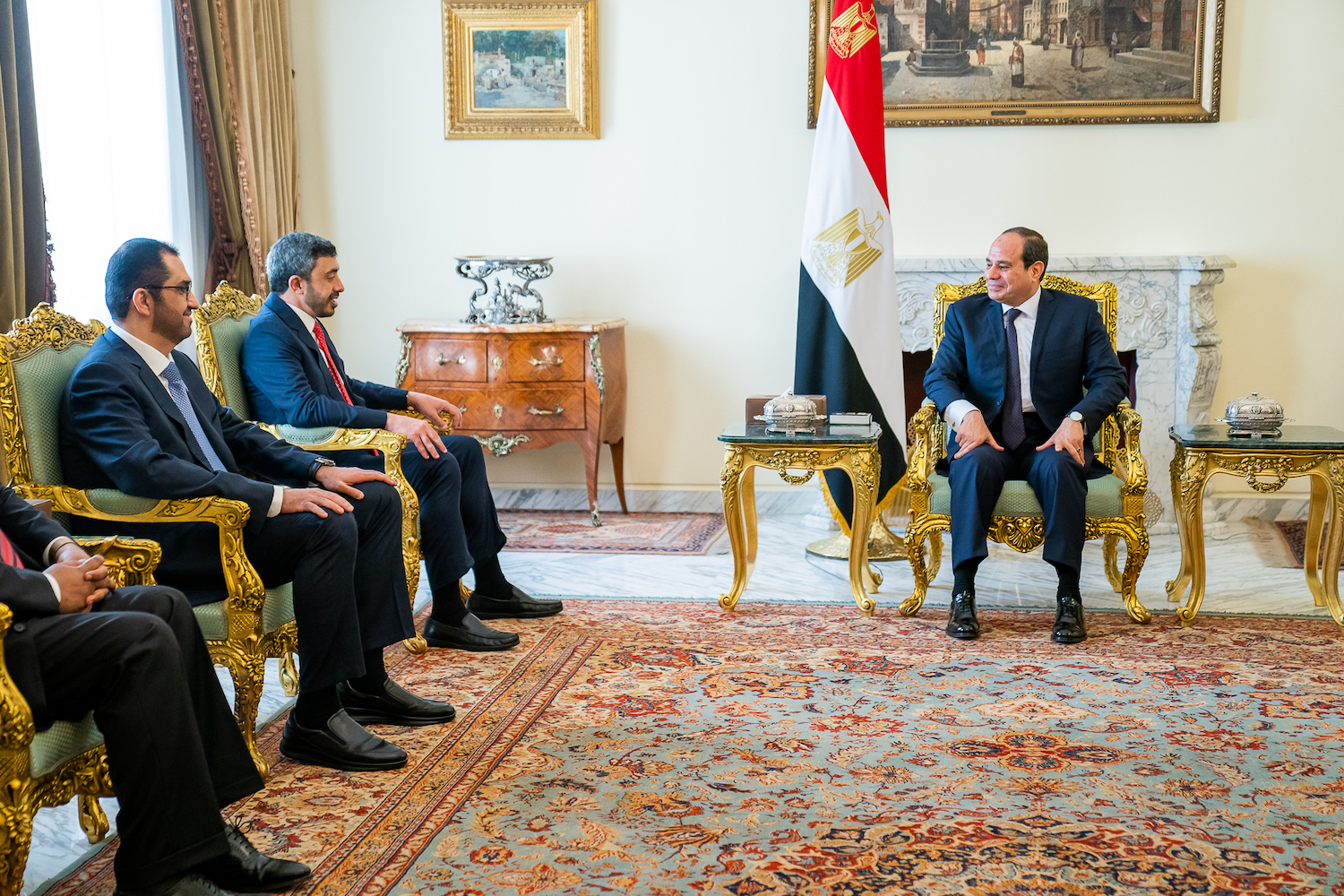
DUBAI: UAE’s Foreign Minister Sheikh Abdullah bin Zayed Al-Nahyan met with Egyptian President Abdel Fattah El-Sisi in Cairo on Sunday.

Sheikh Abdullah commended the role played by Egypt in ensuring regional stability, and noted that the current circumstances in the region necessitate “cementing pan-Arab solidarity and cooperation to confront the besetting challenges,” Emirates News Agency (WAM) reported. 

El-Sisi reaffirmed his country’s support for the UAE in light of recent developments in the Arabian Gulf. 

“Egypt is avidly following up the ongoing developments in the Arabian Gulf region, particularly the latest incidents that posed a menacing threat to the safety of maritime navigation ,” said El-Sisi, asserting his country’s support for the governments and peoples of “UAE and other countries against various challenges, including attempts to destabilize the region.”

Sheikh Abdullah and El-Sisi also reviewed the latest developments in Sudan and expressed solidarity with the people of Sudan to survive the current critical stage that the country is in and fulfill their ambitions.

Main category: 
Tags: 

Sudan interim military council chief Al-Burhan meets with Egypt’s President El-SisiFujairah tanker incident was ‘attack’ on UAE and ‘safety of navigation’: Sheikh Abdullah


US blames Iran for helping Houthis shoot down drone in Yemen

Author: 
Reuters
ID: 
1560699480332400300
Sun, 2019-06-16 15:27

WASHINGTON: The Houthis in Yemen recently shot down a US government-operated drone with assistance from Iran, the US military said in a statement on Sunday.
Lt. Col. Earl Brown, a spokesman for the US Central Command, said the altitude at which the MQ-9 drone was shot down on June 6 marked “an improvement over previous Houthi capability,” a fact that led the military to conclude the group had help from Iran.
Brown also noted that on June 13, Iran separately tried to shoot down yet another US drone over the Gulf of Oman in an effort to disrupt surveillance of Iran’s attack on Kokuka Courageous, one of two oil tankers attacked on Thursday.
US officials have blamed Tehran for those attacks, raising fears about a potential confrontation between the United States and Iran.

Main category: 

Saudi Arabia tells UN Security Council Houthis responsible for Abha Airport attackHuman Rights Watch declares Houthi Abha airport attack a ‘war crime’ as another missile targets city


Libyan prime minister calls for elections in 2019 to end war

Author: 
AFP
ID: 
1560699514772403200
Sun, 2019-06-16 14:48

CAIRO: The head of Libya’s UN-supported government on Sunday proposed holding nationwide elections to end the war in the North African country, as the forces of the rival military commander Khalifa Haftar continue their two-month-long battle to take the capital, Tripoli. Prime Minister Fayez Al-Sarraj told a news conference in Tripoli, the seat of his administration, that he is proposing a “Libyan forum” aimed at finding a peaceful solution to the conflict. The talks would draw up a road map for parliamentary and presidential elections to be held before the end of 2019.
There are fears that the battle for Tripoli could ignite a civil war on the scale of the violence after the 2011 uprising that toppled and killed longtime dictator Muammar Qaddafi.
Libya is divided between the weak government of Al-Sarraj in the west, and Field Marshal Haftar, whose self-styled Libyan National Army (LNA) holds the east and much of the south. Haftar opened a military offensive on the capital in early April, advancing on the city’s southern outskirts and clashing with militias loosely affiliated with the UN-recognized government.
Haftar has presented himself as a strong hand who can restore stability. In recent years, his campaign against militants across Libya has won him growing international support from world leaders who say they are concerned the North African country has turned into a haven for armed groups, and a major conduit for migrants bound for Europe. His opponents view him as an aspiring autocrat and fear a return to one-man rule.
Al-Sarraj said all Libyans who “call for a peaceful and democratic solution” would take part in his proposed talks. He called on the UN to support the forum and to oversee elections.
He did not say whether Haftar or his representatives would be included. The two sides last held talks in the UAE in February.

HIGHLIGHT

Field Marshal Khalifa Haftar has presented himself as a strong hand who can restore stability. In recent years, his campaign against militants across Libya has won him growing international support from world leaders.

Al-Sarraj also demanded an international probe into alleged “war crimes and crimes against humanity,” since Haftar launched his offensive. The fighting for Tripoli has killed over 650 people, including combatants and civilians, according the World Health Organization.
A spokesman for Haftar did not immediately answer phone calls and messages seeking comment.
Haftar’s forces meanwhile pursued Daesh militants in the country’s south, killing more than a dozen militants over the past three days, officials said on Sunday.
The officials said that LNA forces began its attack on a militant hideout in the mountainous area of Haruj earlier this week. The officials spoke on condition of anonymity because they were not authorized to brief the media.

Daesh acknowledged the ongoing LNA attack and claimed to have killed and wounded dozens of LNA troops.
The group was driven from Sirte in 2016 and from Derna, another stronghold, earlier this year. However, the extremists have found refuge in the vast deserts of central and southern Libya, where they continue to stage attacks.

Main category: 

Libyan navy says it intercepted 91 Europe-bound migrantsTunisia, Algeria, Egypt call for a cease-fire in Libya


Iranian opposition groups protest in Brussels

Author: 
Zaynab Khojji
ID: 
1560621733554883400
Sat, 2019-06-15 21:02

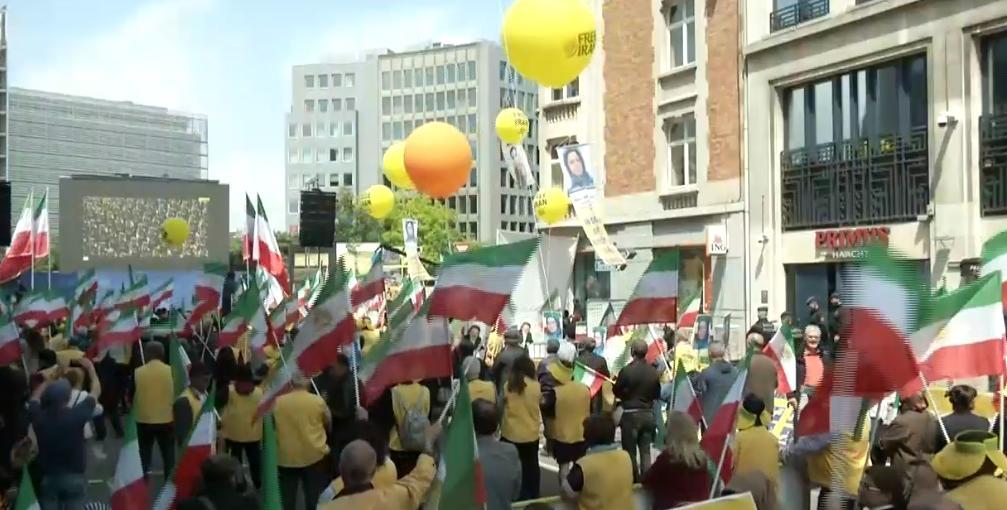
LONDON: Iranian opposition groups protested outside the Council of the European Union in Brussels on Saturday against the regime in Tehran.
The protests mark the upcoming anniversary of protests in 1981, when the People’s Mujahedin of Iran demonstrated against the impeachment of the then president Abolhassan Banisadr.
Several European politicians, including the former Italian Foreign Minister Giulio Terzi and the former Vice President of the European Parliament Alejo Vidal-Quadras, gave speeches at the protest in support of the Iranian opposition.
The President-elect of the National Council of Resistance of Iran Maryam Rajavi called on the “EU to designate the mullahs’ Revolutionary Guard Corps (IRGC) and their Ministry of Intelligence (MOIS) as terrorist entities.”
She also said that the Iranian “regime’s mercenaries must be tried, punished and expelled.”
Rajavi also saluted “supporters of the Iranian people’s Resistance, and the Human Rights advocates who have come from various European and Arab countries.”

Main category: 

US grants Iraq sanctions waiver for Iranian electricity importsUK-Iranian begins fresh hunger strike in Tehran jail