‘Arab world needs heroes like Salah and Malek,’ Bahrain workshop told

Thu, 2019-06-27 00:34

MANAMA: The Arab world needs heroes, and football and the film industry can help provide them, the US-led “Peace to Prosperity” workshop in Bahrain was told.

In a plenary session at the event, titled “the power of sport and entertainment,” Thomas Barrack, an American financier and one of US President Donald Trump’s closest advisers, said: “We in the Arab world do not create our own heroes, we’ve done a bad job at creating role models for Arabs. But football and film have been roads to doing that in the rest of the world.”

Gianni Infantino, president of the international football governing body FIFA, told delegates at the gathering in the Bahraini capital Manama, that the game could help inspire youngsters, and singled out the Egyptian player Mohamed Salah as an example of a new hero in the Middle East.

“Half of the world watches the World Cup. We have got to give hope, dreams and a smile to the world,” he said.

Argentinian film producer Fernando Sulichin, responsible for several Hollywood blockbuster movies, highlighted the success of Oscar-winning “Bohemian Rhapsody” film star Rami Malek, of Egyptian descent, as an example of the kind of success Arab actors could enjoy.

On White House adviser and Trump son-in-law Jared Kushner’s plan to revive the economy of Palestine and surrounding regions, Sulichin said: “Here is this plan. It is a script. I’m a producer, so now let’s get it done.”

He also noted the recent “renaissance” in moviemaking in Saudi Arabia as an example of how film could complement positive social change.

The FIFA boss also called for a program to build more football pitches in Palestine, where he said there were only 25 playing areas for a population of 5 million people.

Main category: 

Bahrain diary: Karma, and calmer, in ManamaEmpowering Palestinians means delivering on promises


Bahrain diary: Karma, and calmer, in Manama

Author: 
Thu, 2019-06-27 00:25

MANAMA: What a difference eight years make. I had not been to Bahrain since the dark days of 2011, when civil strife ruled the streets and some parts of Manama were virtually inaccessible because of barricades and demonstrations. 

In 2019, attending the “Peace to Prosperity” workshop in the presence of US President Donald Trump’s son-in-law Jared Kushner, the place is unrecognizable from the rather hazy memory I have of those days. 

The airport has had a complete makeover. Transport away was fast and efficient, and instead of the tang of tear gas in the air, as there was in 2011, there was the balmy aroma of bougainvillea. It was, as one participant said, karma, and calmer, in Manama.

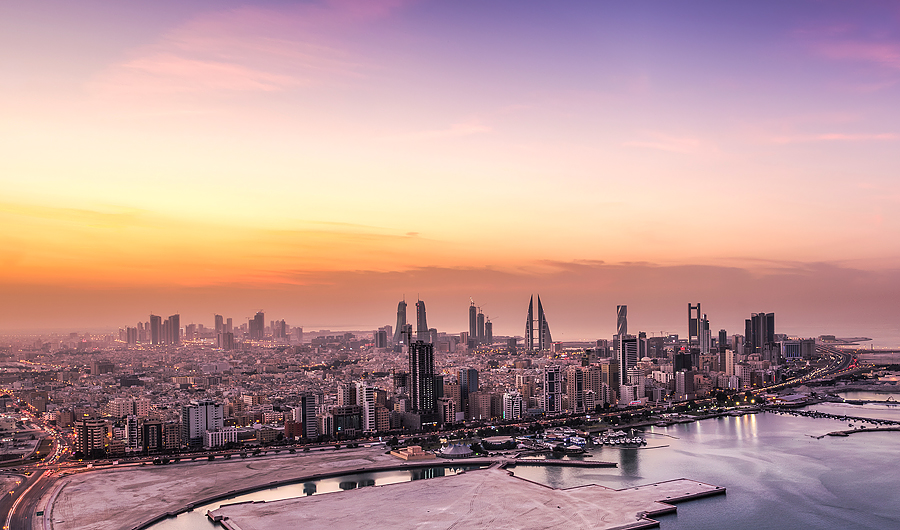
Back then, I stayed at the Crowne Plaza hotel, which was located pretty much on its own in Manama’s diplomatic area. This time, as I checked in there again, what struck me immediately was the amount of development that had gone on all around the area: New residential buildings, more hotels and big flyovers.

The Financial Harbour, which used to be the center of town, has given way to a whole new area — Bahrain Bay — on reclaimed land nearer the airport. At the heart of the new district is the Four Seasons hotel, where the workshop took place. It is a five-star luxury property, as you would expect, and is a good venue for a forum such as the one that just finished there. It was opened in 2015 as the centerpiece of the new reclamation project.

According to the hotel brochure, it “offers you an urban oasis experience with endless views of the Arabian Gulf on one side and the infamous (sic) Manama skyline on the other.” I can vouch for that. The facilities are good. The main plenary hall, rather than an old-fashioned stage and audience setup, is a circular arrangement where the speakers and panelists were in the center and visible from all around.

At least, I have to assume they were visible everywhere in the room. I, as a member of the media distinguished by a yellowy green wash to my lanyard badge, was not allowed into the main hall. Media were confined to a side room with half a dozen TV screens beaming live coverage of the proceedings.

One quirky thing was that there was no sound from the screens, so the huddled hacks had to use headsets to hear what was being said by the eminent thought leaders speaking just next door. It made tape recording very difficult indeed. Media members were isolated from the rest of the workshop during mealtimes too, with access to the main dinner and lunch gently but firmly denied by door wardens.

If the idea behind this segregation was to prevent news-hungry hacks from door-stepping the eminent sources in attendance at the workshop, it was a failure. The hotel lobby, sweeping corridors and marina-facing terraces were all perfect locations for a bit of good, old-fashioned news networking.

Main category: 

Empowering Palestinians means delivering on promisesKushner: Door still open to Palestinians despite Bahrain boycott


Empowering Palestinians means delivering on promises

Wed, 2019-06-26 23:58

MANAMA: Jared Kushner’s “Peace to Prosperity” plan, unveiled this week at a conference in Bahrain, sets ambitious goals, including doubling Palestine’s gross domestic product and reducing its high unemployment rate to under 10 percent.

Unemployment is at 30 percent in the West Bank and 50 percent in the Gaza Strip, according to Christine Lagarde, managing director and chairman of the International Monetary Fund, who spoke at the conference.

Kushner’s plan proposes investments of nearly $30 billion in the occupied Palestinian territories, and $20 billion in Lebanon, Egypt and Jordan. 

But money alone will not be enough if people are not given opportunities to work and develop their own entrepreneurial skills, business leaders warned during a panel discussion entitled “Empowering the People.”

Arab News Editor-in-Chief Faisal Abbas moderated the panel, which featured four distinguished business leaders: Osama Al-Absi, CEO of the Bahrain Labor Market Regulatory Authority; Amadou Diallo, DHL’s CEO for the Middle East and Africa; Shiv Khemka, vice chairman of SUN Group Global; and Luis Alberto Moreno, president of the Inter-American Development Bank.

Abbas praised Kushner’s “impressive and detailed” plan, but said “the political will must be there” for it to succeed.

Khemka said India has overcome similar challenges that Palestine faces, and “if the challenges can be overcome in India, they can be overcome anywhere.”

He added: “In India, we have 1.3 billion people, so we need to create 1.3 million jobs per month for the next 30 years. We have extreme poverty and wealth. We have all kinds of conflicts and all kinds of issues. If you start off with the assumption that the political will is there, then I think there’s no reason at all why this plan can’t succeed.”

Moreno said based on his visit to the West Bank, he believes that “the political will is present and can be nurtured” among Palestinians.

“A plan like this is only as good as the people who are willing to implement it,” he added. “The more important thing, in any case, is the political will to get behind something where people will eventually really build the potential for developing their own country.”

FASTFACTS

• Unemployment in West Best is at 30 percent and 50 percent in the Gaza Strip.

• Jared Kushner’s plan proposes investments of nearly $30 billion in the occupied Palestinian territories.

• The plan also seeks investments worth $20 billion in Lebanon, Egypt and Jordan.

Al-Absi, who helped reduce Bahrain’s unemployment rate from 17 percent to about 4 percent over 11 years, cautioned that the worst thing to do is to raise expectations and then not follow through.

“A pessimist is what an optimist calls a realist, and I’m a realist. It’s doable, but you have to approach this with a lot of practicality,” he said, describing Kushner’s plan as “very ambitious.”

Al-Absi added: “You’re going to come up with … a peace plan and an economic plan. You’re going to raise their (Palestinians’) expectations. You have to prepare them, otherwise, this can all go south.”

Diallo said: “How you create opportunity is by having leadership that has aspirations to change the way people live in their own communities.”

He added: “That has to be done locally because it can’t be done from outside. The people have to fight for that. I’ve seen that happen in Asia, in Pakistan, but also here in the region.”

He said: “How do you open up opportunities so people can fly in and out easily? How do you open up opportunities so goods can move in and out easily? You create entrepreneurs who have opportunities that are beyond their village and their city and are competing with everyone else, competing in the global world. That’s what I call inclusion.”

Main category: 

Kushner: Door still open to Palestinians despite Bahrain boycottMedia blitz as Palestinians oppose ‘Deal of the Century’


Survey reveals plight of Syrian refugee children

Author: 
Wed, 2019-06-26 23:38

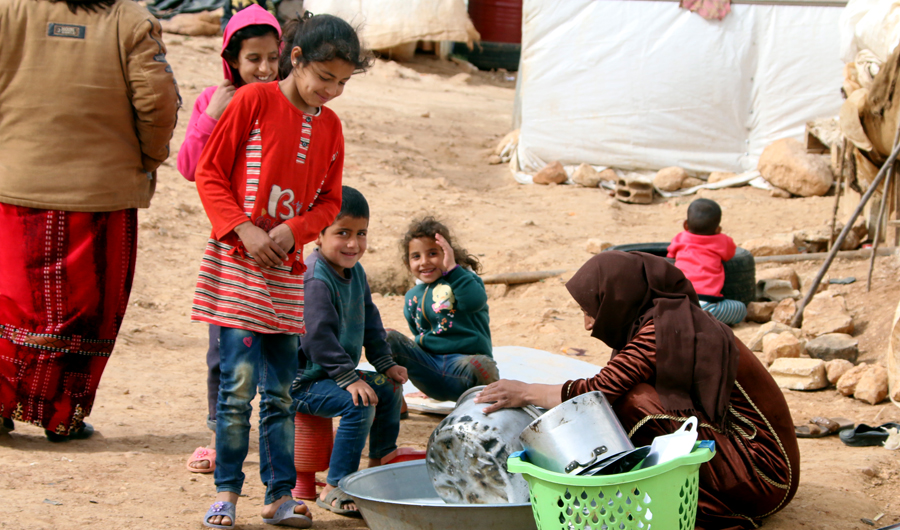
BEIRUT: A survey on child labor among Syrian refugees in Lebanon has revealed that 4,592 of the 6,972 children in the study work — and many have been injured while on the job.

The children, aged four to 18, live in refugee camps in Hermel, Baalbek, Central Bekaa and Zahle.

Dr. Rima Habib, chair of the Environmental Health Department at the Faculty of Health Sciences (FHS) of the American University of Beirut (AUB), supervised the survey conducted by the Ministry of Labor in collaboration with AUB in 2017.

“There are reasons for child labor among Syrians, but we were surprised that 30 percent of those children get injured on the job,” Dr. Habib told Arab News.

“The survey, which began in August 2017 until today’s report, does not mean that things have changed. The situation is still the same, if not worse, and the study was presented to the concerned Ministry of Labor which will fight against this kind of labor,” she said.

Based on the report, “55.2 percent of Syrian refugees in Lebanon are under 18 years old, and out of 938,531 refugees registered at the High Commission for Refugee Affairs, 341,234 of them live in the Bekaa area close to the Syrian border.”

The report describes Syrian refugees’ status in Lebanon as “complicated.” Lebanon does not use the word “refugee” but prefers the term “displaced.” 

Lebanon has not signed the Geneva Convention, which binds states to provide refugees with basic rights. There are also no national laws for the fair treatment of refugees.

The Lebanese security authorities require Syrians to have a sponsor to enter Lebanon and work, and to have a permit costing $200 annually per individual. Many Syrians avoid this and live in Lebanon illegally. 

As a result, Syrians who do not meet the conditions of employment are forced to make their children who are under 18 work since they are less likely to be arrested and investigated.

Based on the survey, 74.8 percent of children work in agriculture, 50.5 percent do not attend school because they are working, 37.8 percent of children are not paid on time, and 43 percent of boys and 41 percent of girls are humiliated while working. Syrian children work in jobs such as waste-picking, construction, shoe cleaning, car washing and mechanics.

The survey shows that 78.8 percent of children work for a Lebanese employer and 19.5 percent for a Syrian employer. About 58 percent said that they give their pay to their parents, and most of them worked in unsuitable professions for children and under harsh conditions.

“The challenges Syrian refugee families face in Bekaa are interlinked with social, political and economic factors and since returning to Syria at this stage will take a long time, it is necessary to work on securing adequate support for the refugees to provide them with a decent life, prohibit child labor, protect them and support their education,” Dr. Habib said.

Main category: 

In Lebanon, Syrian refugees face new pressure to go homeMade homeless by war, Syrians sell furniture to survive


Media blitz as Palestinians oppose ‘Deal of the Century’

Author: 
Wed, 2019-06-26 01:38

AMMAN: Palestinian officials, activists and the public at large stood unusually united on Tuesday in their opposition to the US-led, economic-based Israeli-Palestinian peace effort. They launched a wide-ranging public and media blitz in protest against the start of the two-day Peace to Prosperity economic workshop in Bahrain.

Palestinian government spokesman Ibrahim Milhem told Arab News that watching Jared Kushner make his opening speech at the workshop about the so-called “Deal of the Century” reminded him of the financial machinations of Wall Street.

“I saw a salesman trying to push a particular product, talking about numbers and opportunities without the slightest interest in the fact that he was talking about our lives and our situation,” he said.

Milhem and other Palestinian officials talked to a number of media outlets in an attempt to counter the US narrative. President Mahmoud Abbas, who presides over a divided authority that is in perpetual financial crisis and depends on donor nations, invited members of the Foreign Press Association to his Ramallah headquarters. “We need the money and, really, we need assistance,” he told them. “But before everything, there is a political solution.”

Prime Minister Mohammad Shtayyeh appeared on the Christiane Amanpour program on CNN International and wrote a column for the Washington Post headlined “Palestinians want freedom not Trump administration bribes.”

After Kushner’s speech, political analyst Lamis Andoni said that Palestinians are being asked to accept that if the prison conditions under which they live are to improve, the occupation
will continue. The US proposal is designed to silence Palestinians by giving them enough to survive, while giving a minority the chance to get rich, he said. “It didn’t work before and will not work now,” he added.

Husam Zulmot, head of the Palestine mission in the UK and former head of the Washington DC mission, said: “Palestine is not for sale.” He described Kushner’s plan as “deceptive” and “disingenuous,” arguing that it does not address the core issue: the occupation.

In Nablus, the deputy head of Fatah, Mahmoud Aloul, issued a stern warning to Arab participants in the Bahrain workshop: “We tell our brothers that they have stabbed us in the back and your intervention in our cause has gone overboard and we will not allow that.” He qualified this by adding: “The US and Israel will continue to be our enemy but we will not consider you enemies; we will leave you to your own people and hope that your hibernation will not last long.”

The Palestinian Al Quds daily newspaper ran the front page headline “Opposition to the Deal of the Century hold protests throughout the homeland and the diaspora,” with a photo of the demonstrations in Ramallah covering the rest of the front page. It also published a two-page supplement quoting politicians from a number of movements, including Fatah and Hamas, along with analysts and pundits, all criticizing the Manama workshop.

Hani Elmasri, the head of the Masarat think tank in Ramallah. wrote an article in which he said that the “Trump deal will not succeed without a Palestinian cover, and will fail sooner or later, but while the plan has not succeed in liquidating Palestinian nationalism it has succeeded in stressing the facts of the occupation and made the possibility of a Palestinian struggle much more difficult. This means that it is not enough for Palestinians to reject this plan but they need to respond with a holistic strategy that must be political, economic and has to be a struggle by the people on all levels.”

Main category: 

Kushner urges Palestinians to take the “Opportunity of the Century”Kushner’s Peace to Prosperity plan met with guarded enthusiasm