Radio and television festival kicks off in Tunis

Author: 
Sat, 2019-06-29 00:19

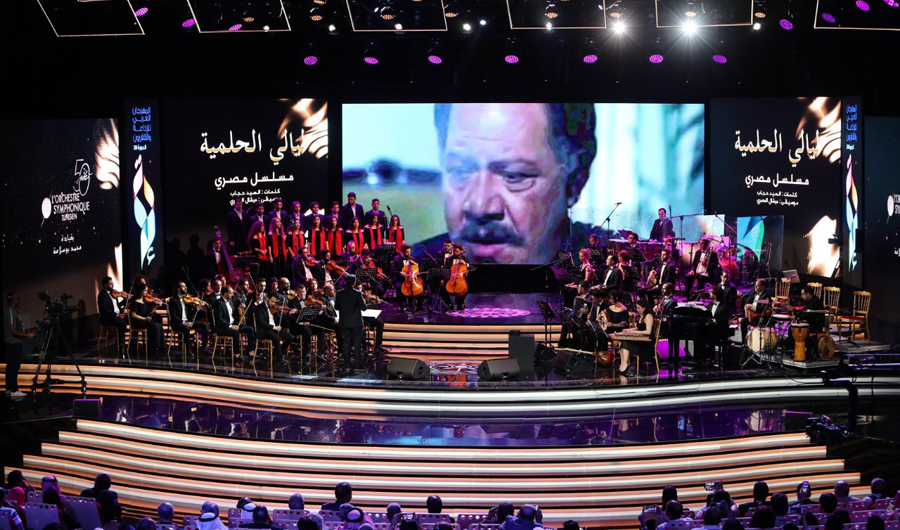
TUNIS: More than 270 programs will compete for awards at the 20th Arab Festival for Radio and Television in Tunis. 

The festival, which runs from June 27 to 30, is organized by the Arab States Broadcasting Union (ASBU) in cooperation with the Tunisian Radio and Tunisian Television Establishment and the Arab Satellite Communications Organization.

The festival welcomes representatives of ASBU member nations, including Saudi Arabia.

The ceremony honored figures who had impacted radio and television throughout the Arab world. The inauguration ceremony was preceded by seminars focusing on audiovisual archives, digital audio broadcasting, the launch of broadcasting in Tunisia and technology developments in the audiovisual field.  

Main category: 
Tags: 

Tunisia rallies after a “black day,” president’s health improvesTunisian president hospitalised ‘in severe health crisis’


Turkey vows fatal attack on Idlib military post will be ‘punished in strongest way’

Author: 
daniel fountain
ID: 
1561749381345843400
Fri, 2019-06-28 22:36

ANKARA: Turkey has warned that the latest shelling and mortar attack on one of its observation posts in Syria’s Idlib region, which left one soldier dead and three others injured, would be “punished in the strongest way.”
According to the Turkish Defense Ministry, the military post came under fire on Thursday night from territory controlled by Syrian government forces.
The fatal attack, the sixth on a Turkish observation post since April 29, has put further pressure on the fragile dynamics of the region covered by a de-escalation zone deal between Turkey and Russia.
Following the incident, Turkish officials summoned Russia’s Ankara attaché to Turkish military headquarters in the capital to signal that the attacks would not go unpunished.
UN chief Antonio Guterres recently urged Russia and Turkey to stabilize Idlib, the last stronghold of opposition in Syria, “without delay.”
Ankara has 12 observation posts in the Idlib region, but it is the first time one of its soldiers has been killed in a strike on them. It responded by immediately reinforcing the area.
Ammar Hamou, a Jordan-based Syrian journalist, said the signs were that Russia and Turkey remain committed to their Idlib agreement, but Syrian President Bashar Assad’s regime was not complying.
“There is an attempt to break the agreement from the Syrian side and the Iranian militias, and this may be useful to Russia, which is playing on both sides, as it adheres to its ambitions in Syria and its interests with Turkey,” he told Arab News.
Under the terms of the Sochi agreement inked between Turkey and Russia in September 2018, Moscow is a guarantor state for Damascus and is responsible for preventing regime attacks and any other violation by Iran-backed militia.
Hamou said that any limited Turkish military action against the Assad regime could help to bring Russia and Syria back to the negotiating table.
“Today the Turkish-Russian agreement is in danger not because they do not want to continue, but the regime is provoking local and regional foes to target civilians and kill them. If not, civilians will stand in the face of the Turkish-backed factions that have adhered to the cease-fire agreement,” he added.
Some experts see the Moscow-backed regime attack on the Turkish observation post as a challenge ahead of the Turkish and American presidents’ meeting on the sidelines of the G20 summit in Osaka, Japan.
Emre Ersen, an expert on Russia-Turkey relations from Marmara University in Istanbul, said the latest attack had once again revealed the fragility of the Turkish-Russian consensus in Syria despite their intense military coordination on the ground.
“It also proves that it will not be easy to reach a lasting settlement on the Idlib issue,” he told Arab News.
In late May, the Kremlin, one of the Syrian government’s staunchest allies, said it was Turkey’s responsibility to prevent rebels in Idlib from firing on civilian and other facilities where Russian troops were located.
But experts have suggested that the Sochi deal is no longer working as the balances in Idlib have been fundamentally distorted especially over the last few months.
Ersen said that Moscow was closely watching the diplomatic contacts going on between Ankara and Washington with regard to the east of the Euphrates river. “Therefore, this latest attack might also be taken as a signal of Russian discontent with Turkey’s search for a balance between Washington and Moscow in Syria,” he added.
Russia recently announced that it would complete the delivery, and training, of the S-400 missile defense system to Turkey by the end of the year.
However, Ankara could be prevented from acquiring the US-made F-35 fighter planes and may face economic sanctions if it receives the Russian weaponry.
“Although it currently seems quite unlikely, if Turkey somehow decides to withdraw from the S-400 deal as a result of US pressure, Russia might use the Idlib issue against Turkey with the goal of undermining a possible Turkish-US rapprochement. The timing of these attacks is quite interesting in this regard,” Ersen said.
The escalation of tensions in Idlib and northern Hama in the past month have resulted in 160 civilian deaths and the displacement of more than 200,000 people.

Main category: 

Attacks on Turkish observation post in Syria’s Idlib kill soldierUN chief asks Russia, Turkey to ‘stabilize’ Syria’s embattled Idlib


Tunisia rallies after a “black day,” president’s health improves

Author: 
Fri, 2019-06-28 21:44

TUNIS: Tunisia’s president is recovering his health and speaking to colleagues, authorities said on Friday, signalling a return to normality after a turbulent 24 hours in which the elderly leader fell ill and militants staged attacks in the capital.
President Beji Caid Essebsi, 92, a major player in the North African country’s transition to democracy following a 2011 revolution, was taken to a military hospital on Thursday after suffering a “severe health crisis.”
His health emergency coincided with attacks by two suicide bombers who blew themselves up in Tunis, killing one officer and wounding several others.
The attacks, claimed by Daesh, took place months before an election and at the peak of a tourist season in which Tunisia is hoping for a record number of visitors.
Alarmed by the spate of troubling news, many Tunisians described Thursday as a “black day.”
But on Friday, normal life appeared to be returning.
Shops reopened in Charles De Gaulle, a commercial street, and cafes were crowded in the main Habib Bourguiba street. Tourists and Tunisians alike wandered the markets as normal.
“We are not afraid, we will not give up,” said a woman who gave her name as Sana.
“We will continue our lives and our democracy, which frightens them.”
Tourism Minister Rene Trabelsi told reporters that the incident would not affect tourism in the country, adding that tourist sites were under tight security surveillance.
“Desperate act”
The presidency spokeswoman said Essebsi’s health had improved significantly and he had called the defense minister to discuss the situation in the country.
Essebsi has been a prominent figure in Tunisia since the overthrow of Zine El-Abidine Ben Ali in 2011, which was followed by uprisings against autocratic leaders across the Middle East.
On Friday, Prime Minister Youssef Chahed played down the impact of the attacks and said it was a “desperate act of the collapse of terrorist groups.”
Tunisia has battled militant groups operating in remote areas near the border with Algeria since the 2011 uprising. High unemployment has also stoked unrest in recent years.
Security has improved since authorities imposed a state of emergency in November 2015 after dozens died in militant attacks earlier that year — one at a museum in Tunis and another on a beach in Sousse. A third attack targeted presidential guards in the capital and killed 12. Daesh claimed responsibility.
Those actions scared off holidaymakers and investors, worsening an economic crisis.
But this year Tunisia expects to receive a million tourists for the first time, seeking to restore confidence in its ability to protect its lifeline tourist income.
Essebsi’s health episode raised questions on social media about the management of the country in the event that the post president became vacant unexpectedly. But Nourredine Benticha, a top adviser to Essebsi, said there would be no constitutional vacancy.
Parliamentary elections are expected to be held on Oct. 6 with a presidential vote following on Nov. 17.

Main category: 
Tags: 

Tunisian president hospitalised ‘in severe health crisis’One dead, several wounded in suicide bomber attacks in Tunisian capital


UN puts brakes on peacekeepers’ pullout from Sudan’s Darfur

Author: 
Fri, 2019-06-28 21:37

UNITED NATIONS: The UN Security Council voted unanimously Thursday to put the brakes on the withdrawal of the joint UN-African Union peacekeeping force in Sudan’s vast western Darfur region as the country deals with a political crisis.
The council approved a resolution to extend the current mandate of the force, known as UNAMID, for four months until October 31.
It asks Secretary-General Antonio Guterres to provide an update in 60 days on the situation on the ground — and it asks the UN and AU to make recommendations by Sept. 30 on what the council should do about continuing the withdrawal.
Last July, the Security Council voted to dramatically cut the UNAMID force in response to reduced fighting and improved security conditions. The target for ending the mission is June 30, 2020.
Britain’s UN deputy ambassador Jonathan Allen, whose country co-sponsored the resolution with Germany, said the council made “the responsible decision to pause the withdrawal,” which he said aligns with the decision of the AU Peace and Security Council.
“Moreover, it recognizes that Darfur is affected by wider instability in Sudan and that there is a need for continued protection of civilians in Darfur,” he said.

Main category: 
Tags: 

Sudan protester dies from wounds in Darfur clashes: medicsFrom Darfur to Agadez: Sudan refugees’ endless quest for safety


Palestinian leaders call for anti-Manama unity to continue

Author: 
Fri, 2019-06-28 00:52

EAST JERUSALEM: Palestinian officials breathed a sigh of relief as the controversial Manama economic workshop — which they considered a failure — ended on Thursday, but warned against complacency in its aftermath.

“The Bahrain workshop was an exercise in futility,” said Palestine Liberation Organization executive committee member Hanan Ashrawi. 

She called for robust efforts to build on the united stand adopted by Palestinians in opposition to the US-led conference and the economic plan it promoted, and to seize the chance to reinvigorate the Palestinian national cause by working with allies around the world.

“We need to return to our people and build on the national unity that was accomplished, through giving the people a chance to cast their vote in general elections,” she said.

Palestinian Deputy Premier Ziad Abu Amer echoed Ashrawi’s comments by calling for serious engagement, in particular with countries that have stood by Palestine.

“We were not against the economic workshop, had it been done within the context of a political process that was focused on the two-state solution,” said Amer. 

He added that Palestinians must build on the unity that Gaza and the West Bank had witnessed, and engage with the world using a proactive strategy that can reinforce the consensus coming out of Bahrain.

“The workshop in Manama showed clearly that you can’t place the cart before the horse,” he said. “All of us have been involved in track-two diplomacy and we are convinced that it is futile unless it is a fulfilment of a political process, and not a precursor to it.”

Amer said that the failure of the Bahrain workshop was due in large part to the steadfastness of Palestinian President Mahmoud Abbas.

“President Abbas had the courage to stand up and say ‘no’ and this inspired many people and countries to reject an American process that attempts to circumvent the two-state solution,” he added.

Abbas met Sabastian Pinera, the president of Chile, in Ramallah on Thursday and presented him with the Medal of Bethlehem. During a joint press conference, Abbas said that national rights are not real estate property that can be bought and sold. 

He added that the correct political process will require “freedom, dignity, independence and justice for the Palestinian people.”

While he rejected the Bahrain workshop, Abbas said that Palestinians yearn for peace.

“Despite all that has happened, we are holding on to the aspirations for peace on the basis of international law, signed agreements and the Arab peace plan,” he said. Palestine will work with any international mechanism that can help Palestinian institutions to develop and empower the economy, he added.
Main category: 
Tags: 

Kushner’s Peace to Prosperity plan met with guarded enthusiasmKushner: Door still open to Palestinians despite Bahrain boycott