IAEA calls emergency meeting on Iran’s nuclear program

Fri, 2019-07-05 19:07

VIENNA: The UN’s nuclear watchdog said Friday it will hold an emergency meeting on Iran’s nuclear programme next week, days after Tehran breached one of the limits set in a 2015 deal with world powers.
The meeting of the International Atomic Energy Agency (IAEA)’s board of governors, which follows a US request, would be held “on 10 July at 14:30,” an IAEA spokesman said.
Earlier, the US mission in Vienna said in a statement that the American Ambassador to International Organizations Jackie Wolcott had requested the special meeting to discuss Iran’s breach of the amount of enriched uranium it could stockpile.
The IAEA confirmed earlier this week that Iran had breached the limit of 300kg for stockpiles of enriched uranium as stipulated under the 2015 Joint Comprehensive Plan of Action (JCPOA).
The US statement described the news of the breach as “concerning”.
“The international community must hold Iran’s regime accountable,” the statement added.
Iran has said that as of Sunday it will begin breaking another key limit set in the JCPOA, which restricts the enrichment level of its uranium stockpile to 3.67 percent.

Main category: 


Greece seizes record amount of amphetamine Captagon shipped from Syria

Author: 
Reuters
ID: 
1562334240033637500
Fri, 2019-07-05 13:33

ATHENS: Greek authorities have seized what they described as the world’s largest single haul of super-charged amphetamine Captagon pills from Syria worth more than half a billion euros.
Coast Guard and drug enforcement officers seized three containers full of the amphetamines, the financial crimes unit (SDOE) said on Friday. The operation involved 20 officers and landed 5.25 tons of the drug — 33 million Captagon pills — found in the containers shipped from Syria.
“It is the largest quantity that has ever been seized globally, depriving organized crime of proceeds that would have exceeded $660 million (587.45 million euros),” the financial crimes unit said in a statement.
Captagon is one of several brand names for fenethylline hydrochloride, a drug compound belonging to the family of amphetamines, stimulants of the central nervous system.
In the 1960s the drug was prescribed to treat narcolepsy and depression but by the 1980s the medical community determined that Captagon’s addictive properties outweighed clinical benefits and it was banned.
However, Captagon is a popular narcotic in the Arabian Peninsula and in war-torn Syria.
Syria became a major amphetamines exporter and consumer as the trauma of its civil war fueled demand and the breakdown in law and order created opportunites for producers.
Greek authorities were trying to determine if the shipment’s final destination was China, SDOE said, without providing further details.

Main category: 

Conditions in Syria’s Al-Hol camp ’apocalyptic’: Red CrossLebanon arrests Captagon drug kingpin


UNESCO lists Iraq’s Babylon as World Heritage Site

Fri, 2019-07-05 16:57

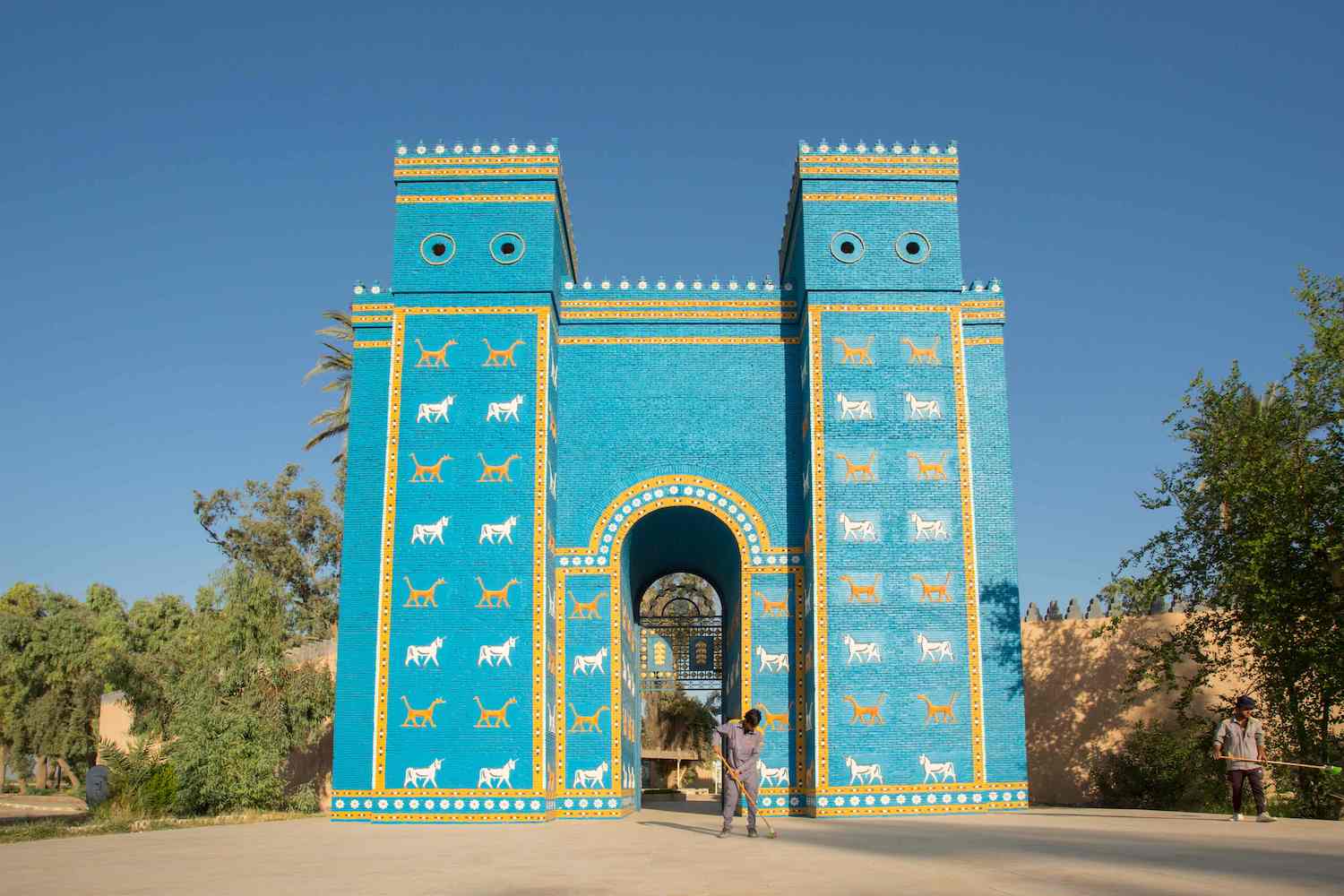
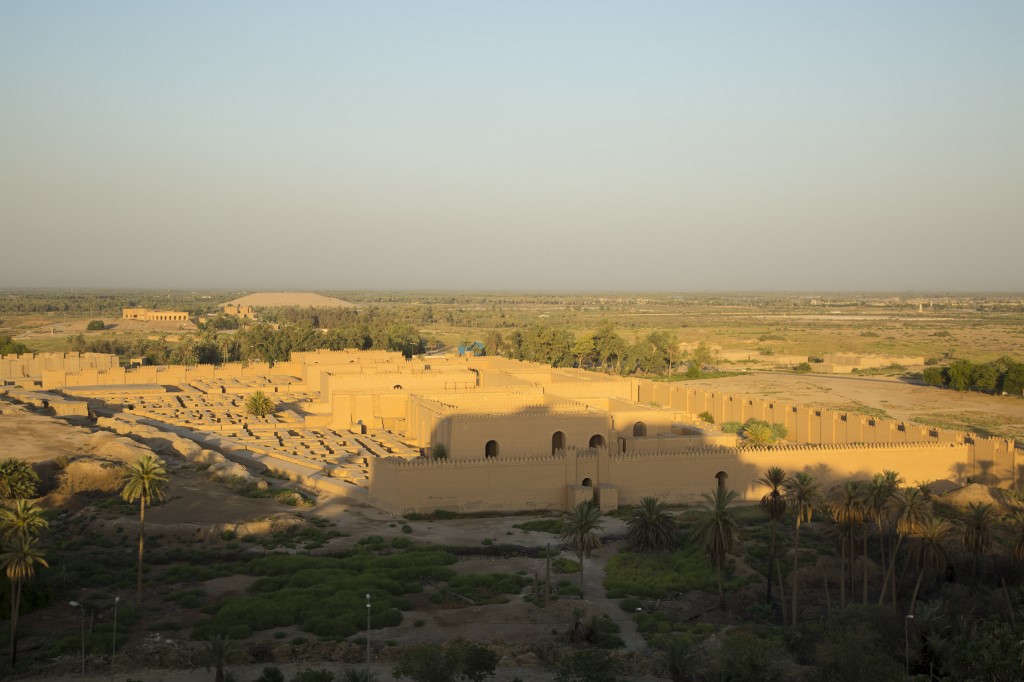
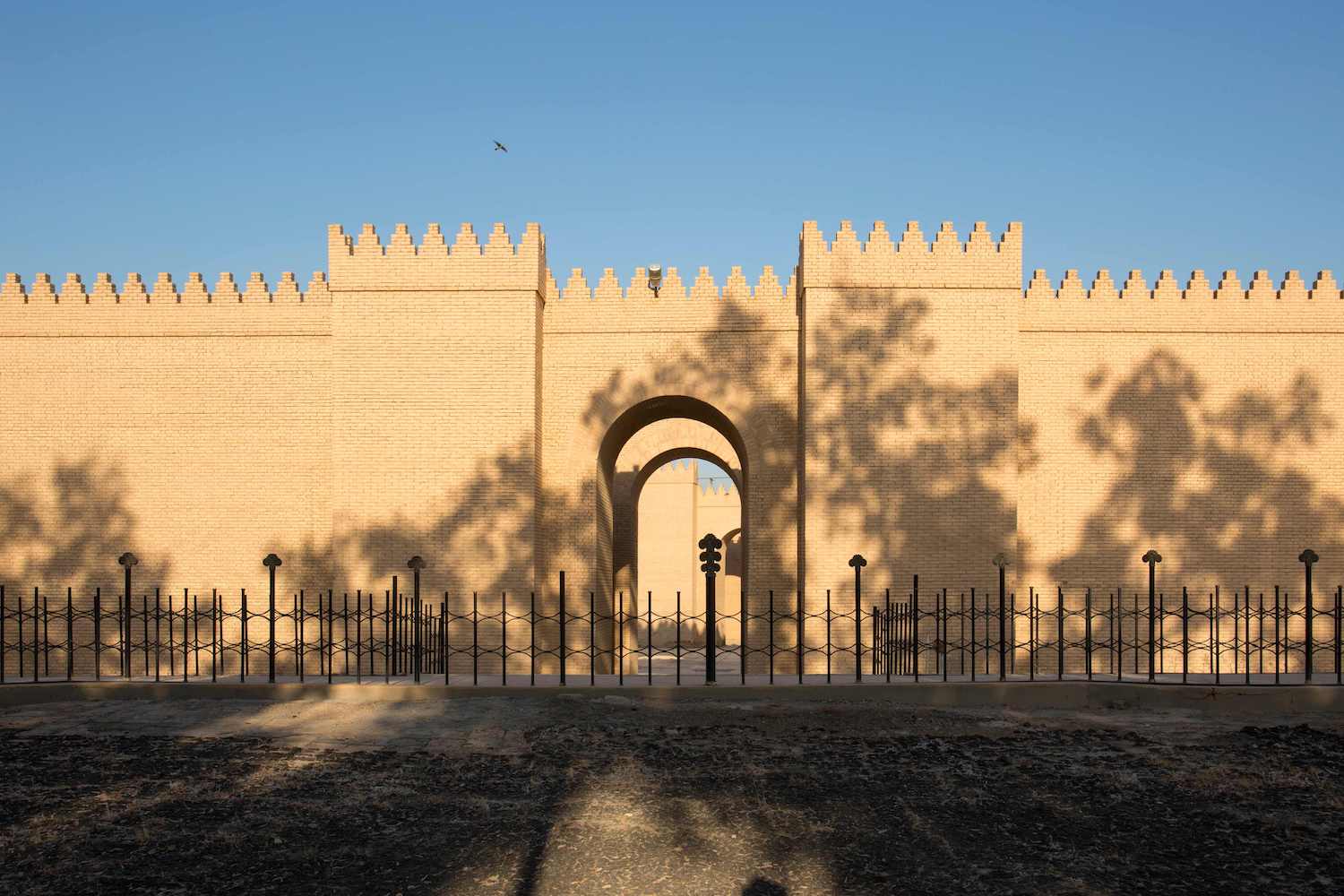
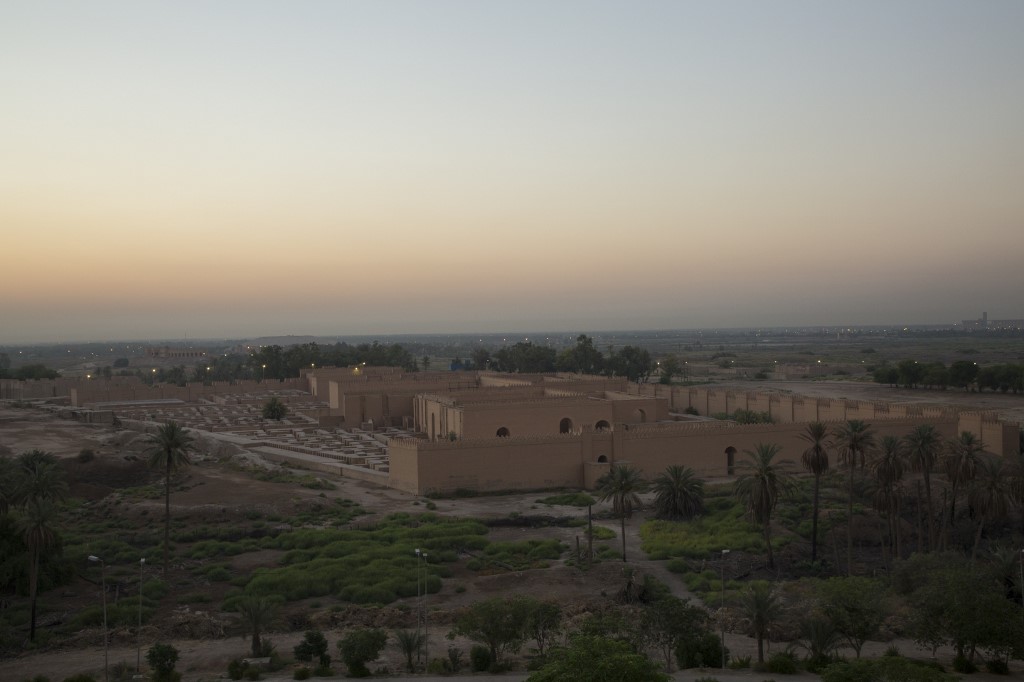
BAGHDAD: UNESCO’s World Heritage Committee voted on Friday to list the sprawling Mesopotamian metropolis of Babylon as a World Heritage Site after three decades of lobbying efforts by Iraq.
Iraq had been trying since 1983 to have the site — a massive 10-square-kilometer complex of which just 18 percent has been excavated thus far — recognized by UNESCO.
Straddling Iraq’s Euphrates River about 100 kilometers (60 miles) south of Baghdad, the city was the center of the ancient Babylonian empire more than 4,000 years ago.
“What is the world heritage list without Babylon? How to tell the history of humanity without the earliest of old chapters, Babylon?” said Iraq’s representative to UNESCO’s World Heritage Committee ahead of the vote.
The committee met in Azerbaijan’s capital of Baku to consider Babylon and another 34 sites, including in Brazil and Burkina Faso, for the World Heritage List.
It opted not to designate Babylon as the World Heritage in Danger after objections from Iraq.
“Babylon is the largest populated city in ancient history,” said Qahtan Al-Abeed, who heads the Basra Antiquities Department and led efforts to get the site listed.
“The Babylonians were the civilization of writing, administration and science,” he told AFP.
Putting Babylon on the World Heritage List “will encourage research and development of the site,” and would “be free publicity for tourists,” he added excitedly.
Babylon occupies a special place in religion, appearing in the Bible, Hebrew scripture, and even mythical prophecies.
It developed as a walled city of temples and towers made of mudbrick and known internationally for its hanging gardens, the Tower of Babel, and the Ishtar Gate.

Main category: 
Tags: 

Iraq and Oman plan cooperation in oil and gas sectorIraq says it deserves more global support in rebuilding


Tunisia bans niqab face covering in public institutions

Fri, 2019-07-05 14:36

TUNIS: Tunisia’s premier on Friday banned the niqab face covering for women in government offices, citing security concerns after attacks in the North African country.
Prime Minister Youssef Chahed signed a government circular “banning access to public administrations and institutions to anyone with their face covered… for security reasons,” his office said.
The ban on the niqab, which covers the entire face apart from the eyes, comes at a time of heightened security following a June 27 double suicide bombing in Tunis that left two dead and seven wounded.
The interior minister instructed police in February 2014 to step up supervision of the wearing of the niqab as part of anti-terrorism measures, to prevent its use as a disguise or to escape justice.
Reactions to the ban were mixed in the Tunisian capital.
“They have the right to prohibit (the niqab) given the events we are currently witnessing,” said Ilhem, a young Tunisian woman.
“But in the end, it remains an individual freedom,” she added.
Lina questioned “why the woman must make sacrifices every time there are security measures to be taken”.
The Tunisian League for the Defence of Human Rights urged that the measure be only temporary.
“We are for the freedom to dress (as one pleases), but today with the current situation and the terrorist threats in Tunisia and across the region we find justifications for this decision,” the league’s president Jamel Msallem told AFP.
He said that the ban should be repealed as soon as “a normal security situation returns in Tunisia”.
The niqab and other outward shows of Islamic devotion were not tolerated under the regime of longtime autocrat Zine El Abidine Ben Ali but have made a comeback since he was toppled in Tunisia’s 2011 revolution.
After bloody attacks in 2015 that targeted security forces and tourists, there were calls in Tunisia to re-impose the ban.

Main category: 
Tags: 

Tunisian president Essebsi leaves hospitalSaudi minister of Islamic affairs and Tunisia’s grand mufti discuss ways of propagating moderation, compassion


Palestinians welcome Japan offer to mediate in Palestine-Israeli conflict

Author: 
daniel fountain
ID: 
1562266195416400700
Thu, 2019-07-04 21:49

AMMAN: Palestinians welcomed the initiative made by Japan’s Foreign Minister Taro Kono in the exclusive interview he gave to Arab News about his country’s interest playing the role of an “honest broker” in helping to resolve the Palestinian-Israeli conflict.

Saeb Erekat, the secretary of the executive committee of the PLO, told Arab News that Japan is a country that has shown a ‘tremendous commitment’ to peace and the two-state solution.

“They have invested in the development of institutions in Palestine and have kept a position against Israeli settlements,” Erekat said. “We welcome their position which is consistent with the peace plan presented by President Abbas before the Security Council in February 2018, calling for a group of countries to facilitate the peace process as we are not going to accept the United States to play this role.”

Ibrahim Milhem, spokesman of the Palestinian Prime Minister Mohammad Shtayyeh, noted that the premier met a Japanese delegation that included the Middle East peace envoy Masahiro Kono and Japan’s head of diplomatic mission in Ramallah Takeshi Okubo. In a statement after the meeting on Wednesday the Palestinian prime minister noted his appreciation of the bilateral relations between both sides. “Shtayyeh praised the continuous political and economic support from Japan, especially their support in the building of the institutions of the state of Palestine,” the statement concluded.

Ahmad Deek, political affairs advisor of the Palestinian Foreign Ministry, said that the ministry “welcomes” the calls made by the Japanese foreign minister. In answer to a question by Arab News, Deek said, “we welcome the suggestion made by the foreign minister because we believe that any movement is helpful.” Deek noted that Palestinians yearn for peace and welcome support from “our international friends so long as it is not limited to only the Americans.”

Hanna Issa, director of Islamic-Christian Commission for Support of Jerusalem, said that Japan’s position is the correct one. “Both the Israeli and American positions are constantly changing and therefore it is important to have a country that is neutral like Japan, which supports the two-state solution and has shown its backing on projects in support of Palestinian statehood.”

The Japanese delegation to Palestine has met a number of senior Palestinian officials and observed Japanese funded projects. Japan is a major supporter of Palestinian agriculture through its efforts to help agricultural exports, especially from the Jordan valley area. They also attended the first conference on Cooperation among East Asian Countries for Palestinian development (CEAPAD) held in Palestine.

Minister of Foreign Affairs and Expatriates Riyad Malki opened the conference, stressing that CEAPAD is an effective model for building bridges of communication and transferring successful experiences in East Asia to Palestine to support the two-state solution.

Malki said that the initiative of the CEAPAD conference gives hope to the Palestinian people, especially in light of Israel’s control over the Palestinian economy.He added that with the help of the countries participating in the conference they hope to move from a state under occupation to a developed country achieving development freely and with dignity.

The first CEAPAD conference was first held in the Japanese capital Tokyo in 2013; the second was in the Indonesian capital Jakarta in 2014, and the third in the Thai capital Bangkok in 2018.

CEAPAD member states include: Japan, Indonesia, Malaysia, Thailand, Singapore, Vietnam, the Sultanate of Brunei and Palestine. The observer countries and organizations are: South Korea, Egypt, Jordan, the International Quartet, UNRWA and the Islamic Development Bank.

Main category: 

Palestine says US ambassador helps Israel to annex part of West BankFull transcript of Arab News interview with Japanese Foreign Minister Taro KonoJapan offers to be ‘honest broker’ for Palestinian-Israeli peacePalestinians ‘let down by their leaders,’ Kushner says