Assad hits a wall in Syrian war as front lines harden

Thu, 2019-07-11 22:32

BEIRUT/AMMAN: The Syrian regime’s assault in the northwest has been met with a painful opposition counterpunch that underlines Turkish resolve to keep the area out of his hands and shows why he will struggle to take back more of Syria by force.

More than two months of Russian-backed operations in and around Idlib province have yielded little or nothing for Bashar Assad’s side. It marks a rare case of a military campaign that has not gone his way since Russia intervened in 2015.

While resisting regime attacks, the insurgents have managed to carve out small advances of their own, drawing on ample stocks of guided antitank missiles that opposition and diplomatic sources say have been supplied by Turkey.

“They’re even targeting personnel with these missiles … it means they are comfortably supplied,” an opposition source said, speaking on condition of anonymity because he was discussing opposition military capabilities. Turkey’s Foreign Ministry did not immediately respond to a request for comment on reports that Ankara has stepped supplies of arms to opposition fighters.

With Turkey committed to the opposition, the battle for the northwest stands in stark contrast to a campaign in the southwest a year ago, when Western and Arab states stood by as Assad and his Russian- and Iranian-backed allies took the area.

Despite Russian backing in the latest fighting, questions have arisen over whether Assad and his allies are entirely on the same page when it comes to the northwest, where Turkey has deployed forces in agreement with Russia and Iran.

Moscow has appeared keen to preserve its ties with Ankara even as its air force bombs in support of Assad: Turkey says Russia has intervened to stop attacks on Turkish forces from Syrian regime-held territory.

And this time there has been no sign of a major role for Iranian backed Shiite forces that have helped Assad to victories in parts of Syria that are of greater interest to Iran, including territory near Iraq, Lebanon and Israel.

The capture of the southwest a year ago remains Assad’s last big gain. The prospects of further advances have been obstructed not only by Turkish interests in the northwest but also the presence of US forces in the east and northeast.

American troops are still supporting Kurdish-led fighters following a reversal of President Donald Trump’s decision last December to pull them all out.

After more than eight years of war, this leaves Syria carved up into areas of US, Russian, Turkish and Iranian influence that seem unlikely to be stitched back together any time soon.

“We could see the front lines harden and remain like that for some time, where either the appetite or capability to fight through them is not there on the part of the regime or its allies,” said a Western diplomat speaking anonymously in order to offer a candid assessment.

‘Bone-breaking battle’

The Idlib area is dominated by Tahrir Al-Sham, formerly known as the Nusra Front. Proscribed as a terrorist group by the UN Security Council, the group has set aside past conflict with Turkish backed opposition to defend the northwest.

Col. Mustafa Bakour, a commander in the Jaish Al-Izza fighter group, said coordination among opposition was a major factor in foiling regime attacks.

“I expect the battles to continue for a time because it has become a bone-breaking battle,” he said in written answers to questions from Reuters.

The regime campaign of airstrikes and barrel bombing that began in late April was followed by the capture of around 20 villages. This led to an opposition counterattack in early June that seized ground the regime has been unable to recover.

The Syrian regime has described its operations as a response to militant violations of cease-fire agreements.

Russia says action was needed to stop attacks from being launched from Idlib, including drone strikes on its nearby air base. President Vladimir Putin said in April a full-scale operation in Idlib was impractical for now.

Though the regime has not declared the goals of the campaign, opposition sources believe it was to capture two highways that pass through opposition-held territory.

Some 300,000 people fleeing bombardment have moved toward the Turkish border since April, prompting the UN to warn that Idlib was on the brink of a “humanitarian nightmare.”

For Ankara, the Syrian opposition’s last major state sponsor, preventing another major influx of Syrian refugees is of paramount importance: Turkey already hosts 3.6 million of them.

While accusing the Syrian regime of targeting civilians and its military observation posts in the Idlib area, Turkey has stopped short of blaming Russia, instead saying it would continue to cooperate with Moscow over the northwest.

The Turkish Foreign Ministry, in a written response to questions from Reuters, also said “necessary messages have been sent to Russian officials to end the attacks on our observation points and civilians” in the Idlib area.

Hundreds of civilians have been killed, as have many fighters on both sides, according to the Syrian Observatory for Human Rights.

Observatory Director Rami Abdulrahman described the operation as “a failure on all levels” for Russia and Damascus.

A Russian private military contractor who was based near Idlib province told Reuters that opposition fighters there are far more professional and motivated than their adversary. Pro-regime forces cannot win the battle for Idlib unless Moscow helps them on the ground, he said.

A second Western diplomat said the regime had suffered heavy casualties for minimal gains, which was “deeply embarrassing.” “Turkey is trying to tell them ‘you cannot take this militarily. You have to negotiate’,” the diplomat said.

A regional source close to Damascus described the escalation since April as a limited confrontation, saying Russia’s ties with Turkey were the main brake on any full-scale assault to take the entire northwest.

“Of course the regime has the desire to recover Idlib by force, but … without the Russians it can’t, because there are many militants and the Russians are completely committed to the Turks,” the source said. “It is expected that the situation in Idlib will stay as it is for a long time.”

Main category: 

Car bomb at rebel checkpoint in Syria’s Afrin kills 13: monitorDeadly clashes, car blast in northwest Syria leave 84 dead


Palestinians reject US charge of increased prisoner stipends

Author: 
Thu, 2019-07-11 22:11

JERUSALEM: The cash-strapped Palestinian Authority (PA) denied on Thursday US allegations it had increased payments to families of militants in Israeli jails, and said the main obstacle to peace was Israeli occupation of Palestinian land.
US officials have criticised the PA’s prisoner stipends as fanning Palestinian violence, and US President Donald Trump’s Middle East envoy Jason Greenblatt said the PA had increased those payments by some 11 percent in the first months of 2019.
“PA increased pay to murderers by over 11% at the same time as they slash pay to their government workers and police,” Greenblatt tweeted on Wednesday. “More harm to Palestinians & to peace!”
The Palestinian Finance Ministry rejected the accusation as “absolutely false and hypocritical” and said Washington was lending financial support to Israel’s occupation of the West Bank.
“It is known to everyone that Israel’s illegal colonial settlements, funded by American taxpayer money, continue to be the obstacle to peace,” a ministry spokesman told Reuters.
PA fiscal records reviewed by Reuters show no marked increase in what they refer to as “assistance for prisoners and detainees”. Monthly payments were around 42 million shekels ($11.85 million) in December 2018, decreasing to 38.4 million shekels ($10.83 million) in April 2019.
Payments spiked to 75 million shekels ($21.15 million) in May 2019, which a ministry spokesman attributed to arrears payments and a bonus for the Muslim holy month of Ramadan. Civil servant salaries also spiked in May. Later data was not available.
The PA, which exercises limited self-rule in the West Bank, has been grappling with a financial crisis since it refused in February to accept tax transfers from Israel after Israeli authorities cut the portion designated for prisoners’ families.
Under interim peace accords, Israel collects taxes on imports into the West Bank and in the Gaza Strip, an enclave under Palestinian Islamist rule since 2007, and makes monthly transfers of the proceeds to the PA.
The tax transfers of around 700 million ($197 million) shekels per month make up about half of the PA’s budget, and the government has slashed civil servant salaries since March to weather the crisis.
Palestinian President Mahmoud Abbas has refused to accept the partial tax remittances from Israel, saying the PA is entitled to all the money under interim peace deals.
The mounting financial pressures on the PA have sent its debt soaring to $3 billion, and led to a severe contraction in its estimated $13 billion GDP economy, according to the PA’s top central banker.

Main category: 

Palestinian militant killed by Israeli fire near Gaza border: HamasIsrael says it shot down drone that crossed from Gaza


US, allies planning naval escort for Gulf tankers

Thu, 2019-07-11 18:37

WASHINGTON: The United States and its allies are discussing plans to provide naval escorts for oil tankers through the Gulf, a top US general said Thursday after Iranian military vessels menaced a British tanker.
General Mark Milley, nominated to become the chairman of the Joint Chiefs of Staff, told a Senate hearing that the US has a “crucial role” in enforcing freedom of navigation in the Gulf.
He said the US was attempting to put together a coalition “in terms of providing military escort, naval escort to commercial shipping.” 
“I think that that will be developing over the next couple weeks.”
Milley, currently chief of staff of the army, confirmed less specific remarks by current Joint Chiefs Chairman General Joseph Dunford earlier this week.
Dunford told media that the Pentagon was working to identify possible partners in an effort to protect navigation in the Straits of Hormuz and Bab Al-Mandab on either side of the Arabian peninsula where much of the world’s crude oil traffic passes.
Milley’s remarks came after London said Thursday that armed Iranian boats tried to block a supertanker before being warned off by a British warship in a dramatic escalation in the Gulf.
The British defense ministry said three Iranian boats tried to “impede the passage” of the British Heritage, a 274-meter (899-foot) tanker owned by BP that can carry a million barrels of oil.
“We are concerned by this action and continue to urge the Iranian authorities to de-escalate the situation in the region,” a Downing Street spokesman said.
Iran’s Revolutionary Guards denied involvement but also cautioned both the United States and Britain that they would “strongly regret” the British detention of a tanker carrying Iranian crude oil off Gibraltar last week. 


Main category: 
Tags: 

UK ships on alert after British frigate thwarts Iranian attempt to stop tanker in GulfTrump accuses Iran of secret nuclear enrichment and warns of ‘substantial’ new sanctions


Gibraltar police arrest captain, officer of detained Iran tanker Grace 1

Thu, 2019-07-11 18:04

GIBRALTAR: Gibraltar police have arrested the Indian captain and chief officer of a seized Iranian tanker suspected of breaching EU sanctions by shipping oil to Syria, Royal Gibraltar Police said Thursday.
“This follows a protracted search of the vessel where documents and electronic devices have been seized and examined,” police said in a statement.
Gibraltar police are interviewing both men, who have “been accorded their legal entitlements and access to consular representation,” it added.
Gibraltar forces and British marines boarded the ship, Grace 1, and seized it on July 4 off the coast of Gibraltar, saying they believed it to be destined for Syria to deliver oil, which is subject to European sanctions.
Tests have shown the 330 metre (1,000 feet) tanker which is capable of carrying two million barrels of oil, was “carrying a full load of crude oil”, the government of Gibraltar said Monday.
Iran has condemned the detention as an “illegal interception” and said the tanker was not headed to Syria.
The arrests come after London said earlier on Thursday that armed Iranian boats tried to “impede” a UK supertanker in the Gulf before being warned off by a British warship.
Iran’s Revolutionary Guards denied involvement but also cautioned both the United States and Britain that they would “strongly regret” the UK Royal Marines’ detention of the Grace 1.
Gibraltar police said the investigation was still on-going and the tanker remained detained.

Main category: 

UK ships on alert after British frigate thwarts Iranian attempt to stop tanker in GulfTrump accuses Iran of secret nuclear enrichment and warns of ‘substantial’ new sanctions


New Kurdish PM makes Baghdad ties priority over independence

Author: 
Wed, 2019-07-10 23:27

IRBIL: Two years after a failed independence bid plunged Iraq’s Kurdistan Region into months of instability, the new regional prime minister said his priority was strengthening ties with Baghdad, signaling dreams of self-rule should be put on hold.

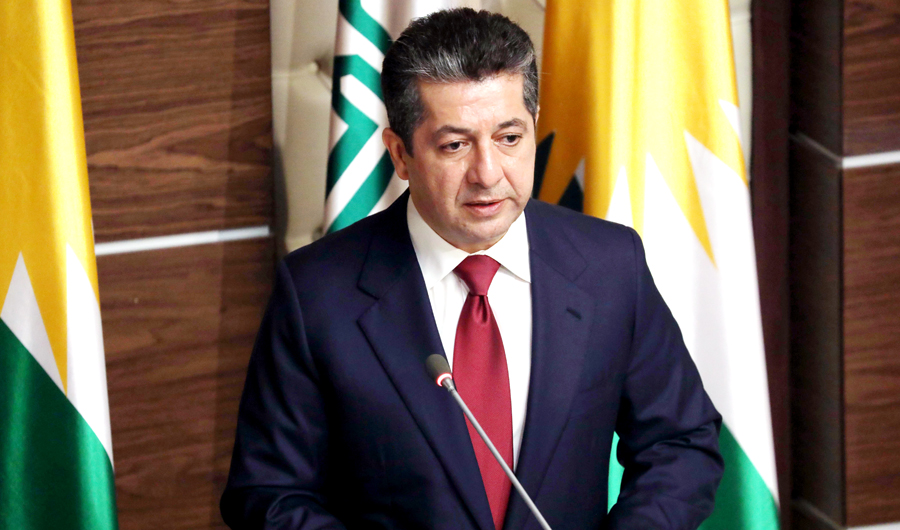
Masrour Barzani, sworn in as regional prime minister on Wednesday, told Reuters in an exclusive interview that under his leadership, the Kurdistan Regional Government’s focus would be to establish a “strong and constructive” relationship with Baghdad, leaving the question of independence aside for now.

“This (independence referendum) happened in the past and it’s a reflection of the enduring aspiration of a nation,” said Barzani, speaking at his palace in the hillside village of Salaheddine, near regional capital Irbil.

“However, the focus of my government will be how to build a stronger relationship and partnership with Baghdad,” he said, adding he would look to fix “those issues that were actually keeping us apart.”

The independence bid was led by Barzani’s father Masoud, who stepped down as Kurdish president in 2017 after the referendum backfired and prompted a military offensive from Baghdad.

At stake for the new premier are long-running disputes over independent oil exports, revenue sharing, security, and territory which have plagued ties between Irbil and Baghdad since a US-led invasion toppled Saddam Hussein in 2003.

Barzani was instrumental in orchestrating the September 2017 referendum, which was held over the objections of Baghdad and regional powers. It was seen as the culmination of years of oppositional politics by the semi-autonomous region.

The backlash was swift and pushed the country to the brink of civil war, threatening to undo the years of unprecedented autonomy the region had enjoyed. Relations eventually improved, cemented by a change of government in both capitals.

A ‘win-win situation’

The region’s oil exports have long been a source of contention with Baghdad. The Kurds, who control Iraq’s only northern pipeline, had been exporting oil independently since 2013. Exports were restarted in 2018, after a year-long freeze amid post-referendum disputes.

As part of the 2018 and 2019 budgets, the Kurdistan Regional Government (KRG) agreed to send 250,000 barrels per day (bpd) to federal authorities in exchange for Baghdad paying civil servants’ salaries.

However, Iraqi officials, including the prime minister, complain that the KRG has not kept up its end of the bargain, having not sent a single barrel to Baghdad.

Barzani said negotiations on oil and gas were already underway and he sees room for “quick progress” on the file.

FASTFACT

At stake for the new premier are long-running disputes over independent oil exports, revenue sharing, security, and territory which have plagued ties between Irbil and Baghdad since a US-led invasion toppled Saddam Hussein in 2003.

“There is great potential for a win-win situation,” he said. “Working together in cooperation with each other, we can increase the production of oil.” Mutual benefits for both sides is a theme Barzani echoed regarding regional security.

Nearly two years since Iraq declared victory against Daesh militants, the country has seen a deterioration in security in the areas bordering the Kurdistan Region.

Barzani, formerly the region’s security chief, said the threat from Daesh is not yet over. 

The group exploited the rift between the Kurds and Baghdad, he said, who fought side by side to defeat the militant group in 2017.

He is looking to establish a joint security mechanism in the so-called disputed territories, areas claimed by both Baghdad and Irbil, “to close that gap.”

Masrour is the latest Barzani to head the regional government. His father Masoud, himself the son of a veteran Kurdish leader, still holds considerable sway over its politics.

His cousin Nechirvan held the premiership until last month when he was sworn in as president, following a regional parliamentary election in September 2018.

Barzani said winning back hearts and minds was a leading priority, as was tackling graft. 

The Barzanis are one of two families that have dominated regional politics for decades. 

Though they enjoy continued support among their respective bases through extensive patronage networks, their continued grip on power has opened them up to allegations of mismanagement and corruption from voters, many of whom are owed years of back pay from the government.

“I’d like to see reform,” he said. “To make sure that people have more trust in the government.”

Main category: 

Iraqi Kurdistan gets new cabinet, without oil ministerIraqi Kurdistan names president’s cousin as their new PM