Former Israeli PM apologizes for killing of Arab protesters

Author: 
Associated Press
ID: 
1563894078294032900
Tue, 2019-07-23 12:55

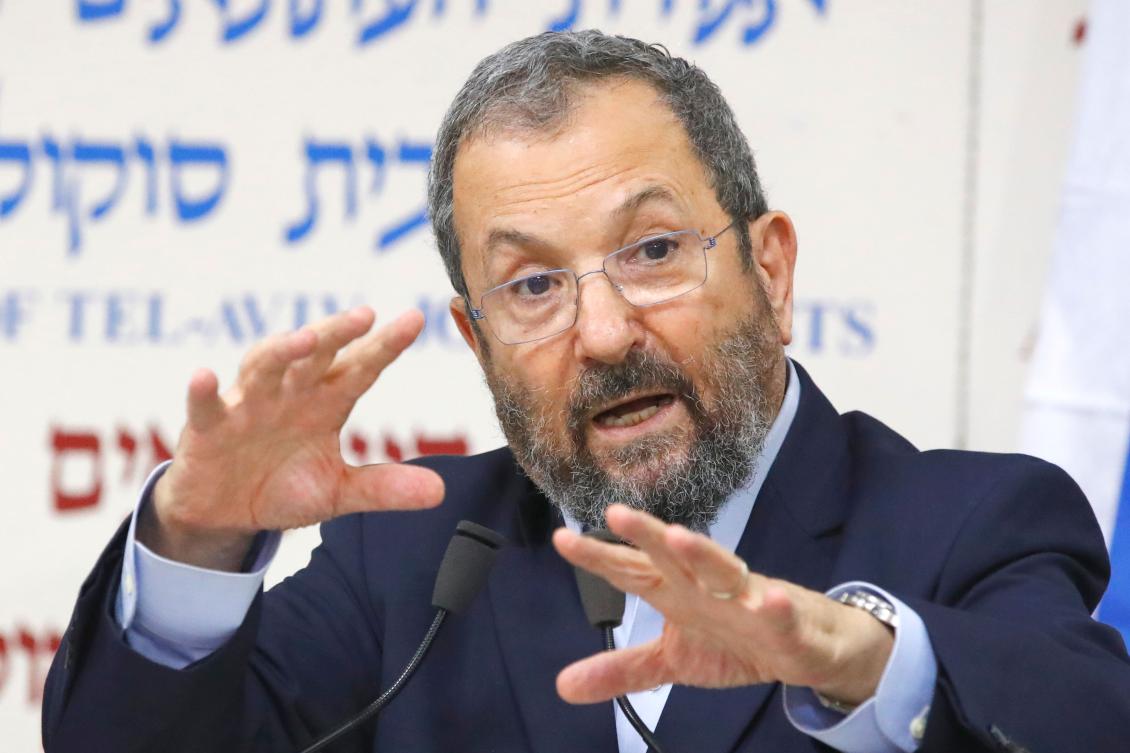
JERUSALEM: A former Israeli prime minister is apologizing for the killing of 13 Arab protesters by Israeli police in 2000.
Ehud Barak, who has made a political comeback ahead of September’s elections, said Tuesday in an Israel Radio interview that “there is no place for protesters to be killed by their country’s security forces.”
Barak was responding to an op-ed written by a parliament member from the left-wing Meretz party who called on him to apologize for the October 2000 killings, which came in the opening weeks of the second Palestinian uprising, when he was serving as prime minister.
Barak’s campaign hinges on uniting liberal parties in a bid to oust Benjamin Netanyahu, Israel’s longest-serving prime minister.

Main category: 


Iraqi forces clear farmland near Baghdad of Daesh militants

Author: 
Associated Press
ID: 
1563887833703498700
Tue, 2019-07-23 12:59

TARAMIYAH: Iraqi security forces are sweeping villages and farmland north of Baghdad as part of an operation aimed at clearing remaining militants belonging to the Daesh group from around the country’s capital.
A military helicopter flew over army units in the area as troops on the ground searched for weapon caches and bombs in farmland in Taramiyah on Tuesday. The area is about 50 kilometers, or 31 miles, north of Baghdad.
The dragnet is part of the operation dubbed “Will to Victory,” which started two weeks ago along the border with Syria and was extended last week to areas north of Baghdad and in the Diyala, Salahuddin and Anbar provinces.
Although Iraq declared victory against IS in July 2017, the extremists continue to carry out attacks around the country.

Main category: 
Tags: 


Iraq exhumes bodies thought to be Kurds killed by Saddam

Author: 
AFP
ID: 
1563884183953076100
Tue, 2019-07-23 12:08

BAGHDAD: Iraq on Tuesday began exhuming the remains of dozens of victims, including children, likely killed during ex-dictator Saddam Hussein’s campaign against the country’s Kurds, a forensics official told AFP.
The mass grave was uncovered in Tal Al-Sheikhiya, about 300 kilometers (200 miles) south of Baghdad, said Zaid Al-Youssef, the head of Baghdad’s Medico-Legal Directorate which is tasked with identifying the remains.
“More than 70 bodies including women and children, ranging from newborns to 10 years old” have so far been exhumed, Youssef said.
Those remains were recovered from the surface layer of the site, he said, but “there could be a second deeper layer” with additional bodies.
“The evidence collected indicates they were summarily executed in 1988,” said Youssef, which coincides with Saddam’s brutal “Anfal” campaign against Iraq’s Kurds.
The operation took place between 1987 and 1988 and saw nearly 180,000 Kurds killed and more than 3,000 villages destroyed.
“The female victims were blindfolded and killed by gunshots to the head, but also have traces on various parts of their bodies of bullets that were fired randomly,” Youssef said.
The grave lies in the southern province of Mutahanna, also home to the notorious Nigrat Salman prison camp.
Many Kurds and political opponents of the previous regime were held there, and survivors shared tales of humiliation, rape and detention of minors as part of Saddam’s 2006 trial.
Iraq has been hit by wave after wave of conflict in recent decades, culminating in the fight against the Daesh group which ended in late 2017.
Those years of conflict left grave sites all across the country where the remains of thousands of victims from Iraq’s diverse ethnic and religious communities have been uncovered.
IS alone left behind an estimated 200 mass graves that could hold up to 12,000 bodies, the United Nations has said.
Authorities are testing remains from the most recent conflict as well as wars dating back three decades in an effort to identify the fates of missing Iraqis.
According to Iraqi authorities, Saddam’s regime forcefully disappeared more than one million people in the 1980s and 1990s, and many of their families are still trying to find out what happened to them.

Main category: 
Tags: 

More Basra water crises unless Iraq government fixes ‘failures’Iraqi forces launch anti-Daesh operation north of Baghdad


Israel says 12 Palestinian buildings destroyed in controversial demolition

Author: 
AFP
ID: 
1563881248472676600
Tue, 2019-07-23 11:09

JERUSALEM: Israel said Tuesday a total of 12 Palestinian buildings it considered illegally constructed were demolished in a controversial operation the previous day, while a UN preliminary assessment showed 24 people displaced.
The demolitions of Palestinian homes, most of which were still under construction, drew condemnation from the European Union and UN officials.

Meanwhile, Saudi Arabia condemned on Tuesday Israel’s demolition, urging world powers to “stop this aggression”.
“The cabinet strongly condemned and denounced authorities of the Israeli occupation for the demolition of dozens of houses in… east Jerusalem,” said a statement carried by the official Saudi Press Agency.
“It called on the international community to intervene to stop this aggression and dangerous escalation that targets Palestinians.”
Israel says the homes south of Jerusalem were built too close to its separation barrier cutting off the occupied West Bank, posing a security risk, and the demolitions were approved by its supreme court following a lengthy process.
Palestinian leaders expressed outrage at the demolitions in the Sur Baher area, which straddles the occupied West Bank and Jerusalem.
They note that most of the buildings were located in areas meant to be under Palestinian Authority civilian control under the Oslo accords of the 1990s.
Before dawn Monday, hundreds of Israeli police and soldiers sealed off buildings in the area while residents and activists were dragged out.
A statement from Israeli defense ministry unit COGAT said “12 buildings and two building foundations were demolished,” adding that they were “built illegally.”
Israel’s supreme court “ruled that the buildings may be demolished as they constitute a security danger to the area of the security fence,” the statement said.
UN humanitarian agency OCHA said a preliminary assessment showed 24 people, including 14 children, were displaced.
More than 300 people were affected by the demolitions, it said.
Prior to the demolitions, OCHA said the buildings were to include some 70 apartments. It said those being displaced were from three households.
On June 18, a 30-day notice was given by Israeli authorities informing of their intent to demolish the buildings.
Residents fear another 100 buildings in the area in a similar situation could be at risk in the near future.
Israel occupied the West Bank and east Jerusalem in the 1967 Six-Day War. It later annexed east Jerusalem in a move never recognized by the international community.
It began construction of the separation barrier during the bloody second Palestinian intifada, or uprising, in the early 2000s and says it is necessary to protect against attacks.
Palestinians see it as an “apartheid wall” and a potent symbol of the Israeli occupation.

Main category: 

Israeli investigations into deaths of Palestinians often reach nowherePalestine Cup postponed due to Israeli travel restrictions


Tunisia toils to find final resting place for drowned migrants

Author: 
Kaouther Larbi | AFP
ID: 
1563814303137712200
Mon, 2019-07-22 14:29

GABES: A putrid odour lingers outside a morgue in Tunisia’s coastal city of Gabes as dozens of bodies of would-be migrants to Europe pulled out of the sea await burial.
A string of deadly shipwrecks since May have left the North African country overwhelmed with bodies and struggling to find them a final resting place.
More than 80 drowned migrants have been retrieved from Tunisian waters — most of them victims of a deadly July 1 shipwreck that left only three survivors.
Fished out of the sea between the port city of Zarzis and the tourist island of Djerba in the south, their bodies were brought to Gabes hospital — the only facility in the region capable of taking DNA samples.
Under pressure from civil society groups, Tunisian authorities have stepped up efforts to systematically collect the DNA of each unidentified drowned migrant, hospital director Hechmi Lakhrech told AFP.
The samples could well be the only hope of informing the victims’ families of their fate, he added.
In the basement morgue, staff use surgical masks or simple scarves to fend off the stench of bodies stacked one top of the other on the floor.
Since July 6, the numbers have “overwhelmed” the morgue’s 30-body capacity, said Lakhrech.
With just two forensic doctors and two assistants, not to mention a lack of equipment, the facility is struggling to keep them properly stored, he added.
After forensic tests, the bodies are kept at the morgue until a burial site is found, which in Tunisia is complicated, according to Gabes governor Mongi Thameur.
Many municipalities have refused to allow the drowned migrants to be buried in their cemeteries.
“Some fear the bodies carry cholera, and others refuse to bury people in Muslim cemeteries if their religion is unknown,” he told AFP.
It comes down to “a problem of mentality and also of humanity in some cases,” he said, adding that many people needed to be “sensitised.”
At the Bouchama cemetery, the only one in Gabes to have so far accepted migrant bodies, 16 graves dug off to the side lie empty.
“My parents are resting here, I don’t want non-Muslims to be buried by their side,” said one local resident.
In front of the hospital, the stifling midday heat beats down as 14 white bags are carefully loaded onto the back of a garbage truck.
Once loaded, it will make the two-hour journey to Zarzis, where an improvised cemetery flooded with the bodies of migrants for several years is now full, and a new one has just been opened.
Each grave is marked with a simple plaque bearing the victim’s DNA file number and burial date.
“On July 12, we collected 45 bodies in one day!” said Zarzis deputy mayor Faouzi Khenissi, calling it a “phenomenal problem.”
The city has taken in the bodies “because we have this culture, we can’t just leave the remains unburied,” he said.
Zarzis is a hotspot for illegal departures to Europe and Khenissi says some of the city’s own youth have also been victims of the wrecks.
Municipal workers and officials take shifts volunteering after work to conduct the burials.
After three hours of prep under the blazing sun, 14 bodies are buried alongside the 47 others already laid to rest at the new site, just outside a shelter for rescued migrants.
Mongi Slim of the country’s Red Crescent called for “international mobilization” to address the issue which “does not concern Tunisia alone.”
“The country is already struggling to take care of rescued migrants, but even more so for those who’ve died.”
Main category: 
Tags: