Russian-backed regime forces recover area in northwestern Syria

Author: 
Mon, 2019-07-29 22:31

BEIRUT: Syrian regime forces have recovered control of two villages in northwestern Syria from militants who withdrew following intensive air and artillery bombardment, the Syrian Observatory for Human Rights said on Monday.

Fighters captured the villages of Al-Jabin and Tel Melah in northern Hama province in early June during a counterattack against regime forces that have been waging a Russian-backed offensive in the area since late April.

An opposition commander in the area confirmed that fighters had withdrawn from Al-Jabin after heavy bombardment.

The pro-Damascus Al-Watan newspaper said the Syrian army had advanced in the area as Syrian and Russian warplanes targeted militant positions and after several days of preparatory fire.

More than 400 civilians have been confirmed killed in the escalation of violence in northwestern Syria over the last three months and more than 440,000 displaced, the UN Office for the Coordination of Humanitarian Affairs said last week.

Ongoing shelling and airstrikes included the use of “indiscriminate weapons, such as barrel bombs,” it said. 

The use of these weapons, which are dropped from helicopters, by the Syrian regime troops has been widely recorded in the eight-year conflict.

The targeted area is part of the last major foothold of the revolution against President Bashar Assad, who has vowed to take back “every inch” of Syria.  However, his side has failed to make significant gains during the latest campaign.

The Idlib area of the northwest is dominated by Tahrir Al-Sham, the extremists formerly known as the Nusra Front. It is proscribed as a terrorist group by the UN Security Council. Groups backed by Turkey also have a presence in the area.

The Syrian regime has described its operations as a response to militant violations of cease-fire agreements.

Meanwhile, a US-led coalition airstrike killed five terrorists in eastern Syria, a spokesman said, in the first such raid since the collapse of the Daesh’s “caliphate.”

“Coalition forces conducted a strike against a Daesh cell near Busayrah,” a town in Deir Ezzor province, said coalition spokesman James Rawlinson.

The five terrorists were all Syrian, according to the Observatory.

The head of the UN special probe into Daesh’s crimes has called for trials like those at Nuremberg of Nazi leaders to ensure the terrorists’ victims are heard and their ideology “debunked.”

For a year, British lawyer Karim Khan has traveled around Iraq with a team of almost 80 people to gather evidence and witness testimony for the UN body known as UNITAD.

“It’s a mountain to climb,” the human rights specialist said, as the investigative team works to analyze up to 12,000 bodies from more than 200 mass graves, 600,000 videos of Daesh crimes and 15,000 pages from the group’s bureaucracy.

Five years ago, when their self-proclaimed “caliphate” spanned territory the size of the UK, the terrorists imposed their brutal rule over 7 million people across Iraq and Syria with administrations, schools, child soldiers, a severe interpretation of their ideologies and medieval punishments.

Daesh “was not some kind of guerilla warfare or a mobile rebel group … that’s one aspect that is unusual” for international justice, Khan said from the ultra-secure UNITAD headquarters in Baghdad.

“There was no taboo” for Daesh, Khan said.

“Who could have thought in the 21st century we would see crucifixion or burning a human alive in a cage, slavery, sexual slavery, throwing people off buildings, beheadings.”

And all this captured “with a TV camera.”

Despite the horror, these crimes “are not new,” he said. 

“What is new perhaps with Daesh, is that the ideology fuels the criminal group in the same way that fascism fueled the criminal pogroms of Hitler.”

Today almost every day Iraqis are sentenced, often to death, but the victims are not present at the trials and the only charge brought is belonging to Daesh.

But Khan said trials where evidence and testimony are exposed to everyone are the only way to turn the page.

After Daesh, “Iraq and humanity requires its Nuremberg moment,” he said.

Because of Nuremberg, “nobody could be taken seriously if they would espouse the principles of Mein Kampf (written by Adolf Hitler). In fact alarms bells in the public conscience would be aroused if anybody thought the principles of fascism were an alternative political philosophy,” he added.

Nuremberg also “separated the poison of fascism from the German people,” according to Khan.

“It was one of the principles of Nuremberg that there is no collective guilt,” but individuals held responsible, and condemned.

A fair trial for Daesh “can also contribute to separating the poison of IS from the Sunni community,” a minority group in Iraq, Khan said.

And where “Nuremberg also educated Germany (and) Europe,” a Daesh trial would have an “educative effect, not only in the region, but in other parts of the world where communities may be vulnerable to the lies and propaganda of” Daesh.

“That ideology can be debunked, so people that are watching … can realize a self-evident truth, that it was the most un-Islamic state that we have seen,” Khan added.

UNITAD is working to establish if Daesh actions constitute crimes against humanity, war crimes or genocide, the most serious crimes in international law.

“You will see in the next two months that we are feeding into some prosecutions that are already taking place in some states,” he added.

UNITAD “will build our own cases also” that will permit states which like Germany have universal jurisdiction to deal with crimes regardless of where they were committed and the nationality of the perpetrators and victims.

Some trials are already in motion, notably in France for attacks claimed by Daesh and in Munich where a German woman has been charged with having left a young Yazidi girl “purchased” at a Daesh slave market to die of thirst.

But, Khan said, “Iraq is the primary intended recipient of our evidence, of our information.”

Iraq has already tried thousands of its own nationals arrested on home soil for joining Daesh and has sentenced hundreds to death, whether they fought for the group or not.

“The forum is not so important,” Khan said, as the possibility of an international tribunal has been raised by some but seems unlikely in the near future.

What is essential is that “the victims have the right to have their voice heard.”

Main category: 

Air strikes kill 15 civilians in northwest SyriaSyria’s Rukban camp dwindles after five-month Russian siege



School students shot dead at Sudan rally ahead of talks

Author: 
Mon, 2019-07-29 21:32

KHARTOUM: Four Sudanese school students were among five demonstrators shot dead Monday during a rally against shortages of bread and fuel, a day before protest leaders and ruling generals are set to hold new talks on the country’s transition.
Authorities announced a night-time curfew in four towns following the deaths in the central town of Al-Obeid, as a key protest group called for nationwide rallies against the “massacre.”
The ruling military council and protest leaders earlier this month inked a power-sharing deal providing for a joint civilian-military administration which in turn would install civilian rule.
That is the main demand of a nationwide protest movement that led to the April ouster of longtime leader Omar Al-Bashir and has since demanded that the generals who took his place cede power to civilians.
But on the eve of Tuesday’s talks aimed at resolving outstanding issues over the transition, five protesters were killed in Al-Obeid, the capital of North Kordofan state, said a doctors’ committee linked to the protest movement.
“Five martyrs succumbed to direct wounds from sniper bullets during a peaceful rally in Al-Obeid,” the committee said in a statement.
Prominent protest leader Babikir Faisal told AFP that the dead included “four high school students.”
Al-Obeid residents and a local journalist also confirmed that the dead included high schoolers.
A key protest group, the Sudanese Professionals Association, said “live ammunition” had been used against a “rally of school students.”
In a post on its Facebook page, it urged “all citizens and medics” to head to hospitals treating the wounded.
In a separate statement, it called for nationwide protests against the “massacre,” demanding that “the perpetrators be brought to justice.”
Hundreds of protesters later rallied in Khartoum’s two districts of Bahri and Burri, but they were swiftly confronted by riot police who fired tear gas, witnesses said.
The office of North Kordofan’s governor announced an overnight curfew in four towns including Al-Obeid, starting Monday and continuing indefinitely.
It added that all schools in the province had been told to suspend classes.
Residents of Al-Obeid said the rally had been over a shortage of bread and fuel in the town.
It was a sudden tripling of bread prices that initially triggered December protests against Bashir, which later turned into a nationwide movement against his three-decade rule.
“For the past few days there has been a shortage of fuel and bread,” an Al-Obeid resident told AFP by telephone.
“School children were affected as there is no transport to help them reach their schools. Today, they staged a rally and when it reached downtown there were shots fired.”
The town had not previously witnessed major rallies against Bashir even as provinces, cities and towns were swept up by the campaign against his rule.
Monday’s deaths sparked calls for talks set for Tuesday to be suspended.
“We cannot sit at the negotiating table with those allowing the killing of revolutionaries,” Siddig Youssef, a prominent protest leader, said in a statement.
Tuesday’s talks were set to cover issues including the powers of the joint civilian-military ruling body, the deployment of security forces and immunity for generals over protest-related violence, according to protest leaders.
The power-sharing deal agreed on July 17 provided for the establishment of a new governing body of six civilians and five generals.
It was then to oversee the formation of a transitional civilian government and parliament to govern for 39 months, followed by elections.
Khartoum has seen angry demonstrations since Saturday, when investigators announced the results of a probe showing into a deadly crackdown on a protest camp.
Shortly before dawn on June 3, gunmen in military fatigues raided the site of a weeks-long sit-in outside the military headquarters in Khartoum, shooting and beating protesters.
Doctors linked to the protest movement say the raid left 127 people dead and scores wounded.
But the joint investigation by prosecutors and the ruling military council that took power following Bashir’s ouster found that just 17 people were killed on June 3, with a total of 87 dying between that day and June 10.
The probe identified eight officers involved in the violent crackdown on the protest camp, including three from the feared Rapid Support Forces paramilitary group.
But protest leaders have rejected the findings, saying the inquiry exonerated the military council and gave a far lower death toll than their own figures.
The investigation “was commissioned by the military council, this is challenging its integrity as the military council itself is accused in this case,” said the Sudanese Professionals Association.
Demonstrators have called for an independent investigation into the raid.
The country’s ruling generals have insisted they did not order the dispersal of the sit-in.

Main category: 

Sudan says 87 killed when security forces broke up protest in JuneSudan protest leaders, rebels end rift over power deal


Right-wing alliance, Arab bloc formed ahead of Israeli vote

Author: 
Associated Press
ID: 
1564421845150069000
Mon, 2019-07-29 15:46

JERUSALEM: A group of religious nationalist parties in Israel announced Monday that they would run together in the upcoming parliamentary elections, the same day four Arab political parties formalized a merger of their own.
The United Right, headed by former Justice Minister Ayelet Shaked, is the third political alliance formed in recent days ahead of this week’s deadline to finalize party lineups for the September 17 vote. It is expected to back Prime Minister Benjamin Netanyahu should he be tasked with forming a government, potentially helping him to secure a fourth consecutive term in office.
Israel faces an unprecedented repeat election in September after Netanyahu failed to form a majority coalition government following a vote in April.
Last week, former Prime Minister Ehud Barak and the left-wing Meretz party joined to form the Democratic Union. They hope to oust Netanyahu, who became Israel’s longest-serving prime minister earlier this month.
Shaked, who assumed the leadership of her New Right party last week, will also head the newly formed United Right, a constellation of religious nationalist parties.
“Weeks of efforts bore fruit today. We united right wing parties for a joint run,” Shaked wrote on Twitter. Her New Right party failed to garner sufficient votes to enter the Knesset, Israel’s parliament, in April’s elections.
The right-wing bloc was announced a day after the Palestinian nationalist Balad party said it would join a reunited Joint List of Arab parties, months after infighting fragmented the political alliance, in order to “increase Arab representation in parliament.”
Ayman Odeh, head of the Hadash party, said Monday that now that the parties have reunited, they can address the “great challenge” facing the country’s Arab minority.
Israel’s Arab population mainly consists of Palestinians who remained in Israel after its creation in 1948 and their descendants, and makes up around a fifth of Israel’s population. They largely identify with the Palestinians and have long complained of discrimination.
Polls published last week projected that the Joint List could become the third largest party in the Knesset, Israel’s parliament, after the September elections.
The four factions first united in 2015, earning 13 seats in the 120-seat Knesset. But infighting later split the Joint List into two parties, which only won a combined 10 seats amid low Arab turnout in April’s election. Around 49% of Arabs cast ballots, down from 64% in the 2015 election.

Main category: 


UN calls for Eid truce in Libya, warns foreign support fueling conflict

Author: 
Mon, 2019-07-29 20:09

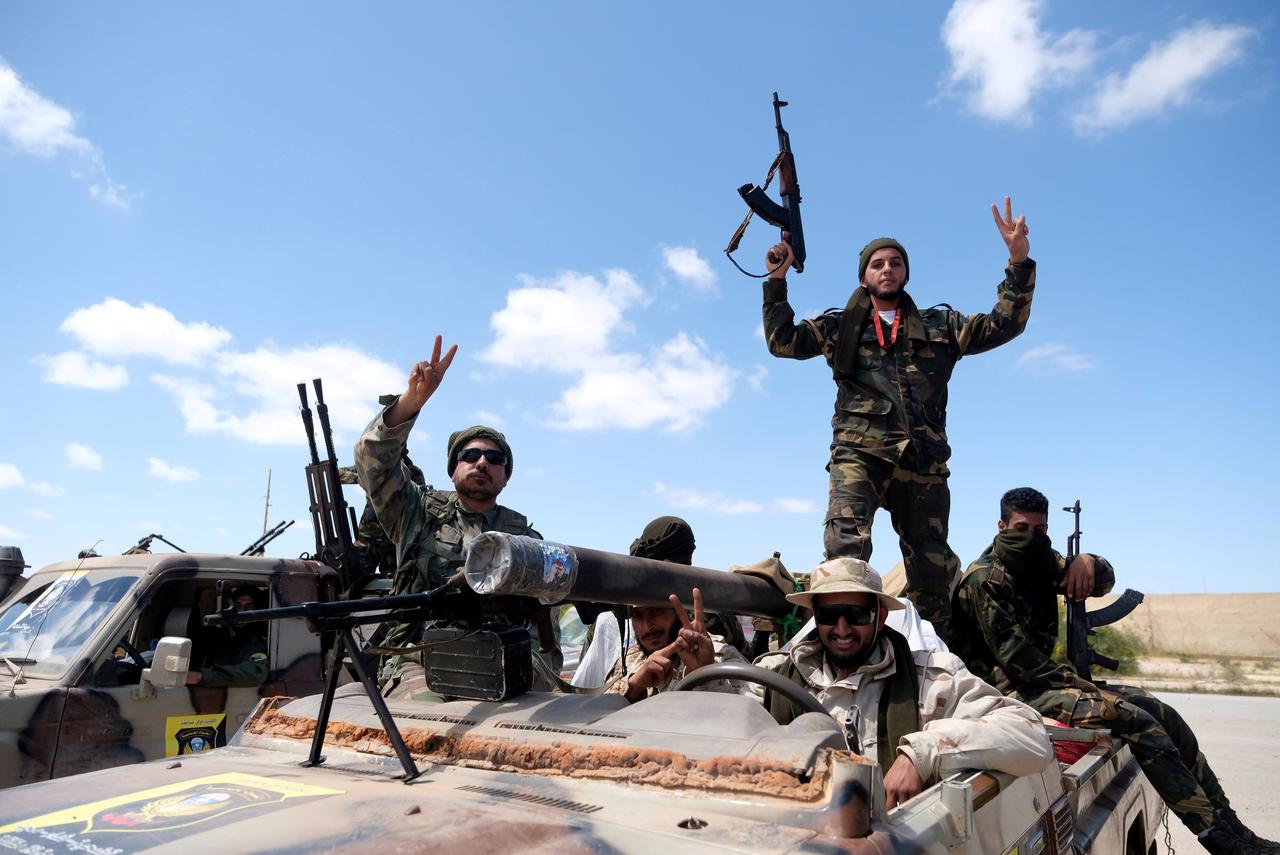
UNITED NATIONS: A United Nations envoy called on Monday for a truce to be declared in Libya around Aug. 10, and warned that an influx of weapons from foreign supporters in violation of an arms embargo was fueling the conflict.
The truce should be declared to mark the Muslim Eid Al-Adha holiday, UN Libya envoy Ghassan Salame told the Security Council, and be accompanied by confidence-building moves like an exchange of prisoners and remains and release of those arbitrarily detained.
Libya has been riven by violence since the fall of Muammar Qaddafi in 2011.
“In the course of the current fighting, serious violations of international human rights and humanitarian law by all parties have been committed,” Salame told the 15-member Security Council.
“More than ever, Libyans are now fighting the wars of other countries who appear content to fight to the last Libyan and to see the country entirely destroyed in order to settle their own scores,” he said.
“Armed drones, armored vehicles and pickup trucks fitted with heavy armaments, machine guns, recoilless rifles, mortar and rocket launchers, have been recently transferred to Libya with the complicity and indeed outright support of foreign governments,” Salame said.
Following a truce, Salame proposed a high-level meeting of concerned countries be convened to “cement the cessation of hostilities, work together to enforce the strict implementation of the arms embargo to prevent the further flow of weapons to the Libyan theater; and promote strict adherence to international humanitarian and human rights law by Libyan parties.”
He said this should then be followed by a meeting of leading and influential Libyans to agree on a way forward out of the conflict.
“This triple action will require consensus in this council and among the member states who exert influence on the ground,” Salame said.
In a statement earlier this month, the UN Security Council called for the warring parties to commit to a cease-fire and urged other countries not to intervene or exacerbate the conflict.
Britain’s UN Ambassador Karen Pierce said the council would discuss Salame’s proposals to work out how best the body could support the United Nations.
The Security Council has struggled to unify on how to deal with the renewed violence.

Main category: 

Airstrike on Libyan hospital leaves 5 dead, say officialsLibya militia says arrests Al-Qaeda leaders


Turkish students given text books justifying 9/11 attacks, slamming ‘weak’ EU – mirroring Erdogan views

Author: 
daniel fountain
ID: 
1564343418153473100
Sun, 2019-07-28 22:51

LONDON: A modern history text book for Turkish public school students appears to justify the Sept. 11 attacks in the US by Al-Qaeda and labels the European Union a “Christian club”, according to a report in Nordic Monitor.
The article from NM, a group that covers religious, ideological and ethnic extremist movements and radical groups, also shows that the text-book — which mirrors speeches by Turkey’s president Recept Tayyip Erdogan — contains text criticizing the NATO alliance.
The book, used by twelfth-grade students in public schools in Turkey, says among its pages: “The US, which has more say with the self-confidence it gained in the aftermath of the Cold War but complies less with international agreements, has started to see itself as one above equals in international relations.
“From that point forward, deciding which countries would be punished and what systems would be changed relied on definitions and references made by the US. These practices by the US are one of the reasons behind the Al-Qaeda terrorist organization’s attack on 9/11.”
According to the text book, the US became “the main source of problems in the world with what it did in the aftermath of September 11,” and is seeking to secure the “absolute dominance” of the international system.
The book also takes aim at the Pope and the European Union for denying Turkey’s membership of the bloc — slamming the “denial of membership to Turkey, a predominantly Muslim nation, while accepting (other) democratically and economically weak states,” which it said raised questions about the identity of the EU.
Within the same section, the book features a photo of EU leaders and the Pope in 2017 as they gathered in Rome to mark the 60th anniversary of the Treaty of Rome, with a caption from British-Polish historian Norman Davies: “I am talking about the common tradition of Christianity, which has made Europe what it is.”
Erdogan referenced the photo during his 2017 presidential referendum rallies and said it proved western Europe was “hostile to Islam.”
The book’s criticism of NATO stretches to the group’s multilateral foreign policy, which it claims has destroyed Turkey’s defense industry and has made Turkey “dependent on US military aid.”
Critics of the text book say school children in Turkey are being force-fed the rhetoric spread by Erdogan and his party at a young age.

Main category: 

Warning to Turkish artists as singer is jailed for ‘insulting’ ErdoganTurkish leader Recep Tayyip Erdogan faces new threat from former allies