Disaster warning over ‘ticking time bomb’ Yemen tanker

Author: 
AFP
ID: 
1567010764698985800
Wed, 2019-08-28 16:27

DUBAI: An abandoned oil tanker anchored off war-torn Yemen that is degrading along with its cargo could explode and cause an environmental disaster, experts said Wednesday as UN inspectors prepared to visit.
The ship “Safer,” used as a floating storage platform, is laden with some 1.1 million barrels of crude oil and has been stranded with no maintenance since early 2015, leaving it to deteriorate and potentially allowing explosive gases to build up.
United Nations spokesman Stephane Dujarric said Tuesday that a technical assessment team was waiting in nearby Djibouti preparing to board the Safer for a first-hand evaluation.
“We expect the assessment to start either later this week or early next week. There are obviously some technical preparations that need to be made,” he told reporters in New York.
The UN team’s visit has been delayed for months as the Houthi rebels who control Ras Issa port, where the ship is anchored, had refused to allow the mission in a dispute over claims for revenues from the oil worth millions.
But Dujarric said the United Nations has obtained permission from both Yemen’s internationally-recognized government and the rebels to examine the vessel.
The structure of the tanker has had no maintenance at all since the Yemen war started, he said.
Dujarric warned that an “environmental catastrophe” could result “if something were to happen to the tanker.”
The aim of the mission is to evaluate the condition of the vessel, perform an initial basic maintenance and assess what could be done technically to strengthen the ship’s structure.
The CEO of global maritime consultants I.R. Consilium described the situation as extremely alarming and characterised the ship as a ticking time bomb.
“The situation is serious and this matter will unfold into a crisis if urgent, decisive and effective action is not taken,” Ian Ralby told AFP.
A report issued by Consilium said the vessel “has turned into a massive bomb capable of explosion due to its contents and lack of maintenance.”
The risk of explosion increased by the day and if it happened, “it would create an environmental crisis four and a half times the size of the Exxon Valdez oil spill,” it said.
The report was referring to the 1989 disaster when a tanker spilt some 260,000 barrels of oil into pristine Alaskan waters.
The United Nations has warned that if the Safer ruptures, it could block maritime trade through the Red Sea, which accounts for up to 10 percent of world trade.
It could also threaten the daily passage of some 5.5 million barrels of oil, contaminate drinking water and damage the marine environment across the Red Sea, the Gulf of Aden and parts of Gulf waters.
The head of Kuwait’s Greenline Environmental Group, a private NGO, warned that any catastrophe would likely hit waters of Yemen, Saudi Arabia, Sudan, Egypt, Djibouti, Somalia and Eritrea.
“The environmental system of the Red Sea is at risk of catastrophe if the oil leaks into the sea… It would lead to a large-scale death of fish and birds,” Khaled Al-Hajjeri told AFP.

Main category: 
Tags: 

UN confirms support for Yemeni government’s efforts in the southHouthis destroy UN food aid after blocking it from delivery in Yemen


Sudan starts trial of agents linked to teacher death: lawyer

Author: 
Wed, 2019-08-28 19:43

OMDOURMAN, Sudan: Sudan began the trial on Wednesday of 41 security agents accused of involvement in the death of a teacher held in custody, a lawyer said.
Ahmed Al-Kheir, 36, died in prison after his arrest in January by members of the feared National Intelligence and Security Services (NISS), used by now-ousted veteran leader Omar Al-Bashir to crush dissent.
Kheir was detained in his village of Khashm El-Girba, in the eastern province of Kassala, on allegations of organizing anti-Bashir protests.
Days after his arrest, Kheir’s family was told to collect his body from a local mortuary.
His death fueled protests against Bashir who was toppled in April after months of mass rallies against his iron-fisted rule.
“Trial proceedings for the 41 NISS agents started,” said lawyer Adel Abdelghani, adding that the case involves officers and other ranks.
“They are accused of subjecting the deceased Ahmed Al-Kheir to torture which led to his death,” he said.
The next trial will be held on September 3, according to an AFP correspondent who attended the session.
Under Bashir, the NISS oversaw repeated crackdowns on government opponents and the media, and launched a severe crackdown on the countrywide protests that erupted in December.
In July, the agency was renamed the General Intelligence Services.
Sudan has since embarked on a transition to civilian rule following a deal signed this month between protest leaders and the generals who seized power after Bashir’s ouster.
On August 21, the country swore in a joint civilian-military ruling body and a prime minister as part of the roadmap to guide the country through a three-year transitional period.
Bashir himself is now jailed at the maximum-security Kober prison in Khartoum, where thousands of political prisoners were held during his 30-years in power.
The former president is being tried over a raft of corruption charges.

Main category: 

Sudanese activists say tribal clashes killed 37 in port citySudan to name cabinet as tough challenges loom


Kuwait’s generosity boosts Syria’s food security

Author: 
Wed, 2019-08-28 01:27

DUBAI: Kuwait and the Food and Agricultural Organization (FAO) of the United Nations have teamed up to help farmers and herders in Syria recover from the setbacks dealt by war. This month, Kuwait contributed $3 million to benefit about 20,000 highly vulnerable people and their extended families by boosting their food security and nutrition situation. Kuwait is working with FAO to fight hunger and malnutrition and assist disaster-stricken communities in the Near East and North Africa (NENA) region and beyond, in countries such as Yemen, Somalia, South Sudan and Nigeria.
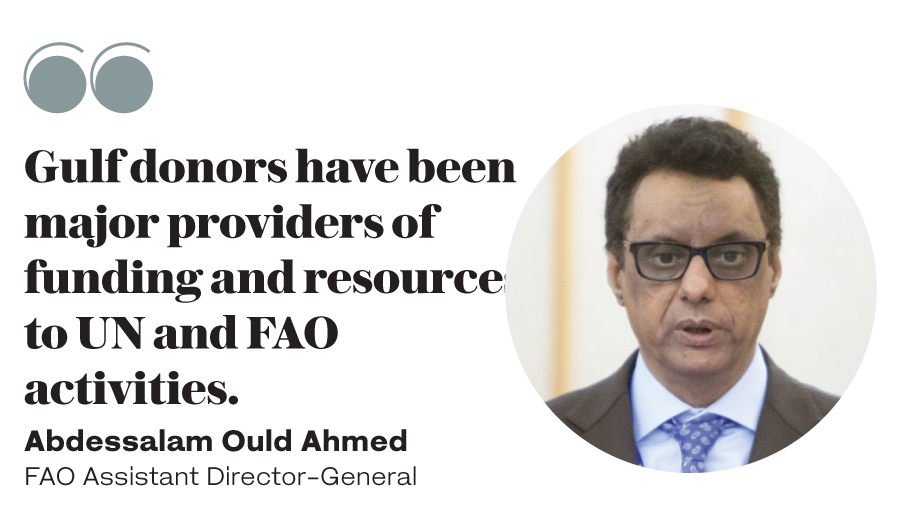
“There is an urgent need to strengthen cooperation between the Gulf, the United Nations and the international community to increase the resilience of the most vulnerable populations and jointly address the challenge of food insecurity in the region,” said Abdessalam Ould Ahmed, FAO assistant director-general and NENA regional representative.
“Beyond the structural causes of food insecurity, conflict has remained the single most important driving factor of food insecurity in the Arab region in recent years. Conflict undermines food security in multiple ways: destroying crops, livestock and agricultural infrastructure, disrupting markets and causing displacement and the spread of diseases.”
FAO has collaborated with Arab Gulf countries for more than 70 years. Currently, Saudi Arabia is among its top resource partners, and the number one in the Near East.
However, in recent years economic growth in several Arab countries has been adversely affected by conflict. According to FAO, “the protracted crisis in Syria, coupled with the most severe drought in decades, has severely weakened Syria’s agricultural production. This has led to more than 6 million people facing hunger and increasingly struggling to feed their families, and to high food prices.”
The still precarious political situation in Syria continues to fuel the largest refugee crisis in the world. Despite decreased levels of conflict in many areas, “within the country, 6.2 million people remain displaced, around 1.4 million have returned, and these returnees are in urgent need of resources and support,” Ahmed said.
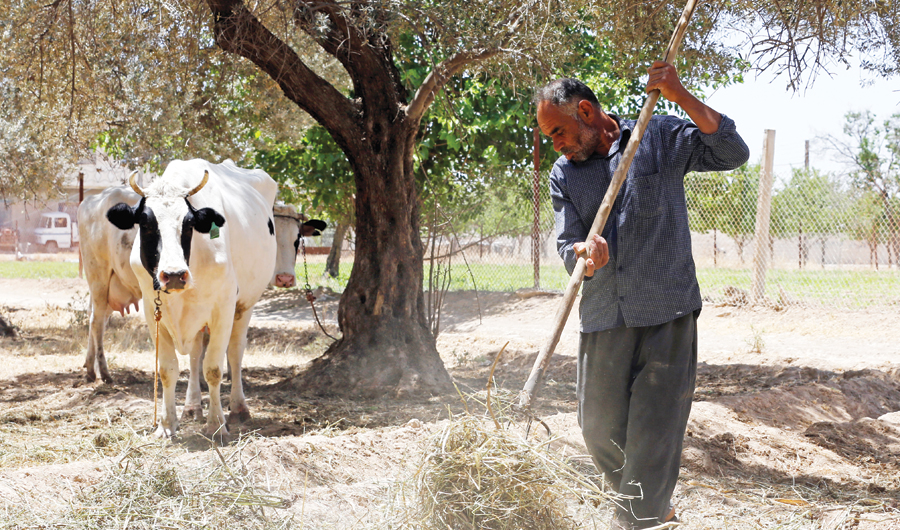
Kuwait’s contribution will go towards helping Syrian households headed by women and their extended families with vegetable seeds, irrigation kits and feed for their animals, as well as support to rehabilitate their fodder crop nurseries and training on best agricultural practices. FAO will carry out these activities in Syria’s Daraa, As-Sweida, Deir-Ez-Zor and Hama governorates. “Gulf donors have been major providers of funding and resources to UN and FAO activities aimed at supporting the affected populations in many areas: access to food, health, sanitations, livelihood support and others,” Ahmed told Arab News.
“Despite the conflict and violence, farmers are still on their land. They are in dire need of inputs, seeds and animal feeds, and they need access to markets.”
FAO’s primary focus is on building the resilience of farmers and affected communities. In 2018, it managed to reach three million people in Yemen and almost 273,600 Syrians, including cross-border operations. “The Kuwait contribution to the FAO programs in Syria and Yemen has been critical in this regard, and GCC countries can do a lot to support the expansion of the livelihoods programs,” Ahmed said.

INNUMBERS

$3m – Kuwait’s contribution to FAO

6.2m – people remain displaced in Syria

1.4m – Syrians have returned but in urgent need of resources and support

20m+ – Yemenis are food-insecure in 2019

“The NENA region is home to some of the biggest humanitarian crises in the world, which have been further complicated by conflict, water scarcity and climate change. Addressing this requires a collective effort.”
It is not Syria, however, but Yemen, in the Arabian Peninsula, that is at present the site of the world’s worst humanitarian crisis. More than 20 million Yemenis are food-insecure this year, including nearly 10 million who are on the brink of famine and starvation. Conditions in two thirds of all districts in Yemen are considered “pre-famine.”
Saudi Arabia and the UAE are supporting a project being implemented by FAO in Yemen that has benefited 4,200 local fishermen in Abyan, according to the UAE’s WAM news agency. It is being supported by the UN Office for the Coordination of Humanitarian Affairs (OCHA) and the Field Medical Foundation.
The project is part of a series of humanitarian and development projects supported by the two countries “through various international organizations which aim to improve the livelihoods of residents of areas damaged by the war started by the Iranian-backed Houthi militias.”
Ahmed spoke of a shared history and culture between the Gulf and many of the countries facing developmental and humanitarian crises. “While Gulf countries have made immense contributions to life saving, there is much to be done to ensure that livelihoods are saved and protected,” he said.
“Agriculture is a critical source of income and provides food and nutrition needs for affected households and their livestock.”
FAO uses the “resilience approach” in tackling hunger and food insecurity in the region through income generation and access to food; building agriculture assets; strengthening social safety nets; ensuring availability of basic services such as health, water and sanitation; and strengthening households’ ability to adapt.
“Any contribution can increase the resilience of households, communities and institutions to effectively prevent — and cope with — crises by providing viable livelihood opportunities in agriculture,” Ahmed said. “Contributing to the enhancing resilience of crisis-affected communities will help achieve the overall goal of improving food security and alleviating rural poverty in the region.”
Experts have described such contributions as crucial because along with money, time is also of the essence. Once farmers and herders have been displaced from their land, it becomes extremely difficult to go back and restart due to a lack of supplies and labor.
“More importantly, the dislocation causes severe physiological problems,” said Jeffrey Culpepper, chairman of UAE-based AgriSecura, which provides sustainable solutions for food-security purposes.
“Farmers and herders are deeply attached and tied to the land, usually generations of the same family. It’s an anchor for their existence, so getting them back and settled can’t be understated.” Culpepper said contributions such as those made by Kuwait can make the difference between return or life as a refugee.
“A factory worker can work anywhere but farmers and herders need land,” he said.
“The situation in the region is critical — every time you remove a farmer or herder from the land, that’s one less person producing food and one more needing to be fed from outside sources. “Right now, you have malnutrition rapidly gaining ground in the region, especially among children.”
Once a conflict ends, it can take years to get farmers and herders back on the land on which they traditionally depended for sustenance. “Kuwait’s assistance should jumpstart the recovery,” Culpepper said. “This is 2019 — the time of artificial intelligence and vast wealth in the hands of the 1 percent. Children should not be going hungry.”
Conflict resolution is of course the best solution to the problem, given that disruptions in food production happen quickly in conflict zones. Restoring food production can prove tough and, often remains out of reach, which reinforces the cycle of dependence on foreign food aid and increases malnutrition levels in conflict zones.
“Due to the unrest in Syria, agricultural production and farmers’ income were disrupted, which had detrimental social impact on their families and their communities,” said Dr. Khalil Ammar, principal scientist in hydrogeology and water resources management at the International Center for Biosaline Agriculture in Dubai.
“Unrest affects the livelihoods of millions of people in these countries, particularly the farmers who rely on agricultural production and livestock. In addition, natural disasters such as drought cause sharp declines in cereal and forage production, higher grain prices, environmental degradation, and migration of young people when coupled with conflict.”
Dr. Ammar said more efforts were needed to build resilience and reduce vulnerability through supporting planning for longer-term action and more investment for development.
“Several countries in the region need urgent support to mitigate the food and nutrition security crisis and restore the livelihoods of communities dependent on livestock and crops,” he said.

Main category: 

Syria’s Idlib clashes kill at least 60 fightersSyrian Kurdish YPG has withdrawn from some border positions — Kurdish authority


UN confirms support for Yemeni government’s efforts in the south

Author: 
Tue, 2019-08-27 23:55

RIYADH: The UN envoy to Yemen confirmed his support to the internationally recognized legitimate government on Tuesday for its efforts in restoring stability in the south of the country.
Martin Griffiths met with President Abd-Rabbo Mansour Hadi in Riyadh to discuss the government’s views on his proposal for the implementation of the Hodeidah agreement.
He praised the government in its “efforts to restore stability in the south and the need to respect Yemen’s state institutions.”
Griffiths also thanked Hadi for his “constructive leadership on Hodeidah.”
Saudi Arabia and the UAE on Monday formed a joint panel to support the cease-fire between Yemen’s government and southern separatist forces in Shabwah and Abyan.
Security Belt forces loyal to the separatist Southern Transitional Council (STC) took control of some institutions in Aden on Aug. 10 following deadly clashes with government troops that killed at least 40 people.
The tensions between the forces complicate the Yemen conflict as they are meant to be on the same side fighting against the Iran-backed Houthis.
UN spokesperson Stéphane Dujarric said that the Yemeni government and the Iranian-backed Houthi militia both sent their views on Griffiths’ proposal for an immediate cease-fire and the joint redeployment of troops from the ports of Salif, Ras Issa, Hodeidah and its city.
The UN envoy said the proposal was submitted to both sides in early August for consideration, “in order to generate the momentum required to implement the important and essential steps in the agreement.”
Griffiths said the agreement, also known as the Stockholm agreement as it was agreed in Sweden in December, allows the two sides to enter into a broader political process and for the Yemeni government and the Houthi militia to reach a deal.

Main category: 
Tags: 

Houthis destroy UN food aid after blocking it from delivery in Yemen Saudi Arabia, UAE urge new talks between Yemen’s government and southern separatists


Gazans despair over fuel tensions with Israel

Author: 
Wed, 2019-08-28 00:02

GAZA CITY: In the Gaza Strip, concerns are growing that war with Israel may be on the horizon once again.

Tension in the region is higher than normal, following a series of incidents that has led the Israeli Defense Force (IDF) to ramp up operations, coming, it says, in response to rockets fired by Hamas at the town of Sderot.

Palestinian fears have since increased as Israel has halved the amount of fuel allocated to Gaza’s only power plant.

Officials say the decision to cut fuel will have a negative impact on all walks of life in the Gaza Strip, but many people fear it could trigger further escalation and conflict.

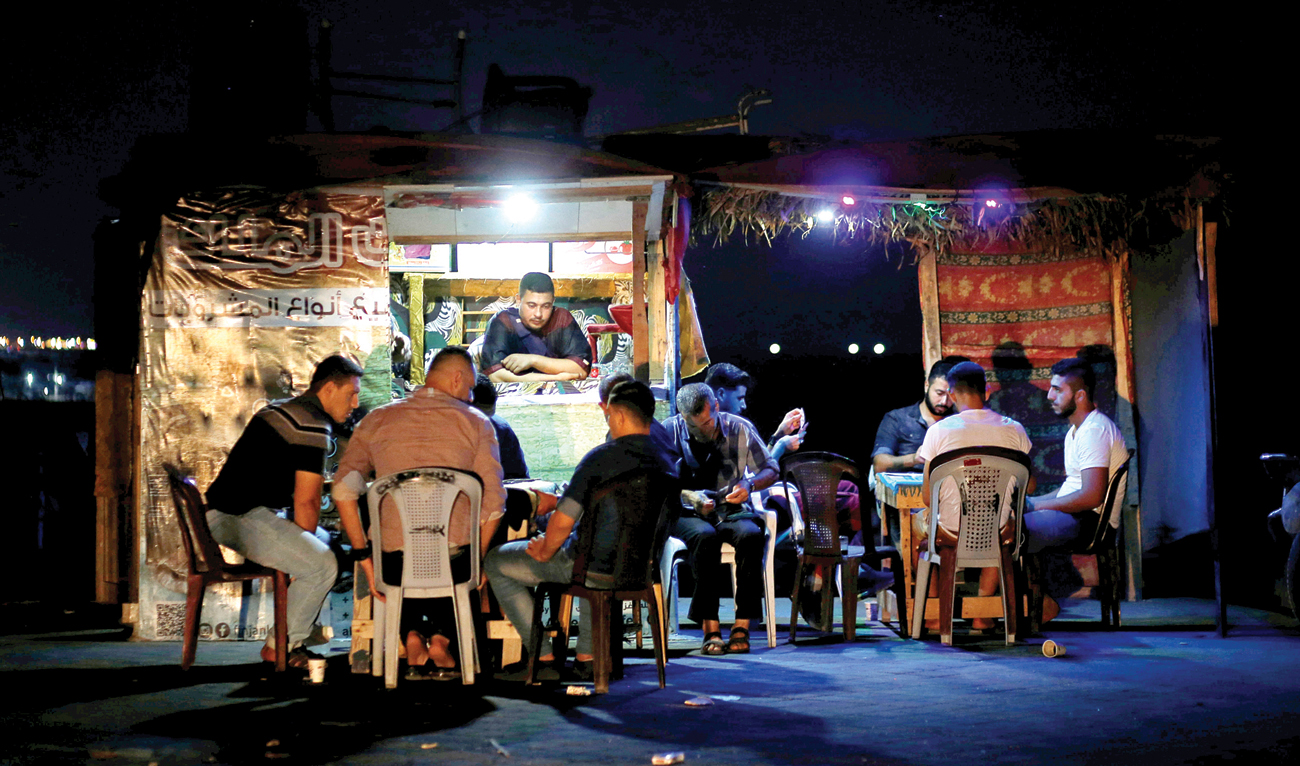
Mohammed Hamdi Al-Tuwaisi told Arab News he was concerned at the direction things were heading. “We live in a bitter enough reality in Gaza without war, let alone with wars like five years ago.” Al-Tuwaisi lost his job then, when the factory he worked in, for ready-mixed concrete, located east of Rafah in the southern Gaza Strip, was completely destroyed in 2014.

“The majority of people in Gaza are living in disastrous conditions because of poverty and unemployment, and a new war would be intolerable,” said Al-Tuwaisi, who supports a family of nine and lives in a modest home in a refugee camp in Rafah.

UN estimates indicate that more than half of the Gaza Strip’s 2  million people live on humanitarian aid, with unprecedented levels of poverty and unemployment.

Due to Israel’s decision to reduce the amount of fuel for the power plant, Al-Tuwaisi fears that he will lose his job again, this time at a local ice-cream factory in the southern town of Khan Younis.

He currently earns 30 shekels a day ($8.5), and says that in previous crises where the power plant stopped working, when electricity supplies were reduced, the factory owner had to cut employee numbers by more than half.

Mohammed Thabet, a spokesman for the Electricity Distribution Co. in Gaza, said that the electricity schedule would be negatively affected by the Israeli decision to reduce the amount of fuel supplied to the power plant.

Thabet estimated that the electricity would be limited to about 6 hours a day, should one of three generators working at the plant stop.The electricity needs of the Gaza Strip normally ranges from 450-500 megawatts, increasing during winter.

He warned of disastrous consequences for hospitals, sewage treatment plants, municipalities and other institutions that provide vital services should Israel not reverse its decision. The Israeli government coordinator in the West Bank and the Gaza Strip, Kamil Abu Rokon, said fuel delivered to the Gaza power plant through the Kerem Shalom commercial crossing would be reduced until further notice.

In response to the decision, Hamas spokesman Abdel-Latif Al-Qanoua called on mediators to stop the Israeli action, stressing that reducing fuel was a “collective punishment” of two million Palestinians which “would not
be tolerated.”

A Hamas delegation left for Cairo, which observers say is an attempt to calm the situation and prevent its deterioration, in light of Israeli threats that upcoming general elections scheduled next month would not prevent it from reacting strongly if rocket fire from Gaza continued.

Israeli affairs researcher Momen Mekdad believes that neither Hamas nor Israel are interested in war at the moment, but that this conviction may fade if Israel felt sufficiently provoked, as reflected by recent Israeli bombing in Lebanon, Syria and Iraq.

Main category: 
Tags: 

UN envoy warns West Bank, Gaza violence threatens regionIsraeli forces target Hamas sites in Gaza after Palestinian mortar fire, two killed in separate blast