CAIRO: Sudan’s state-run news agency says a head-on collision between two buses has killed 21 people in a central province.
SUNA reports the crash took place on Wednesday in a small town south of Obeid, the capital of North Kordofan Province. It said 29 others were injured.
Local media say one bus was heading to Kaduqli, the capital of South Kordofan Province, and the other was traveling to Obeid.
Road accidents are common in Sudan, often the result of badly maintained roads and poor enforcement of traffic laws. The World Health Organization said road accidents killed more than 10,000 people in Sudan in 2018.
Last month, a similar crash between two buses killed 15 people and left 22 others injured on a highway south of the capital, Khartoum.
South Sudan says will host peace talks between Sudan and rebels
How Saudi Arabia is leading Middle East’s fight against breast cancer
Wed, 2019-10-16 22:16
ABU DHABI: Breast cancer remains the most common form of the disease among women despite major advances in treatment coupled with improved screening and awareness campaigns.
Rates of the disease are increasing in nearly every region globally as aging populations and factors such as obesity take their toll.
In 2018, more than 2 million new cases were reported worldwide of what is one of the biggest and most preventable killers of women.
Dr. Samer Abushullaih, an oncologist and physician manager at Johns Hopkins Aramco Healthcare in Dhahran, said that despite rising detection rates and the introduction of cutting-edge technology, health experts cannot afford to be complacent.
“In the past 20 years we have seen major advances in the survival of breast cancer patients around the world,” he told Arab News.
“It has been an amazing journey of heightened awareness, technological advances and changes in culture. Unfortunately, we are a long way away from defeating the disease.”
The Middle East is forecast to experience the fastest increase in cancer rates globally over the next two decades. By 2030, prevalence of breast cancer is expected to be double what it was in 2012, according to experts at the War on Cancer Middle East.
Regionally, Lebanon has the highest incidence among Arab countries, followed by Bahrain and Morocco. In the UAE, cancer is the third-biggest cause of death, with breast cancer being the most prevalent type.
As the world marks Breast Cancer Awareness Month, experts say that Saudi Arabia is leading the fight against the disease regionally. Even so, cancer incidence rose in the Kingdom by 49 percent between 2008 and 2017, and breast cancer remains the most common form of the illness among women.
FASTFACTS
2.1 MILLION – women diagnosed with breast cancer worldwide each year.
627,000 – An estimated 627,000 women died of breast cancer in 2018. (WHO)
50 – Women over 50 years old affected most, but younger women also at risk.
Abushullaih said that the Eastern Province of Saudi Arabia has the largest number of breast cancer patients in the country .
“The use of 3D mammography and advanced MRI images have improved early detection,” he said, adding that treatment of breast cancer has evolved significantly in the past few years.
“Surgery moved from the traditional mastectomy and lymph node dissection to more cosmetically friendly procedures such as lumpectomies and sentinel lymph node biopsy,” he said.
“Also, the new techniques of oncoplastic surgeries, such as skin sparing and nipple sparing mastectomies, spare a lot of women the physical and emotional agony of losing their breasts.”
According to Abushullaih, advancements in molecular profiling have improved the understanding of breast cancer. Physicians can tell who needs chemotherapy, sparing those who do not the dreaded side effects.
Drug development has also evolved in the field of targeted therapy. Medicines such Herceptin, suitable for women with a particularly fast-growing form of the disease, cut the risk of cancer returning by up to half. Tamoxifen, designed as a contraceptive, is now used to prevent breast cancer in women at high risk.
“These are drugs that target the cancer cells and spare the normal cells,” said Abushullaih.
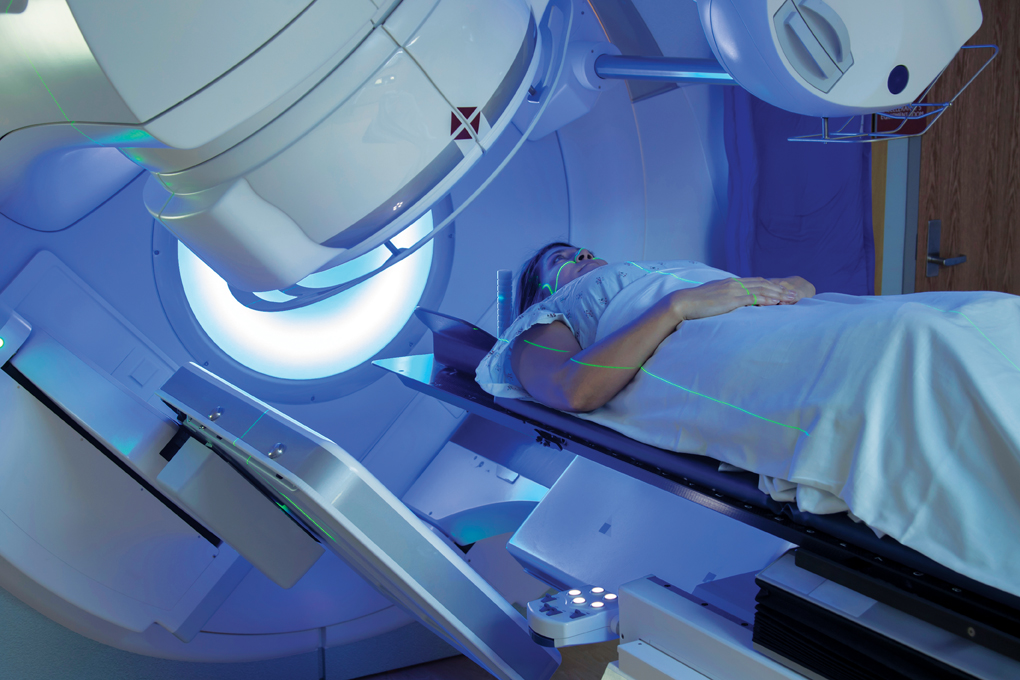
He said that new medicines, targeted therapies such as radiotherapy, and advances in surgery, along with screening, have expanded the resources available to beat breast cancer.
“On the horizon, research and advances in immunotherapy, where the body’s immune system works with medication to fight the disease, are promising to advance survival and cure rates,” said Abushullaih.
When it comes to Saudi Arabia, Abushullaih said: “The Kingdom is in the lead in the fight against cancer and other diseases, both in the GCC and the Middle East.”
Early detection rates for breast cancer are relatively low in the Gulf. (Shutterstock)
However, he said that heightened awareness will help in early detection of the disease, ensuring that women carry out regular self-examination and get screened early.
“I think our early detection rate is still very low compared with the West. More than 50 percent of all breast cancer cases in the Kingdom are still detected after it has spread to lymph nodes or other parts of the body,” said Abushullaih.
One of the biggest obstacles facing women is being proactive in requesting a mammography, even when it is not offered, he said.
“Treating breast cancer at an early stage is much easier. Saudi Arabia and many of the countries in the Middle East fare the same way with regard to screening. However, in the Kingdom it is slowly improving.”
Another obstacle in patient care is the cost of therapy, said Abushullaih. “Here, the Kingdom fares better than most, if not all, the countries in the region as the government invested heavily early on in providing for cancer patients,” he said.
Dr. Nazura Siddiqi, a specialist in obstetrics and gynecology at the UAE’s Bareen International Hospital, said the first step to a diagnosis is self-examination.
“Women should check for lumps and change in size or other signs linked to breast cancer,” she said.
“The other forms include visiting a health care facility and getting clinical breast examination by a physician, ultrasound, MRI or mammogram.”
Siddiqi quoted research by the American Cancer Society that showed almost one in eight women suffers from breast cancer.
“In fact, according to the World Cancer Research Fund International’s statistics, 12 percent of all new cancer cases and 25 percent of all cancers in women could be linked to breast cancer,” she said.
The risk doubles for women who have one first-degree female relative (sister, mother, daughter) diagnosed with breast cancer. If two first-degree relatives have been diagnosed, the risk is five times higher than average.
“There is also a group of women who don’t have family history, yet can develop breast cancer,” Siddiqi said. “Therefore, it is highly recommended to undergo regular screening in order to detect the condition in its early stages.”
Hormonal factors such as early menarche, late menopause or late childbirth are also potential risk factors, said Siddiqi.
Use of oral contraceptives and hormone replacement therapy are also believed to raise breast cancer risks.
Lifestyle is another issue, said Siddiqi. “Research shows that factors that contribute to breast cancer and resulting mortality include alcohol use, obesity and physical inactivity,” she said.
According to the Saudi Cancer Registry of the King Faisal Specialist Hospital and Research Center, breast cancer has a prevalence rate of 21.8 percent in the Kingdom.
Earlier this year, Tareef Yousef Alaama, of the Saudi Ministry of Health, told Arab News that a string of cancer-prevention measures were planned in the Kingdom.
These included the roll-out of advanced screening programs, increased palliative care and greater public awareness about risk factors associated with the illness.
Fitness trio teams up to fight cancer in Saudi ArabiaKAUST and KAU join forces for research in cancer
Security Council warns of ‘risk of dispersion’ of Syria extremists
Author:
AFP
ID:
1571247393500429800
Wed, 2019-10-16 17:35
UNITED NATIONS: The UN Security Council warned in a unanimously adopted statement Wednesday of a risk of “dispersion” of extremist prisoners in Syria, but stopped short of calling for a halt to Turkey’s offensive against Kurdish forces there.
“Members of the Security Council expressed deep concerns over the risks of dispersion of terrorists from UN-designated groups, including ISIL,” the statement said, using an acronym for the Daesh group.
All 15 Council members including Russia, a key player in the conflict, declared themselves “very concerned (about) a further deterioration of the humanitarian situation” in northeastern Syria.
All were in agreement on the danger of Daesh regrouping, summed up a Western ambassador, who requested anonymity.
The short text proposed by France was adopted following a brief meeting held at the request of European members of the Council.
It does not condemn the Turkish offensive — which the United States is seen as having green-lighted by withdrawing troops from northeastern Syria — nor does it call for the operation to stop.
At a previous meeting late last week, Russia and China blocked the Council adoption of two separate texts calling for a halt to the offensive — one sponsored by European members Germany, Belgium, France, Britain and Poland — and the other by the United States.
Europeans and Americans on the Security Council have since been coordinating their efforts more closely, said a Western diplomat under cover of anonymity.
Almost a week of deadly bombardment and fighting in northeastern Syria has killed dozens of civilians, mostly on the Kurdish side, and prompted at least 160,000 to flee their homes.
The Turkish invasion has also forced the withdrawal of several non-governmental organizations providing assistance to victims of the Syrian conflict, which has killed more than 370,000 people and displaced millions since 2011.
Trump officials rush to Turkey as Moscow fills Syria void from US retreatPutin invites Erdogan to Russia amid Syria offensive: Kremlin
Royal pardon for Moroccan journalist jailed for abortion
Author:
Reuters
ID:
1571244505770130800
Wed, 2019-10-16 16:41
RABAT: Morocco’s King Mohammed VI has pardoned Hajjar Raissouni, a journalist convicted last month of having extramarital sex and an abortion, along with her fiance, a doctor and two of his colleagues, the justice ministry said on Wednesday.
The case of Raissouni, who had denied the charges against her, outraged rights activists who said she had been targeted for her work for a newspaper that has criticized the state, and because she is the niece of a prominent Islamist.
LONDON: The US special envoy to Iran said on Wednesday that the United Nations Security Council must renew the Iranian arms embargo, which is due to expire next year.
Under the Iran nuclear deal, which the US pulled out of last year, a UN ban on weapons sales to Tehran will come to an end in October 2020.
“Countries like Russia and China will be able to sell conventional weapons to Iran,” Brian Hook told a congressional hearing on US-Iran policy. “The Iranian regime will also be free to sell weapons to anyone.
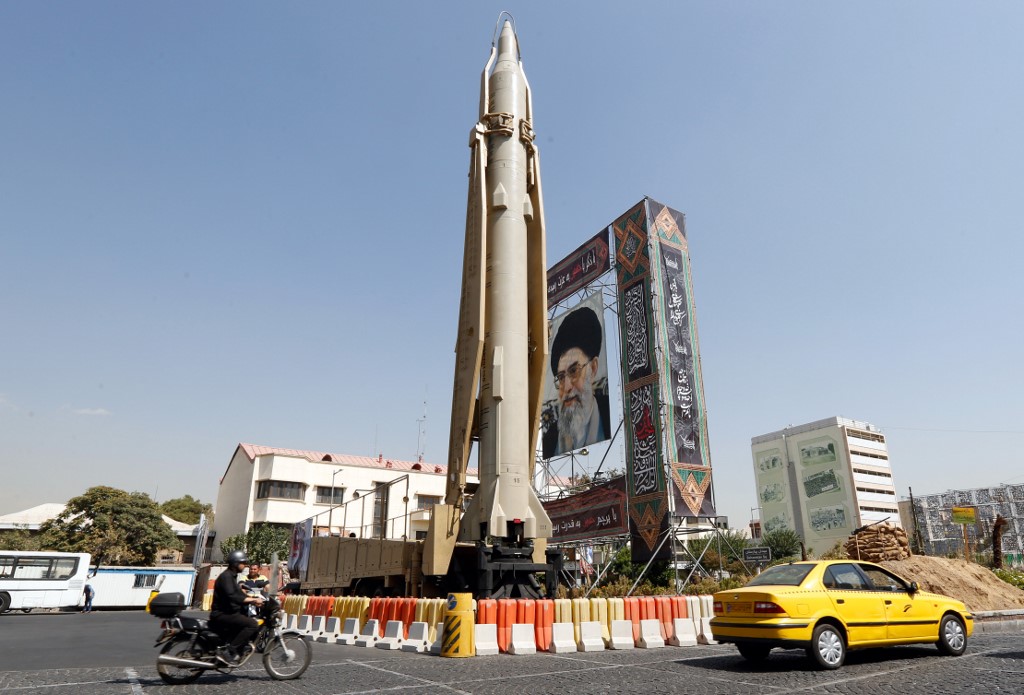
“The moment Iran is allowed to buy advanced drones, missiles, tanks, and jets, it will do so. This will be a win for its proxies across the region, who will use such arms to then attack other nations on Iran’s behalf.”
Since withdrawing from the Iran deal, the US has implemented what it calls an unprecedented pressure campaign on Iran, mostly through punishing rounds of sanctions.
The measures aim to “deny the regime the revenue it needs to fund a revolutionary and expansionist policy and to increase the incentive for Iran to come to the negotiating table,” Hook said.
The hearing, described as a matter of pressing national security importance, explored the relationship the US and other countries maintain with Iran.
“If you look at the 40-year history that the US and other nations have had with this republic, you see a consistent pattern that requires either economic pressure, diplomatic isolation or the threat of military force and its is one or more of these factors that inform Iran’s decision making calculus,” Hook said.
Hook reiterated US President Donald Trump’s willingness to meet with the Iranians and negotiate without preconditions.
“Unfortunately, Iran has responded to our diplomacy with violence and kinetic force and in recent months, Iran has launched a series of panicked attacks to intimidate the world into halting our pressure.”
He said Iran was responsible for attacks on ships in a UAE port, an assault on two oil tankers in the Gulf of Oman and a missile and drone attack on Saudi oil facilities last month.
Senator Jim Risch, the Republican chairman of the US Senate Foreign Relations Committee, also welcomed the joint statement from the UK, France and Germany following the attacks on the Abqaiq oil processing plant and Khurais oil field.
“Apart from rightly identifying Iran as the culprits, our partners addressed the importance of addressing regional security issues as well as the nuclear question,” Risch said.
He said Iran’s pursuit of regional domination following the 1979 revolution transformed the fabric of the Middle East and that the “Iranian regime dangerously catalyzed sectarian identities and weaponized sect and religion against its neighbors, triggering a Sunni/Shiite war that continues to unravel through the greater Middle East.”
“The nuclear issue is but one aspect of the regime’s malign conduct,” Risch said, adding “every riyal and dollar we deny the regime is money not spent on terrorism.”
Risch said one of his main issues with the nuclear deal, known as the Joint Comprehensive Plan of Action, was that it only touched on the nuclear aspects of Iran’s behavior.
“Iran continues to threaten its neighbors with ballistic missiles, conducts criminal maritime activity in international waters, continues to unlawfully hold American citizens, and fuels dangerous proxy conflicts in Yemen, Syria, Iraq and Lebanon,” he told the hearing.
“It is my assessment that the maximum pressure campaign against Iran is working and can serve as the bridge to more meaningful negotiations,” Risch said.
The hearing heard that since May of last year, over 30 rounds of sanctions have denied the regime of more than $25 billion in oil revenue. The riyal has plunged, inflation is around 50 percent and climbing and Iran’s economy is shrinking rapidly.
Hook said the US is seeking a comprehensive deal to address the threats that Iran presents to international peace and security “including their nuclear and missile programs and its support to terror groups and proxies.”