Egypt to press for outside mediator in Ethiopia dam dispute

Author: 
Reuters
ID: 
1571600641895445500
Sun, 2019-10-20 18:55

CAIRO: Egypt will push Ethiopia this week to agree to an external mediator to help resolve a deepening dispute over a giant hydropower dam being built on Ethiopia’s Blue Nile, officials said on Sunday.
Egypt sees the Grand Ethiopian Renaissance Dam (GERD) as an existential risk, fearing it will threaten scarce water supplies in Egypt and power generation at its own dam in Aswan.
Cairo says it has exhausted efforts to reach an agreement on the conditions for operating GERD and filling the reservoir behind it, after years of three-party talks with Ethiopia and Sudan.
Ethiopia has denied that three-way talks are stalled, accusing Egypt of trying to sidestep the process.
Egyptian President Abdel Fattah al-Sisi is expected to raise the demand for a mediator when he meets Ethiopian Prime Minister Abiy Ahmed during a Russian-African summit in Russia this week.
“We’re hoping this meeting might produce an agreement on the participation of a fourth party,” an Egyptian foreign ministry official told journalists at a briefing. “We’re hopeful to reach a formula in the next few weeks.”
Egyptian officials said they had suggested the World Bank as a fourth party mediator, but were also open to the role being filled by a country with technical experience on water sharing issues such as the United States, or the European Union.
Recent proposals put forward by Egypt for a flexible reservoir-filling process and a guaranteed annual flow of 40 billion cubic metres were rejected by Ethiopia.
The latest rounds of talks in Cairo and Khartoum over the past two months ended in acrimony. “The gap is getting wider,” the Egyptian foreign ministry official said.
Egypt draws almost all of its fresh water supplies from the Nile, and is faced with worsening water scarcity for its population of nearly 100 million. It says it is working to reduce the amount of water used in agriculture.
Hydrologists consider a country to be facing water scarcity if supplies drop below 1,000 cubic metres per person per year.
Egypt currently has around 570 cubic metres per person per year, a figure that is expected to drop to 500 cubic metres by 2025, without taking into account any reduction in supply caused by GERD, Egyptian officials said.
Ethiopia is expected to start filling the GERD reservoir next year.

Main category: 
Tags: 

Egypt unveils trove of ancient coffins excavated in LuxorEgypt’s president to meet with Ethiopia PM over Nile dispute


Tunisia says militant leader killed in anti-terror raid

Author: 
AFP
ID: 
1571592336304851200
Sun, 2019-10-20 16:33

TUNIS: An Al-Qaeda leader was killed and another wounded during an anti-terror raid in Tunisia on Sunday, according to the country’s defense ministry.
Tunisian armed forces and national guardsmen led the operation against Al-Qaeda in the Islamic Maghreb (AQIM) in the mountainous Kasserine region near the Algerian border, ministry spokesman Mohamed Zekri told AFP.
“A terrorist leader from the Okba Ibn Nafaa group was killed” and another injured in the ongoing operation, he said.
Okba Ibn Nafaa is the Tunisian branch of AQIM.
Various extremiist groups are active in the rugged frontier region of Kasserine, including the Daesh group-affiliated Jund Al-Khalifa, or “Soldiers of the Caliphate.”
Security forces regularly carry out raids in the area.
Tunisia faced a rise in extremist activity after its 2011 revolution, with attacks killing dozens of security personnel, civilians and foreign tourists.
While the security situation has significantly improved since a series of deadly attacks in 2015, Tunisia has maintained a state of emergency for four years and assaults against security forces have persisted.

Main category: 
Tags: 

Enduring miseries drive exodus of Tunisian youthInitial exit polls give Kais Saied landslide win in Tunisian election


Darfur victims say for sake of peace Bashir must face ICC

Author: 
Abdelmoneim Abu Idris Ali | AFP
ID: 
1571581576933917600
Sun, 2019-10-20 10:55

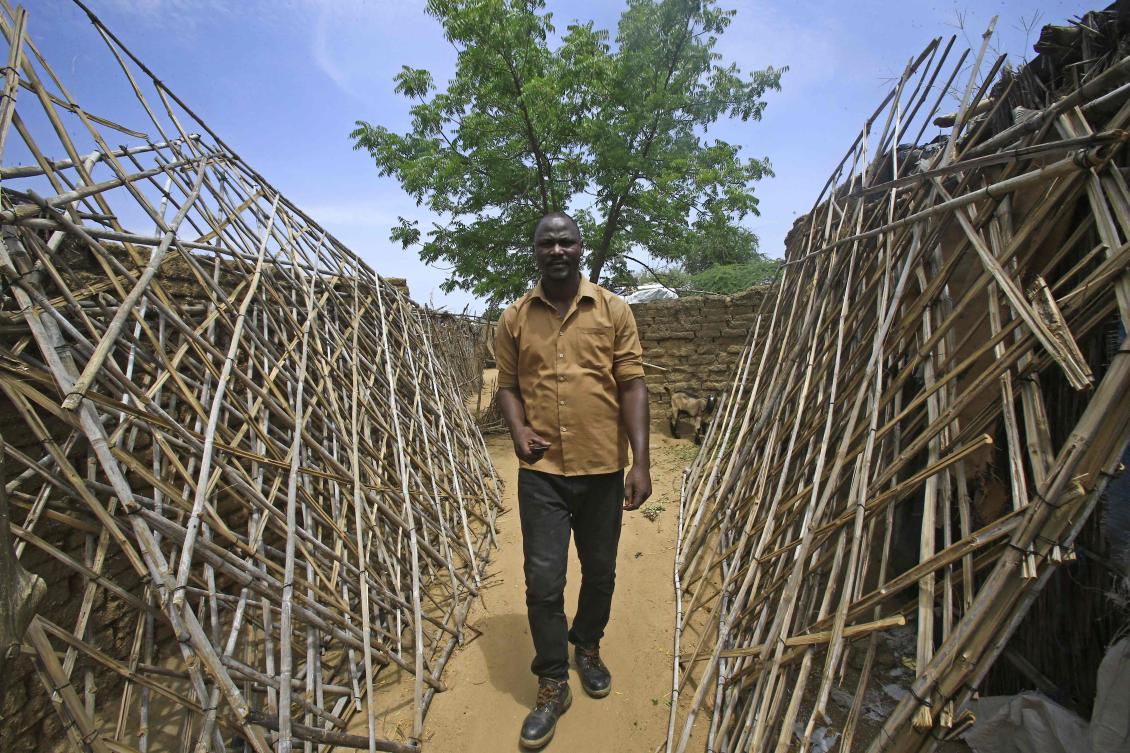
CAMP KALMA: For Jamal Ibrahim, whose sisters were raped by militiamen in Darfur, only the handover of Sudan’s ousted dictator Omar Al-Bashir to the International Criminal Court can bring peace to the restive Darfur region.
“Two of my sisters were raped in front of my eyes by militiamen who stormed through our village, setting our houses on fire,” Ibrahim, 34, told AFP at Camp Kalma, a sprawling facility where tens of thousands of people displaced by the conflict in Darfur have lived for years.
“Bashir and his aides who committed the crimes in Darfur must be handed over to the ICC if peace is to be established in the region.”
Ibrahim, who is from Mershing in the mountainous Jebel Marra area of Darfur, said his village was attacked by Arab militiamen in March 2003 soon after conflict erupted in the region.
The fighting broke out when ethnic African rebels took up arms against Khartoum’s then Arab-dominated government under Bashir, alleging racial discrimination, marginalization and exclusion.
Khartoum responded by unleashing the Janjaweed, a group of mostly Arab raiding nomads that it recruited and armed to create a militia of gunmen who were often mounted on horses or camels.
They have been accused of applying a scorched earth policy against ethnic groups suspected of supporting the rebels — raping, killing, looting and burning villages.
The brutal campaign earned Bashir and others arrest warrants from The Hague-based ICC for genocide, war crimes and crimes against humanity.
About 300,000 people have been killed and 2.5 million displaced in the conflict, the United Nations says.
Bashir, who denies the ICC charges, was ousted by the army in April after months of nationwide protests against his ironfisted rule of three decades.
He is currently on trial in Khartoum on charges of corruption, but war victims like Ibrahim want the ex-leader to stand trial at the ICC, something the northeast African country’s new authorities have so far resisted.
Ibrahim said his father and his uncle were shot dead when militiamen, riding on camels, rampaged through their village.
“We fled from there… and came to this camp. Since then we have not returned to our village,” Ibrahim told an AFP correspondent who visited Camp Kalma last week.
Established near Niyala, the provincial capital of South Darfur state, Camp Kalma is one of the largest facilities hosting people displaced by the conflict.
It is a sprawling complex of dusty tracks lined with mud and brick structures, including a school, a medical center and a thriving market, where everything from clothes to mobile phones are sold.
Hundreds of thousands of Darfur victims live in such camps, subsisting on aid provided by the UN and other international organizations.
In Camp Kalma, hundreds of women and children queue up daily to collect their monthly quota of food aid.
“Often the officials here tell us that we must return to our village, but we can’t because our lands are occupied by others,” said a visibly angry Amina Mohamed, referring to Arab pastoralists who now occupy large swathes of land that previously belonged to people from Darfur.
“We won’t accept any peace deal unless we get back our land. We will leave this camp only when those who committed the crimes are taken to the ICC.”
Even as instances of violence in Darfur, a region the size of Spain, have fallen in recent years, there are still regular skirmishes between militiamen fighting for resources and livestock.
Sudan’s new transitional authorities have vowed to bring peace to Darfur and two other conflict zones of Blue Nile and South Kordofan.
A Sudanese delegation led by generals and government officials is currently holding peace talks in the South Sudan capital of Juba with two umbrella rebel groups that fought Bashir’s forces in these three regions.
On Wednesday, the chief of Sudan’s ruling sovereign council, General Abdel Fattah Al-Burhan, announced a “permanent cease-fire” in the three regions to show that authorities are committed to establishing peace.
But residents of Camp Kalma are not convinced, with hundreds of them staging a protest against the talks in Juba.
Musa Adam, 59, who hails from the village of Dilej but has lived in Camp Kalma for years, is in no mood to forgive Bashir.
Seven members of his family were shot dead by militiamen when they raided his village in 2003, Adam said.
“I know those militia leaders… I am ready to testify at the ICC against them as a witness to their crimes,” he said.
“Until these criminals are taken to the ICC, we cannot have peace in Darfur.”

Main category: 

Years after militia raid, fear still grips Darfur village


World’s oldest pearl found in Abu Dhabi

Author: 
AFP
ID: 
1571577591613525300
Sun, 2019-10-20 12:57

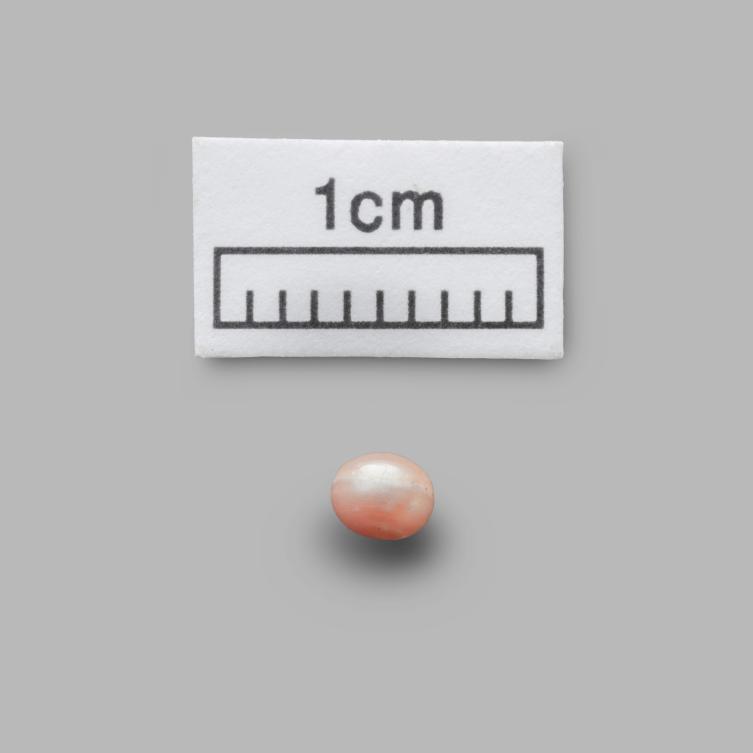
ABU DHABI: An 8,000-year-old pearl that archaeologists say is the world’s oldest will be displayed in Abu Dhabi, according to authorities who said Sunday it is proof the objects have been traded since Neolithic times.
The natural pearl was found in the floor of a room discovered during excavations at Marawah Island, off the capital of the United Arab Emirates, which revealed the earliest architecture found in the country.
“The layers from which the pearl came have been carbon dated to 5800-5600 BC, during the Neolithic period,” Abu Dhabi’s Department of Culture and Tourism said.
“The discovery of the oldest pearl in the world in Abu Dhabi makes it clear that so much of our recent economic and cultural history has deep roots that stretch back to the dawn of prehistory,” said its chairman Mohamed Al-Muabarak.
The excavation of the Marawah site, which is made up of numerous collapsed Neolithic stone structures, has also yielded ceramics, beads made from shell and stone, and flint arrowheads.
The “Abu Dhabi Pearl” will be shown for the first time in the exhibition “10,000 years of Luxury” which is opening on October 30 at the Louvre Abu Dhabi — the outpost of the famous Paris museum.
Emirati experts believe that the pearls were traded with Mesopotamia — ancient Iraq — in exchange for ceramics and other goods. They were also likely worn as jewelry.
“The Venetian jewel merchant Gasparo Balbi, who traveled through the region, mentions the islands off the coast of Abu Dhabi as a source of pearls in the 16th century,” the culture department said.
The pearl industry once underpinned the economy of the United Arab Emirates, but the trade collapsed in the 1930s with the advent of Japanese cultured pearls, and as conflicts rocked global economies.

Main category: 
Tags: 


Libya coast guard intercepts dozens of Europe-bound migrants

Author: 
Associated Press
ID: 
1571577205213476500
Sun, 2019-10-20 12:02

CAIRO: Libya’s coast guard says it’s intercepted dozens of Europe-bound migrants off the country’s Mediterranean coast.
Spokesman Ayoub Gassim said Sunday the migrants were returned to shore and would be taken to a detention center in the capital, Tripoli.
Gassim said a rubber boat with 89 African migrants, including 16 women and two children, was stopped Saturday off Libya’s western town of Khoms, around 120 kilometers (75 miles) east of Tripoli.
Libya has emerged as a major transit point for migrants fleeing war and poverty to Europe. In recent years, the EU has partnered with Libya’s coast guard and other local groups to stem the dangerous sea crossings.
Rights groups, however, say those policies leave migrants at the mercy of armed groups or confined in squalid detention centers rife with abuses.

Main category: 

Conjoined twins from Libya arrive in Saudi ArabiaRival Tripoli government restricts Libya’s oil revenues: Benghazi-based PM