Two years on, Turkish dissident remains behind bars 

Mon, 2019-10-21 23:12

JEDDAH: The situation of many peaceful dissidents who are still in jail in Turkey, like Osman Kavala, who recently completed his second year in pretrial detention, is still criticized by Western countries and human rights defenders.  

The solitary confinement of Turkish philanthropist, activist and businessman Kavala is described by many as a “Kafkaesque” experience, as charges brought in the indictment against him are still without concrete evidence.  

Kavala, who was put behind bars over his alleged involvement in Gezi Park protests in summer 2013 to “overthrow the government” by funding and organizing the whole process, had his third hearing on October 8, but the court ruled that he should remain in custody. 

“It is not Kavala who has lost his freedom and independence, it is the Turkish judicial system,” his lawyers said in a statement.  

In the indictment, Kavala is accused of providing milk, fruit juice and pastries as well as gas masks to protesters.  

The fact that he was on the board of the Turkish branch of George Soros’ Open Society Foundation at that time was also a source of suspicion. But he denied that the charity had ever provided financial support for the protests.  

The next hearing for the case is set for December 24-25.  

Some of his friends shared with Arab News their thoughts and feelings about the lengthy judicial process  

“It is hard to put into words how much influence one person can have at changing historical and current perspectives,” Louis Fishman, an assistant professor at City University of New York, told Arab News. 

“Kavala is man who has dedicated his life to creating spaces within the Turkish public sphere, where narratives of Armenians, Kurds, and other silenced groups can find a place. This soft-spoken man has contributed greatly to the development of a civil society in Turkey and even after his imprisonment his work is being carried out through multiple non-profit organizations and art galleries,” he added. 

Fishman also said that the presence of Kavala was missed, but his legacy continued, and all his friends and supporters were waiting for his release and his return.  

Aysen Candas, a Turkish political scientist from Yale University, is another friend of Kavala who took part of the international campaign to raise awareness of his incarceration.

“Osman Kavala’s unlawful imprisonment, the violation of due process at every step of his detainment, bogus charges against him, the ridiculous nature of what is presented as ‘evidence,’ namely illegally tapped phone conversations irrelevant to the charges, the fact that the indictment was submitted one year after Osman was imprisoned … are all plain facts about his case,” she told Arab News. 

According to Candas: “What renders Kavala’s imprisonment politically significant is his relentless defense of the rule of law, human rights, minority protections and his advocacy of implementing the standards of constitutional democracies in Turkey. 

“He was a firm, unyielding proponent of norms of rule of law and democracy and minorities, he lent a legitimacy to the political initiatives he was a part of,” she added. 

Candas also noted that: “While the activities of Kavala’s cultural association Anadolu Kultur have been highlighted and targeted by the false accusations that are scattered all through the ridiculous indictment against him, his imprisonment is not due to cultural activities but is aiming to attack the political meaning of these cultural activities, such as peaceful coexistence, such as dialogue and public deliberation, such as equal respect.” 

Candas thinks Kavala’s imprisonment reflects the new hostage-status of constitutional democracy in Turkey; the negation of not just the democratization efforts since the 1980s, but also of the secular republic, of cosmopolitan modernization, of Turkey’s efforts to become an international, law-abiding member of UN and of all international conventions that Turkey is a part of. 

“Osman is also a secular businessman, a member of Turkey’s top business association. His family is from the Balkans and they had arrived in mainland Turkey through the population exchange with Greece, so perhaps the secular identity, of those who established the republic in 1923, is being targeted and criminalized in Osman’s person,” she said.

Main category: 
Tags: 

Iran rejects Turkey’s establishing of military posts in SyriaTurkey accused of using illegal phosphorus munitions in Syria


Baha’i community fears deportations as Yemen sentence looms

Author: 
AFP
ID: 
1571689133713248500
Mon, 2019-10-21 19:52

WASHINGTON: The Baha’i community voiced fear Monday that a court under Yemen’s Houthi rebels could order the mass expulsion of members of the faith.
The community said that an appeals court in Yemen’s capital Sanaa, which is controlled by the insurgents, is expected to rule Tuesday on a death sentence handed down on religious grounds to Hamed bin Haydara, a Baha’i detained since 2013.
Citing statements by the prosecutor, the Baha’i International Community said it feared the judge would not only uphold the execution but order the deportation of Baha’is from Yemen.
“By such a ruling, he would target and threaten an entire religious community in Yemen — which wishes for nothing more than to contribute to its nation’s progress,” Diane Ala’i, a representative of the community to the United Nations, said in a statement.
She warned Baha’is could face “statelessness and expulsion, confiscation of assets and threat of extermination in the country.”
Sam Brownback, the US ambassador-at-large for international religious freedom, voiced concern about reports that the Houthis were looking to deport the Baha’is or seize their assets.
“We urge them to release arbitrarily detained Baha’is like Hamed bin Haydara and respect religious freedom,” he tweeted earlier this month.
Several thousand Baha’is — members of the 19th century faith founded by the Iranian-born Baha’u’llah that calls for unity among religions and equality between men and women — are estimated to live in Yemen.
The Houthis are allied with Iran’s Shiite clerical regime, which restricts the rights of Baha’is despite allowing freedom of religion for Christians, Jews and Zoroastrians.

Main category: 
Tags: 

US group denounces Houthi militia’s prosecution of Baha’isYemen accuses Baha’is of converting Muslims


Israel’s Netanyahu gives up effort to form new government

Mon, 2019-10-21 20:28

JERUSALEM: Prime Minister Benjamin Netanyahu informed Israel’s president Monday he could not form a new government following deadlocked September elections, making way for his opponent Benny Gantz to try.
The decision was an important defeat for Netanyahu as he seeks to continue his tenure as Israel’s longest-serving prime minister, but it does not mean the end of those efforts since he still has various cards to play.
Gantz will also face long odds in forming a government, with many analysts predicting he too will fail to negotiate a unity coalition.
In that case, President Reuven Rivlin could ask a majority of parliament members to agree on a candidate.
Rivlin has vowed to do all he can to prevent yet another election — a third since April — but the possibility remains that the stalemate could eventually trigger it.
Netanyahu has been battling the threat to his political survival on two fronts, also facing the possibility of corruption charges in the weeks ahead.
“A short time ago I informed the president that I was handing back my mandate to try to form a government,” Netanyahu said in a video posted on his official Facebook page.
The prime minister blamed Gantz for refusing to negotiate on Netanyahu’s preferred terms.
Rivlin said shortly afterwards that he intended to ask ex-military chief Gantz, head of the centrist Blue and White alliance, to try to form a government.
Like Netanyahu, he will have 28 days to attempt to do so.
Rivlin can take up to three days to hear out the parties elected to parliament before officially tasking Gantz, who had no political experience before mounting his challenge to the premier he once worked with as military chief of staff.
Blue and White said in a statement: “The time of spin is over, and it is now time for action.”
“Blue and White is determined to form the liberal unity government, led by Benny Gantz, that the people of Israel voted for a month ago,” it said.
By “liberal,” it signalled it would seek to limit the influence of religious parties in forming a coalition.
Netanyahu argued that he had “made every effort to bring Benny Gantz to the negotiating table, every effort to form a broad national government, every effort to prevent further elections.”
“Unfortunately, time and time again he simply refused.”
But Gantz has repeatedly said he cannot negotiate based on the terms Netanyahu wants.
Netanyahu’s right-wing Likud has been seeking to negotiate based on a compromise set out by Rivlin that takes into account the possibility the premier will be indicted for corruption in the upcoming weeks.
It could see him remain prime minister for now, but step aside at some point later as he combats the charges.
Gantz would take over as acting premier under such a scenario.
The Blue and White leader, however, says he should be prime minister first under any rotation arrangement since his party won the most seats in September 17 elections, finishing with 33 compared to Likud’s 32.
Gantz also says Blue and White cannot serve in a government with a prime minister facing serious indictment.
Netanyahu has added a further complication to the coalition talks.
He has pledged not to abandon the smaller right-wing and religious parties that support him in parliament, saying he represents the entire bloc in coalition negotiations.
That condition is also unacceptable to Gantz, who says it would mean Blue and White joining a Netanyahu government as a junior member.
Netanyahu received the endorsement of 55 members of parliament for the post of prime minister after the election, while Gantz received 54.
Ten of the parliament members endorsing Gantz, however, are from Arab parties and have said they will not serve in a government with the ex-military leader.
While the 70-year-old Netanyahu was yielding to his opponent at least temporarily on Monday, he has shown no sign of willingly giving up the post he has held for a total of more than 13 years.
A prime minister does not have to step down if indicted — only if convicted with all appeals exhausted — while other ministers can be forced to do so when charged.

Main category: 

Israel’s Gideon Saar challenges lengthy Netanyahu Likud ruleIsraeli officials wrap up Netanyahu’s pre-indictment hearing


US, European, Asian chiefs of staff support Saudi Arabia’s right to self-defense

Author: 
AFP
ID: 
1571677665792410600
Mon, 2019-10-21 13:26

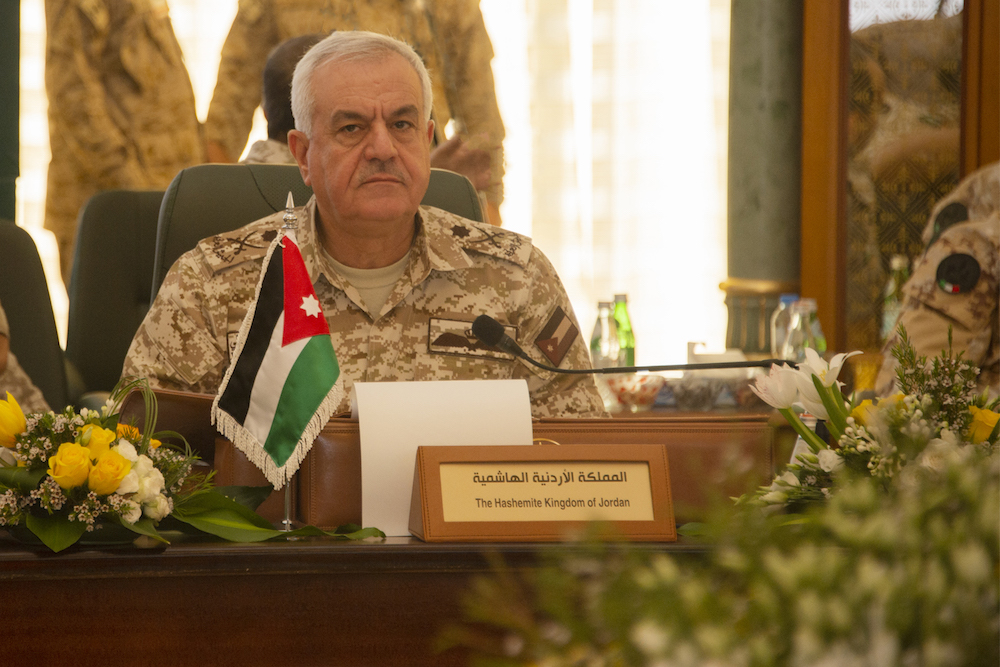
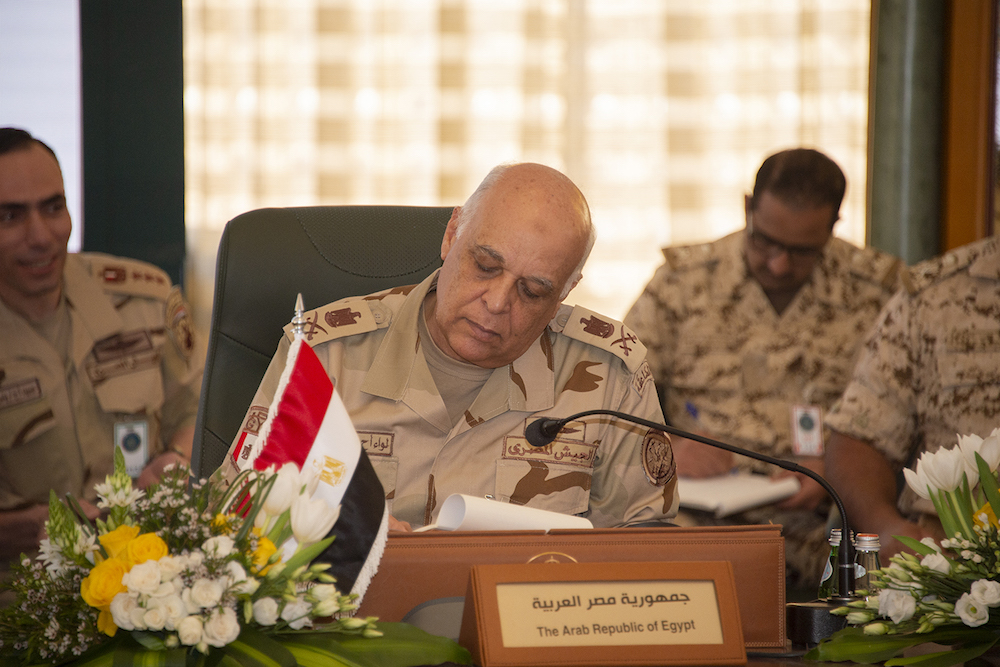
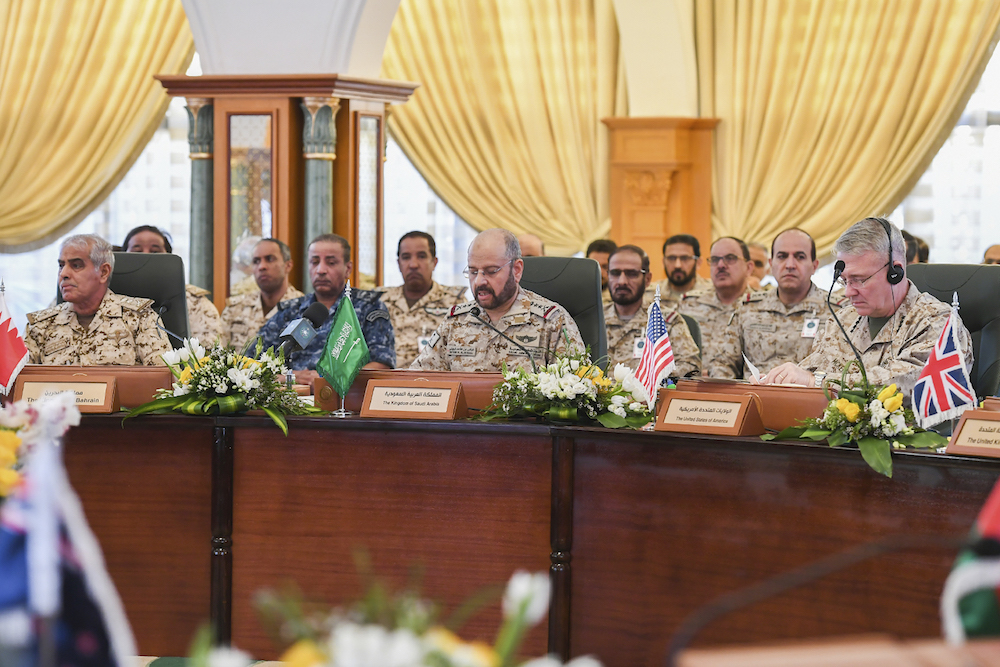
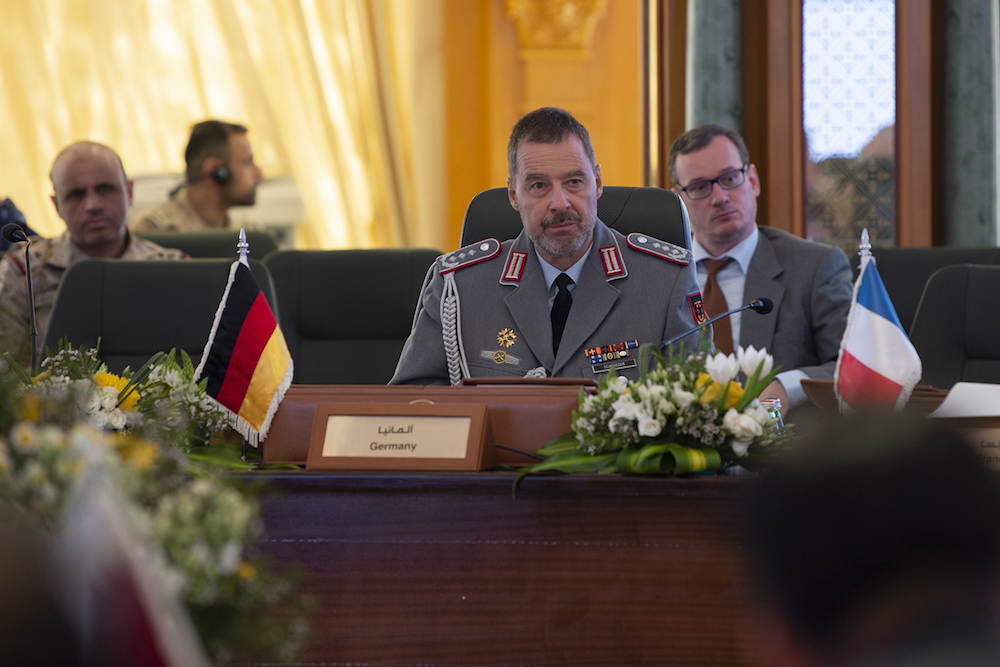
JEDDAH: Saudi Military Chief of Staff Lt. Gen. Fayyad bin Hamad Al-Ruwaili said the Kingdom’s armed forces are confronting all threats from Iran and its allies, adding that he is looking forward to producing a stance that stresses international support in protecting oil facilities and ensuring their protection from future attacks.
He pointed out that everyone should actively be involved in strengthening the capabilities to resist Iran’s threats and those of its allies.
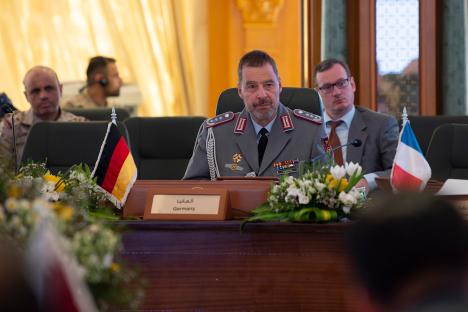
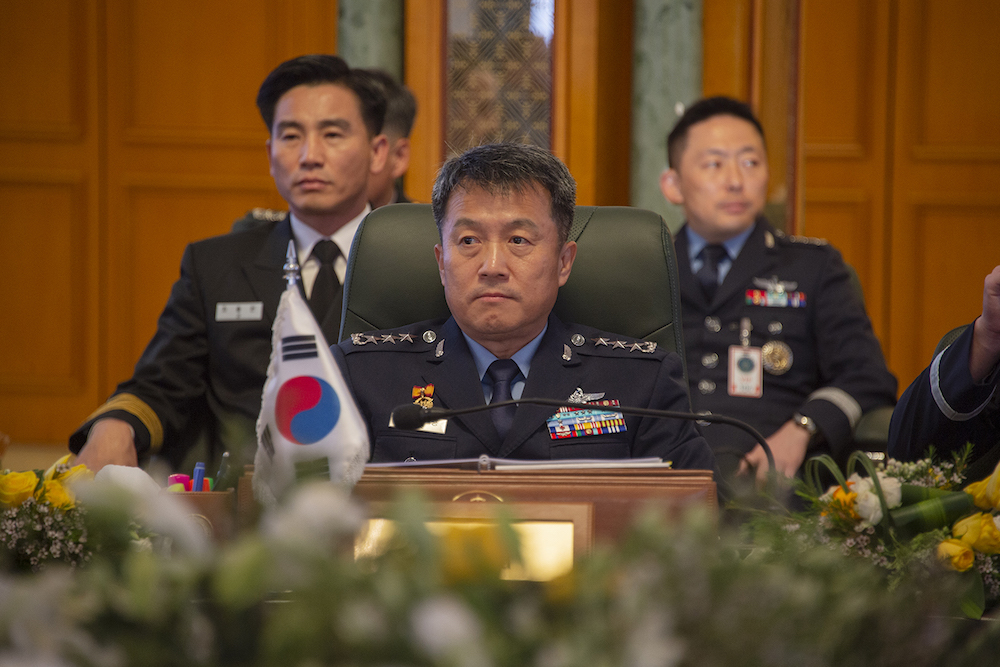
Al-Ruwaili’s statement came during the Security and Defense Conference of the chiefs of staff of GCC states and other countries including Egypt, Jordan, Pakistan, Britain, the US, France, South Korea, the Netherlands, Italy, Germany, New Zealand and Greece.
The aim of the conference was to emphasize maritime and air protection, discuss Iranian hostilities and participate in the procurement of capabilities needed for the security of the region.
Highlighting the importance of the region, Al-Ruwaili said it contains about 30 percent of the world energy supplies and shipping lanes that constitue 20 percent of the global trade paths, which is equivalent to 4 percent of the world gross domestic product.
He said: “Today’s meeting aims to find appropriate ways for joint military cooperation to ensure the protection of vital and sensitive facilities, as the region continues to suffer from ongoing crises since the time the regime came to power following (1979) revolution in Iran, which aims to export the revolution to other countries, in contradiction with international conventions and treaties.”
He added that this has contributed to “spreading chaos by using religious sectarianism to serve political objectives, adopting and supporting loyal armed groups and forming parties and militias that contribute to destabilizing security and stability in several countries in the region.
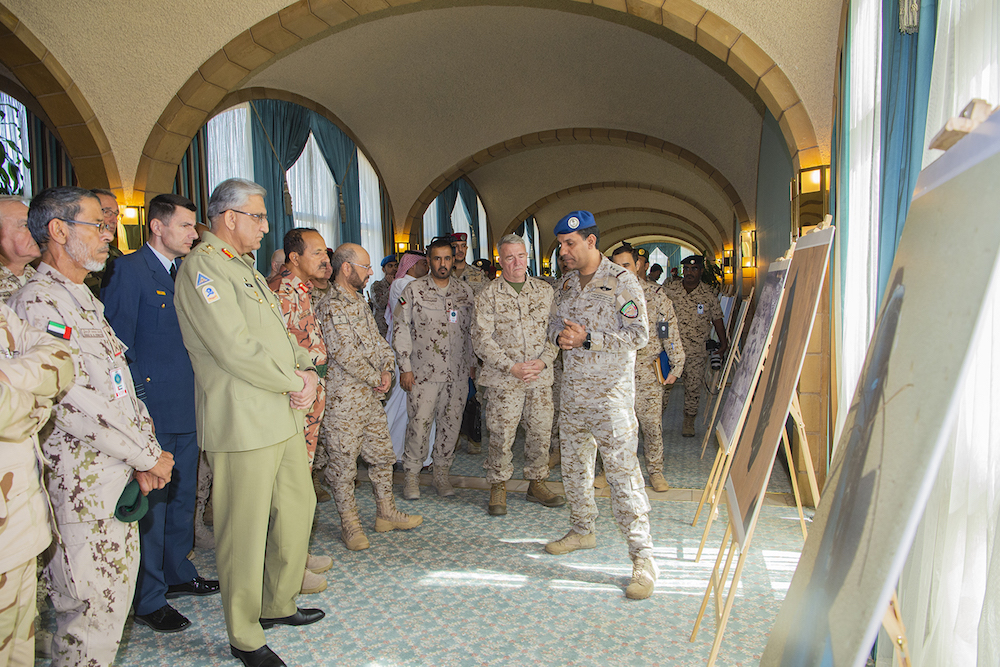
The participants visited an exhibition, in which they were briefed on the unprecedented attack on vital facilities in the Kingdom as well as intercepted ballistic missiles, Iranian drones and photos of Iranian terrorist tools used to destabilize the region.
Participants issued a joint statement denouncing the attacks on the Kingdom, and expressing their determination to deter future attacks on vital facilities that are crucial for the global economy.
They also expressed their full support for Saudi Arabia’s efforts to deal with attacks, and affirmed its right and the right of its neighbors to self-defense in accordance with international law.
They also stressed the need to identify the best ways to support the Kingdom, deter threats against vital infrastructure in Saudi Arabia and the safety of navigation in its waters, which will be discussed in the upcoming meeting on Nov. 4.

Main category: 

Bookmark History Pentagon chief arrives in Riyadh as Iran tensions simmer and Russia makes movesSaudi, Bahraini forces carry out joint exercises


Trump says US troops to deploy to other areas before leaving Syria

Mon, 2019-10-21 19:09

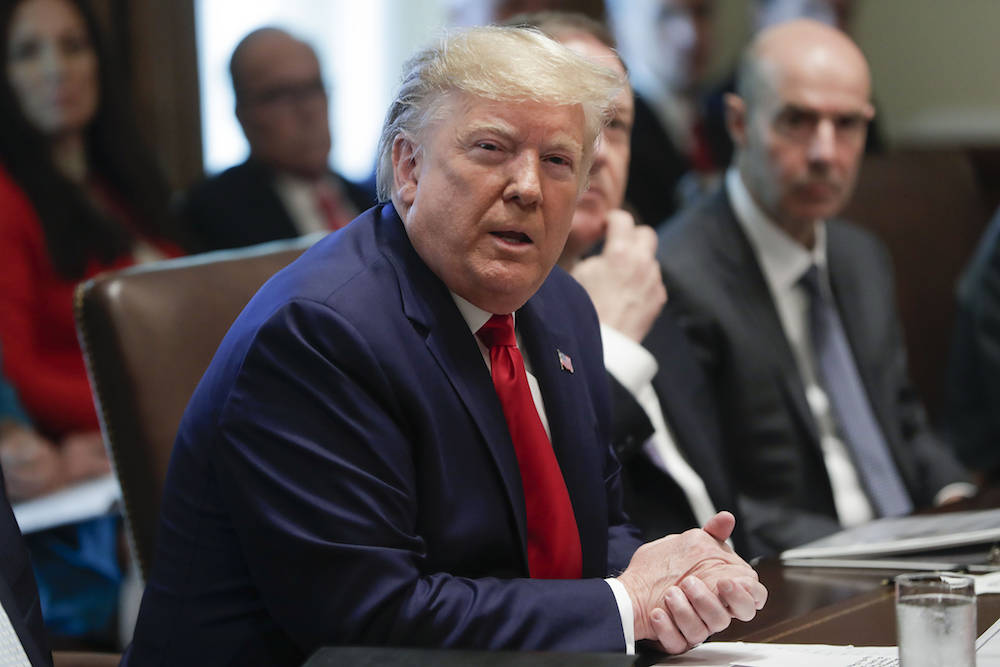
WASHINGTON: US President Donald Trump on Monday said he did not want to leave any American troops in Syria, but that US forces leaving the country now would deploy elsewhere before eventually returning to the United States.
Trump, speaking at a meeting of his Cabinet at the White House, also said it appeared a five-day pause negotiated last week in the Turkish offensive against US-allied Kurdish-led fighters in northern Syria was holding despite some skirmishes, and that it could possibly go beyond Tuesday’s expiration.
“I’m sure if we needed a little extension that would be happening,” he told reporters at the meeting.
Turkey began its cross-border operation following Trump’s decision two weeks ago to withdraw US troops from the area. USofficials said then that those troops were expected to be repositioned in the region. Some of them could go to Iraq.
A small number of US troops would stay “in a little different section to secure the oil,” as well as in “a totally different section of Syria near Jordan and close to Israel,” Trump said on Monday.
“That’s a totally different mindset,” Trump said, adding: “Other than that, there’s no reason” for US troops to remain. “They’re going to be sent initially to different parts,” he added. “Ultimately, we’re bringing them home.”
The American withdrawal has been criticized by US lawmakers, including some of Trump’s fellow Republicans, as a betrayal of Kurdish allies who for years have helped the United States fight the Islamic State.
On Monday, US Defense Secretary Mark Esper said the Pentagon was considering keeping some US troops near oilfields in northeastern Syria alongside Kurdish-led Syrian Democratic Forces (SDF) to help deny oil to Daesh militants.
Trump defended the withdrawal decision saying, “we never agreed to protect the Kurds for the rest of their lives.”
“We helped the Kurds. And we never gave the Kurds a commitment that we’d stay for the next 400 years and protect them,” he added.
Trump also said he was fulfilling a campaign promise to disengage from international conflicts as part of his “America first” agenda as he seeks re-election next year.
“I want to bring our soldiers back home,” he said. “I have to do what I got elected on, and I have to do what I think is right.”

Main category: 

Pentagon chief says keeping some troops in north Syria under discussionErdogan accuses the West of ‘standing by terrorists’ in Syria