Afghan Foreign Minister Salahuddin Rabbani tenders his resignation

Author: 
Sayed Salahuddin
ID: 
1571851018159486800
Thu, 2019-10-24 20:19

KABUL: Afghan Foreign Minister Salahuddin Rabbani tendered his resignation on Wednesday following differences with President Ashraf Ghani, who Rabbani accused of sidelining him.
His departure may not affect Ashraf’s already weak government because Rabbani was disqualified from office by Parliament three years ago, and served as acting minister on the basis of an order by the president.
Rabbani is an ally of Chief Executive Dr. Abdullah Abdullah, who shares power with Ghani and is the president’s election rival.
Rabbani’s resignation comes weeks ahead of the possible formation of a new government if an election winner is announced.
“During my time, the working environment in the National Unity Government was not good from the start,” he wrote in his resignation letter.
“I witnessed parallel structures being created and have seen essential institutions — key pillars of the system — pushed to the side.”
The presidential palace had no immediate comment about Rabbani’s resignation or his allegations, which according to his supporters include being barred from attending conferences and events overseas that fall under his remit.
Part of Rabbani’s differences with Ghani surfaced openly earlier this month when Rabbani’s office welcomed Pakistani efforts regarding the Afghan peace process, which included a warm reception in Islamabad to a visiting Taliban delegation. The Afghan presidential palace openly opposed Pakistan’s warm welcome of the delegation.

Main category: 

Pakistan’s hosting of Taliban leaders angers Afghanistan


London’s Lebanese sympathize with protests, struggle to send money

Author: 
Reuters
ID: 
1571850551849415900
Wed, 2019-10-23 16:42

LONDON: In common with millions of other Lebanese living abroad, London restaurateur Moufid Shamms is unable to send cash back to support his family — in his case daughters studying at school.
Banks back home have remained shut for five working days as hundreds of thousands have taken to the streets to protest against Prime Minister Saad Al-Hariri’s government.
That is a problem for Shamms, who usually makes transfers via Western Union, and also for Lebanon’s small economy. Remittances are a lifeline for families and important source of financing for the economy, funding almost half the trade deficit.
“I have my two eldest daughters living in Lebanon and now I can’t send them money,” the 49-year-old, says sitting outside his restaurant in Edgware Road, a bustling Arab heartland in the British capital.
Lebanese nationals overseas have an outsize influence on their native country’s fortunes.
After many fled from civil war between 1975-1990, estimates now put Lebanon’s diaspora as high as 14 million — more than twice the size of its domestic population.
Britain is among the top ten countries of origin for remittances to Lebanon. A 2011 census recorded more than 15,000 Lebanese living in Britain.
Having left in 1989, sick of the violence and corruption back then, 49-year-old Shamms sees ongoing graft as a prominent issue in the latest upheaval.
“The corruption in Lebanon is why I left,” he says, puffing on a shisha. “Everyone has a right to protest and all Lebanese agree with what they’re asking but we all know nothing is going to be changed because you know Lebanon.”
Globally, flows to Lebanon have faltered recently.
One reason for that is concern from some expatriates about the risk of a looming economic collapse back home, say economists. Another is the Gulf, where hundreds of thousands of Lebanese work, but softening oil prices have hurt the job market.
Having peaked at $9.6 billion in 2014, remittances from the diaspora fell to $7.7 billion in 2018 and may dip to $6.5 billion next year, estimates Institute of International Finance’s Garbis Iradian.
S&P Global warned last month that waning inflows from non-residents were contributing to an accelerated drawdown of foreign currency reserves that would test Lebanon’s ability to maintain its currency peg to the US dollar.
While the closure of banks has provided a practical barrier to sending money, some expatriates also voiced worry about the impact a potential devaluation of the Lebanese currency and further financial instability could have on their savings and investments.
“The first income in Lebanon is from people outside. If they stop sending money then that’s the end of the country,” says Ali Sahir, 50, who sends money to support his wife in Lebanon’s south.
London-based public relations professional Roni Sinno has family in Canada, Germany, United Arab Emirates, Qatar and Belgium — all sending money back to relatives.
“There is no work in Lebanon,” she says. “My nieces and nephews finished universities and couldn’t work. One stayed in Lebanon five years unemployed until he found work in Qatar. Meanwhile, the children of the politicians are living luxury lives in London and Paris.”
One driver of the demonstrations has been the large sums of money, they say, siphoned out of Lebanon’s economy through corruption.
“Lots of money has been stolen from the government for the last 30 years,” says Ali Abbas, 35, who moved to London in 2007 after graduating and now works in a shop. “The main thing that will help the country will be bringing this money back to the country.”

Main category: 
Tags: 

Lebanon’s protests move from spontaneity to organizationLebanon struggles to restore normality amid protests


Revealed: How Iran led brutal suppression of Baghdad protests

Author: 
Suadad Al-Salhy
ID: 
1571849651289327400
Wed, 2019-10-23 19:55

BAGHDAD: The toll of dead and injured in protests this month in Iraq was so high because security services used “excessive force” and live ammunition without official authority, a damning report on the demonstrations has concluded.

At least 150 were killed and more than 7,000 injured in six days of protests in Baghdad and eight Shiite-dominated southern provinces against corruption, unemployment and non-functioning public services.

Prime Minister Adel Abdul Mahdi set up a committee 10 days ago to investigate the high casualty rate and identify who was responsible. Its report, disclosed to Arab News on Wednesday, says the security forces’ response was excessive, “which led to an increase in the number of victims.”

The investigation found that authorities gave no official orders for security forces to fire live ammunition, but the report recommends that 45 senior military commanders and officers be dismissed for “losing command and control over their forces,” and that others be referred to the courts “for involvement in firing against demonstrators.”

Nevertheless, the investigative committee’s report was condemned on Wednesday as a whitewash because it scapecoats military officers who are not viewed as loyal to Iran, and it does not name the two men who actually directed the suppression of the protests. They are Gen. Qasem Soleimani, the powerful Iranian military leader who commands the Quds Force of the Islamic Revolutionary Guard Corps; and Abu Mahdi Al-Muhandis, deputy head of the Popular Mobilization Commission (PMC) of Iran-backed armed factions.

“The report is a farce, and worthless,” a prominent Shiite adviser told Arab News. “Any report that does not reveal the identity of the snipers who killed the demonstrators in cold blood, does not mention those who gave explicit orders to kill, and ignores the names of the real killers, has no value.”

Another critic said the report was flawed for “deliberately omitting to mention many facts, and presenting a number of police commanders and officers who are not pro-Iran as a scapegoat to cover up those who are actually responsible for the massacre.”  

Iraqi security officials have told Arab News how the operation to police the protests was hijacked by Iranian operatives — initially by Al-Muhandis, an Iraqi-born Iranian citizen who is wanted by the US and other countries for his involvement in the bombing of the US and French embassies in Kuwait in 1984, and later by Soleimani himself.

Before the protests began, Prime Minister Abdul Mahdi formed a special “crisis unit” of senior government ministers, military leaders and security chiefs. Its aim was “to manage the demonstrations, secure Baghdad, secure government headquarters and diplomatic missions, and prepare for the worst-case scenario — the overthrow of the Shiite-led regime,” sources told Arab News.

However, the unit, which met at the federal police headquarters in Baghdad throughout the protests, was subordinate to the orders of Al-Muhandis. “He was the one who led the operation throughout the days of demonstrations, and he was the one who drafted the Baghdad security plan,” a senior national security official told Arab News.

“For the first two days, he worked with Hamed Abdallahi, commander of the Quds Force special operations unit,”the official said. “On the third day, Qasem Soleimani arrived to take the lead himself.

“Abdul Mahdi did not attend all the meetings, but he visited from time to time to see the latest developments.”

Al-Muhandis is widely viewed as Iran’s most powerful operative in Iraq, and the man to whom most of the Iranian-backed armed factions owe total loyalty. He enjoys the absolute confidence of Soleimani, to the extent that the Quds Force commander stays at Al-Muhandis’s home when he is in Iraq.

The plan proposed by Al-Muhandis for controlling the protests was similar to the plan for securing Damascus for Bashar Assad when it was threatened by the Syrian opposition. It required dividing Baghdad into up to 19 sectors, separated by roadblocks preventing movement from one to another, with troops in each sector reinforced by snipers “to prevent the arrival of protesters … and to spread terror among them,” three sources familiar with the plan told Arab News. He also ordered attacks on the studios of TV news channels to try to prevent footage of the protests being broadcast, along with a campaign to arrest journalists and activists.

“Al-Muhandis did not explicitly say, ‘Kill the protesters.’ I did not hear him at least, but he clearly said that you should treat the demonstrators as warriors,” a military commander who attended several meetings of the crisis unit told Arab News.

“How would any security or military commander understand this? How would he translate it? Of course, by shooting live ammunition and resorting to lethal force.”

Soleimani — referred to as “the general” by Iraqi security commanders and “Hajj” by pro-Iranian politicians — arrived at Baghdad International Airport on the third day of the protests. He was accompanied by a group of up to 30 Iranian and Lebanese “advisers,” all young men dressed in black — T-shirt, pants, sneakers and a black sports hat — and carrying backpacks. There was no insignia on their clothing to indicate who they were working with.

The group arrived on three separate flights and were taken from the airport in vehicles belonging to the PMC.

“Soleimani came to protect Abdel Mahdi, who represents the regime for him,” a prominent Shiite government adviser close to the prime minister told Arab News. “He said it frankly, he protected Bashar Assad in Syria for 10 years and will protect Abdul Mahdi to the end, even if it costs him his life.”

The deadly suppression of the protests, and the political crisis in their aftermath, has revealed the full extent of the control exercised by Iran and its operatives over Abdul Mahdi and his senior staff, security officials, government advisers and politicians told Arab News. 

The brutality of the crackdown in Baghdad, and the Iraqi government’s denial that it deployed snipers or ordered the deliberate killing of protesters, have raised questions about who has the power and the ability to take to the street in full view of the security authorities and carry out executions.

Forensic medical examinations indicate that most of the dead suffered direct head and chest injuries, confirming reports by witnesses and video evidence obtained by Arab News of executions, shots fired by masked gunmen in black uniforms, snipers in tall buildings overlooking the demonstrations and protesters being chased into alleyways, where they were shot in the head from a distance of less than a meter.

Grand Ayatollah Sayyed Ali Al-Sistani, the leader of the world’s Shiite community and the most influential man in Iraq, has expressed dissatisfaction with Abdul Mahdi’s performance. He has condemned excessive violence against the protesters, demanded the identification of their killers, and “is not convinced by the results of the investigation and does not accept them,” according to a source in Najaf, the ayatollah’s power center.

Al-Sistani’s displeasure suggests that the prime minister will not stay in office for long, and that a decision had been made to remove him.

“It’s done,” a close source to the ayatollah told Arab News. “Abdul Mahdi will not be able to provide any satisfactory solutions, and even if he did, it is too late.

“There will inevitably be chaos, and the talk in Najaf now is about how to contain it. Removing Abdul Mahdi is not the real solution, but it will reduce the damage.”

Main category: 

Iran-backed militias deployed snipers during Iraq protestsIran says US blame over Iraq protests ‘astonishing’


More than 100 Daesh prisoners have escaped in Syria: US envoy

Wed, 2019-10-23 17:58

WASHINGTON: More than 100 prisoners of the extremist Daesh movement have escaped in Syria in the chaos since Turkey’s incursion, a senior US official said Wednesday.
“We would say the number is now over 100. We do not know where they are,” James Jeffrey, the State Department pointman on Syria, told the House Foreign Affairs Committee when asked about the detainees.
Turkey launched a military operation in Syria after President Donald Trump agreed to pull US troops who were allied with the Syrian Democratic Forces, the Kurdish-led group that bore the brunt of the fight against Daesh. 
Jeffrey said that the Kurdish fighters were still guarding prisoners from the extremist group, despite their warnings that they will need to devote resources to fight Turkey instead.
“Almost all of the prisons that the SDF were guarding are still secured. The SDF still has people there,” Jeffrey said.
“We are monitoring that as best we can. We still have people in Syria working with the SDF and one of those priorities is these prisons,” he said.
The Kurdish fighters have pulled out of a key border area as part of a US-brokered agreement with Turkey to end the offensive.
Turkey links the Syrian Kurdish fighters to PKK separatists at home, who are considered a terrorist group by the United States and the European Union.

Main category: 

Russian forces deploy at Syrian border under new accordSyria’s Al-Assad vows support for Kurds against Turkey assault


In Egypt, 7 dead after chaotic day of heavy rains, flooding

Author: 
By SAMY MAGDY | AP
ID: 
1571841942308560200
Wed, 2019-10-23 14:32

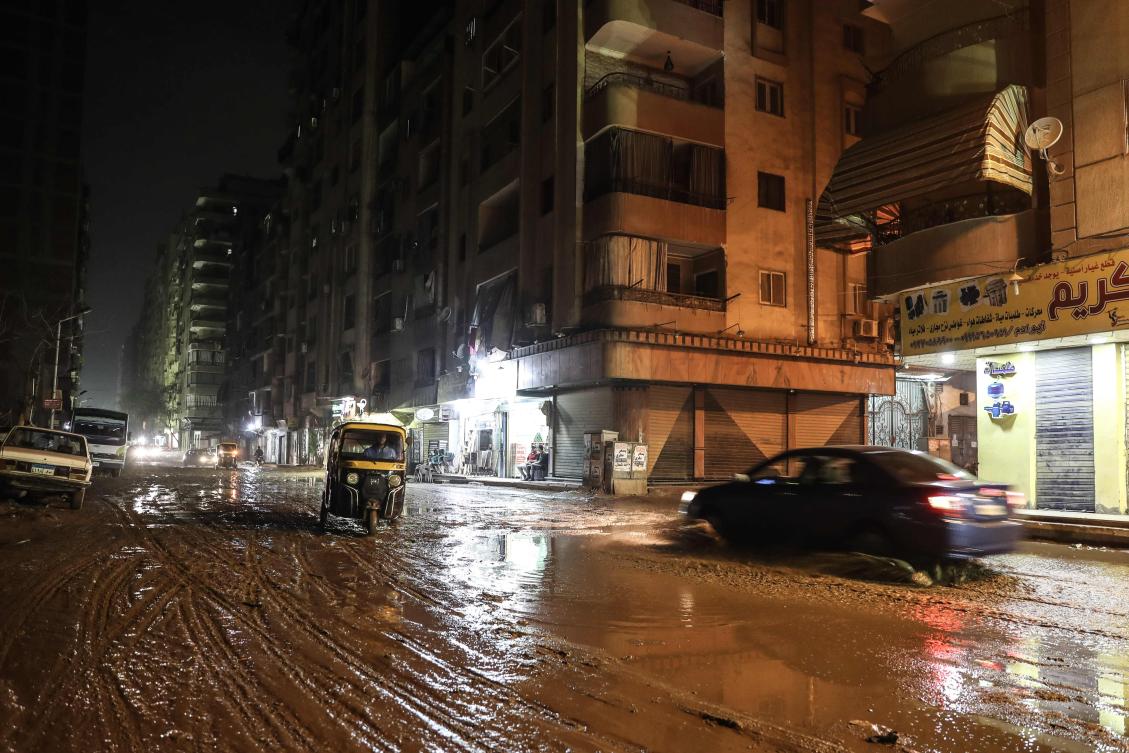
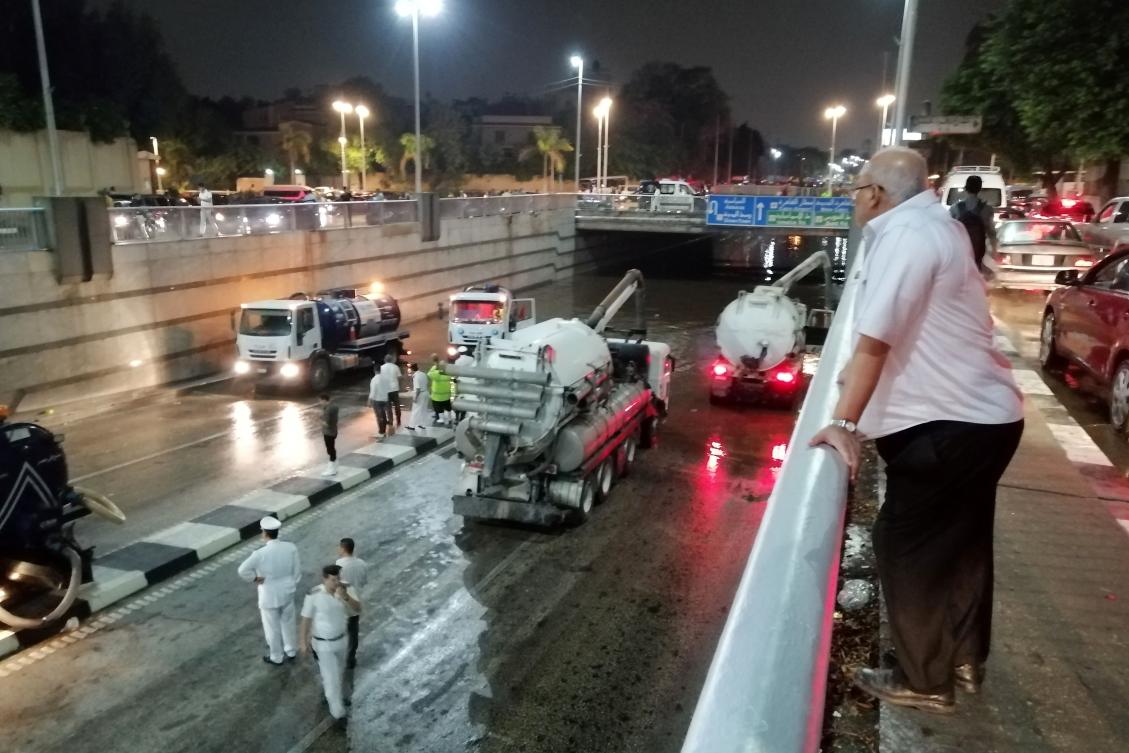
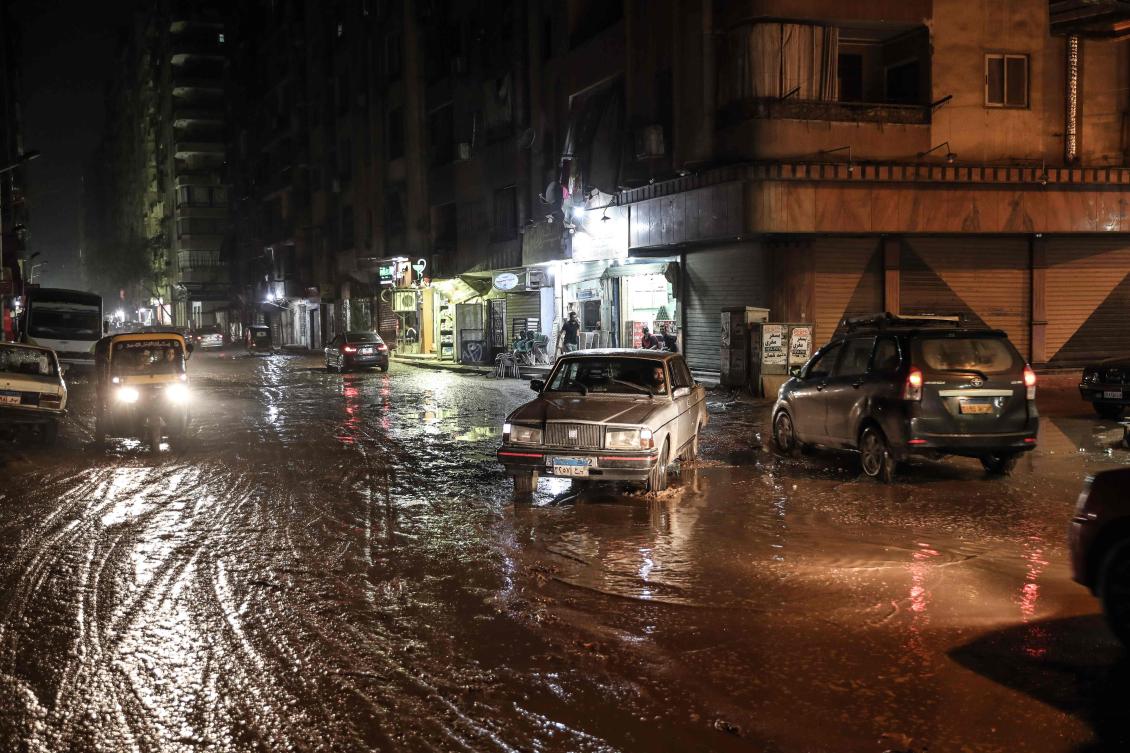
CAIRO: At least seven people, including three children, were killed in Egypt’s Nile Delta and Sinai regions, authorities said Wednesday after heavy rains pummeled Cairo and other parts of the country the previous day, causing massive traffic jams and flooding many key roads.
People captured images of Tuesday’s downpours and flooding on their mobile phones, posting footage on social media, including scenes of cars submerged by flood waters.
In one dramatic video, a man on a bulldozer pulls the lifeless body of a little girl out of the water in a flooded area in the northern province of Sharqia as shouts and screams are heard in the background. Another video shows a policeman, steps away from the presidential palace in Cairo’s district of Heliopolis, wading into a flooded street to unclog a sewage drain.
Authorities closed schools and universities in the greater Cairo area Wednesday and companies saw only skeletal staff show up at work after Tuesday’s heavy rains.
The mayhem raised questions about Cairo’s ability to deal with heavy rainfall as the city’s infrastructure and sewage and drainage systems have suffered from years of poor maintenance.
Prime Minister Mustafa Madbouly said Wednesday’s school closures were limited to the greater Cairo area, including Giza and Qalioubia, as more rainfall was expected in the next couple of days, according to the country’s weather service.
Five deaths occurred in the Nile Delta provinces of Sharqia, Gharbia and Kafr el-Sheikh, according to the Interior Ministry. Three of the victims, including two children, were fatally electrocuted. The other two victims died falling from the rooftops of their flooded homes.
Local authorities in northern Sinai also reported two deaths. Moataz Taher, head of the el-Hassana municipality, said in a statement that a 47-year-old farmer and his 13-year-old daughter died early Wednesday in the flooding.
Cairo’s eastern suburb of Nasr City was hit the hardest, as well as Heliopolis, located near Cairo’s international airport. The government said the two suburbs had received at least 650,000 cubic meters of precipitation in just 90 minutes on Tuesday, overwhelming the city’s sewage and drain systems.
Trucks fanned out across Cairo to drain water from flooded areas. A key highway connecting Cairo to other provinces was closed, the state-run Al-Ahram daily reported.
EgyptAir said it had delayed some fights on Tuesday because passengers were stuck on the roads and unable to get to the airport. A part of the old Cairo airport terminal which has been under renovation was also flooded, with footage on social media showing rainwater pouring into the hallway.
The Civil Aviation Ministry said that terminal was only being used by a private carrier for one or two flights a day and shared photos of it after it was cleaned up.

Main category: 
Tags: 

Heavy rain across Cairo cause chaos as residents use bulldozer to escape floodsEgypt arrests 22 for planned protest over grisly murder case