NATO hammers Turkey on Syria operation

Author: 
Marc BURLEIGH | AFP
ID: 
1571940803978134300
Thu, 2019-10-24 17:36

BRUSSELS: NATO defense ministers Thursday slammed Turkey for its military operation in Syria conducted with Russia’s help, but recognized there was little they could do to sanction their strategically important ally.
The first day of a two-day meeting of the ministers in Brussels was dominated by the issue, with Turkey isolated among the 29 member states because of its incursion against Kurdish fighters it considers “terrorists” but who are key in the fight against the Daesh group in Syria.
NATO Secretary General Jens Stoltenberg described discussions as “frank and open” — euphemisms for sharp discord — and noted “we have seen disagreements before” but the transatlantic alliance has endured.
He stressed that the ministers agreed on the need to “maintain our unity in the fight against Daesh,” referring to the IS group being fought in Syria, Iraq, Afghanistan and elsewhere by a broad international coalition including many NATO members.
Germany presented an idea it floated this week of international troops being deployed to create a security zone in northeast Syria — a notion that has been met tepidly by allies because of the situation on the ground and the need for a UN mandate.
The top commander of Syria’s Kurdish force, Mazloum Abdi, welcomed the proposal, telling journalists in northern Syria that “we demand and agree to this.”
But the NATO ministers did not directly embrace the German plan. Stoltenberg said they instead stressed their “broad support… for ways to engage the international community to find a political situation” in northern Syria.
Before the meeting, German Defense Minister Annegret Kramp-Karrenbauer said she and her French and British counterparts believed a Turkish-Russian agreement to jointly patrol a “safe zone” inside northern Syria “does not provide a permanent basis for a political solution.”
Belgium’s defense minister, Didier Reynders, said of Germany’s troops idea: “In principle we are in favor of such an agreement to work together — but then again, the situation is totally different now” following the Turkey-Russia agreement.
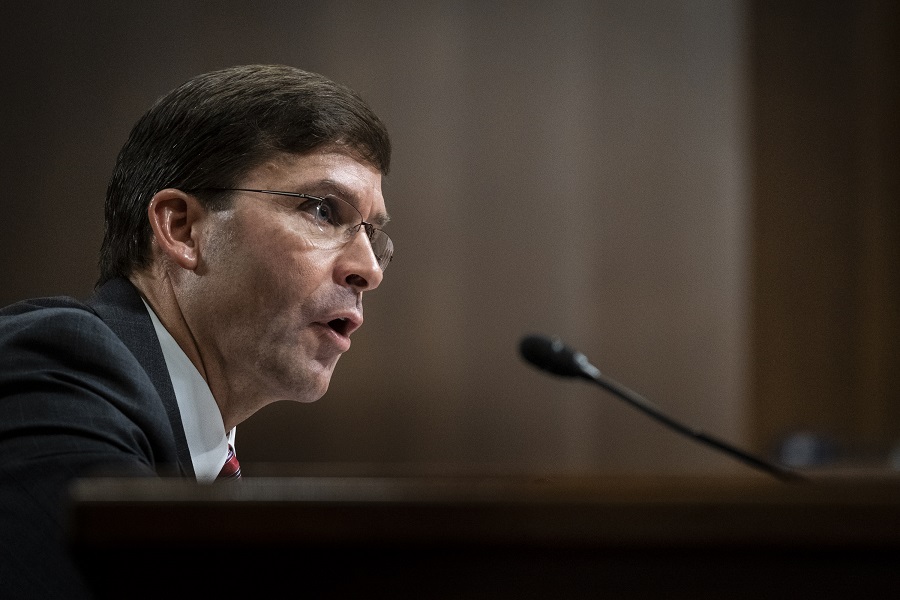
US Defense Secretary Mark Esper, speaking at a think tank conference in Brussels before the NATO meeting, was blunt about Turkey, saying it was “heading in the wrong direction.”
“Turkey put us all in a very terrible situation and I think the incursion’s unwarranted,” Esper said.
He defended the withdrawal of “less than 50” US troops from northern Syria that cleared a path for the Turkish operation, arguing it was the only way to preserve the soldiers’ lives, and that in any case he was not “about to start a fight with a NATO ally.”
US President Donald Trump on Wednesday summed up American strategy in Syria by saying: “Let someone else fight over this long blood-stained sand.”
However on Thursday, he tweeted: “I appreciate what the Kurds have done. Perhaps it is time for the Kurds to start heading to the Oil Region!“
That referred to a non-Kurdish, crude-rich desert zone in Syria’s northeast under US control that Trump wants to prevent falling into the hands of the Syrian regime or its Iranian or Russian partners.
Turkey’s actions, its rapprochement to Russia and its threat to its European allies in NATO to unleash a wave of refugees if they dared criticize the assault in Syria have unnerved many in the transatlantic alliance.
“When we say we will open the gates, they are up in arms. Don’t be up in arms, the gates will be opened when the time comes,” Turkish President Recep Tayyip Erdogan said in a televised speech in Ankara.

Main category: 
Tags: 

US Secretary of Defense Esper meets King Salman, asks NATO to protect Saudi Arabia from IranMacron slams Turkey’s aggression in Syria as ‘madness’, bewails NATO inaction
Kurdish forces start Syria-Turkey border pullback

Author: 
AFP
ID: 
1571928166227252800
Thu, 2019-10-24 14:35

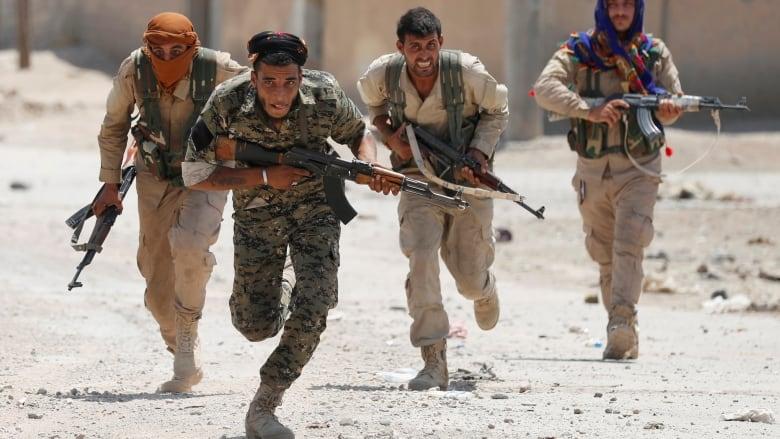
QAMISHLI, Syria: Kurdish forces in northeastern Syria left several positions along the long border with Turkey on Thursday, complying with a deal that sees Damascus, Ankara and Moscow carve up their now-defunct autonomous region.
Russian forces have started patrols along the flashpoint frontier, filling the vacuum left by a US troop withdrawal that effectively returned a third of the country to the Moscow-backed regime of President Bashar Assad.
An AFP correspondent saw a Russian patrol set off from the town of Qamishli westwards along the Turkish border flying Russian flags, accompanied by Kurdish security forces.
US President Donald Trump has praised the agreement reached in Sochi by NATO member Turkey and Russia and rejoiced that US personnel were leaving the “long blood-stained sand” of Syria, leaving just a residual contingent behind “where they have the oil.”
The deal signed in the Black Sea resort by Syria’s two main foreign brokers gives Kurdish forces until Tuesday to withdraw to a line 30 kilometers (19 miles) from the border.
The Syrian Observatory for Human Rights reported that the Kurdish-led Syrian Democratic Forces had pulled out of some areas at the eastern end of the border on Thursday.
“The SDF have withdrawn from positions between Derbasiyeh and Amuda in the Hasakah countryside,” the Britain-based war monitor’s head, Rami Abdel Rahman, said.
Fighters of the Kurdish People’s Protection Units (YPG) — the main component of the SDF — remained in many positions along the 440 kilometer (275 mile) border, he added.
The Observatory also reported clashes near the town of Tal Tamr between SDF fighters and some of the Syrian former rebels paid by Turkey to fight ground battles.
SDF commander Mazloum Abdi on Twitter accused the Turkish-led forces of violating the truce on the eastern front of Ras Al-Ain.
“The guarantors of the cease-fire must carry out their responsibilities to rein in the Turks,” he added on Twitter.
The events were set to provoke “forceful” discussion at a NATO defense minister meeting in Brussels on Thursday and Friday but Ankara risked little because of its strategic position, diplomats said.
Russian and Syrian government forces were deploying across the Kurdish heartland to assist “the removal of YPG elements and their weapons.”
Kurdish forces had already vacated a 120-kilometer segment of the border strip — an Arab-majority area between the towns of Ras Al-Ain and Tal Abyad.
The SDF withdrawal from that area came after Turkey and its Syrian proxies launched their deadly cross-border offensive on October 9.
Turkish President Recep Tayyip Erdogan, who is embattled on the domestic political front, hopes to use the pocket to resettle at least half of the 3.6 million Syrian refugees his country hosts.
Under the Sochi deal, the area will remain under the full control of Turkey, unlike the rest of the projected buffer zone which will eventually be jointly patrolled by Turkey and Russia.
Some 300,000 people have fled their homes since the start of the Turkish offensive and many Kurds among them seem unlikely to return.
US forces pulled back from the border area earlier this month, in a move the Kurds saw as a betrayal but which Trump had discussed since last year.
The autonomous Kurdish administration in Syria had hoped that the sacrifices made in the name of the international community to help crush the Daesh group’s “caliphate” would pay off.
But Trump has been keen to keep a promise to remove his troops from Syria, where IS’s “caliphate” was eliminated in March but where conflict continues.
“Let someone else fight over this long blood-stained sand,” he said in a White House speech on Wednesday.
That “someone” is undoubtedly Russia, whose status as the main foreign power in Syria is now undisputed, to Assad’s great benefit.
“Assad is getting back a third of Syria’s territory without firing a shot,” geographer and Syria specialist Fabrice Balanche said.
Some US forces remain in eastern districts of Syria, where government forces have been deploying but have not yet re-established full control.
“We have secured the oil and, therefore, a small number of US troops will remain in the area where they have the oil,” Trump said on Wednesday.
The Syrian government is keen to reclaim the northeast, which is home to the country’s main oilfields and some of its most fertile farmland.
In a phone call with Russia’s defense minister and military chief on Wednesday, Abdi thanked Moscow for “defusing the war in our region and sparing civilians its scourge,” the SDF said.

Main category: 
Tags: 

Moscow warns Kurds to pull out after Turkey agreementSyria’s Al-Assad vows support for Kurds against Turkey assault


Replicas of Assyrian statues smashed by Daesh unveiled in Iraq’s Mosul

Author: 
AFP
ID: 
1571926161227108500
Thu, 2019-10-24 13:27

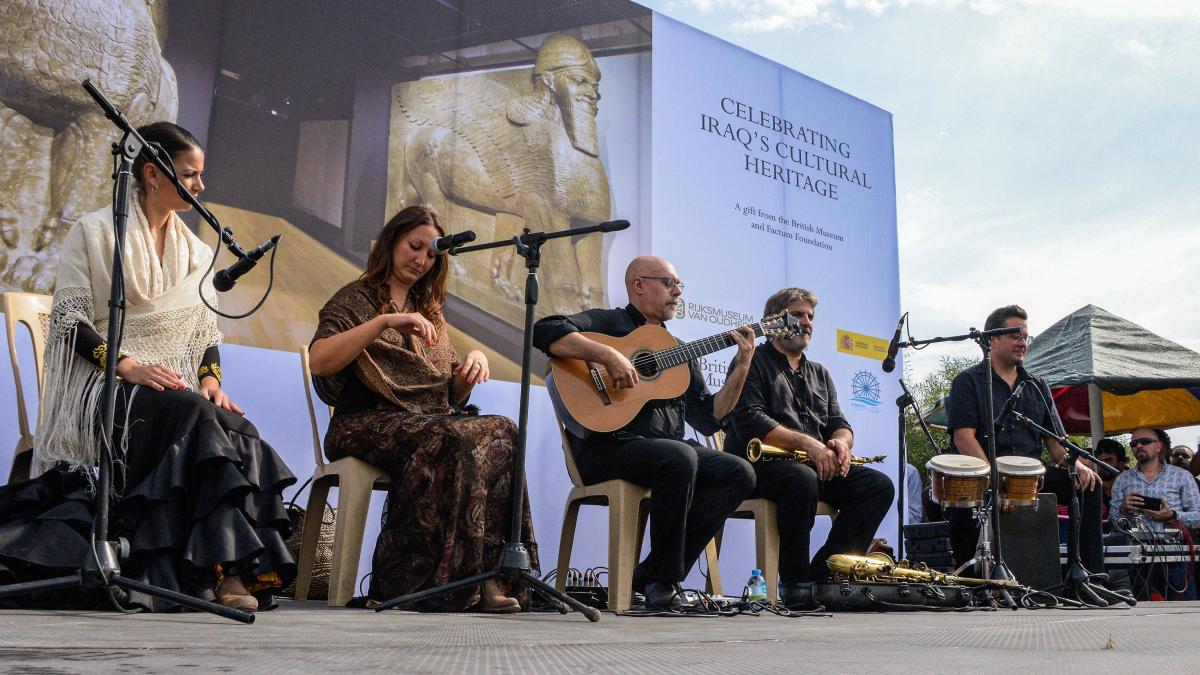
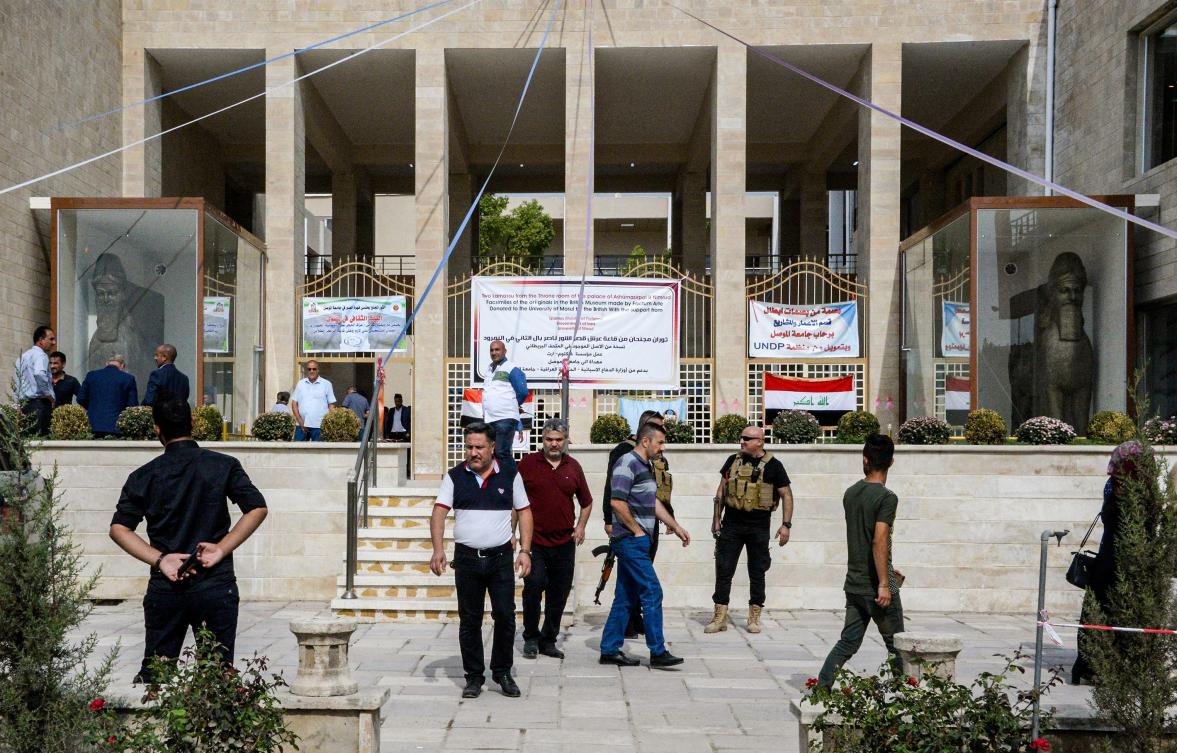
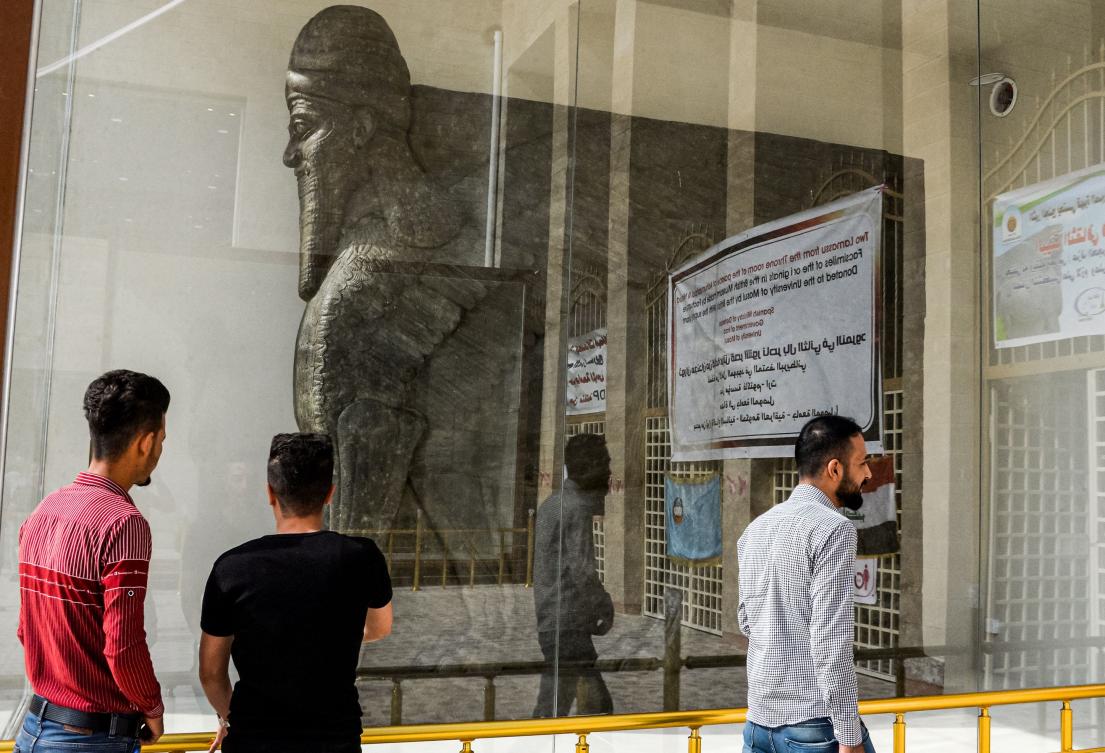
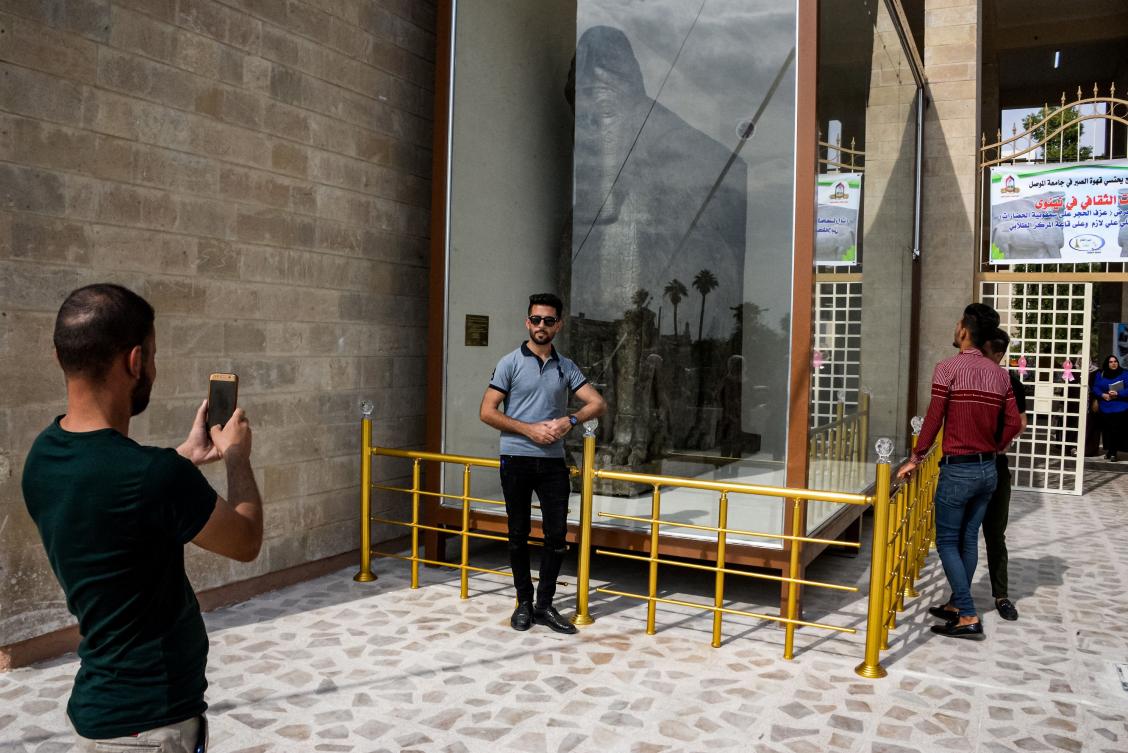
MOSUL: Two high-tech replicas of iconic Assyrian statues destroyed by the Daesh group in northern Iraq were unveiled on Thursday at the University of Mosul.
The real “lamassu” — massive statues of winged bulls with human faces — had adorned a royal throne room in the ancient city of Nimrud for centuries, and one was later exhibited in the Mosul Museum.
But extremists destroyed the originals after they swept across northern Iraq in 2014, blowing up Nimrud and filming themselves taking hammers to pre-Islamic artefacts they deemed heretical.
Iraqi troops recaptured Mosul in mid-2017, but the museum has remained shuttered and the lamassu in ruins.
Using 3D recordings of lamassu fragments, the Spanish Factum Foundation created copies, erected this week outside the student library at the University of Mosul.
“This gift is a message of hope that Mosul has returned to normal and its people must build their city,” Spanish Ambassador Juan Jose Escobar said at the statues’ unveiling.
Ahmad Qassem, a professor of history at the University of Mosul, said the lamassu’s hybrid figure is highly symbolic.
“The head symbolizes wisdom, the wings speed, and the body — a mix of a bull and a lion — represent strength,” he told AFP.
And Factum founder Adam Lowe told AFP the replicas now had their own meaning.
“We want them to be here as a symbol, a demonstration of what’s possible with technology when people work together to share cultural heritage, share understanding, and share our historical culture that links us all together,” he said.
“Now they’re sitting in front of the entrance to the student building and I hope they’ll guard everyone for many years to come,” said Lowe.
University student Ilaf Muhannad said she was elated to see her university house them.
“I’m so happy today to see the lamassu statues placed here, because it represents the civilization and heritage of Mosul. We demand the Iraqi government work on returning everything stolen from Mosul,” she said.

Main category: 

Iraqi security forces used ‘excessive force’ during protests that killed 157 -government inquiry


Iran threatens international navigation in the Gulf: US defense secretary

Thu, 2019-10-24 11:50

DUBAI: Iran targeted the Saudi facilities in Aramco in September, US Secretary of Defense Mark Esper said on Thursday, reiterating calls to deter the country’s threats.
Esper, who was speaking at the German Marshall Fund in Brussels, referred to the drone attacks at several Aramco sites on Sept. 14, saying “Iran threatens international navigation in the Gulf.”
He added the US “does not seek war with Iran, but we are prepared to do so if necessary.”
Meanwhile, the Pentagon chief also lashed out at Turkey for its military assault on Syrian Kurdish fighters across the border into Syria, days after the US withdrew its troops from the war-torn country.
Esper says Turkey’s unwarranted invasion into Syria jeopardizes security gains made in recent years as the US-led coalition and allied Syrian Kurdish forces battled the Daesh group.
President Donald Trump announced Wednesday that the US is lifting sanctions on Turkey after the NATO ally agreed to permanently stop fighting Kurdish forces in Syria. Esper was in Iraq Wednesday to discuss the withdrawal and the Daesh threat with Iraqi leaders and his military commanders.

(With Reuters)


Main category: 

US Secretary of Defense Esper meets King Salman, asks NATO to protect Saudi Arabia from IranRouhani: New sanctions against Iran signals US ‘desperation’


Lebanese president vows reforms as protests engulf country

Author: 
AFP
ID: 
1571902432005695500
Thu, 2019-10-24 07:31

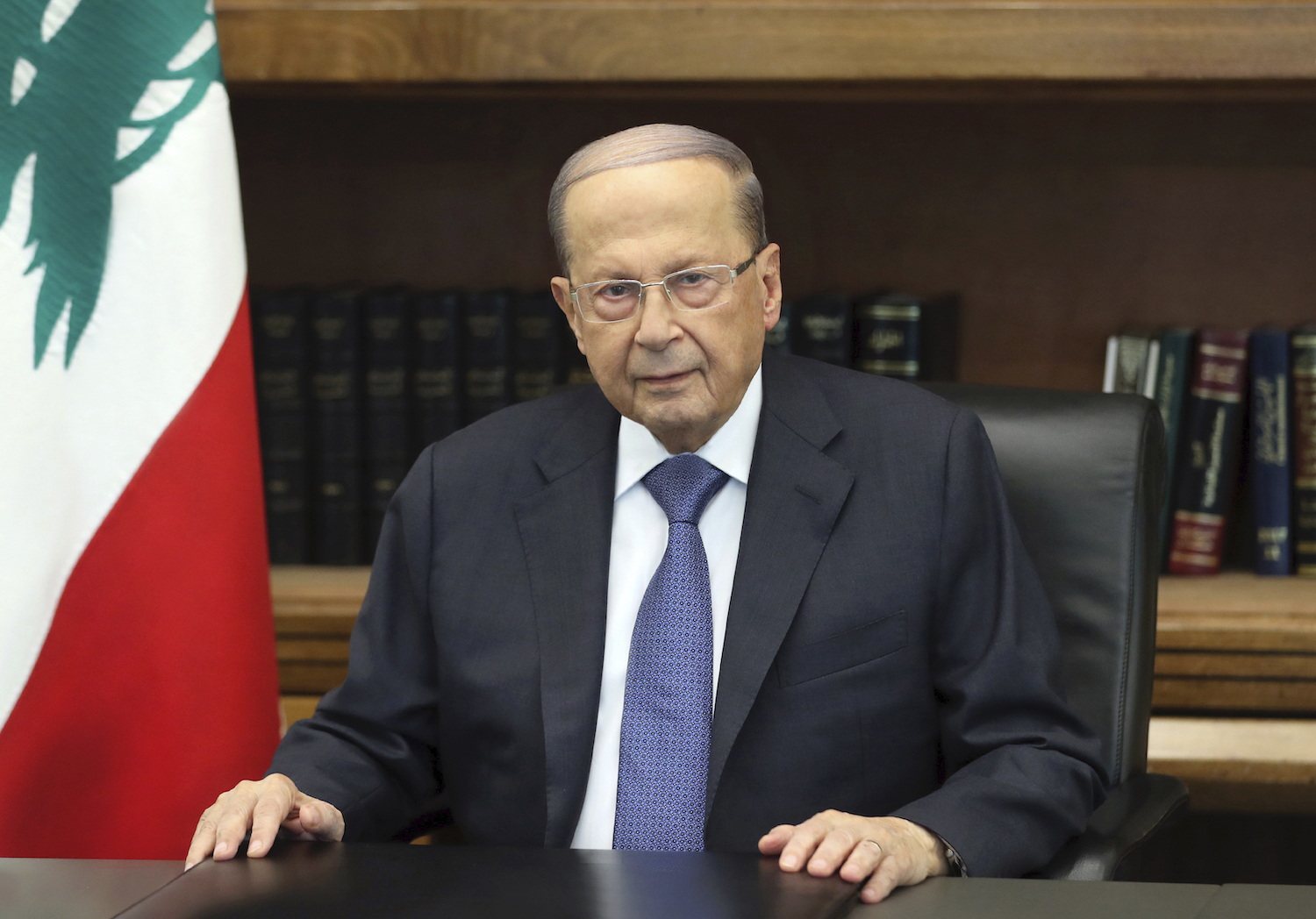
BEIRUT: Lebanon’s president pleaded Thursday with tens of thousands of protesters who have blocked main roads and paralyzed the nation for days, urging them to back economic reforms proposed by the prime minister as the “first step” toward saving the country from economic collapse.
The protesters, however, have already rejected the initiative and it didn’t appear that President Michel Aoun would sway them.
In his televised address, Aoun pledged to exert every effort to implement radical reform, but also said that change can only come from within state institutions. He said freedom of transportation must be respected, urging demonstrators to remove roadblocks.
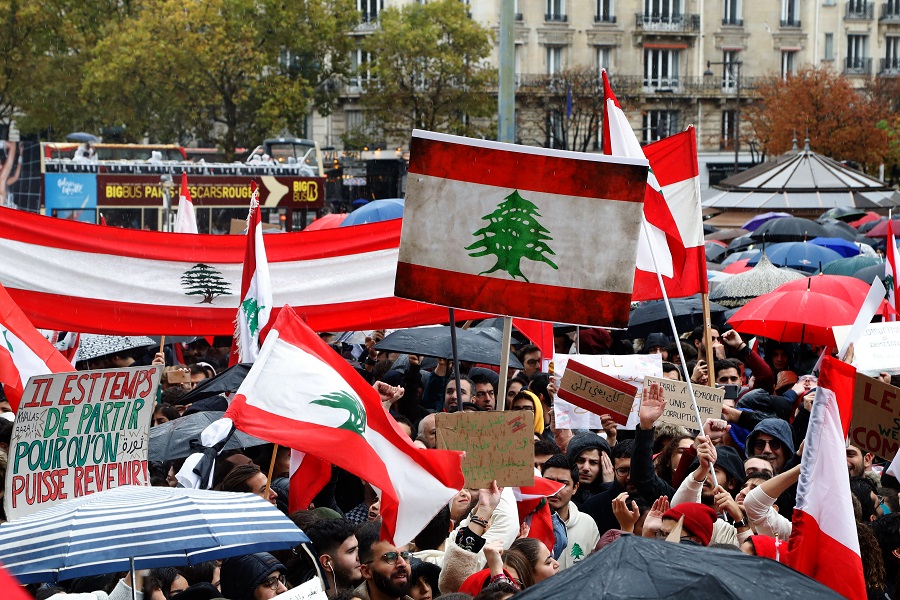
Lebanon has been engulfed by protests since last Thursday, a paralysis that has compounded the country’s severe economic crisis and is threatening to plunge it into another cycle of chaos and instability.
The leaderless protests were triggered by new proposed taxes, and have escalated into a nationwide revolt against the country’s sectarian-based leaders whom the demonstrators accuse of corruption and mismanagement.
Aoun’s comments are his first since the protests started. On Monday, Prime Minister Saad Hariri announced a package of economic reforms the government hopes will help revive the struggling economy, but the protesters denounced it as empty promises designed to quell their movement. They have insisted on staying in the street until the government resigns. Some have called on the president to step down as well.
For Lebanon, these protests have also been the first of their kind, shattering taboos and openly taking aim at powerful sectarian leaders from their own communities.
As Aoun spoke, hundreds of people gathered in downtown Beirut listening to his speech through a giant speaker, shouted: “Come on, leave, your term has left us hungry.”
They later dismissed his speech, saying it offered nothing new.
“The (economic) reform paper that was adopted is the first step to save Lebanon and to distance the scepter of financial and economic collapse,” Aoun said.
The president promised the protesters’ “call will not go unanswered,” adding he’s ready for constructive dialogue.
“I heard lots of calls for bringing down the regime,” he said. “The regime cannot be changed in the squares… this can only happen through state institutions.”
Both Hariri and Aoun have warned that a government resignation would lead to another vacuum, at a time the country desperately needs a government to enact reforms to help the struggling economy.
Aoun invited the protesters to send representatives to meet with him.
“I am ready to meet your representatives who will carry your worries and specify your demands, and you can listen to our concerns about an economic collapse,” he said. “We should work together to achieve your goals without causing a collapse.”
“Dialogue is the best way for salvation. I am waiting for you,” he added.

Main category: 

London’s Lebanese sympathize with protests, struggle to send moneyLebanese protesters unbowed as army vows to open roads