Defense chief Esper: US troops, armored vehicles going to Syria oil fields

Author: 
By LOLITA C. BALDOR | AP
ID: 
1572016904926126100
Fri, 2019-10-25 14:52

BRUSSELS: Pentagon chief Mark Esper said Friday that the United States will leave more American troops and armored vehicles in eastern Syria to help prevent Daesh militants from gaining access to oil fields controlled by US-allied Syrian Kurds. That deployment will likely include tanks, a US official said.
The defense secretary confirmed that the US will send in an armored force to the region, but he did not provide details or the number of troops.
His comments at a news conference at NATO headquarters in Brussels reflected one more change in what has been a rapidly shifting US stance on American forces in Syria.
Just last week, President Donald Trump insisted that all 1,000 American forces in Syria would leave the war-torn country. Then he acknowledged that a couple hundred would stay at the Al-Tanf garrison in the south.
In tweets Friday, Trump said “Oil is secured. Our soldiers have left and are leaving Syria for other places, then…. COMING HOME! … When these pundit fools who have called the Middle East wrong for 20 years ask what we are getting out of the deal, I simply say, THE OIL, AND WE ARE BRINGING OUR SOLDIERS BACK HOME, Daesh SECURED!“
Esper, when asked about America’s shifting Syria strategy, said the US mission has always been to prevent the resurgence of Daesh. “That mission remains unchanged,” he said.
But Esper said at NATO that the US is “considering how we might reposition forces in the area in order to ensure we secure the oil field.” He added: “We are reinforcing that position. It will include some mechanized forces.”
The US official who send the deployment probably would include tanks offered no more details. This official was not authorized to discuss internal discussions about military planning and spoke on condition of anonymity.
He said the US wants to ensure that Daesh militants do not get access to the oil, which could give the insurgent group to obtain resources to rebuild.
Trump in the past days has turned a greater focus on the Syrian oil facilities in the eastern part of the country, saying US will stay in Syria to protect them.
According to officials, top military leaders have pushed for the US to leave forces in Syria to guard against a Daesh resurgence. While the group’s physical zone of control was largely destroyed by US and Syrian Kurdish forces, insurgents remain in small pockets throughout the country and in Iraq.
Russian and Turkish leaders have now divided up security roles in northeast Syria following America’s abrupt troop withdrawal from the Turkey-Syrian border region. The American move triggered widespread criticism that the Trump administration had abandoned the Syrian Kurdish fighters who fought alongside the US against Daesh for several years.
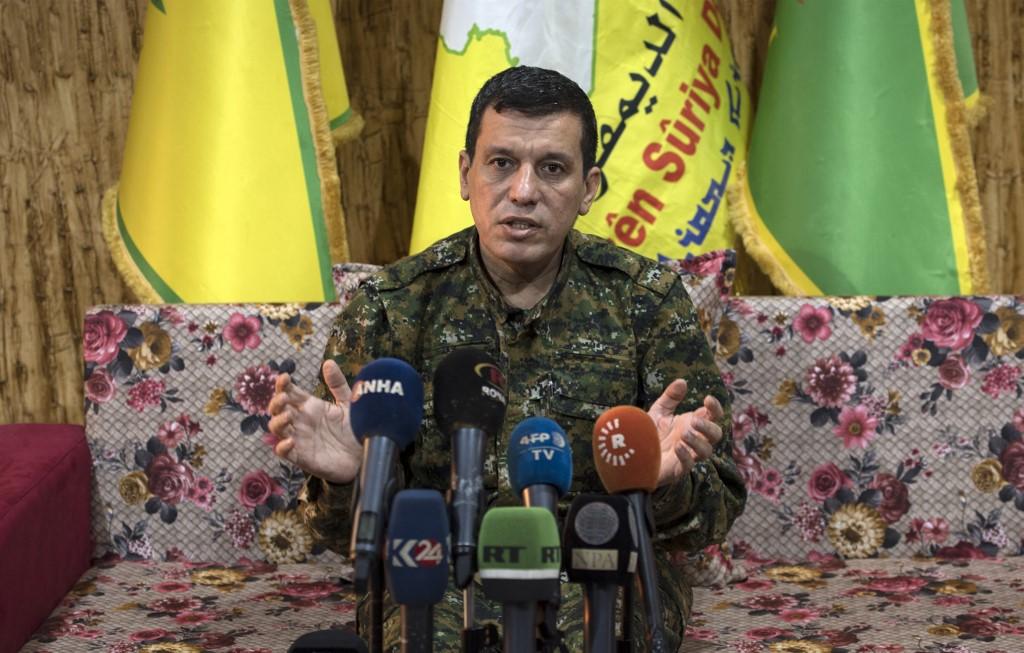
Trump spurred a fresh wave of condemnation when he tweeted Thursday that he had spoken with Syrian Kurdish military chief Mazloum Abdi and said that perhaps “it is time for Kurds to start heading to the Oil Region.” That was an apparent reference to the oil fields in Deir Ezzor. US military commanders see that region as critical to holding off a Daesh resurgence there.
“We’ve secured the oil, and, therefore, a small number of US troops will remain in the area where they have the oil,” Trump said. “And we’re going to be protecting it, and we’ll be deciding what we’re going to do with it in the future.”
White House officials did not respond to requests for greater clarity about Trump’s tweet suggesting Kurds head to the oil region.
The Pentagon released a statement Thursday saying it was committed to sending additional military forces to eastern Syria to “reinforce” control of the oil fields and prevent them from “falling back to into the hands of Daesh or other destabilizing actors.”

Main category: 

US Secretary of Defense Esper meets King Salman, asks NATO to protect Saudi Arabia from IranTurkey deporting Syrian refugees to planned ‘safe zone’ region: Amnesty



Yemen government strikes power-sharing deal with southern rebels

Author: 
AFP
ID: 
1572014410915878200
Fri, 2019-10-25 10:08

RIYADH: Yemen’s southern separatists have struck a power-sharing deal with the internationally-recognized government aimed at ending the conflict between the two sides, sources said Friday.
The deal would see the secessionist Southern Transitional Council (STC) handed a number of ministries, and the government return to the southern city of Aden, according to officials and reports in Saudi media.
Saudi Arabia’s Al-Ekhbariya TV channel said a government of 24 ministers would be formed, “divided equally between the southern and northern governorates of Yemen.”
Under the deal, the Yemeni prime minister would return to Aden to “reactivate state institutions,” it added.
Al-Ekhbariya said the Arab coalition which backs the Yemeni government against the Houthis would oversee a “joint committee” to implement the agreement.
Security Belt Forces — dominated by the STC — in August took control of Aden, which had served as the government’s base since it was ousted from the capital Sanaa by the Iran-backed Houthis in 2014.
The clashes between the separatists and government forces — who for years fought on the same side against the Houthis — had raised fears the country could break apart entirely.
The warring factions have in recent weeks been holding indirect and discreet talks mediated by Saudi Arabia in the kingdom’s western city of Jeddah.
“We signed the final draft of the agreement and are waiting for the joint signature within days,” an STC official currently in Riyadh told AFP.
Both Yemen’s President Abedrabbo Mansour Hadi and STC leader Aidarous Al-Zoubeidi are expected to attend a ceremony in Riyadh, he added.
A Yemeni government official, declining to be named, confirmed the deal had been agreed and was expected to be signed by Tuesday.
It sets out “the reformation of the government, with the STC included in a number of ministries, and the return of the government to Aden within seven days after the agreement being signed,” he told AFP.

Main category: 

Houthis commit over 500 violations in less than two weeksHouthis killed during airstrikes in Yemen’s Hajjah


Morocco arrests six suspected Daesh members

Author: 
Reuters
ID: 
1572014346435873300
Fri, 2019-10-25 11:50

RABAT: Moroccan security services have broken up a suspected Daesh cell, arresting six members near Casablanca and in the northern towns of Chefchaouen and Ouazzane, a police spokesman said on Friday.

Compared with other North African countries, Morocco has been largely insulated from militant attacks. Its most recent took place in December 2018, when militants loyal to Daesh killed two Scandinavian tourists.

Police seized firearms including guns, automatic pistols and hunting rifles in Tamaris, south of Casablanca as well as ammunition and bladed arms, the spokesman, Boubker Sabik, told Reuters.

They also discovered dangerous chemical material and liquids that could be used to make explosives, along with Daesh flags and a document and video recording showing the cell pledge allegiance to the international extremist group.

The cell also possessed navigation and swimming material including an inflatable boat, the spokesman added.

Official Moroccan figures from late 2018 showed that 1,669 Moroccans had traveled to Syria and Iraq to join Daesh. However, the only other major attack in the country this decade was the 2011 bombing of a Marrakesh restaurant, killing 17.

Main category: 
Tags: 

Bodies of 2 Scandinavian women found in Morocco’s High Atlas mountainsAlleged ringleader admits Scandinavian hiker killings at Morocco trial


Turkey warns US meeting with SDF chief would ‘legitimize terrorists’

Author: 
AFP
ID: 
1572000521054609500
Fri, 2019-10-25 10:41

ANKARA: Turkey on Friday warned Washington that any meeting with the leader of a US-backed Syrian Kurdish-led force risked “legitimizing terrorists.”
US President Donald Trump on Thursday said he had talked with Mazlum Abdi, commander of the Syrian Democratic Forces (SDF) which fought against extremists in Syria, and that he had “really enjoyed” the conversation.
In a tweet on Wednesday, Trump thanked Mazlum and said: “I look forward to seeing you soon,” raising fears in Turkey of a possible face-to-face meeting between the two men in the United States.
“If you start legitimizing terrorists like this, tomorrow you will end up meeting with Baghdadi as well,” Turkish Foreign Minister Mevlut Cavusoglu said in televised remarks.
Abu Bakr Al-Baghdadi is the head of Daesh.
“It is not acceptable for our allies to meet with a terrorist wanted under a red notice,” Cavusoglu told reporters in Baku.
“We have informed the US of all of this in a written note,” the minister added.
Turkey says there is an Interpol red notice for Abdi, which Turkish NTV broadcaster reported had been issued in 2011.
A group of American senators including Lindsey Graham earlier this week urged the US State Department to expedite a visa for Abdi to enable a visit where he can speak to officials and lawmakers on the situation on the ground in Syria.
Turkish Justice Minister Abdulhamit Gul earlier on Friday said if Abdi entered the US, “because there is a red bulletin, because there is an arrest warrant…, this person should be caught, arrested and extradited to Turkey.”
Gul told reporters in the Turkish border town of Akcakale that Turkish diplomats had contacted their US counterparts to remind them that Abdi was a wanted individual.
Relations between Turkey and the US are particularly tense after Ankara launched a cross-border offensive on October 9 against the Kurdish YPG militia, whose fighters make up the bulk of the SDF.
But there have also been strains over Washington’s failure to extradite Muslim preacher Fethullah Gulen, accused by Ankara of ordering the 2016 failed coup. which Gulen has denied.

Main category: 

300 Russian police arrive in Syria for border patrolsTurkey deporting Syrian refugees to planned ‘safe zone’ region: Amnesty


Lebanon’s 9th day of protests witness rise in violence

Author: 
AP
ID: 
1571998609974494000
Fri, 2019-10-25 10:05

BEIRUT: Lebanon’s ninth day of anti-government protests witnessed a change in pace as clashes erupted between Hezbollah supporters, protestors and riot police, before and after the group’s Secretary-General Hassan Nasrallah’s speech.

Several people were injured as both sides hurled projectiles at one another. It was a dramatic shift from the morning, when people in Beirut’s Martyrs Square and Riad Al-Solh calmly set up stands of Lebanese merchandise, and vendors prepared their food offerings.

Riot police were forced to intervene between both sides in an attempt to deter the projectiles following Nasrallah’s speech — which was decried as similar to an earlier address given by Prime Minister Saad Hariri.

“They’re all the same: Hariri, Nasrallah, Aoun, Bassil,” Alaa Mortada, one of the protestors, told Arab News.

“Look at what they’re doing. Aren’t we all Lebanese? This is why we need to remove religion from politics,” he added.

Nasrallah continued to throw his weight behind the Hariri government, claiming that the protests were an “achievement” since they pushed the government to announce a budget with no tax.

“We don’t accept toppling the presidency, we also don’t back government resignation,” he said, adding: “Lebanon has entered a dangerous phase, there are prospects that our country will be politically targeted by international, regional powers.”

He ended the speech by urging his supporters to leave the protests. Several arrests were made following the clashes.

Similar scuffles broke out on Thursday night at the same site in central Beirut.

Following the scuffles more riot police with masks and batons were dispatched to the square to defuse the situation, which appeared to be growing more tense.

The demonstrators, who have thronged towns and cities across Lebanon prompting the closure of banks and schools, have been demanding the removal of the entire political class, accusing it of systematic corruption.

The protests are expected to continue throughout the night.

Numbers have declined since Sunday, when hundreds of thousands took over Beirut and other cities in the largest demonstrations in years, but could grow again over the weekend.

Lebanon’s largely sectarian political parties have been wrong-footed by the cross-communal nature of the demonstrations, which have drawn Christians and Muslims, Shiite, Sunni and Druze.

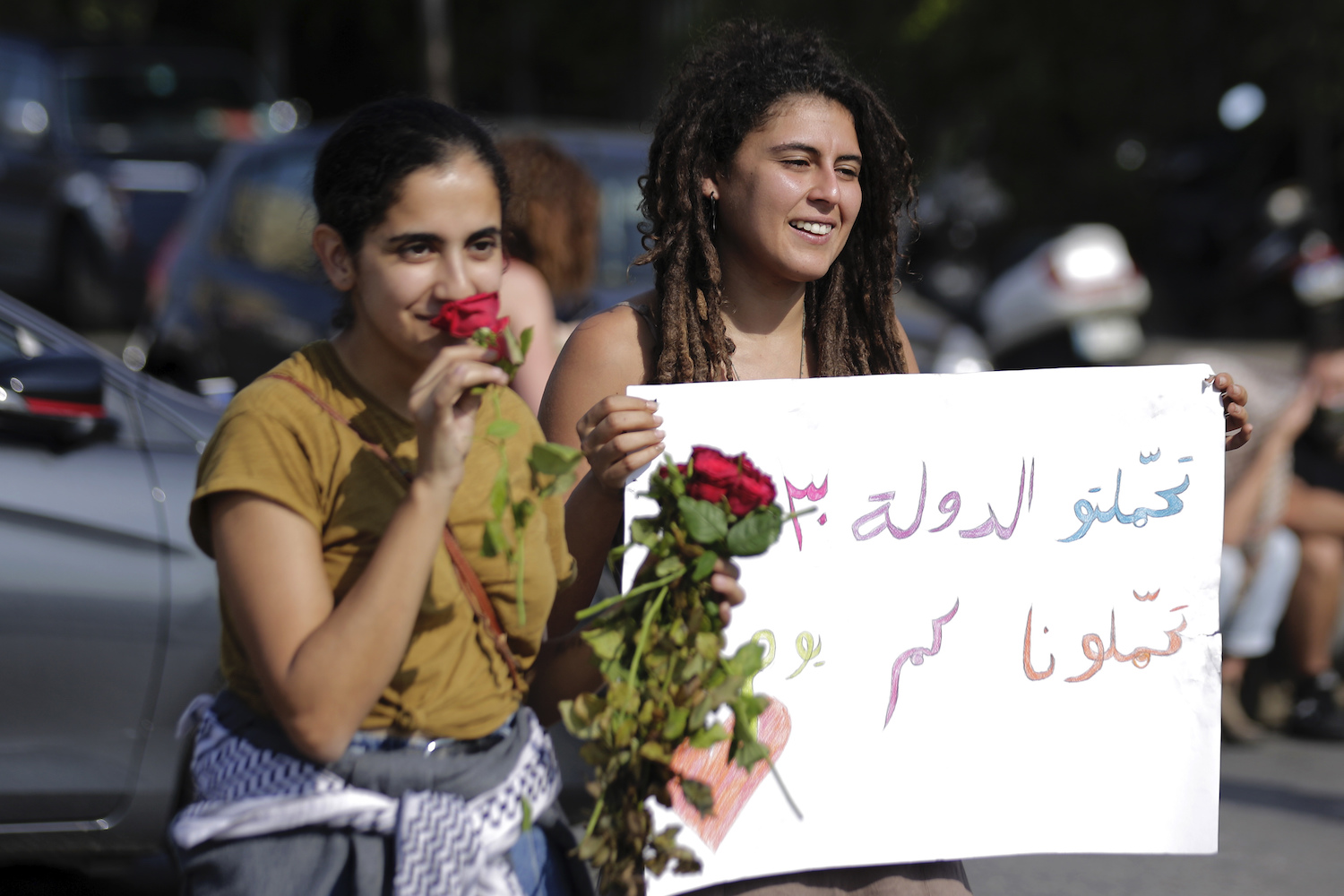
Waving Lebanese national flags rather than the partisan colors normally paraded at demonstrations, protesters have been demanding the resignation of all of Lebanon’s political leaders.


Volunteers clear trash in a mass clean-up in central Beirut on Friday, October 25, 2019. (AFP)

In attempts to calm the anger, Prime Minister Saad Hariri has pushed through a package of economic reforms, while President Michel Aoun offered Thursday to meet with representatives of the demonstrators to discuss their demands.

But those measures have been given short shrift by demonstrators, many of whom want the government to resign to pave the way for new elections.

“We want to stay on the street to realize our demands and improve the country,” one protester, who asked to be identified only by his first name Essam, said.

“We want the regime to fall … The people are hungry and there is no other solution in front of us,” said Essam, a 30-year-old health administrator.

On Friday morning, protesters again cut some of Beirut’s main highways, including the road to the airport and the coast road toward second city Tripoli and the north.

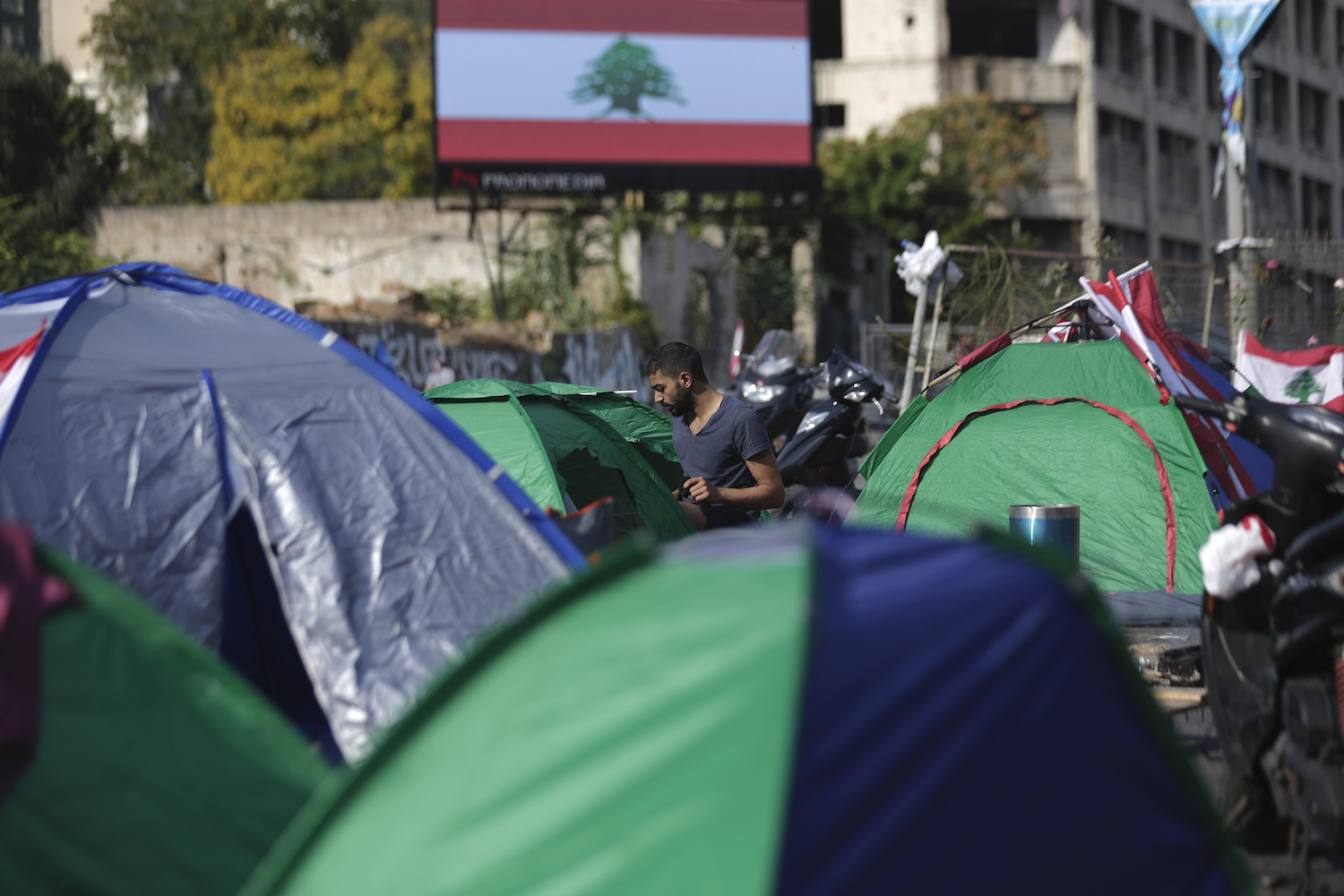
On the motorway north of Beirut, demonstrators had erected tents and stalls in the center of the carriageway.

But there was no sign of any move by the army to try to reopen the road.

In central Beirut, where street parties have gone on into the early hours, groups of volunteers again gathered to collect the trash.

“We are on the street to help clean up and clean up the country,” volunteer Ahmed Assi said.

“We will take part in the afternoon to find out what the next stage will be,” said the 30-year-old, who works at a clothing company.

Lebanon’s Al-Akhbar newspaper, which is close to Hezbollah, headlined its front page “Risk of chaos,” saying the movement had pledged to work to reopen blocked roads.

Hezbollah maintains a large, well-disciplined military wing.

Fares Al-Halabi, a 27-year-old activist and researcher at a non-governmental organization, said that “the Lebanese parties are trying to penetrate the demonstrations and put pressure on them or split them.”

Lebanon endured a devastating civil war that ended in 1990 and many of its current political leaders are former commanders of wartime militias, most of them recruited on sectarian lines.

Persistent deadlock between the rival faction leaders has stymied efforts to tackle the deteriorating economy, while the eight-year civil war in neighboring Syria has compounded the crisis.

More than a quarter of Lebanon’s population lives in poverty, according to the World Bank.

The post-war political system was supposed to balance the competing interests of Lebanon’s myriad sects but its effect has been to entrench power and influence along sectarian lines.

— With input from Reuters

Main category: 

‘Loyal’ Tripoli turns its back on Lebanon’s Hariri PM Hariri’s office says foreign governments back Lebanon reform goals