Wrong about Japan: Arab News-YouGov survey reveals Arab misconceptions

Author: 
Mon, 2019-10-28 03:19

DUBAI: Nearly half the people in the Arab world believe the Japanese invented the mobile phone and more than a third think they also created personal computers, a new survey suggests.

The Arab News-YouGov poll, which highlights Arabs’ positive perceptions of Japan, has also revealed a number of misconceptions.

Arabs are misinformed about Japan’s executive authority, with 30 percent thinking the emperor has the power to sign laws. An even bigger number — 45 percent — believe Japan has a nuclear bomb.

Based on online interviews with 3,033 Arabic speakers from 18 countries, the poll was commissioned by Arab News as part of the recent launch of its Japan online edition.

Such misconceptions among Arabs were attributed by experts to several factors, including how history is taught, knowledge gaps across generations and the use of technology.


Politics

Ignorance of Japanese politics was also common among the respondents, almost half of whom said Japan was a member of the UN Security Council. Nine percent thought Japan’s military was aligned with North Korea.

Japan’s history of earthquakes and natural disasters, including the 2012 Fukushima nuclear plant disaster, appears to have influenced Arab perceptions. Close to half of the respondents associated Japan with earthquakes, despite its advanced infrastructure for managing natural disasters.

Dr. Theodore Karasik, senior adviser at Gulf State Analytics in Washington, DC, said mobile phones were a useful tool to eliminate misconceptions. “The way Japanese society uses mobile phones provides an interesting cross-cultural reference point regarding use of public space and being better informed,” he said.

And who invented them? That was Marty Cooper, a US engineer, in 1973.

Main category: 

Arabs underestimate Japan’s energy dependence on the Gulf, finds pollMost Arabs in the dark about Japan’s power structure


Al-Baghdadi’s death calms ‘rage and fire’ inside terror survivors

Mon, 2019-10-28 00:59

JEDDAH/ANKARA: The US special forces in eight helicopter gunships left Anbar province in western Iraq and flew low and fast below the night sky of northern Syria.

Their destination: Barisha, just north of Idlib, 5 kilometers from the Turkish border. Their target: Abu Bakr Al-Baghdadi, founder and leader of Daesh, and the world’s most wanted terrorist, with a $25 million bounty on his head.

The flight was far from safe. The ground beneath the US aircraft bristled with conflicting military forces in Syria’s complex civil war — from the Assad regime, Russia, Iran and Turkey, to myriad heavily armed extremist militias, many linked to Al-Qaeda.

However, Russia controls the airspace and both Moscow and Ankara had been tipped off that a US mission was underway. The gunships, and their accompanying attack drones, reached their destination unharmed.

Opinion

This section contains relevant reference points, placed in (Opinion field)

Only there did they encounter armed defensive action from the ground, which was swiftly dealth with by a display of devastating firepower from above.

Until then, asleep in the hideout in Barisha where he had spent the previous 48 hours, Al-Baghdadi must have thought he was safe. But as the US special forces blasted their way into his compound and hunted him down, he knew it was all over.

Wearing a suicide vest and chased by US troops with pursuit dogs, the Daesh leader fled into a dead-end tunnel, taking three children with him.

Confronted with either capture or death, Al-Baghdadi chose the latter, and detonated his explosive vest — not only killing himself, but adding three more innocent lives to the toll of thousands that he and his followers had already taken.

In the Situation Room at the White House in Washington, DC, US President Donald Trump watched the events unfold via a live video feed, accompanied by senior administration officials, security advisers and military chiefs. When it was over, and US forces safely back at base, he tweeted: “Something very big has just happened!”

It had indeed. The significance of Al-Baghdadi’s death may be gauged by the number of countries and individuals lining up to claim credit for having played a key role.

In northern Syria, Kurdish fighters from the Syrian Democratic Forces (SDF) said they had supplied crucial intelligence on Al-Baghdadi’s whereabouts.

Their commander, Mazloum Abdi, said it was a joint operation after “cooperation on the ground and accurate monitoring” for five months. He called it “successful and historic” joint intelligence work.

In Iraq, senior officials said vital intelligence was obtained after an Al-Baghdadi aide was killed by a US airstrike in western Iraq. The man’s wife was arrested and was a key source of information on the Daesh leader’s whereabouts. Al-Baghdadi’s brother-in-law was also arrested by the Iraqis, and supplied further information.

In Ankara, the defense ministry said: “Turkey exchanged information and coordinated with US military counterparts prior to the US operation in Idlib.

“We continue to work with our friends and allies against terrorism in all its forms and manifestations. It’s time to eliminate all the remaining terrorist leaders.”


AL-BAGHDADI SIGNIFICANT DATES

  • Apr. 2010 Abu Bakr Al-Baghdadi becomes leader of Islamic State of Iraq
  • Apr. 2013 Al-Baghdadi announces group’s new name
  • Jan. 2014 Daesh takes control of Fallujah in Iraq and Raqqa in Syria
  • June 9-11, 2014 Daesh seizes Iraq’s Mosul and Tikrit
  • June 29, 2014 Al-Baghdadi declares “Caliphate” over Iraqi, Syrian territory
  • July 4, 2014 Al-Baghdadi makes first public appearance in Mosul’s Al-Nuri Mosque
  • Aug. 2014 Daesh captures Sinjar in Iraq and begins slaughter of Yazidi community
  • Aug. 2014 The US launches targeted airstrikes against Daesh in Iraq
  • June 26, 2016 Fallujah declared liberated by Iraqi forces
  • June 6, 2017 US-backed, Kurdish-led SDF fighters begin assault to liberate Raqqa
  • Oct. 17, 2017 SDF takes full control of Raqqa
  • Aug. 23, 2018 Al-Baghdadi releases audio recording urging followers to continue the fight
  • Oct. 27, 2019 President Trump declares Al-Baghdadi’s death after US raid in northwestern Syria


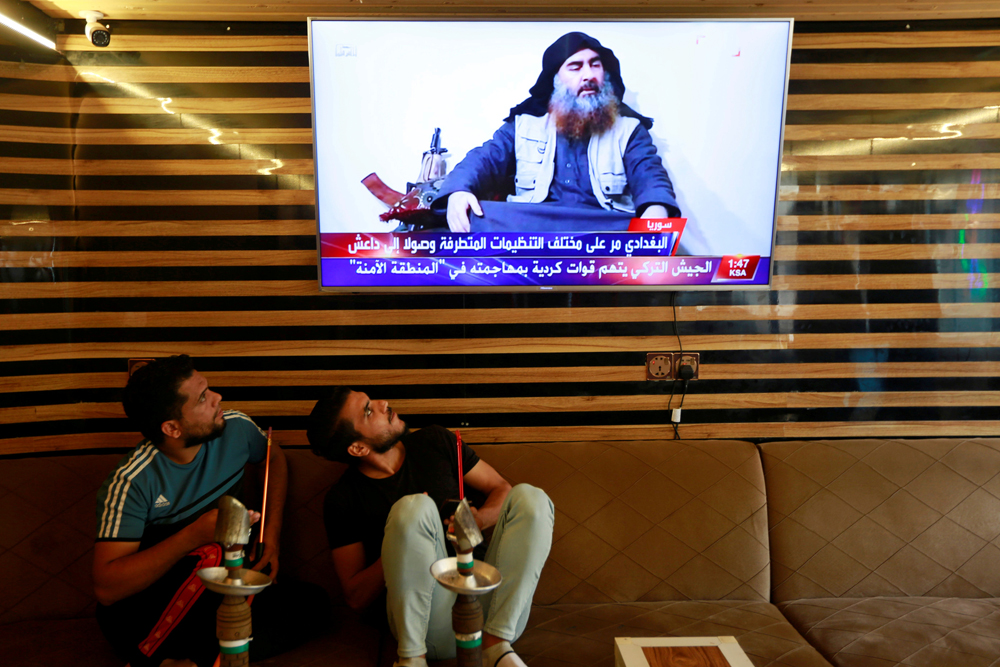
In remarks on Sunday, Trump paid tribute to the many victims of Daesh’s gruesome filmed executions at the height of their so-called “caliphate”, and their families were swift to respond to Al-Baghdadi’s death.

“I am grateful to our president and brave troops for finding Al-Baghdadi,” said Diane Foley, whose son James was among the victims. “I hope this will hinder the resurgence of terror groups and I pray that captured fighters will be brought to trial and held accountable.”

Safi Al-Kasasbeh, whose son Muath was a Royal Jordanian Air Force pilot burned to death by Daesh after his F-16 jet crashed over Syria in December 2014, said: “I congratulate myself and the whole Muslim nation. This tyrant and terrorist has caused damage to the image of Islam and portrayed it as a terrorist religion. Islam is innocent of such a coward.

“I had hoped I would have the chance to kill him myself, but nevertheless this news of him being terminated has calmed the rage and fire inside me.”

Main category: 

Trump: Daesh leader Al-Baghdadi ‘died a coward’ in US raid in north-west SyriaWorld reacts to Daesh leader Al-Baghdadi’s deathIraq’s Mosul breathes easier after death of ‘butcher’ Al-BaghdadiMost Wanted Man On Earth: Abu Bakr Al-Baghdadi, self-proclaimed leader of the murderous Daesh ‘caliphate’


Iraqi PM Abdul-Mahdi refuses to resign over deadly protests

Mon, 2019-10-28 00:38

BAGHDAD: Iraqi Prime Minister Adel Abdul-Mahdi will not resign in response to the demands of demonstrators and refuses to allow his country to slide into civil war, his spokesman said Sunday.

Baghdad and seven other Shiite-dominated southern provinces have witnessed mass demonstrations since the beginning of the month. The protests have been against corruption, unemployment and a lack of basic services.

Demonstrations stalled after the first week when at least 147 people, including security personnel, were killed and more than 7,000 injured in a bloody crackdown by the Iraqi government and its allies.

But the protests resumed on Friday after Iraqi forces vowed not to use live ammunition against demonstrators.

Despite the pledge, at least 74 people have been killed and more than 3,600 wounded in the past three days, according to the Independent High Commission for Human Rights in Iraq.

Protesters have responded to the violence by increasing their demands, which now include the resignation of Abdul-Mahdi and his government, changing the election law, and holding fresh elections.

The prime minister’s insistence on not resigning, means the cycle of violence is expected to continue and increases the possibility of clashes erupting between the different Shiite factions.

“Abdel-Mahdi will not resign in this critical and difficult circumstance,” Sa’ad Al-Hadaithi, the prime minister’s spokesman, told a local Iraqi TV station on Sunday evening. “The resignation of the government could lead the country into a dangerous situation. We warn of the loss of civil peace and the collapse of the country into chaos.

“The prime minister continues to respond to the legitimate demands of the demonstrators and will not allow the loss of control of the situation.”

Most of the casualties in Baghdad have been from tear gas, while in the provinces they have mainly been caused by clashes when demonstrators attempted to attack the headquarters of Iranian-backed political parties, security officials and witnesses told Arab News.

Abdul-Mahdi attempted to quell the protests with a promise to secure hundreds of thousands of jobs, speeding up corruption trials, and increased welfare for poor families.

But after a two week pause, the incentives appear to have failed with large numbers of demonstrators, returning to the streets with increased popular support, especially in the Shiite communities.

His refusal to resign is linked to the positions of his local and regional allies. Several Iraqi political leaders allied with Abdul-Mahdi told Arab News that an agreement overseen by Gen, Qassem Soleimani, the powerful Iranian military commander, was made to keep Abdul-Mahdi in his post until the end of the crisis.

Soleimani, who commands the Quds Force of the Islamic Revolutionary Guard Corps, is accused of leading the crackdown on demonstrators in Baghdad when they first erupted.

“All the Iraqi political parties involved in the government were clearly informed that they are not allowed to take any step to resign Abdul-Mahdi now,” a prominent Shiite governmental advisor closed to Abdul-Mahdi told Arab News.

“At the first days of the crisis (demonstrations), we suggested to ask the prime minister to resign to calm the demonstrators and gain some time, but Haj (Soleimani) rejected this.

“He (Soleimani) said in front of most of the prominent political leaders that he is committed to protecting Abdel-Mahdi to the end and would not allow him to fall because of the protests.

“He said he would agree on the resignation of Abdul-Mahdi just after the end of the crisis. Maybe after two months and Abdul-Mahdi knew and agreed on this.”

Main category: 

Iraq students join rallies as pressure on government swellsIraqi security forces used ‘excessive force’ during protests that killed 157 -government inquiry


Daesh spokesman killed in fresh north Syria raid: SDF official

Author: 
AFP
ID: 
1572208607785536000
Sun, 2019-10-27 20:25

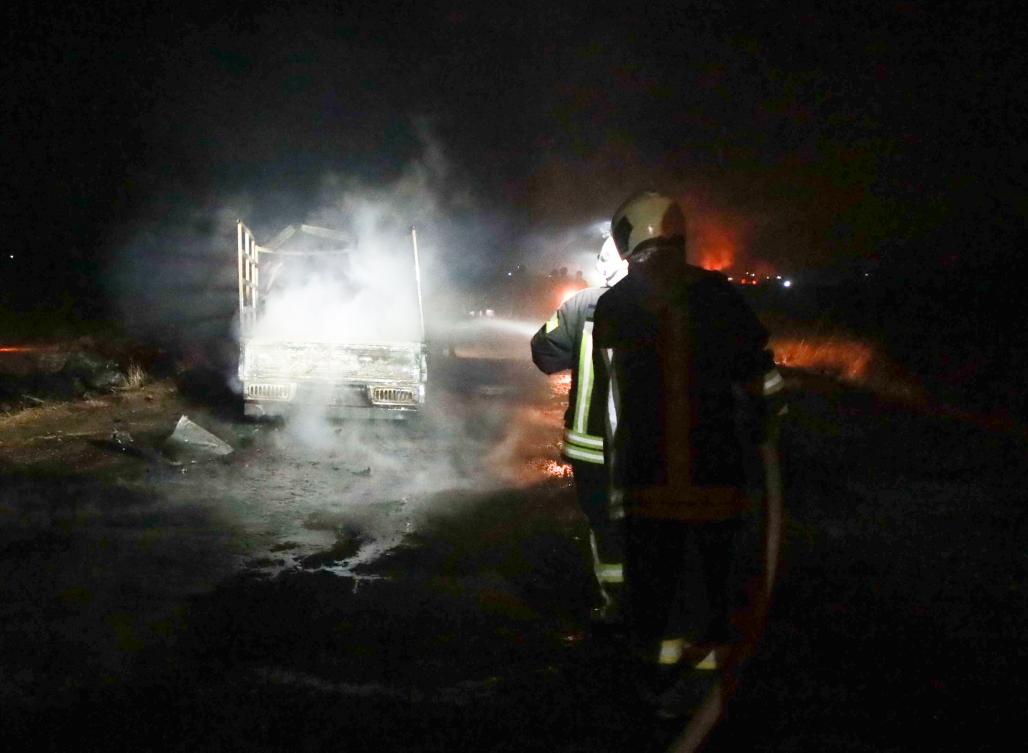
AIN AL BAYDAH, Syria: The Daesh group’s spokesman was killed Sunday in northern Syria, a top Kurdish official said, hours after the extremists’ leader Abu Bakr Al-Baghdadi was announced dead.
The official with the Kurdish-led Syrian Democratic Forces said Daesh spokesman Abu Hassan Al-Muhajir had been killed, after SDF chief Mazloum Abdi said he had been “targeted” in a fresh raid.
“Al-MuHajjir, the right-hand of Baghdadi and the spokesman for IS, was targeted in the village of Ain Al-Baydah near Jarablus, in a coordinated operation between SDF intelligence and the US army,” Abdi said on Twitter.
An AFP correspondent in Ain Al-Baydah, which is controlled by Turkey-backed Syrian rebels, said two vehicles where hit by airstrikes: a small pick-up truck and a larger truck carrying a small metal container.
He saw two corpses lying outside the first vehicle while a third charred body was in the metal container.
He could not identify who was behind the strikes or if they were carried out by warplanes or a drone.
The Britain-based Syrian Observatory for Human Rights confirmed the death of Al-Muhajir, saying he was among five IS members who were killed in a US-led operation backed by the SDF.
In a later post on Twitter, SDF spokesman Mustefa Bali said: “We believe Daesh spox.Al-Muhajir was in Jarablus to facilitate Baghdadi’s entry to Euphrates Shield area,” referring to a zone in northern Syria controlled by Turkey’s Syria proxies.
“The two US-led operations have effectively disabled top Daesh leadership who were hiding” in northwest Syria.
“More still remain hiding in the same area,” Bali said.
Earlier on Sunday, Trump said Al-Baghdadi was killed, dying “like a dog,” in a daring, nighttime raid by US special forces deep in northwest Syria.
Trump said that US forces killed a “large number” of Daesh militants during the raid, which culminated in Al-Baghdadi cornered in a tunnel, where he detonated a suicide vest.
The operation to kill Al-Baghdadi took place near a small village in northwestern Syria called Barisha, more than a 100 kilometers west of Ain Al-Baydah.
The Daesh “caliphate” was eradicated in March, nearly five years after it was proclaimed by Al-Baghdadi, largely reducing the militants to scattered sleeper cells.
At the time, the Daesh spokesman came out of months of silence to spur on his troops.
He had not delivered a speech since March.

Main category: 

World reacts to Daesh leader Al-Baghdadi’s deathTrump: Daesh leader Al-Baghdadi ‘died a coward’ in US raid in north-west Syria


Lebanese student protesters say it is their duty to carry on

Author: 
Zaynab Khojji
ID: 
1572203889585171900
Sun, 2019-10-27 22:14

BEIRUT: Lebanese students Lail Al-Durzi, 29, Firas Harb, 23, and Ghiwa Nasr, 22, insist they will not quit the protests that have paralyzed Beirut despite spending more than 11 days on the streets of the capital.
Al-Durzi, from Beirut, graduated from the Lebanese University and worked in media before leaving his job because he had not been paid for three months.
“I joined the revolution because the government was unable to extinguish a fire. How can we entrust it with our lives and future?” he told Arab News.
Al-Durzi said that he is still unable to pay rent for the house he shares with his mother.
“My father died and my brothers work for the Internal Security Forces and have been serving for 10 days. They do not know I am protesting and my mother opposed my participation at first, but then she changed her mind and supported me because politicians were noticing us,” he said.
He is active on social media along with his unemployed friends. “We shed light on unenforced rights in Lebanon, theft cases, taxes, social cases, and violence against women.”
Al-Durzi fears the revolution will fail. “The activists who spend the night in tents are being assaulted by people who insult us and steal from us without the intervention of the security forces,” he said.
“People we do not even know come to us with simple sandwiches to eat. But we have not given our full trust to anyone. We need time to establish a reference to the revolution.”
Harb, who has a master’s degree in architecture from the Lebanese University, has been jobless for a year. “It hurts to see the youth’s culture expand while we cannot invest our knowledge anywhere, not even in our homes,” he said.
His father owns a shop that sells vegetables, while his mother is unemployed, and his brother and sister are still in school.
“My mother opposed my participation in the protest, but last night she texted in support,” he said. “Many reasons forced us to take to the streets. We might not be a generation of war, but we are fighting an emotional war.
“The 10 days I have spent so far in Martyrs Square brought waves of optimism and others of pessimism that made us think of leaving. Nonetheless, we meet people that encouraged us to stay through their belief in righteousness of their cause.
“We are being hurt by people who do not like our protests. People here have different backgrounds and we do not know the objectives of everyone in the square,” Harb told Arab News.
Nasr, who specialized in biology and English literature at the Lebanese University, is staying in a bigger tent for protection.
“Our parents are children of war and were affected by it. I took to the street because we had a gasoline and bread shortage, which forced my elderly grandmother to bake for us. The Whatsapp tax came after and sparked the revolution,” she said.
“Politicians do not understand that we want to sack the entire political class. We do not prefer one leader over another.
“This revolution is not organized like the others. People are different and we have to accept that for it to succeed.
“The youth will not give up. It is our duty to carry on. If this revolution fails, politicians need to know that the people will never remain silent anymore and they will be watching them,” she added.

Main category: 
Tags: 

Crowds swell as Lebanese protest leadership concerns growLebanese president fails to calm protesters