EU Mideast envoy: Two-state solution ‘only viable option’ to end Palestinian conflict with Israel

Thu, 2019-10-31 01:23

RIYADH: The EU’s special representative for the Middle East peace process on Tuesday expressed her “optimism” for an end to the Israeli-Palestinian conflict but admitted a two-state solution was the only viable option.

Speaking to Arab News, Susanna Terstal said she was confident that the international community would ultimately find a way for Israelis and Palestinians to become “good neighbors.”

During a visit to Riyadh, where she held meetings with senior Saudi officials, the diplomat said: “As special representative, I get a mandate from the member states to contribute to actions and initiatives leading to a final settlement of the Israeli-Palestinian conflict.

“I work directly with all the member states and with high representative Federica Mogherini, maintaining close contact with all parties to the peace process.

“For the EU, international parameters are paramount. Like the League of Arab States (Arab League), we support a two-state solution, based on the 1967 borders, with Jerusalem as a shared capital and a just solution for the refugee problem,” she added.

Terstal noted that her three-day trip to Saudi Arabia, followed by talks in the UAE, was aimed at finding ways to work with Arab states on achieving their common goals.

On current progress of the peace process, she said: “I am an optimist, I always say and I believe at a certain point as an international community there will be a solution to the conflict, and Israelis and Palestinians will manage to find a solution and live in peace and security as good neighbors.

“That is our goal, of course, but what we see at the moment is that the situation on the ground is deteriorating: West Bank and Gaza are split; and the settlements are growing.

“The humanitarian situation in Gaza is also a big concern to the EU. People in Gaza often do not have clean drinking water or electricity and the health situation is critical. We at the EU strive to alleviate those problems. Like Saudi Arabia, the EU is one of the biggest donors to the Palestinians,” Terstal added.

“With the EU and its member states in the past 15 years, we have spent €10 billion (SR41.6 billion). We spend that money for making the two-state solution possible. We do this to empower the Palestinian Authority, invest in rule of law, but also making sure the people can have a decent life. That’s why we also do projects in Gaza and are working on a large desalination plant there, with EU and Arab funding.

“But the ultimate goal is always a Palestinian state, in the framework of a two-state solution,” she said.

Terstal travels to Israel and Palestine every six weeks and frequently visits other countries in the region such as Jordan and Egypt. Part of her job is to liaise with European capitals to ensure they are all on the same page in terms of their approach to the Middle East peace process.

“We say that Jerusalem is the capital of both states and that Israel and the Palestinians should agree on a solution for the city through negotiations. It is also an important issue of course for the international community, because Jerusalem is the home of holy sites for Muslims, Jews and Christians and should be accessible to all.”

Asked about the shrinking Palestinian territory and expansionist policy of Israel, she said: “The UN Security Council resolutions are very clear on this and we believe that we should really fight for achieving two states. We realize it’s getting harder and harder with the passing of time and the expansion of settlements.

“But to us, the two-state solution remains the most viable option. And I think it is the same position here and that is what we are working for.”

During her visit to the Kingdom, Terstal held talks with various Saudi officials including Minister of State for Foreign Affairs Adel Al-Jubeir, General Supervisor of the King Salman Humanitarian Aid and Relief Center (KSRelief) Dr. Abdullah Al-Rabeeah, and Secretary-General of the King Faisal Center for Research and Islamic Studies Dr. Saud Al-Sarhan.

She noted the extensive aid work of KSRelief to help the Palestinians.

“We had very good discussions on how we can cooperate in the future. There are a lot of possibilities for peace, and it was very important for me to understand how the leaders in the Kingdom are looking at the conflict,” she added.

Main category: 

Two states ‘only solution’ to resolve dispute, says GermanyUN chief says important Mideast peace efforts realize two-state vision



Syria government, opposition launch ‘historic’ constitutional review

Author: 
Thu, 2019-10-31 01:20

GENEVA: Syrian government and opposition negotiators sat face-to-face on Wednesday to launch a committee tasked with amending the country’s constitution, a meeting hailed by the UN as marking “a new chapter” for the war-torn nation.

The UN-brokered constitutional review committee includes 150 delegates — divided equally among President Bashar Assad’s government, the opposition and civil society.

Hopes remain dim that the group will reach a breakthrough toward a political resolution to Syria’s eight-year conflict, which has killed more than 370,000 people.

But UN Syria envoy Geir Pedersen said the meeting amounted to “a historic moment” and “a new chapter for Syria.”

“I know that it is not easy for all of you to be here together,” Pedersen said, conceding that “the road ahead will not be easy.”

Experts have argued that Assad — whose forces have made major gains against the opposition — has little to lose at the talks and will walk away before making any significant compromises.

His lead negotiator Ahmad Kuzbari praised the country’s existing charter as “a modern constitution.”

“But this does not prevent us from meeting to consider possible amendments, or changes to the current constitution, and putting a new constitution in place, one that … effects positive change,” he added.

In opening remarks that also included tough rhetoric against those battling Assad, Kuzbari insisted that Syrian forces would continue fighting regardless of ongoing diplomacy.

“We have been fighting terrorism before the meeting, and we will wage this battle during the meeting and afterward, until we liberate every inch of our nation’s precious land,” he said.

The head of the opposition delegation, Hadi Albahra, described the meeting as “a first step on a long path to recovery.”

“We all know that 150 people meeting today in this room have diverging opinions,” he said.

“But after eight painful years of suffering in Syria we came here to look for similarities.”

Following Wednesday’s ceremony, meetings between the 150 will take place before a smaller group of 45 delegates will begin work drafting the constitution.

There is no deadline for the process and Pedersen said the aim would be to reach consensus on all issues.

Where that is not possible, changes would only be made with a 75-percent majority vote in the committee to avoid having any one side dictate the results.

Constitutional review is a central part of the UN’s peace plan for Syria, which was defined by Security Council resolution 2254, adopted in December 2015.

The resolution also calls for UN-supervised elections.

Main category: 
Tags: 

Syrian army clashes with Turkish forces in northeast border area Pullout of Kurdish forces in northern Syria complete: Moscow


The post-Hariri resignation stage: Paving the way to assign a replacement

Author: 
Thu, 2019-10-31 00:48

BEIRUT: Prime Minister Saad Hariri announced the resignation of his government in a move that suggested there is no winner in Lebanon. Neither have the two-week protests fulfilled all their demands nor has Hariri succumbed to some of the powers’ rejection to bring about any government change.

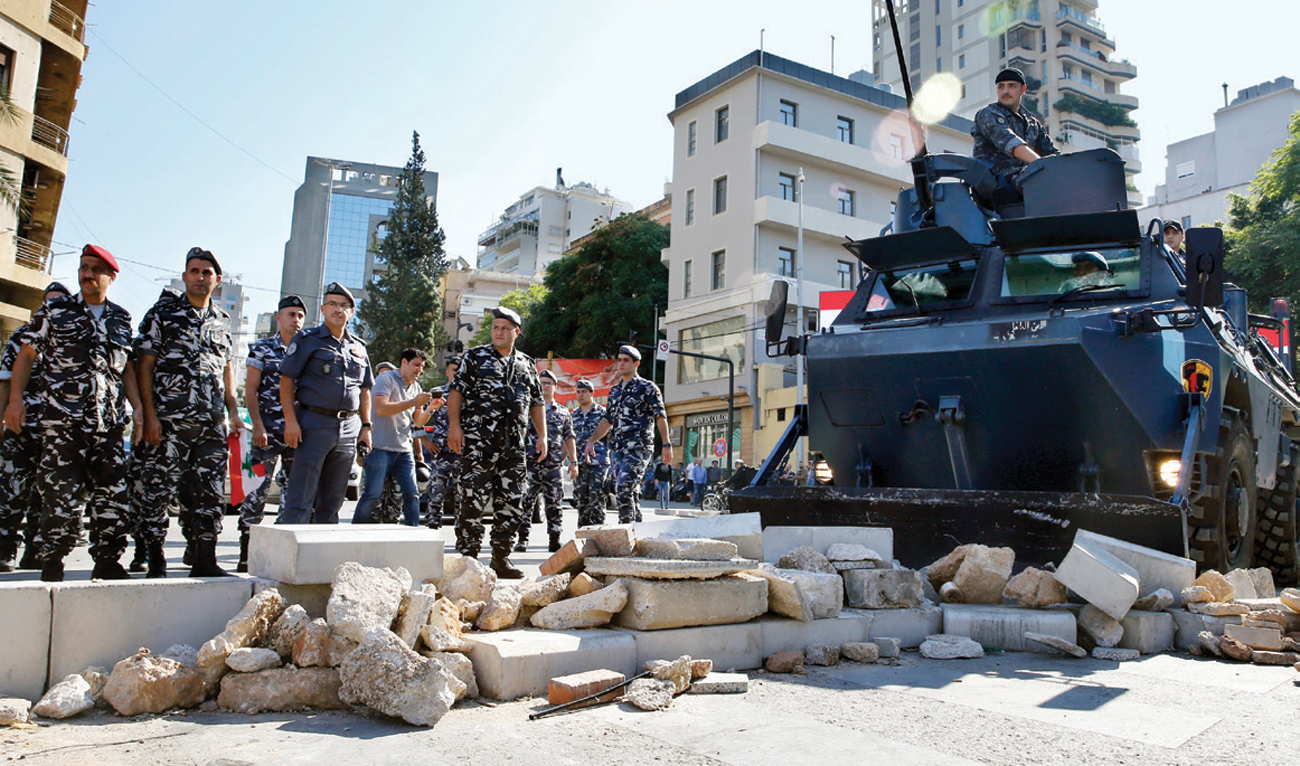
At two in the afternoon on Wednesday was the deadline set by the Lebanese army command for the protesters to reopen all the roads they have blocked across Lebanon. This demand aimed to “reconnect all regions in accordance with the law and public order.” The army command stressed “the right to protest in accordance with the provisions of the Constitution and under the protection of the law in public squares only.”

It was not easy to convince the protesters, who were adamant to continue to escalate, to leave the streets despite that their first demand, which is the resignation of the government, has been fulfilled.

There have been many debates between those who refused to leave the streets and those who are convinced that the squares should suffice in the next stage. Frustrated protesters have expressed outrage by accusing unnamed parties of having attempted to thwart the movement. Their high-pitched yelling expressed their disappointment, but everyone complied with the army command and left the streets.

Free Patriotic Movement ministers and MPs said in a statement that they were shocked by Hariri’s decision to resign and that he had not coordinated with President Michel Aoun.

The pro-Hezbollah Al-Akhbar newspaper said that Hariri succumbed to external pressure and participated in the coup against the Covenant in light of the foggy events in the streets.

Hezbollah Secretary-General Hassan Nasrallah had said last Saturday: “We do not accept overthrowing the Covenant, we do not support the resignation of the government, and we do not accept early parliamentary elections because this is a complicated issue.”

On the fourteenth day of the protests, Lebanon entered the stage of the constitutional steps that follow the resignation, intensifying communication to restore the political situation. In the presidential palace, off-the-record active communication between President Aoun and his political allies took place to formulate a vision for the next political phase. The General Directorate of the Presidency issued a communiqué declaring that President Aoun has accepted Hariri’s resignation and demands that the government continues to operate normally until a new government is formed. The communiqué did not specify the dates for parliamentary consultations to appoint a new prime minister to form a government.

The Association of Banks announced a tacit agreement to commence operation starting Thursday, but the banks’ doors will remain closed to customers until a decision on this subject is taken in the coming days.

Walid Fakhreddine, political expert and civil movement activist, told Arab News: “The street is still intense as people have fulfilled their first demand to bring down the government, but we await the next stage. If no date is announced for the start of the parliamentary consultation to assign a new prime minister, we shall be ready. PM Hariri took responsibility and the ball is now in the court of the political powers.”

He added: “The street has won so far, and the victorious party shall be determined through the political considerations in the formation of the next government. We shall watch and see if the politicians understand the street’s demands and how they will seek to please it. The squares are available and have not been closed, and blocking roads is also accessible.”

“People are exhausted but have not lost faith. It is true that we are now in the stage of catching our breath, but at the same time, we are observing. The key to the solution has been put in place—the government must resign, and if the political forces return to their previous ways for handling the protests, we shall be on the lookout.”

“The people overthrew the government that Hezbollah was preventing from getting overthrown, and this is the first political victory,” former MP Fares Souaid told Arab News.

“Even if some thought they can re-engineer political life and restore it to how it was before the protests, they will not be able to do that because the people who have tested themselves and their abilities will take to the streets again,” he added.

Souaid said: “In revolutions, the final results need time. Lebanon’s social media generation resembles that of Iraq, Khartoum and Algeria, and violence cannot be used against them. They have fought for Lebanon’s lifestyle, and their achievements deserve respect and encouragement.”

As part of the foreign reactions to the resignation of the government and the assault on protesters in Beirut, the embassy stressed Lebanon’s need for “a government capable of urgently implementing vital and necessary reforms to build a better country for everyone.” It also warned that “violence or intimidation by any group during peaceful protests will only contribute to undermining Lebanon’s unity and stability.”

UN Secretary-General António Guterres appealed for calm and restraint. He called on all political actors to seek a political solution that preserves the stability of the country and responds to the aspirations of the Lebanese people.

He also called on all actors to avoid violence and respect the rights to peaceful assembly and expression.


Main category: 

Lebanon’s Aoun asks cabinet to continue in caretaker role until new government formsLebanon’s closed banks pledge to pay out salaries


Moment of truth rapidly approaching for Iraq PM Abdul Mahdi

Author: 
Suadad Al-Salhy
ID: 
1572471458450101100
Thu, 2019-10-31 00:39

BAGHDAD: Whether or not the government of Prime Minister Adel Abdul Mahdi can survive the unrest in Iraq is likely to depend on how his allies and opponents respond to the protests and to the resultant demands of influential Shiite cleric Muqtada Al-Sadr, politicians and analysts told Arab News on Wednesday.
There have been mass demonstrations in Baghdad and seven southern, Shiite-dominated provinces since the beginning of October in protest against corruption, high unemployment and a lack of basic day-to-day services. Abdul Mahdi and his allies ordered a brutal crackdown on the protesters, killing at least 147 and injuring more than 7,000. This succeeded in halting the demonstrations for two weeks.
However, the protesters returned to the streets last Friday in even greater numbers after domestic and international pressure led to a pledge from security forces that they would not use live ammunition against demonstrators. Even so, at least a further 100 people were killed and more than 5,500 injured according to the Iraqi Higher Commission of Human Rights, in clashes with guards at the offices of political parties and armed factions, during which the buildings were attacked and set on fire.
The resumption of the protests was accompanied by additional demands, including the resignation of Abdul Mahdi’s government, changes to election law and early parliamentary elections.
Al-Sadr, who controls the largest parliamentary bloc and the biggest armed faction in Iraq, has announced his support for the demands of the demonstrators. He has millions of followers and the ability to mobilize large numbers to join the protests. In a message published by his office on Sunday, he called on Abdul Mahdi to resign and call early, UN-supervised parliamentary elections, appoint new members of the Independent High Electoral Commission, and change the country’s electoral laws.
On Tuesday, Abdul Mahdi responded by saying that his position as prime minister was decided by political and parliamentary consensus, in which Al-Sadr and his allies were key partners.
This response, seen by some as a “blatant” and “unprecedented” challenge to Al-Sadr, hastened the return of the cleric from Iran. He flew to Najaf hours later and went straight from the airport to join the protests in the heart of the city.
In addition to adding momentum to the demonstrations with his presence, he also called on Hadi Al-Amiri, leader of the Iran-backed Al-Binna’a coalition, the second largest parliamentary bloc, and the biggest ally of Abdul Mahdi, to work with him to force Abdul Mahdi from office and address the demands of the demonstrators.
Al-Amiri responded to this request late on Tuesday evening after a three-hour meeting with his Shiite allies. In a letter sent to the media, he said: “We will work together to achieve the interests of the Iraqi people and save the country.”
A prominent Shiite commander who participated in the meeting told Arab News: “The meeting was limited to the leaders of Al-Fattah (the political wing of the pro-Iranian armed factions) to discuss how to response to Al-Sadr’s request.
“Adel (Abdul Mahdi) is finished; we were not discussing this. This (his dismissal) is something that was agreed upon some time ago. The problem now is how to announce this. All the leaders of the armed factions have problems with Al-Sadr and their disputes with him have existed for years. None of them wants to give him a popular or political victory.”
Al-Sadr on Wednesday said that the response from Al-Amiri and his allies suggested that “the resignation of Abdul Mahdi now will deepen the crisis.”
However, in a direct message to Al-Amiri and his allies, Al-Sadr added: “The survival of Abdul Mahdi (as PM) means more bloodshed and the transformation of Iraq to another Yemen or Syria, therefore I will not participate in any more alliances with you.”
A prominent Shiite leader familiar with the negotiations said: “Al-Fattah leaders have abandoned Abdul Mahdi … but they want to teach Al-Sadr a lesson and do not want to surrender to him too easily. They are now seeking to procrastinate and buy time, and will continue to publicly state their support for Abdul Mahdi until the last possible moment.
“After a while, they will sit down with Al-Sadr to agree a new government — but I suspect that before then, Abdul Mahdi might preempt them and resign.”

Main category: 

Iraq prime minister’s fate in limbo as crowds of demonstrators swellCleric Al-Sadr urges rivals to help oust Iraq’s prime minister


US military gives more details on Al-Baghdadi raid

Thu, 2019-10-31 00:12

WASHINGTON: The head of United States Central Command said Wednesday that Daesh leader Abu Bakr Al-Baghdadi was buried at sea after a weekend raid on his compound.
Gen. Frank McKenzie told reporters that Al-Baghdadi died after he exploded a suicide vest just before US troops were going to capture him.
McKenzie said two children, under the age of 12, were killed in the explosion set off by the Daesh leader.
The US said earlier that three children were killed.
US forces raided the compound in northwestern Syria on Saturday. There were no US casualties.

Main category: 

GCC defense ministers: Al-Baghdadi’s killing important step in eliminating Daesh cells Crown Prince congratulates Trump for US killing of Daesh leader Al-Baghdadi