US declares Israeli settlements on occupied Palestinian land ‘consistent’ with international law

Mon, 2019-11-18 22:37

WASHINGTON: The United States on Monday backed Israel’s right to build Jewish settlements in the occupied West Bank by abandoning its four-decade position that they were “inconsistent with international law.”

The announcement by Secretary of State Mike Pompeo sparked anger among Palestinians who say the settlements are the main barrier to their future state.

The shift in US policy follows the Trump administration’s decision to relocate the US embassy in Israel to Jerusalem last year, a move seen as undermining Palestinian claims to the eastern half of the city as a future capital.

Pompeo said US statements about the settlements on the West Bank – which Israel captured during a 1967 war – had been inconsistent, saying Democrat President Jimmy Carter in 1978 found they were not consistent with international law and Republican President Ronald Reagan in 1981 said he did not view them as inherently illegal.

“The establishment of Israeli civilian settlements is not, per se, inconsistent with international law,” Pompeo told reporters at the State Department, drawing criticism from a senior Palestinian figure even before his announcement.

“Another blow to international law, justice & peace,” Hanan Ashrawi, a veteran Palestinian negotiator and member of the Palestine Liberation Organization’s Executive Committee, said on Twitter ahead of Pompeo’s statement.

The announcement marked the third major instance in which the Trump administration has sided with Israel and against stances taken by the Palestinians and Arab states even before unveiling its long-delayed Israeli-Palestinian peace plan.

In 2017 Trump recognized Jerusalem as the capital of Israel before opening the embassy in the city. US policy had previously been that the status of Jerusalem was to be decided by the parties to the conflict.

In March, Trump recognized Israel’s 1981 annexation of the Golan Heights in a boost for Netanyahu that prompted a sharp response from Syria, which once held the strategic land.

Trump’s move might have been designed to help Netanyahu as he struggles to stay in power. Israeli politics is deadlocked after two inconclusive elections this year. Former military chief Benny Gantz’s centrist Blue and White party emerged neck and neck with Netanyahu following a September vote, and both leaders have struggled to put together a ruling coalition.

*With Reuters

Main category: 

Court says EU states must label Israeli settlement productsIsraeli PM vows to annex ‘all the settlements’ in West Bank
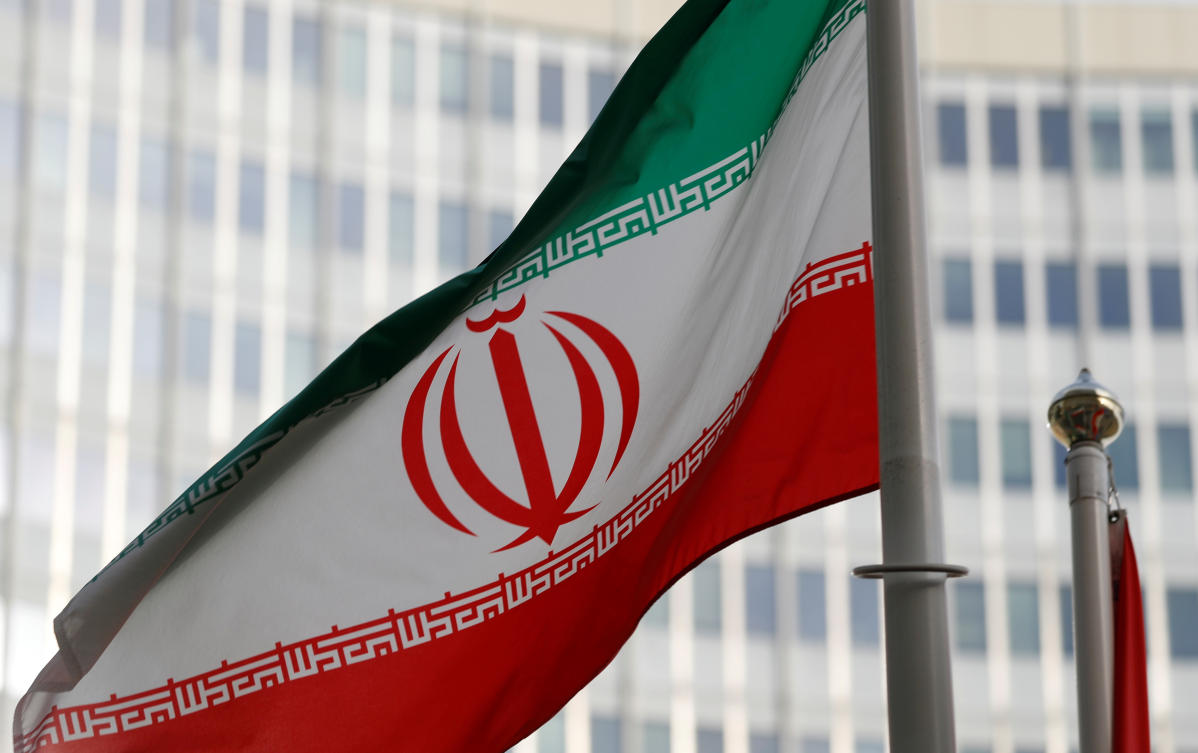


Iran’s heavy water stock exceeds authorised limit: IAEA

Author: 
AFP
ID: 
1574102026426520800
Mon, 2019-11-18 18:16

VIENNA: The UN’s nuclear watchdog said Monday that Iran’s stock of heavy water for reactors has surpassed the limit set under its agreement with world powers.
The International Atomic Energy Agency said in a statement that Iran’s heavy water production plant was in operation and that its stock of heavy water reserves was 131.5 tonnes, above the 130-tonne limit.
In Vienna, an IAEA spokesperson said: “On 17 November, the Agency verified that the Heavy Water Production Plant (HWPP) was in operation and that Iran’s stock of heavy water was 131.5 metric tonnes.”
Heavy water is not itself radioactive but is used in nuclear reactors to absorb neutrons from nuclear fission.
Heavy water reactors can be used to produce plutonium for nuclear weapons as an alternative to enriched uranium.
It was the first time the agency has recorded a volume greater than the level agreed upon as part of the Joint Comprehensive Plan of Action (JCPOA) reached in 2015 with Britain, China, France, Germany, Russia, the United States and the European Union.
The US unilaterally withdrew from it last year, after which Iran began reducing its commitments in a bid to win concessions from those still party to the accord.
In Washington Monday, Secretary of State Mike Pompeo said the US will lift sanctions waivers on Iran’s Fordow nuclear plant, citing the resumption of uranium enrichment activities at the site already announced by Tehran.
“The United States will terminate the sanctions waiver related to the nuclear facility at Fordow effective December 15, 2019,” Pompeo told a news conference.
Earlier this month, the IAEA said that uranium particles had been detected at an undeclared site in Iran.
The report also confirmed that Iran has ramped up uranium enrichment in breach of the 2015 deal, feeding uranium hexafluoride gas into previously mothballed enrichment centrifuges at Fordow, an underground plant south of Tehran.
That allows for the production of the most fissile isotope, Uranium 235.
Since September, Iran has also been producing enriched uranium at a facility in Natanz.
It has exceeded a 300 kilogramme limit on stocks of enriched uranium and has breached a uranium enrichment cap of 3.67 percent.
Iran has always insisted that its nuclear programme is exclusively peaceful and that acquiring nuclear weapons would be contrary to Islamic principles.

Main category: 
Tags: 

Amnesty investigates ‘dozens of deaths’ in Iran protests as regime’s Guards give ominous warning Iran spy agency leaks reveal Tehran’s ‘horrifying’ grip on Iraq


Lebanon is a sinking ship, parliament speaker warns

Author: 
Reuters
ID: 
1574093894305980200
Mon, 2019-11-18 15:11

BEIRUT: The speaker of parliament on Monday described Lebanon as a sinking ship at risk going under completely, underlining the depth of crisis in a country hamstrung by political deadlock and facing the worst economic strains since the 1975-90 civil war.
Banks, which have been seeking to prevent capital flight, were set to reopen on Tuesday as staff ended a one-week strike over security concerns posed by clients demanding their cash and protests at branches.
Struggling with a massive public debt and economic stagnation, Lebanon has sunk deeper into trouble since protests erupted against its ruling elite a month ago, leading Prime Minister Saad Al-Hariri to quit on Oct. 29.
Parliament Speaker Nabih Berri told his visitors Lebanon was like a ship that was “sinking little by little,” the newspaper Al-Joumhuria reported.
“If we don’t take the necessary steps, it will sink entirely,” he said.
An-Nahar newspaper quoted him as likening Lebanon to the Titanic.
Berri, an ally of the powerful Shiite group Hezbollah, also said that efforts to form a new government were “completely frozen” and awaiting developments at any moment, Al-Joumhuria reported.
Efforts to form a new government, needed to enact urgent reforms, hit a setback at the weekend when former finance minister Mohammad Safadi withdrew his candidacy for the post of prime minister, drawing bitter recriminations.
Safadi had emerged as a candidate after Hariri, who is aligned with Western and Gulf Arab states, had been unable to agree with the Iran-backed Hezbollah and its allies on the type of government that should replace the outgoing cabinet.
Hariri had said that he would only return as prime minister of a cabinet of specialist ministers capable of securing international aid and saving Lebanon from crisis.
Hezbollah, which is heavily armed and listed as a terrorist group by the United States, and its allies have insisted that the government include politicians.
Hezbollah’s deputy leader, in comments to Iranian media, said “political understandings” would take place between “the parties and even with leaders of the protest movement” to form a new government, without giving further details.
Sheikh Naim Kassem also said the new government’s agenda would help to calm down the streets.
Both Hezbollah and Berri have said their preference is for Hariri to return again as prime minister — a post reserved for a Sunni Muslim in Lebanon’s power-sharing system.
The nationwide protests have been fueled by the mismanagement and perceived corruption of the ruling elite.
Lebanon’s economic problems have been compounded by a slowdown of capital inflows, leading to a scarcity of US dollars and spawning a hard currency black market.
Dollars were being offered at 1,820 pounds, around Friday’s level, dealers said, but still some 20% weaker than the official rate of 1,507.5 pounds.
On Sunday, banks, which have mostly been closed since the protests began, announced temporary measures including a weekly cap of $1,000 on cash withdrawals and restricting transfers abroad to cover urgent personal spending only.
A union representing bank staff said banks would be operating as normal on Tuesday after a decision to end the strike. It cited an interior ministry security plan and the newly declared measures announced by the banking association as the reason for the decision to go back to work.
“Tomorrow the banking sector will no longer be on strike. Tomorrow is a normal working day in all banks and all branches,” George Al-Hajj, President of the Federation of Syndicates of Bank Employees, said.

Main category: 

Independents dominate lawyers’ body elections in LebanonHariri and Aoun trade blame as PM candidate’s withdrawal plunges Lebanon further into crisis


Houthi militants from Yemen seize South Korean ship in Red Sea

Mon, 2019-11-18 18:37

RIYADH: Houthi militants from Yemen have seized a ship in the southern Red Sea, the Arab Coalition said Monday.

The Iran-backed militia used two small boats to hijack the vessel as it was towing a South Korean drilling rig late on Sunday, spokesperson Col. Turki Al-Maliki said.

“The Houthi militia pose a real terrorist threat to the freedom of navigation and trade,” he added.

The coalition said the militia were responsible for securing the safety of all ships and crew members from any country.

The Houthis have been involved in a number of attacks against shipping in the Red Sea and near the Bab Al-Mandeb Strait – a major conduit for global trade.


Main category: 

7 Yemeni soldiers killed by Houthi missile in Marib military baseAid group says hospital hit during Houthi attack in Yemen


Yemeni government back in Aden under deal with separatists

Author: 
AP
ID: 
1574088055055406900
Mon, 2019-11-18 14:35

ADEN: Yemen’s internationally recognized government returned to the war-torn country on Monday for the first time since it was forced out by southern separatists during clashes last summer.
Prime Minister Maeen Abdulmalik Saeed landed in Aden, fulfilling a key point in the power-sharing deal brokered by Saudi Arabia that ended months of infighting with separatists in Yemen’s south.
“The government’s priorities in the next stage are to normalize the situation in Aden first and then consolidate state institutions on the ground … as a guarantor of stability,” Saeed told The Associated Press when he disembarked onto the tarmac.
He described the government’s return as “foundational for the improvement of civic services,” but added that “security challenges cannot be overlooked, especially at this stage.”
Saeed, accompanied by five key ministers from President Abed Rabbo Mansour Hadi’s government, was received by local officials and Saudi forces at the air base.
“Today we are uniting our efforts to defeat the Iranian project in Yemen and restore the state,” the government said in a statement.
In August, the separatists, overran Aden and drove out forces loyal to President Hadi, who has been based in Saudi Arabia since 2015.
The outbreak of violence between nominal partners in the coalition fighting against Iran-allied Houthi rebels added a new twist to the country’s complex civil war.
The power-sharing deal, signed earlier this month in Riyadh, calls for both sides to pull their forces out of Aden. That leaves the city under the coalition’s control, with only a presidential guard for Hadi’s protection if the exiled president were to return.
The agreement also asks that the separatists break up their militias and integrate them into Hadi’s forces.
“The plan for incorporating the security services needs to be clear and transparent,” Saeed told The Associated Press. “We have the support of the Saudis and the coalition leaders, factors that will help to implement the agreement through promising steps on the ground.”
The conflict in the Arab’s world’s poorest country started in 2014, when the Houthi rebels captured the capital, Sanaa, along with much of the country’s north. The Saudi-led alliance intervened in 2015 to drive out the Houthis and restore Hadi’s government.

Main category: 

Yemeni president directs state agencies to implement Riyadh agreementYemen president Hadi meets separatists chief in Riyadh