‘Coordinated action’ key to a water-secure Middle East

Thu, 2020-01-09 01:03

DUBAI: As governments and nongovernmental organizations draw up plans to address the world’s major water challenges, experts say that in addition to sound and integrated resources management, what may hold the key to a positive outcome in each case is more attention and coordinated action.

For the countries of the Mediterranean and the Middle East and North Africa (MENA) regions, whose share of global freshwater resources is a meagre 3 percent for a population of more than 460 million, it would certainly not hurt if “more attention, coordinated action and better management” became something of an inter-governmental mantra.

Among the organizations striving to create and maintain momentum for coordinated action is the Global Water Partnership (GWP), a Stockholm-based “multi-stakeholder action network,” with its ability to mobilize over 3,000 partner organizations and learn from new experiences.

In keeping with its mission of “advancing governance and management of water resources for sustainable and equitable development,” the GWP recently unveiled its strategy for 2020-25, titled “Mobilizing for a water secure world.”

Central to the strategy are the UN Sustainable Development Goals (SDGs), climate-resilient development and transboundary water cooperation, with particular emphasis on engagement with the private sector, youth participation in decision-making and gender-inclusivity.

“Recent forecasts point to water availability becoming more strenuous due to precipitation decrease, temperature rise and population growth,” said Vangelis Constantianos, executive secretary of Global Water Partnership Mediterranean (GWP-Med).

“Due to climate change alone, (water) availability may decrease by two to 15 percent for a +2 degrees Celsius warming (scenario).

“This is among the largest (predicted) decreases in the world. Furthermore, extreme phenomena, like droughts and floods, would increase in the region.”
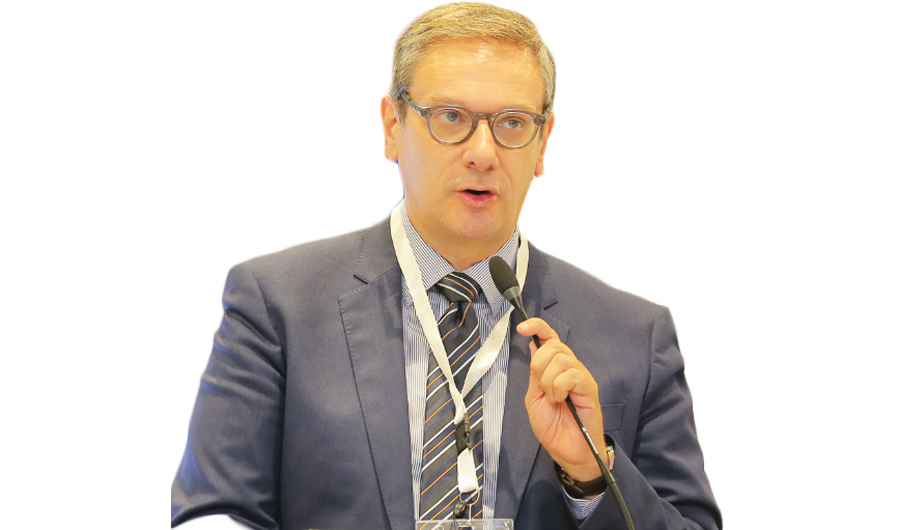

Vangelis Constantianos, executive secretary, GWP-Med. (Supplied)

Irrigation, for instance, represents 50 to 90 percent of the total water used. It is estimated that, by the end of the century, a +2 degrees Celsius warming scenario will translate to a 4 percent increase in irrigation water demand, while a +5 degrees Celsius warming scenario will mean an 18 percent increase.

“If population growth and shift of consumption patterns are also considered, these scenarios may reach a scary +22 percent and +74 percent of water demand for irrigation,” Constantianos said.

“The situation becomes gloomier when seen through the integrated water-energy-food-ecosystems nexus lens, where every shift or pressure affecting each of these sectors has an impact on all the others.” Through GWP-Med, the GWP is an active contributor of policy and technical solutions to countries that are grappling with water-related challenges. It engages with all actors that have a stake in natural resources management.

The “Mobilizing for a water-secure world” strategy “describes where we focus and how we will deliver our contributions responding to demand, plus builds on our more than 20 years of experience,” Constantianos said.

“Of course, water scarcity is not new in the region. Solutions have been worked out over millennia. However, today’s challenges are bigger on natural conditions and far more complex in socioeconomic terms.”

The GWP’s new strategy reinforces and expands its long-term agenda, which includes supporting countries achieve the SDGs by facilitating the framing of water policies and investment plans, incorporating the different values of water in decision making and helping countries to assess their progress towards set objectives.

The ultimate goal is to make water governance and water financing more effective and comprehensive while addressing the water-energy-food-ecosystem nexus.

“Water is a scarce source in the Middle East,” said Dr Osman Gulseven, associate professor at Skyline University College in Sharjah. “The climate is mostly arid desert. Some countries are on the border of the Mediterranean, but even they do not get much rain.

“In the oil-rich Gulf region, tap water comes from desalinated sea water. However, this is an unsustainable solution because it increases the salinity level of the sea, which in turn negatively affects life underwater.”

According to Gulseven, droughts are becoming frequent in the Levant countries, including Syria, Iraq, Egypt and Jordan, while parts of Saudi Arabia and Kuwait are experiencing unexpected floods.

“The increased frequency of natural disasters shows that there is a need for important climate-resilient development and transboundary water cooperation in the Middle East,” he said.

“Collaboration is important because, in many cases, the countries of the Middle East share scarce water resources.”

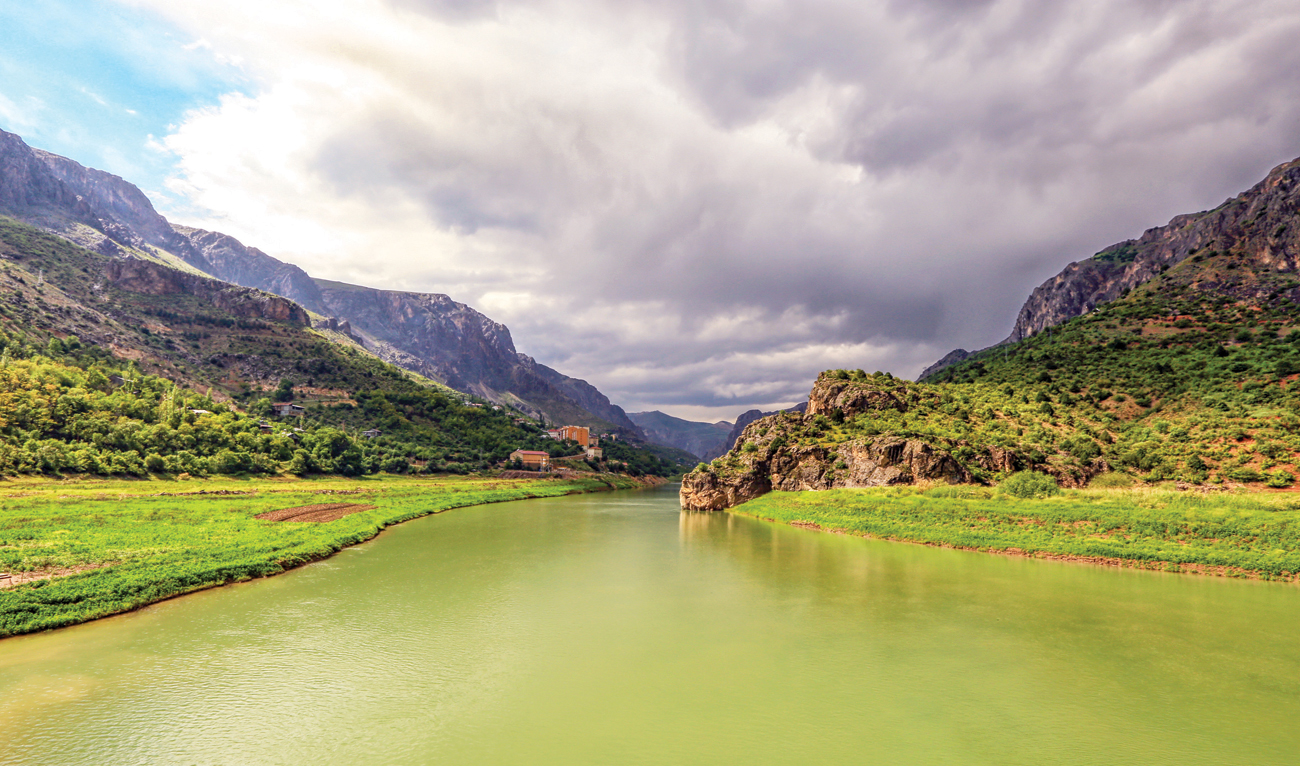
For the Gulf, the main freshwater sources are the Tigris and Euphrates Rivers. They have their origins in Turkey, pass through Syria and Iraq and debouch into the Gulf near the Basra shallows.

Another big river of the region, the Nile, has its origins deep in Africa and discharges into the Mediterranean Sea in Egypt.

“A collaborative approach to water management will resolve existing and potential conflicts between these nations in the Middle East,” Gulseven said.

Water challenges in the MENA region are too big and too critical for half measures, say experts who fear the environmental impact of water inadequacy could contribute to social and political instability.

“More than 60 percent of the MENA population is concentrated in places affected by high or very high surface- and ground-water stress, compared to a global average of about 35 percent,” Constantianos said.

“If left unchecked, economic losses related to water are estimated to increase to six to 14 percent of GDP by 2050, the highest in the world.”

Among the potential consequences is high unemployment, particularly among youth, which can significantly increase the risk of violence.

“Social stresses, including high inequality in both opportunity and income, are also among causes of conflict, often triggering migration,” Constantianos said, pointing out studies that suggest “more than a quarter of MENA youth are willing to migrate.”

On the bright side, the GWP sees the pursuit of water security as an enabler of employment opportunities, which in turn could act as an incentive for people to stay in their home country.

Constantianos expects 50 million jobs to be created in the region over the next decade to absorb the labor supply and to tackle some of the root causes of migration.

“Water can become a valid contributor to meeting this target,” he said, adding: “We look into the years ahead with
excitement and optimism.”

Transfer and application of “water technology and innovation,” supported by political will, planning tools and investment, can create opportunities for new skills, new job fields and new markets.”

Possible jobs include technical and managerial positions in industries related to sustainable agriculture, integrated urban water management, sustainable production and consumption and tourism.

“Technologies for efficient water supply, wastewater treatment and reuse, irrigation and desalination are among the fields with potential for giving rise to new markets and new skills,” Constantianos said.

“Importantly, instead of being a destabilizer and conflict creator, water can be a key contributor for collaboration among countries across borders as well as among communities. It’s time to stop blaming water scarcity, it has always been in our region, and it won’t go. Today, we feel the urgency and we have theknowledge to act.”
Main category: 
Tags: 

Startup of the Week: Red Sea Farms in Saudi Arabia aims to provide viable solutions to water scarcityHow the Middle East can tackle the problem of water scarcity


Four Turkish soldiers killed in car bombing in Syria

Author: 
AFP
ID: 
1578519262018610600
Wed, 2020-01-08 18:56

ANKARA: Four Turkish soldiers were killed Wednesday in a car bombing in northeastern Syria, Turkey’s defense ministry said.
The soldiers were conducting road patrols when the attack happened in the region captured by Turkish forces after the latest operation against a Kurdish militia last year.
The ministry did not provide further information on exactly where the bomb exploded or who was to blame for the attack.
Turkish soldiers supporting Syrian proxies launched an offensive against the US-backed Syrian Kurdish People’s Protection Units (YPG) militia in October 2019.
Ankara says the YPG is a “terrorist” offshoot of the outlawed Kurdistan Workers’ Party (PKK), which has waged an insurgency against the Turkish state since 1984.
The PKK is blacklisted as a terror group by Turkey and its Western allies.
Turkey previously launched two military operations in northern Syria against the Daesh extremist group in 2016 and the YPG in 2018.

Main category: 
Tags: 

Civilians flee as Syria Kurds battle Turkish invasionSyria Kurds call up civilians to defend against Turkey


Philippine troops to evacuate citizens in Iraq

Author: 
Thu, 2020-01-09 00:04

MANILA: The Philippines on Wednesday ordered the evacuation of its nationals from Iraq amid rising tensions between the US and Iran.

The Philippine government expressed deep concerns over security in the region and raised the threat alert in Iraq to the highest level.

“The Philippine Embassy in Baghdad has been tasked to effect the mandatory evacuation of Filipinos estimated to be around 1,640 in that country,” the Department of Foreign Affairs (DFA) announced. The level-4 alert, according to the DFA, is raised when “there is large-scale internal conflict or full-blown external attack.”

The repatriation efforts will be led by Environment Secretary Roy Cimatu, who is set to fly to the Middle East on Thursday. 

“We will do everything to bring out Filipinos there,” Cimatu said, adding that those who refuse will be forced to leave.

He also said that as Iraq is practically landlocked, Filipinos residing there would either be airlifted if the Baghdad airport is still open, or moved by land to transit points from where they could board ships or planes to the Philippines.

If they are evacuated by land, they would go through Amman in Jordan or Irbil in northern Iraq. From Amman or Irbil, they would be flown to Doha in Qatar or to Dubai in the UAE, and then board flights to Manila.

The highest alert level was also imposed for Iran and Lebanon, Labor Secretary Silvestre Bello said, adding that senior labor officials are being sent to different Middle Eastern countries — including Saudi Arabia, Kuwait and the UAE — to brief Filipinos of the government’s action plan should tensions escalate.

The government is also prepared to bring home Philippine nationals from Iran and Libya.

Meanwhile, Defense Secretary Delfin Lorenzana said the Philippine military will send two battalions to help repatriate Overseas Filipino Workers (OFWs) from Iraq.

“The two battalions will not be there to engage in combat,” he said, “but to facilitate or help assist in the repatriation of the OFWs, especially in Iraq,” he told reporters in Camp Aguinaldo.

The two battalions will comprise the Philippine Army’s Special Operation Command marines and troops. A battalion is composed of between 350 and 500 officers and enlisted personnel.

Lorenzana added that if the need arises, the troops will also protect the Philippine nationals and those helping them in the evacuation process.

Asked whether they already have rules of engagement for these soldiers, the defense chief said that everything is still in the planning stage. 

Lorenzana said that a brand-new Philippine Coast Guard offshore patrol vessel, the BRP Gabriela Silang, which is now in Malta, is expected to reach Jeddah in Saudi Arabia by Thursday.

The ship will be held there “for a while in case we will need the ship to shuttle OFWs from Iran or Iraq to Qatar and then from there we can maybe charter a plane or charter ships to bring them home,” he said, adding that other military assets that can be used to transport the OFWs are two landing docks — the BRP Tarlac and the BRP Davao Del Sur — with a combined capacity of 500 people.

Also to be deployed for the operation are two Air Force Lockheed C-130 cargo planes and the EADS CASA C-295 military transport aircraft.

If the need arises, the government will engage commercial planes and cruise ships as well.

Main category: 
Tags: 

Khalid bin Salman: Saudi Arabia will do everything in its power to spare Iraq from conflict


Yemen denies considering deal with Turkey to run ports, airports

Author: 
Wed, 2020-01-08 23:59

AL-MUKALLA: Yemen’s government has issued a firm denial of reports that it intends to allow Turkish companies — whether private or government-run — to run key ports and airports in the war-torn country.

The denial was a response to remarks made by Yemeni Minister of Transportation Saleh Al-Jabwani on a recent visit to Istanbul. Al-Jabwani then said he agreed with his Turkish counterpart that the two countries should form a joint committee tasked with developing Yemen’s transport infrastructure — including ports and airports.

The government issued a statement saying that any cooperation with other countries would always take Yemen’s interests into consideration. Without mentioning Al-Jabwani, the statement made it clear that his remarks do not represent the government’s stance on the matter.

“Circulated remarks about arrangements related to seaports and airports do not represent the government, and some officials’ visits to friendly countries are personal,” the statement said.

The internationally recognized government in Aden is in control of all of the country’s major ports on the Red Sea and the Arabian Sea, with the exception of Hodeida, which is currently under the control of the Iran-backed Houthi militia. The government also runs functioning airports in Hadramout and Aden.

On Wednesday, a senior government official told Arab News that the prime minister was “angry” with the transport minister and that the government’s statement was intended to send a message that only President Abed Rabbo Mansour and his government have the authority to decide who manages Yemeni seaports and airports.

“Neither Al-Jabwani nor any other official has the right to give permission to other countries to run Yemeni facilities. This is a sovereign decision that can be made only by the president and the government,” the official, who asked to remain anonymous, said.

Meanwhile Yemen’s Minister of Information Muammar Al-Aryani took to Twitter to call for the international community to designate the Houthis as a terrorist group.

“We call on the international community to … deal with the Houthi militia on an equal footing with other Iranian arms in the region by speeding up its designation as a terrorist movement,” Al-Aryani wrote. 

Yemeni officials including Vice President Ali Mohsen Al-Ahmar, Al-Aryani, and Minister of Foreign Affairs Mohammad Al-Hadhrami, have all backed the US strike that killed Qassem Soleimani, the former head of Iran’s Quds Force, widely believed to be responsible for the training and arming of the Houthis. 

On Wednesday, Mohammed Ali Al-Houthi praised Iran’s retaliatory missile attacks again American bases in Iraq, accusing America of killing Yemenis.

Meanwhile, fighting continues to rage in Yemen. 

Minister of Defense Mohammed Al-Maqdishi said Houthis had attacked loyalists in the western province of Hodeida — despite both sides having signed the Stockholm Agreement, which was designed to stop fighting in Hodeida and other cities.

On Tuesday, the Yemeni army’s news site, 26 September, said government troops had foiled a Houthi attempt to seize control of military locations in Beit Al-Fagiah district, triggering clashes with government forces. 


Main category: 
Tags: 

Houthi missiles kill 9 Yemeni soldiersYemen’s Taiz National Museum Reopens After Four Years of Closure


Making fun of men or emboldening sex pests? Egyptian song spurs debate

Author: 
Reuters
ID: 
1578509714547974800
Wed, 2020-01-08 18:36

CAIRO: An Egyptian pop song where a man threatens a woman to force her to give him her phone number has caused a storm as it was released the day after a video emerged of a woman being sexually assaulted by a mob — a common crime during the Arab Spring.
Singer Tameem Youness has defended the track “Salmonella” — where he prays for the woman he is wooing to become sick with salmonella — as a satire on men’s reactions to being spurned in the conservative Arab country.
“I was making fun of the men who appear very romantic but when they get rejected, they go nuts and start to treat the woman badly or curse her or say things that are not true about her,” he said in a video on his Facebook page.
Egypt is the Arab world’s most populous country and its pop music is listened to across the Middle East. “Salmonella” has been viewed more than 7.5 million times on YouTube since its release on Jan. 1.
Women’s rights advocates say many men will not see the joke and the catchy tune risks encouraging harassment in Egypt, where sexual assault was rife during and after the 2011 uprising that ousted veteran president Hosni Mubarak.
Youness, who is shown with blood splattered around his mouth at one point in the video, sings, “I will not go away until I get your number so do not refuse.”

More than 60% of Egyptian men said they have sexually harassed a woman or girl in a 2017 survey by UN Women and the gender equality group Promundo, which also found that most men believe women sometimes deserve to be beaten.
“This (kind of song) can really incite young people to practice violence against women and violate their rights without giving them the freedom to say no,” said Nehad Abu El Komsan, head of the Egyptian Center for Women’s Rights.
The timing of the song’s release — a day after footage emerged of a woman being groped by a mob during New Year’s Eve celebrations in Mansoura, about 130km northeast of Cairo — was insensitive, she said.
Authorities have said they are investigating the incident.
President Abdel Fattah El-Sisi ordered a crackdown on sexual harassment after a woman was assaulted in Cairo’s Tahrir Square during his 2014 inauguration, with a law introduced that year prescribing a minimum of six months in jail or a fine.
Not everyone is worried about the song.
“The song is insulting and humiliating to women but I am against banning it,” Maggie Mamdouh, a 25-year-old engineer, told the Thomson Reuters Foundation.
“This will be a violation of freedom of expression.”

Main category: 

Search continues for Scottish businessman missing off Egyptian coastHow Eskai is changing the way women shop in Egypt