Libya peace still elusive despite ‘small step’ in Berlin

Author: 
AFP
ID: 
1579550069246621700
Mon, 2020-01-20 19:32

BERLIN: A peaceful solution to Libya’s protracted conflict remains uncertain despite an international agreement struck in Germany, analysts say, as a fragile cease-fire between warring factions brought only a temporary truce.
On Sunday in Berlin, world leaders committed to ending all foreign meddling in Libya and to uphold a weapons embargo as part of a broader plan to end the country’s conflict.
But overnight Sunday to Monday heavy bombardment again echoed south of Tripoli — the capital of a country that has been in turmoil since the 2011 NATO-backed uprising that killed dictator Muammar Qaddafi.
Since April last year the UN-recognized Government of National Accord (GNA) based in Tripoli has fought back against an offensive launched by fighters loyal to eastern commander Khalifa Haftar.
GNA leader Fayez Al-Sarraj and Haftar attended the Berlin summit but they refused to meet and the conference failed to get the two rivals to commit to a permanent truce.
The host, German Chancellor Angela Merkel, tried hard to get Sarraj and Haftar to engage in a serious dialogue.
But after the hours-long talks, she had to put on a brave face and admit she had no illusions concerning a peaceful outcome in Libya anytime soon.
“Ensuring that a cease-fire is immediately respected is simply not easy to guarantee,” Merkel said.
Echoing Russian Foreign Minister Sergei Lavrov who took part in the talks, she said the Libyan parties had taken “a small step forward.”
Khaled Al-Montassar, a Libyan university professor of international relations, agreed that much still needs to be done.
“Theoretically, the Berlin summit was successful and touched upon all the details and the causes of the Libyan crisis,” he said.
“But the mechanisms of implementing the summit’s conclusions are still not clear.”
The summit was attended by the presidents of Russia, Turkey, France and Egypt, as well as US Secretary of State Mike Pompeo and UN chief Antonio Guterres.
The main points they agreed to will be put forward as a UN Security Council resolution.
They include a commitment to end foreign interference in Libya, respect for a UN arms embargo, a permanent cease-fire and steps to dismantle numerous militias and armed groups.
European states must now convince Italy to resume naval operations suspended since March 2019 aimed at enforcing the embargo.
Other points agreed in Berlin were a return to a political process under the auspices of the UN, respect for human rights and guarantees to ensure the security of Libya’s lucrative oil infrastructure.
The United Nations walked away from the summit satisfied at least with one key development.
The summit saw the formation of a military commission comprising five GNA loyalists and five Haftar delegates who will seek to define ways of consolidating the cease-fire.
The UN mission in Libya had for weeks urged the rival camps to submit names of delegates to such a commission, and its wish was finally answered on Sunday.
The military commission is expected to meet in the coming days, according to the UN, tasked with turning the fragile cease-fire into a permanent truce as requested by the international leaders in Berlin.
The cease-fire was co-sponsored by Russia and Turkey and has broadly held since it went into effect on January 12.
The main goal of the Berlin summit was to end the international divisions concerning Libya.
Although the GNA is recognized by the UN as Libya’s legitimate government, the world body’s member states do not agree when it comes to the oil-rich North African country.
Haftar, who insists his military campaign is aimed at battling Islamists, has the support of several countries, including Egypt, the United Arab Emirates and France, with some providing him with military and logistical backing.
The GNA is backed by Qatar and Turkey, which has recently sent some troops to shore up Sarraj’s embattled government.
Moscow is also suspected of backing Haftar but denies funding Russian mercenaries on the ground.
As a follow-up to the Berlin summit, the two rival administrations must now choose representatives to attend talks in order to revive the moribund political process, UN envoy to Libya Ghassan Salame said.
Algeria, which attended the conference and shares a border with Libya, on Monday offered to hold inter-Libyan talks on its soil. French Foreign Minister Jean-Yves Le Drian will travel to Algiers on Tuesday, his ministry said Monday, to discuss the situation in Libya, among other topics.
Future Libya talks are certain to face huge challenges, particularly after pro-Haftar forces blocked oil exports from Libya’s main ports last week.
Meanwhile, Libyans on social media remained skeptical, the deep divisions reflected in comments such as “who won, Haftar or Sarraj?“
Tripoli resident Abdul Rahman Milud said a “another summit isn’t necessary.”
Establishing “a consensus among Libyans themselves” is much more important, he told AFP.

Main category: 

Berlin talks important step in resolving Libya crisis: Egypt FMLibya strongman Haftar in Athens for talks ahead of Berlin peace conference



British MPs call for UK to recognize Palestinian state

Mon, 2020-01-20 21:20

LONDON: A group of British MPs has called for the UK to recognize the state of Palestine ahead of a visit by Prince Charles to Israel and the occupied Palestinian territories.
In a letter to The Times, the MPs, along with figures from think tanks and pressure groups, said the move was long overdue and would help fulfil Britain’s “promise of equal rights for peoples in two states.” 
The call comes as the heir to the British throne travels on Thursday to Israel and the occupied West Bank. 
During the visit, he will meet Palestinian President Mahmoud Abbas in Bethlehem and Israeli President Reuven Rivlin in Jerusalem. 
Prince Charles will also attend the World Holocaust Forum to mark the 75th anniversary of the liberation of the Auschwitz concentration camp. 
The letter said since 2014, no meaningful progress has been made in the peace process, and Israel’s actions are pushing a two-state solution beyond reach.
“Illegal Israeli settlements, described by the Foreign Office as undermining peace efforts, are expanding,” the letter said.
Among the signatories are Emily Thornberry, a candidate for the Labour Party leadership, and Crispin Blunt, chairman of the Conservative Middle East Council.
Husam Zomlot, the Palestinian envoy to the UK, welcomed the move but said full recognition from the British government should have happened many years ago.
“Recognition doesn’t contradict peace-making and negotiations,” Zomlot told Arab News, referring to the main argument used by the UK against taking such a step. 

“It reinforces the vision (of a Palestinian state) and a negotiated two-state solution. It should happen now because of the threat of annexation (of Palestinian territory) and the killing of the two-state solution.”
Alistair Carmichael, a Liberal Democrat MP who signed the letter, told Arab News that the policies of Israeli Prime Minister Benjamin Netanyahu’s government toward Palestine “makes the achievement of a two-state solution more and more remote with every week that passes.”
He said: “The UK has historic and political obligations toward Israelis and Palestinians. There’s now no longer any good reason not to recognize the state of Palestine.”
A spokesman for Labour MP Fabian Hamilton, who also signed the letter, told Arab News: “The fact that this has cross-party support shows the growing desire across Parliament for the recognition of a Palestinian state and a two-state solution.”
Chris Doyle, director of the Council for Arab-British Understanding, said the international community needs to finally stand up for the solution that it has had on the table for decades.
Doyle, an Arab News columnist, said the letter is an “indication that many people in British politics think we should be doing this, we should be standing up for the Palestinian right to self-determination, the legal rights, at a time when the state of Israel is doing everything to stop this, to take more land from the Palestinians.”
The letter was timed to coincide with a meeting of European foreign ministers on Monday, who discussed the Middle East peace process.
The Palestinian Authority, which runs parts of the West Bank, has been increasing calls for European countries to recognize the state of Palestine as the US has shifted to a more pro-Israel stance, including recognizing Jerusalem as Israel’s capital in 2017.
Writing in The Guardian on Monday, Saeb Erekat, secretary-general of the Palestine Liberation Organization, said Europe could strengthen its role in the peace process if it recognized Palestine.
“European recognition of this state is not only a European responsibility but a concrete way to move toward a just and lasting peace,” he said.
Only nine out of the 28 EU countries have so far recognized Palestine as a state, compared to 138 out of the 193 UN member states.
In 2011, the UK’s then-Foreign Minister William Hague said the British government “reserves the right” to recognize Palestine “at a time of our own choosing, and when it can best serve the cause of peace.”
In 2012, the UN General Assembly voted to upgrade Palestine’s status to that of “non-member observer state.”
Zomlot said that the UK has a historically important role in the Palestinian issue, dating back to the British mandate of Palestine (1920-1948, the Balfour Declaration — a public statement issued by the British government in 1917 that expressed support to the formation of “a national home for the Jewish people” — and subsequently the 1948 Nakba (catastrophe) and the military occupation of that 1967 borders.
“With the current quest for the UK to be a global player and post-Brexit, we believe that the UK could be a very important factor in achieving Middle East peace,” he added.

Main category: 

Catholic bishops call on West to recognize PalestineIsraeli, Palestinian youth fear conflict will ‘never end,’ says poll


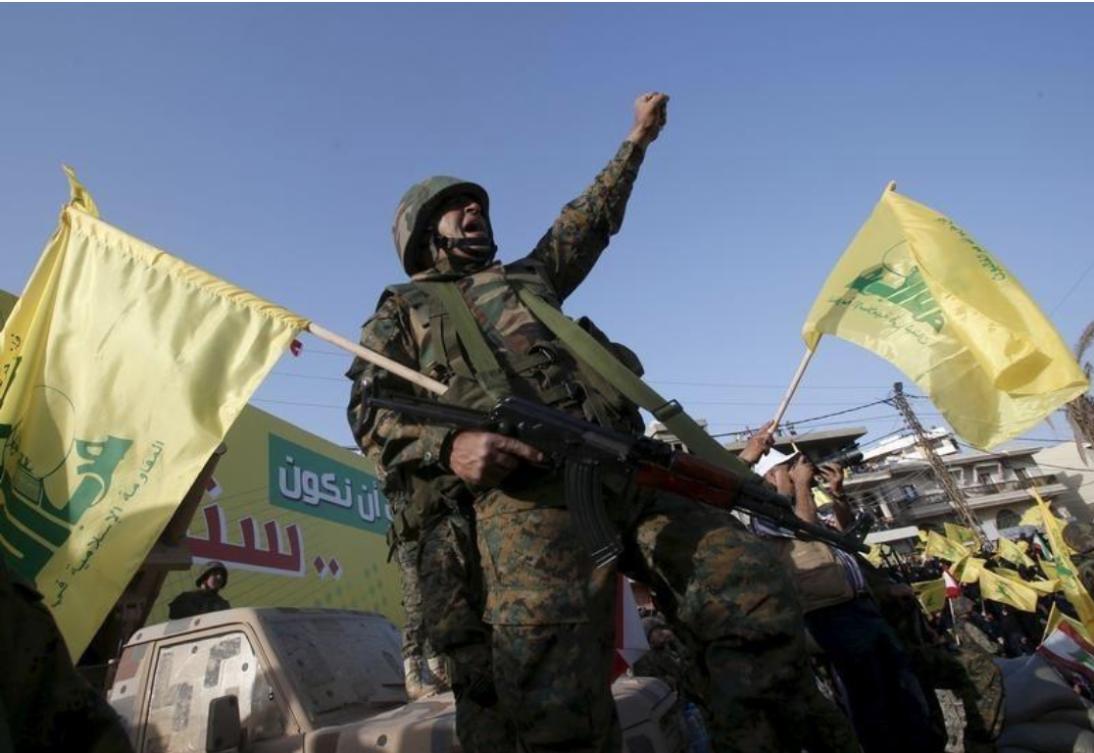
Honduras declares Hezbollah a terrorist organization

Author: 
Reuters
ID: 
1579545512386282700
Mon, 2020-01-20 18:29

TEGUCIGALPA: The Honduran government has formally declared Iranian-backed Lebanese group Hezbollah a terrorist organization, a top security official said on Monday.
“We declare Hezbollah a terrorist organization and will include it in the registry of persons and institutions linked to acts of terrorism and its financing,” said Luis Suazo, Honduras’ deputy security minister.
Heavily armed Hezbollah, a Shiite Muslim group, has also been designated a terrorist organization by the US government.
Last week, Guatemala’s new president, Alejandro Giammattei, also signaled he would label Hezbollah a terrorist group, in addition to keeping the Guatemalan embassy in Israel in the city of Jerusalem.
Both moves were seen as aligning Guatemala’s foreign policy more closely with that of US President Donald Trump.
Israel’s foreign minister, Israel Katz, called the Honduran government’s move “an important step in the global war on terror” and said it built on similar actions taken in recent months by Britain, Argentina and others.
“I applaud the Honduran government for its important decision to declare Hezbollah a terrorist organization and to impose sanctions against it,” Katz said.
Israel considers Hezbollah, which is backed by its enemy Iran, the biggest threat across its border. The two last fought a war in 2006.
Britain’s Treasury, or finance ministry, said on Jan. 17 it had expanded an asset freeze to include the whole of Hezbollah in addition to its military wing.
Last year, Argentina designated the group, which it blames for two attacks on its soil, as a terrorist organization and froze its assets in the country.
Other countries that have designate Hezbollah or its military wing as a terrorist organization include Canada, Australia, New Zealand, the European Union and Israel.

Main category: 


Eight EU nations back naval force to patrol Strait of Hormuz

Author: 
AFP
ID: 
1579541745625961100
Mon, 2020-01-20 14:59

PARIS: The French foreign ministry said Monday that eight European Union nations had given their support for a new naval patrol to help avoid potential conflicts in the Strait of Hormuz, the strategically critical entry to the Gulf.
Belgium, Denmark, France, Germany, Greece, Italy, the Netherlands and Portugal backed the new force, though the ministry did not say how many ships would be involved, or when they would begin operations.
The move comes amid escalating tensions in the region, especially between Iran and the United States, that have sparked attacks on tankers and other conflicts in a crucial zone for oil shipping.
“For months this situation has jeopardized freedom of navigation and the security of both European and foreign ships and crews,” the ministry said in a statement.
The EU initiative also underscores the bloc’s goal of acting separately from the US, which launched its own operation alongside allies last November to protect shipping in Gulf waters.
France and its European allies are hoping to distance themselves from US President Donald Trump in order to save the landmark 2015 deal curtailing Tehran’s nuclear program.
Trump abandoned the accord in 2018 and imposed economic sanctions against Iran, rekindling a smoldering conflict that led to strikes on cargo ships as well as Saudi Arabian oil facilities.
France, Denmark, Greece and the Netherlands have already confirmed they will contribute to the patrols, which will be based in the United Arab Emirates, and “new commitments” are expected in the coming days, the ministry said.

Main category: 

South Korea mulls sending own ships to Strait of HormuzUAE sees no immediate risk to oil flow through Strait of Hormuz


Iran threatens to leave global nuclear treaty if Europeans send JCPOA case goes to UN

Author: 
daniel fountain
ID: 
1579536647815527300
Mon, 2020-01-20 19:16

LONDON: Iran said on Monday it could quit the global nuclear Non-Proliferation Treaty (NPT) if European countries refer it to the UN Security Council over a nuclear agreement, a move that would overturn diplomacy in its confrontation with the West.
The 1968 NPT has been the foundation of global nuclear arms control since the Cold War, including a 2015 deal Iran signed with world powers that offered it access to global trade in return for accepting curbs to its atomic program.
Britain, France and Germany declared Iran in violation of the 2015 pact last week and have launched a dispute mechanism that could eventually see the matter referred back to the Security Council and the reimposition of UN sanctions.
“If the Europeans continue their improper behavior or send Iran’s file to the Security Council, we will withdraw from the NPT,” Iranian Foreign Minister Javad Zarif said, according to comments carried by IRNA and other Iranian news agencies.
He also said Iran could take other steps before withdrawing from the NPT, although he did not specify them.
The fate of the 2015 pact has been in doubt since US President Donald Trump pulled the United States out of it and reimposed sanctions. Iran has responded by scaling back its commitments, although it says it wants the pact to survive.
The nuclear dispute has been at the heart of an escalation between Washington and Tehran which blew up into military confrontation in recent weeks.
The 190-member NPT bans signatories other than the United States, Russia, China, Britain and France from acquiring nuclear weapons, in return for allowing them to pursue peaceful nuclear programs for power generation, overseen by the United Nations.
The only country ever to declare its withdrawal from the NPT was North Korea, which expelled nuclear inspectors and openly tested atomic weapons. Nuclear-armed India and Pakistan never signed up, nor did Israel, which does not say whether it has nuclear weapons but is widely presumed to have them.
The West has long accused Iran of seeking to develop nuclear arms. Tehran denies this and says its goal is to master the whole process of generating electricity from nuclear energy.
A steady escalation over Iran’s nuclear plans flared into tit-for-tat military action this month, with Trump ordering a drone strike that killed a top Iranian general, prompting Iran to fire missiles at US targets in Iraq. During a state of alert, Iran shot down a Ukrainian airliner in error.
Amid that escalation — one of the biggest since Iran’s 1979 revolution — Tehran has faced mounting pressure from European states which say they want to save the 2015 nuclear deal. They have also indicated a readiness to back Trump’s call for a broader deal with Iran that goes beyond its nuclear plans.
“Despite the ill will that we see from some European countries the door of negotiations with them has not been closed and the ball is in the court of these countries,” Iranian Foreign Ministry spokesman Abbas Mousavi said.
But he also told a news conference: “I don’t think Iran is ready to negotiate under the conditions they have in mind.”
Since Washington withdrew from the deal, Trump began a policy of “maximum pressure”, saying a broader deal should be negotiated on nuclear issues, Iran’s missile program and Iranian activities in the Middle East.
US sanctions have crippled Iran’s economy, slashing its oil exports. Iran has long said it would not negotiate with Washington while sanctions are in place.
Tehran has repeatedly held talks with European officials to find ways to keep the nuclear agreement alive, but has blamed the Europeans for failing to guarantee economic benefits that Iran was meant to receive in return for curbing nuclear work.
“The European powers’ claims about Iran violating the deal are unfounded,” Mousavi said. “Whether Iran will further decrease its nuclear commitments will depend on other parties and whether Iran’s interests are secured under the deal.”
In a report on a parliamentary website, Iran’s foreign minister said steps to scale back its commitments under the nuclear deal were now over.
Britain has said a “Trump deal” could replace the 2015 deal, and France has called for broad talks to end the crisis.
Iran says it cannot negotiate with Trump, who broke promises by repudiating the deal reached under his predecessor Barack Obama. Mousavi repeated Iran’s rejection of a “Trump deal”.
“The fact that a person’s name is put on an agreement shows they’re not familiar with the conditions. An agreement with a person doesn’t mean anything,” he said.

Main category: 

Iran has not ruled out talks to end nuclear disputeUK’s Johnson, France’s Macron reiterate commitment to Iran nuclear deal