Iran’s regional proxy machine has been derailed, says expert

Mon, 2020-04-27 20:40

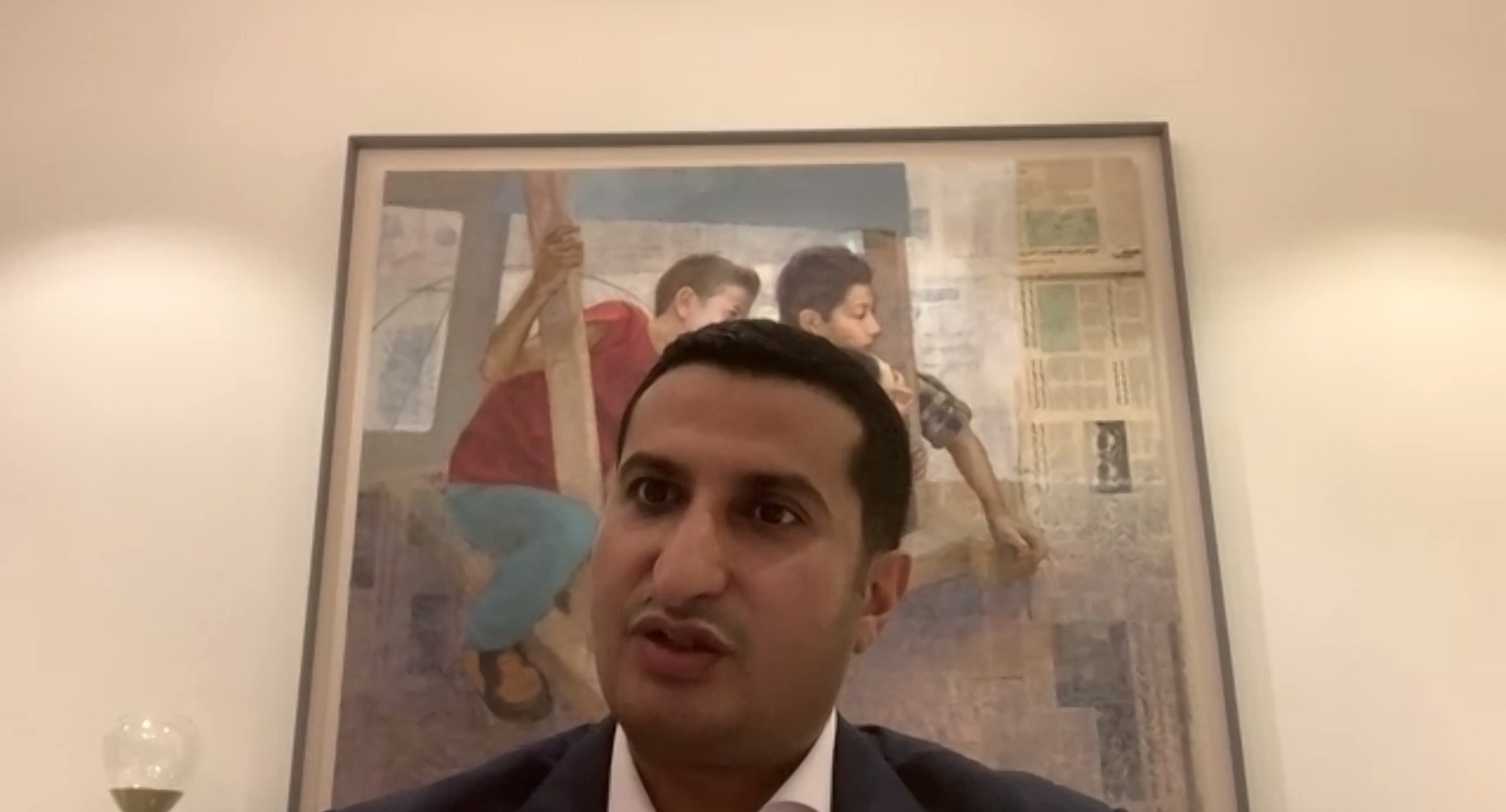
LONDON: The killing of Iranian Maj. Gen. Qassem Soleimani and the lack of dollars have derailed Tehran’s regional proxy machine, which will need time to recover, the editor in chief of Al Arabiya English said at a webinar on Monday.
“The Iranian regime needs US dollars to fund dozens and dozens of militias in Iraq. Many of them it exercises full control over, others a considerable amount — same in Syria and Lebanon,” said Mohammed Khalid Alyahya.

The lack of a charismatic leader to replace Soleimani, the commander of Iran’s Quds Force who was killed in a US drone strike in Iraq in January, is derailing the proxy machine even further, Alyahya added.
“In the region, limiting Iran’s ability to fund its proxy network is the strategy. The US strategy is working. It’s not perfect, but it’s working,” he said.
“What we’re seeing right now is the maximum-pressure campaign putting Iran in a corner scrambling for resources.”

Alyahya noted that none of the regional actors had a say in the talks that led to the Iran nuclear deal.
“Every country within range of Iran’s ballistic missiles, long range or short, or that contains militias, which are many in the region, wasn’t included in the nuclear negotiations,” he said. 

“Those most at risk from Iranian aggression and expansionism were an afterthought of the discussions,” he added.
“Since the deal, Iran stepped up its activities across the region, doubled down on ethnic cleansing and genocide in Syria … and empowered Hezbollah.”
On Saudi-Iranian relations, Alyahya said: “If you go to Riyadh and ask what their biggest national security threat is, invariably you’d hear Iran. However, if you were to go to Iran to ask them what their biggest national security threat is, they’d say the US or Israel, or both … 

So primarily it’s a conflict between the US and Iran.”
The webinar was hosted by the Harvard Kennedy School’s Belfer Center for Science and International Affairs, and was co-sponsored by Managing the Atom, the Iran Working Group and the Middle East Initiative.
Main category: 

The strike on Iran’s SoleimaniUS imposes fresh sanctions on Iranian individuals, companies amid coronavirus


Two Bahrainis bring fashion world to masks

Author: 
AFP
ID: 
1588007512902052800
Mon, 2020-04-27 16:16

MANAMA: As the world combats the spread of the novel coronavirus, two Bahraini entrepeneurs are adding a little color to an item that is now almost part of everyday life — masks.
Noor Khamdan and Nada Alawi want to raise awareness and add enthusiasm to wearing masks in the small Gulf country.
Khamdan’s designs include symbols from Gulf culture, ranging from the traditional ghutra (headdress) or the Bahraini flag to the local viral hashtag #Team_Bahrain.
“The mask you are wearing is to protect you and others against COVID-19 and to also bring color and joy into your life in these hard times,” Khamdan, founder of BH Masks, told AFP.
“By giving people the option to invest in colorful, washable masks, we are ensuring medical masks are saved for those who need it the most, such as medical staff,” said the mother of three whose masks cost around $3.
Like many other Gulf countries, Bahrain has made it mandatory to wear masks outside the home, having eased some restrictions at the start of the Muslim fasting month of Ramadan.
It has so far recorded more than 2,700 infections, including eight deaths.
Alawi, co-founder of the lifestyle brand Annada, repurposes uniquely-designed scarves into masks, saying she wants to cater for people who want “something different.”
“Some people want to wear something that gives them a bit of happiness, a bit of inspiration,” she told AFP.
“With masks being mandatory… you can’t tell someone’s feelings, you can’t tell if they’re smiling at you.”
“At least, this is a way to tell someone’s personality when they have color on their face.”
Annada’s masks, which come in a set of three, are giftwrapped in a teal box with a ribbon and cost about $52.
Twenty-five percent of the proceeds go to charity.
“Even at times like this, you want to get a surprise and to feel like you’re getting beauty,” said Alawi.

Main category: 

Major companies in Bahrain respond to government’s clean-up call in labor campsBahrain sets up coronavirus ICU in military hospital car park


Pentagon downplays Iran military satellite as ‘tumbling webcam’

Author: 
AFP
ID: 
1587998870681433300
Mon, 2020-04-27 13:30

Washington: The head of the US Space Command said the Pentagon believes that Iran’s first successful launch of a military satellite into space does not pose any intelligence threat.
The Nour satellite placed into orbit on April 22 is classified by the US military as a small 3U Cubesat, three adjoined units each no more than a liter in volume and less than 1.3 kilograms (one pound) each, said General Jay Raymond in a tweet late Sunday.


“Iran states it has imaging capabilities — actually, it’s a tumbling webcam in space; unlikely providing intel,” he wrote.
“#spaceishard,” Raymond added to the tweet.
While Raymond downplayed any threat from the satellite, the United States has warned that Tehran’s ability to place it into space represents a significant advance in its long-range missile capability, posing a greater threat to US forces and allies in the Middle East.
Last week US Secretary of State Mike Pompeo accused Iran of violating a 2015 UN Security Council resolution against Tehran advancing any nuclear-capable ballistic missile activities.
On Saturday, Pompeo called for the United Nations to extend its conventional arms embargo on Iran beyond its scheduled end in October.
“All peace-loving nations must reject Iran’s development of ballistic-missile-capable technologies and join together to constrain Iran’s dangerous missile programs,” he said.

Main category: 

Iranian IRGC navy ‘harassed’ US military ships in the GulfRouhani urges Iran military to remain vigilant against ‘provocations’


Gaza restaurants to reopen as lockdown eases

Author: 
AFP
ID: 
1587992957900967600
Mon, 2020-04-27 12:38

Gaza City: Restaurants in Gaza were to be allowed to reopen from Monday, the economy ministry in the Hamas-run enclave announced, following pleas from restaurant owners to ease economic suffering.
“It was decided to allow restaurants and cafes in the (Gaza) Strip to reopen their doors to customers starting from today, the ministry said in a statement.
Under the decision based on health ministry recommendations, restaurants must continue to observe social distancing rules, it said.
Since the middle of March, the Hamas government has imposed strict measures to avoid a widespread outbreak of COVID-19.
Schools, universities, mosques and restaurants have been closed.
So far Gaza has recorded only 17 confirmed cases of the novel coronavirus, all Palestinians returning from outside the Gaza Strip.
Those who contracted the virus have been placed in isolation immediately upon their return.
There are no confirmed cases among Palestinians who stayed inside Gaza, according to Hamas, the Islamist movement that has controlled the coastal enclave since 2007.
Gaza’s population is overwhelmingly Muslim and most people are observing the holy month of Ramadan, including fasting from sunrise to sunset before eating large meals with their families.
Salah Abu Haseera, head of the Committee for Restaurants, Hotels and Touristic Services in Gaza, told AFP the ministry’s decision “came after an appeal to open restaurants to avoid further losses and a serious recession.”
Restaurants reopening could allow some 2,500 people to return to work, he said.
Gaza, blockaded by Israel for 13 years, suffers from poverty rates close to 50 percent.
Israel says the measures are necessary to isolate Hamas, with which it has fought three wars since 2008.
In the West Bank, the largest part of the Palestinian territories but controlled by a rival government, restaurants remain closed.

Main category: 

Besieged Gazans anxious over new Israeli government’s moves


Lebanon protests hinder virus testing by health teams

Author: 
AP
ID: 
1587991608400864600
Mon, 2020-04-27 12:42

BEIRUT: Scattered anti-government protests broke out in several parts of Lebanon on Monday amid a crash in the local currency and a surge in food prices, leading to road closures that prevented medical teams from setting out from Beirut to conduct coronavirus tests across the country.
The Health Ministry said its teams would try again on Tuesday, urging protesters to let the paramedics work to evaluate the spread of the virus in the tiny country of 5 million people.
The protests came as the government began easing a weeks-long lockdown to limit the spread of the new coronavirus in Lebanon, which has reported 710 cases and 24 deaths so far. The number of registered cases has dropped over the past two weeks, leading to the shortening of the nighttime curfew by one hour and allowing some businesses to resume work on Monday.
The Lebanese national currency hit a new record low over the weekend, with 4,000 pounds to the dollar on the black market while the official price remained at 1,507 pounds. Coronavirus and the lockdown has worsened the most serious economic and financial crisis to hit Lebanon since the end of the 1975-90 civil war.
Around noon Monday, Lebanese troops forcefully removed dozens of protesters from a major highway in Zouk Mosbeh, north of Beirut, and traffic resumed. Shortly afterward, it was blocked again with burning tires.
The Lebanese army said it respects the people’s right to protest as long as the protesters don’t close roads or attack public and private property.
“Our demands are simple and we are not asking for the impossible,” said protester George Ghanem in Zouk Mosbeh, citing early parliamentary elections and an independent judiciary. “We want to live in dignity … we will continue and no one will remove us from the street.”
A woman carried a placard reading: “My salary buys me two cartons of milk.”
On Sunday night, the Central Bank of Lebanon issued a circular instructing currency exchange shops not to sell the dollar for more than 3,200 pounds. On Monday, most exchange shops were not selling dollars, saying clients who have dollars are refusing to exchange their hard currency at such a low price.
Earlier over the weekend, several banks in northern and southern Lebanon were attacked, some with firebombs, reflecting rising public anger against banks that have imposed capital controls on people’s accounts.
In a sign of the deepening crisis, Lebanon’s Prime Minister Hassan Diab on Friday accused the longtime Central Bank governor, Riad Salameh, of orchestrating the local currency’s crash, and criticised what he called the governor’s “opaque” policies that the premier said covered up major banking sector losses and capital flight.
Lebanon is one of the world’s most indebted countries and has been grappling with a liquidity crunch, an economic recession and rising unemployment.

Main category: 

Lebanon reels from double blow of virus pandemic and currency crashLebanon’s top Christian cleric backs central bank governor as currency tumbles