Virus-hit Iran reopens mosques for holy Ramadan nights

Wed, 2020-05-13 16:21

TEHAN: In spite of their fears over the coronavirus, hundreds of pious Iranians took advantage of the temporary opening of mosques Wednesday to pray at one of the holiest times of year.
The mask-clad faithful for the most part adhered to social distancing guidelines as they sat in designated areas of Reihanat Al-Hussein mosque, in west Tehran.
Clutching their own prayer mats and Qur’ans, they showed up with their families, including a couple with a baby, and appeared to be in high spirits.
Worshippers spilled out into grounds outside the mosque were disinfected by a sanitary worker in a hazmat suit who sprayed them as he walked among them.
But some of the gaps between those seated at the back appeared to be too close for comfort, and the Basij militia were on hand to ensure they kept apart.
“Of course, everybody is worried about the disease, even my own family,” said one of the worshippers who gave his name only as Mahmoudi.
“When I decided to come they were concerned about me and I promised them to respect the directives,” he said.
“So I came and saw that everyone is respecting the (social) distancing, otherwise, I wouldn’t have stayed and I’d have gone back home.”
Iran reopened the mosques for two hours from midnight for Laylat Al-Qadr, a high point during the fasting month of Ramadan that marks when the Qur’an was revealed to Prophet Muhammad.
The Islamic republic shut its mosques and shrines in March as part of its efforts to contain the Middle East’s deadliest outbreak of COVID-19.
The first cases emerged in the Shiite holy city of Qom on February 19 and spread rapidly to all 31 of the country’s provinces.
It has gone on to claim nearly 6,800 lives in Iran.
President Hassan Rouhani, whose government has faced criticism for being slow to react to the crisis, praised worshippers for abiding by health guidelines.
“There were concerns about how people would follow health guidelines if mosques were opened, but last night, you found that it was a special ceremony,” he said.
“Wherever people participated, they followed all the instructions,” he said in televised remarks.
Health Minister Saeed Namaki had sounded a note of caution on Tuesday as he announced the special reopening for three out of the next five nights.
And on Wednesday he admitted it had been a “difficult and risky decision… criticized by some of my colleagues.”
“Everywhere people observed the instructions, except in one county where, contrary to our protocols, tea was offered to the participants,” he said.
The Qadr ceremony lasts three nights because the exact time of the revelation of the words of God is unknown.
Those at the first gathering overnight at Tehran’s Al-Hussein mosque appeared to be exalted at the chance to finally pray after being shut out for more than two months.
“We have brought masks and gloves and everything. I think that if we follow the security and health protocols, then nothing will happen to us and we will be able to continue with this ceremony,” said Masoumeh, a housewife.
For Amir Hosein, a private sector worker, it was a chance not to be missed.
“These nights are special for people and I think the government wasn’t able to cancel these ceremonies because we go out and pray together: that is the whole joy of this ceremony.”

Main category: 

Pompeo: Iran trying to ‘foment terror’ during pandemicVirus-hit Iran to reopen mosques for holy nights


Lebanon to reinstate total lockdown amid spike in infections

Author: 
By SARAH EL DEEB | AP
ID: 
1589374386434170200
Wed, 2020-05-13 11:34

BEIRUT: Lebanese rushed to food stores to stock up on vegetables and basic items, hours before the government was to reinstate a four-day nationwide lockdown on Wednesday, following a spike in reported coronavirus cases.
The government called on the public to stay home, starting Wednesday evening and until dawn on Monday, reversing measures earlier this month that phased out restrictions imposed since mid-March.
The new shutdown is a rare reversal and comes as many countries, seeking to balance economic and health care needs, have started easing restrictions despite grave concerns of a setback.
Restaurants will close down after they partially opened 10 days ago, and food deliveries will be halted altogether. The country’s top Sunni Muslim cleric announced that communal Friday prayers in mosques will also be halted, only a week after they were allowed to resume at limited capacity.
The public health crisis comes at a particularly turbulent period for Lebanon. The country is facing an unprecedented economic and financial crisis, putting pressure on a population that is seeing its savings erode. The currency, pegged at a fixed rate to the dollar since 1997, has lost 60% of its value in a few weeks.
Unemployment had been rising even before the coronavirus restrictions as economic growth and investment dropped. Officials say 45% of the population now lives in poverty. The government has asked the International Monetary Fund for financial assistance, and talks over the rescue plan are due to begin with the IMF later Wednesday.
Lebanon began a phased-out plan to relax a national lockdown late last month that allowed small businesses to reopen, and shortened a nighttime curfew.
But after a few days of single-digit cases detected, there was a spike in reported infections this week, including among Lebanese returning home during repatriation programs who did not observe quarantine measures.
Lebanon, a country of just over 5 million, has so far been able to contain the virus, recording only 870 infections, including 117 repatriated Lebanese, and 26 deaths after imposing early lockdown measures and strictly implementing restriction on movement.
But over the last few days, government and health officials criticized carelessness and lax implementation of social distancing and other restrictions among the public, warning that the relaxation of restrictions would be reconsidered.
Meanwhile, Saudi Arabia said Wednesday it will go into a full lockdown during the days of celebration that follow the Muslim holy fasting month of Ramadan.
The Interior Ministry said the lockdown would be in effect from May 23 through May 27 — days mark the Eid Al-Fitr holiday that comes at the end of Ramadan. That holiday typically sees families invite loved ones over for meals and go out to eat and drink during the day.
And the United Arab Emirates, a federation of seven sheikhdoms, said it will offer free coronavirus testing for all citizens, beginning next week. Foreigners in the country with coronavirus symptoms, pregnant women, those over 50 and those in contact with those who fell ill with COVID-19 also will be among those able to be tested for free.
Private beaches at hotels also are beginning to reopen in Dubai, even as the number of confirmed cases and deaths continue to rise in the country.
In Tehran, mosques temporarily reopened Tuesday night after about two months closure, for a special night of prayers in Ramadan.
A mosque at Tehran university campus in central Tehran hosted worshippers for the “Qadr,” or ‘‘Night of Destiny,” a special night of prayers in the Muslim holy month.
Officials in Iran had closed down all mosques and holy sites across the country in mid-March, at the height of the coronavirus outbreak, to lower the risk of the contagion. The virus has killed more than 6,700 people and infected more than 110,000 people in Iran so far.
“Obviously, everyone is feeling great tonight. It has been a tough time especially for mosque-goers and those who love praying, ” said Reza Abbasi, a worshipper who was praying along with his family on the campus of Tehran university.
Upon entering the campus, a group of medical students disinfected hands and shoes of worshippers and gave away face masks. Worshippers also had their body temperatures taken by infrared thermometers. Spots were marked on the mosque floor for worshippers to sit down while practicing proper physical distancing.

Main category: 

AUB’s saga of survival in the limelight as Lebanon battles financial, coronavirus crisesLebanon to shut down again for 4 days


Oman launches mobile testing units for coronavirus

Author: 
Wed, 2020-05-13 12:18

DUBAI: Oman’s Ministry of Health has launched a mobile coronavirus screening service using two buses.
The new mobile units are equipped with the necessary medical tools to examine people, and will be deployed to selected areas based on an epidemiological map.
The health ministry has also partnered with the Oman National Transport Company to facilitate transportation of people to free screening centers.
The buses will cover three areas in Muscat, and will operate from 9 a.m. to 1 p.m. local time.

Main category: 
Tags: 

‘The simplest things opened my eyes to Islam’: Writer shares experience of being Spanish Muslim woman


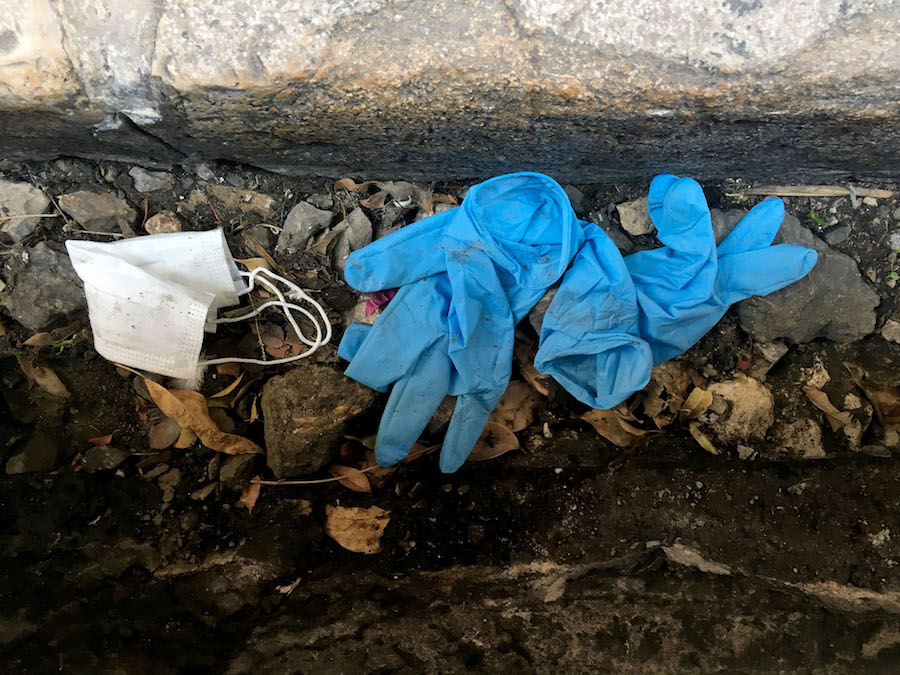
Gloves and masks litter Middle East amid virus panic

Author: 
AFP
ID: 
1589300368638481900
Tue, 2020-05-12 16:15

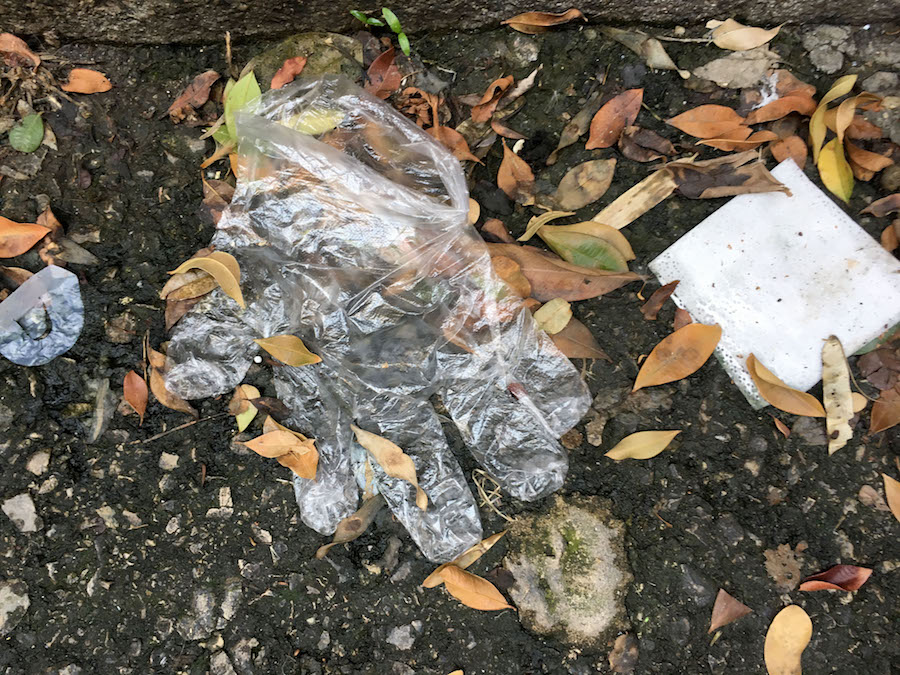
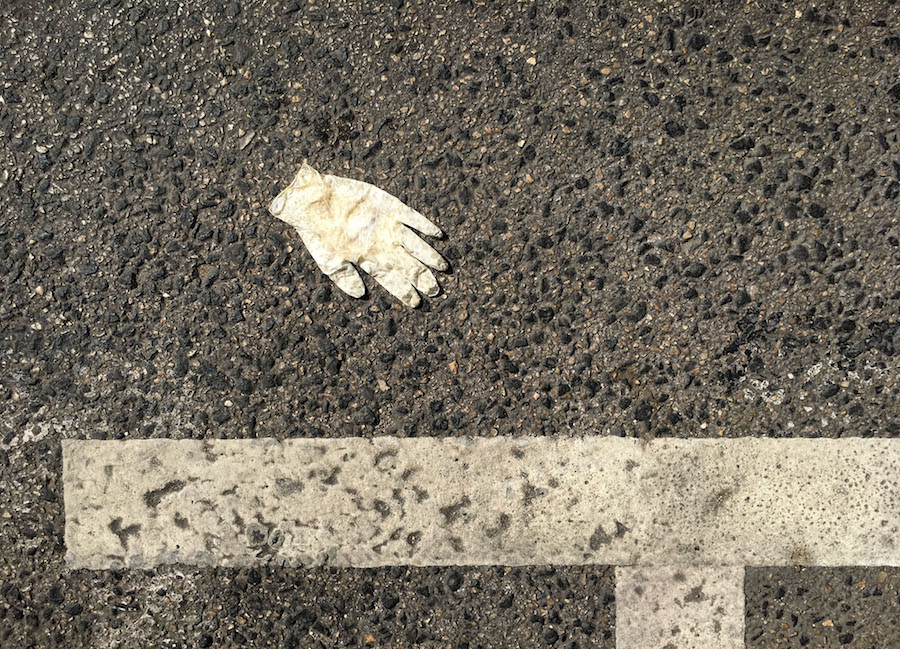
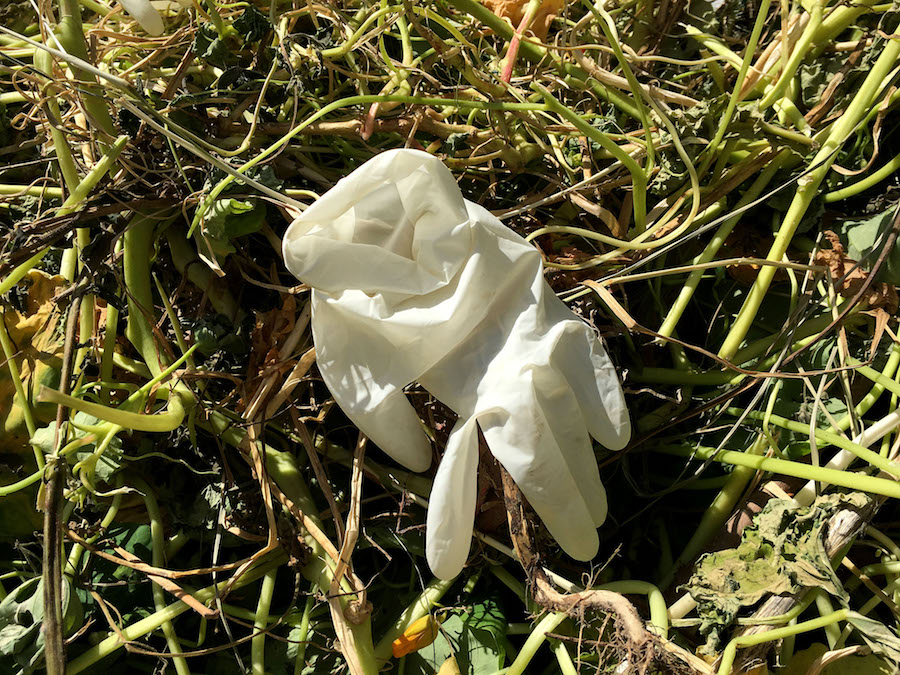
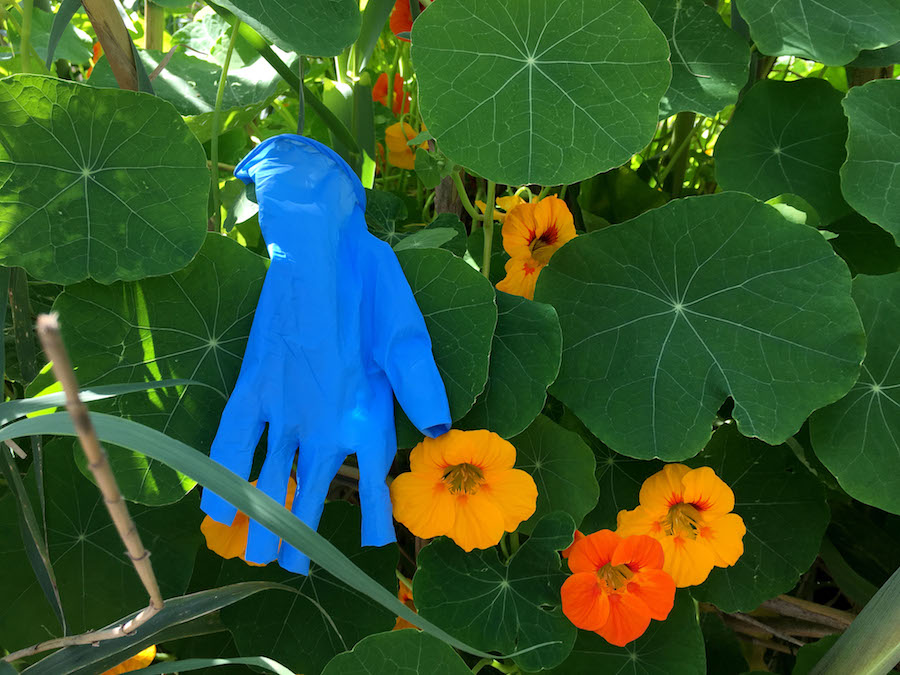
BEIRUT: While walking in Beirut during the coronavirus lockdown recently, Omar Frangieh was struck by the number of face masks and gloves littering the Lebanese capital.
The photographer, concerned that contaminated waste could itself transmit the disease, took 200 photos of discarded personal protective equipment and posted them in a Facebook album he titled “Invaders in Beirut.”
From Baghdad to Gaza, the disposable masks and gloves that remain in high demand to protect populations from the coronavirus pandemic are discarded after use, adding to pollution.
“The major concern though is the fact that this protective equipment is turned into a health hazard by being littered all over Beirut streets,” Frangieh told AFP.
While the virus is usually transmitted by close human contact via respiratory droplets, studies show it can survive on some surfaces for days, suggesting that discarded gloves and masks could pose a risk of transmission to whoever cleans them up.
Since the coronavirus emerged in China in December, countries across the Middle East have reported 7,711 deaths and 233,522 COVID-19 cases.
The run on the protective gear has come even as opinion is divided on how useful they are.
The World Health Organization says washing hands regularly is more effective than wearing gloves for preventing the spread of the virus.
The US Center for Disease Control advises ordinary people to wear washable cloth masks in public, allowing in-demand single-use respirators and surgical masks to be used by health care workers and other at-risk groups.
In the Palestinian enclave of Gaza on the eastern Mediterranean, the beachfront — already polluted with rubbish — is now also littered with masks and gloves.
The items are designed to be single use, are not recyclable and most will not biodegrade making them an unsightly source of pollution and potential hazard to marine life if they end up in the ocean.
Some small shop owners have taken the initiative to collect them and put them in the trash bin but the beach has long been dotted with rubbish, with poor Gazans often dumping their waste there.
Lina Ouda, who was out for a stroll with her husband, stopped to pick up several discarded items.
“I noticed masks and gloves lying on the cornice and put them in the garbage bin because these things pollute the beach,” the 30-year-old told AFP.
Her husband Jamal Ouda explained: “There is no general culture of cleaning the beaches in Gaza but some people take the initiative to collect the remnants of protective medical gear such as masks and put them in the trash.”
But unfortunately, he said, “many people walk wearing masks and gloves and (at the end) throw them on the ground.”

Main category: 

Sale of counterfeit face masks and surgical gloves on the rise in EgyptGloves off as world champion boxer Amir Khan dreams of ‘more fights in Saudi Arabia’


Egypt receives $2.77 bln in IMF emergency financing

Author: 
Reuters
ID: 
1589297990808303200
Tue, 2020-05-12 15:35

CAIRO: Egypt has received $2.77 billion in emergency financing from the International Monetary Fund, its state news agency reported on Tuesday, citing a senior central bank source.
The IMF had approved the funds on Monday in an effort to help Egypt to contend with the new coronavirus pandemic that has brought tourism to a standstill and triggered capital flight.

Main category: 

IMF approves $2.77bn emergency virus loan for EgyptDoctors’ head urges two-week full curfew in Egypt as precaution