Did UN chief’s global ceasefire call boost the coronavirus fight?

Tue, 2020-07-21 00:01

DUBAI: Since a deadly coronavirus outbreak in China’s Wuhan city late last year began to spread to the rest of the world, most of humanity has had no choice but to cope with the blows of a pandemic without a vaccine.

While the crisis has affected people’s lives, cutting across political and geographical boundaries, few groups have proved more vulnerable than the world’s large population of displaced and dispossessed living in conflict zones.

At the same time, the wellbeing of billions of people hangs in the balance, with unemployment rates projected to soar and potentially affecting the lives of 1.6 billion “informal economy” workers worldwide.

The international community has seldom faced such a perfect storm of challenges in living memory.

“The pandemic exacerbates so many of the world’s problems — war, racial and economic inequalities, gender inequality, poverty and more,” Kerry Anderson, writer and political risk consultant, told Arab News.

Several countries in the Middle East were already lagging behind in socioeconomic development due to conflict, drought, political unrest or environmental degradation.

With the advent of the pandemic, however, they had to quickly take on mankind’s latest common enemy: The novel coronavirus.

In response to the unfolding crisis, UN Secretary-General Antonio Guterres called for a worldwide cease-fire in March, urging parties to lay down their weapons.
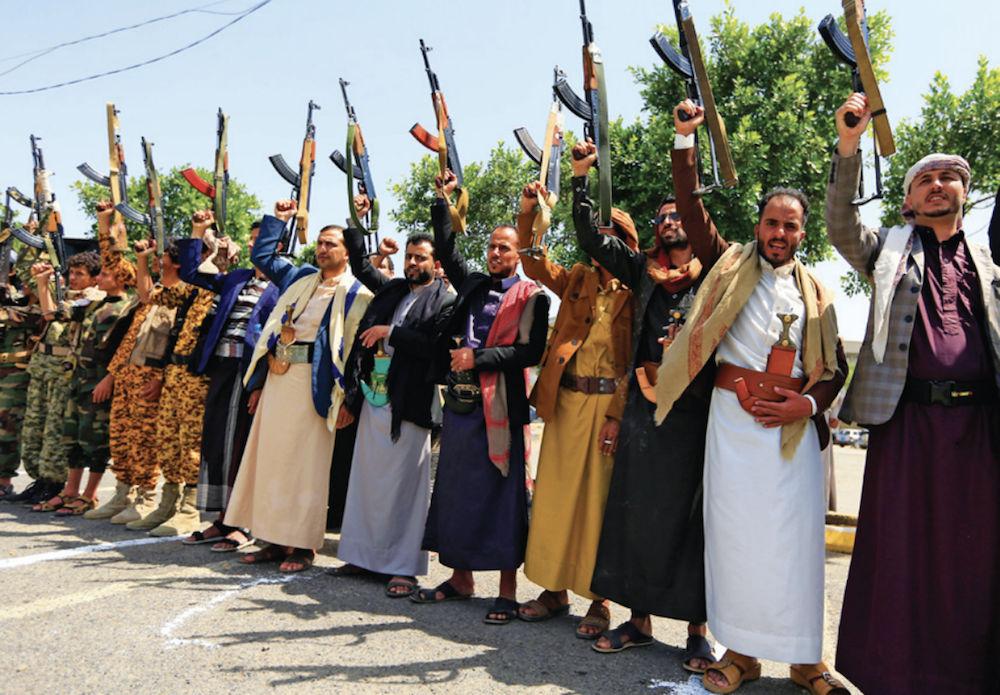

Houthi fighters in Yemen’s capital Sanaa have not ratcheted down their rhetoric despite rising coronavirus cases. (AFP/File Photo)

In an emotional appeal, he warned: “It is time to put armed conflict on lockdown and focus together on the true fight of our lives.”

He pointed out that vulnerable groups such as women, children, people with disabilities, the marginalized, displaced and refugees typically pay the highest price during any conflict. They were now at risk of suffering “devastating losses” due to the pandemic, he said.

Four months on, did Guterres’s appeal make any difference to the lives of the people he had in mind?

To Anderson, cease-fires are important tools, but they must be followed up with action. A preliminary cease-fire is an “essential” but “temporary” approach, “not a solution to a conflict,” she said.

“A pandemic-related truce would help buy time to mitigate the effects of the virus in some of the world’s most vulnerable places. However, both the pandemic and the causes and consequences of conflict are likely to outlast a cease-fire.”

To develop longer-lasting solutions (such as definitive cease-fires), the international community must use this moment to build a more “cooperative approach to entrenched problems,” Anderson said.

In other words, a pause in fighting only presents an opportunity to pursue more durable diplomatic solutions to a conflict.

“It’s a window of opportunity to provide humanitarian aid, and an opportunity to try to both prepare for and mitigate the spread of coronavirus,” Anderson said.

Gueterres’s plea to “silence the guns” and raise “the voices for peace” resonated worldwide. Eleven countries mired in protracted conflicts agreed to observe a cease-fire, and 170 signatories endorsed the appeal by June.

FASTFACT

70

Number of non-state actors, civil society networks, organizations that endorsed UN chief’s global cease-fire call.

On the face of it, they supported the UN chief’s call to silence all guns and stand united against the world’s first pandemic in decades.

But as Guterres himself noted later, the support for his cease-fire call was nominal in some countries, and “there was still a distance between declarations and deeds in many countries.”

In some of the most volatile parts of the world, namely the Middle East and North Africa, the appeal of cease-fires proved fleeting.

Reports of airstrikes and clashes between rival sides poured in from Libya, Iraq and Yemen, while the health-care situation deteriorated further in war-torn Syria.

In Yemen, reeling from the world’s worst humanitarian crisis, a two-week cease-fire proposed by the Saudi-led coalition backing the UN-recognized government went into effect on July 9.

But just days after the agreement, seven children and two women died in an incident that marked the start of a fresh round of tit-for-tat attacks that have defied the UN’s appeals for a cease-fire.
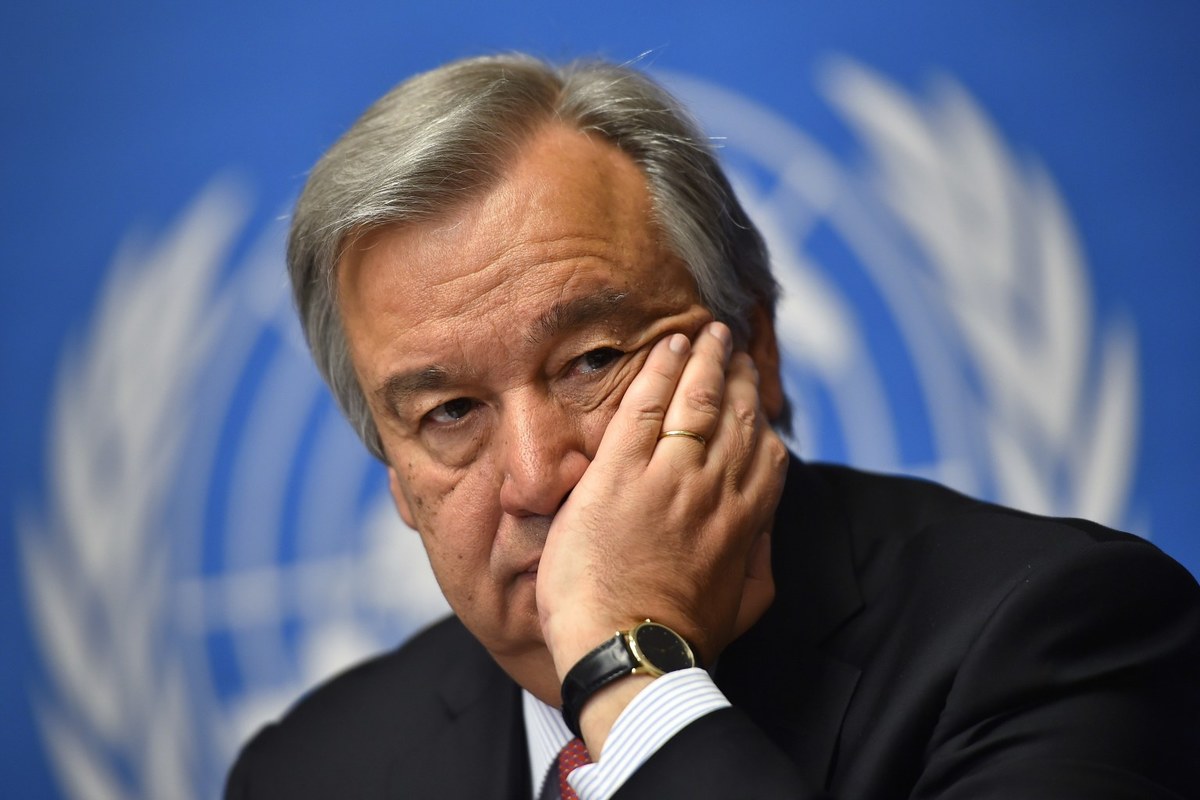

UN chief Guterres has urged combatants to lay down their weapons and focus on the ‘true fight of our lives.’ (AFP/File Photo)

Laura Petrache, a senior adviser to the Paris-based Migrant Integration Lab, said Yemen is in “urgent” need of a pause in the fighting in view of the increasing coronavirus cases in the war-torn country.

She views a cease-fire as a “perfect opportunity” to end the conflict as well as contain the COVID-19 outbreak.

“Less than 50 percent of Yemen’s hospitals and clinics are operational, and most lack qualified staff, medicine and often electricity,” she told Arab News.

Another country where the UN’s cease-fire call has failed to make a dent in the violence level is Libya.

On July 4, overnight strikes destroyed military equipment when they struck Al-Waitya in Tripoli’s outskirts, a base that had just fallen to Turkey-backed forces.

The attack took place even though both the Turkey-aligned Government of National Accord (GNA) and the rival east-based Libyan National Army had publicly welcomed the UN’s cease-fire call, according to Petrache.

One place where a cease-fire appears to have largely held is in Syria’s Idlib province, even though the situation there remains “fragile,” said Anderson.

“Idlib has seen its first confirmed COVID 19 case (in July), raising serious concerns about the potential for the virus to spread through a region overcrowded with Syrians displaced by war,” she added.
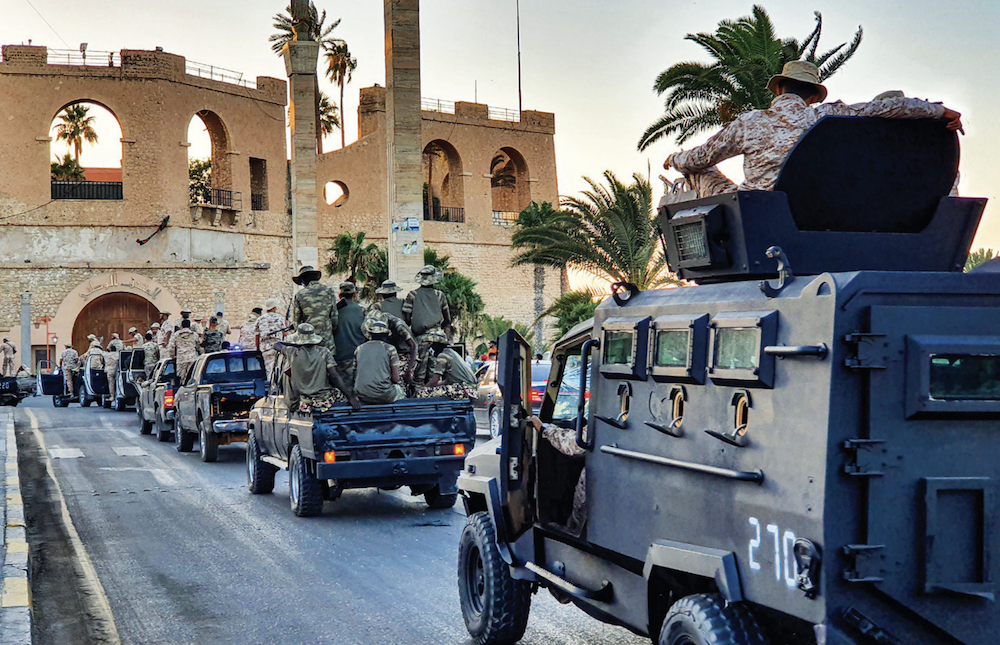

Kurdish-majority northeastern Syria is one of the many conflict zones vulnerable to COVID-19’s ravages. (AFP/File Photo)

The UN estimates that Syria’s public-health infrastructure, devastated by war, requires $10 billion in aid to combat the impact of conflict and the pandemic.

“Further fighting would only exacerbate an already dire situation and undermine any efforts to address the pandemic,” Anderson said, adding that it is vital that key border crossings are kept open for humanitarian aid to pass through.

For over a month now, an eerie calm has prevailed in the Gaza Strip, marking a sharp departure from the usual flare-ups in the besieged Palestinian territory.

“There has been no official cease-fire, but Israel and Palestine have put aside their disputes and made joint efforts to fight COVID-19,” said Petrache.

However, attacks have been reported at checkpoints in the West Bank as tension remains high over the Israeli government’s threat to annex parts of the occupied territory.

Despite the reduction in violence in parts of the world since the onset of the pandemic, the condition of children in conflict situations continues to be a cause for concern.

The cease-fires during the pandemic, if adhered to, are predicted to protect 250 million children.

“There’s going to be a generation of people who have suffered severe loss, now known as ‘human devastation syndrome,’ due to the absolute refusal of combatants to uphold any recognized standards of behavior during war,” Kimberly Gleason, associate professor at the American University of Sharjah, told Arab News.

“Unfortunately, the conflicts in Libya, Syria and Yemen involve a heavy flow of foreign fighters. So although it looks as though COVID-19 hasn’t spread significantly there yet, fighters coming from countries with known coronavirus epidemics can easily infect local populations.”

Gleason also worries about the repercussions of the practice of targeting health facilities in war zones by combatants, which the Middle East has witnessed in recent years.

“Every additional day that these conflicts drag on, and every health-care worker who is lost to COVID-19 or conflict, is a tax on future economic recovery,” she said.

—————-

Twitter: @jumana_khamis

Main category: 

UN chief renews call for global cease-fire to tackle coronavirusArab coalition deploys monitors to oversee Yemen cease-fire with separatistsUN denounces recent escalation in Yemen, says threatens cease-fireTurkey-Russia cease-fire negotiations for Libya: Any hope for durability?


Egypt’s foreign minister in show of support for Palestinians in Ramallah

Tue, 2020-07-21 00:06

AMMAN: Egypt’s Foreign Minister Sameh Shukri ended a two-day visit to Jordan and Palestine with a visit to the Palestinian presidential headquarters in Ramallah on Monday.

Nabil Shaath, senior adviser to the Palestinian president, said the visit followed a Sunday phone call between President Abdel Fattah El-Sisi and President Mahmoud Abbas.

“The Egyptian position in opposition of the (West Bank) annexation and in support of Palestinian rights is well-known,” Shaath told Arab News. “But the physical presence of the Egyptian official sends a strong message to Palestinians and the world that Egypt is in total sync with the Palestinians.”

After the visit Shukri and Palestinian Foreign Minister Riyad Malki held a press conference to reiterate the strength of Palestinian-Egyptian relations and their opposition to Israel’s annexation plans.

Oraib Rantawi, head of the Al-Quds Center for Political Studies, said the visit to Ramallah was meant to have been part of a show of support by both Jordan and Egypt.

“The earlier plan was that Shukri and Jordan’s Foreign Minister Ayman Safadi make the trip together, but Shukri was unable to join Safadi on that trip because of sensitive regional talks regarding the Nahda dam,” he told Arab News.

Ofer Zalzberg, a senior analyst with the International Crisis Group, said that the visit by Shukri was a blow to Israel.

“Cairo’s public condemnation of Israeli unilateralism in Ramallah is a blow to (Benjamin) Netanyahu’s narrative that Israel’s Arab partners are indifferent toward annexation if not desirous of it,” he told Arab News.

Cairo’s public condemnation of Israeli unilateralism in Ramallah is a blow to (Benjamin) Netanyahu’s narrative that Israel’s Arab partners are indifferent toward annexation if not desirous of it.

Ofer Zalzberg, Senior analyst

The importance of this visit clearly showed the high level of Egyptian coordination with Ramallah and Amman, he added.

Jordan’s official Petra news agency said that King Abdullah II reiterated that any unilateral Israeli measure to annex lands in the West Bank was unacceptable as it would “undermine the prospects of achieving peace and stability in the region.”

While in Jordan, Shukri said that El-Sisi was looking forward to a trilateral summit between Jordan, Egypt, and Iraq to try and discuss ways to achieve better regional cooperation.

Petra reported that efforts to reach “political solutions to regional crises” were also discussed.

Analysts said that the regional crises were a reference to the situation in Libya.

Rantawi said that the earlier visit to Amman had more than one item on the agenda.

“Jordan’s relationship with Turkey has improved in recent months and I am told that Egypt was hoping that his majesty can help defuse the current Egyptian-Turkish tensions over Libya.”

In other Palestinian-related issues, the governor of Jerusalem, Adnan Ghaith, was arrested for the 17th time since being appointed to his position two years ago.

Police raided Ghaith’s home in the city’s Silwan neighborhood on Sunday and took him into custody, the Wadi Hilweh Information Center said in a statement.

An Israeli judge decided on Monday to extend his detention to seven days in prison.

It is unclear why he was arrested and what the reason was for the extended remand.

Main category: 

Egypt parliament approves possible intervention in LibyaTrump, Biden urged to show balance in Palestine-Israel policies


Egyptian family stunned after father ‘returns from dead’

Sun, 2020-07-19 21:53

CAIRO: The family of an Egyptian man who they thought had died and been buried have been left stunned after he appeared to come back from the dead.
Mohammed El-Gammal, who is in his 40s, was found wandering out of a cemetery in the village of Kafr Al-Hosar in the Sharqiyah region north of Cairo.
However, his family thought they had held his funeral four months ago after they incorrectly identified another corpse as being El-Gammal.
El-Gammal, who had worked as a teacher and is married with children, had suffered from mental illness and would often disappear for up to a month at a time, a village resident told Youm 7 news website.
But in January he went missing and never returned. His family kept searching for him until they received a call from a relative who worked at a local hospital.
The relative told them that an unidentified dead body had arrived at the hospital and the family went to see if it was El-Gammal.
They all believed the corpse was his apart from one of his sisters.
The report said a DNA sample was taken from the body but the result was never received by the family and the funeral took place on March 21.
Four months later, the real El-Gammal was found alive by youths over the weekend and taken to the nearest police station.

Main category: 
Tags: 

How technology is keeping elderly Egyptians safe during coronavirus crisisSocial media users demand ‘Palestine’ is added to Google Maps


Hagia Sophia mosaics will be covered with curtains during prayers -Turkish presidential spokesman

Author: 
Sun, 2020-07-19 21:47

ISTANBUL: Mosaics depicting Christian figures in Istanbul’s ancient Hagia Sophia will be covered with curtains during Muslim prayers, Turkish presidential spokesman Ibrahim Kalin said on Sunday, as work to prepare the building for use as a mosque continues.
Authorities had said last week that the mosaics would be concealed with either curtains or lasers when the first prayers are held next Friday.
In a move that sparked sparked international criticism and concern, President Tayyip Erdogan declared Hagia Sophia open to Muslim worship earlier this month following a court ruling that said the building’s conversion to a museum in 1934 was unlawful.
Hagia Sophia dates back to the sixth century and has a history as both a church and a mosque before it was turned into a museum.
In an interview with broadcaster NTV, Kalin said some mosaics of Mary and Gabriel that are positioned in the direction of Qiblah, where Muslims face during prayer, would be covered with curtains.
He said other mosaics of Jesus and other Christian figures did not pose an obstacle for Muslim prayers because they are not located in the direction of Qiblah. But he did not say whether they would remain uncovered at all times.
Outside prayers, Hagia Sophia will be open to all visitors and tourists and all mosaics will be uncovered, authorities have said.
Erdogan visited the mosque earlier on Sunday to inspect the progress in preparing the building. (Reporting by Ali Kucukgocmen Editing by Frances Kerry)

Main category: 

Hagia Sophia will open outside prayer time, says TurkeyTurkey will inform UNESCO about Hagia Sophia moves – foreign minister


Emir’s brothers raise red flags as Qatar prepares to host 2022 FIFA World Cup

Author: 
Sun, 2020-07-19 21:20

CHICAGO: When Tamim bin Hamad Al-Thani was named Emir of Qatar in 2013 by his father, Hamad bin Khalifa Al-Thani, who took power in a coup in 1995, his biggest controversy was his eagerness to continue his father’s policy of building ties with the Muslim Brotherhood and Hamas in the Gaza Strip.
Emir Tamim Al-Thani declared as his mission to promote sports and healthy living among Qatari’s and rebuild Qatar’s image abroad as he leads Qatar’s plans to host the FIFA World Cup in 2022.
Today, the Emir is busy sorting out the violent mischief of several of his 24 siblings from his fathers’ three wives, while distancing himself, at least publicly, from Qatar’s involvement in the killing and maiming of at least 10 Americans during his father’s reign.
But his worst public scandals involve the antics of two younger brothers, playboy racing driver and accused murderer Sheikh Khaled Al-Thani and the until now obscure Sheikh Khalifa Al-Thani, who is the cornerstone of an exposé published in the Los Angeles Times this week.
Sheikh Khaled has been accused in a federal lawsuit filed in June by six former employees of murdering an Indian driver who worked for his wife, and threatening to murder a dozen others, from racing car industry rivals to friends he suspected of leaking information about his personal life.
On June 16, 2020, Florida Attorney Rebecca Castaneda asserted KHK’s brother, Sheikh Khaled, “created an environment of hostility, falsely imprisoned employees, caused personal injury, assaulted and battered employees, inflicted emotional distress, engaged in retaliation, and intentionally interfered in business relationships,” and was involved in at least one murder.
Sheikh Khaled first made a name for himself when he recklessly drove his $3.4 million yellow McLaren P1 GTR Ferrari at speeds of 100 mph through Beverly Hills, California, in a 2015 rampage caught on video. Confronted by police, Sheikh Khaled declared “diplomatic immunity.”
Although hard to steal the headlines from his racing “bad boy” brother, Sheikh Khalifa is on his way to “Qatari fame,” the focus of a detailed profile published in the Los Angeles Times. Sheikh Khalifa, a head of Qatar’s internal security apparatus, the notorious “Lekhwiya” – derived from a Qatari word for brother — has been exposed as a part of the growing college admissions scandal that has resulted in charges being filed against more than 50 Hollywood and sports celebrities, mostly in California.
Sheikh Khalifa, better known as “KHK,” has a bachelor’s in public policy with distinction and master’s in public diplomacy from the University of Southern California (USC), sources claim as a result of a pattern of bribes, bullying, and broken rules by the Qatari royal family.
Sources claim KHK skipped classes claiming “security” concerns and got his degrees without stepping foot on the campus, allowed to study remotely while living at the posh Beverly Wilshire hotel. A professor said KHK submitted his finals in a bag that included a Rolex valued at more than $12,500.
KHK’s education was bought by his family through huge donations to California universities. Before “graduating” from USC, KHK attended with two cousins the LA Mission College, a community college 25 miles from Beverly Hills. He then made a failed attempt to transfer to the University of California at Los Angeles (UCLA).
A hotel executive identified in the story allegedly promised “a substantial donation” if UCLA would admit KHK.
When UCLA officials refused to meet to discuss KHK’s enrolment, his mother Mozah bint Nasser traveled to California to lobby for her son’s admission. She personally oversaw $1 billion in donations to American universities, according to the LA Times.
When the push for UCLA failed, the family turned to USC, where they targeted influential people around the university, including friends, business associates and several of USC’s wealthy trustees. One of these was the billionaire Thomas J. Barrack Jr, an LA investor and founder of Colony Capital, who oversaw the construction of the Al-Thani family’s $300-million hilltop Bel-Air California compound.
Four months later, KHK was a certified USC student, although the Qatar Foundation and Mozah insisted that the prince had “already been admitted.”
Members of the Qatari royal family and employees were sent to Los Angeles to care for KHK, and found themselves, allegedly, concealing inflated expenses from the family back home, according to the LA Times. These included airline ticket reimbursements ($200 became $8,700), and nonexistent legal fees of $73,000.
The slush fund of inflated payments from the Emir went to cover KHK’s luxurious lifestyle in Los Angeles.
Like his playboy racing older brother Sheikh Khaled, KHK loved fast cars, too, and was pulled over by the California Highway Patrol in 2014 for racing down the 10 Freeway at 130 mph in a white Maybach Ferrari which rivals for cost Sheikh Khaled’s McLaren P1 GTR. KHK was charged but never showed up for the arraignment.
Their Ferraris achieved their own fame as car enthusiasts shot videos of them parked outside the Beverly Wilshire. One included a photo of Scott Disick, the ex-boyfriend of Kourtney Kardashian who posed on the hood of Al-Thani’s car. “Thanks for the ride @KHK,” Disick captioned the photo on Instagram.
After KHK received his bachelor’s degree, he received a “special dispensation” to study remotely for his master’s because “family duties” prevented him from attending classes. Nonetheless, KHK was praised by USC for turning in papers of a “high standard” that were “potentially publishable.”
KHK’s exploits and controversies only add weight to the searing issues Emir Tamim must weigh as Qatar turns the corner to hosting the FIFA World Cup.
On June 10, relatives of 10 Americans who were killed or seriously injured during terrorist attacks in Israel and the Israeli-occupied West Bank filed a “wrongful death” lawsuit against Qatar’s Royal family. The Al-Thanis are accused of financing Hamas and Palestinian Islamic Jihad, which are both designated as “terrorist organizations” by the US government.
According to the lawsuit, Qatar sought to evade US sanctions by channeling money through three entities, the Qatar Charity, and two Middle East banks that Qatar’s royal family controls, Masraf Al-Rayan and Qatar National.

Main category: 

UN report: Qatar’s migrant workers face ‘structural racism’Mauritania investigates gifting of island to former Qatari Emir