Khamenei threatens US with ‘reciprocal blow’ over Soleimani strike

Author: 
Amir Havasi | AFP
ID: 
1595353843455844200
Tue, 2020-07-21 17:42

TEHRAN: Iran’s supreme leader told Iraq’s visiting premier on Tuesday that Tehran will not interfere in Baghdad’s relations with Washington, but warned that the US presence next door to the Islamic republic was a cause of insecurity.
Prime Minister Mustafa Al-Kadhemi of Iraq met Ayatollah Ali Khamenei in the Iranian capital during his first trip abroad since taking office.
“Iran will not interfere in Iraq’s relations with America but expects Iraqi friends to know America and realize that their presence in any country causes corruption, ruin and destruction,” the Iranian leader said, according to his official website.
“The Islamic republic expects… (the Iraqi) parliament’s decision to expel the Americans to be adhered to since their presence is a cause of insecurity.”
Khamenei pointed to the US killing of Iran’s top general Qasem Soleimani in a January drone strike in Baghdad, after which parliament voted to expel US troops.
“They killed your guest in your house and blatantly confessed to it.”
Iran “will never forget this and will certainly deal a reciprocal blow to the Americans,” Khamenei said.
Iran retaliated for Soleimani’s death days after by firing a volley of missiles at US troops stationed in Iraq, but US President Donald Trump opted against responding militarily.
While the attack on the western Iraqi base of Ain Al-Asad left no US soldiers dead, dozens suffered brain trauma.
According to Khamenei, Iran was opposed to “whatever may weaken the Iraqi government” in contrast to the US, which he said did not want “an independent, strong Iraqi government elected by popular vote.”
Kadhemi had been scheduled to visit Saudi Arabia as his first trip abroad, then quickly follow it up with a trip to Tehran.
The Saudi leg was postponed after King Salman was hospitalized on Monday.
Kadhemi rose to the premiership in May after serving as head of Iraq’s National Intelligence Service for nearly four years.
He formed close ties to Tehran, Washington and Riyadh during that time, prompting speculation he could serve as a rare mediator between the capitals.
His trip to Tehran comes after he received Iran’s top diplomat Mohammad Javad Zarif in Baghdad on Sunday.
Relations between the two countries were not always close — they fought a bloody war from 1980 to 1988.
Tehran’s influence in Baghdad grew after the 2003 US-led invasion of Iraq toppled the government of Saddam Hussein.
Iran now has significant leverage over many of Iraq’s Shiite political groups.
Iraq’s delegation includes the ministers of foreign affairs, finance, health and planning, as well as Kadhemi’s national security adviser, some of whom also met their Iranian counterparts.
Kadhemi also held talks with President Hassan Rouhani to discuss closer trade ties, fighting the novel coronavirus and efforts to ensure regional stability, state television said.
 

Main category: 
Tags: 

Iranian deputy FM draws flak for Kabul critique in migrants’ drowning incident US court upholds Turkish banker’s conviction in Iran case


Ethiopia, Egypt reach ‘major common understanding’ on Nile dam

Tue, 2020-07-21 20:38

JOHANNESBURG: Ethiopia’s prime minister says his country, Egypt and Sudan have reached a “major common understanding which paves the way for a breakthrough agreement” on a massive dam project that has led to sharp regional tensions.
The statement by Abiy Ahmed’s office Tuesday night came as new satellite images show the water level in the reservoir behind the nearly completed dam is at its highest in at least four years.
Ethiopia has said the rising water is from heavy rains, and the new statement says that “it has become evident over the past two weeks in the rainy season that the (dam’s) first-year filling is achieved and the dam under construction is already overtopping.”
Ethiopia has said it would begin filling the dam’s reservoir this month even without a deal as the rainy season floods the Blue Nile. But the new statement says the three countries’ leaders have agreed to pursue “further technical discussions on the filling … and proceed to a comprehensive agreement.”
Ethiopia says the colossal dam offers a critical opportunity to pull millions of its nearly 110 million citizens out of poverty and become a major power exporter. Downstream Egypt, which depends on the Nile to supply its farmers and booming population of 100 million with fresh water, asserts that the dam poses an existential threat.
Years of talks with a variety of mediators, including the Trump administration, have failed to produce a solution. These new talks were mediated by the African Union.

Main category: 

Nile dam dispute poses a thorny challenge for Ethiopia and EgyptNile dam dispute spills onto social media


Egypt denies destroying ancient Islamic cemeteries to build bridge

Author: 
Tue, 2020-07-21 01:22

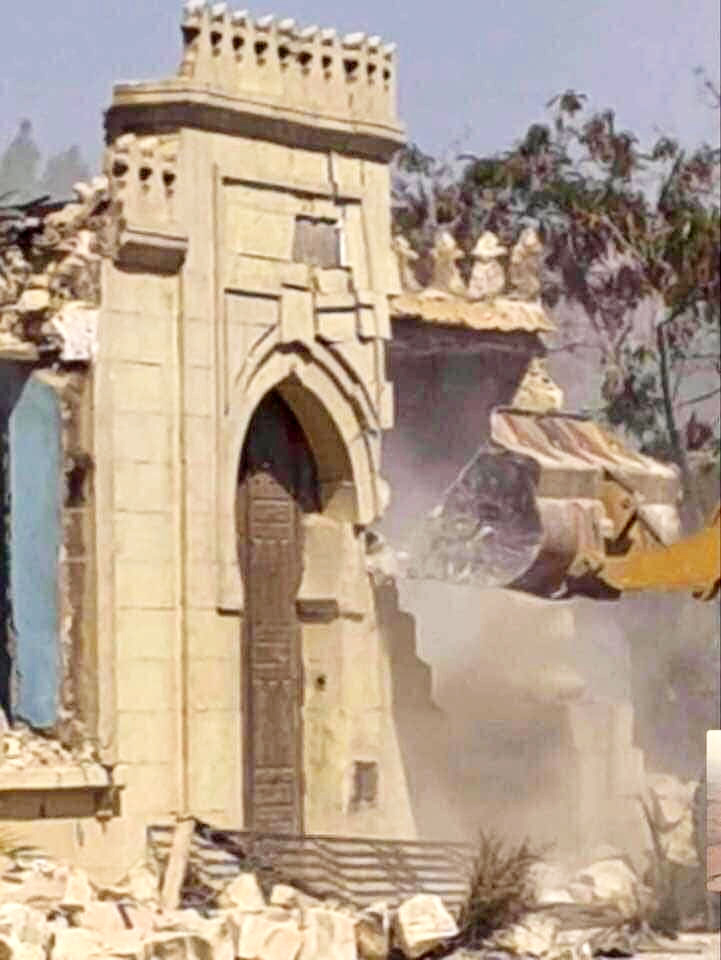
CAIRO: The Egyptian government on Monday denied claims circulating on social media that ancient Islamic cemeteries and artifacts were being destroyed to make way for a bridge-building project.

Antiquities dating back five centuries in Cairo’s City of the Dead were among treasured items online posters said had been wrecked.
However, in a statement, head of the Islamic, Coptic and Judaic Antiquities Sector, Osama Talaat, said that the rumors were “completely untrue” and images of tombs that had appeared on social networking sites were not historic registered monuments.
He added that although the pictured tombs were from more recent times, the secretary-general of Egypt’s Supreme Council of Antiquities had still ordered the formation of a scientific technical committee to examine the tombstones and look into the possibility of displaying some of them in museums.
An online campaign, launched on Facebook, has been critical of the scheme to build a bridge through the Mamluk Desert Cemetery.
Activist and journalist Khaled Abdel-Hadi said that the Mamluk tombs were part of Egypt’s world-famous Islamic architecture and destroying them would be to erase key aspects of the country’s history.
Archaeologist Hisham Auf pointed out that the cemeteries being demolished to make way for the bridge were in an archaeological site registered since 2009 and as such it was against the law to damage them.
He said the cemeteries dated back to the 1920s and contained the bodies of pashas, former Egyptian prime ministers, and members of the Egyptian intelligentsia who fought during the Egyptian Revolution of 1919 against British occupation.

BACKGROUND

Archaeologist Hisham Auf pointed out that the cemeteries being demolished to make way for the bridge were in an archaeological site registered since 2009 and as such it was against the law to damage them.

This, he noted, “made the area a part of modern history as well as ancient history. The region as a whole went through changes, all of which were against the law as this tampered with Egyptian history and Egypt’s international pledge to UNESCO.
“It is true that during the construction of the Salah Salem Road during the time of (Egyptian) President Gamal Abdel Nasser parts of graves were removed, but this does not legitimize what is happening now and does not mean anything in the debate about the graves.”
Auf added: “We were informed only 10 days ago of the decision to demolish. It was an official report and was conducted by the person responsible for my mother’s family tombs in El-Ghafir, in which its two-room reception and large vacant space will be destroyed.
“As the tombs are on a side street, the cemeteries themselves are still safe. I don’t know if we have to move the remains of the dead. The state did not provide us with alternate graves.”
He said some people had been able to arrange for remains to be moved but others were struggling. “My great grandfather had bought a second cemetery in the same area, but he donated it. This second cemetery will most likely end up being destroyed and no one will move any of the bones located there.”
He said that to date there had been no offer of compensation.
“This is not a process of moving the graves. This is the demolition of the graves, which is untenable behavior. I am disgusted by the attempts to defend this sad day in the history of Cairo,” Auf added.

Main category: 

Egyptian family stunned after father ‘returns from dead’Egypt’s foreign minister in show of support for Palestinians in Ramallah


No new COVID-19 cases at 14 Egyptian isolation hospitals

Author: 
Tue, 2020-07-21 00:14

CAIRO: There have been no new coronavirus cases in the past three days at 14 Egyptian hospitals designated for the isolation of patients.

The announcement comes during a decline in the number of cases in Egypt in recent days.

Around 600 new cases are being reported daily, with deaths ranging between 50 to 60, according to Egypt’s Ministry of Health.

As of July 19, 4,302 people have died from the disease and 87,775 have been infected since the outbreak began in the country in February.

The hospitals that reported no new cases were El-Nujaila and El-Alamein hospitals in Marsa Matrouh governorate near the Libyan border, as well as El- Gomhoria, Sheikh Zayed and Heliopolis in Cairo.

Three hospitals in Ismailia city on the Suez Canal declared that they, too, were free of coronavirus cases: Abu Khalifa Hospital, Ismailia General Hospital and Sadr Hospital. In Menoufia governorate, north Cairo, Shebin El-Koum and Berket El-Sabaa General Hospital and Bagour General Hospital reported the same trend.

Abu Qir Central Hospital in Alexandria also said it had no new cases.

El-Madina Hospital in Luxor governorate in Upper Egypt and the Red Crescent Hospital in the eastern region north of Cairo also have no new cases.

Amani Mukhtar, a professor of preventive medicine in Egypt, attributed the decline to the possibility that the country had passed the peak of the pandemic.

She said there were several reasons for the decline, the main one being the weakening of the cell because of the nature of viruses. She described the viruses as mutating and that there was a lot of research being conducted on the weakening of the virus.

Mukhtar said the second reason for the decline in cases was because of preventive measures that have helped reduce the number of cases.

Precautionary measures taken by the state and which the public is being constantly urged to follow, as well as the mandatory wearing of face masks in public places, might have prevented the virus from spreading further.

The expert said that most people had acquired immunity. Research suggests that the body, after being infected with the virus, will gain immunity for two to six months.

Hossam Hosni, head of the scientific committee to combat coronavirus in Egypt, said that the decrease in the number of daily reported cases was expected.

He praised the isolation hospitals that no longer had any COVID-19 cases, as well as the efficiency of medical teams in hospitals, and said the commitment of citizens to wear face masks would lead to an even bigger decrease in newly reported cases.

“Looking at the cost of private hospitals, we must praise the Egyptian state, which is providing treatment to those able and unable to afford it,” he told Arab News. “When it comes to prevention of the coronavirus we have committed to precautionary measures. Taking vitamin C and zinc from their natural sources, such as fruits and vegetables, has also helped.”

He said that not every coronavirus patient who recovered could donate plasma without several specific conditions, among which is a recovery period ranging from 14 to 30 days, and excluded chronic kidney disease patients and those who took cortisone.

Severe cases or those with chronic illnesses did not recover using blood plasma, he added.

“There is news about the possibility of a second wave of the coronavirus, but there is no scientific evidence to back it up. And there is no scientific evidence to back up what is reported about the possibility of the virus disappearing from Egypt within a month’s time.”

Hosni said it would take a few months until Egypt reached zero coronavirus cases but, until then, the reported cases would continue to decrease.

Jihan El-Assal, vice-chair of the Scientific Committee to Combat the Novel Coronavirus at the Ministry of Health, said that Egypt had passed the peak stage of the virus and that the number of infections was declining. But she also said that nobody could predict when the country would reach zero cases.

El-Assal stressed the importance of people committing to the government’s precautionary measures during the upcoming period in order to eventually reach zero cases.

She added that there had been a strong willingness from the public to adhere to safety guidelines since the beginning of the coronavirus outbreak.

She said people had become more aware and therefore resorted to healthcare providers if they experienced any COVID-19 symptoms which, in most cases, range from mild to moderate and were treated by isolating at home, with a decrease in critical cases.


Main category: 
Tags: 

Egypt’s foreign minister in show of support for Palestinians in RamallahEgypt parliament approves possible intervention in Libya


Turkey faces rise in brain drain over political and economic concerns

Author: 
Tue, 2020-07-21 00:14

ANKARA: Dr. Ahmet Erdi Ozturk, lecturer at London Metropolitan University, has lived abroad for nine years. He even married and had a child, miles away from his home country and parents. He always maintains that “it is emotionally very hard to be a member of the diaspora.”

When asked, however, whether he would be willing to return to Turkey to an academic post with a higher wage, he politely declines, saying, “There is no stability and predictability even in the academic sphere, let alone in politics.”

Recently, several foreign academics who were called from abroad to teach at Sehir University in Istanbul found themselves jobless and hopeless after the university, founded by Turkey’s former Prime Minister Ahmet Davutoglu, was shut down by an overnight presidential decree. The decree followed a longtime dispute between Davutoglu and his ex-ally President Recep Tayyip Erdogan after the former founded his own breakaway Future Party.

An expert on Turkish politics as well as diaspora studies, Ozturk said that people were becoming increasingly disappointed with the widespread nepotism in the country, especially after the economic deterioration.

Ankara’s opposition-affiliated Mayor Mansur Yavas recently announced a list of those who were unfairly employed in the municipality during his predecessor’s time, government-aligned controversial figure Melih Gokcek. 

“Democracy is something that influences daily life,” Ozturk told Arab News. “Young citizens are losing their hopes of finding a job based on their merits if they don’t know any high-ranking people. Many people feel that even their basic freedoms are being taken away from them.”

He added that it would be nearly impossible to “win back” that generation in the short term, as young professionals are choosing to leave altogether in what amounts to a brain drain for the country.

Turkey witnessed a 2 percent increase in its number of emigrants in 2019, compared to the previous year.

A total of 330,289 people left the country last year, according to recent official data from the state-run Turkish Statistical Institute. About 40.8 percent of those who emigrated from Turkey were between the ages of 20-34.

Seren Selvin Korkmaz, executive director of the Istanbul Political Research Institute, said recent studies showed that young people were leaving Turkey mainly for better working conditions and living standards, job opportunities and freedom.

“Migration becomes an exit strategy from everyday struggles. In the country, youth unemployment is more than 25 percent. Many of these young people are still financially dependent on their families or are working for low wages,” Korkmaz told Arab News.

Under these conditions, she explained, young people do not envision a future for themselves.

“I think this creates a ‘violence of uncertainty’ for them. In addition to unemployment, authoritarian tendencies in the country — including social media bans and threats to freedom of thought — impact the youth and make them worry for their future,” she added.

SODEV, a Turkish foundation, recently asked young people between the ages of 15 and 25 whether they would live abroad if given a chance.

Almost half of those who identify as supporters of the ruling Justice and Development Party’s (AKP) government said they preferred to live abroad — a sign which, experts think, shows they have lost their faith in the country’s future.

According to this same survey, released in May, 70.3 percent of respondents believe that a brilliant young Turk would never be promoted professionally in the country if he or she did not have any political and/or bureaucratic “connections.”

According to Korkmaz, the current young generation in Turkey is in a much more precarious position compared to their parents.

“They do not have job security. Education under the AKP’s neoliberal policies is not a guarantee for upward mobility anymore. Also, professional identity, based on the harmony between the education one receives and the job he or she performs, is eroding in the country,” she said.

“Young people feel disappointment after graduation. They are hopeless, and current political parties and actors are unable to attract them,” Korkmaz added.

Experts say that recent government threats to further control platforms like YouTube, Twitter and Netflix have triggered much anger, especially from Generation Z — those born between 1995 and 2015 — who see social media as one of the last remaining bastions of freedom in the digital age.

In the upcoming 2023 parliamentary elections, young voters are expected to make up 12 percent of the electorate and are therefore considered a critical element that politicians in the country have to consider.

Main category: 

Turkey moves toward social media restrictionsBlow to Erdogan as US boots Turkey out of F-35 strike fighter program