Eid in Lebanon overshadowed by virus lockdown, economic crisis

Author: 
Fri, 2020-07-31 02:49

BEIRUT: Eid Al-Adha celebrations in Lebanon were on Thursday overshadowed by economic gloom and the first day of lockdown to prevent the spread of the coronavirus disease (COVID-19) outbreak.
Any festive spirit was knocked flat as official figures showed the number of COVID-19 cases in the country having shot up to 4,250, with 55 deaths.
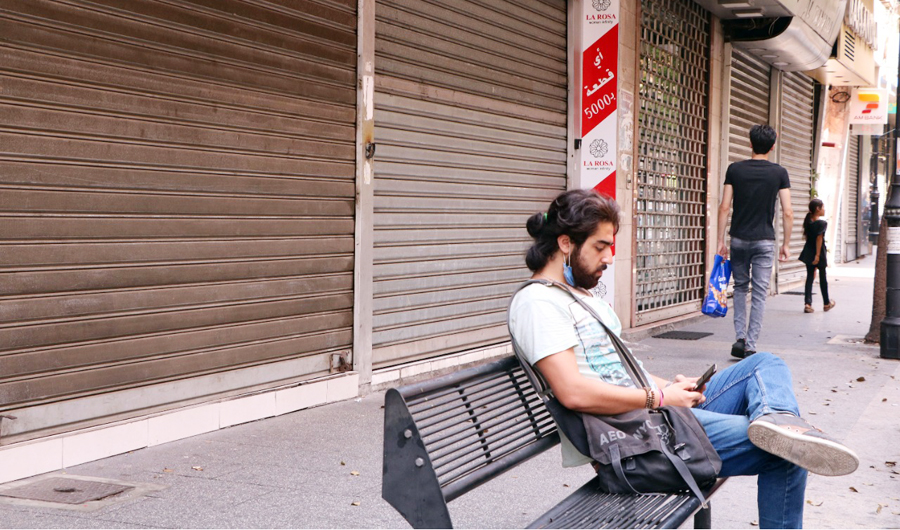
Streets in the capital Beirut were empty and shops and markets closed, as security patrols enforced a shutdown that will continue until Monday. The COVID-19 pandemic combined with the country’s financial crisis has left many cash-strapped Lebanese unable to enjoy traditional Hajj season rituals.
Beirut butcher shop owner, Mohammed Oleylat, said: “I used to slaughter between 40 and 50 sheep (for Eid), however, I only had two clients today asking to buy sheep. Each sheep costs $300 now, which equates to 2.4 million Lebanese pounds on the black market.
“On the eve of Eid Al-Adha, customers neither ordered meat for barbecues nor lamb necks. Those used to be cooked for the festivities, but today, they are only ordering meat to add to dishes. Circumstances are difficult for everyone.
“I could not afford to buy any clothes for my children or sweets. I gave my wife 100,000 Lebanese pounds and I asked her to make do,” he added.
The owner of a children’s clothes shop in the Barbeer neighborhood of Beirut, who would only give their name as Sami, said: “We rely on Eid Al-Adha for sales. Last year, the situation was bad, but it seems worse this year.
“People are not buying clothes. Their priorities are now providing food and water if they can afford them. Prices have multiplied and resources diminished. There is no electricity. There is a pandemic and collapse of the Lebanese pound. People are frustrated.”
Mom-of-three Ghada Houweily said she normally bought new clothes for her children at Eid. “This is how I was brought up, and this is how I want to raise my children. However, I will not buy anything this year. A cotton T-shirt for a 6-year-old costs 169,000 Lebanese pounds. How is that possible?
“We decided to go to the beach instead of buying new clothes, but due to the lockdown decision, we will have to stay at home. I have never experienced anything like this in my life.
“I consider myself middle-class, and some of my friends whose economic situation was better than mine are now at rock bottom. I am severely frustrated, and my kids are depressed. My husband is working hard to make ends meet but we do not know when this collective punishment will end,” Houweily added.
Lebanese Ministry of Tourism chiefs have allowed sweets shops to open during Eid for takeaway and delivery services only, with restaurants and fast-food outlets given the green light to trade under the same restrictions.
Nicolas Chammas, president of the Beirut Traders’ Association, told Arab News: “The situation is desperate. We waited for Eid Al-Adha and summer to make up for our losses on Eid Al-Fitr, Christmas, and last new year, but the situation has become worse. All factors have overlapped, and our losses have increased.”
He added that over the past nine months a quarter of businesses in Beirut had been forced to close due to the country’s crises, and he expected a similar proportion to go to the wall over the next six months.
Nassib Gemayel, president of Mount Lebanon Trade Association, called on the government to reconsider its lockdown decision given the “catastrophic damage” caused to the commercial sector.
In Tripoli, tour boat owners blocked the corniche and torched bins in protest at being banned from working over Eid.
Main category: 

No money, no mutton: Lebanon crisis upends Eid traditionLebanon’s Jumblatt: country needs new prime minister


In West Bank, Eid sacrifices plummet as virus cases soar

Author: 
Fri, 2020-07-31 02:32

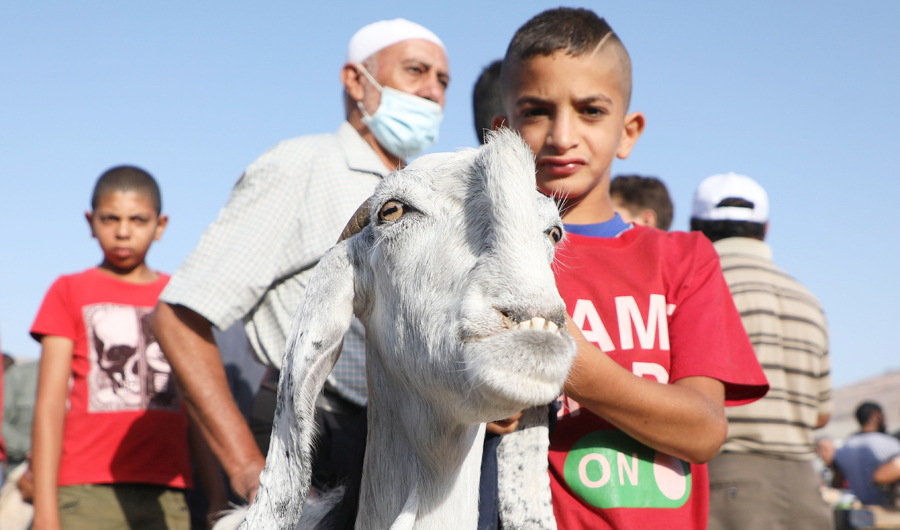
BETHLEHEM: Slaughterhouses typically crowded with Palestinian Muslims buying sheep for the annual Eid Al-Adha “feast of sacrifice” were nearly empty this week as coronavirus curbs weigh on the economy in the occupied West Bank.

The Palestinian Authority (PA) has imposed a partial lockdown over areas under its control to battle a surge in new cases, forcing many businesses to close and sending unemployment to an estimated 18 percent.
“Who exactly can afford (sheep) to sacrifice?,” livestock merchant Daoud Ebayat asked at a hillside market in Bethlehem. “People are unable to cover expenses for their children, there’s no work.”
Around 115,000 sheep and 10,000 calves were sold during Eid Al-Adha in the West Bank and in East Jerusalem last year, according to ministry data.
But with many out of work, and public servants on reduced pay as the PA attempts to weather a financial crisis, local officials say sheep sales have plummeted.
“There will be a decrease, some are saying, of about 20 percent or more,” said Tareq Abu Laban, an official at the Palestinian Agriculture Ministry, noting that final figures were not yet available.
In Bethlehem, several dozen customers haggled with merchants at the sparsely crowded market, hoping for a bargain on sheep that Ebayat says sell for around 2,000 shekels ($588) each. The average monthly income in the West Bank is $350.
Many buyers share larger animals, such as cows or camels, with their extended families to manage the cost ahead of the four-day Muslim festival, which begins on Friday.
Eyad Daraghmeh, who runs a slaughterhouse in Al-Bireh, pointed to empty animal pens at his sprawling facility as evidence of Palestinians’ economic hardship.
“These sheds used to be full of livestock and sacrifices, at least 6,000 available for slaughter,” Daraghmeh said. Behind him a lone calf walked around an otherwise empty pen.

SPEEDREAD

In Bethlehem, customers haggled with merchants at the sparsely crowded market, hoping for a bargain on sheep that sell for around 2,000 shekels ($588) each. The average monthly income in the West Bank is $350.

Fawzat Rayyan, a livestock breeder in the northern West Bank city of Nablus, said that by this point in a typical year he would have sold 120 animals.
“This year it is hardly half that number … the coronavirus is weighing down on us,” he said.
Palestinians have reported 75 deaths and over 10,000 COVID-19 cases in the occupied West Bank, the majority of them in the last two months.
A second wave of infections sweeping the West Bank is fueling fears of a surge in overcrowded Palestinian refugee camps where social distancing is next to impossible.
At the start of the COVID-19 pandemic in March, the Palestinian Authority quickly imposed a lockdown as it sought to contain infections.
But after Israel and later the PA eased restrictions in late April and May, the number of cases rose again, exacerbated by breaches of limits on public assembly and movement.
One major driver has been Palestinian workers going to and from jobs in neighboring Israel, according to the PA.
The Jewish state went into lockdown in mid-March, but after easing restrictions it started reporting 1,000 to 2,000 new coronavirus infections a day and reimposed some restrictions.
The Palestinian Health Ministry’s Tuesday update logged more than 10,860 confirmed cases of infection since the start of the pandemic, including more than 75 deaths.
That compares with an accumulated total of less than 2,700 infections and seven deaths as recently as July 1.
The growing health crisis is causing concern in the camps.
The UN defines about 5 million Palestinians as having refugee status. They are the survivors and descendants of the more than 700,000 who were expelled or fled their land over a few months in 1948 when Israel was founded.

Main category: 

Social media users demand ‘Palestine’ added to Google MapsSection of West Bank mosque damaged by arson


Yazidi children freed from Daesh haunted by health crisis

Author: 
Fri, 2020-07-31 02:28

BAGHDAD: Nearly 2,000 Yazidi children freed from the grips of Daesh in recent years are still trapped by psychological and physical trauma, Amnesty International warned on Thursday.
In a new report based on dozens of interviews in northern Iraq, the rights group found that 1,992 children who faced torture, forced conscription, rape and other abuses at the hands of Daesh were not getting the care they need.
“While the nightmare of their past has receded, hardships remain for these children,” said Matt Wells, deputy director of Amnesty’s crisis response team.
The Yazidis are an ethno-religious minority numbering around 550,000 in their heartland of northwest Iraq before Daesh swept through the rugged region in 2014.
Slamming the Yazidis as heretics, Daesh slaughtered thousands of men, abducted women and girls and forced boys to fight on its behalf.
Yazidi children were forcibly converted to Islam and taught Arabic, banned from speaking their native Kurdish. To this day, child survivors suffer “debilitating long-term injuries,” as well as post-traumatic stress disorder, mood swings, aggression and flashbacks.
Yazidi children interviewed last year in a displacement camp in the northwest district of Duhok played aggressively, wore all black and spoke Arabic to each other, even months after they were freed from Daesh.
One of them, a 10-year-old girl, had threatened to commit suicide multiple times, her mother said.
Sahir, a 15-year-old former Daesh child soldier, told Amnesty that he knew he needed mental support to cope with his trauma but felt he had nowhere to turn.
“What I was looking for is just someone to care about me, some support, to tell me, ‘I am here for you’,” he said. “This is what I have been looking for, and I have never found it.”

Main category: 
Tags: 

Displaced Yazidis head back to Sinjar as lockdown bitesUN investigators eye 160 Daesh militants over Yazidi massacres


Pompeo urges renewal of UN arms embargo against Iran

Thu, 2020-07-30 23:33

CHICAGO: US Secretary of State Mike Pompeo urged the UN to renew its arms embargo against Iran before it expires on Oct. 18, during testimony at Senate Foreign Relations Committee hearings on the State Department’s annual budget.

Pompeo warned that Iran remains a threat to Saudi Arabia, the Middle East, Israel and the West, and pushed to continue sanctions against Iran’s Lebanese proxy Hezbollah.

The State Department’s operating budget of nearly $41 billion includes funds for the US Agency for International Development (USAID), but Pompeo made no mention of the possibility of restoring USAID funding to Palestinians living under Israeli military occupation.

“We’ve rallied nations to our side through diplomacy — witness the designations of Hezbollah from European and South American countries,” Pompeo told Senate committee members on Thursday. “And we’ve bolstered our military readiness vis-a-vis Tehran.”

Pompeo said more needs to be done to confront Iran and prevent it from spreading terrorism and violence worldwide.

“The Security Council must renew the UN arms embargo against Iran before it expires on Oct. 18,” he added.

“Iran already mines ships in the Strait of Hormuz, launches missiles at Saudi oil facilities and ships arms to the Houthis. Should the Security Council fail to act, Iran will have a freer hand to sow destruction across the Middle East and indeed the world.”

Pompeo called for an indefinite renewal of the arms embargo against Iran during an appearance at the Security Council last month.

But he was rebuffed by the Russian and Chinese governments, while American allies seemed ambivalent about the idea.

Pompeo denounced Iran’s regime as “authoritarian” and as “an aggressor and not a victim.” He said of US efforts to confront Iran: “We’ve gone full bore on our maximum-pressure campaign. Since May of 2018, we’ve slashed the vital oil revenues the regime uses for terrorism and illegal nuclear activities by 90 percent.”

Main category: 

Pompeo: US warns against danger of not extending arms embargo on IranIran arms embargo lapse would ‘intensify’ regional violence: US envoy


Cash-strapped Palestinians forced to sacrifice time-honored Eid traditions

Wed, 2020-07-29 22:02

GAZA CITY: On the eve of Eid Al-Adha, cash-strapped Saeed Zeitawi bemoaned that for the first time in 20 years he had not been able to buy a sacrificial animal for the Muslim festival.

The 49-year-old Palestinian, who supports a family of eight, told Arab News that this year’s Eid holiday would hardly be worth celebrating.

“There is no point in making Eid without a sacrifice. The joy of Eid this year has gone. The sacrifice is the most prominent ritual of the feast. It brings joy to the hearts of children and makes everyone happy,” he said.

Livestock markets in Palestine, where animals are sold for sacrifice, have witnessed a dramatic slump in trade due to a combination of the financial crisis being faced by the Palestinian Authority (PA), the economic fallout from the coronavirus disease (COVID-19) pandemic, and the ongoing Israeli blockade imposed on the Gaza Strip.

Livestock dealers have been offering to accept staged payments for sacrificial animals in order to encourage citizens to buy. Zeitawi, who lives in the West Bank, said he had paid via instalments last year but that this Eid he would not even be able to afford to take up that option.

As a PA employee his monthly wage had more than halved and payment dates had become irregular. “The salary we receive is barely enough to manage our basic life affairs,” he added.

Zeitawi’s situation is reflected throughout the Gaza Strip, where 2 million people live. Abed Rabbo Odwan bought a sacrificial calf last year with five friends who together purchased it through installments.

In previous years, when his finances were healthier, Odwan, 45, had bought lamb as a sacrifice but now, he said, even a shared calf was “no longer an option.”

Odwan, a school headmaster who for years has only received 40 percent of his total salary, added that he supported a family of nine, four of them studying at university, and could barely provide for their basic needs. An animal sacrifice for Eid had become a luxury he could no longer afford.

Abdel Aziz Afanah, whose family owns one of the largest livestock farms in Gaza, told Arab News that Eid seasonal business was at its “worst” in years.

“The situation has been deteriorating continuously since the imposition of the (Israeli) blockade, and the current season has worsened with the pandemic and the salary crisis. The majority of people have been affected financially,” he said.

According to official estimates, about 53 percent of the population of the Gaza Strip lives in poverty.

Issam Asida, a livestock dealer in the West Bank, said there had been a sharp dip in trade at sacrificial livestock markets this season where the supply of animals had outstripped demand.

Despite prices being the same, if not less, than last year, Asida told Arab News that his sales so far had not even reached 20 percent of 2019 levels.

Unofficial estimates indicate that Palestinians sacrifice around 100,000 sheep and calves a year.

Samir Abu Mudalleh, a professor of economics at Al-Azhar University in Gaza, said that most Palestinians were experiencing severe economic pressures, and due to wage cuts the purchasing power of workers had greatly diminished.

“The majority of economic sectors are in crisis, and if the situation continues to deteriorate, the crises may strike all aspects of life and lead to unprecedented collapses.”

Main category: 

Palestine imposes curfew, bans travel as COVID-19 cases soarPalestine’s only eye hospital appeals for help