Gloomy mood in war-torn Libya on the occasion of Eid Al-Adha

Author: 
Sat, 2020-08-01 01:47

TAJOURA, LIBYA: Worn down by conflict, poverty and the pandemic, many Libyans are gloomy this year on the occasion of Eid Al-Adha.
A usually bustling annual sheep market on the outskirts of the capital Tripoli lies largely deserted, lambs bleating in their wire-mesh pens with few customers in sight.
A handful of potential buyers eye the sacrificial animals, their makeshift enclosures partially shaded against the blazing summer sun, in the suburb of Tajoura.
Breeder Suleiman Ertel got up long before dawn to bring his livestock from his hometown of Zliten, about 140 km away, to the biggest animal market in western Libya.
For Muslims, the festival honors Prophet Abraham’s willingness to sacrifice his son as an act of obedience to God, who then intervened and provided a sacrificial lamb instead.
The faithful commemorate this by ritually sacrificing an animal — a sheep, goat, cow or even a camel — and dividing it into three parts; for the poor, for relatives and for the home.
“Usually, in the days before the festival, people rush to buy their sheep,” Ertel said, his eyes scanning the dusty three-square-kilometer expanse.
But this year high livestock prices, a pandemic-driven fear of crowded markets, a financial crisis and heightened insecurity in Libya itself have all kept customers away.
For livestock farmers like him, Ertel said, “everything is more expensive. Fodder has doubled in price, but also transport costs between towns, because of insecurity on some routes.
“It’s discouraging,” he said. The country is also plagued by water shortages and power blackouts that hobble air-conditioners and also make it impossible to store meat in freezers.
The deplorable situation is compounded by the COVID-19 crisis, which has depressed global oil prices. The virus itself has flared again in Libya despite curfews, the closure of schools and mosques, and a travel ban.
In recent weeks, new infections have surged above 100 a day for the first time since the virus was detected in the North African country in late March.
There have been 3,017 confirmed cases and 67 deaths in Libya from the respiratory disease, deemed by many as underestimates in a divided country with a shattered public health system.

SPEEDREAD

• For livestock farmers, everything is more expensive. Fodder has doubled in price and also transport costs between towns, because of insecurity on some routes.

• The country is plagued by water shortages and power blackouts that hobble air-conditioners and also make it impossible to store meat in freezers.

At Tajoura’s market, Ahmed Al-Fallah spent his third day searching for a sheep he could afford, in a desperate bid to try to maintain the crucial religious and family tradition.
“I ask about prices without being able to buy anything,” he told AFP, keeping an eye on one of his three sons posing for a photo next to a sheep.
“I don’t have enough money. I think I’m going to have to borrow some.”
An average-sized sheep costs 1,200 to 1,400 dinars — too much for many Libyans who, even if they have the means, cannot withdraw enough cash from their bank accounts.
“Most banks have capped withdrawals at 1,000 dinars in the days leading up to the festival,” said Mohammed Kecher, another frustrated customer at the market.
“So we hesitate,” he said. “Should we spend it all on the sacrificial sheep or keep the money for the family’s expenses for a month?”

Main category: 

Turkey ‘dreaming of empire in Libya,’ says Egyptian strategist Saudi Arabia backs Egyptian position in Libya, foreign minister says after talks with El-Sisi


Turkey ‘dreaming of empire in Libya,’ says Egyptian strategist

Sat, 2020-08-01 01:22

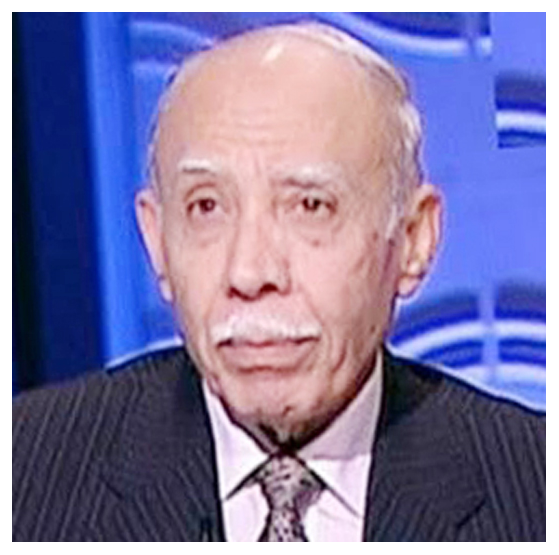
CAIRO: Egypt will not be dragged into a Libyan war designed to break the Egyptian army, a leading Cairo-based military strategist told Arab News.
Maj. Gen. Nagy Shohood, a strategic expert and adviser at the Nasser Military Academy, accused Turkey of intervening in Libya to further its dreams of a restored Ottoman empire.
Ankara is seeking to establish its presence in Libya by creating naval and air bases, and is not working alone but also with the US and Russia, he added.
“Turkey has established a base in Somalia, then Qatar, and then moved to Libya. Erdogan is still dreaming of the Ottoman empire.”
Shohood said that the region “is to be divided in one way or another,” as Europe and the US approved plans announced by former US Secretary of State Condoleezza Rice in 2005.
“Turkey is a means of implementing this plan in both Syria and Iraq. Turkey is operating in the region where sabotage is taking place and Syria has been divided by ideology and tribalism through Turkey, which has not come to fight in Libya but to coordinate and agree with other parties,” he said.
Shohood said that Turkey is unlikely to take military action in Libya since it is difficult to fight hundreds of miles away from its own territory.
“They are achieving what they want with tenants who are working with Turkish expertise and capabilities. A semi-permanent Turkish presence in Libyan air and naval bases is required.”
Shohood said: “The Libyan people will destroy these rules that are being established, but it is up to them if they accept being slaves to the Ottoman empire once again.”
He said that Egypt will not be dragged into making a decision that is not in the interest of its people and the Egyptian armed forces.
“Egypt will not be dragged into a war in the south or west, except after studying the situation fully and making sure it is in the interests of Egyptian citizens,” he said.
Shohood said that “caution and anticipation” are needed in dealing with the situation in Libya.
The Egyptian military must strike first and not wait to react in order to avoid a clash in the region, he added.
“Some people are hoping for a military clash between Egypt and Turkey,” Shohood said.
Turkey’s expansionary aims have taken an ominous turn, moving beyond cultural and economic projects and into the military arena, with an Ottoman troop presence resurfacing in the Arab world after almost a 100 years.

“It is up to the Libyan people if they accept being slaves to the Ottoman empire once again.”

Maj. Gen. Nagy Shohood

The recently opened Al-Rayyan military base in Qatar — the first military presence in the Gulf region since the end of the Ottoman presence — is a springboard for these ambitions.
On the other side of the Arabian Peninsula, Turkey opened a military base on the Somali coast, overlooking the strategic Gulf of Aden, in July 2016, at a cost of about $50 million.
The Gulf of Aden is the main gateway to the global oil trade. Construction of the base coincided with an escalation in hostilities between Turkey and Egypt. The Gulf of Aden and the Bab Al-Mandab Strait are the strategic entrance to Egypt’s Suez Canal, so Turkey’s presence could put pressure on Egypt in future.
In addition, the Turkish presence in the Horn of Africa represents the beginning of a possible wider expansion on the continent, which possesses promising markets and an abundance of investments.
Turkey’s military activity has reached the north of the Arab world, with the Bashiqa camp in the Kurdistan region of northern Iraq.
Construction of the first Turkish military base in Syria — on top of the Sheikh Barakat mountain near Aleppo — was completed last November.
Turkey’s entry into the Libyan dispute, with a military intervention and armed militias from Syria, confirms Ankara’s desire to restore the Ottoman empire.
The intervention started with the Turkish parliament’s decision on Jan. 2 authorizing a Turkish army deployment in Libyan territory.
Ankara began to interfere using intelligence elements until it applied full force alongside the Government of National Accord, headed by Fayez Al-Sarraj, in the face of the Libyan National Army led by Field Marshal Khalifa Haftar.
The Turkish intervention has upset the balance, as the Al-Wefaq government, with Turkish support, managed to drive the national army out of the city to Sirte.

Main category: 

El-Sisi, Ramaphosa discuss Libyan developmentsSaudi Arabia backs Egyptian position in Libya, foreign minister says after talks with El-Sisi


Families seek justice for Sudan’s slain anti-Bashir coup plotters

Sat, 2020-08-01 01:08

KHARTOUM/CAIRO: After decades of searching for their loved ones’ remains, the families of slain Sudanese officers who attempted a coup against strongman Omar Bashir are demanding the killers be held accountable.

Since the 1990 attempt, they have endured intimidation, arrests and beatings — but Bashir’s ouster in April 2019 spurred hopes that they could finally receive justice.
Last week, investigators looking into crimes during the strongman’s 30-year rule found the bodies of the 28 officers dumped in a mass grave in the city of Omdurman.
The coup attempt came just months after Bashir overthrew the democratically elected government of Sadiq Al-Mahdi in 1989.
The attempt to oust him was thwarted and the officers were immediately executed.
“We have been searching for their graves for 30 years. It was a heinous crime. There was no trial, no investigation and they were executed only 24 hours after their arrest,” said Awatef Mirghani, the sister of one of the officers, Esmat.
“They were all dumped in a single grave, still wearing their uniforms. It was a violation of human dignity,” she said, choking back tears.
In her Khartoum house, Fathiya Kembal keeps at a framed photo of her husband, Bashir Abudeik, in uniform and flashing a broad smile.
The photo, taken as he attended training in the US, bears a black band on one side as a sign of mourning.
It was April 22, 1990 when the couple and their children gathered at a friend’s house for iftar, an evening meal to break the fast during Ramadan.
Abudeik later drove his family to her father’s house, where “he said he would be busy for two days.”
The following morning, she woke up to the news of a coup attempt.

HIGHLIGHTS

• Last week, investigators looking into Bashir’s crimes found the bodies of the 28 officers in a mass grave.

• The coup attempt came just months after Bashir overthrew Sadiq Al-Mahdi’s govt in 1989.

She rushed to a nearby military base to check on her husband. At the gate, she met some of her husband’s colleagues, who avoided her gaze.
“They knew he would be killed,” the 61-year-old lawyer said.
The news of her husband’s execution, along with other coup plotters, was announced on the official Radio Omdurman the next day.
“It was a massacre. (Abudeik’s killing) was an extrajudicial execution,” she said.
The families of the slain officers quickly united to call for justice and find the bodies of their loved ones.
“Our movement was formed in the spur of the moment and has never stopped since with women — wives, sisters, mothers — at its core,” said Kembal.
As they sought answers, they faced a heavy-handed crackdown.
Their protests outside government buildings were violently broken up by security forces.
Many were arrested or banned from civil service jobs. Some were forced into exile.
But their movement found a ray of hope as nationwide protests erupted against Bashir in December 2018, mainly triggered by economic hardship. The families joined the demonstrations, including the protest camp outside army headquarters in Khartoum.
They issued a booklet saying the officers had sought “to restore the democratic rule Bashir had overthrown, win the release of political detainees and bring those who undermined the constitutional order to trial.”
The officers’ bodies have yet to be exhumed, but the families hope their memories will be honored.

Main category: 
Tags: 

Sudan to deploy troops to Darfur after killingsSudan calls for ‘decisive talks’ on Ethiopia dam


Turkey bans writing of university dissertations in Kurdish

Author: 
Fri, 2020-07-31 22:37

ISTANBUL: Turkey’s Council of Higher Education has banned students studying Kurdish language and literature at Turkish universities from writing their dissertations in Kurdish.

All dissertations at Kurdish language departments will now have to be written in Turkish.

The move is a step back from the government’s previous efforts to provide Kurdish citizens, who make up about a fifth of Turkey’s population, with an opportunity to receive an education in their mother tongue. State schools have been offering Kurdish as an elective language for the past seven years in a country where Turkish is the only constitutionally recognized language.

Since 2013, Kurdish studies were introduced at universities during the fragile and short-lived “Kurdish peace process” that aimed to increase Kurdish cultural and linguistic rights but which ended suddenly in 2015.

Kurdish language departments previously received thousands of applications from university students who wanted to have their education in Kurdish but numbers have now dropped dramatically.

The decision will influence four universities in Turkey that are allowed to open Kurdish language and literature departments: Dicle University in the southeastern province of Diyarbakir, Mardin Artuklu University, Bingol University and Mus University.

“The collapse of the peace process has resulted in such efforts to target Kurdish language whose use has turned into a political leverage and a means of criminalization in Turkey,” Roj Girasun, the head of Diyarbakir-based Rawest Research Center, told Arab News. “However, education in the mother tongue was one of the core campaign topics of President Recep Tayyip Erdogan in 2013 and in 2014 when he was reaching out to Kurdish citizens in the southeastern provinces,” he said.

Girasun wrote his undergraduate thesis in the Kurdish language and on the topic of Judaism in the Kurdish oral culture at Mardin Artuklu University. However, he is now obliged to write his master’s thesis in Turkish, which is not his mother tongue.

“As political tensions escalate domestically and regionally among Turks and Kurds, the crackdown on the universities is mounting. The government doesn’t appoint teachers to the Kurdish language departments of the universities, which naturally discourages citizens from applying to those universities due to the lack of qualified academic staff. What we are witnessing is the criminalization of the Kurdish language,” Girasun said.

Esat Sanli, a doctoral candidate at Dicle University, is another student who will be affected by the decision.

“The decision will directly target students willing to write history and culture-focused dissertations. On the other hand, it will also have international repercussions. Any dissertation that is written in Kurdish will be taken as a lack of capacity of the student in linguistic skills,” Sanli told Arab News.

According to Sanli, the decision will also be a disincentive for Kurdish students to continue their academic career in the Kurdish language.

“There was a significant interest in choosing these Kurdish departments simply for the opportunity to write academic dissertations in their mother tongue. But now these universities risk losing their appeal in the eyes of the students,” he said.

A recent study showed that only 18 percent of the 600 young Kurds surveyed — aged between 18 and 30 — could speak, read and write in Kurdish. The categorization of Kurdish language as an “unknown language” by the judicial system is another marginalization of the language, sometimes even criticized by government officials.

Max Hoffman, a Turkey analyst from the Washington-based Center for American Progress, said that the Kurdish language was another front in Turkey’s culture war.

“Erdogan and the ruling Justice and Development Party (AKP) lost most of their Kurdish support with the resumption of the PKK conflict and the accompanying harsh government repression. Since July 2015, they have only intensified the crackdown, including removing duly elected mayors from the HDP,” he told Arab News.

According to Hoffman, just as Erdogan drove the Hagia Sophia controversy in the hope that secular Turkey and the West would react — allowing him to pose as the defender of the faithful — he is trying to use Kurdish language and culture as another wedge to force the opposition to either defend Kurdish cultural rights, driving away nationalist voters, or abandon Kurdish cultural rights, driving away Kurdish voters.

“This move should be seen as a sign of political concern about his right-wing, as well as an attempt by the AKP to cause tension in the informal opposition electoral alliance,” he said.


Main category: 
Tags: 

Turkey’s Kurds demand spending probe, end to military ops in Libya, SyriaSyria Kurds set up first coronavirus hospital


Jordan’s crackdown on teachers condemned by HRW

Author: 
Fri, 2020-07-31 03:00

AMMAN: Jordan’s government is facing criticism from human rights groups over its handling of a teachers’ protest in the country.
The global watchdog Human Rights Watch (HRW) and the Jordanian Center for Human Rights condemned the government’s response to the dispute shortly after teachers’ union offices were shut down and a comprehensive gag order was placed on all reporting about the situation, including on social media or sharing social media comments.
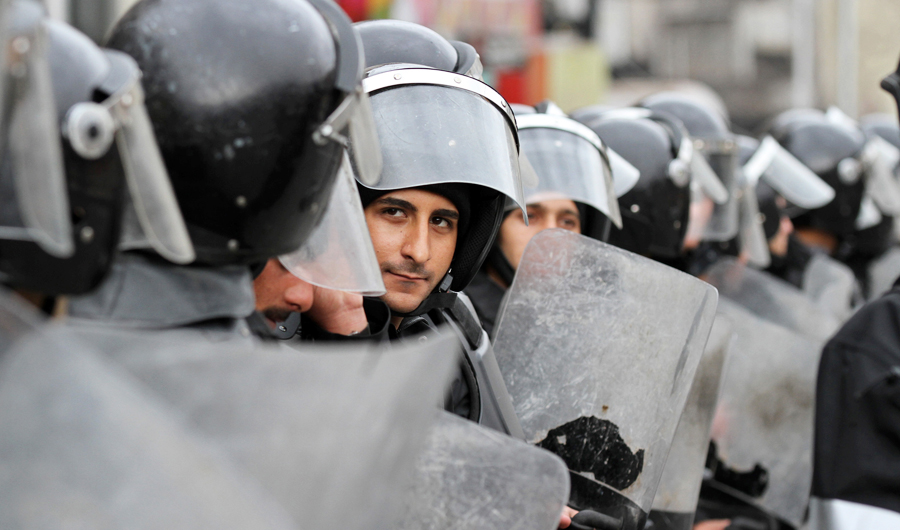
Police raided the Jordan Teachers Syndicate headquarters in Amman, shuttered 11 of its branches across the country and arrested all 13 syndicate board members on July 25.
HRW issued a statement criticizing the government’s handling of the conflict.
“Shuttering one of Jordan’s few independent labor unions following a protracted dispute with the government and on dubious legal grounds raises serious concerns about the government’s respect for the rule of law,” said Michael Page, the group’s deputy Middle East director.
“The lack of transparency and the ban on discussing this incident on social media only reinforces the conclusion that the authorities are violating citizens’ rights.”
Amjad Adaileh, minister for media affairs, told Arab News that the government respects the rights of citizens but must enforce Health Ministry orders to avoid large gatherings.
“While we can’t comment on the proceedings of the judiciary and we commit to respect whatever decision it makes, the government is also responsible for executing the general health directives and related defense orders regarding social distancing in order to prevent the spread of the coronavirus.”
Adaileh said the government will not permit any gatherings that threaten to block major traffic arteries or prevent access to essential services.
“However, we accept to help protect demonstrators who abide by health regulations and demonstrate with distance in outdoor settings.”
Jordan’s Center for Human Rights demanded the release of teachers’ union leaders who were arrested on Saturday and called for the right to assemble to be preserved.
Asma Khader, a former Jordanian government spokeswoman, told Arab News that the escalation of tensions is unfortunate.
“The right to protest and to establish a union is a constitutional right as is the right to education,” Khader said.
Protests in Amman drew global media attention amid claims that demonstrating teachers and journalists had been beaten by police.
However, local media was silent because of the official gag order.
Adam Coogle, HRW’s deputy Middle East director, told Arab News that the ban on media reporting is aimed at halting public discussion on the teachers’ union shutdown and the arrest of its leaders.
“Preventing press reporting raises questions about what the authorities may be trying to hide,” he said.

Main category: 
Tags: 

Jordan parliamentary elections due for Nov. 10Child dies, 700 sick in Jordan mass food poisoning