‘They killed us twice’: Finding loved ones at last among Syria’s tortured dead

Sat, 2020-08-08 01:18

AMMAN/BERLIN: Some families say it is better to know and mourn. Others say finally learning what happened is worse than dying themselves.
Hundreds of victims of Syria’s torture chambers are only now being discovered, thanks to a new effort to identify bodies from tens of thousands of photos smuggled out of Damascus 7 years ago. For their families, an image of a broken body with a number tag is all that lies at the end of the quest.
“They died starved and naked,” said Um Munzer Yaseen, 58, who, after sifting through countless photos of emaciated corpses, finally found her son, Jamil, last month.
A computer engineer, Jamil had been missing since one night in June, 2011, when he was taken by secret police from the family flat in Damascus. In the picture his mother found of his body, his eyes had been gouged out and his legs were broken.
“If they had shot my son it would have been better to die with a bullet than go through this hell,” she said in Amman, where she and her husband have found sanctuary since fleeing Syria in 2013.
Her husband, a doctor, said: “They killed us twice — when they arrested him and took him, and the second time when we saw the pictures.” He asked: “Are we not human?”
Jamil’s image was among 53,275 photos smuggled on discs and thumb drives out of Syria by a former Syrian army photographer, codenamed Caesar, who fled in August 2013. It was his job to record the deaths in military prisons.

If they had shot my son it would have been better to die with a bullet than go through this hell.

Um Munzer Yaseen, a Syrian mother

Caesar is hiding in an undisclosed country out of fear of reprisals against him and his family, some friends said. Reuters could not immediately reach him for comment.
Now, years after Caesar’s photos first came to public attention, they are back in the spotlight. The toughest US sanctions yet came into force in June for alleged war crimes against the civilian population, under a law named after Caesar.
President Bashar Assad has not commented directly on the Caesar photographs since a 2015 interview, when he dismissed them as “allegations without evidence.”
The Syrian Information Ministry and the Syrian UN mission did not respond to Reuters emailed requests for comment about the Caesar photographs and evidence of systematic torture.
Human rights groups believe Caesar’s photos contain images of 6,785 detainees, most tortured to death by the Syrian authorities in the early months of the uprising that evolved into Syria’s civil war, now in its ninth year.
The state of the tortured, mutilated and starved bodies makes it hard to identify them, said Fadel Abdel Ghani, the Doha-based chairman of a group, the Syrian Network for Human Rights, which says it has identified 900 victims so far.
With the renewed attention, campaigners have launched a new push to identify the dead.
The images first came to light in 2014, the year after Caesar defected, but after the sanctions were imposed they have been re-released on activists’ social media platforms, giving families a fresh chance to find missing loved ones.

Main category: 
Tags: 

Syria doctors fear virus spreading faster than clinics can testNetanyahu warns foes after Israeli retaliatory strikes in Syria





‘No way we can rebuild’: Lebanese count huge losses after Beirut blast

Author: 
Reuters
ID: 
1596818656802238000
Fri, 2020-08-07 10:22

BEIRUT: Beirut residents began trying to rebuild their shattered lives on Friday after the biggest blast in the Lebanese capital’s history tore into the city, killing at least 154 and leaving the heavily indebted nation with another huge reconstruction bill.
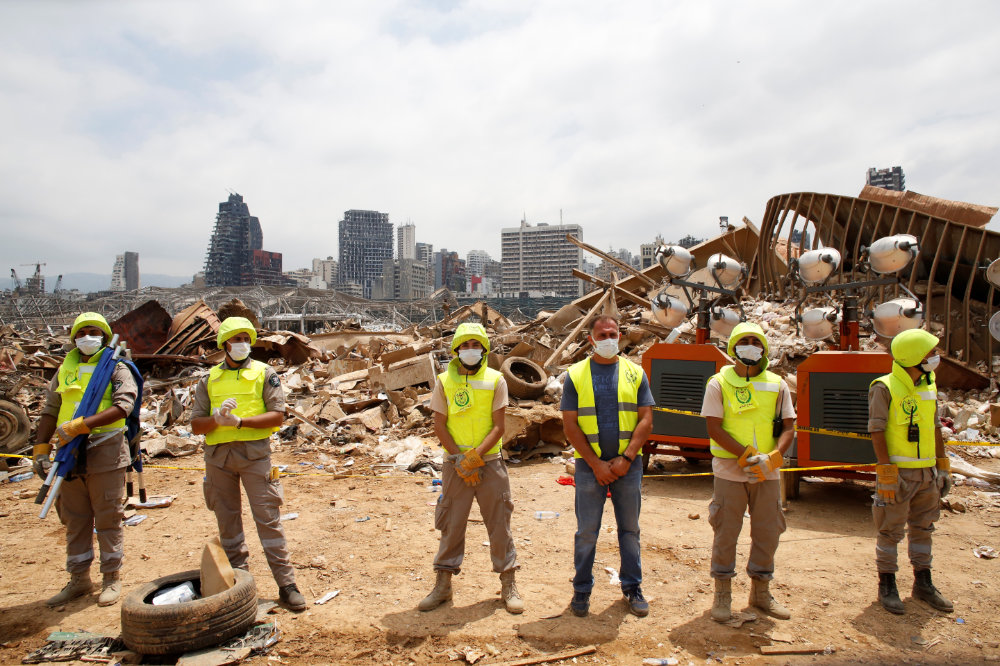
The search for those missing since Tuesday’s blast intensified overnight, as rescuers sifted rubble in a frantic race to find anyone still alive after the explosion smashed a swathe of the city and sent shockwaves around the region.
Security forces fired teargas at a furious crowd late on Thursday, as anger boiled over at the government and a political elite, who have presided over a nation that was facing economic collapse even before the deadly port blast injured 5,000 people.
The small crowd, some hurling stones, marked a return to the kind of protests that had become a feature of life in Beirut, as Lebanese watched their savings evaporate and currency disintegrate, while government decision-making floundered.

Opinion

This section contains relevant reference points, placed in (Opinion field)

“There is no way we can rebuild this house. Where is the state?” Tony Abdou, an unemployed 60-year-old, sitting in the family home in Gemmayze, a district that lies a few hundred meters from the port warehouses where highly explosive material was stored for years, a ticking time bomb next to a densely populated area.
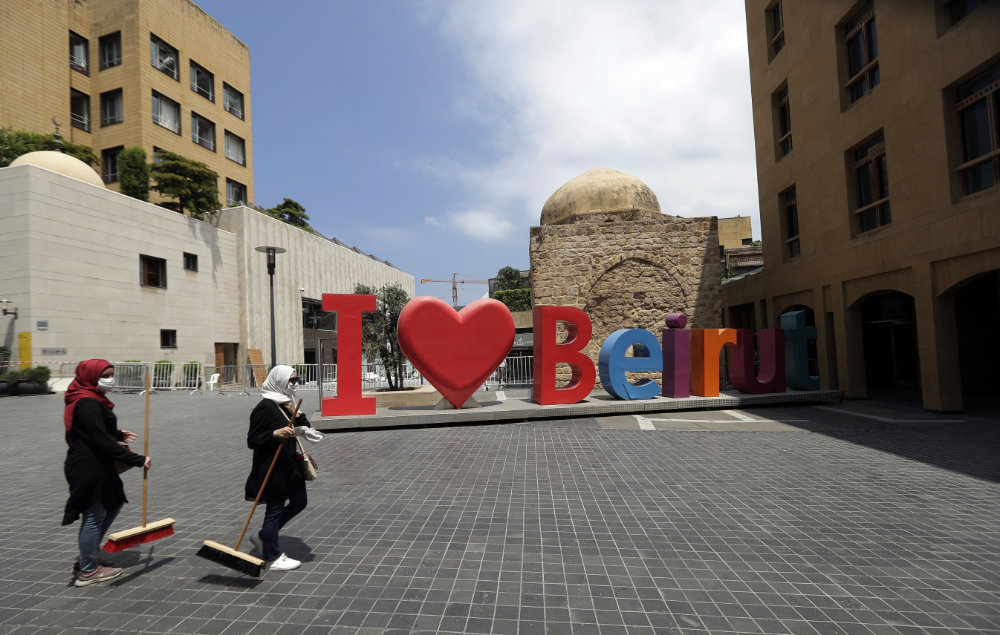
As Abdou spoke, a domestic water boiler fell through the ceiling of his cracked home, while volunteers from the neighborhood turned out on the street to sweep up debris.
“Do we actually have a government here?” said taxi driver Nassim Abiaad, 66, whose cab was crushed by falling building wreckage just as he was about to get into the vehicle.
“There is no way to make money anymore,” he said.
The government has promised a full investigation and put several port employees under house arrest. State news agency NNA said 16 people were taken into custody. But for many Lebanese, the explosion was symptomatic of the years of neglect by the authorities while state corruption thrived.
Shockwaves
Officials have said the blast, whose seismic impact was recorded hundreds of miles (kilometers) away, might have caused losses amounting to $15 billion — a bill the country cannot pay when it has already defaulted on its mountain of national debt, exceeding 150% of economic output, and talks about a lifeline from the International Monetary Fund have stalled.
Hospitals, many heavily damaged as shockwaves ripped out windows and pulled down ceilings, have been overwhelmed by the number of casualties. Many were struggling to find enough foreign exchange to buy supplies before the explosion.
In the port area, rescue teams set up arc lights to work through the night in a dash to find those still missing, as families waited tensely, slowly losing hope of ever seeing loved ones again. Some victims were hurled into the sea because of the explosive force.
The weeping mother of one of the missing called a prime time TV program on Thursday night to plead with the authorities to find her son, Joe. He was found — dead — hours later.
Lebanese Red Cross Secretary General George Kettaneh told local radio VDL that three more bodies had been found in the search, while the health minister said on Friday the death toll had climbed to 154. Dozens are still unaccounted for.
Charbel Abreeni, who trained port employees, showed Reuters pictures on his phone of killed colleagues. He was sitting in a church where the head from the statue of the Virgin Mary had been blown off.
“I know 30 port employees who died, two of them are my close friends and a third is missing,” said the 62-year-old, whose home was wrecked in the blast. His shin was bandaged.
“I have nowhere to go except my wife’s family,” he said. “How can you survive here, the economy is zero?“
Offers of immediate medical and food aid have poured in from Arab states, Western nations and beyond. But none, so far, address the bigger challenges facing a bankrupt nation.
French President Emmanuel Macron came to the city on Thursday with a cargo from France. He promised to explain some “home truths” to the government, telling them they needed to root out corruption and deliver economic reforms.
He was greeted on the street by many Lebanese who asked for help in ensuring “regime” change, so a new set of politicians could rebuild Beirut and set the nation on a new course.
Beirut still bore scars from heavy shelling in the 1975-1990 civil war before the blast. After the explosion, chunks of the city once again look like a war zone.

Main category: 

At Beirut’s ‘ground zero’, race to find survivorsDeadly Beirut blast could have been missile attack or bomb, says president


Coronavirus crisis creates opportunities for venture capital entrepreneurs

Fri, 2020-08-07 19:02

DUBAI: A resource crunch and the expansion of new economic sectors in the wake of the coronavirus pandemic could have a major impact on the availability of venture capital (VC) for entrepreneurs in the Middle East.

Yet, even as startups in the region, like their global counterparts, face significant challenges to fundraising, a number of sunrise sectors have emerged in response to coronavirus-linked business and lifestyle challenges, according to Fady Yacoub, co-founder and managing partner at the global technology investment firm HOF Capital.

“While angel investors and family offices accounted for a record-breaking amount of the capital deployed in the region in 2019, COVID-19 has made this source of funding scarce,” Yacoub said. “This is similar to trends abroad, but it is most acutely felt in the region as family offices have historically represented a significant share of invested dollars.”

Global VC funding has plunged 20 percent since the coronavirus outbreak in December last year, data from Startup Genome shows.


Global VC funding has plunged 20 percent since the coronavirus outbreak in December last year, data from Startup Genome shows. (Supplied)

In the Gulf, funding to MENA startups was up 2 percent in the first quarter compared with a year earlier, although the number of venture capital deals fell 22 percent, principally because of a steep drop in March, according to the regional data platform Magnitt.

Given the interruption to business schedules, VCs are doubling down on their holdings, Yacoub said.

“Most VC dollars are being spent on putting out fires at existing portfolio companies rather than on new investments.”

Winning VC funding is now a challenge, even for companies growing in double or triple digits week on week, he said.

“Rounds that were once oversubscribed have had investors walk away, forcing companies to mark down valuations and raise at lower levels per share than their previous round. We have seen this play out with quite a few firms.”


Winning VC funding is now a challenge, even for companies growing in double or triple digits week on week, Yacoub said. (AFP/File Photo)

Yacoub, an Egyptian, teamed up with compatriots Onsi Sawiris and Hisham Elhaddad to found HOF Capital in 2016. The firm is backed by more than 70 influential families and organizations, including leading brands such as Morgan Stanley, Etihad Airways and BNP Paribas.

Its investors have $350 billion of assets under management. HOF focuses its investments on nascent technologies with the potential to solve major social problems, backing entrepreneurs in areas including artificial intelligence software, next-generation finance, and genetics and computational biology.

Yacoub and his colleagues believe the downturn offers an opportunity to launch category-leading businesses. Challenging times present new problems to be solved, creating new market prospects.

Given the widespread changes to lifestyles around the world, Yacoub pinpoints four possible growth sectors:

Remote work: “Beyond tools enabling remote work, we are excited about how this trend will alter the distribution of tech talent. Clusters beyond expensive central locations will emerge in places offering better quality of life or that are closer to home for migrants, even in the MENA region.”

Electronic sports and gaming: As alternatives to live sporting events and other in-person experiences, e-sports and video games have seen player activity levels rise. Yacoub predicts exciting times ahead for the sector, particularly with localized Arabic-language products.


Lockdowns and social distancing have forced consumers to shop online, with regional platforms Noon and Souq enlarging their workforce even as companies in other sectors have laid off staff. (AFP/File Photo)

Telemedicine: Telehealth claims in the US rose by more than 4,000 percent in the year to March 2020. “A similar trend may follow in other countries, which was part of our motivation for investing in Helium Health. Its telemedicine service has seen rapid growth during the pandemic.”

E-commerce: Lockdowns and social distancing have forced consumers to shop online, with regional platforms Noon and Souq enlarging their workforce even as companies in other sectors have laid off staff. “Overall, e-commerce has grown in the GCC and Egypt at a 30 percent compound annual growth rate. Investors will be keen to find the next e-commerce winner in the region.”

With a number of factors expected to affect consumer spending in the medium term, VC funding could be affected accordingly. Yacoub said that founders should expect longer fundraising cycles as VCs look more closely at all aspects of a company’s business model and operating market.

“VC investors are generally exposed to hundreds or thousands of startups each year, so it’s important to stand out from the crowd in a good way, such as having a world-class team, a best-in-class or unique product or technology, market-leading traction, and being able to convey an interesting and compelling story to investors,” he said.

* This report is being published by Arab News as a partner of the Middle East Exchange, which was launched by the Mohammed bin Rashid Al Maktoum Global Initiatives to reflect the vision of the UAE prime minister and ruler of Dubai to explore the possibility of changing the status of the Arab region.

Main category: 

Venture capital firms warn of virus ‘black swan’ as investment slumpsSTC establishes ME’s largest venture capital fund


Italian government, Vatican City pledge support for Lebanon

Author: 
Fri, 2020-08-07 17:38

ROME: Italy’s government pledged on Friday to assist Lebanon after two explosions in the Lebanese capital, Beirut, earlier this week caused widespread damage, leaving more than 150 people dead and thousands injured.

One of the victims of the blasts was a 92-year-old Italian woman, and two Italian soldiers from the United Nations Interim Force in Lebanon were wounded.

In a telephone call with Lebanese Prime Minister Hassan Diab, Italian Prime Minister Giuseppe Conte expressed his country’s “deepest condolences” and offered his “unconditional support” to Lebanon.

Conte said Italy had already arranged to send “personnel and material” and was “ready to provide any further assistance requested.”

A statement from Conte’s office said the two prime ministers agreed to stay in close contact.

Foreign Minister Luigi Di Maio said that a flight carrying 8.5 tons of medical supplies had been sent to Lebanon and more aid would follow if required, promising his Lebanese counterpart Charbel Whebe: “Italy will keep on helping Lebanon. The Lebanese people will not be left alone in this hardship.

“After such a tragedy the international community must react promptly and give help. Italy and Lebanon are on the same side,” he added.

Speaking to Italian TV news channel TG5, Di Maio said: “What happened in Lebanon is a tragedy. To us Italians, Lebanon is like a second home and helping that country means to help stabilizing it. The entire Mediterranean will benefit from the stabilization of Lebanon.”

Two Italian Air Force flights landed in Beirut this week, the first one carrying a team of 22 experts in the fields of CBRN (chemical, biological, radiological, nuclear) and structural stability of buildings, and the second loaded with the 8.5 tons of health supplies (surgical and trauma kits) donated to the Lebanese Armed Forces, to benefit Lebanese public hospitals.

In terms of humanitarian aid, the Agency for Development Cooperation of the Italian Ministry of Foreign Affairs is finalizing emergency contributions of 700,000 Euros ($823,000) to the Lebanese Red Cross, $1.76 million to the International Committee of the Red Cross, $1.18 million to United Nations Office for the Coordination of Humanitarian Affairs, and $2.35 million for projects implemented by Italian NGOs.

The Italian government also said it is ready to respond to any appeals launched by the United Nations and the International Red Cross and Red Crescent Movement in the near future.

Pope Francis has also donated just under $300,000 from the Vatican to “support the needs of the Lebanese church in (this) time of great difficulty and suffering.”

Main category: 

First plane with aid from Saudi Arabia arrives in LebanonMacron calls aid conference for blast-hit Lebanon ‘in coming days’


Volunteers with brooms and shovels show true spirit of Beirut

Fri, 2020-08-07 02:01

BEIRUT: An army of volunteering civilians flocked to the residential areas damaged by the huge explosion that rocked Beirut on Tuesday evening. They have been holding brooms and shovels for two days, while wearing masks and gloves and cleaning debris and glass shards from inside the homes and outside the shops.

The Martyrs Square in downtown Beirut turned into a volunteer center; Tents were built and filled with water bottles, bread, and food items that were donated in order to be distributed to the displaced people.

Most young women bought their own brooms and received gloves from the Beirut municipality to protect them from wounds that can be caused by glass fragments, while other volunteers came without any protective gear and held shovels to remove rubble, saying that they are not afraid of injury.

Social media platforms were behind some people’s enthusiasm to get on the ground, whereas others’ zeal motivated them to come to the aid automatically.

Ziad Haidar from the Lebanese Spotlight organization said: “Similarly to other volunteers, we are school students between the ages of 16 and 18. We participate in cleaning beaches usually, but today, people need our help. All we see is destruction, especially in downtown Beirut, Gemmayze and Mar Mikhael”.

“We are college students from Beirut who gathered, went to the Beirut municipality and received gloves. We had bought brooms at our expense. Most affected people are poor and unable to fix anything broken”, said Ghida.

Jad and Anas, students at the American University of Beirut (AUB), went to Gemmayze to contribute to the aid. They said that they are not members of any organization, but felt the need to take action and not only watch television. 21-year-old Anas said: “I started helping at my parents’ house, then my neighbors’. We live relatively far from the explosion site, but we were affected by the damage. In my neighborhood, I used my car to transport injured people to the hospital. The only logical thing I could think of is to offer help. People told me about how they lost a sister or a daughter, and how some people are still lost and not found in hospitals. That truly affected me”.


Lebanese light candles at a vigil held at Kensington gardens in central London to honor the victims of the Beirut blast on August 5, 2020. (Photo by Tolga Akmen / AFP)

22-year-old Jad said that he was seeking immigration, but changed his mind and decided to stay in the country after the explosion at Beirut’s port: “We have not witnessed any wars, and when the 2006 aggression happened, we were kids”.

“My parents lived through many wars, and yesterday, they were shivering and counting on me to rescue them after the explosion. That affected me a lot. I turn to them to care for me usually, but yesterday, it was the other way around. I used to hear war stories from my grandfather and father, but today, I am living that experience, not knowing whether I will ever be able to tell my children about it. My grandfather had told me that war is over and behind us, but today, it looks like we are heading towards it once again. Where is the happy ending? I do not want to tell my children that we left Lebanon because it became unlivable”, added Anas.

Sabil spoke on behalf of a group of young women who came from Tripoli: “We are from the Humanities and Social Science Organization. We normally help people in Tripoli, but this is our capital Beirut, and it is our duty to help it in its disaster. We know the beautiful buildings in Beirut, but they are destroyed today, and people need us. Our parents have accompanied us to Beirut to donate blood in hospitals”.

She added: “We worked on removing debris from inside a lot of homes that were left without any furniture, and people are unable to compensate for their losses, but if we, young people, continue our volunteer work, we might rebuild the walls that were destroyed. We want to give people hope”.

Nayla Mouawad, a volunteer college student said: “My female friends and I wore masks and decided to take to the streets. People need us and we must help each other”.

Yvon Azar said: “The streets are crowded because people are coming to Beirut to help. This is humanitarian work we should be proud of”.


Volunteers clean the rubble and broken glass from the streets in downtown Beirut on August 6, 2020 in the aftermath of the massive explosion. (Photo by JOSEPH EID / AFP)

Bachir Jabbour, Tony Houry and Joe Semaan came from Bekfaya to Beirut because they were no longer able to watch the events on television. They decided to help “because mourning the homeland does not lead anywhere”.
“This is our country and we will not leave. Let the people who hurt it leave!”

Scenes about young people’s enthusiasm to help affected people were preceded by stories about young men and women who turned into heroes on social media platforms. 25-year-old Sahar Fares is the first female paramedic of Beirut Fire Brigade who was motivated to help her friends put out the fire at the port, which led to the huge explosion that happened seconds later. Her body was later found, and she was buried on Thursday, amid the applause of all the security agencies, out of respect for her patriotism and humanism.

Eight of Sahar’s colleagues are still missing, according to Commander Fire Brigade Nabil Khankarly.

The Order of Nurses mourned five nurses who passed away in the Beirut’s port explosion on Tuesday, while in the line of duty at hospitals and centers that were destroyed by the blast. The nurses are Lina Abou Hamdan, Jessy Kahwaji Daoud, Jessica Bazdarjian, Mireille Jermanos and Jacqueline Jibrin.

In contrast, people on social media platforms shared the photo of nurse Pamela Zeinoun holding three newborns and trying to keep them warm after the Al Roum Hospital where she works was extensively damaged.


Main category: 

Beirut blast: ‘It was like the apocalypse’Doctors on emergency duty describe horror of Beirut explosions