Blast destroyed landmark 19th century palace in Beirut

Author: 
Tue, 2020-08-11 01:32

BEIRUT: The 160-year-old palace withstood two world wars, the fall of the Ottoman Empire, the French mandate and Lebanese independence. After the country’s 1975-1990 civil war, it took 20 years of careful restoration for the family to bring the palace back to its former glory.
“In a split second, everything was destroyed again,” says Roderick Sursock, owner of Beirut’s landmark Sursock Palace, one of the most storied buildings in the Lebanese capital.
He steps carefully over the collapsed ceilings, walking through rooms covered in dust, broken marble and crooked portraits of his ancestors hanging on the cracked walls.
The ceilings of the top floor are all gone, and some of the walls have collapsed. The level of destruction from the massive explosion at Beirut’s port last week is 10 times worse than what 15 years of civil war did, he says.
More than 160 people were killed in the blast, around 6,000 were injured and thousands of residential buildings and offices were damaged. Several heritage buildings, traditional Lebanese homes, museums and art galleries have also sustained various degrees of damage.
The Sursock Palace, built in 1860 in the heart of historical Beirut on a hill overlooking the now-obliterated port, is home to beautiful works of arts, Ottoman-era furniture, marble and paintings from Italy — collected by three long-lasting generations of the Sursock family.
The Greek Orthodox family, originally from the Byzantine capital, Constantinople — now Istanbul — settled in Beirut in 1714.
The three-story mansion has been a landmark in Beirut.

FASTFACT

The Sursock palace, built in 1860 in the heart of historical Beirut on a hill overlooking the now-obliterated port, is home to beautiful works of arts, Ottoman-era furniture, marble and paintings from Italy.

With its spacious garden, it’s been the venue for countless weddings, cocktail parties and receptions over the years, and has been admired by tourists who visit the nearby Sursock Museum.
The house in Beirut’s Christian quarter of Achrafieh is listed as a cultural heritage site, but Sursock said only the army has come to assess the damage in the neighborhood. So far, he’s had no luck reaching the Culture Ministry.
The palace is so damaged that it will require a long, expensive and delicate restoration, “as if rebuilding the house from scratch,” Sursock says.
Sursock has moved to a nearby pavilion in the palace gardens, but this has been his home for many years alongside his American wife, his 18-year-old daughter and his mother, Yvonne.
He says the 98-year-old Lady Cochrane (born Sursock) had courageously stayed in Beirut during the 15 years of the civil war to defend the palace.
His wife was just dismissed from hospital, as the blast was so powerful that the wave affected her lungs.
Sursock says there is no point in restoring the house now — at least not until the country fixes its political problems.
“We need a total change, the country is run by a gang of corrupt people,” he said angrily.
Despite his pain and the damage from last week’s blast, Sursock, who was born in Ireland, says he will stay in Lebanon, where he has lived his whole life and which he calls home. But he desperately hopes for change.
“I hope there is going to be violence and revolution because something needs to break, we need to move on, we cannot stay as we are.”

Main category: 

Italy defense ministry seeks closer ties with LibyaItaly puts pressure on Tunisia to control wave of migrants


Explosion targets convoy carrying US military equipment near Iraq-Kuwait crossing

Tue, 2020-08-11 00:11

BASRA, Iraq: An explosion near the Jraischan border crossing between Iraq and Kuwaiti on Monday evening targeted a convoy carrying equipment for US forces, three Iraqi security forces told Reuters.
It was not immediately clear if there were any US troops in the convoy or if anyone had been injured in the explosion, which went off just before 9 p.m. Baghdad time (1800 GMT).
The Iraqi military denied the incident took place.
Vehicles are regularly loaded with military equipment at the crossing, the sources said, and the cargo is usually loaded or unloaded before entering or exiting Iraq.
Foreign companies are contracted by US forces to provide security in the area, the Iraqi security sources said.
A security source had earlier said that the explosion was caused by an Iraqi Shiite Muslim militia targeting a US military base near the crossing by smuggling in an explosive device, and that some staff on the base had been injured. This was later contradicted by other security sources who said a convoy was attacked, not a base.
The US Embassy in Kuwait said it was looking into the matter.
A little known Iraqi Shiite militia group by the name of Ashab Al-Kahf claimed responsibility for the attack and published a video showing an explosion at a distance. It said it was able to destroy US military equipment and large parts of the crossing.

Main category: 

Rockets hit military base south of Baghdad, no casualtiesPompeo hints at Iran links in killing of Iraq expert


Yemen backs Iranian arms embargo extension

Mon, 2020-08-10 23:51

AL-MUKALLA: The internationally recognized government of Yemen has demanded the UN to extend the arms embargo on Iran, saying that Iranian arms have fueled the conflict in the country.

Yemen’s Information Minister Muammar Al-Aryani said war-torn Yemen and other Arab countries have borne the brunt of Iranian expansionism through proxy conflicts.

“Yemen and Arab countries like Iraq, Lebanon and Syria have paid heavy prices for hostile policies adopted by the Iranian regime and the Revolutionary Guards,” he said.

Iran’s supply of weapons to Houthis in Yemen and other militias in the region had fueled the war, he added.

“Selling and supplying arms to Iran inflames conflicts in the region through the smuggling of weapons to sectarian militias and terrorist organizations like the Houthis, Hezbollah, Al-Qaeda and Daesh.”

His appeal came as the Gulf Cooperation Council (GCC) called for an extension to the embargo, just two months before it is set to expire.

The GCC sent a letter to the UN Security Council urging an extension to the deal that has prevented Iran from buying foreign-made weapons, including jets, tanks and warships.

The GCC said Iran had “failed to cease or desist from armed interventions in neighboring countries, directly, and through organizations and movements armed and trained by the country.”

Even before the Houthi takeover of Sanaa in late 2014, consecutive Yemeni governments accused Iran of fueling the conflict by providing rebels with advanced weapons, military training and financial support.

The government and Arab coalition have intensified attacks on Iran in recent years after intercepting arms shipments to Yemen.

Al-Aryani warned that lifting the embargo could give the Iranians free rein to cause chaos in the region.

“We warn against lifting the embargo, which would be a free gift to spread chaos and terrorism in the region, and would provide Iran with financial resources to expand its activities, and threaten the security and stability of the region and the world,” the minister said.

In a recent speech during Eid Al-Adha, Yemeni President Abed Rabbo Mansour Hadi renewed his commitment to challenging Iran’s designs in Yemen by defeating the Houthis, and liberating the capital and other areas under their control.

He accused the rebel group of “turning Yemen into a den of Iranian extremism and terrorism.”

When the US killed Qassem Soleimani in January, the Yemeni government praised the strike, accusing the Al-Quds Force commander of spearheading Iranian military activities in Yemen.

Yemeni military and political analysts said that advanced weaponry supplied by Iran has shored up the Houthis on the battlefield, encouraging them to reject calls for peace.

“The Iran-backed Houthis are the main engine of the war. They expanded across Yemen. Stopping the flow of Iranian weapons to them is the most important step for stopping the war in Yemen,” Yasser Al-Yafae, an Aden-based political analyst, told Arab News.

He added that the Houthis would likely accept peace deals if their arsenal of weapons is depleted.

Fighting has raged in recent days on the front line in several contested provinces across Yemen.

Yemen’s Defense Ministry said army troops and allied tribesmen pushed back Houthi attempts to gain ground in the provinces of Marib and Al-Bayda.

Fighting intensified despite repeated appeals from the UN and local health workers for a humanitarian truce to help deal with the coronavirus pandemic.

The Aden-based national coronavirus committee reported seven new cases, three deaths and three recoveries in the provinces of Hadramout and Taiz on Sunday, bringing the total number of cases to 1808, including 515 deaths and 913 recoveries.

Main category: 
Tags: 

Yemen’s UNESCO-listed Old Sanaa houses collapse in heavy rainsUAE reunites Yemeni Jewish family after 15 years apart


UN chief calls for independent inquiry into Beirut explosion

Mon, 2020-08-10 23:24

NEW YORK: UN Secretary-General Antonio Guterres has called for a “credible and transparent” investigation into the causes of the explosion at Beirut’s port last week that killed dozens of people and left thousands injured.

His comments echoed the demands of protesters who took to the streets throughout the weekend and on Monday. They blame years of government corruption and incompetence for the blast.

Amal Mudallali, Lebanon’s ambassador to the UN, likened the blast to “15 years of war in 15 seconds, the darkest 15 seconds we have ever seen.”

In an emotional keynote speech during a UN virtual briefing on the humanitarian situation in Lebanon, she added: “People are demanding, and deserve, justice — and rightly so.”

As he opened the international gathering on Monday, Guterres saluted the spirit of the Lebanese people in the aftermath of the massive explosion, giving the example of “neighbors helping neighbors, people clearing their streets of broken glass and opening their homes to those who have lost theirs.”

He urged international donors to provide aid “speedily and generously” to help the devastated country, but also stressed the importance of implementing longer-term political and economic reforms in the country that address the needs of the Lebanese people.

The UN has sent search-and-rescue experts to assist first responders in Beirut, along with desperately needed medical supplies to treat the injured. In addition, the organization has provided $15 million to help fund urgent needs such as temporary shelters for families whose homes were damaged, and the import of wheat flour and grain for bakeries to help address food shortages across the country after grain silos at the port were destroyed.

Opinion

This section contains relevant reference points, placed in (Opinion field)

Guterres urged world leaders to build on the efforts of French President Emmanuel Macron, who on Thursday was the first world leader to visit Beirut after the explosion.

Mudallali evoked the words of former French President Charles de Gaulle as she said of the visit: “The Lebanese hearts were truly beating to the rhythm of France’s heart as we saw Macron and the French come to the rescue of Lebanon.”

On Sunday, Macron co-convened a virtual donors’ conference to solicit international assistance for Lebanon, during which world leaders and international organizations pledged $300 million.

Donors said the humanitarian aid will be coordinated by the UN and delivered directly to the Lebanese people, a clear indication of their concerns that any money delivered to the government will not be used properly. They also warned that investment in rebuilding the city will be contingent on the full commitment of the authorities in the country to “timely measures and reforms expected by the Lebanese people.”

Macron has insisted on reforms, in co-ordination with the International Monetary Fund (IMF), to tackle deep-seated corruption and restore order to Lebanon’s crippled economy and the banking system. The IMF has criticized the ruling elite in the country for a “shortage of political will to adopt and implement meaningful reforms.”

More than 50 countries participated in Monday’s UN briefing. They unanimously expressed solidarity with the Lebanese people and promised a prompt response to their urgent needs.

David Beasley, the executive director of the World Food Program, warned that Lebanon is facing bread shortages within two weeks, and said efforts are being made to import grains to avoid this. He said he met Lebanese President Michel Aoun and cabinet ministers and asked them for “absolute cooperation. No obstacles. People on the streets have been asking us to please make sure the aid goes directly to the people.”

Mudallali highlighted the priorities in Beirut: medicine, food, construction materials, and the rebuilding the city’s port. She urged the international community to “remain with us for the whole journey, and not only help with the emergency stage of the catastrophe. I appeal to you to stay with us for the second, most important stage: the rebuilding and rehabilitation stage.”

Despite the tragedy and the challenges facing Beirut as it recovers and rebuilds, the envoy concluded her speech on an upbeat, optimistic note.

“Lebanon, one of the countries that met in San Francisco 75 Years ago and founded the UN, promises you that it will rise again,” she said. “We will rebuild better. We will continue to offer a message of coexistence and tolerance, and we will continue to uphold the principles and values enshrined in the UN charter.

“But we have to do it together.”

Main category: 

UN food chief: Beirut could run out of bread in 2 1/2 weeksLebanese artist auctions viral painting of Beirut blast to help people in need


Alexandra Najjar: The face of Beirut’s man-made tragedy 

Mon, 2020-08-10 01:11

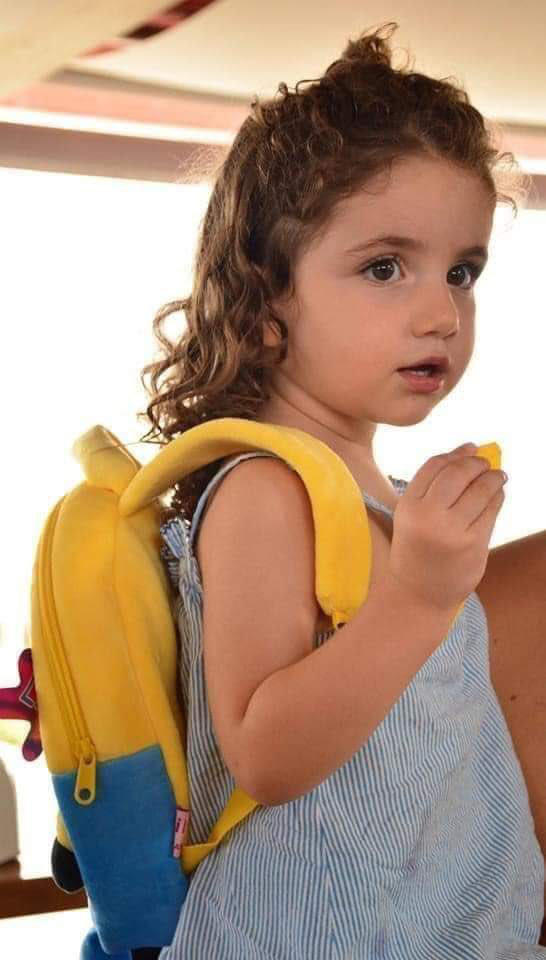
LONDON: In an ideal world, Alexandra Najjar should have been able to enjoy the rest of a pleasant Mediterranean summer with her family. Once the coronavirus outbreak in Lebanon had been tamed, she should have been able to experience her first day of school.

She would have made many new friends and begun to absorb all the knowledge that a three-year-old is capable of when they first enter kindergarten.

And as the days turned into weeks, which turned into months, which turned into years, Alexandra’s parents would have watched her grow into a young girl, enjoy life, dream big and perhaps achieve greatness in some field.

Alas, in the harsh real world of a crisis-wracked Lebanon, the dreams of Alexandra’s parents will remain just that.

Some 2,750 tons of ammonium nitrate haphazardly stored in a warehouse at the Port of Beirut exploded as Alexandra was playing with a friend on the evening of August 4, leaving her severely injured.


Photos and videos of Alexandra were shared widely on social media and tributes poured in online. (Reuters )

Shockwaves from that blast devastated Beirut, its streets blanketed in rubble and shards of glass with many of its residents caked in grey dust and crimson-red blood.

Three days later, after being in a critical condition in a hospital and suffering internal bleeding in her brain, Alexandra succumbed to her wounds.

“You killed us in our own home, in a place where I thought I could leave my family, protect my family . . . where if crimes are happening and we don’t have anything in this country, then at least we have our home where we can be safe,” said Paul Najjar, Alexandra’s grief-stricken father, in a TV interview on Saturday evening, assailing Lebanon’s leaders.

“What you did is a crime at the cost of our family that is so very united and this for me, at the most, is a crime at the cost of love because if there’s anything I should believe in, it’s this  — which was the foundation of our family, it still is and will continue to be so.”


As the pain of the Najjar family’s loss sank in, photos and videos of Alexandra — or “Alixou,” the name by which parents called her — began to be shared widely via social media platforms and WhatsApp groups, both in Lebanon and outside it.

Tributes poured in online, testifying to the despair and anguish Lebanese across the world felt in the aftermath of the explosions. Alexandra’s untimely death had put a human face on Beirut’s horrible tragedy.

In one of the pictures, Alexandra is seen sitting atop her father’s shoulders as he took part in a march during last year’s October 17 “revolution,” demanding an end to Lebanon’s twin bane of corruption and sectarianism.

The protesters were calling for a better world for all Lebanese — and a brighter future for Alexandra.

The captions accompanying the photos point to the impact of the Najjar family’s tragedy on the Lebanese people and diaspora.


Photos and videos of Alexandra were shared widely on social media and tributes poured in online. (Reuters)

“This is a photo of Alexandra protesting for a better Lebanon to remove the corrupt government and no one listened and now she’s in heaven,” former Miss USA Rima Fakih wrote below a post on Instagram.

Another caption says: “Alexandra, you are in each of our hearts and prayers today and always. Your death will not be in vain . . . we will make sure of it!”

Alexandra was one of the youngest victims of the Beirut explosions, whose human cost so far includes 150 deaths, nearly 6,000 injured and another 300,000 homeless.

After citizens and residents independently organized and cleaned up the streets and homes of the areas most affected by the blast’s impact, shock turned to anger.

“My message to the Lebanese is a message of unity,” Paul Najjar said in the interview. “They killed us — they didn’t kill Christians or Muslims or politically-affiliated or not politically-affiliated. There is none of this anymore — a message to all the people who are still following these people.

“Please, enough. We need to stand together. We need to stand united so that we can make the change, so we can revolt for the sake of Alexandra and every child and every family that wants to live in this country like we had hope for.”


Photos and videos of Alexandra were shared widely on social media and tributes poured in online. (Reuters)

Paul Najjar said he and his wife returned to Lebanon and set up a company in an effort to help the country.

“We had hope that we would help the country. We also hoped that Alixou would grow up in Lebanon,” he said.

On Saturday, thousands of Lebanese made their way to Beirut’s Martyrs’ Square demanding accountability for the explosions, and the resignation of all government officials. Many of them carried nooses, which they used for symbolic hangings of Lebanon’s principal political actors, including Hezbollah leader Hassan Nasrallah.

The government responded by deploying riot police and the army, who used rubber bullets and tear gas to subdue similar protests in front of the parliament in Riad Al-Solh Square and the nearby Beirut Souks.

Lebanese Red Cross and the Islamic Emergency and Relief Corps figures showed that the clashes left 728 more Lebanese injured, of whom 153 were taken to hospital and 575 treated on site.

“For your information, rubber bullets could kill and cause permanent damage. If necessary, it should be aimed at legs only. Yesterday, and in one hospital, there were seven open surgical eyes and a ruptured abdominal spleen,” Mohammad Jawad Khalifeh, a former Minister of Health, said on Twitter.

Meanwhile, little light has been shed by the government on why such a huge quantity of a highly combustible chemical was stored next to the Beirut Port Silos building after being confiscated from a Russian-leased ship six years ago.

“The incident might be a result of negligence or external intervention through a missile or a bomb,” President Michel Aoun said on Friday.

Whatever the truth, UNICEF has warned that almost 80,000 of those displaced by the “incident” are children whose families are in desperate need of support. 

One children’s hospital in the Karantina area, which had a specialized unit treating critical newborns, was destroyed.

Across Beirut, at least 12 primary health care facilities, maternal, immunization and newborn centers have been damaged, disrupting services for nearly 120,000 people.

Against this grim backdrop, Paul Najjar and his wife are hoping that Alexandra’s death will not be in vain but will have a positive impact when the nation rebuilds itself.

_____________

Twitter: @Tarek_AliAhmad

Main category: 

Lebanon minister Manal Abdel-Samad resigns amid ‘will for change’ after Beirut blastLebanese it girls Nathalie Fanj and Nour Arida join protests in Beirut