A never-ending eastern Med saga of brinkmanship

Fri, 2020-08-14 23:24

JEDDAH: As tensions between Athens and Ankara continue to run high in their dispute over oil and gas resources in the eastern Mediterranean, it emerged on Friday that a Greek and a Turkish warship were involved in a minor collision on Wednesday.

Analysts said it is unlikely the dispute will escalate as neither side would be willing to risk the political and economic costs. Nevertheless, the war of words continues.

Turkish President Recep Tayyip Erdogan warned on Thursday that if any Turkish ships in the disputed eastern Med are attacked, there would be serious consequences.

“We said that if you attack our Oruc Reis (a Turkish research vessel that began looking for oil and gas on Monday) you will pay a high price, and they got their first answer today,” said Erdogan, apparently in reference to the collision between the warships.

His comments came hours after Greek and French military forces conducted exercises in the vicinity of Crete, close to the location where the Oruc Reis is operating, accompanied by a military escort.

In an attempt to gain international support for its claims in the maritime dispute with Turkey, Greek foreign minister Nikos Dendias met 27 EU foreign ministers and US secretary of state Mike Pompeo in Vienna on Friday for urgent talks about the rising military tensions.

So far, only France has provided tangible support for the Greek cause, by sending two warships to the region and staging the joint military exercises.

Ankara, meanwhile, is lobbying German Chancellor Angela Merkel and EU Council President Charles Michel.

So far, the only action the EU has taken over the Turkish drilling activity is to impose sanctions on two energy-company executives in the country.

SPEEDREAD

Turkey warned on Thursday that any attack on a Turkish ship drilling in disputed East Mediterranean shores would bring a ‘high price.’

“Although it appears to be a major crisis between Greece and Turkey, as they are seemingly at the brink of war, the situation will not escalate beyond what it already is,” said Paul Antonopoulos, an expert on Turkish-Greek relations.

He added that the dispute with Greece has been manufactured by Ankara, along with Turkey’s activities in Syria and Libya, to distract the Turkish population from their country’s dire economic situation. The lira is trading at more than 7.30 to the dollar, the unemployment rate has reached 24.6 percent and the prices of fuel and other commodities are rising.

“Greece is not interested in a war and will continue on a path of diplomatically isolating Turkey in the eastern Mediterranean, which it has thus far successfully done,” said Antonopoulos. “While Greece has gotten firm support to oppose Turkey in the eastern Mediterranean from France, Cyprus, the EU, Israel, Egypt, the UAE and Saudi Arabia, Turkey remains completely isolated and will likely soon face sanctions that could escalate the economic situation.”

A maritime border deal signed last week by Greece and Egypt added another layer of tension as it includes an area claimed by Ankara as part of a controversial deal with Libya’s Government of National Accord. Turkey dismissed the agreement between Greece and Egypt as “null and void”.

Despite the strong rhetoric and posturing from both Athens and Ankara, Antonopoulos reiterated that the dispute is unlikely to escalate into open hostilities. A conventional war with Greece would be a completely different scenario from Turkey’s interventions in Syria and Libya, he added, and the final nail in the coffin of the Turkish economy.

However, the next crisis in the saga is looming, if Ankara goes ahead with its previously announced plans to issues gas-exploration licenses for the area. Antonopoulos said that any additional EU sanctions could further weaken the Turkish economy and give Erdogan an excuse to create another crisis that will distract the Turkish people from their nation’s economic problems.

Meanwhile two US senators and two members of Congress urged Secretary of State Mike Pompeo to encourage Turkey to end its drilling plans, on the grounds that they risk an escalation that would jeopardize American strategic interests and create challenges to regional cooperation and US-Turkey ties.


Main category: 
Tags: 

Erdogan says only solution in Mediterranean is dialogueFormer Pentagon official calls for US to confront Turkey in Eastern Mediterranean


15 years on from Israeli withdrawal, Gazans frustrated by lack of progress

Fri, 2020-08-14 23:05

GAZA CITY: Saad Al-Farra was among the thousands of Palestinians who rejoiced at the Israeli withdrawal from the Gaza Strip on 2005, but today he appears pessimistic and frustrated.

“We did not know that the occupation would (leave), and that division, corruption, poverty and unemployment would come in its place.” Al-Farra who was a farmer on land owned by his family adjacent to an Israeli settlement in the Gush Qatif settlement, south of the strip, told Arab News

The majority of Palestinians living in Gaza believed that their lives would improve after 38 years of occupation when, on Aug. 15, 2005, Israel began implementing its “unilateral disengagement plan” from the small coastal strip, which has an area of roughly 360 square kilometers. Israel evacuated 21 settlements inhabited by around 6,000 settlers, which had taken up around 35 percent of the Gaza Strip.

But for Al-Farra, and many others, that optimism has turned to frustration at the subsequent deterioration in the quality of Gaza residents’ lives.

“Nobody prefers the occupation. But our reality is worse than it was before the Israeli withdrawal. What have we done since?” he asked, clearly angry. “We fought, divided, and dispersed, and our youth scattered and emigrated. And many of them died in the sea (trying) to escape from Gaza.”

He continued: “We used to think that we were liberated from the occupation, and we did not know that we would remain besieged by the occupation from the land, sea and air, and besieged by our own division and disagreement. Everything has deteriorated — in all aspects of life. There is no work or electricity.”

Since Israel tightened its blockade in mid-2007, after Hamas took control of the strip by force, Gaza has been subject to a stifling electricity crisis, and an unprecedented rise in poverty and unemployment.

“Israel has not actually withdrawn, as it is still controlling all aspects of life,” said Samir Abu Mdallala, professor of economics at Al-Azhar University in Gaza, adding that although Israel had withdrawn settlers from Gaza, its control over the strip’s residents remained such that “it is able to count the breathing of the Gazans.”

FASTFACT

The majority of Palestinians living in Gaza believed that their lives would improve after Israel began implementing its disengagement plan from the Gaza Strip. But that optimism has turned to frustration at the subsequent deterioration in the quality of Gaza residents’ lives.

As a result of Israel’s blockade, its control of the sea and commercial crossings, and its ban on both the majority of exports from Gaza and many imports — including raw materials, economic conditions have worsened dramatically, leading many residents into despair, Abu Mdallala suggested.

Professor of political science Mukhaimer Abu Saada referenced an old statement by the Israeli National Security Adviser during the Israeli withdrawal from Gaza — in which he framed the withdrawal as a way to block the establishment of an independent, interconnected Palestinian state — and suggested that the current dismal state of affairs is what Israel intended all along.

“Israel withdrew its settlements from Gaza, but it was killing Gaza by blocking all other methods,” Abu Saada said.

The professor does not blame Israel alone for the current situation in Palestine as a whole, however. Like Al-Farra, he stresses the damage done by Palestinian leaders themselves, who have failed to present a united front.

“It was possible to (deal with) the Israeli withdrawal from Gaza in a better way,” he said. “But what the Palestinians did was the exact opposite. They devoted themselves to internal battles.”

Political analyst Hani Habib agrees that the Israeli withdrawal from Gaza and, before that, the Oslo Accords of the early Nineties, offered the Palestinians an opportunity: “Can they manage their affairs by themselves?”

Habib told Arab News: “We showed the world our inability to manage ourselves by ourselves and the experience of governance in Gaza is the greatest proof.”

Hamas MP Atef Adwan acknowledged that the Palestinians have failed politically to make the most of Israel’s withdrawal from Gaza, but said that the reality of the Arab region, which he described as “flabby,” and ongoing international bias towards Israel were among the reasons for that failure.

But Adwan claimed that some positive results have been achieved following the withdrawal. Specifically, “developing the resistance” and achieving “self-sufficiency in some crops” thanks to agricultural projects on the land once occupied by Israeli settlements.

Main category: 

Israel halts fuel shipments to Gaza over fire balloon launchesIsrael strikes Hamas positions in Gaza over fire balloons


Families of Beirut blast victims demand UN Security Council probe into ‘massacre’

Fri, 2020-08-14 22:57

BEIRUT: Families of the Beirut blast victims have demanded an international probe into the “massacre,” with an FBI team set to arrive in Lebanon on Sunday to join the investigation.

At least 170 people were killed and thousands were wounded following the explosion of 2,750 tons of ammonium nitrate in a warehouse at the Port of Beirut on Aug. 4.

It destroyed vast swathes of the capital, leaving hundreds of thousands homeless and stoking anger about authorities’ negligence and corruption.

Lebanon’s government under Prime Minister Hassan Diab resigned earlier this week following days of demonstrations demanding accountability for the disaster.

Lawyer Nada Abdelsater said on behalf of the victims’ families: “The victims’ families do not trust the security and political system in Lebanon and believe it to be the suspect even if it was not the only one involved in this massacre.”

She said that the only legal way for an international investigation – and international prosecution – to take place was for the UN Security Council to send an investigative and fact-finding committee to Lebanon before the crime scene was further compromised. “After that, international prosecution takes place either by referring this crime against humanity to the International Criminal Court or by establishing a special court to look into this crime.”

She read out a demand signed by thousands of affected families. It was addressed to all UN Security Council member states and she said that copies had been sent through these countries’ ambassadors to Lebanon.

Opinion

This section contains relevant reference points, placed in (Opinion field)

Foreign dignitaries continue to flock to Lebanon following the tragedy.

US Assistant Secretary of State for Political Affairs David Hale met Lebanese officials on the second day of his visit to Beirut. He will meet political, spiritual, and civil society figures on Saturday.

His trip coincides with that of Iranian Foreign Minister Mohammad Javad Zarif, who arrived in Beirut on Thursday evening. But Zarif did not go to the areas devastated by the explosion, despite his visit being billed as an expression of solidarity with Lebanon during its time of need.

The first to visit Beirut after the explosion was from French President Emmanuel Macron, followed by Hale and French Armed Forces Minister Florence Parly. They were welcomed by the Lebanese, who requested their help to rescue Lebanon.

Zarif visited President Michel Aoun, Parliament Speaker Nabih Berri, Diab, and caretaker Foreign Affairs Minister Charbel Wehbe.

It was reported that Iran sent a field hospital to Lebanon. But it was placed on the campus of the Lebanese University in Hadath in the southern suburbs of Beirut, far from the site of the explosion and those directly affected by it.

According to the media office of Baabda Palace, Hale said at his meeting with Aoun that President Donald Trump’s directives were that the US be present to help Lebanon. Hale said that his country would not intervene in Lebanon’s internal affairs, but that it would cooperate with Lebanese authorities, as well as friends and allies in the region, to help Lebanon and its people. He stressed that the Lebanese people must be listened to and their aspirations must be fulfilled.

He also highlighted the importance of achieving reforms in Lebanon and proceeding with the fight against corruption, as this path would open the door to funding from the Cedar (CEDRE) Conference and cooperation with the IMF “because this is what Lebanon needs now.”

Aoun told Hale that the investigation into the explosion would continue, and what was required was help in learning the circumstances surrounding the arrival of the ship that was carrying the deadly ammonium nitrate.

He welcomed the arrival of the FBI team and said a number of port officials were under investigation. He said that the first task of the new government was to achieve reforms, fight corruption and follow up on a crime audit decided by the Cabinet.

Parly, after her meeting with Aoun, said that France was and would remain by Lebanon’s side. She announced that Macron had ordered the opening of an air route between Lebanon and France to provide aid.

She also conveyed Macron’s message to Aoun and said that her country had provided much aid and would provide more, especially in terms of equipment that helped to remove rubble, complete relief work, and survey the damage.

She said that 750 French soldiers would participate in these tasks and “this is evidence of France’s standing with the Lebanese people.”

French experts were assisting in the ongoing investigation, she added, and this involvement was in conjunction with sending food and building equipment. “You can rely on France,” she said, emphasizing that Macron had pledged during his Beirut trip to put all of its resources at Lebanon’s disposal.

Parly hoped that there would soon be a new government in order to proceed with the reforms the international community deemed necessary. She said that Macron would return to Lebanon on Sept. 1 to complete the dialogue he had initiated with Lebanese officials and leaders, and to learn about repairs to devastated areas.

But Zarif criticized the French initiative to facilitate the formation of a new Lebanese government.

“Lebanon’s government and people are the only ones to decide on the government, and no one should exploit the circumstances to dictate to Lebanon what to do,” he said. “I believe it is not humane to take advantage of this tragic situation to dictate to Lebanon what to do.”


Main category: 

UNDP to focus on inclusive recovery in supporting Lebanon following Beirut blastFrance’s Parly confirms Macron plans trip to Lebanon Sept 1


UN chief urges Yemen’s Houthis to grant access to decaying oil tanker

Author: 
Reuters
ID: 
1597428093020589600
Fri, 2020-08-14 17:46

NEW YORK: UN Secretary-General Antonio Guterres urged Yemen’s Houthis to allow an assessment team to travel to a decaying oil tanker that is threatening to spill 1.1 million barrels of crude oil off the war-torn country’s coast.
More then a month ago Houthi officials said they would agree to allow a UN mission to conduct a technical assessment and whatever initial repairs might be feasible on the Safer tanker. But the United Nations is still waiting for formal authorization.
Guterres is “deeply concerned” about the condition of the oil tanker, UN spokesman Stephane Dujarric said on Friday. The United Nations has warned that the Safer could spill four times as much oil as the 1989 Exxon Valdez disaster off Alaska.
“He specifically calls for granting independent technical experts unconditional access to the tanker to assess its condition and conduct any possible initial repairs,” Dujarric said. “This … will provide crucial scientific evidence for next steps to be taken in order to avert catastrophe.”
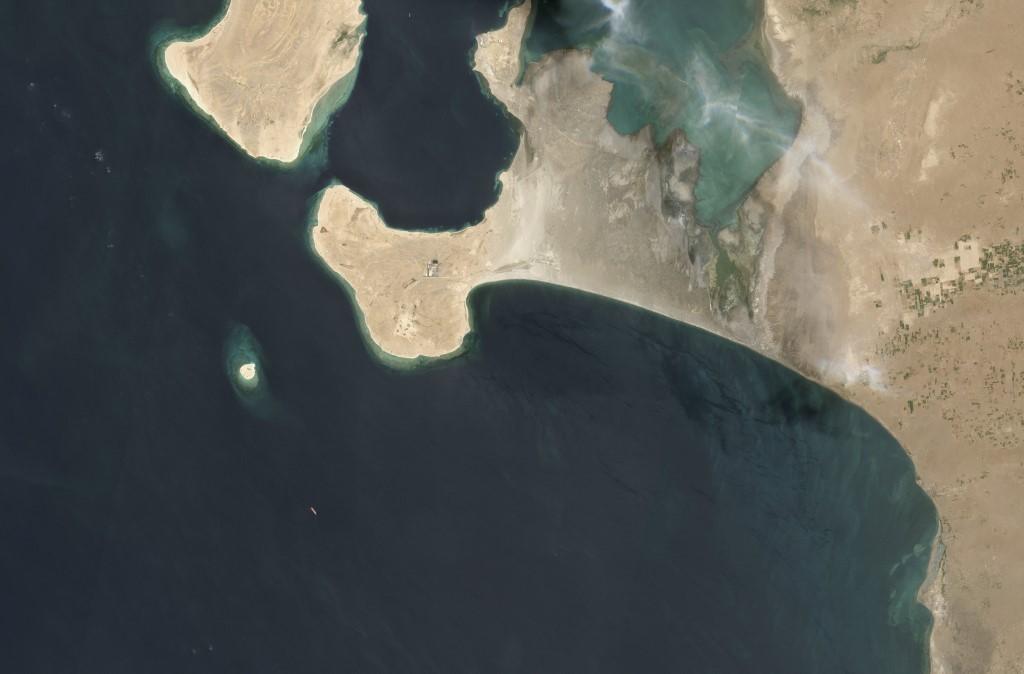
The Safer tanker has been stranded off Yemen’s Red Sea oil terminal of Ras Issa for more than five years. The UN Security Council has also called on the Houthis to facilitate unconditional access as soon as possible.

Main category: 

Yemeni government, STC discuss coalition under Riyadh AgreementYemeni president in US for annual medical checkup


Yemeni president in US for annual medical checkup

Author: 
Thu, 2020-08-13 23:33

AL-MUKALLA: Yemen’s President Abed Rabbo Mansour Hadi touched down in the US for his annual medical checkup on Thursday, the Yemeni Embassy in the US said.
Ambassador Ahmed Awad bin Mubarak received Hadi at the airport in Cleveland, Ohio, where the appointment is due to take place, and “reaffirmed his utmost best wishes to the president for continued good health,” the embassy said in a brief statement.
Hadi left for the US after appointing a new governor and a new security chief in Aden, and mandating new Prime Minister Maeen Abdul Malik Saeed to form a new government. Hadi has travelled regularly to Cleveland for medical treatment since becoming president in early 2012, reportedly suffering from heart problems.
Saeed asked the governor, Ahmed Hamid Lamlis, to focus his efforts on reviving public institutions in Aden, restoring peace and security and fixing basic services that have been hit hard by years of instability. The official Saba news agency reported that the prime minister pledged Lamlis his government’s full support.
Saeed also entered discussions with various political factions in Yemen with a view to forming his government. Abdul Malik Al-Mekhlafi, an adviser to President Hadi, said on Twitter that the administration would be announced within a month, as the internationally recognized government and the Southern Transitional Council (STC) enacted security and military components of the Riyadh Agreement.
The STC recently rescinded a controversial declaration of self-rule under a new Saudi-brokered proposal to accelerate the implementation of the Riyadh Agreement.
Signed by both sides in late 2019, the agreement was designed to end hostilities in Aden and other southern provinces. Under the deal, the government and the STC were agreed to withdraw their forces from contested areas in southern Yemen, move heavy weapons and military units from Aden and allow the new government to resume duties.
Meanwhile, a judiciary committee assigned by the country’s attorney general to investigate reports of thousands of tons of ammonium nitrate stored at Aden’s port found hat the material was in fact a different fertilizer, urea, which could also prove hazardous if mixed with other materials.
In a letter addressed to the Yemen Gulf of Aden Ports Corporation, Judge Anes Nasser Ali, a local prosecutor, ordered the port’s authorities to remove the urea from the city.
Shortly after the tragic explosion in the Lebanese capital Beirut last Tuesday, Fatehi Ben Lazerq, editor of the Aden Al-Ghad newspaper, ignited public uproar after suggesting 4,900 tons of ammonium nitrate stored in 130 containers had been gathering dust at the port for the last three years, which could cause an equally destructive explosion. The story prompted the country’s chief prosecutor, politicians and the public to call for an investigation.


Main category: