Missing boy’s death exposes Houthi child recruitment
Sat, 2020-08-15 22:53
AL-MUKALLA: When 15-year-old Abdul Aziz Ali Al-Dharhani went missing, his family visited the local Houthi officials of their small village in Yemen’s Dhale province to ask for information. The Iranian-backed rebels said they knew nothing about their son’s whereabouts.
The family were certain the officials were lying, because their son had attended Houthi religious sessions at a local mosque before he went missing. Family members circulated Al-Dharhani’s image on social media and asked people to help find him.
A local Houthi figure, despite claiming to not know about the child, called the family 10 days later to congratulate them on the “martyrdom” of their son.
Abdurrahman Barman, a Yemeni human rights advocate and director of the American Center for Justice, investigated the boy’s disappearance and said Al-Dharhani was brainwashed by Houthis and sent to battle where he was killed.
Barman added that his investigation revealed that Houthis actively recruit child soldiers.
“Before joining them, the boy was friendly and got on with people,” he told Arab News.
After joining sessions at the mosque, where he was lectured on jihad and Houthi movement founder Hussein Al-Houthi, Al-Dharhani isolated himself from family and friends. He left home without telling anyone, leaving his family in fear and panic.
“The Houthis give recruited children nicknames to convince them they are men and can fight,” Barman said, adding that he learned the boy was sent to the front line without any military training.
“He was killed shortly after,” Barman said.
NUMBER
7,000 Children are reported to have been recruited by Houthis, according to the Yemeni Coalition to Monitor Human Rights Violations
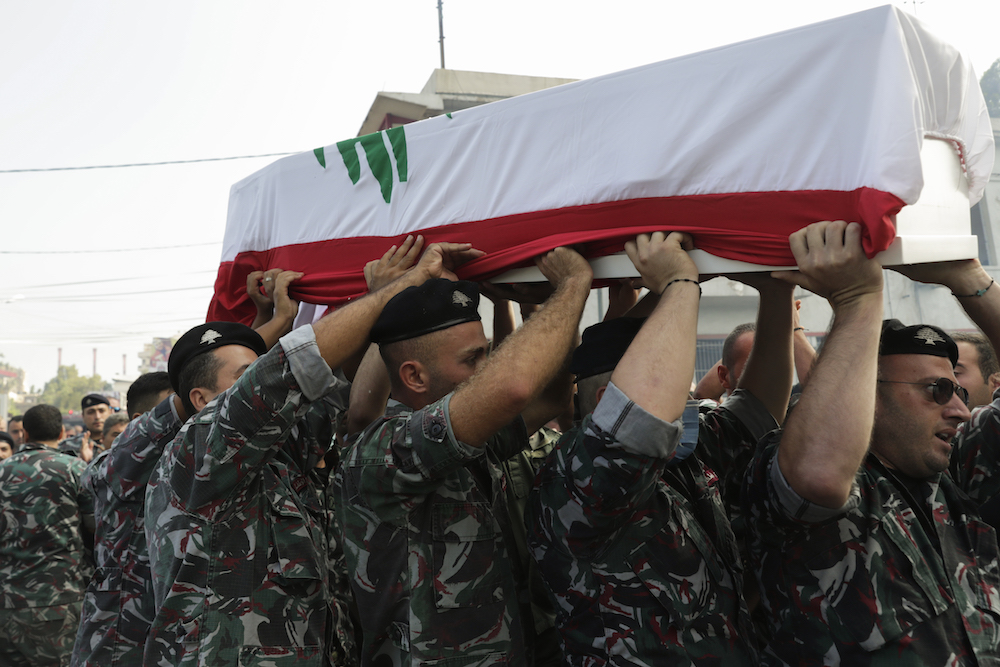
Houthis held a long funeral procession where his body was wrapped in slogans. Houthi media quoted local officials as saying that Al-Dharhani was a “hero” who fought Israel, the US and other enemies.
Barman said the Houthis have never been ashamed of their recruitment of children despite local and international criticism.
“The Houthi movement boasts about the deaths of their child soldiers. Even some Houthi-affiliated rights activists describe dead children as heroes and martyrs.”
Yemeni government officials, human rights groups and experts said the story of Al-Dharhani represents only the tip of the iceberg. Houthis are alleged to have recruited thousands of children over the last five years to shore up troop numbers amid the increasingly costly war.
The Yemeni Coalition to Monitor Human Rights Violations, known as the Rasd Coalition, recently reported that Houthis had recruited 7,000 children from heavily populated areas under their control.
Nadwa Al-Dawsari, a Yemeni conflict analyst, told Arab News that Houthis are responsible for most child soldiers in Yemen and use specific strategies to draw children to the front line.
“Houthis are aggressive when it comes to recruiting children. They are responsible for over 70 percent of child soldiers in Yemen according to the UN. They lure children to fight with them by brainwashing them through mosques and religious activities, sometimes without the knowledge of their families,” she said.
On the battlefield, the recruited children take part in fighting or logistical work, while some operate as spies. Al-Dawsari said Houthi ideology helps explain why they brag about recruiting children.
“They are a radical Jihadist group that doesn’t hesitate to spill blood to achieve their political objectives. They want to ensure Abdulmalik Al-Houthi and the Hashemite bloodline rule Yemen for good,” she said.
Rehabilitation center
In the central city of Marib, the King Salman Humanitarian Aid and Relief Center founded a institute to rehabilitate soldiers in Yemen in 2017. The center has rehabilitated about 480 child soldiers. Mohammed Al-Qubaty, the center’s director, told Arab News that children are usually lured into joining through financial and social incentives. Enlisted children are given salaries, arms and food, while others are forced to take up arms, he said. “Children are cheap and easily influenced. They quickly learn how to use arms and are obedient to their commanders,” he added.
UN chief urges Yemen’s Houthis to grant access to decaying oil tankerUS blasts Houthis over ‘ticking time bomb’ tanker in Red Sea
Ankara burns bridges with UAE but maintains ties with Israel: Why?
Sat, 2020-08-15 22:38
JEDDAH: After Turkish President Recep Tayyip Erdogan threatened on Friday to suspend diplomatic relations with the UAE following a breakthrough deal between the Gulf state and Israel, without making reference to any downgrading of its own diplomatic relations with Tel Aviv, the move was criticized by many as hypocrisy.
The deal between Israel and UAE requires that Israel suspend its planned annexation of parts of the West Bank in exchange for a normalization of ties with Abu Dhabi. In response, the Palestinian Authority announced the “immediate” recall of its ambassador to the UAE.
The Turkish Foreign Ministry described the deal as a betrayal of the Palestinian cause.
Although it is a strong advocate of the Palestinians as far as Israeli actions in the Gaza Strip and West Bank are concerned, Turkey continues to maintain its diplomatic ties with Israel.
“Turkey has a hypocritical stance, slamming the UAE for discussing relations with Israel, while Turkey also has relations with Israel,” said Seth J. Frantzman, executive director of the Middle East Center for Reporting and Analysis.
Turkey has had diplomatic relations with Israel since 1949. Despite deep mistrust between the two countries, especially since the Mavi Marmara incident in 2010, when Israeli commandos boarded a Turkish aid boat and killed ten Turkish activists, bilateral trade between two countries reached to $6 billion last year. Israel is among Turkey’s top 10 export markets.
In the past two years, the bilateral diplomatic representation has been at the level of chargé d’affaires rather than ambassador in response to the transfer of the US embassy to Jerusalem and to Israeli policies in the Gaza Strip.
According to Frantzman, this rhetoric is part of a deliberate choice by Ankara to distract from economic failure at home.
NUMBER
$6bn Worth of bilateral trade between Turkey and Israel was conducted last year.
“Ankara, guided by its current ruling party, is moving towards becoming the most anti-Israel regime in the region. Recent bombastic announcements about ‘liberating Al-Aqsa after Hagia Sophia’ seek to fan religious extremism as part of an agenda by Ankara to try to re-kindle populist, religious and nationalist views across the region rooted in the previous century’s mentalities and wars,” he said.
On Aug. 13, the British Daily Telegraph alleged that Turkey is granting citizenship to seven senior operatives of Hamas and voiced concerns about the potential repercussions of such moves to give the group more freedom to stage attacks on Israeli citizens around the world. The allegations were denied by a spokesman for the Turkish government.
Hamas is listed by the US and the EU as a terrorist group, but Ankara considers it a legitimate political movement. Western allies have warned Turkey several times about Hamas’ presence on Turkish soil.
Frantzman thinks that Turkey’s ruling party, which supports Hamas and is growing closer to Iran’s regime, only maintains its current relations with Israel because of Washington and because of its desire to exploit NATO and the EU.
“Ankara’s real agenda is to try to dominate the Arab world, and it thinks anti-Israel views will gain it support, the same way Iran seeks to exploit Palestinian suffering for the regime’s own ends. Neither Turkey or Iran have succeeded so far in bringing Palestinians more rights, all they have done is led to false hopes and ruined chances at peace and tolerance,” he said.
But Frantzman finds it unfortunate that Turkey pursues this policy rather than engagement because Ankara once played a role in Israel-Syria discussions and other productive work in the region.
The “technical” and “functional” relationship between Israel and Turkey still go on. Israel’s flagship carrier El Al, which suspended its flights to Turkey a decade ago following the Mavi Marmara crisis, landed in Istanbul this May to operate twice a week between Istanbul and Tel Aviv.
“Turkey was the first majority Muslim country to extend diplomatic recognition to Israel, and that has not changed under the AKP (the ruling Justice and Development Party). So, all the UAE is doing is what Turkey has done for almost 70 years – recognize Israel,” said Bill Park, a visiting research fellow at King’s College London.
Furthermore, as Turkey’s trade with Israel has continued to increase under the AKP in Turkey’s favor, Park doubts that Erdogan could really put this trade at risk for this reason.
If it is little more than a war of words, why does Erdogan engage in these threats?
“He is already in conflict with the UAE over Libya, Qatar and Turkey’s regional backing for Islamist and Muslim Brotherhood elements,” Park said. “So Erdogan’s rhetoric is part of this ongoing tension. He doesn’t like Israel and its plans to annex the West Bank, so maybe he is trying to achieve the moral and/or political high ground at home and in the region.”
Park thinks that if other Arab states, such as Oman, Bahrain and even KSA follow the UAE example, this would isolate Erdogan still further.
“The UAE is in large measure driven by fear of and hostility towards Iran, a sentiment shared by Israel. This now looms larger for many Arab governments than the plight of the Palestinians. Turkey again finds itself at odds with much of the region. Although there is a degree of mutual suspicion between Tehran and Ankara, there is little hostility, and Turkey has been crucial in enabling Iran to reduce the impact of US-inspired sanctions,” Park said.
Park said Erdogan could be either engaging in rhetoric for its own sake, or playing to the gallery of public opinion, or willing to damage Turkey’s economic interests, or simply adding to Turkey’s stark regional isolation.
“What his stance will not do is solve any problem that the region, or Turkey, faces,” he said.
Turkey may suspend ties with UAE over Israel deal, Erdogan says
US official promise help to Beirut
Sat, 2020-08-15 22:31
BEIRUT: US Under-Secretary of State for Political Affairs David Hale toured the site of the explosion that occurred in Beirut’s port on Aug. 4 on the third day of his visit to Lebanon. He seemed very stunned by the horror of the destruction. In a statement, he said: “Every sovereign state, controls its ports and its borders thoroughly and I imagine that all Lebanese would like to return to that era and not have the ‘anything goes’ atmosphere that we’ve seen in the recent years.”
“Seeing what happened with the naked eye differs from watching it on television,” Hale said.
The American official praised the “impressive international efforts, in which many countries are participating.”
A team from the FBI is scheduled to arrive today to participate in the investigations to ensure that the Lebanese get answers about and the circumstances of the explosion. “The investigation will be comprehensive and transparent, as everyone demands, especially the Lebanese people,” Hale said.
The judiciary arrested 19 people, including two former and current directors of the port, pending the referral of the file to the judicial investigator who was appointed to tackle the case.
The Lebanese are awaiting the results of the investigation conducted by a French team that arrived in Lebanon hours after the explosion to help the Lebanese army. Several foreign rescue teams have participated in the clearance operations to recover the victims trapped under the rubble. Many of those who were working in the vicinity of the blast are still missing.
FASTFACT
A team from the FBI was set to arrive on Saturday to participate in the investigations to ensure that the Lebanese get answers about and the circumstances of the explosion.
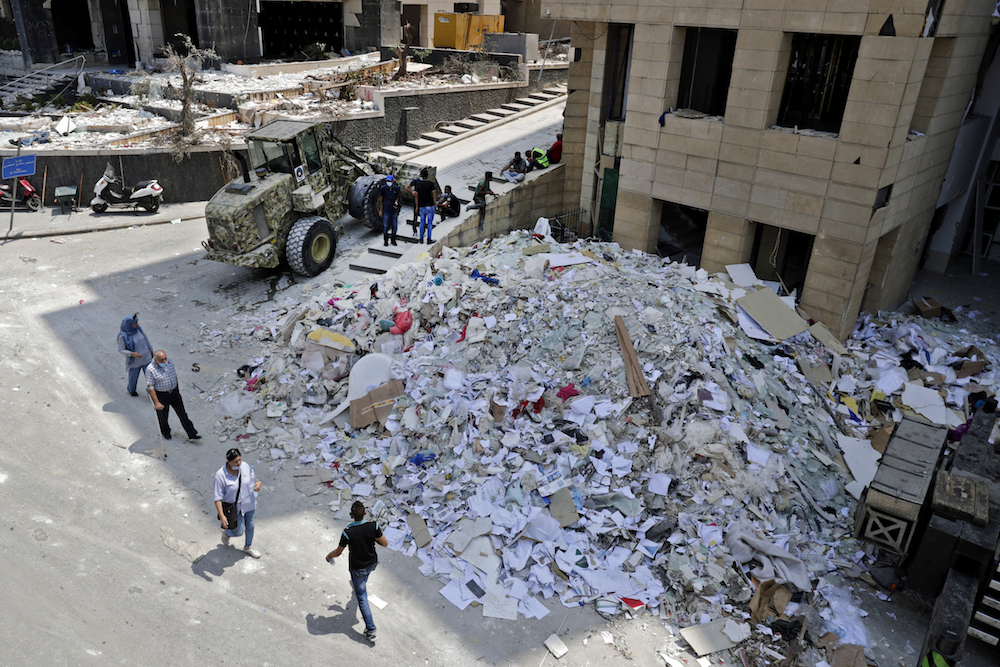
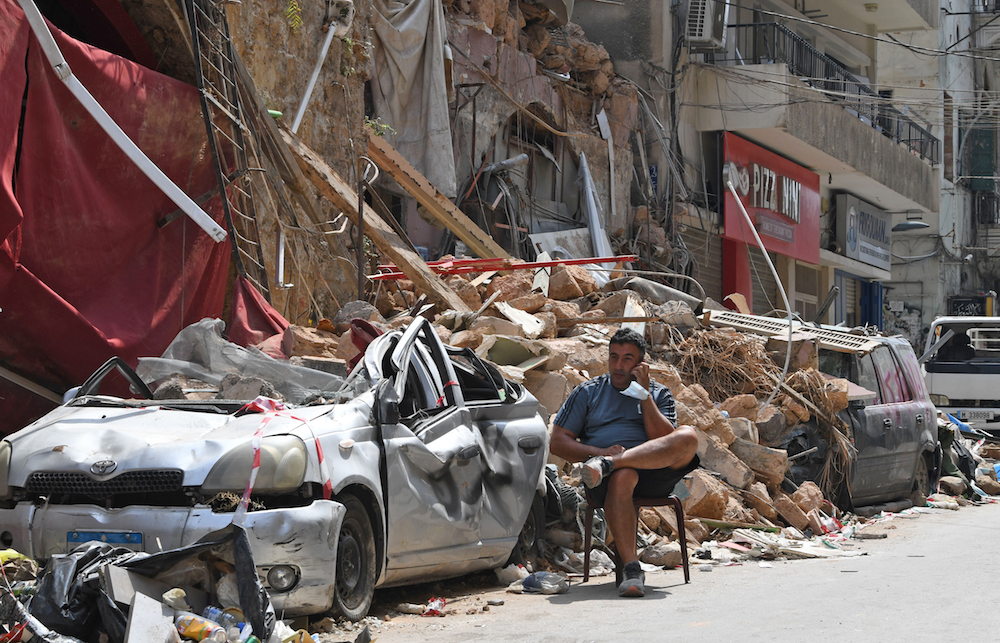
The death toll has so far reached 173 dead and 6,000 injured. More than 80,000 homes have been damaged.
The Engineers’ Syndicate, the Engineering Authority of Beirut Municipality and private engineering companies are undertaking surveys of the affected area to find out which buildings need to be demolished.
Meanwhile, humanitarian air bridges with Lebanon continue to provide it with medical and relief aid.
Opposite Beirut’s port, a French helicopter carrier carried a unit of French military engineers in and engineering vehicles and equipment to clear debris from the site of the explosion.
The Lebanese army said: “The French helicopter carrier is also loaded with medical and food supplies, building materials, and two vehicles designated as a gift to the Lebanese Civil Defense.”
Beirut blast brings fresh misery to displaced Syrians in LebanonUNDP to focus on inclusive recovery in supporting Lebanon following Beirut blast
Beirut blast brings fresh misery to displaced Syrians in Lebanon
Sat, 2020-08-15 20:31
DUBAI: It was 2012, and Lina Attar Ajami was spending the summer in Canada when a bomb went off near her neighborhood of Rawda in Damascus.
Her father called her immediately and told her not to return to Syria. “You must go to Beirut and find a house and make your life there,” Ajami recalled being told.
She followed his instructions and moved to an apartment in Saifi Village, an upscale neighborhood within walking distance of Gemmayze, the beating heart of Beirut.
“You escape a country for security. You escape a war of nine years in order to give your children security and not let them be exposed to the atrocities of war. But this — the Aug. 4 blast in Beirut — is worse than anything my family went through during the Syrian civil war,” Ajami told Arab News by phone from Beirut.
Even before the blast, Lebanon was in a state of free fall following months of economic and political turmoil marked by mass unemployment, hyperinflation and social unrest.
But the devastation caused by the blast has wreaked unprecedented havoc on the Lebanese capital, leaving an estimated 300,000 homeless and an even larger number of people in need of assistance of some kind.
Of the 177 deaths confirmed so far, 43 were Syrians working at the Port of Beirut, according to a statement from the Syrian Embassy in the Lebanese capital. The UN refugee agency has put the Syrian toll at 34, of which eight bodies are still missing.
The workers were refugees, earning daily as little as 50,000 Lebanese pounds ($33). Their bodies, like their existence up until Aug. 4, are unlikely to be unaccounted for.
Each of their families, living in the blast-devastated capital of a crisis-torn country, has likely lost not only its breadwinner but also its livelihood.
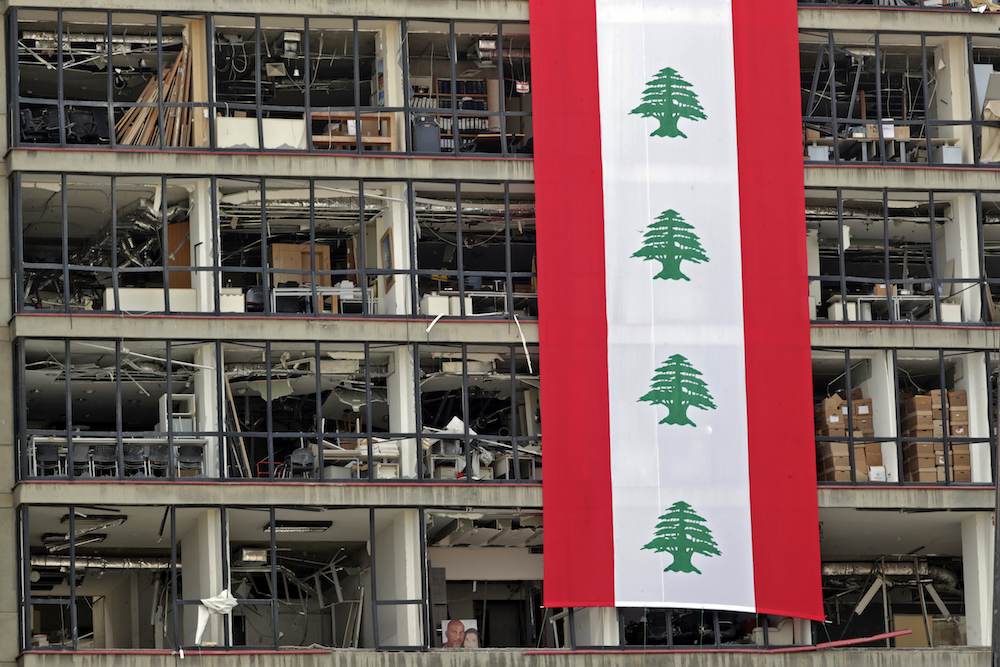
A picture of victims is displayed inside their damaged apartment facing the port of Beirut following the cataclysmic explosion. (AFP)
Ajami’s 12-year-old daughter was severely wounded in the blast. “We live on the 11th floor, so I could see the port. I heard my daughter screaming in the salon. I ran there and found her covered in blood. Blood was all over the walls,” she said.
Ajami’s husband carried his daughter downstairs and dashed off in search of a hospital, but they were full beyond capacity. “People were getting into fights just to get their loved ones admitted,” she said. “It was hell.”
The couple decided to take their daughter to south Beirut, where they found a hospital willing to admit her. She has since undergone two surgeries and is currently recovering.
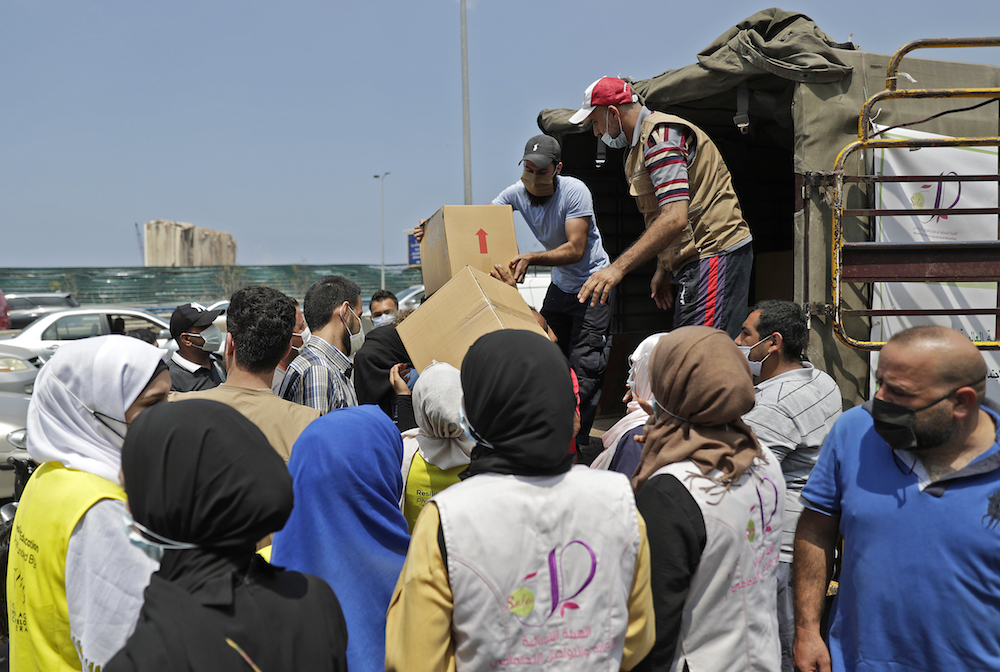
Volunteers distribute aid supplies to those affected by the cataclysmic explosion in Beirut’s port area, on August 12, 2020. (AFP/File Photo)
“There’s nothing more disturbing than thinking you’re in the safety of your home and a sudden blast takes away all the security you thought you had in your adopted country,” Ajami said. “As Syrians, this is our second loss. It’s beyond description.”
The Syrians currently in Lebanon, estimated at 910,000, are a mixture of registered and unregistered refugees, as well as migrant workers and others.
Those who fled Syria because of the civil war kept most, if not all, of their life savings in banks in Lebanon.
The value of their deposits has eroded drastically since the start of the economic and financial crisis.
FASTFACT
Syrians in Lebanon
* At least 34 Beirut blast victims were Syrian workers.
* Lebanon hosts 890,000 Syrian refugees.
* Two-thirds of the refugees live below poverty line.
* Lebanon’s estimated population is 6 million.
“Syrians relocated to Lebanon and placed all their wealth in Lebanese banks, knowing that no other country would agree to open bank accounts for Syrians,” said Ajami. “Their savings have dwindled in real terms as a result of the stringent capital controls.”
According to Asharq Al-Awsat newspaper, the Syrian government estimated in January the total amount belonging to Syrians in Lebanese banks at about $45 billion — roughly a quarter of deposits held by Lebanese banks.
That said, many Syrians are content with having survived the blast that shattered Beirut. “I was sure by the time someone asked about me I’d be dead,” said Haidara M., a kickboxing instructor who left Syria in 2016 in search of a better life in the Lebanese capital.
At the time of the blast, caused by a long-neglected stock of ammonium nitrate, Haidara was in the bathroom of his apartment.
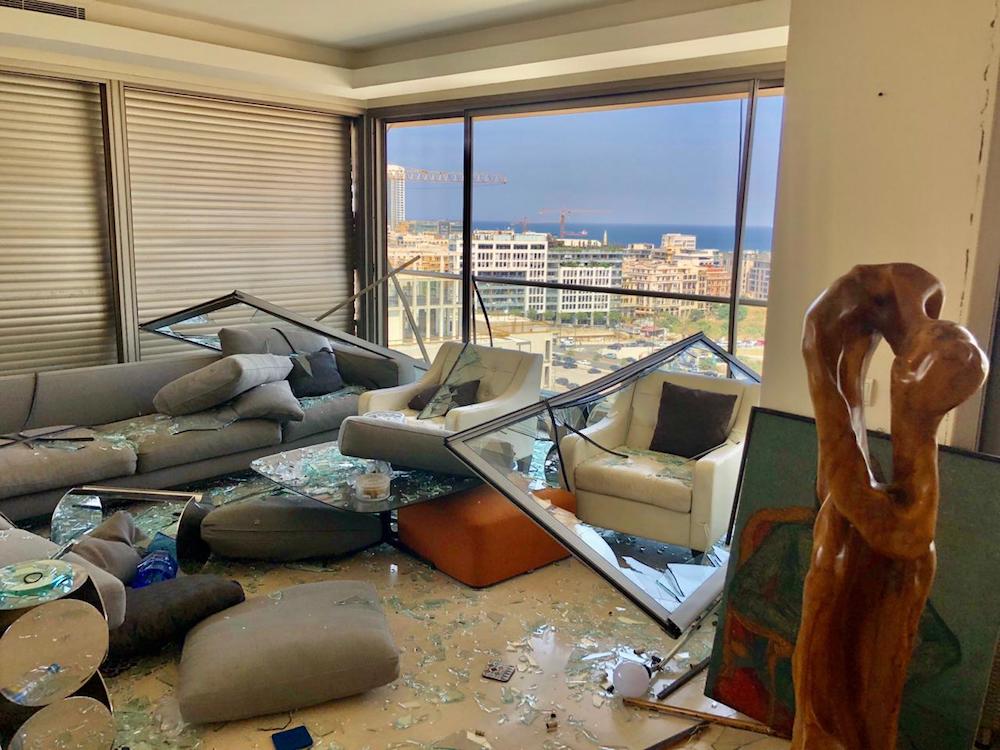
Lina Attar Ajami’s apartment, where her 12-year-old daughter was severely wounded in the blast. (Supplied: Lina Attar Ajami)
Freeing himself of the debris that fell on him, he ran out into the middle of a street in the hope that someone would help him. “I’m afraid of dying in a country without any family to bury me,” he told Arab News.
A Syrian who lives in the Lebanese capital and works with an international NGO said: “Syrians living in Beirut have been affected on an emotional level. They fled Syria to Lebanon to live in a safer place, but are now trying to leave Lebanon for the same reason.”
He added: “We still don’t have clear information regarding Syrians living in Lebanon who’ve been affected by the blast. No one knows the names of the 43 Syrians who died at the port.”
One Syrian national who has returned to Damascus following the explosion is Rana Tamimi, who specializes in marketing and communications.
She was allowed to cross the border into Syria after she took a COVID-19 test (for which she paid 150,000 Lebanese pounds) in Beirut and got a negative result.
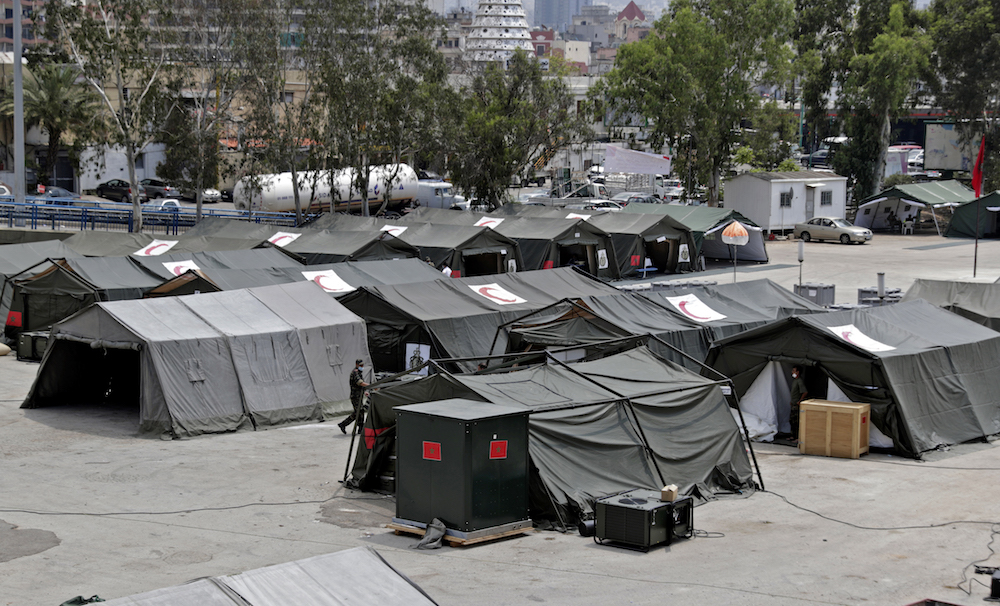
A general view shows the Moroccan field hospital in Karantina neighbourhood near the port of Beirut, on August 12, 2020. (AFP)
“I moved to Beirut from Damascus eight years ago after a big explosion behind my house in Damascus,” she told Arab News.
“There was a lot of fear in the streets then and I had to leave. The effect of the explosion that happened in Beirut was equal to the sum of the horrors of eight years of war.”
Nimat Bizri, a half Algerian, half Syrian woman married to a Lebanese man who has lived in Lebanon for 24 years, said: “Since the blast, I feel helpless and depressed … The border to Syria has remained closed for three months now due to COVID-19. There’s no light at the end of the tunnel.”
Bizri runs the Social Support Society, an NGO founded in 2006 that provides quality programs and opportunities to Syrian refugees residing in Lebanon’s Bekaa Valley. It caters to 2,500 students spread over five centers located in different villages.
But Syrians face an altogether new challenge in the wake of the destruction in Beirut. Cases have come to light of discrimination against migrants and refugees trying to access emergency aid.
“No support is being given to Palestinian and Syrian refugees who’ve been working and living in Beirut,” said Bizri. “The Lebanese people haven’t been giving them support since the explosion.”
Dalia Al-Ogaily, a Syrian-Iraqi resident of Beirut who previously lived in Syria, recently joined a group of friends who had volunteered to do social work in different parts of the city.
Survivors of Beirut’s August 4 blast are still in shock over a disaster that disfigured their city. The earth-shaking explosion killed 171 people and wounded more than 6,000, a sickening blow to a country already in crisis. (AFP)
“On our way to downtown Beirut, we spotted the Banin Charity Association in action so we offered to help,” she told Arab News.
“Initially they allowed us to help people in the neighborhood by interviewing them and assessing their needs. However, after a few hours, when we ran into a Syrian woman in need, the coordinator of the charity told us not to help her because, according to its policy, it’s meant to help only Lebanese.”
The incident sparked controversy on social media that culminated in the resignation of Fadi Al-Khateeb, a renowned Lebanese footballer, from his position as the Banin Charity Association’s goodwill ambassador.
Complaints of discrimination against non-Lebanese in aid distribution also prompted Alexandra Tarzikhan, a Syrian human rights lawyer based in Chicago, to comment: “The blast didn’t discriminate when it chose whose lives to take and which houses to destroy.”
In recent years, Gulf Cooperation Council member countries have become the home of many Arab families fed up with their home countries’ poverty, corruption, sectarian politics and conflict.
Firefighters carry the coffin of their colleague Joe Noun, who was killed in Beirut’s massive blast, during his funeral at the fire station in Karantina neighbourhood near the port on August 12, 2020. (AFP/File Photo)
Syrians and Lebanese are among the tens of thousands who have chosen to start a new life in the UAE, drawn by the lure of peace and financial security.
Leaving his home in Damascus in 2012 to escape the war, Alaa Krimed lived for two years in Beirut before moving to Dubai.
Now the Syrian-Palestinian is the artistic director of the Sima Dance Co. in Dubai’s Alserkal Avenue.
“I loved Beirut, but I also hated Beirut because I struggled a lot there,” he told Arab News, recalling the need to reapply for residency papers every three months. “The people are wonderful but the government is corrupt, and this is why I moved from Beirut to Dubai.”
London-based Lebanese non-profit at forefront of Beirut fundraisingUS calls for credible probe into ‘overwhelming’ Beirut blast
Trump wrote to Assad about journalist missing in Syria, says Pompeo
Sat, 2020-08-15 01:30
WASHINGTON: US President Donald Trump personally wrote to his Syrian counterpart Bashar Assad about the case of journalist Austin Tice, who has been missing since 2012, Secretary of State Mike Pompeo said Friday.
“The US government has repeatedly attempted to engage Syrian officials to seek Austin’s release,” Pompeo said in a statement on the eighth anniversary of Tice’s disappearance.
“President Trump wrote to Bashar Assad in March to propose direct dialogue.”
Tice was a freelance photojournalist working for Agence France-Presse, McClatchy News, The Washington Post, CBS and other news organizations when he disappeared after being detained at a checkpoint near Damascus on Aug. 14, 2012.
Thirty-one years old at the time he was captured, Tice appeared blindfolded in the custody of an unidentified group of armed men in a video a month later.
Since then, there has been no official information on whether he is alive or dead.
In March, Trump said the United States had written a letter to authorities in Damascus, without specifying that he himself had written personally to Assad, who Washington wants out of power. At that time, Trump said he did not know if Tice was still alive.
HIGHLIGHT
Tice was a freelance photojournalist working for Agence France-Presse, McClatchy News, The Washington Post, CBS and other news organizations when he disappeared after being detained at a checkpoint near Damascus on Aug. 14, 2012.
“No one should doubt the president’s commitment to bringing home all US citizens held hostage or wrongfully detained overseas,” Pompeo said Friday.
“Nowhere is that determination stronger than in Austin Tice’s case.”
Pompeo said he and Trump hoped there would be “no need for another statement like this a year from now.”
“Austin Tice’s release and return home are long, long overdue. We will do our utmost to achieve that goal,” he added.
A year ago, the US government said it believed Tice was still alive.
His mother Debra Tice said in January that she had “credible information” to that effect, without elaborating.
In 2018, US authorities announced a $1 million reward for information that would lead to his recovery.