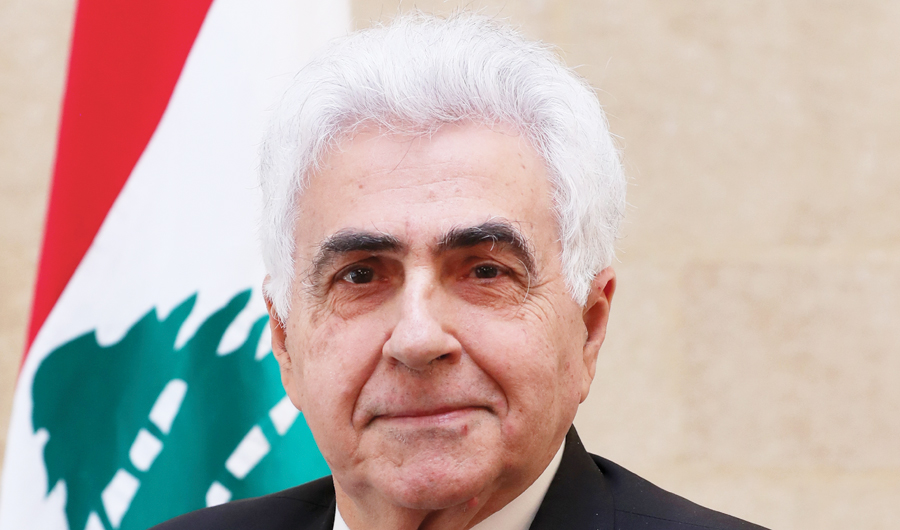
INTERVIEW: Political actors must be transparent, held accountable: ex-Lebanon FM Nassif Hitti

Tue, 2020-09-01 00:42

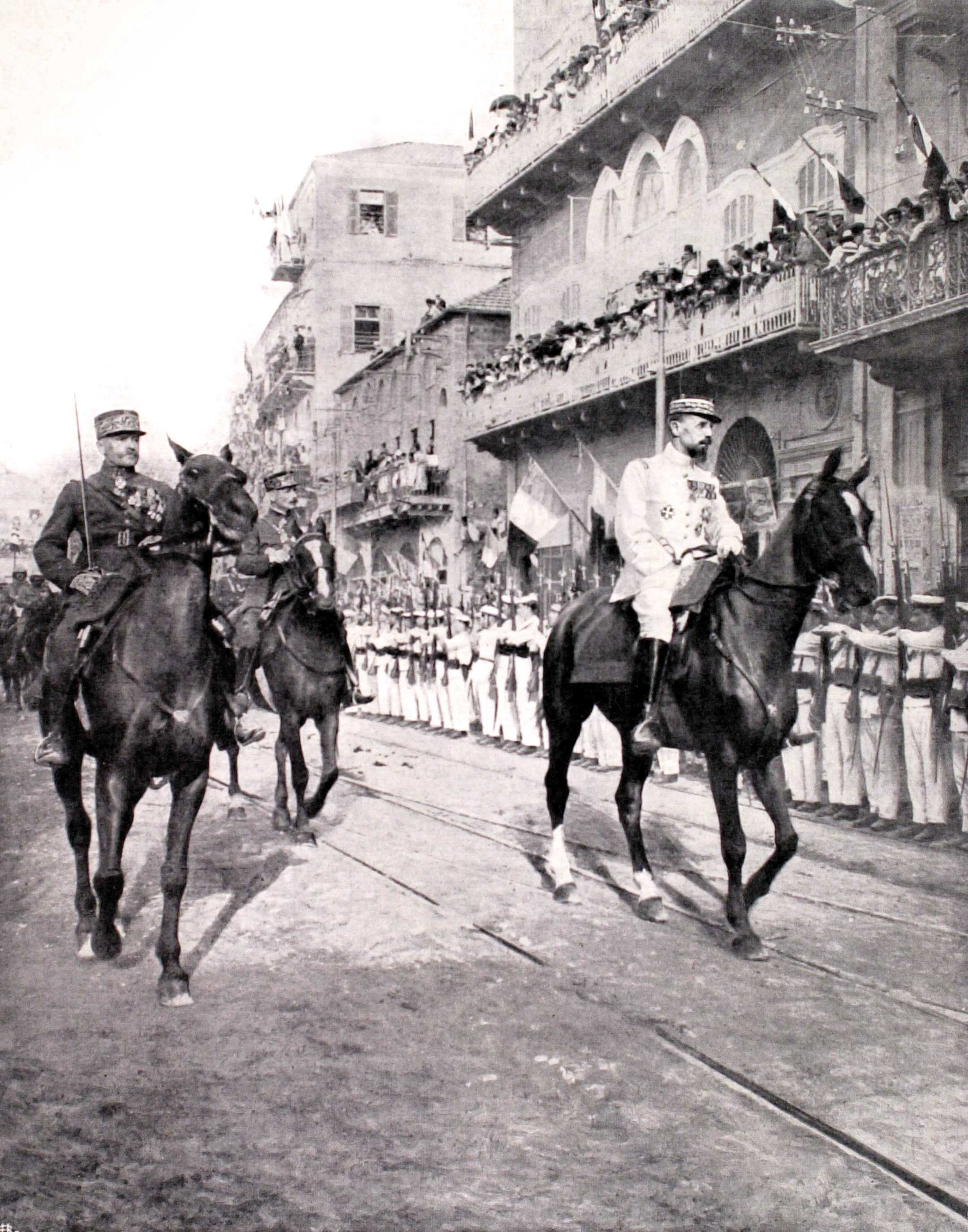
BEIRUT: Lebanon finally saw the light on Nov. 22, 1945, almost 25 years after the declaration of Greater Lebanon by Gen. Henri Gouraud.

That same year, it became a founding member of the UN. In 1947, one of its most brilliant politicians, Charles Malek, helped draft the Universal Declaration of Human Rights, alongside Rene Cassin, Peng Chung Chang, and John Humphrey, under the leadership of Franklin D. Roosevelt’s widow, Eleanor.

This golden age has now become a pipe dream in the view of many. The Lebanon of 2020 is nothing less than a failed state, a country that, according to its former Minister of Foreign Affairs Nassif Hitti, “is the least regionally and internationally influential and the most influenced by foreign powers.”

In an exclusive interview with Arab News en Francais, Hitti, a diplomat, academic and former minister of foreign affairs and emigrant, said the date of September 1 certainly has a “sentimental” dimension related to “the importance of the creation of this entity” that became the modern Lebanon.

On the other hand, the Greater Lebanon proclamation centenary comes at a time when Lebanon must be prevented from “sinking like the Titanic.”

He added: “A confrontation with the current authorities is more than necessary today. You have to show will and foresight. These elements are essential in a country where nearly 52 percent of the population lives below the poverty threshold and where, instead of social uplift, there is now social decline.

“We must have the mindset and go for it. To say that we are a country of coexistence is no longer enough. Today everything is politicized. Structural and comprehensive political, economic, and financial reforms are needed and must be initiated. Time is our sworn enemy.”

According to Hitti, a government must be immediately formed, with a plan of action and a roadmap with a clear agenda. “Political actors must be transparent and held accountable.”

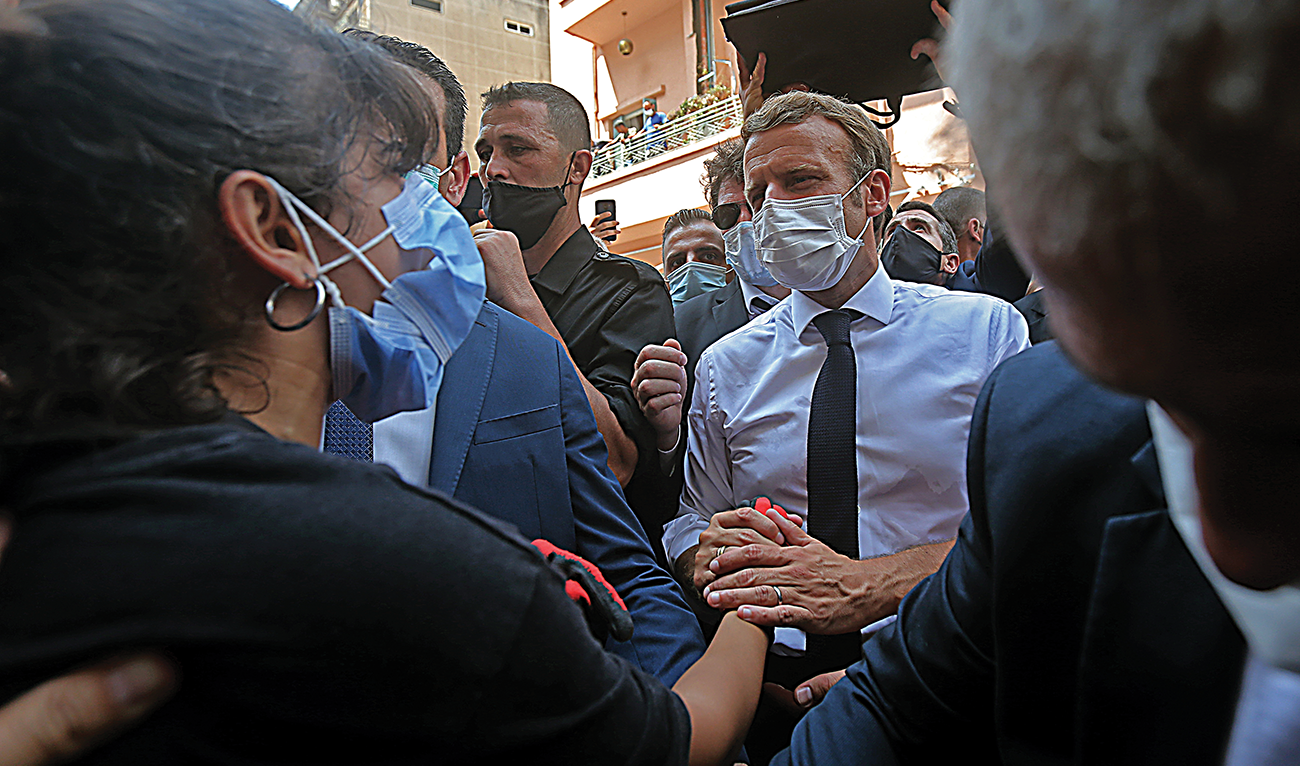
What about France’s role in Lebanon, as French President Emmanuel Macron visits Lebanon for the second time in less than two months? Is not the French intervention mainly driven by the historical link that exists between the two countries?

“There is certainly a sentimental dimension. For Paris, we must save this country, a model of coexistence and of unity in diversity.”

However, the strategic importance of Beirut and its stability should not be understated.

“This stability is important, not only for the Middle East, but also for the entire Mediterranean. Lebanon’s deep stability is important for obvious strategic reasons. In case you need reminding, this former head of Lebanese diplomacy (Hitti) resigned as minister of foreign affairs in the wake of an awkward statement made by then Prime Minister Hassan Diab, in response to remarks made by French Foreign Minister Jean-Yves Le Drian.”

Le Drian, during a visit to Beirut, had harshly criticized Lebanese officials for their inaction. In response, Diab claimed that Le Drian “lacks information” about the reforms undertaken by his government. Despite the chill cast by this statement, Macron was the first international leader to go to the bedside of Beirut after the massive explosion of Aug. 4 that damaged nearly half of the city.

So, was Paris in a position to prevent Beirut from sinking?

It was, but Hitti said: “We must fulfil our duty. I am very much counting on the role of France. This country is a friend, and a friend is someone who tells you the truth as it is. During my tenure as minister, I was very open to criticism. France can play a supporting role, only if we shoulder our responsibilities.”

How did Hitti perceive Lebanon in 2021? He called for “a new social contract, a drastic reform of the political system, which could put an end to sectarian logic and the reign of tribal leaders.”
Main category: 

What a petition for return of French mandate says about LebanonINTERVIEW: ‘France is for a strong and sovereign Lebanon’


Why Franco-Lebanese ties transcend strategic, economic interests

Tue, 2020-09-01 00:10

PARIS: The symbolism could not have been stronger. On Sept. 1, 1920, French Gen. Henri Gouraud, representing the French mandate authority, proclaimed the State of Greater Lebanon from the Pine Residence in Beirut. On that day, Lebanon set out on its path toward independence, which it gained — for better or worse — 23 years later, on Nov. 22, 1943.

One hundred years later, as French President Emmanuel Macron inspected the devastation caused by the massive explosion of Aug. 4, 2020 at the Beirut port, Lebanese people, expressing their anger at the incompetence of the Lebanon’s authorities, called for the country to be placed under “French mandate for the coming 10 years.”

The French leader promised to return on Sept. 1 for the centenary celebrations of the creation of Lebanon. Meanwhile, Paris stepped up its efforts to support those affected by the explosion, and to urge Lebanese leaders to begin much-needed reforms to deal with the serious economic and financial crisis facing the country.

French Foreign Minister Jean-Yves Le Drian’s July 8 cri de coeur aimed at the Lebanese authorities — “Help us help you, dammit!” — reflected growing concern in Paris over the very future of Lebanon.

Relations between the two countries go back much further than the historic date in 1920, which only consecrated ties that were several hundreds of years old. One can trace the beginning of France’s links with Lebanon to St. Louis, the 13th-century monarch who recognized the Maronite nation in Mount Lebanon and was committed to ensuring its protection.

However, it was the capitulation agreements between the Ottoman empire under Suleiman the Magnificent and the European powers, including France, ruled by Francois I, that paved the way for France in the 14th century to forge deeper relations with the Lebanese, with the aim of defending the empire’s minorities, especially Christians.

In 1860, after the massacres of Christians in Mount Lebanon, the French, under Napoleon III, intervened militarily to restore order. This allowed the creation, on a political level, of the Mutasarrifate, an administrative authority that ushered in a period of stability until the First World War.

With the end of the Ottoman empire at the beginning of the 20th century, Lebanon was put under French mandate. Since then, Paris has always played a privileged role in the land of the cedars. Beirut was at the center of relations between these two entities, especially its port, which was largely destroyed in the Aug. 4 blast.

When the Count of Pertuis was granted the concession for the modernization of the port, he opened Beirut to the world. The city began to develop, mainly thanks to the silk trade between Lyon and the Lebanese mountains. It was the installation of mainly French-speaking religious missions in the 19th century, and the creation of schools and Saint Joseph’s University that made Beirut and Mount Lebanon what they are today.

Lebanon thus became the center of a strategic vision for France, which saw it as the flagship of the Beirut-Damascus-Bagdad axis in the face of the British-controlled Haifa-Amman-Bagdad axis.

The establishment by the French of the railway that connected Beirut to Mount Lebanon, on the one hand, and Damascus to Baghdad on the other, ended up giving Beirut a new dimension by shaping it economically, politically and culturally.

France was thus actively present, long before the mandate instituted by the League of Nations in April 1920. The proclamation of Greater Lebanon was the crowning achievement of a relationship that has been established simultaneously on religious, cultural, economic and political levels.


A French patrol, part of a multinational peacekeeping force, outside the southern Lebanese village of Al-Tiri in 2006. (AFP)

France’s political support to Lebanon has been immeasurable, especially during the 1975-1990 war. Paris has repeatedly sent envoys to negotiate cease-fires and to unblock political crises. The July 2007 meeting at the Chateau de La Celle-Saint-Cloud to initiate a dialogue between different Lebanese political forces is a case in point.

The road map recently presented by President Macron is the latest example of this approach.

France’s presence in the UN and multinational forces formed several times to intervene in Lebanon can hardly be glossed over. French soldiers paid dearly for their country’s support for Lebanon, such as during the 1983 Drakkar building attack, blamed on Hezbollah and Iran, which killed 58 French paratroopers. The assassination by the Syrians of Ambassador Louis Delamare in 1981 is another case in point.

In addition, France has been present in UNIFIL forces since 1978 and remains one of its principal contributors.

On the financial front, as the linchpin of the support group for Lebanon, France has always been a mobilizing force for donors. In recent years, various conferences  had been organized to help Lebanon, notably Paris I, II and III under the leadership of former President Jacques Chirac, as well as the CEDRE conference in 2018.

It is a friendship that has been marked by Chirac’s unwavering support for Lebanon, especially after the assassination of Rafik Hariri in 2005. France has always been present in the most difficult times to lend a helping hand. It is also the country that has the most leverage as it tries to talk with all parties, while other countries, especially regional ones, take more radical positions.

Paris is virtually the only power that has always worked for the unity, stability and sovereignty of Lebanon. A special friendship connects the two countries beyond strategic and economic interests — a friendship epitomized by President Macron’s words in Beirut on Aug. 6: “Because it’s you, because it’s us.”

Main category: 

Lebanon can draw strength from life of De Gaulle: Former French ministerLebanon at 100: The French mandate’s mixed blessing


What a petition for return of French mandate says about Lebanon

Mon, 2020-08-31 23:55

LONDON: When the League of Nations issued a decree on Aug. 31, 1920 for the creation of Greater Lebanon under a French mandate, the Arab population was reeling from years of despair under Ottoman rule, a famine that had left at least 200,000 dead and the fallout from World War I.

A century after the proclamation of the State of Greater Lebanon, a petition calling for the French mandate (originally called the Mandate for Syria and the Lebanon) to be re-implemented for a period of 10 years has attracted more than 60,000 signatures.
  It was launched around the time French President Emmanuel Macron visited Beirut on Aug. 6, two days after 2,750 tons of ammonium nitrate stored carelessly in a warehouse at the city’s port for several years exploded and damaged large sections of the city. At least 181 people died, more than 6,000 were injured and an estimated 300,000 were left homeless.
The cause of the disaster, according to most citizens, was government negligence and rampant corruption. It coincided with an unprecedented financial crisis and the deadly coronavirus pandemic. It is no surprise that many Lebanese have lost all confidence in the establishment.
“I sadly came to the realization that Lebanon, the way it is now with the government that we have, cannot run any more as an independent country,” said Marita Yaghi, a 25-year-old doctor and researcher. “Not because we don’t have the capabilities, not because we don’t have the people, but because the people who are already in the government are just so attached to their positions.
“The mandate would be there for 10 years, 1,000 per cent temporary, just to be able to help out with the transition to an independent Lebanese-led government.”
Adam Ouayda, a 22-year-old student of law at Saint Joseph University in Beirut, said: “If the mandate serves the purpose of guiding essential reforms that will allow the Lebanese state to move toward becoming a more modern state, without creating a form of economic dependency or control over Lebanon, I would be more inclined to support it.”
He added that if such a hypothetical arrangement served a strategic or military purpose that exploited Lebanon, he would oppose it.
While many among the younger generation in Lebanon agree with Yaghi about the political elite’s determination to cling to the perks of power, not all believe the solution to the problem is a temporary French mandate.

The time has come to completely rethink the way Lebanon is governed, politically and economically

Karim Emile Bitar, Director of the Institute of Political Science at Saint Joseph University

“I do not think colonization in the 21st century should be considered as a valid option because it cancels a lot of the country’s freedoms and, at the end of the day, a mandate is just colonization in disguise,” said Sara Abi Raad, a 25-year-old doctor.
Jeffrey Chalhoub, 22, agreed, saying: “Implementing the French mandate would not necessarily ameliorate Lebanon’s crises, but will add to our inability to govern and develop ourselves free from outside influence.”
Lebanon’s students and youth have been a pivotal part of the nationwide protests that began on Oct. 17 last year, calling for an end to sectarianism and corruption. Decades of government mismanagement and negligence have culminated in the country’s currency losing about 80 percent of its value. A UN World Food Programme survey found that nearly half of Lebanese people questioned are worried they will not have enough to eat.
“I think this petition is merely a sign of despair — the Lebanese populace are so desperate, so angry and so mad at the current political system and at their ruling elites,” said Karim Emile Bitar, director of the Institute of Political Science at Saint Joseph University.
“They are so fed up with the mobsters that have been governing them for the past 30 years, that this idea — which is, frankly, completely ridiculous and unrealistic — began floating around and attracting signatures.”


The explosion on Aug. 4 and its aftermath was a wake-up call for civil-society groups across the country, he added.
“While politicians and the establishment have been completely complacent and inactive since (Macron’s) last visit, it is as if the last visit did not happen, and they have made absolutely no progress in the formation of a new government. In contrast, civil-society groups have been quite actively trying to get their act together. They have been trying to form a wide coalition,” said Bitar, who in 2017 cofounded Kulluna Irada, a civic organization advocating for political reform in Lebanon.
However, the goal of a united front to tackle the ruling elite’s grip on power has proved notoriously elusive, with different factions and civil-society groups refusing to agree or compromise on some points, including social and economic issues, early legislative elections and the disarmament of Hezbollah.
“The mutual demand today, the demand that is agreed upon by most opposition groups, is a temporary government that would have legislative prerogatives,” said Bitar. “This is not something new to Lebanon; between the 1950s and the 1980s, Lebanon had seven governments that had legislative prerogatives, and many people feel that today this would be an absolute necessity to prevent the current political parties from continuing to control what the government does, as they did under the (Prime Minister Hassan) Diab government.”
Diab’s government resigned less than a week after the explosion in Beirut but remains in place in a caretaker capacity. President Michel Aoun announced on Thursday that binding consultations will take place on Monday to decide on a new prime minister, in the run-up to another visit by Macron next week.
Analysts believe the last-minute scrambling is unlikely to bring about any genuine change and that it will be business as usual for the government. That is what happened when Saad Hariri’s cabinet resigned three weeks after the October protests began and was replaced by Diab’s Hezbollah-backed government.
“Today, Lebanon’s entire system needs an overhaul,” said Bitar. “There is a new generation of Lebanese that is demanding radical change, and the time has come to completely rethink the way Lebanon is governed, politically and economically.”

Twitter: @Tarek_AliAhmad

Main category: 

INTERVIEW: ‘France is for a strong and sovereign Lebanon’Lebanon at 100: The French mandate’s mixed blessing


Denied permits, Palestinians raze own homes in Jerusalem

Author: 
Mon, 2020-08-31 01:41

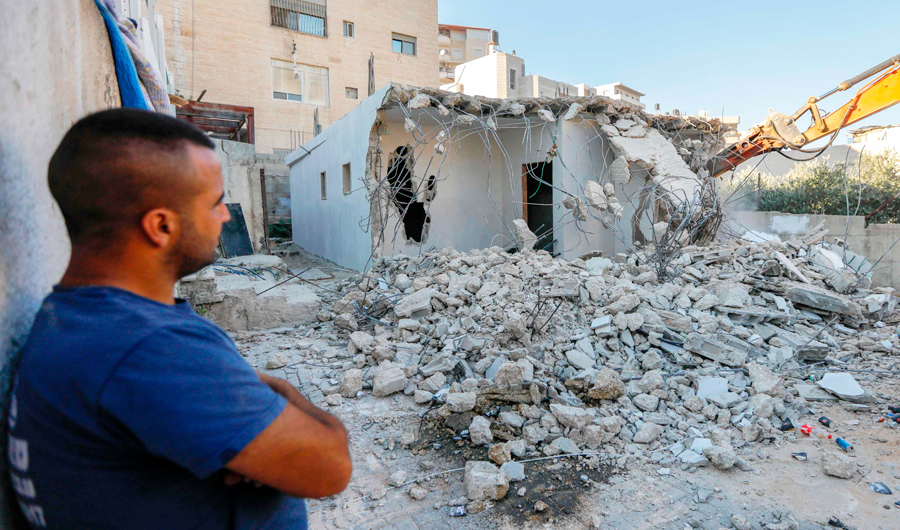
JERUSALEM: Palestinian Alaa Borqan preferred to tear down his own house in Israeli-annexed East Jerusalem after a court ruled that it was constructed illegally and must be demolished.
The 35-year-old was given two options: To destroy his four-bedroom home in the Jabal Mukaber neighborhood himself, or to let the city council do it and then send him the bill.
The Israeli authorities regularly raze homes built by Palestinians on their own lands in East Jerusalem and the occupied West Bank if they lack Israeli construction permits.
The catch, according to an UN study, is that such permits are “virtually impossible” to obtain and the result is a chronic housing shortage.
“I applied to city hall for a building permit, but without success,” Borqan told AFP.
“I spent around 75,000 shekels ($22,000) on legal fees and on a ground survey,” he said.
Ben Avrahami, an adviser to the city authorities on East Jerusalem, said that every case is handled strictly according to the law.
“The demolitions are being carried out by order of an Israeli court and are subject to careful legal scrutiny,” he said.
Borqan, a father of four, however said he was dismayed after he hired a bulldozer that tore down his own house in front of his eyes.
He said he had invested all his savings in the building, taking on a debt of 800,000 shekels and putting in four years of work.
The court, which ruled the structure illegal because it was built without a permit, fined him 60,000 shekels for the offense.
He now lives with his family in a house that he rents for 2,800 shekels a month.
Standing in the rubble of his former house, he recounted “how difficult it is to demolish (a home) with one’s own hands.”
According to city hall, 44 houses have been demolished in East Jerusalem since the start of this year.
Some owners prefer to raze their homes themselves to avoid having to pay sometimes thousands of shekels to the city’s demolition crews.
Under Israeli occupation since the 1967 Six-Day War, East Jerusalem is home to around 300,000 Palestinians and 200,000 Jewish settlers.
Palestinians charge that the true purpose of the permit regime is to empty the city of its Palestinian inhabitants. The UN’s Office for Humanitarian Affairs (OCHA) noted in an April 2019 report that in East Jerusalem “a restrictive planning regime applied by Israel makes it virtually impossible for Palestinians to obtain building permits.”
“At least one-third of all Palestinian homes in East Jerusalem lack an Israeli-issued building permit, potentially placing over 100,000 residents at risk of displacement,” it added.
OCHA says that only 13 percent of east Jerusalem is designated for Palestinian construction, much of which is already built up, while 35 percent has been allocated to Israeli settlements, which are illegal under international law.
According to the director of the Jerusalem Center for Economic and Social Rights, Ziad Hammuri, the self-demolitions are “humiliating” and “have considerable psychological effects” on families, in addition to heavy financial costs.
But many Palestinians still prefer to demolish their property themselves, fearing arrest if they are unable to pay the city’s demolition bill or fines.
On July 2, the Shalalda family also demolished their home, a two-bedroomed apartment in A-Tur.
It is “very difficult, a dream has been destroyed,” lamented Sara Shalalda, a mother of six.
“We were about to move in, we didn’t want to have to pay rent anymore.”
According to OCHA, 65 children were displaced and 85 others variously affected by self-demolitions in east Jerusalem in the first six months of the year.
Palestinians lack 30,000 to 40,000 housing units, rents are high, and building permits are expensive, said Mahmud Zahaykeh of the Jerusalem Housing Union.
“The average rent is $800 and a building permit for an apartment can cost $50,000,” he added.
“Only 20 percent of residents obtain permits, and the process can take five years.”
Avrahami says the city grants around 250 building permits to Palestinians each year.
Borqan had hoped to be among the lucky ones but his hopes were dashed.
“They don’t want us to stay,” he said, referring to Israel.
“But we are not going to move.”

Main category: 
Tags: 

An inside job: How a Jewish terror group broke hundreds out of a British jail in PalestineBahrain tells Pompeo there must be two-state solution for Israel-Palestine


Sudan rebels agree to key peace deal with government

Author: 
Mon, 2020-08-31 01:36

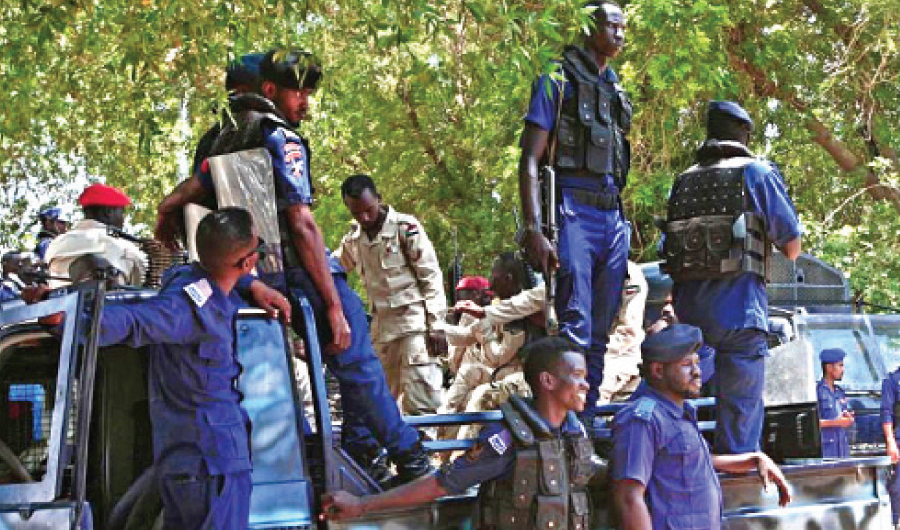
KHARTOUM: Sudan’s main rebel alliance has agreed to a peace deal with the government aimed at ending 17 years of conflict, official news agency SUNA said on Sunday.
The Sudan Revolutionary Front (SRF), an alliance of rebel groups from the western region of Darfur and the southern states of South Kordofan and Blue Nile, inked a peace agreement with the government late on Saturday.
A formal signing ceremony is set to take place on Monday in Juba, the capital of neighboring South Sudan, which has hosted and helped mediate the long-running talks since late 2019.
Senior government officials and rebel leaders “signed their initials on protocols on security arrangements” and other issues late Saturday, SUNA reported.
However, two key holdout rebel forces have refused to take part in the deal.
The final agreement covers key issues around security, land ownership, transitional justice, power sharing, and the return of people who fled their homes due to war.
It also provides for the dismantling of rebel forces and the integration of their fighters into the national army.
Sudanese Prime Minister Abdalla Hamdok and several ministers flew to Juba on Sunday, the news agency said, where he met with South Sudan President Salva Kiir.

SPEEDREAD

A formal signing ceremony is set to take place on Monday in Juba, the capital of neighboring South Sudan, which has hosted and helped mediate the long-running talks since late 2019.

Hamdok said that finding a deal had taken longer than first hoped after a initial agreement in September 2019.
“At the Juba declaration in September, everyone expected peace to be signed within two or three months, but …we realized that the questions were of one great complexity,” Hamdok said.
“However, we were able to accomplish this great work, and this is the start of peace building.”
The rebel forces took up arms against what they said was the economic and political marginalization by the government in Khartoum.
They are largely drawn from non-Arab minority groups that long railed against Arab domination of successive governments in Khartoum, including that of toppled ruler Omar Bashir.
About 300,000 people have been killed in Darfur since rebels took up arms there in 2003, according to the United Nations.
Conflict in South Kordofan and Blue Nile erupted in 2011, following unresolved issues from bitter fighting there in Sudan’s 1983-2005 civil war.
Forging peace with rebels has been a cornerstone of Sudan’s transitional government, which came to power in the months after Bashir’s overthrow in April 2019 on the back of mass protests against his rule.
Two movements rejected part of the deal — a faction of the Sudan Liberation Movement, led by Abdelwahid Nour, and a wing of the Sudan People’s Liberation Movement-North (SPLM-N), headed by Abdelaziz Al-Hilu.
Previous peace accords in Sudan, including one signed in Nigeria in 2006 and another signed in Qatar in 2010, have fallen through over the years.

Main category: 
Tags: 

Sudan government not mandated to normalize Israel ties, Pompeo told during visitSudan to launch mass polio vaccination after outbreak